REVIEW · COURTYARDS OF CORDOBA
Cordoba: Courtyards Festival Guided Tour in Spanish
Book on GetYourGuide →Operated by Paseando por Europa · Bookable on GetYourGuide
Patios in Cordoba are basically living art. This Courtyards Festival tour takes you through three signature neighborhoods—San Pedro, San Lorenzo, and San Andres—at the most beautiful time of year, when spring flowers fill the courtyards. I love that you get an insider’s look at patios that are usually closed off, and I also love the plant-focused way the local guide explains what you’re seeing.
One thing to plan around: the tour is in Spanish only. If you’re not comfortable following the conversation, you might miss some of the history and botany details that make this outing worth it.
If you want a short, thoughtful walking experience tied to a UNESCO tradition, this is a very practical pick for Cordoba.
In This Review
- Key Highlights You’ll Actually Care About
- Entering Cordoba’s Patio Festival Season, Not Just Taking Photos
- Finding the Meeting Point at Plaza de la Corredera
- What 105 Minutes Adds Up To on Foot
- Three Neighborhoods: San Pedro, San Lorenzo, and San Andres
- Normally Closed Patios: Seeing the Real Festival Mood
- The Botany Class That Helps You Spot the Flowers
- Plants, Pots, and the Courtyard Design Secrets
- Guide Matters: When Juan Carandel Leads the Story
- Pricing: Why $14 Can Be Good Value Here
- Who This Tour Fits Best (And Who Might Prefer Something Else)
- Should You Book This Cordoba Courtyards Festival Tour?
- FAQ
- What language is the guided tour in?
- How long is the tour?
- Where do I meet the guide?
- What is included in the price?
- Are food and drinks included?
- Is transportation or hotel pickup included?
- Is the tour wheelchair accessible?
Key Highlights You’ll Actually Care About
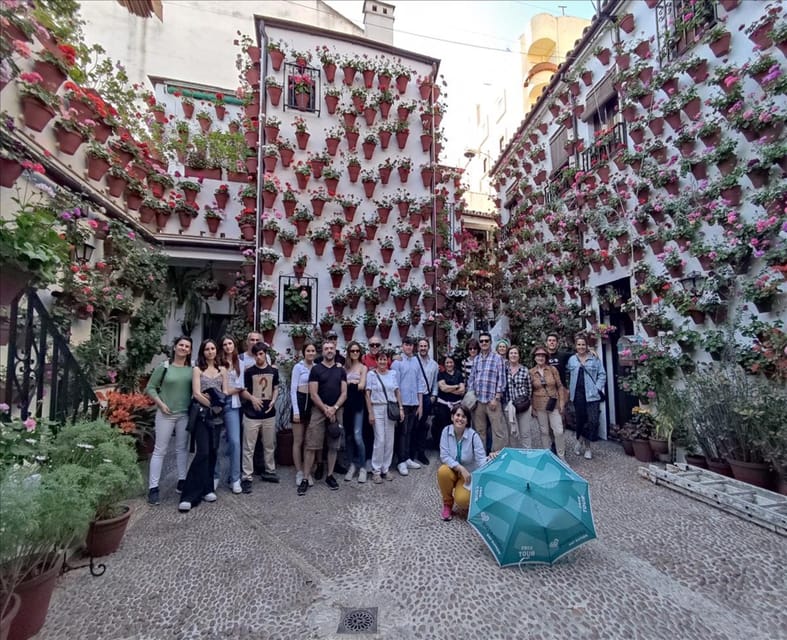
- Normally closed courtyards you can see only because you’re with a guide
- 100-year-old Patio Festival tradition explained as you walk, not as a lecture
- Botany lesson with a local resident, focused on the flowers used during the festival
- Neighborhood storytelling across San Pedro, San Lorenzo, and San Andres
- Plants and decoration tips that locals use (so you know what you’re looking at)
- A 105-minute format that fits well even if you have limited time
Entering Cordoba’s Patio Festival Season, Not Just Taking Photos
Cordoba’s Patio Festival isn’t only about pretty blooms. It’s a window into how people live together, celebrate community, and decorate shared spaces. On this guided walk, the festival comes with context as you move—so the courtyards feel like part of the city’s rhythm, not a one-off photo stop.
You’ll get a cool-spring pace that’s built for looking slowly. That spring breeze matters too. You’ll be outside, on your feet, and the tour is designed for you to notice details: flower types, arrangement styles, and the way each courtyard creates its own micro-climate.
This isn’t a long, day-long itinerary. It’s a focused 105 minutes, which is great if you want culture without burning half your day. For $14 per person, you’re paying for a guide-led route plus access to patios that are normally not open.
The only real “watch-out” is language. Since the tour is in Spanish, you’ll get the most value if you can follow basic conversation or you’re willing to go with the flow.
Finding the Meeting Point at Plaza de la Corredera
Start where locals actually pass through: Plaza de la Corredera, outside the main door of the Mercado de la Corredera—the building with the clock. Your guide carries a teal flag with the Paseando por Europa logo, so you can spot the group without playing detective.
This matters more than it sounds. Cordoba’s old center can be easy to misread on your first day. Having a clear, recognizable landmark helps you arrive calm and on time, which is the difference between a smooth tour and a rushed scramble.
If you’re planning your day, give yourself a little buffer before you head there. Even with a smooth meeting point, you’ll want time to get oriented and make sure you’re at the correct door of the market.
What 105 Minutes Adds Up To on Foot
The tour is scheduled for 105 minutes, and that time is spent on walking plus viewing several courtyards. With a short duration, the experience stays lively and doesn’t drag. You’re not stuck listening for long stretches, and you’re not doing the slow “museum line” thing either.
The timing also means you should come ready. Wear comfortable shoes. Bring water. Add a hat if the sun is out, because even if it’s spring-mild, Cordoba’s light can still hit hard.
Also, be ready to stop more often than you might expect. Courtyards aren’t one big room—you’ll be stepping into different spaces, looking up, and noticing plant combinations that don’t read well unless you’re actually there.
One more practical point: the tour is wheelchair accessible, which is a big deal in historic centers where cobblestones and tight turns can be a headache on other tours. If you need accessible routing, this is explicitly built to work.
Three Neighborhoods: San Pedro, San Lorenzo, and San Andres
The route runs through San Pedro, San Lorenzo, and San Andres, and that choice is smart. These aren’t just random dots on a map. They’re neighborhoods that help explain why patios matter in Cordoba—where the tradition grew, how daily life meets celebration, and how design choices show up in ordinary homes.
As you walk, the guide ties courtyard scenes to the neighborhood’s feel. That’s what makes the festival more than a stop-and-gawk event. You start to recognize patterns: how courtyards relate to the street, how entrances frame views inside, and how people use plants to create shade, texture, and color.
The neighborhoods also help with variety. Even if two courtyards are both packed with flowers, you’ll still notice differences in layout and what’s being emphasized. That comes through best when you’re moving between areas rather than staying in one pocket.
If you’re short on time in Cordoba, covering three neighborhoods inside one guided window is a solid strategy.
Normally Closed Patios: Seeing the Real Festival Mood
This is the part you’re paying for: insider access to courtyards that are normally closed to the public. From the moment you enter, the atmosphere shifts. You’re stepping into private space that’s been transformed for the festival season.
Expect to spend real time looking. The courtyards aren’t just open-air stages; they’re intimate spaces where plants are arranged to be seen from specific angles—doorways, windows, and inner walls. You’ll likely notice how water features (when present), seating spots, and hanging plants shape the feel of the place.
One honest note from how these tours can play out: you may visit multiple patios, and not every one hits the same level of impact. On similar guided visits, I’ve heard that some patios land strongly while others feel more average. If you keep your eyes open for composition and plant variety, you can still enjoy the stops even if one courtyard doesn’t wow you.
Also, if you’re someone who expects a perfect lineup every time, recalibrate. Festival judging and artistic choices vary by home. The value is the access and the local explanation—not the promise of ten identical showpieces.
The Botany Class That Helps You Spot the Flowers
Here’s a standout feature: during the tour, you can take a botany class with a local resident. Even if you’re not a plant nerd, this kind of stop changes how you look at what’s around you.
Instead of treating flowers as a blur of color, you start learning the names and the roles they play in patio decoration. The tour focuses on the main flowers used during the festival, so you’re not getting random horticulture trivia. You’re learning the species you’ll actually see in front of you.
This is also a great way to avoid the common patio-tour problem: taking photos without knowing what you’re photographing. After the botany portion, you’ll have the basics to identify what’s used and why certain plants fit the festival look.
If you enjoy practical learning—short, useful, and tied to what you can observe—this is one of the best reasons to book.
Plants, Pots, and the Courtyard Design Secrets
You’ll also hear about which plants are used to decorate patios, directly from a local perspective. That’s where the tour turns from sightseeing into interpretation.
Courtyard decoration isn’t only about flowers. It’s about how plants interact with light and space. You’ll likely notice choices that create shade, soften harsh stone, and make inner walls feel warmer. Even if you don’t know horticulture, the guide’s explanations help you understand the logic behind the looks.
And this is where the tour shines for first-timers. Once you understand what people are trying to achieve—color rhythm, freshness across the season, and a pleasing layout—you’ll start seeing the craftsmanship behind what looks effortless.
This is also a good angle for people who love design but hate fluff. The guide isn’t just listing pretty facts. You get the “what you’re looking at and why it matters” version.
Guide Matters: When Juan Carandel Leads the Story
The guide quality is a major part of this experience. In recent groups, the tour has been led by Juan Carandel, and the comments about his approach are consistent: he’s described as a professional with heavy history and patio knowledge, with excellent hosting and clarity.
What you care about as a visitor is the effect. A strong guide makes you linger in the right spots. They explain what you can’t easily spot yourself. They also keep the pace moving so you don’t feel like you’re dragging through a crowded festival scene.
If you prefer tours with real local authority—someone who can connect patios to Cordoba society—this is exactly that style.
Just remember the language factor again. If you’re comfortable in Spanish, you’ll likely feel like you’re getting a guided story and a mini class at the same time. If you’re not, plan to rely more on visual cues.
Pricing: Why $14 Can Be Good Value Here
Let’s talk money, because $14 is either a steal or a trap depending on what’s actually included. In this case, the structure supports the price.
You’re paying for:
- a Spanish tour guide
- access to normally closed courtyards
- a route through three major neighborhoods
- a botany-focused moment with a local resident
Food and drinks aren’t included, so don’t budget this like a meal tour. But for 105 minutes of guided access to private spaces during a major tradition, it’s fair value. You’re also not paying for transportation or hotel pickup here, which keeps the base price lower. If you can get to the meeting point on your own, you’re set.
In short: this isn’t a “walk and hope” situation. The guide and the access are the product.
Who This Tour Fits Best (And Who Might Prefer Something Else)
This guided patio walk works best if you:
- want a short, structured experience in Cordoba
- enjoy learning while you look, especially through a Spanish talk plus a botany class
- like neighborhoods and local context more than ticketed landmarks
It’s also a great fit if you’re traveling with mixed interests: the courtyards satisfy your eye, while the history and plant explanation satisfy your brain.
You might consider a different option if:
- you don’t speak Spanish and you can’t follow conversation without frustration
- you dislike walking at a moderate pace with frequent stops
- you’re expecting food, drinks, or a full-day schedule (this is not that)
Also, bring patience with festival variability. Some courtyards will impress you more than others. That doesn’t mean the tour missed the mark—it’s just how artistic homes participate in a living tradition.
Should You Book This Cordoba Courtyards Festival Tour?
Yes, you should book if you want an efficient way to see Cordoba’s Patio tradition up close—with access you likely wouldn’t get on your own. The combination of normally closed courtyards, neighborhood storytelling, and the botany component makes this feel more educational than most short sightseeing walks.
If Spanish is a barrier for you, don’t ignore that. This tour is built for Spanish-speaking visitors, and the value increases when you can follow the guide’s explanations.
My practical bottom line: book it when you want a guided, pay-once experience that turns courtyards into understanding. Skip it if you’re trying to maximize comfort over access and learning, or if you’re not comfortable with Spanish.
FAQ
What language is the guided tour in?
The tour is in Spanish.
How long is the tour?
The duration is 105 minutes.
Where do I meet the guide?
Meet at Plaza de la Corredera, outside the main door of the Mercado de la Corredera (clock building). The guide will carry a teal flag with the Paseando por Europa logo.
What is included in the price?
A Spanish tour guide is included.
Are food and drinks included?
No, food and drinks are not included.
Is transportation or hotel pickup included?
No. Hotel pickup and drop-off and transportation are not included.
Is the tour wheelchair accessible?
Yes, the tour is wheelchair accessible.