REVIEW · FIGUERES
Costa Brava: Via Ferrata Cala del Molí
Book on Viator →Operated by eXperiencies Costa Brava · Bookable on Viator
This guided Via Ferrata Cala del Molí is built for vertical thrills without the guesswork, with secured cables and metal aids that help you move through cliffs and forested sections. I especially like the two-section route idea because it balances an approachable start with a more demanding follow-up, all while you get that coastal-by-the-Mediterranean feeling that makes this area special.
The best part for me is how the guides focus on safety and keep you progressing at a human pace, with plenty of help on clipping in and where to put your feet and hands. The trade-off: the second part can require upper-body stamina and confidence with heights, and at least a few people report that the harder section is not for everyone on that day.
In This Review
- Key highlights you will care about
- Where the Via Ferrata Begins in Sant Feliu de Guíxols
- The Two-Part Route: Start Easy, Then Take on Cala del Molí
- What You Actually Do on a Via Ferrata (Metal Aids and Cable Control)
- Guides, Safety, and the Real Meaning of Feeling Secure
- Timing: How Long 3 to 4 Hours Feels on the Cliffs
- Views Over the Sea: Why Cala del Molí Feels Worth the Work
- Equipment, Photos, and the Convenience Factor
- Price and Value: What You Get for Around $48
- Who This Via Ferrata Suits Best (And Who Should Think Twice)
- Small Gotchas: Heat, Arm Fatigue, and When Guides Change the Plan
- Weather and Rescheduling: The Day Depends on the Cliffs
- Should You Book Via Ferrata Cala del Molí?
- FAQ
- Where is the meeting point for Via Ferrata Cala del Molí?
- How long does the Costa Brava via ferrata take?
- How much does the tour cost?
- Is the experience offered in English?
- What fitness level do I need?
- How many people are in the group?
- Is there a minimum height requirement?
- What is included in the price?
- Is good weather required?
- Is there an option to leave the route earlier?
Key highlights you will care about
- Small groups (max 6): more attention and less waiting around on the route.
- Two sections with an easier start: many people use the first part as a confidence builder.
- Photographic report included: guides take photos so you do not have to stop climbing to capture moments.
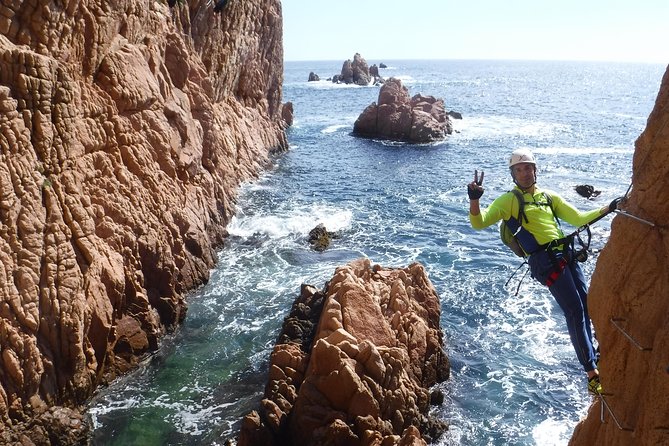
- Secure route systems: metal steps, cables, and bridges turn scary exposure into a controlled experience.
- Mini picnic on the plan: a small reset that helps on a 3- to 4-hour outing.
- Guides vary, but safety stays consistent: names that show up often include Miguel, Matías, Lorenzo, and Mathias.
Where the Via Ferrata Begins in Sant Feliu de Guíxols
You will base yourself around Sant Feliu de Guíxols, on Costa Brava. The meeting point is Carretera de Sant Pol, 200, 17220 Sant Feliu de Guíxols, Girona, Spain, and the activity ends back at the same spot.
The walk to the start is short. The approach is listed as about 2 minutes, so you are not spending the day hiking just to reach the cliff.
This is also set up so you can fit it into a travel day. It’s near public transportation, and you get a mobile ticket after booking.
You can also read our reviews of more tours and experiences in Figueres.
The Two-Part Route: Start Easy, Then Take on Cala del Molí
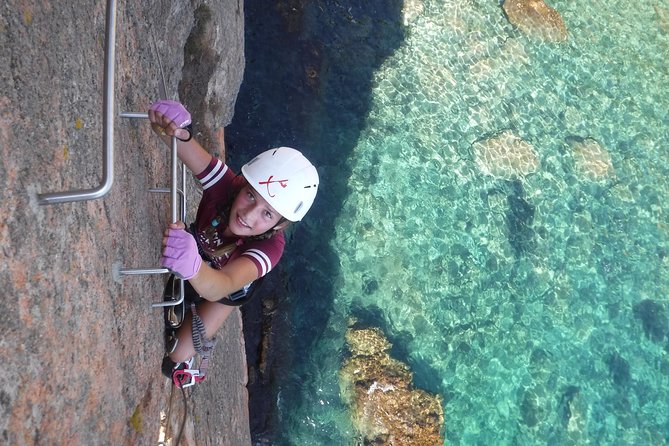
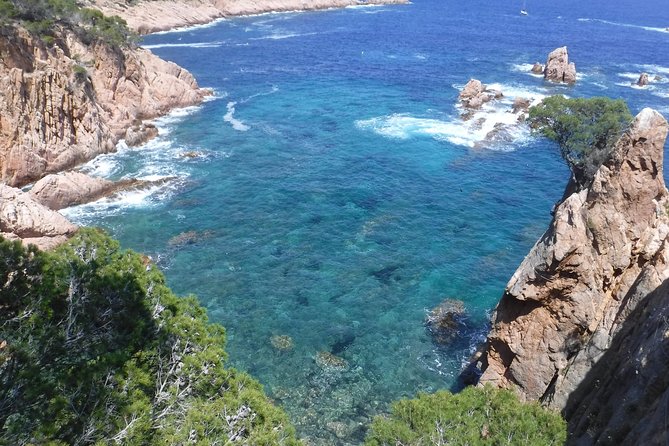
Cala del Molí is described as one of the most beautiful via ferratas on the Costa Brava because of its privileged position by the Mediterranean Sea. The route is split into two sections: one initiation segment and one that is more demanding.
In practical terms, that structure matters because it gives you a on-ramp. People who have never done via ferrata often feel the first section is where you learn how the system works: how you clip in, how you move from one metal feature to the next, and how you keep your breathing steady while the rock and cable do the heavy lifting.
After that, you face the second part. Multiple reviews call it harder, especially on hot days, and some mention needing solid arm and upper-body strength. You are not expected to be a rock climber, but you should be ready to work your way through steps, rings, chain sections, and a cable-assisted rhythm.
What You Actually Do on a Via Ferrata (Metal Aids and Cable Control)
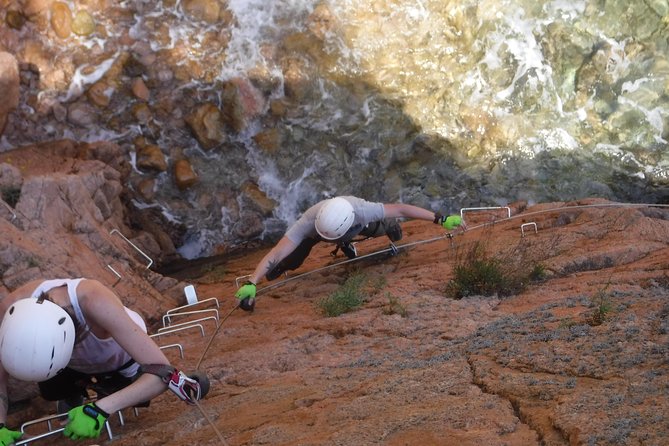
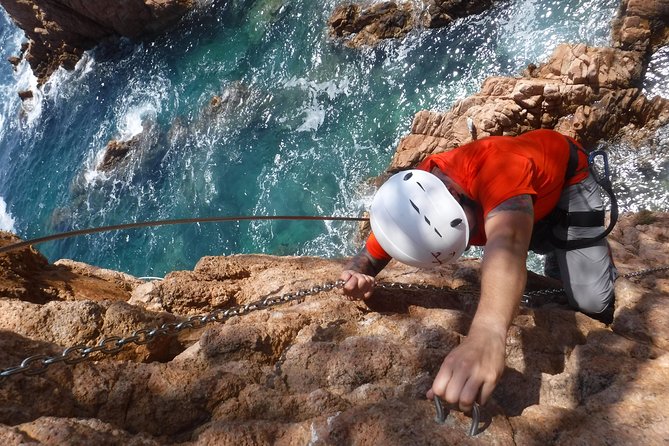
A via ferrata is part climbing, part trekking, with fixed hardware along the route. Instead of free-soloing your way across uncertainty, you move through a corridor of metal steps and attachments, usually connected to a cable.
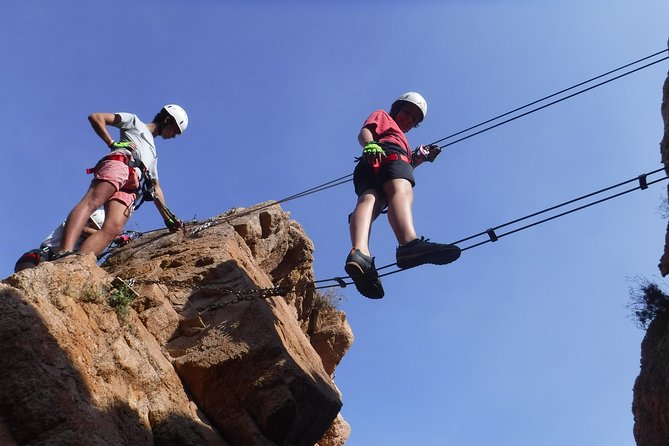
On this course, you can expect a mix of vertical and horizontal sections, plus natural variety. The overview specifically mentions aided movement on metal steps, crossing on Tibetan bridges, and progressing along routes secured to a cable. It also describes moving through forest areas and crossing rivers in a different way than you might expect on a normal hike.
The key for your experience is that this style of route removes a lot of decision-making. You still have to follow technique, but the fixed line and hardware help you focus on foot placement, balance, and keeping your momentum.
Guides, Safety, and the Real Meaning of Feeling Secure
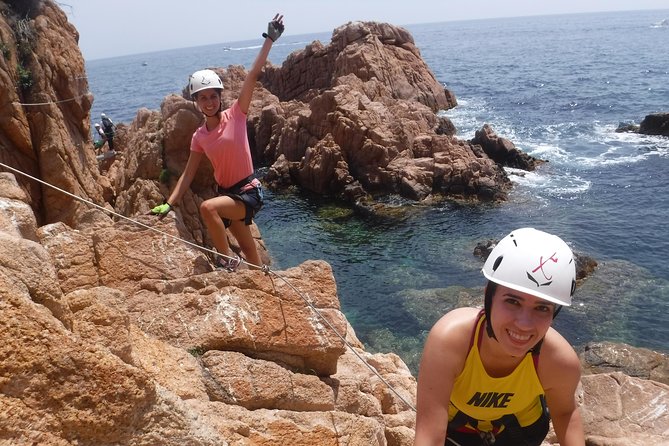
This is the part that people consistently praise: the guides. Names that come up a lot include Miguel and Matías, plus Lorenzo and Mathias in other reviews. What matters is not the celebrity of a name; it’s the coaching style.
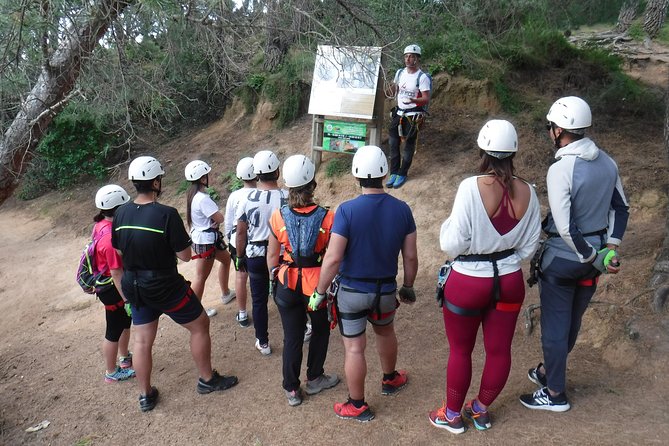
The setup is hands-on. Guides help with equipment use and explain how to clip in, and many reviews mention that they were supportive without over-correcting every step. That balance helps if you are new. You get enough instruction to feel safe, then you can actually enjoy the route.
Safety also shows up in group management. Some guides assess how you handled the first section and then recommend whether to continue to the harder part. In a few cases, people chose to stop when the guide advised it. That can feel disappointing if you want to push, but it is also a reminder that the day’s plan changes with real conditions and real ability.
One more safety-related point: via ferrata hardware expects you to use the system correctly. If the guide tells you how to clip or pause, follow the instructions exactly. A negative review criticized one guide’s decisions, so treat technique guidance as non-negotiable.
Timing: How Long 3 to 4 Hours Feels on the Cliffs
The activity duration is listed as 3 to 4 hours, and the price page summary notes about 3 hours. In reality, your time can shift based on how the group moves, heat, and how many people continue from the initiation section into the more demanding part.
Several reviews highlight the second part as the work section. Even if you are excited, you might feel it in your shoulders, forearms, and grip endurance. That does not mean it is dangerous. It means you should plan your day like an active outing, not like a quick photo stop.
On pacing, the inclusion of a mini picnic is a nice touch because it gives your body a reset. It also helps explain why the route is scheduled as a half-day activity rather than a short burst.
Views Over the Sea: Why Cala del Molí Feels Worth the Work
The reason people keep coming back to this specific via ferrata is the setting. The operator emphasizes the Mediterranean Sea location, and the reviews mirror that with comments about breathtaking or amazing views.
Because the route is secured and guided, you can take in the scenery without the same level of mental load you might have on an unroped scramble. The view rhythm also matters: you are not just staring at the horizon from one spot. You see coastal angles and cliff perspectives as you progress through the different sections.
If you love the feeling of earning a view, this works. You climb through forests and along fixed routes, and then the sea shows up as the payoff.
Equipment, Photos, and the Convenience Factor
Included in the price is qualified guide and technical material, plus a photographic report. That last piece is a bigger value than it sounds.
Via ferrata is awkward for selfie-style photography. You need two hands sometimes, and you cannot reliably stop to frame shots. Multiple reviews specifically praise guides for taking lots of photos and sending them later, which means you can focus on moving and let someone else handle the camera work.
It also explains why reviews mention guides being in the right spot for safety and for a good shot. When your guide is already navigating where you should step, you often get better angles than you could manage yourself while clipping in.
Price and Value: What You Get for Around $48
At about $48.31 per person, the value comes from what is included, not just the activity itself. Your ticket covers:
- Qualified guide
- Technical gear
- Photographic report
- Mini picnic
- RC and accident insurance
If you compare this to hiring gear and arranging a guide separately, it usually adds up fast. Here, you get the essentials bundled into a small-group climb, which helps explain the strong rating.
Group size matters for value. A maximum of 6 people usually means fewer bottlenecks at the hardware and more individual attention when someone needs help starting or transitioning between sections.
One more value point: many reviews praise guides for safety and instruction quality, which can prevent the day from feeling chaotic. That is hard to price, but it often makes the difference between a fun first time and an awkward one.
Who This Via Ferrata Suits Best (And Who Should Think Twice)
This activity is listed for people with moderate physical fitness. That is honest. You do not need to be an elite athlete, but you do need to be comfortable moving on a route with fixed steps and doing some continuous effort for a few hours.
It also has a minimum height requirement listed as 1.50 cm. That wording is unusual, but the booking details do state a minimum height. Plan to meet the requirement exactly as listed in your confirmation.
It is also described as open to beginners thanks to the initiation section. Several reviews mention it as a first via ferrata and highlight that the first part helps you learn fast. Just understand this: beginners still need to handle the coordination of clipping in and stepping on small metal features.
If you are anxious about heights, you might still enjoy it, because the cable and harness system creates structure. Some reviews explicitly mention feeling more at ease once the route and equipment give you something to focus on.
If you know you struggle with upper-body fatigue, grips, or arm endurance, be realistic about the second section. Reviews call out upper arm strength needs, especially in the harder portion.
Small Gotchas: Heat, Arm Fatigue, and When Guides Change the Plan
Most via ferratas feel easier when you stay cool. The second part is frequently described as more demanding, and one review calls it a lot of work on a hot day. That means you should take heat seriously even if you feel fit.
Another gotcha is that you may not get the same day-long experience if your group makes different choices. In several accounts, people continued or stopped based on how they felt and how the guide judged progression after the first segment. That is part of how these routes keep groups safe.
Finally, guides are human. There are a few negative reviews tied to guide attitude or decision-making. Most of the feedback is strongly positive, with many mentions of Miguel and Matías as helpful, patient, and safety-focused. Still, if you know you prefer a very specific coaching style, read your guide assignment information carefully and communicate needs early.
Weather and Rescheduling: The Day Depends on the Cliffs
This activity requires good weather. If conditions are poor, the experience can be canceled and you will be offered a different date or a full refund.
That matters because via ferrata routes depend on traction and stability. If the sea wind, rain, or slick conditions make the track less safe, the safest option is to postpone.
The best move: choose a Costa Brava day when you can stay flexible. If you are planning Barcelona base trips, keep some buffer so you can shift to another day if the ferrata gets called.
Should You Book Via Ferrata Cala del Molí?
Yes, you should book this if you want a guided, structured way to experience coastal climbing in the Costa Brava. The strongest reasons are consistent: safety-focused guides, a route that mixes nature and sea scenery, and included photos that you will actually want after you finish.
I would not book it if you are looking for a gentle walk. Even the initiation section involves climbing-adjacent work, and the second part is repeatedly described as tougher, sometimes requiring real upper-body effort.
If you do book, go in with a smart mindset: treat it as active climbing training for your legs and grip, trust the system, and let your guide manage pace and safety. That is how this route turns into a story you will keep talking about long after the harness is off.
FAQ
Where is the meeting point for Via Ferrata Cala del Molí?
The meeting point is Carretera de Sant Pol, 200, 17220 Sant Feliu de Guíxols, Girona, Spain. The activity ends back at the same meeting point.
How long does the Costa Brava via ferrata take?
The duration is listed as about 3 hours, with the activity duration also described as 3 to 4 hours depending on conditions and pace.
How much does the tour cost?
The price is $48.31 per person.
Is the experience offered in English?
Yes. The activity is offered in English.
What fitness level do I need?
The tour is recommended for people with a moderate physical fitness level.
How many people are in the group?
This activity has a maximum of 6 travelers.
Is there a minimum height requirement?
Yes. The minimum height is listed as 1.50 cm in the tour details.
What is included in the price?
The price includes a qualified guide, technical material, a photographic report, a mini picnic, and RC and accident insurance.
Is good weather required?
Yes. The activity requires good weather. If it is canceled for poor weather, you will be offered a different date or a full refund.
Is there an option to leave the route earlier?
The route includes an initiation section and the harder section after it. Some people mention that there is an exit option during the first part, including a mid-point and an end of the first segment. Your guide will also assess whether to continue based on safety and progression.