REVIEW · XATIVA
Essentials of Valencia and its World Heritage Sites
Book on Viator →Operated by Turiart · Bookable on Viator
Valencia’s UNESCO treasures are surprisingly walkable. In just about 2 hours, you’ll cover several major landmarks with a guide who keeps you moving and explains how Valencia’s story connects to what you see on the street.
I especially like two things: first, the way the tour strings together UNESCO-listed sites so you get the big picture fast without getting lost. Second, the small-group pace (up to 25) makes it easier to ask questions and actually absorb details, including when you can go inside.
The one drawback to consider is that the time is tight. Even though stops include short visits, you’re still seeing a lot in a short window, so if you want long museum-style wandering, you’ll need to plan follow-up visits on your own.
In This Review
- Key things to know before you go
- Getting your bearings fast in Valencia’s historic center
- Estació del Nord and the city’s early “wow” factor
- Plaça de l’Ajuntament: where Fallas history becomes real
- Ajuntament de València: a quick but meaningful context stop
- Mercat Central de València and the Mediterranean diet talk
- Entering La Lonja de la Seda: the Silk Exchange you can go inside
- Plaça de la Mare de Déu and Thursday’s Tribunal of the Waters
- What you pay (and why it’s good value here)
- Who should book this tour (and who should skip it)
- Practical tips to get the most out of your 2-hour walk
- Should you book Essentials of Valencia and its World Heritage Sites?
- FAQ
- How long is the Essentials of Valencia and its World Heritage Sites tour?
- What language is the tour offered in?
- Where do I meet and where does the tour end?
- Is there a ticket included for any of the UNESCO sites?
- When does the Tribunal of the Waters take place?
- Do evening tours in August and September include entry to all the stops?
- What if La Lonja de la Seda is closed during the visit?
Key things to know before you go
- UNESCO in one morning/afternoon walk: you’re ticking off multiple World Heritage stops close together
- La Lonja de la Seda ticket included: you actually enter the Silk Exchange (not just look from the outside)
- Fallas context at Plaça de l’Ajuntament: the tour explains why Valencia added them to UNESCO in 2016
- Thursday timing for the Tribunal of the Waters: it fits into the tour flow around noon when possible
- Central Market + Mediterranean diet talk: you get the why behind the food culture, not just the building
- Evening hours can change what’s included: August and September evening tours may not include some entrances
Getting your bearings fast in Valencia’s historic center
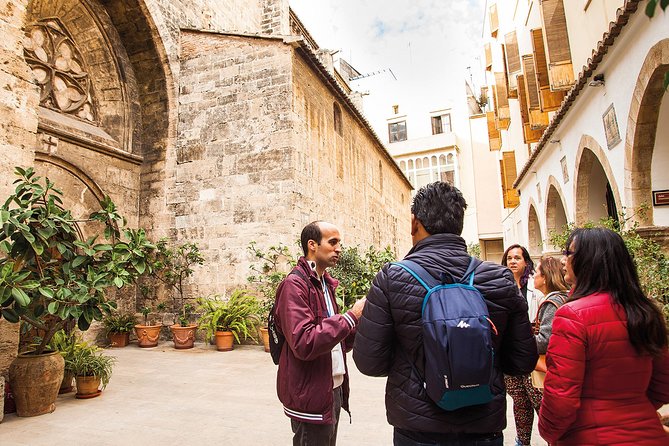
This is the kind of tour that helps you stop second-guessing yourself. You start at Estació del Nord, then walk into Ciutat Vella (Old Town) while the guide places each stop into a clear timeline. That matters in Valencia because the city is layers on layers: Roman-era traces, medieval wealth, and modern local traditions all sit within an easy walking loop.
What I like about the format is the balance. You’re not just collecting photos. You’re getting a plain-language explanation of what each site represents, and why it earned UNESCO status in the first place. That makes it much easier to decide where to spend extra time later.
And because the guide stays with you the whole way, you’re not stuck figuring out logistics mid-stroll. The tour ends at Carrer del Micalet, 7 in Ciutat Vella, so you’re dropped right where you’ll want to keep exploring.
Estació del Nord and the city’s early “wow” factor
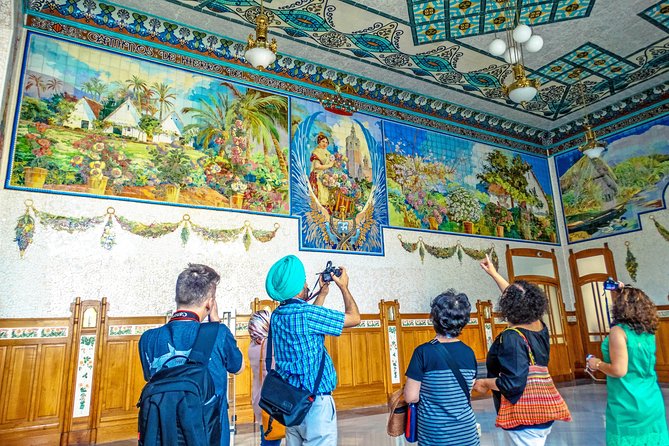
Your first stop is Estació del Nord, with about 20 minutes to visit the station. Even if you’re not a train nerd, it’s a strong warm-up because it sets the tone: Valencia isn’t only cathedrals and courtyards. It has grand public spaces tied to movement, trade, and regional connections.
Practical upside: this initial stop helps you start oriented. By the time you’re walking to the plazas, the route feels less random. You understand what area you’re entering and how the city’s layout supports its historic centers.
One small consideration: it’s a short visit. You’ll see the station, but you won’t get a slow “soak in the details” moment here. Treat this as a confident start, not a full station deep-dive.
Plaça de l’Ajuntament: where Fallas history becomes real
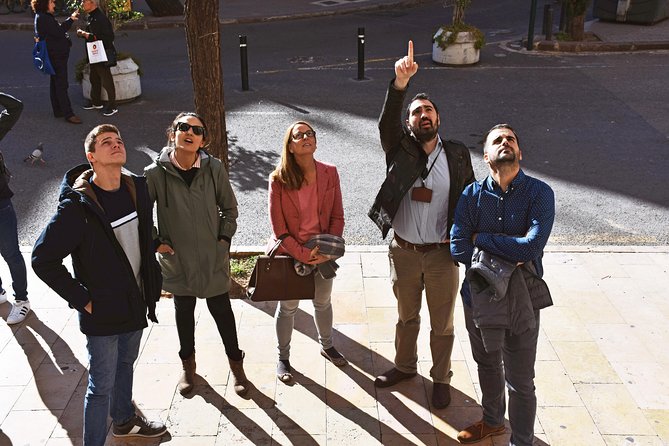
Next you’ll reach Plaça de l’Ajuntament for about 15 minutes, and the guide focuses on Fallas. This is especially useful for first-time visitors because Valencia’s Fallas are not just a seasonal spectacle. The tour explains them as an event that was the last addition of Valencia to the UNESCO list in 2016.
When the dates are March 15–19, the city essentially turns into an open-air museum of temporary monuments, with music, traditional costumes, and that unforgettable smell tied to the festivities. Even if you’re visiting outside those dates, you’ll leave with a mental map of where the energy happens and why this tradition belongs on UNESCO’s world stage.
Drawback to expect: this stop is time-focused. If you come during Fallas week, you may want to linger nearby, but the tour keeps moving so you can hit the other key UNESCO sites in one go.
Ajuntament de València: a quick but meaningful context stop
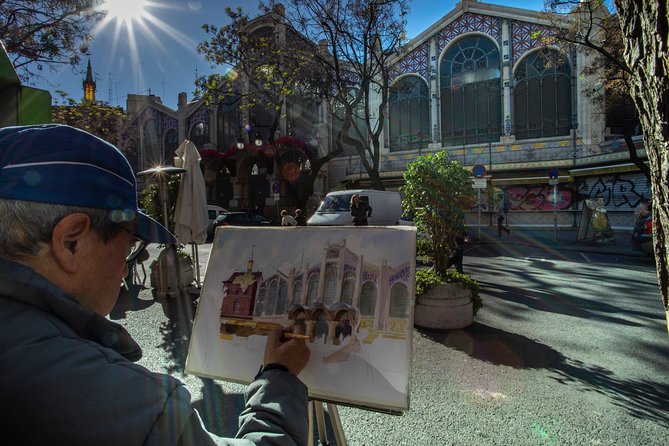
You then visit the Ajuntament de València area for about 20 minutes (working days only, with exceptions for official events/holidays and also specific timing rules for evening tours in August and September).
Why it’s worth the stop: the town hall sits at the heart of civic Valencia. Even with a short visit, the guide typically ties it to how the city governed itself and how public life shaped the culture you’ll see elsewhere.
Practical tip: wear something comfortable and keep water handy. You’ll be on your feet in central plazas, and the tour is short enough that you’ll feel heat and sun quickly on walking days.
Mercat Central de València and the Mediterranean diet talk
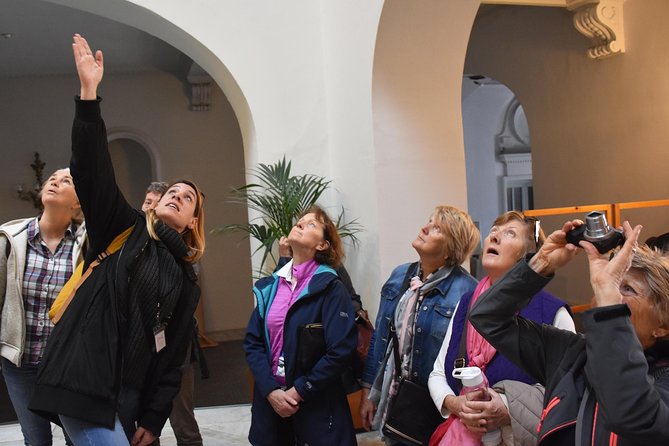
At Mercat Central de València, you get an explanation of the Central Market and the Mediterranean diet connection. The market stop is about 10 minutes, and it’s free in terms of admission for the tour component.
There’s a real practical detail here: evening tours in August and September at 06:30 pm do not include entrance. So if you’re booking for those months, double-check what you’re actually able to go inside during your time slot. The tour can still be useful for orientation and context, but you’ll want your own plan if the goal is seeing the market interior.
If your travel style is food-first, this stop helps you understand what you’re looking at. You’re not only asking what to eat; you’re learning what the market represents culturally and why the Mediterranean diet phrase is more than a marketing slogan.
Entering La Lonja de la Seda: the Silk Exchange you can go inside
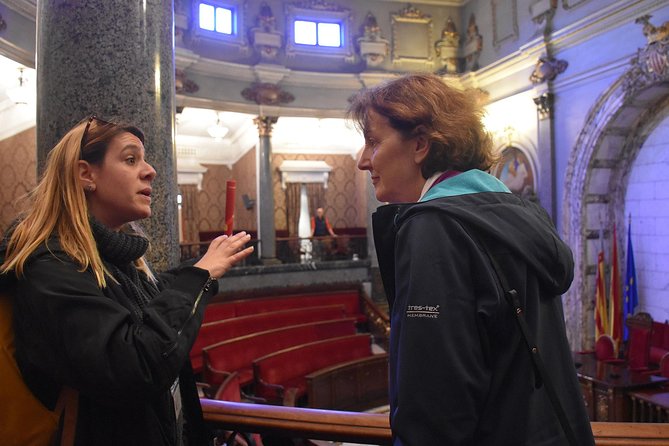
This is the anchor stop: La Lonja de la Seda. You’ll enter, and it takes about 30 minutes. Here’s what you should care about most: this visit includes the admission ticket.
The Silk Exchange is described as a masterpiece of civil Gothic architecture, a World Heritage Site since 1996. And the big payoff is the Sala de Contratación—with its columns, vaults, and ribs—where you get a sense of how the Valencian Golden Age connected wealth, trade, and architecture.
If you’re the type who usually sees buildings from the street and moves on, this is where the tour changes that. Inside, the scale and design communicate status in a way photos can’t.
A consideration for timing: for evening tours in August and September, the tour notes that evening departures at 06:30 pm do not include entrance for La Lonja. So daytime tours are your best bet if you want the full indoor experience.
Plaça de la Mare de Déu and Thursday’s Tribunal of the Waters
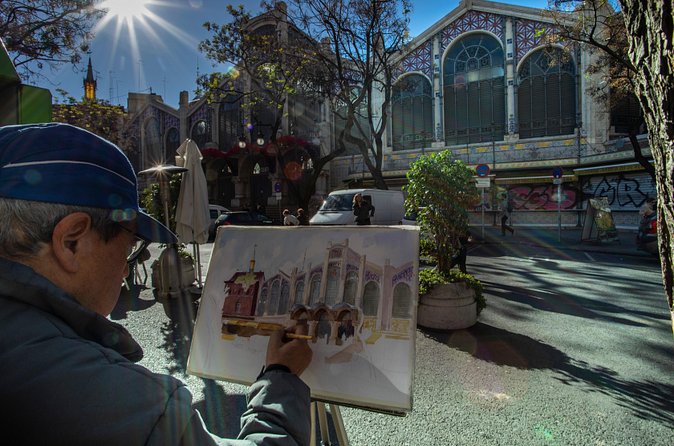
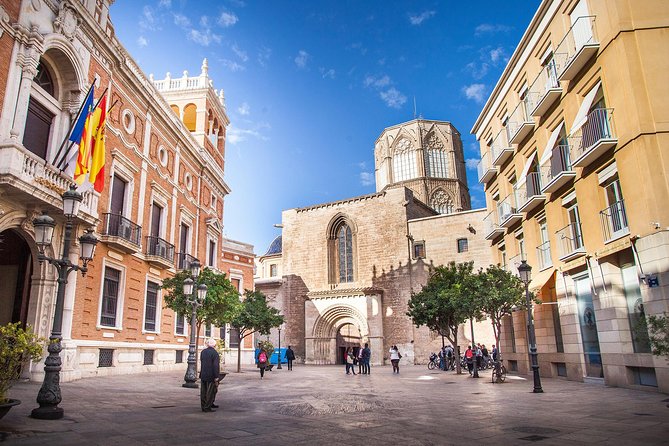
The next stop is Plaça de la Mare de Déu for about 15 minutes, and this is where the tour can feel extra alive if you match the schedule.
The highlight here is the Tribunal of the Waters, listed as Intangible Heritage of Humanity since 2008. It happens every Thursday at 12:00 noon at the Apostles’ Gate of the Cathedral.
Translation into real life: if you’re doing the tour on a Thursday, you have a shot at seeing this centuries-old tradition in action at the right time. Even if you don’t catch it perfectly, the guide’s explanation helps you understand why this ritual matters to Valencia’s identity and water culture.
One practical detail you’ll appreciate: the tour is designed to bring you to the Cathedral area in the lead-up to the noon moment when possible.
What you pay (and why it’s good value here)
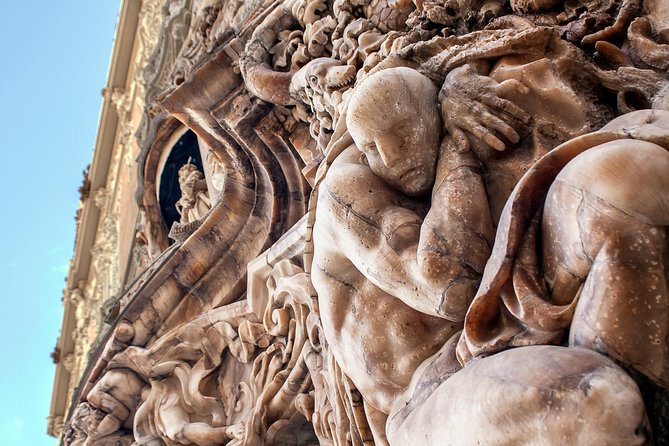
The price is $21.78 per person for about 2 hours, with a professional guide and a mobile ticket.
To judge value, focus on what’s not just “included,” but useful:
- You get multiple UNESCO stops in one guided loop, which saves decision time on your first day.
- You get entry to La Lonja de la Seda, which is the most substantial paid access among the listed sites.
- Most other stops in the walk are ticket-free for the tour component, so your money goes mainly toward guiding, pacing, and interpretation.
Also, you’re planning for a short trip that still leaves time to wander afterward. The tour ends in the middle of Ciutat Vella, so you can keep exploring without needing to reposition.
Booking note: this is commonly reserved about 21 days in advance on average. That doesn’t mean you must book months ahead, but it does mean last-minute slots can run out in busier seasons.
Who should book this tour (and who should skip it)
This tour is a strong fit if:
- You’re in Valencia for the first time and want a clear overview of the World Heritage sites without map stress.
- You like architecture and civic history, and you want context that helps you notice more when you walk on your own.
- You’d rather spend $20-ish on a guided primer than spend your whole first day trying to figure out what matters most.
It may not be your best choice if:
- You want long stops inside museums and buildings. This experience is intentionally compact.
- You’re visiting for the deepest possible archaeology or a long food-market crawl. This is explanation + orientation, not a full dining tour.
Practical tips to get the most out of your 2-hour walk
1) Plan to follow up on your favorite stop. After La Lonja or the market area, you’ll likely spot something you want to see longer. Use the tour to choose your next move.
2) Dress for walking in sun. The route runs through plazas and central streets. Breaks are short, so come prepared.
3) If you’re going in August or September evenings, pay attention to the note about entrance not being included for some locations. Adjust expectations and consider arranging your own entry to La Lonja or Mercat if that’s a must.
4) Bring a phone for the mobile ticket. The tour uses a mobile ticket, and you’ll want it ready at meeting time.
Should you book Essentials of Valencia and its World Heritage Sites?
Yes, I’d book it if you want an efficient first-day plan that turns Valencia from a cluster of landmarks into a connected story. For the money, the biggest win is the guided UNESCO sweep plus actual entry to La Lonja de la Seda, not just outside sightseeing.
I’d hesitate only if you hate short visits or you strongly prefer a slower, longer “museum pace.” In that case, you might do better with individual tickets and longer self-guided time.
If you’re flexible and strategic, this tour is a smart way to get oriented, catch the most important UNESCO highlights, and walk away ready to explore with confidence.
FAQ
How long is the Essentials of Valencia and its World Heritage Sites tour?
It runs for about 2 hours (approx.).
What language is the tour offered in?
The tour is offered in English. It may also be operated by a multi-lingual guide.
Where do I meet and where does the tour end?
You start at Estació del Nord, Valencia, Spain, and you end at Carrer del Micalet, 7, Ciutat Vella, 46001 València, Valencia, Spain.
Is there a ticket included for any of the UNESCO sites?
Yes. Admission for La Lonja de la Seda is included, while the other listed stops are free for the tour component.
When does the Tribunal of the Waters take place?
It takes place every Thursday at 12:00 noon at the Apostles’ Gate of the Cathedral.
Do evening tours in August and September include entry to all the stops?
No. For evening tours in August and September at 06:30 pm, the notes specify that entrance is not included for La Lonja de la Seda and Mercat Central.
What if La Lonja de la Seda is closed during the visit?
If it’s closed due to an event, you’ll be offered the option to have the tickets sent to enter in the afternoon yourself, or you may be offered a ticket exchange of the same amount to another museum/monument.