REVIEW · GIJON
From Gijón: Covadonga Lakes, Cangas de Onís and Lastres
Book on GetYourGuide →Operated by buendía · Bookable on GetYourGuide
Asturias can steal your attention fast. This day trip strings together Covadonga Lakes and the Picos de Europa national park, with real guide-led context that makes the scenery mean something. I love the way the tour slows down just enough for photos and breathing room, and I also like how you get guided history at the big religious and historical stops, including the story around Covadonga. One possible drawback: expect a moderate amount of walking and keep your language expectations realistic, since the commentary can skew heavily to Spanish depending on the group.
You’ll start in Gijón at Panadería Manín and spend about 11 hours riding an air-conditioned bus between dramatic viewpoints, sacred sites, and coastal villages. It’s a classic “see a lot without driving” day, and it works especially well if you want the must-sees of eastern Asturias without the hassle of planning.
In This Review
- Key highlights that make this day trip worth your time
- From Gijón’s Manín Bakery to Picos de Europa: How the day flows
- Entrelagos viewpoint and the open country of Los Picos de Europa
- Covadonga Lakes (Lake Ercina and Lake Enol): where the glacial water shows up
- Basilica and Sanctuary of Covadonga: stonework and the holy cave setting
- The Sacred Cave of the Virgin of Covadonga: fountain, chapel, and waterfall below
- Cangas de Onís: cider, Santa María, and the Roman bridge over the Sella
- Lastres on the coast: sea and Picos views from the heights
- Pace, language, and what to pack for an 11-hour day
- Value check: is $55 good value from Gijón?
- Should you book this Gijón to Covadonga and Lastres trip?
- FAQ
- How long is the tour from Gijón to Covadonga Lakes, Cangas de Onís, and Lastres?
- Where do I meet the guide in Gijón?
- What languages are offered during the tour?
- Is the tour mostly walking?
- Is the tour suitable for wheelchair users?
- What should I bring for the day?
- Are pets allowed on this tour?
- What happens if Covadonga Lakes are closed due to snow or ice?
Key highlights that make this day trip worth your time
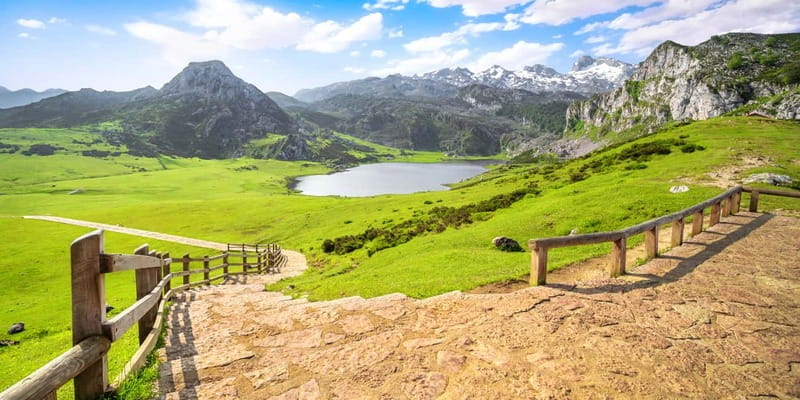
- Covadonga Lakes, Lake Ercina and Lake Enol with dedicated free time for actual viewing, not just a quick stop
- Basilica of Covadonga stonework and the famous sacred setting that ties together faith and local identity
- Guided Cangas de Onís so you get the meaning behind the cobblestones, bridge, and church details
- Lastres on the coast with views over the sea and toward the Picos de Europa from a high viewpoint
- Entrelagos and other scenic viewpoint stops that help you understand the geography as you travel
From Gijón’s Manín Bakery to Picos de Europa: How the day flows
The day starts at Panadería Manín on 17 de Agosto Street. The schedule is tight, so arrive about 15 minutes early so you don’t end up stressed before you’ve even left Gijón. From there, you’ll board an air-conditioned bus and head toward the first big scenery zone.
The flow is built around three “wow” areas: first, the wider Picos de Europa country and viewpoints; then the Covadonga zone with the lakes and sacred complex; and finally the seaside finish in Lastres, plus a stop in Cangas de Onís for food and local atmosphere. I like that this tour doesn’t treat lunch and walking as an afterthought. You get guided time where it counts, and you get enough free time to enjoy places at your own pace.
One practical note: the tour is about 11 hours. That’s a full day, so treat it like a plan you want to be fully present for. If you’re the type who hates transit time, this might feel long. If you’re happy settling in and using the bus ride for scenery and brief explanations, it’s a good match.
You can also read our reviews of more tours and experiences in Gijon.
Entrelagos viewpoint and the open country of Los Picos de Europa
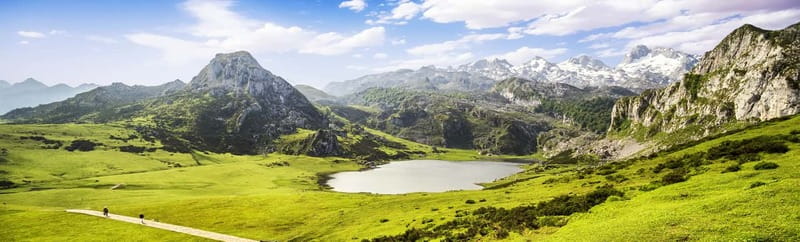
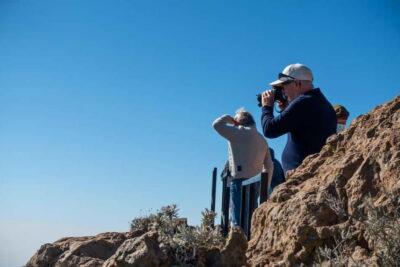
Before you reach Covadonga Lakes, you’ll get a sense of the broader national park setting. There’s a stop at Entrelagos viewpoint where you can take in the views that define this corner of Asturias—mountain shapes, valley lines, and the way the region’s terrain guides your eyes.
This portion matters more than it sounds. When you understand what you’re looking at—where the mountains fold, how the valleys open—you’ll appreciate the later stops even more. Covadonga isn’t just pretty water in the distance. It’s part of the whole glacial-and-karst story of the Picos de Europa area.
On most days, this is the “settle in and start noticing” stage. On less cooperative weather days, it can still help because viewpoints give you composition even when the lakes are harder to photograph.
Covadonga Lakes (Lake Ercina and Lake Enol): where the glacial water shows up
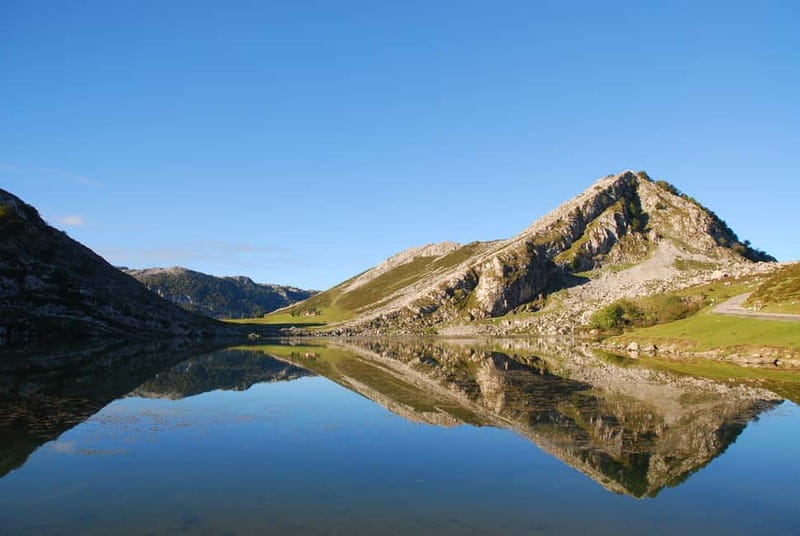
Your heart stop is Covadonga Lakes, specifically Lake Ercina and Lake Enol. You’ll get about 2.5 hours of free time here, which is a big deal because it means you can actually choose how you want to experience the place—slow photos, scenic stops, or just standing still and letting the view do the work.
These lakes sit inside the Picos de Europa setting, and the tour is careful to frame them as more than a viewpoint. Your guide provides context about the park and the Covadonga story, so you’re not just staring at scenery—you’re learning why this natural park has such an enduring pull in Asturias.
Also keep in mind one key contingency: on some days, access to the lakes can close due to snow and ice. If that happens, you’ll follow an alternative plan. It’s not something you can control, but it’s reassuring that the day isn’t a bust if winter conditions roll in.
Because this is a free-time window, it’s also when your comfort choices matter. Wear comfortable shoes, bring water, and don’t try to “power walk” if you’re not used to hills.
Basilica and Sanctuary of Covadonga: stonework and the holy cave setting
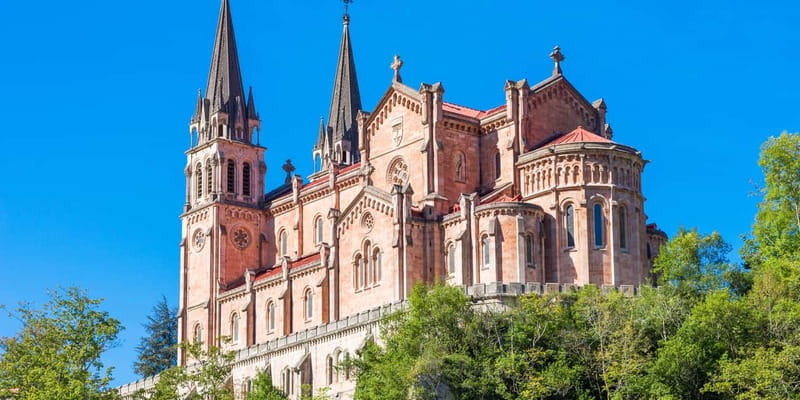
After the lakes, you move into the Covadonga complex: the Basilica and Sanctuary of Covadonga. You’ll take a walking tour here with your guide, which is one of the best parts of the day if you like explanations that connect art, faith, and local identity.
The basilica is known for its impressive stone masonry, built with stone extracted from the surrounding mountains. That detail isn’t decoration—it’s a statement. You’re seeing a building that literally uses the region’s materials, so it feels grown out of the land rather than dropped in from somewhere else.
Nearby, the sanctuary area leads into the sacred cave experience. The guide will tie in the symbolism of Covadonga for Asturias, including the idea of a sacred fountain associated with the Virgin of Covadonga. In practical terms, you’re going to a place where history and reverence are still active parts of the landscape, not just “old stones.”
One more reason this stop hits: your guide’s delivery can make the religious and historical layers easier to hold in your head. Names that come up in prior groups include guides like Santiago and Marta, often praised for clear storytelling and helpful explanations at the right moments.
The Sacred Cave of the Virgin of Covadonga: fountain, chapel, and waterfall below
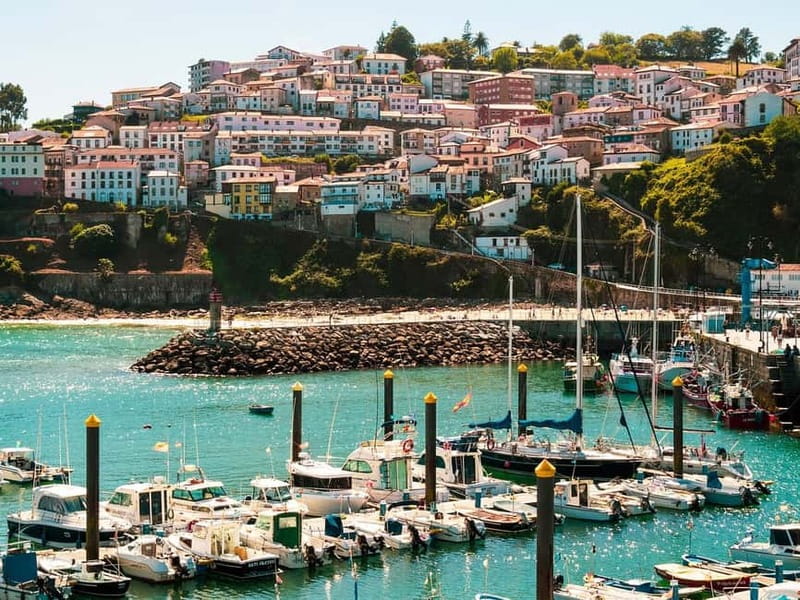
The sacred cave is the emotional centerpiece. This is where the tour shifts from nature admiration to something more personal and grounded in ritual.
You’ll visit the sacred cave of the Virgin of Covadonga and also admire the waterfall below. The cave setting is described as having a chapel inside the cave above a resurgence, with water moving through the area—so you get that rare mix of enclosed geology and sound-and-motion water below.
What I like about this part of the experience is that it’s easy to feel in your body, even if you don’t know the full religious context. The cave’s acoustics and the presence of water give you a sensory anchor. Then your guide adds meaning—explaining the connection to Asturias and the significance of key figures tied to Covadonga’s tradition.
If you’re traveling with kids or a group that gets bored by slow indoor time, this is worth it because it isn’t just “a room.” It’s an active, dramatic space, and it’s one of those stops where even short attention spans usually pay off.
Cangas de Onís: cider, Santa María, and the Roman bridge over the Sella
Next up is Cangas de Onís, the charming town stop that keeps the day from feeling like a straight line of monuments. You’ll have about 2 hours here, including a guided portion plus free time to wander and eat.
Cangas is where you can pivot from grand sights to daily life. You can choose from Asturian dishes and sip a local pour of cider (often described as a culine). I like this structure because it lets you match the pace to your appetite—order lunch, keep it simple, or browse for something that feels local without overthinking it.
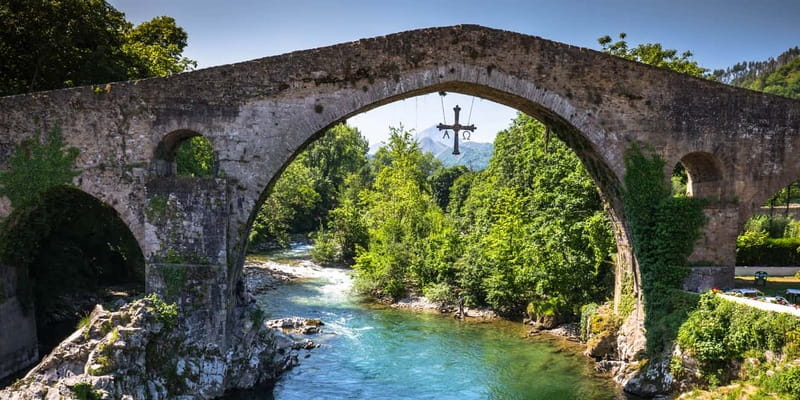
The guided segment includes the highlights that give Cangas its identity. You’ll see the cobbled streets, the Roman bridge that spans the Sella River, and the bell tower of the Church of Santa María. A nice extra detail: that Roman bridge is described as built in the 13th century, which helps you clock just how long this spot has been a crossing point for people moving through the region.
This stop also makes your day-trip more believable. You’re not just bouncing from attraction to attraction. You’re tasting what Asturias feels like between the big stops.
Lastres on the coast: sea and Picos views from the heights
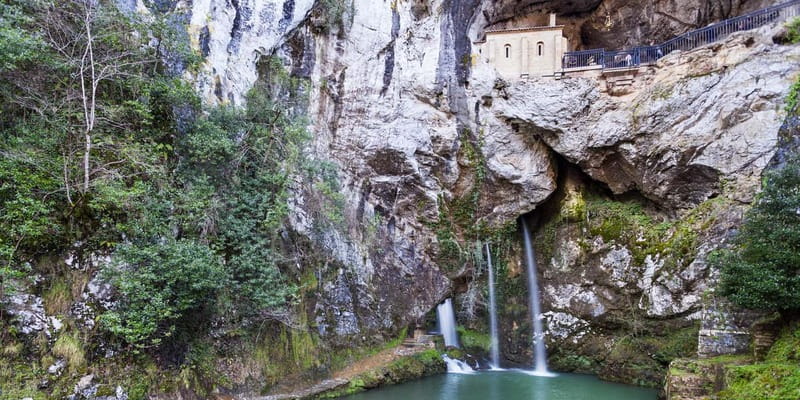
Finally, you reach Lastres, one of the most visually rewarding seaside villages in the region. You’ll enjoy a guided tour here and also have time to explore.
What makes Lastres special is the viewpoint aspect. The tour finishes with impressive views from the heights—sea views plus sightlines toward the Picos de Europa. That combination is rare. Many coastal towns only show you the ocean; Lastres adds the mountain frame in the distance, so the geography feels stitched together.
The tour also includes a return-route change along the Cantabrian coast, passing beaches like La Espasa, La Isla, and La Griega for panoramic views. This is a pleasant way to end the day: you’re not immediately rushed out of the scenery you’ve been collecting all day.
Lastres works best if you like quiet walking and photo stops. If you want museums or shopping as the main activity, you might find the time here a bit short. But for atmosphere and viewpoints, it’s a strong finish.
Pace, language, and what to pack for an 11-hour day
This is a moderate walking day. You’re moving through lakes areas (weather can affect conditions), walking during the basilica/sanctuary portion, and wandering towns like Cangas de Onís and Lastres. It’s not described as wheelchair-friendly, so plan around that if mobility is an issue.
Language is the other big practical consideration. The tour offers live guidance in English and Spanish, but group mix can affect what you actually hear. In smaller English-speaking groups, you may find the bus and explanations leaning heavily to Spanish, with English help limited or translated at key moments. If you want a truly English-first day, take this into account before you book.
Bring the basics: ID/passport, water, and comfortable clothes. If you’re going in colder months, assume layers will help because lake access can be affected by snow and ice—and even when access is possible, the air can feel different up in the park.
Finally, remember the tour runs on a schedule with limited wiggle room. That’s why arriving early at the Panadería Manín meeting point is so important.
Value check: is $55 good value from Gijón?
For about $55 per person, you’re paying for a full guided day across multiple top-tier sites in Asturias, without renting a car or figuring out parking and timing yourself. What makes the price feel more reasonable is that the cost includes:
- air-conditioned bus transport
- guide-led tours in key places like Cangas de Onís and Lastres
- walking time at the Basilica and Sanctuary of Covadonga
- viewpoint moments like San Roque and scenic lake panoramas
On paper, $55 sounds like “just transportation.” In practice, it’s also paying for the guide’s job: turning a set of stops into a connected story. That matters a lot at Covadonga, where the meaning behind the basilica and sacred cave isn’t automatically obvious from standing in front of it.
This tour is usually best value if you’re short on time in Gijón and want the region’s highlights in one shot. If you already have your own transport and you enjoy independent pacing, you might be able to build a similar itinerary for less. But if you want a guided, structured day that handles logistics for you, this price makes sense.
Should you book this Gijón to Covadonga and Lastres trip?
I’d book it if you want a one-day hit of eastern Asturias with minimal planning: Covadonga Lakes, the basilica/sanctuary, a proper town stop in Cangas de Onís, and a scenic finale in Lastres. The tour’s biggest strength is how it mixes nature, culture, and local atmosphere in a way that doesn’t feel rushed from stop to stop.
I’d hesitate if you’re very sensitive to walking, or if you need consistently detailed English commentary throughout the bus ride. If language flexibility would stress you out, plan for Spanish-heavy segments and bring your patience.
If that sounds workable, this is a strong day-trip choice—especially for first-time visitors who want the essentials of Asturias without the driving headache.
FAQ
How long is the tour from Gijón to Covadonga Lakes, Cangas de Onís, and Lastres?
The duration is about 11 hours.
Where do I meet the guide in Gijón?
Meet at Panadería Manín on 17 de Agosto Street. Arrive 15 minutes early since the schedule is strict.
What languages are offered during the tour?
The live tour guide is available in English and Spanish.
Is the tour mostly walking?
There is a moderate amount of walking, including walking during the Basilica/Sanctuary portion and time in towns.
Is the tour suitable for wheelchair users?
No. It is not suitable for wheelchair users.
What should I bring for the day?
Bring your passport or ID card, water, and comfortable clothes.
Are pets allowed on this tour?
No, pets are not allowed.
What happens if Covadonga Lakes are closed due to snow or ice?
On some days, access to the lakes may be closed. In that case, you’ll enjoy an alternative plan.