REVIEW · COSTA DEL SOL
Guided tour and olive oil tasting in Alhaurin el Grande (Málaga)
Book on Viator →Operated by Aceites Molisur · Bookable on Viator
Olive oil gets real when machines are running. At Aceites Molisur in Alhaurín el Grande, you see a 100-plus-year mill history lesson in the same space where the old gear still works, then carry that understanding straight into a tasting.
I like that it is not just talk. It is part museum, part factory walk, with a guide who makes the steps clear.
My second big win is the tasting of three Extra Virgin olive oils. You learn how to spot differences in aroma and nuance, and guides like Ana and Lucia keep it fun (yes, even for kids). One consideration: private transportation is not included, so you’ll want a plan for getting to the mill meeting point in Alhaurín el Grande.
In This Review
- Key Highlights You’ll Actually Notice
- Aceites Molisur in Alhaurín el Grande: the tour starts where the oil lives
- The olive oil museum and the centennial mill: the best kind of history
- The three-oil tasting: your shortcut to tasting like locals
- Walking through today’s production factory: from liquid gold to the real workflow
- The stainless-steel winery stop: why it sounds different and feels memorable
- Views and pacing: a short tour that still feels complete
- Price and value: is $35.09 a fair deal for what you get?
- Who this olive oil tour is best for (and who should skip it)
- Practical tips before you go
- Should you book this tour in Málaga?
- FAQ
- How long is the guided tour and olive oil tasting?
- How much does the tour cost?
- Where does the tour meet?
- Is bottled water included?
- Is private transportation included?
- What language is the tour offered in?
- What happens during the tour?
- What do you taste?
- How big is the group?
- Are pets allowed?
- What is the cancellation window for a refund?
Key Highlights You’ll Actually Notice
- Centennial mill machinery in action during a museum-style tour
- Three-oil tasting to train your nose and palate for Extra Virgin differences
- Small group feel with room to ask questions and hear the guide
- Modern production factory visit so you connect tradition to today’s process
- Spain’s only visit-able stainless-steel winery (as the tour describes it)
- Valley views that break up the indoor stops nicely
Aceites Molisur in Alhaurín el Grande: the tour starts where the oil lives
The experience meets at the Aceites Molisur shop on Carretera Coín, Churriana, A-404 (km 5). It is a practical start: you’re not being routed all over town. You begin right at the oil mill, which makes the whole day feel focused.
This is also one of those tours where timing and group size matter. It runs about 1 hour 30 minutes, and it caps at 25 travelers. That size is big enough to keep energy, but small enough that you’re not shouting over a crowd when the guide explains the process or asks you to pay attention to aromas.
English is offered, and you get a mobile ticket. So once you book, you can show up without digging through paper.
You can also read our reviews of more tours and experiences in Costa del Sol.


The olive oil museum and the centennial mill: the best kind of history
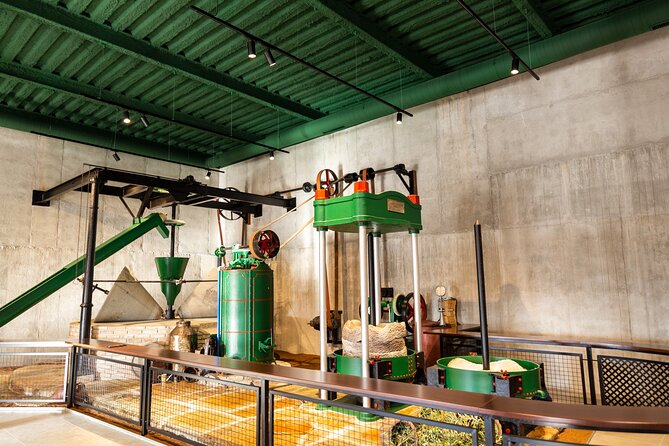
The first major stop is the oil museum. Here, you learn how olive oil was made more than a century ago. The real star is not a poster or a timeline. It is the machinery itself, restored and operated so you can actually connect the words to what the equipment does.
What I like about this approach is that it teaches cause and effect. You see how processing steps link to flavor, and you learn why older methods produced a different result than modern handling. This matters because olive oil quality is not just about labels. It’s about how the olives get pressed and treated along the way.
A tour like this also gives you vocabulary fast. Instead of only hearing that an oil is fruity or bitter, you get a framework for what you are tasting and why.
If you’re traveling with kids, this museum part usually lands well because the moving parts do the explaining for you. It is easier for young ones to stay engaged when there is action to watch and something hands-on-adjacent (even if they cannot touch) happening around them.
The three-oil tasting: your shortcut to tasting like locals
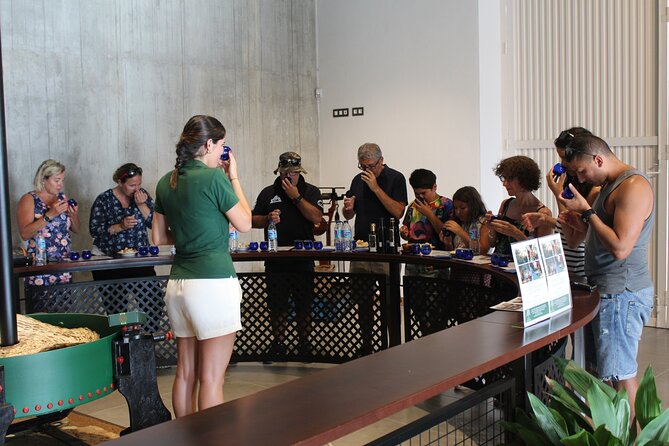
Next comes the tasting: you sample three olive oils and learn to tell the difference between Extra Virgin Olive Oil nuances.
Here is the practical value. Once you taste three in a row, your brain stops treating olive oil like one flavor and starts hearing a range. You’ll notice how aromas can shift, and you’ll begin to understand that “good olive oil” is not one taste. It is a set of sensory traits.
Pay attention to the guide’s cues. They’ll help you notice aromatics (things you might describe as green, fruity, or more pungent) and then connect those cues back to what you saw in the process. That is the connection the tour is aiming for: history plus senses, not just “try this, it’s tasty.”
Also, since it is a guided tasting, you’re not stuck guessing whether your opinion is correct. A good guide will steer you toward how to evaluate without making it feel like a test.
I especially liked the energy the guides bring. Ana is described as engaging and entertaining, while Lucia is praised for clear explanations. Either way, you should expect a tasting that feels like a shared lesson, not a silent sip-and-scroll.
Walking through today’s production factory: from liquid gold to the real workflow
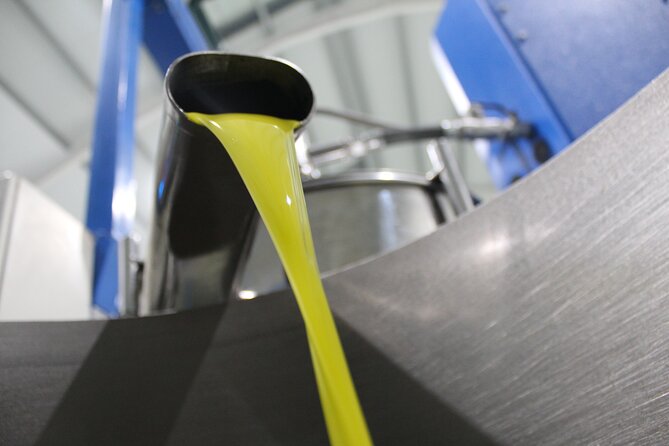
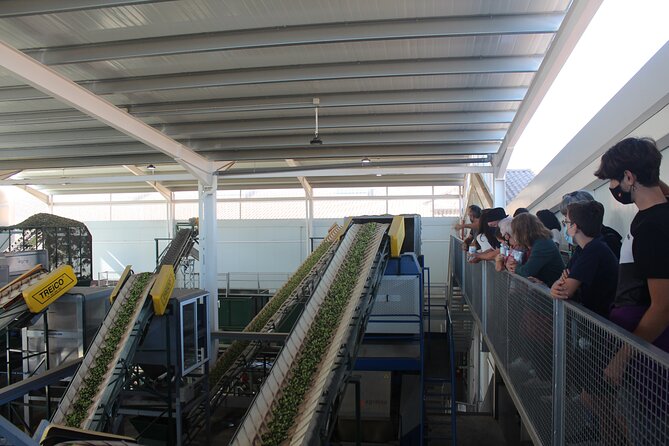
After the museum and tasting, you shift gears to the current production facility. This is where you see how the mill makes its olive oil now, and it helps everything you learned earlier snap into place.
This part is valuable for a simple reason. You are not only learning the romance of olive oil. You are seeing the workflow that turns olives into bottled product. That makes it easier to understand why fresher handling and modern processing steps can affect the final taste.
One nice touch is that you also get valley views during the tour. It breaks up the industrial spaces with something wider and calming. Even if you’re focused on food, a little scenery keeps the pacing human.
The stainless-steel winery stop: why it sounds different and feels memorable
The tour continues with a visit to the winery located on site. The guide frames it as an exclusive stainless steel winery that can be visited in Spain.
You may wonder why wine is included in an olive oil day. The answer is that stainless steel and careful handling are common ground in food and drink quality. Even if you are not a wine person, this stop works because it adds another lens on production discipline: clean equipment, controlled processes, and the idea that handling choices shape what you get in the glass.
It’s also a change of pace. After machinery, tasting, and factory space, the winery stop gives you a different kind of context without turning the tour into a random detour. It stays linked to the same overall story: how “craft” becomes product.
You can also read our reviews of more guided tours in Costa del Sol

Views and pacing: a short tour that still feels complete
At about 90 minutes, this is not a half-day excursion. It is tight. You do a lot without feeling dragged through ten rooms.
The pacing seems built around three learning moments:
- First, see the traditional methods in the museum.
- Then, use your senses during the three-oil tasting.
- Finally, connect to today’s production and see the on-site wine facility.
Because it is compact, it is a good option if you’re staying on the Costa del Sol and you don’t want to spend half your day commuting. Still, you should keep your plan flexible. This is not a “drop by whenever” visit. It starts at the shop and follows a set flow.
Price and value: is $35.09 a fair deal for what you get?
The price is listed at $35.09 per person for about 1 hour 30 minutes, with bottled water included. That might sound modest, and it is hard to argue against the value once you look at the package.
Here’s why it feels like a strong value:
- You get a guided walk through both historical and modern production spaces.
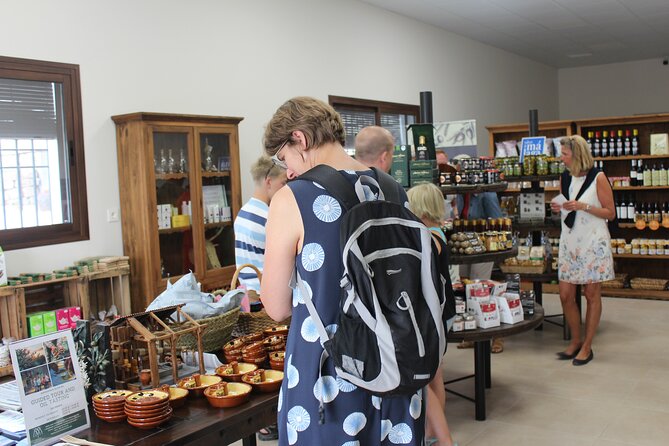
- You receive a structured tasting of three oils, not a token sample.
- You also get the winery stop and valley views, all in one loop.
- The group size stays limited to 25 travelers, which usually improves the quality of the explanations.
The only real cost “catch” is transport. Private transportation is not included, so your total out-of-pocket depends on how you reach the meeting point in Alhaurín el Grande.
If you are driving, the price feels like a straightforward local food experience. If you are relying on a bus or taxi, it still may be worth it, just do the math so you’re not paying more for getting there than for the tour itself.
Who this olive oil tour is best for (and who should skip it)
This tour fits best if you:
- Want a guided olive oil experience without turning it into a long workshop
- Enjoy food lessons you can use at home, especially tasting and aroma recognition
- Travel with kids and want something active that holds attention
- Prefer small-group tours where you can ask questions
It is also a solid pick for couples and friends who want a “one activity day” that feels local and not touristy. The combination of museum + tasting + factory walk usually clicks with people who are curious but not trying to become certified olive oil experts.
You might skip it if you’re only looking for a quick self-guided shop stop. This is a guided tour with multiple steps, so if you hate structured timing, it may feel a bit scheduled.
Practical tips before you go
Bring comfortable shoes. You’ll be moving through factory-style spaces and museum areas.
Go with a curious mindset. Olive oil tasting works best when you slow down. If you rush, you’ll miss the aroma differences the guide is trying to help you hear.
And if you care about what you buy at the end: plan to spend a little time in the shop after the tour. The experience is set up so you can pick up products you liked once you’ve learned what to look for.
Should you book this tour in Málaga?
If you want a focused, high-value olive oil experience in the Málaga area, this is one of those bookings that makes sense. The biggest reason is the mix: centennial mill history, a real guided three-oil tasting, and a look at modern production plus the stainless-steel winery stop. It teaches you the story, then trains your senses, then shows you the process.
Book it especially if you’re traveling with family or you like hands-on food learning without committing to a long day. The only real reason to hesitate is transportation to Alhaurín el Grande if you don’t have an easy ride planned.
FAQ
How long is the guided tour and olive oil tasting?
It lasts about 1 hour 30 minutes.
How much does the tour cost?
The price is $35.09 per person.
Where does the tour meet?
You meet at Aceites Molisur, Carretera Coín, Churriana, A-404, km5, 29120 Alhaurín el Grande, Málaga, Spain.
Is bottled water included?
Yes. Bottled water is included.
Is private transportation included?
No. Private transportation is not included.
What language is the tour offered in?
The tour is offered in English.
What happens during the tour?
You visit an oil museum to learn about olive oil production more than 100 years ago, then do a guided tasting of three olive oils, and finish with a visit to the current production factory. You also visit the winery on site.
What do you taste?
You taste three olive oils, focused on learning differences in Extra Virgin Olive Oil aroma and nuance.
How big is the group?
The tour has a maximum of 25 travelers.
Are pets allowed?
No. Pets are not permitted.
What is the cancellation window for a refund?
You can cancel for a full refund up to 24 hours before the experience starts.
If you want, tell me your travel dates and how you’re getting to Alhaurín el Grande (car, bus, taxi). I can help you sanity-check timing so the tour fits smoothly into your Málaga plan.