REVIEW · MALAGA
Malaga city game: Operation Mindfall
Book on Viator →Operated by Playday Malaga · Bookable on Viator
Malaga becomes a mystery map in two hours. Operation Mindfall is a city game that uses augmented reality and a story-led mission to guide you through central sights, including Malaga Cathedral and the Alcazaba area.
I love that it works for families and parties and keeps everyone thinking together, with riddles that mix easy and hard without turning frustrating. I also like that the tour includes iPad hire and a kit of helpful gadgets, so you’re not hunting for tech once you meet up.
The main catch is the time limit: the 120-minute mission can make you move fast, so if you want long sightseeing pauses, you may feel a bit rushed. And if the iPad setup feels clunky at first, give yourself a minute to get comfortable before the puzzles get serious.
In This Review
- Key highlights at a glance
- Operation Mindfall in Malaga: a 2-hour city game with real momentum
- What the iPad kit and augmented reality really change for your sightseeing
- Meeting point at C. Ángel Ganivet and how to start without wasting time
- Stop 1: Malaga Cathedral—where observation becomes part of the puzzle
- Stop 2: Alcazaba—moving from landmark focus to citywide clues
- Stop 3 in central Malaga—tying the mission together
- The biggest trade-off: time pressure vs. slow sightseeing
- Who this fits best: families, parties, and puzzle lovers
- Value for money: why $24.19 can feel like a good deal
- Weather and pacing: a practical guide to making it work
- Should you book Operation Mindfall in Malaga?
- FAQ
- How long is Operation Mindfall in Malaga?
- What is the price per person?
- What’s included with the tour?
- Where does the game start?
- What stops are included during the game?
- Is this activity private?
- Does the experience depend on weather?
Key highlights at a glance
- AR-guided problem solving that ties the clues to what you’re standing near
- iPad hire plus a gadget kit included, so you can focus on the game
- Built for teamwork rather than solo wandering
- Two big stops on the map: Malaga Cathedral and the Alcazaba area
- A host who adds local value, with recommendations shared during the experience
Operation Mindfall in Malaga: a 2-hour city game with real momentum
If you like escape rooms but also like seeing a city, this is a smart hybrid. Operation Mindfall is set up like a mission. You’re working toward a goal, with a clock running, and clues that ask you to look around and connect dots with your group. That structure does something useful in Malaga: it turns your walk into purposeful movement, not aimless drifting.
The story adds flavor. In the 1950s, a secret organization develops a dangerous poison that becomes a worldwide threat. You and your friends are chosen to find the antidote and stop the evil forces behind it. It’s classic mystery framing, but it’s also practical: the plot gives you reasons to visit specific parts of central Malaga, and the game keeps you from overthinking logistics.
This is also a good way to get traction when you’re not sure how to plan your day. Instead of deciding what to see first, you start at the meet point and follow the mission. You’ll still walk around on your own feet, but with the game doing the heavy lifting of pacing.
And yes, it’s family-friendly in the way that matters. The puzzles are designed to be solvable as a group, and the difficulty feels mixed. You’re not stuck doing one impossible riddle for 40 minutes. The time box is what creates the excitement.
You can also read our reviews of more city tours in Malaga

What the iPad kit and augmented reality really change for your sightseeing
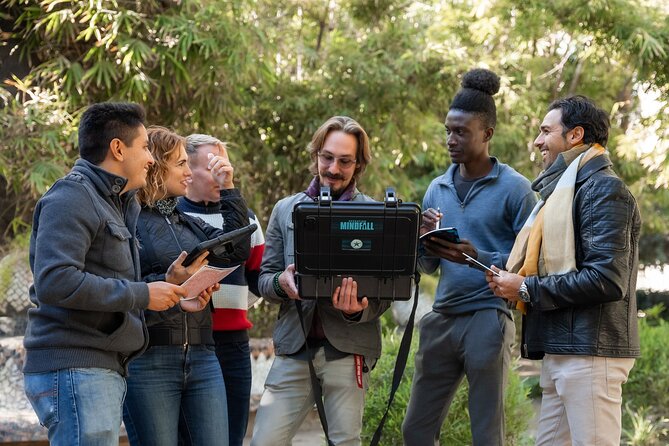
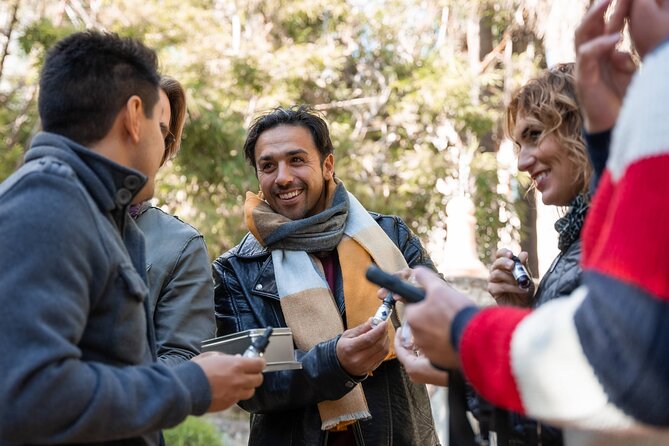
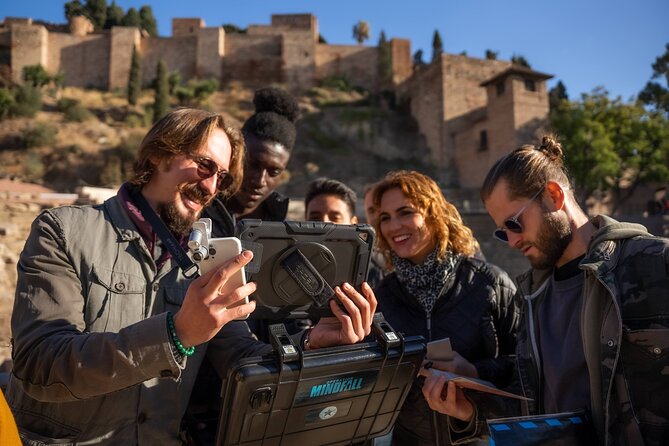
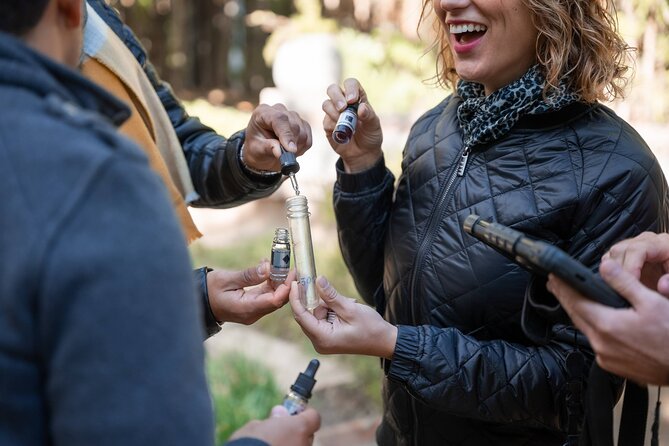
The big practical advantage here is that the tech is handled for you. You get iPad hire as part of the experience, plus a kit full of useful gadgets. That’s not just a nice-to-have. It changes how you experience the mission.
With the iPad provided, you don’t need to:
- bring your own device with compatible settings,
- guess how the AR works,
- or burn time figuring out an app while you’re standing in the street.
You still have to pay attention, but the friction is lower. Reviews also flag that the iPad can be a bit tricky at times, especially early on. My advice: when you start, don’t sprint into the first clue. Take a short moment to practice how to read prompts and interact with the kit, even if it feels obvious. That one minute can save you stress later.
About the AR: this game doesn’t just use phone screens for show. Augmented reality is used to make the mission feel connected to the streets around you. In plain terms, you’re not wandering randomly with a map and hoping you find the right spot. You’re prompted to look for answers in your immediate environment.
That’s where the “creative, brave, open minded” angle turns into something real for you. The puzzles ask you to be observant. They reward teamwork. And they keep you moving through Malaga’s center in a way that feels guided, not scripted museum-style.
Meeting point at C. Ángel Ganivet and how to start without wasting time
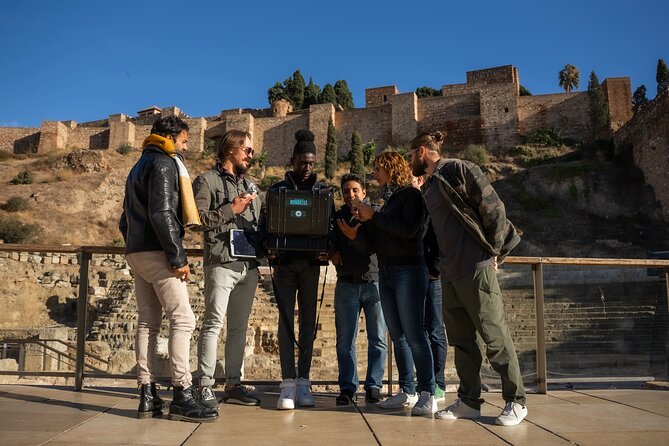
Your start point is C. Ángel Ganivet, 1, Distrito Centro, 29005 Málaga, Spain. The good news is that the meeting area is near public transportation, so you’re not forced into a taxi-or-bust plan.
Because the mission is time-limited (about 120 minutes), your first few minutes matter. Here’s how I’d set you up for a smooth start:
- Arrive a few minutes early and get the group together.
- Assign roles fast: who reads clues, who checks the screen, who watches surroundings.
- If the iPad requires any setup, do that right away so you’re ready before the first challenge.
This kind of city game works best when your group stays organized. If everyone tries to solve every clue alone, you’ll slow down. If you split tasks and stay calm, the mission starts to feel almost like a moving scavenger hunt with a strong narrative.
Also, this activity is private for your group. That matters. You’re not competing with strangers for attention, and you can move at a pace that fits your group’s comfort level.
Stop 1: Malaga Cathedral—where observation becomes part of the puzzle
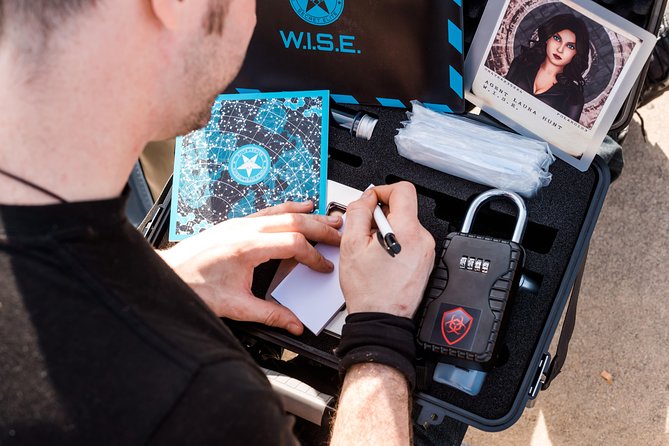
Your first major area is the Malaga Cathedral stop. This is a smart opener because big landmarks give you clear reference points. You’re not guessing where you are in the city. You’re anchoring your location while the game asks you to do something more active: look around with puzzle intent.
In a game like this, the cathedral area is a perfect testing ground. Even if you’re not spending hours sightseeing, it gives you architectural and street cues you can use to answer riddles. And that’s the key: you’ll get a feel for how the game wants you to think—scan, connect, confirm.
The drawback? Time is time. Since the game is mission-driven, you may not get the slow, “let’s just linger here” experience you’d want if you were doing a traditional sightseeing day. If your priority is deep exploration of the cathedral interior or long photo stops, treat this first stop more like a guided puzzle zone than a full cultural visit.
Still, it’s a great way to orient yourself. You’ll likely come away with a better sense of where the cathedral sits within the central city grid, which helps for whatever you do after the game ends.
Stop 2: Alcazaba—moving from landmark focus to citywide clues
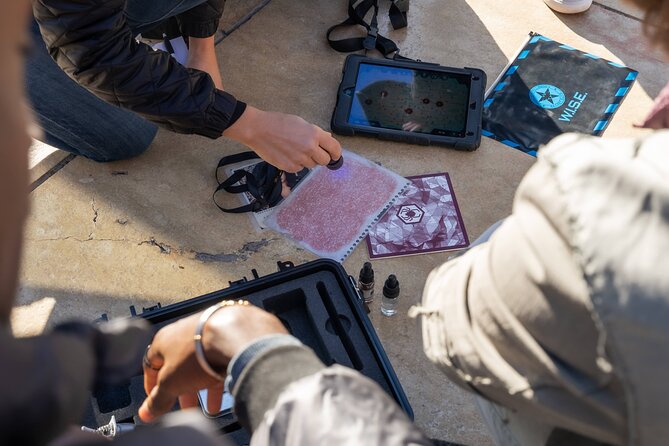
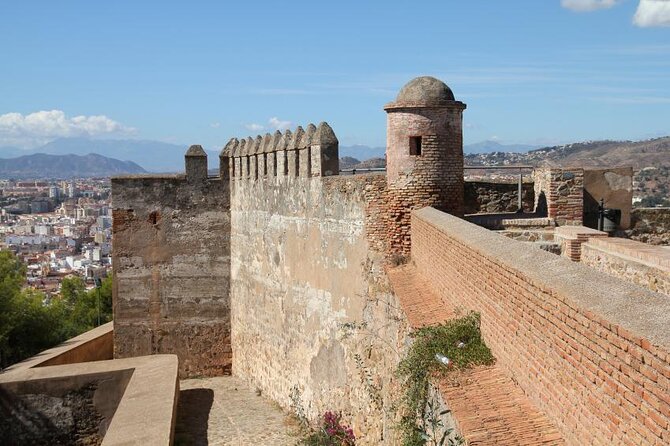
Next up is the Alcazaba area. This is where the game shifts from landmark orientation to broader city problem solving. The mission encourages you to look around and use your surroundings as evidence. Some clues can be difficult, but that’s part of the fun. The challenge level is balanced—enough to make you think, not so hard that you feel stuck.
I like this stop for another reason: Alcazaba tends to make people naturally slow down and scan their surroundings because it has that “area” feeling rather than just one building front. That matches how these puzzles work. You’re not just reading text. You’re searching the city for information.
If you’re traveling with teens or adults who enjoy mystery games, this stop is likely where they’ll lean in hardest. If you’re traveling with younger kids, it’s where teamwork pays off most, because you can divide who checks the screen and who spots visual hints.
One more practical note: since the whole mission runs about 2 hours, your time at this stop won’t turn into an extended detour. Use the time you have wisely. If a clue feels stuck, don’t let one person hog the iPad. Swap roles. A fresh set of eyes often solves it.





Stop 3 in central Malaga—tying the mission together
Your final game stop is listed as Malaga (a broader third segment rather than one named monument). That’s useful to know, because it means the last stretch likely feels more like navigating and consolidating clues than bouncing between two big postcard stops.
This is where you’ll typically feel the momentum of the mission: you’ve learned how the game communicates with you, you’ve practiced reading the prompts, and now you’re combining what you’ve found into the final solution path.
Because the game includes augmented reality cues and puzzle steps, the last segment often rewards people who stayed engaged throughout, not only those who got lucky with early answers. You may see why the mission is designed for groups. One person can notice something; another person can interpret it; someone else can confirm using the device prompts.
The time constraint becomes real here. You don’t have infinite chances to retry. So stay fluid. If the clue doesn’t click immediately, move on and come back if you’re allowed to. The best teams keep the mission moving without panicking.
The biggest trade-off: time pressure vs. slow sightseeing
Let’s be honest. A city game has a built-in tension. You’re here to explore, but you’re also here to finish the mission.
One review point that really matters for your expectations: due to the time constraints, you might miss some city sights if your plan is to do long, classic sightseeing stops during the game. The game is designed around completion and puzzle progress, not leisurely roaming.
So here’s how I’d manage it:
- If you want to see a lot, do this game earlier in the day, then spend the rest of your time on what you liked most.
- If you want to slow down and linger, pair this with lighter plans after, not a packed museum itinerary.
Also consider the iPad experience. The equipment is included and staff provide support, but the device can be difficult to use at times. Don’t interpret that as a deal-breaker. Just treat it like any new tech: give it a minute, and you’ll likely be fine.
Who this fits best: families, parties, and puzzle lovers
This is a standout pick for:
- families who want something interactive (not just another walking tour),
- parties of friends who enjoy teamwork games,
- people who like escape rooms or mystery-style entertainment,
- anyone who wants a fun way to cover central Malaga without overplanning.
The mission is not for solo players. The theme and instructions emphasize sticking together. That makes sense because puzzles depend on group input. If you travel solo, you’ll probably have a tougher time unless you’re comfortable joining decisions quickly.
One of the best signals from the experience is how it supports group problem solving. Reviews mention that riddles are a mix between easy and hard. That’s the sweet spot. If everything is easy, it gets boring fast. If everything is hard, it becomes stressful. Here, you’re challenged just enough to feel rewarded.
And if you’re traveling with multiple generations—like parents plus siblings—that’s a great match too. The game creates shared moments. It improves teamwork because you’re literally coordinating your attention.
Value for money: why $24.19 can feel like a good deal
At $24.19 per person for roughly two hours, the value depends on what you want from your day.
You’re paying for:
- a structured city route through central Malaga,
- AR-based puzzle play,
- iPad hire and a gadget kit included,
- and a private group format where your experience doesn’t get diluted by strangers.
If you’ve ever paid for a guided activity and then discovered you were mostly just walking, this is different. The mission gives you a reason to look at details you’d otherwise skip. You’re not just paying for access; you’re paying for a framework that makes the walk more interesting.
The included gear also matters. Gadget hire can add up in Spain if you’re trying to recreate this yourself. Here, it’s bundled.
And finally, the host experience adds value. One review specifically praises Aymen as friendly and helpful, with extra Malaga recommendations offered during the experience. That’s not required for the game to work, but it’s a real travel win. You finish the mission with ideas for what to do next.
Weather and pacing: a practical guide to making it work
This activity requires good weather. If the skies don’t cooperate, it may be canceled and you’ll be offered a different date or a full refund. Plan with that in mind. If you’re in Malaga during a rainy stretch, check the forecast and keep flexibility.
For pacing, remember:
- You have about 120 minutes.
- You’ll be moving between the Cathedral area and the Alcazaba area, then into the final city segment.
- The clock can change how long you spend at any one spot.
So bring the right mindset. Treat it like a game you play in a real city. If you try to force it into a traditional “tour first, game second” format, you’ll feel friction.
Should you book Operation Mindfall in Malaga?
Book it if you want an active, family-friendly way to explore central Malaga that doesn’t require heavy planning. The combination of iPad hire, AR clues, and teamwork-based puzzles makes it a strong choice for people who like mystery games and who enjoy figuring things out together.
Skip it (or at least adjust expectations) if your top priority is slow sightseeing and long time in museums or interiors. The time limit means you may move past things quickly. Also, if you’re extremely sensitive to tech setup and want everything effortless, the iPad can be a minor irritation at first.
If you fall somewhere in the middle—open to a bit of game energy but still curious about Malaga—this is exactly the kind of experience that turns a regular walk into a story you’ll actually remember.
FAQ
How long is Operation Mindfall in Malaga?
The game lasts about 2 hours (approximately 120 minutes).
What is the price per person?
It costs $24.19 per person.
What’s included with the tour?
You get a mobile ticket. The experience also includes iPad hire and a kit full of useful gadgets, plus augmented reality elements as part of the game.
Where does the game start?
The meeting point is at C. Ángel Ganivet, 1, Distrito Centro, 29005 Málaga, Spain.
What stops are included during the game?
The game includes stops at Malaga Cathedral and the Alcazaba, plus another segment within Malaga. It ends back at the meeting point.
Is this activity private?
Yes. Only your group will participate.
Does the experience depend on weather?
Yes. It requires good weather. If it’s canceled due to poor weather, you’ll be offered a different date or a full refund.