REVIEW · PICASSO S BIRTHPLACE MUSEUM
Malaga: Picasso’s Birthplace Museum Entrance Ticket
Book on GetYourGuide →Operated by Distributor: GetYourGuide Tours & Tickets GmbH · Bookable on GetYourGuide
Picasso begins in a modest Malaga house. With this Museo Casa Natal de Picasso entrance ticket, you’ll walk through the artist’s birthplace, connect the story to what he drew and made later, and add a rotating exhibition to the mix.
I love how close it feels: the birthplace house setting turns a famous name into a real person with real family spaces. I also like the audio guide approach, because it helps you spot themes without needing to be an art expert.
One thing to consider: this is a small museum. Expect about an hour or less, so it’s best as a focused stop, not a full-day Picasso substitute.
In This Review
- Key highlights to plan around
- Picasso’s Birthplace Museum in Malaga: what makes it worth your time
- Entering Museo Casa Natal de Picasso: location and first impressions
- The 9-room route: how the museum tells Picasso’s story
- Ground floor: family life and the start of an artist
- First floor: works by Picasso and Jose Ruiz Blasco
- Thematic rooms: symbols you’ll start recognizing
- What you’ll actually see: mediums, mementos, and early sketches
- Temporary exhibition: Picture of Picasso (until 28 April 2024)
- Audio guide tips (and a small translation oddity)
- Picasso meets contemporary art: 3,500 works by 200+ artists
- Timing in Malaga: how long to stay and when to go
- Value for money at about $4.71: what you get per minute
- Who should book this ticket (and who might not love it)
- Should you book the Picasso Birthplace Museum ticket?
- FAQ
- Where is the Museo Casa Natal de Picasso?
- How long should I plan for the visit?
- What’s included with the entrance ticket?
- Are there headphones requirements for the audio guide?
- What languages are available for the audio guide?
- Does the ticket help me avoid waiting in line?
- When can I enter for free on Sundays?
- What’s the last time I can enter?
- Is the ticket refundable?
Key highlights to plan around
- 9 rooms in Picasso’s birthplace home: built-in pacing, not a long maze.
- Early life objects in plain view: from baby items to shoes he used to learn to walk.
- Malaga as the theme engine: the Mediterranean city is explained through motifs and symbols.
- Works across multiple media: sketchbooks, lithographs, ceramics, and more.
- Contemporary art add-on: 3,500 works by 200+ artists, including graphic art by Miró, Bacon, Ernst, and Matta.
- Audio guide in many languages: English, Spanish, French, German, Italian, Chinese.
Picasso’s Birthplace Museum in Malaga: what makes it worth your time
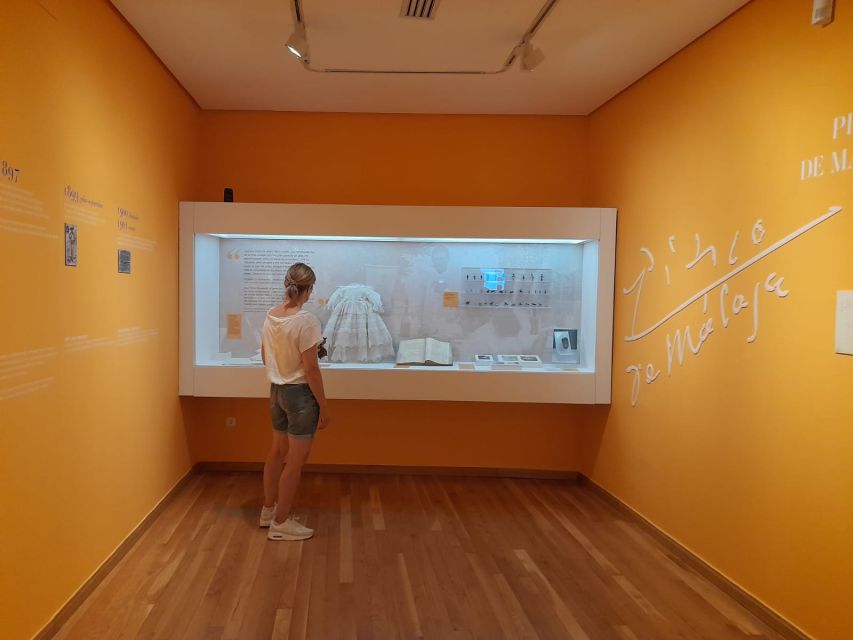
If you’re visiting Malaga and want Picasso to feel human, start here. The Museo Casa Natal de Picasso (the house where he was born) gives you the rare combo of place + objects + explanation, all in one tight visit.
You’re not walking through a massive warehouse of paintings. You’re moving through a home-like museum with 9 rooms, where you can trace how childhood surroundings and family life fed the artwork Picasso later became known for. It’s a different experience than seeing Picasso “at his peak.”
And for the price point (listed around $4.71 per person), the museum is a strong value if you want a meaningful stop that won’t eat your whole day.
Entering Museo Casa Natal de Picasso: location and first impressions
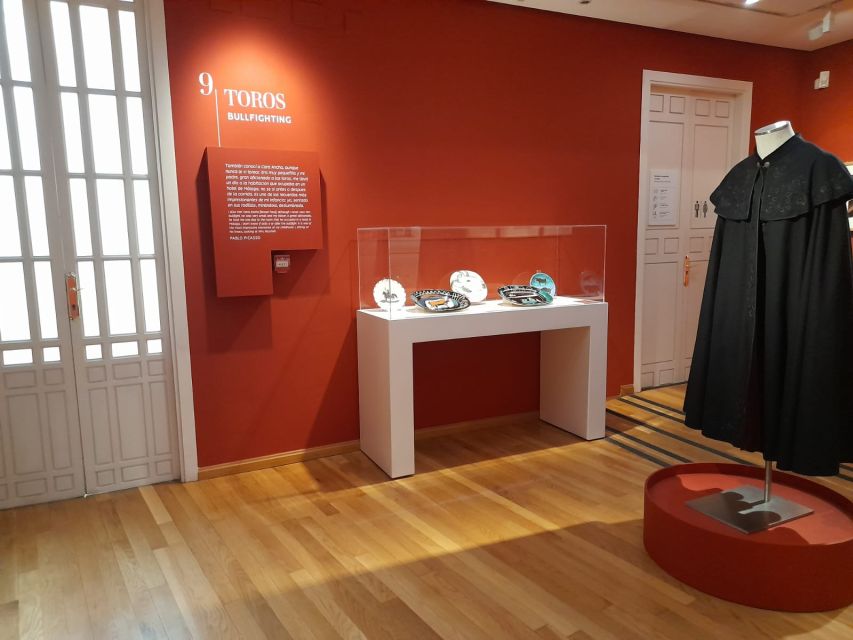
You’ll find the museum at Plaza de la Merced 15, 29012 Malaga. It’s an easy add-on because this part of Malaga is built for strolling: you can start your walk in the plaza area and fold the ticket visit in without complex transit planning.
This ticket includes skip the ticket line, which matters in tourist-heavy towns. It’s still small inside, but getting in quickly helps you keep your day feeling relaxed instead of rushed.
Also note the museum is wheelchair accessible, so you can plan this as an on-foot afternoon without worrying that the building will block you. And since the museum is self-paced, you can match your visit style: a fast scan with the highlights or a slower walk with the audio guide.
The 9-room route: how the museum tells Picasso’s story
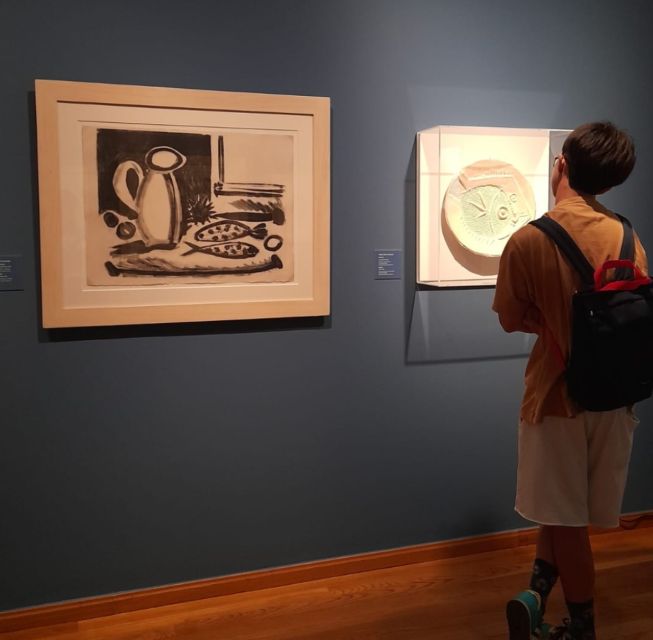
The museum is laid out to feel chronological and thematic. As you move through the rooms, the explanations keep pulling you back to Malaga—how the city, light, people, and everyday symbols show up again and again.
Ground floor: family life and the start of an artist
You’ll see early-life items that bring a surprising level of detail. The museum includes objects from Picasso’s early years, including something as personal as a baby shirt and the shoes he learned to walk in. That kind of item makes the story feel less like a textbook and more like a family archive.
There are also photographs and portraits that help you understand the family context. It’s not just about Picasso the genius—it’s about Picasso the kid growing up with influences around him.
First floor: works by Picasso and Jose Ruiz Blasco
On the first floor, the museum focuses on works connected to Picasso and his father, Jose Ruiz Blasco. Seeing the father’s presence in the museum flow matters because it frames training and environment, not just raw inspiration.
If you like learning how talent is shaped, this is one of the museum’s best parts. You come out with a more grounded idea of how Picasso developed, not only what he produced later.
Thematic rooms: symbols you’ll start recognizing
Throughout the rooms, the museum doesn’t just list facts. It connects themes to what Picasso kept returning to—like nudes, bullfighting, doves, and the Mediterranean.
You’ll also see references to how training and early life connect to the way Picasso built his visual language. The idea is simple: Malaga isn’t just a backdrop. It’s a recurring influence you can track.
What you’ll actually see: mediums, mementos, and early sketches
One reason this museum works well is the variety. You’re not limited to one type of artwork.
Here’s what you can expect to encounter (depending on what’s on display in the rooms): sketchbooks, lithographs, ceramics, and other formats that show Picasso developing ideas over time. It’s a helpful way to see how an artist can think in drafts, not just in final masterpieces.
The museum also includes personal mementos and documentary-style elements like the library area mentioned in the experience description. That kind of detail is especially satisfying if you like museums that explain the how, not only the what.
And if you’re comparing it mentally to other Picasso stops in Spain: this one often feels more intimate because it’s tied to his early material world. You’re seeing the beginnings and the habits that later turned into famous styles.
Temporary exhibition: Picture of Picasso (until 28 April 2024)
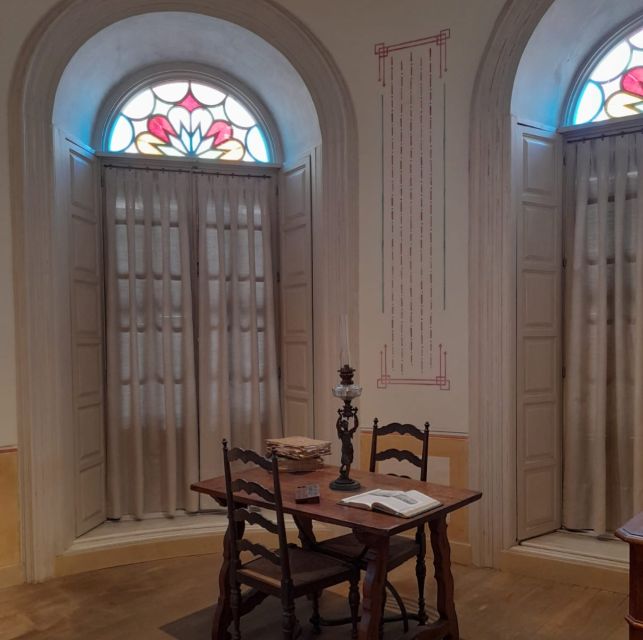
On top of the permanent exhibition, your ticket gives access to a temporary show called Picture of Picasso (listed as until 28 April 2024).
What’s smart here is the framing. This temporary exhibition looks at Picasso through the lens of how his image and ideas spread through other creators and popular culture. It references mediums like books and the press, social networks, advertising, photography, comics, cinema, television, and popular music.
So even if you’re not hunting for one specific painting, you’re getting a sense of how Picasso became Picasso in public imagination. It’s a practical, modern angle that helps the museum feel current.
Audio guide tips (and a small translation oddity)
Your ticket includes an audio guide, and you’re given language options: English, Spanish, French, German, Italian, Chinese. In a museum this size, the audio guide is an efficient way to get the story beats without stopping to read every label.
One practical note: the experience instructions say to bring headphones. Audio guide headphones aren’t always included in the package, so pack a simple pair or be ready to borrow/use what’s available at the site (but only the data here says headphones are required from you).
Also, there’s a fun little caution from the museum’s theme language: one motif term can land a bit off depending on translation. In some versions, Paloma gets rendered as pigeon instead of dove (and that matters because the dove motif is tied to symbolism). It’s not a deal-breaker, but if a detail seems weird, it may be the language line—not the art.
If the audio guide voice style distracts you, switch strategies: read key room labels for the main themes, and use the audio only when a room feels dense. You’ll still get the “what this means” payoff.
Picasso meets contemporary art: 3,500 works by 200+ artists
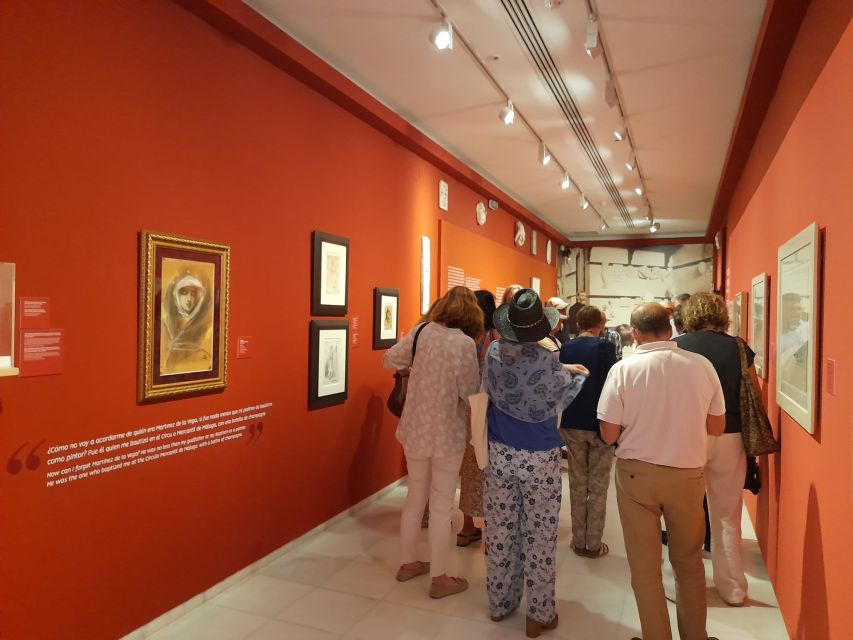
This museum has an extra layer that surprised many people who only expect Picasso paintings. In addition to the birthplace story, it contains over 3,500 examples of contemporary art by more than 200 other artists.
A major part of this contemporary section includes graphic art by Miró, Bacon, Ernst, Matta, and others. The museum also represents contemporary artists from the 1950s to the present day.
Why this is valuable for you: it changes the museum from a single-artist experience into a “Picasso’s influence” experience you can see through other people’s work. If you’re a fan of how Picasso’s ideas echoed through later styles, this is one of the best ways to make that connection without leaving the building.
It’s also a good reality check. Picasso’s story gets framed as larger than him. That helps you walk away with a wider sense of what Picasso set in motion.
Timing in Malaga: how long to stay and when to go
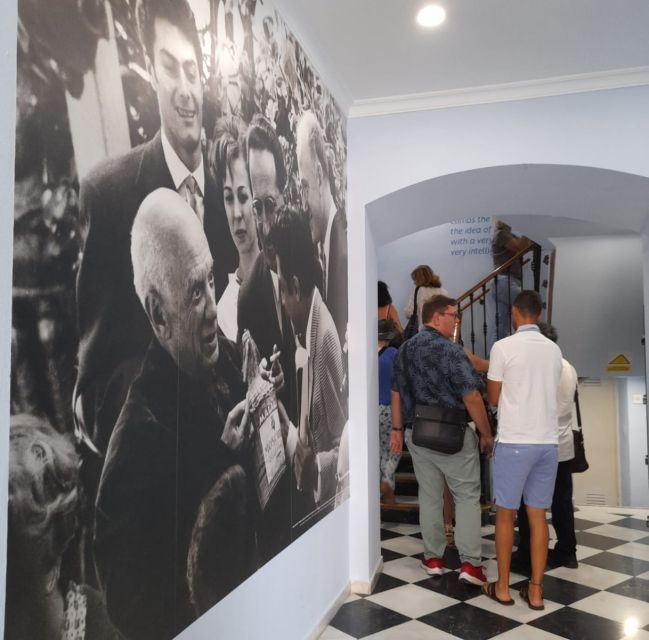
This museum is small, and that’s a plus. Many visitors find they can finish in about an hour or less, especially if you use the audio guide at a comfortable pace rather than word-for-word listening.
If you want a smooth afternoon, plan for 60 to 75 minutes total. That gives you time for the 9 rooms, the key early-life objects, and the temporary exhibition without feeling like you’re sprinting.
A few timing details that matter:
- Last entry is 30 minutes before closing. Keep that in mind if you’re finishing lunch or squeezing in a sunset walk.
- The museum is free every Sunday from 4:00 PM until closure. If your schedule matches, you can stretch your budget and still get the full experience.
- Your ticket is valid 1 day from first activation, so don’t activate it too early if you’re still planning when you’ll enter.
Value for money at about $4.71: what you get per minute
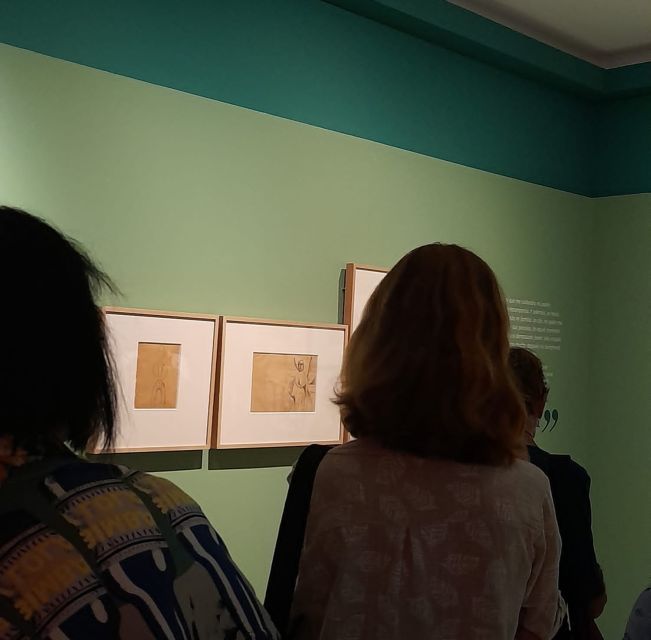
At roughly $4.71 per person, this ticket is one of the better “short-but-meaningful” museum values in Malaga.
You’re paying for four things:
1) the birthplace house setting,
2) early-life objects and family context,
3) access to works across media in the permanent exhibition,
4) the temporary exhibition plus an audio guide.
For comparison, if you’re deciding between a quick Picasso stop and a larger Picasso museum elsewhere in town, this one often wins if you don’t want a long appointment. You get strong focus: early life, Malaga influences, and symbolic motifs explained in a way that feels usable.
One more angle: the contemporary art section gives you extra breadth without adding time pressure. If you like variety, this keeps the visit from feeling like a single-note biography.
Who should book this ticket (and who might not love it)
This ticket is a great fit if you:
- want a short, high-impact Picasso experience
- like museums that explain motifs like bullfighting, doves, nudes, and Mediterranean influences
- already saw another Picasso museum and want the birthplace angle
- care about how an artist is shaped by home life and surroundings, not only by famous masterpieces
You might not love it as much if you’re the type who wants hundreds of paintings and a long, all-day gallery marathon. This place is about focus and context. It’s quick on purpose.
Should you book the Picasso Birthplace Museum ticket?
Yes, if you’re looking for a smart Malaga stop that connects Picasso to his beginnings. For the price, you get a real sense of place, audio-guided explanations, early objects that make the story feel personal, and a temporary exhibit that looks at Picasso’s image in modern culture. Add the contemporary art section, and you’ll leave with a bigger picture than a standard “look at art” visit.
If your schedule is tight, book it and plan around last entry. If you’re in Malaga on a Sunday, time it for 4:00 PM free entry to stretch your budget. This is the kind of ticket that pays off fastest when you treat it like a focused hour well spent.
FAQ
Where is the Museo Casa Natal de Picasso?
The museum is at Plaza de la Merced 15, 29012 Malaga.
How long should I plan for the visit?
Plan for about an hour or less. The museum is laid out across 9 rooms, and it’s designed for a self-paced visit.
What’s included with the entrance ticket?
Your ticket includes entrance to the permanent exhibition and access to the temporary exhibition. An audio guide is also included.
Are there headphones requirements for the audio guide?
Yes. The experience instructions say to bring headphones.
What languages are available for the audio guide?
The audio guide is available in English, Spanish, French, German, Italian, and Chinese.
Does the ticket help me avoid waiting in line?
Yes. The ticket includes skip the ticket line.
When can I enter for free on Sundays?
The museum is free every Sunday from 4:00 PM until closure.
What’s the last time I can enter?
Last entry is 30 minutes before closing.
Is the ticket refundable?
No. The activity is listed as non-refundable.