REVIEW · EL ESCORIAL
San Lorenzo de El Escorial: Monastery and Site Guided Tour
Book on GetYourGuide →Operated by Todo Tours Gestion SL · Bookable on GetYourGuide
El Escorial turns history into something you can see. This San Lorenzo de El Escorial guided visit walks you through one of Spain’s biggest Renaissance monuments, tied to the Spanish Golden Age and Philip II. You’ll also see why the site is recognized as a UNESCO World Heritage attraction, not just a pretty stop on a day trip list.
What I liked most is how the tour focuses on the building’s meaning, not just its rooms. I love that you go inside key spaces like the basilica, the Battle Hall, the pantheon, and the palatial areas, then connect it all to the ideas of the era. A second big win is the guide quality: people have praised guides such as Alejandro, Isabella, and Marta for clear explanations, good humor, and turning facts into something you can actually hold in your head.
One possible drawback: this is a lot of ground in only 2 hours, so the flow can feel a touch rushed if you want to linger. And if you’re arriving a bit early, you’ll want to keep your eyes open for the meeting setup, since at least one guest wished there were an easier way to spot the start.
In This Review
- Key Points Before You Go
- Why El Escorial Is More Than a Monastery Stop
- The 2-Hour Plan: What You’ll See (and What You Might Miss)
- Entering the Monastery: Getting Your Bearings Fast
- Basilica: The Sacred Core You’ll Understand Better With Context
- Battle Hall and Pantheon: How Power Shows Up in Rooms
- Palatial Rooms: Seeing the Court Side of the Complex
- The Royal Library: The Philip II Knowledge-Power Connection
- Why the Guide Matters So Much Here (Based on Real Experiences)
- Price and Logistics: Is $47 Good Value?
- Who This Tour Is Best For
- Should You Book the San Lorenzo de El Escorial Guided Tour?
- FAQ
- FAQ
- How long is the guided tour?
- What’s included in the $47 ticket?
- Where do I meet the guide?
- What time should I arrive?
- What language is the live guide?
- Is the tour wheelchair accessible?
- What should I bring, and what is not allowed?
- Is cancellation free?
Key Points Before You Go
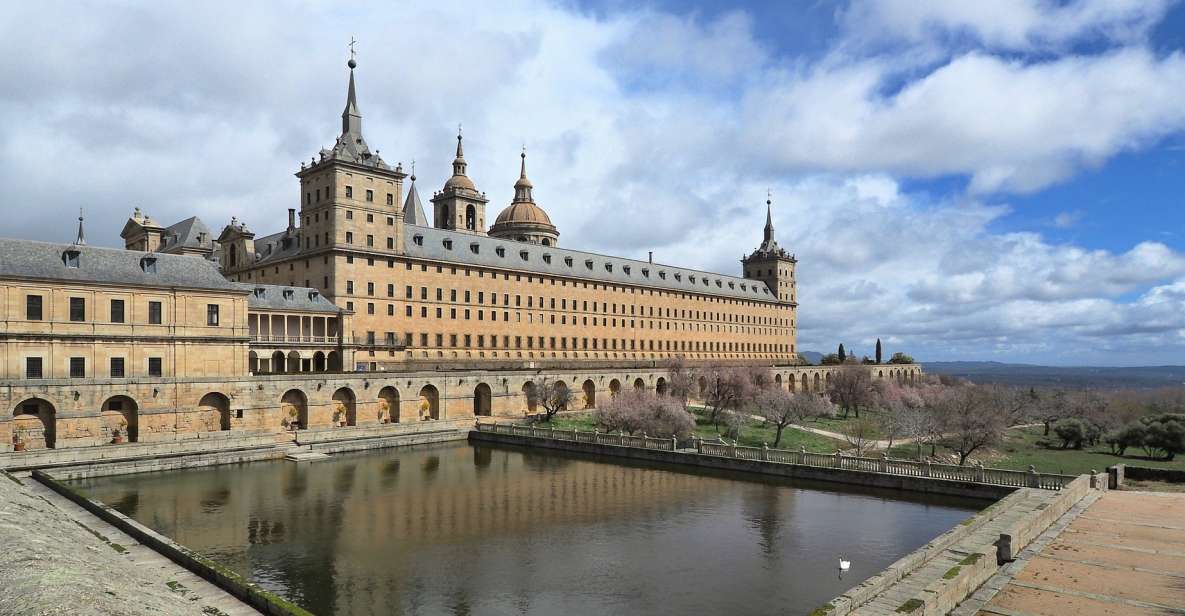
- UNESCO World Heritage: A major Renaissance complex, not just a church visit.
- Spanish Golden Age + Philip II: You’ll learn how the reign shaped the place.
- Royal Library focus: You’ll see the library as a visible statement of power and ambition.
- Must-see interior areas: Basilca, Battle Hall, pantheon, and palatial rooms are all part of the circuit.
- Guide-driven clarity: Reviews highlight guides like Alejandro, Isabella, and Marta for making it easy to understand.
- Short duration: At 2 hours, you’ll see the essentials—but plan to move.
Why El Escorial Is More Than a Monastery Stop
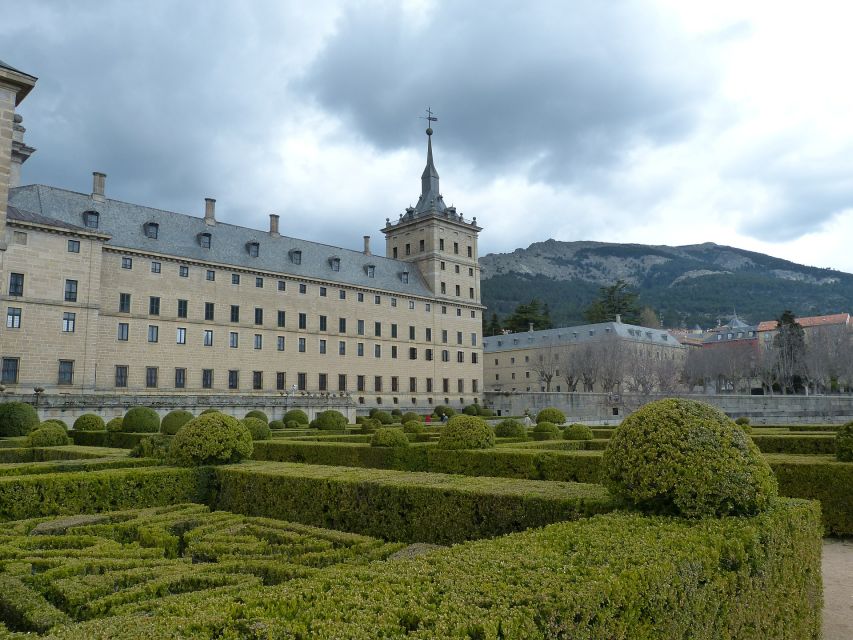
El Escorial is one of those places where architecture is doing the talking. From the moment you’re guided inside, you’re not just looking at stone. You’re seeing how Spain under Philip II tried to express power, religion, and ideology through design.
The tour’s angle matters. Instead of treating the site like a checklist, it frames what you’re looking at as part of the Spanish Golden Age. That gives you a lens for the whole visit. When you move from one section to the next—sacred spaces to halls to royal living areas—the links feel intentional rather than random.
I also appreciate the emphasis on the site’s recognition as a UNESCO World Heritage attraction. That matters because it hints at what you’re really walking through: a large, culturally important complex with staying power. You can feel that scale once you’re inside, even with only a couple of hours.
You can also read our reviews of more tours and experiences in El Escorial.

The 2-Hour Plan: What You’ll See (and What You Might Miss)
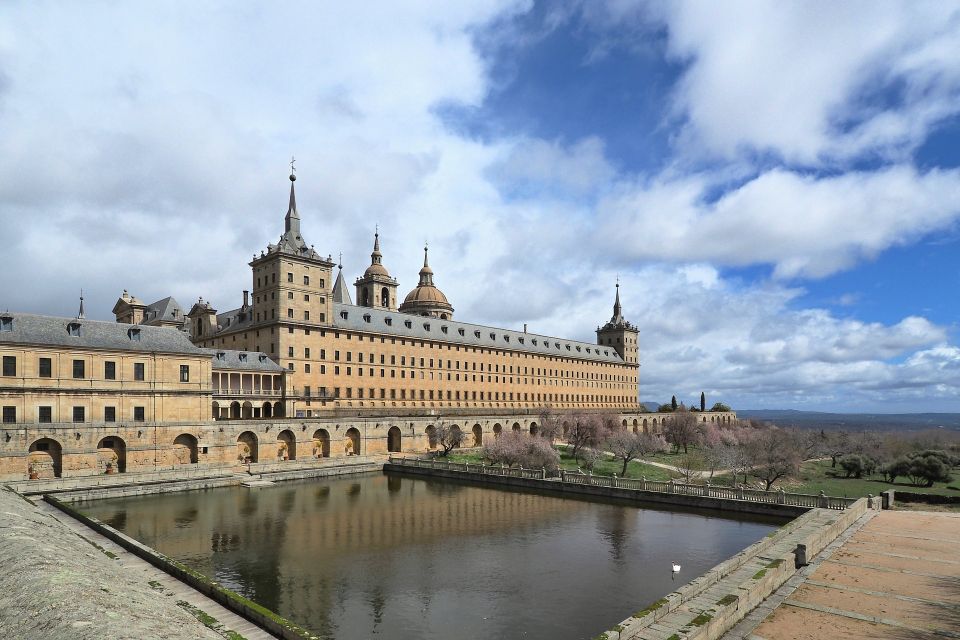
This tour is built around an interior-focused loop, designed to cover the monument’s essential spaces in 2 hours. That’s a good rhythm if you’re visiting from Madrid and want to spend your limited time wisely.
Here’s the core sequence you should expect:
You’ll explore the 16th-century monument’s inside spaces, starting with the major religious and ceremonial areas, then moving through halls and royal sections. The tour doesn’t stop at the basilica type of highlights. It also takes you into the parts of the complex that connect to the court and the state.
If you’re the type who loves to read every plaque and linger over details, I’d mentally plan for a “see the essentials deeply enough” experience. One review noted the flow felt a little rushed on a second visit. That’s the trade-off with a structured, time-limited guided tour.
Entering the Monastery: Getting Your Bearings Fast
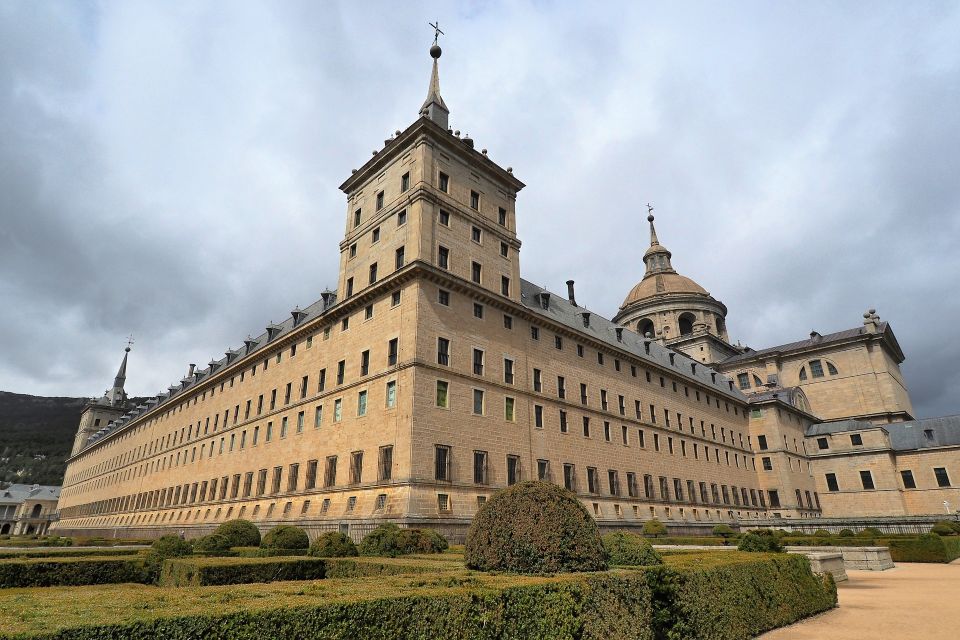
El Escorial can feel like a maze once you’re on your own. That’s not a knock on the place—it’s just the reality of a large, structured complex.
The guided format helps you get your bearings fast. You’re not wandering between major rooms wondering what you’re looking at. Your guide gives you the connections as you go, which makes the monument easier to follow and less tiring.
A practical note: the meeting point is at the monastery access door—the main entrance with the flag of Spain at the top. You’ll exchange your voucher there, and the guide will be waiting with a blue umbrella from Todo Tour. Arrive about 15 minutes early so you can swap in calmly and start on time.
Basilica: The Sacred Core You’ll Understand Better With Context
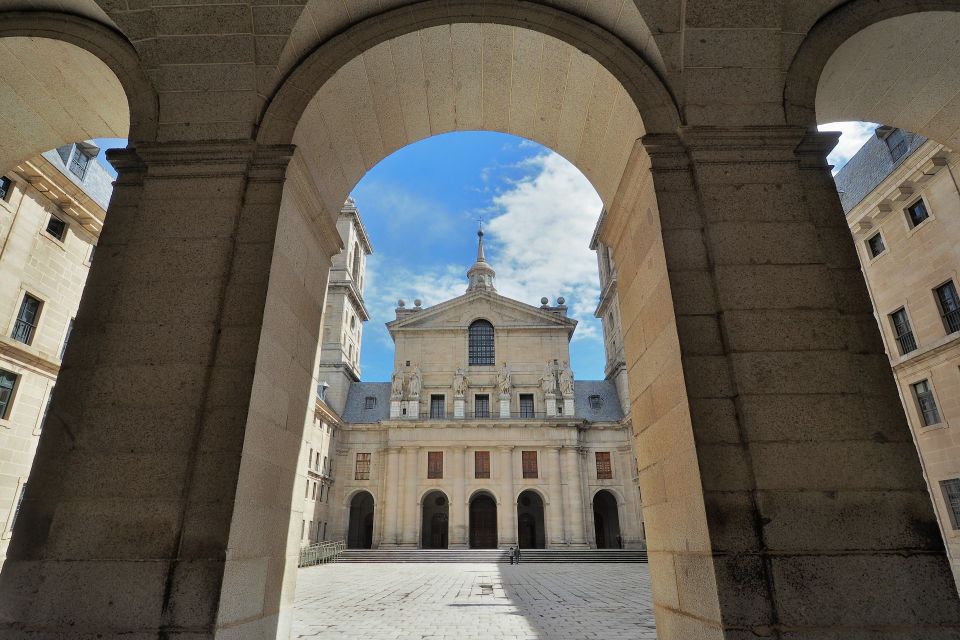
One of the first big draws is the basilica. It’s the kind of space that can look impressive without necessarily explaining why it mattered. That’s where the tour’s historical frame helps.
During the visit, you’ll connect the basilica area to the broader Spanish Golden Age ideals that the monument represents. That makes the space feel less like an isolated religious stop and more like a centerpiece of the whole concept behind the complex.
What to watch for is not just visual impact, but meaning. You’re learning how the reign of Philip II fits into the story of the monastery. Even if you’re not a deep-history person, the guide’s job is to make the themes click: faith, authority, and cultural aspiration in one setting.
Battle Hall and Pantheon: How Power Shows Up in Rooms
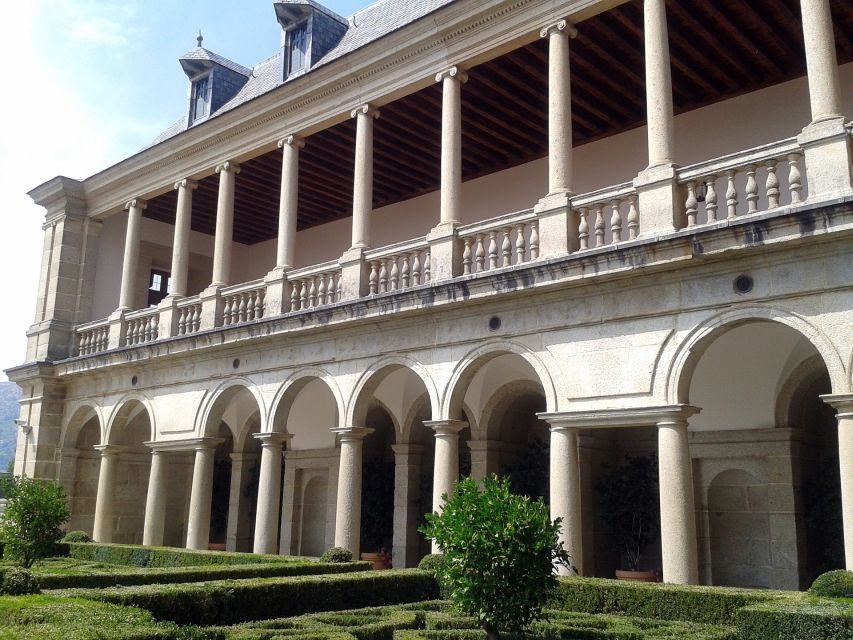
The tour includes the Battle Hall and the pantheon, and those two stops help explain why El Escorial is often described as more than a monastery.
You’ll move from religious space into areas that feel ceremonial and state-like. That change in tone is exactly what makes these sections important to the overall experience. They show how the complex reflects the Spanish Golden Age mindset, where public identity and private authority can live side by side.
This is one of the reasons I think guided time is worth it here. If you walk in without a framework, you may recognize the grandeur but miss the point. With a guide, the architecture becomes readable. You can start to feel why these rooms were part of a single, larger idea.
Palatial Rooms: Seeing the Court Side of the Complex
The tour also takes you through palatial rooms—another essential stop if you want to understand the monastery as a royal project, not only a spiritual one.
This is where the monument’s Renaissance character comes through. The guide’s explanations tie what you’re seeing to the period’s aspirations and to the ideological role the complex played. You’re basically getting a guided translation of what the building was meant to communicate to the world.
I like that this isn’t presented as a separate attraction tacked on at the end. It’s integrated into the same story. That makes the visit feel coherent rather than scattered.
The Royal Library: The Philip II Knowledge-Power Connection
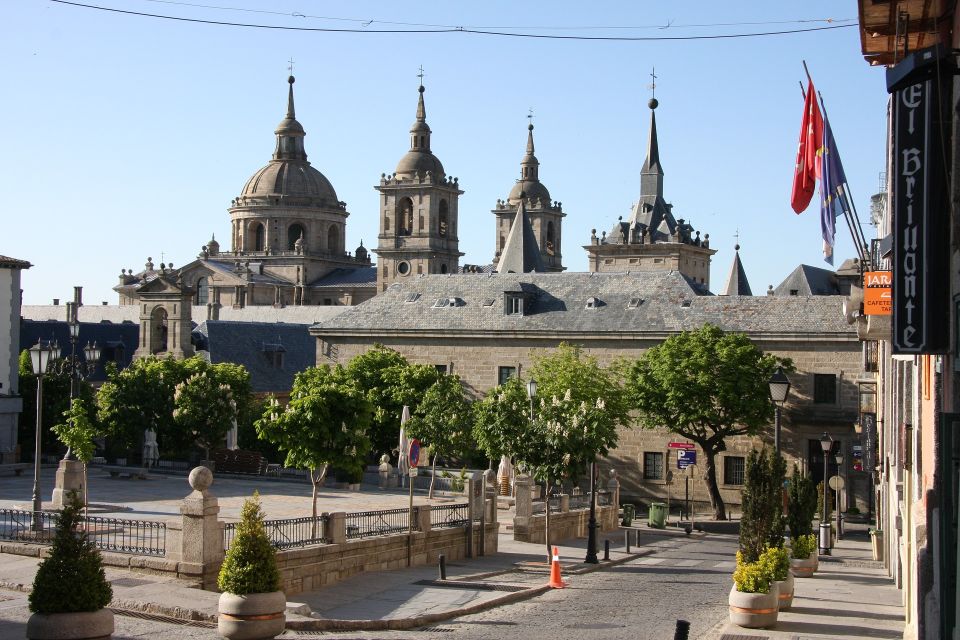
If you only remember one part of the tour, make it the Royal Library. It’s presented as a major highlight for a reason: Philip II collected volumes there to expand his humanistic knowledge.
This detail changes how you look at the library. It’s not just a room full of books. It’s a visible statement of power, taste, and intellectual ambition. In a monument where many spaces speak in religious and ceremonial language, the library shows a different side of the same goal.
During your visit, you’ll understand why this library belongs inside the story of the Spanish Golden Age. It’s the Renaissance idea of learning tied to authority, all housed in the same imposing complex. If you enjoy the intersection of culture and politics, this is the stop that tends to hit hardest.
Why the Guide Matters So Much Here (Based on Real Experiences)
In a place like El Escorial, the guide can make or break your experience. Here, that’s very clear from the way guests describe their tours.
People have praised guides such as Alejandro, Isabella, and Marta for being professional, witty, and easy to follow. Several reviews emphasize that the explanations were clear and well-prepared, with a strong focus on facts rather than guesswork or wandering stories. Others specifically called out English ability for at least some guides, like Isabella, which is useful if you’re not fluent in Spanish.
One review also compared guided touring with self-guided visits, pointing out that solo exploring can leave you confused and walking longer in a maze-like layout. That matches what I’d expect in a complex like this: a good guide shortens your learning curve.
If you’re choosing between this tour and self-guided entry, I’d pick the guided option unless you’re extremely confident navigating big historic buildings. You’ll get more meaning per minute.
Price and Logistics: Is $47 Good Value?
At around $47 per person for a 2-hour guided tour with entry included, the value mostly comes down to one question: do you want explanation, or do you want to wander?
For me, this price feels fair because you’re paying for:
- A live guide covering multiple interior highlights
- Entry ticket access to the monastery areas
- Time saved on figuring out what matters most inside the complex
If you’re the type who can read well without help, you might feel this is pricier than a self-paced plan. But if you want the Spanish Golden Age and Philip II context connected to specific spaces like the Battle Hall and pantheon, the guided structure makes sense for the cost.
Logistics are straightforward:
- You must exchange your voucher at the meeting point.
- The guide holds a blue umbrella from Todo Tour at the access door with the Spanish flag above it.
- Bring a passport or ID card.
- Dress appropriately: short skirts, sleeveless shirts, and swimwear are not allowed.
- Leave luggage or large bags behind; and keep voices down since making noise isn’t permitted.
One small consideration: a guest wished there were a clearer sign identifying the start and meeting point. So give yourself a few extra minutes to orient, and don’t assume every detail is obvious the moment you arrive.
Who This Tour Is Best For
This is a strong fit if you want:
- A structured way to see major interior spaces in a short visit
- Context about the Spanish Golden Age and Philip II
- A focus on the Royal Library as more than a decorative stop
You’ll also enjoy it if you like architecture explained in plain language, with humor and a human pace. The reviews make it clear that guides bring personality—one guest singled out Marta’s sense of humor and preparation, and others praised Alejandro and Isabella for energy and professionalism.
It’s also a good choice if you’ve ever felt lost in large historic complexes. The guided format gives you a storyline, not just a route.
Should You Book the San Lorenzo de El Escorial Guided Tour?
Yes, I’d book it—especially if this is your only chance to visit El Escorial. The combination of a Renaissance monument, the Spanish Golden Age framing, and the library focus gives you more than “big building photos.” You come away understanding what the complex was meant to communicate during the reign of Philip II.
Do you need it? If you’re a hardcore self-guided museum walker who loves reading labels and doesn’t mind slower exploration, you could do it independently. But if you want meaning, direction, and a smooth path through key rooms in 2 hours, this guided tour is the smart move.
The only real reason to hesitate is if you strongly dislike feeling on a schedule. With a time-limited route, you won’t get endless lingering in every corner.
FAQ
FAQ
How long is the guided tour?
It lasts 2 hours.
What’s included in the $47 ticket?
The tour includes a guide and an entry ticket to the Monastery.
Where do I meet the guide?
Meet at the access door to the monastery (the main entrance with the flag of Spain at the top). You’ll exchange your voucher there, and the guide will be waiting with a blue umbrella from Todo Tour.
What time should I arrive?
Arrive 15 minutes before the activity starts.
What language is the live guide?
The live tour guide is Spanish.
Is the tour wheelchair accessible?
Yes, it’s listed as wheelchair accessible.
What should I bring, and what is not allowed?
Bring a passport or ID card. Luggage or large bags are not allowed, and short skirts, sleeveless shirts, swimwear, and making noise are also not allowed.
Is cancellation free?
Free cancellation is available up to 24 hours in advance for a full refund.