REVIEW · VALENCIA
Valencia in bici con guida turistica italiana madrelingua
Book on GetYourGuide →Operated by MO'bike · Bookable on GetYourGuide
Valencia looks different when you ride it. This tour blends Italian-speaking guidance with lots of photo stops, so you’re moving through centuries without feeling rushed. My favorite part is how it strings together the old quarter, UNESCO-grade landmarks, and the calm glide through the Turia Gardens, while still keeping you safe with proper bikes and gear. One thing to consider: you’ll need to feel comfortable on a bicycle since the ride is essential to the experience.
What you’re really buying is momentum with context. In about 150 minutes, you get an easy-flow route that hits the classics—Mercado Central, La Lonja de la Seda, Valencia Cathedral, Torres de Serranos—then shifts into green, then into the futuristic City of Arts and Sciences. If you like first-day orientation and you’re traveling solo, as a couple, or with a small group, this format is a strong value.
In This Review
- Key highlights to notice before you pedal off
- Starting at MO’bike near Plaza del Ayuntamiento
- Mercado Central to La Lonja: the old city’s power couple
- Plaza de la Virgen and Plaza de la Reina: where Roman clues meet big churches
- Torres de Serranos: your best panoramic pay-off
- Turia Gardens on bike: the calm, green reset
- City of Arts and Sciences: futuristic Valencia, same easy riding
- Ending near Playa de la Malvarrosa (and what to do with your extra time)
- Price and value for a 150-minute guided bike tour
- Who this tour fits best (and who should choose something else)
- Should you book this Valencia bike tour with Mo’bike?
- FAQ
- How long is the Valencia bike tour with Mo’bike?
- What language is the live tour guide?
- Where does the tour start?
- Are bikes and safety equipment included?
- Do I need to know how to ride a bicycle?
- Is hotel pick-up or drop-off included?
- Are museum entrances included?
- Where does the tour finish?
- Can I climb Torres de Serranos?
- What should I bring?
Key highlights to notice before you pedal off
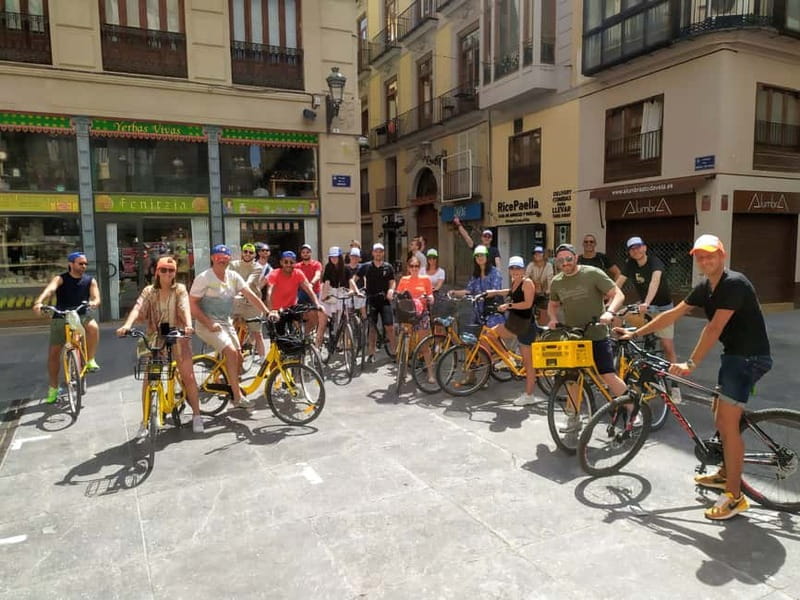
- Italian live guide energy: guides like Marco and Michelangelo are repeatedly praised for keeping the ride fun and informative.
- Photo-friendly stops: you can pause often to frame landmarks the right way, not just snap-and-go.
- 2,000 years in one circuit: the route moves from Roman-era remnants to modern Valencia’s signature architecture.
- Turia Gardens bike lanes: a genuine break from traffic, with a long, relaxed stretch through the park.
- Big “wow” factor at City of Arts and Sciences: you reach it by bike, not by trying to navigate it at peak time.
- Beach-area finish with options: it ends near Playa de la Malvarrosa, and you may have the option to keep the bike later (for an extra fee).
Starting at MO’bike near Plaza del Ayuntamiento
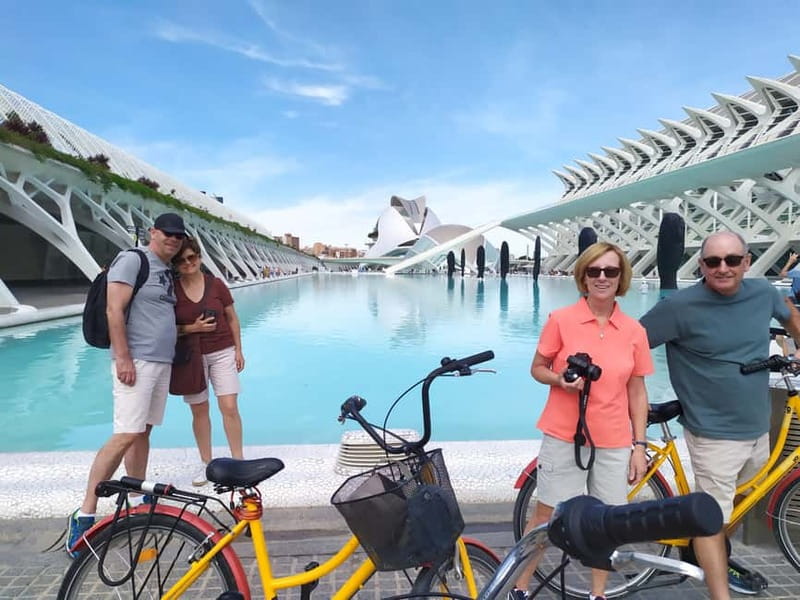
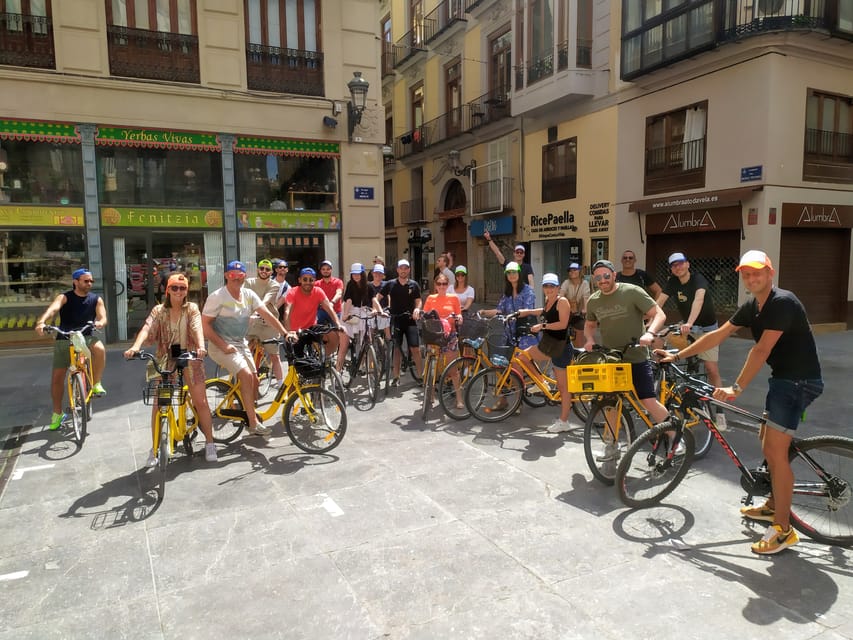
The meeting point is MO’bike, at Carrer del Músic Peydró, 7, which is right in the central zone. You’re listed as about 2 minutes from Plaza del Ayuntamiento and roughly 2 minutes from Mercado Central, so you won’t waste time crossing half the city just to start.
I like that the shop doubles as a bike workshop, which usually means the staff know bikes inside out. The tour includes high-quality bicycles and safety equipment, so you’re not showing up worrying about whether you’ll get something sketchy. You’ll also get insurance coverage as part of the experience, which helps take the edge off when you’re riding in an unfamiliar city.
Plan for practical things: wear comfortable clothes and shoes you don’t mind getting a little warm in. The tour is 150 minutes, not a two-hour sprint—but it’s still long enough that flip-flops and fancy sandals can turn annoying fast.
You can also read our reviews of more tours and experiences in Valencia.



Mercado Central to La Lonja: the old city’s power couple
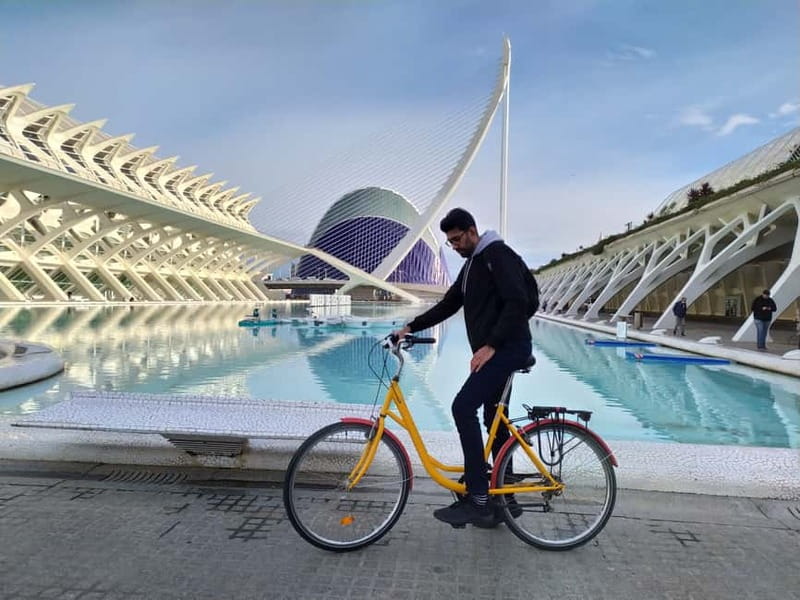
Your ride kicks off from MO’bike and quickly gets you into the city center. A short photo stop sets the tone, then you reach Mercado Central, the largest fresh food market in Spain (and the oldest operating market in Europe, according to the tour info).
Here’s what I’d look for, even if you’re not shopping: the market is a great introduction because it’s active, grounded in daily life, and surrounded by sights you’ll keep seeing on the route. You’re learning the city while it’s still being the city.
From there, you continue to La Lonja de la Seda, a UNESCO World Heritage Site and a civil Gothic masterpiece. The big value of this stop isn’t only the building—it’s the explanation of why it mattered: it served as a major silk trading center. That context makes the architecture feel less like a photo background and more like a snapshot of Valencia’s past economy.
This area is also ideal for photography. You’ll get guided narration and time to frame shots, without the stress of trying to coordinate everything yourself on crowded streets.
Plaza de la Virgen and Plaza de la Reina: where Roman clues meet big churches
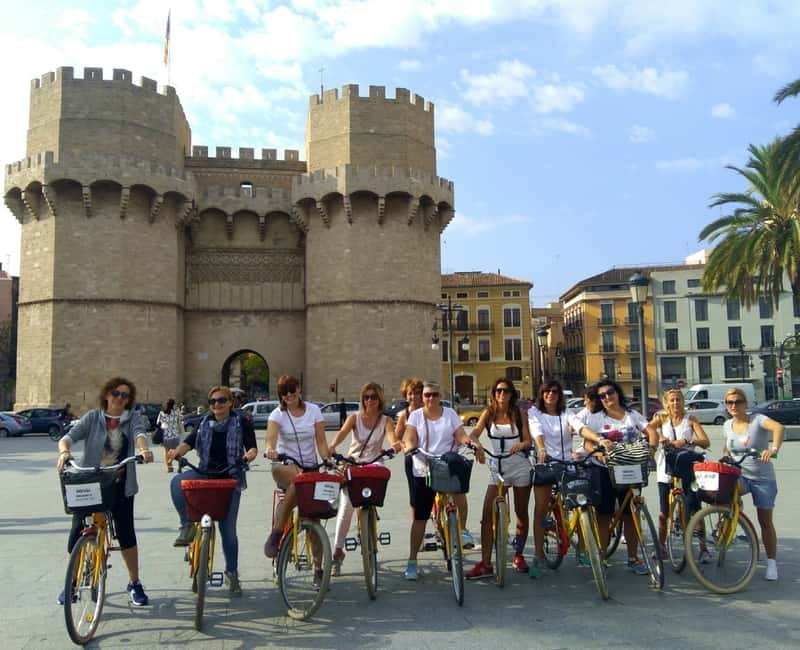
Next come the squares that define the historic core. You’ll visit Plaça de la Verge, described as dating back to Roman times. You’re not going to find a single, dramatic Roman ruin here like a movie set—instead, it’s more about tracing how the city’s layers kept stacking. That’s exactly why a bike tour helps: you can move along the timeline faster than on foot.
Then you roll into Plaza de la Reina, where you’ll see the Valencia Cathedral and the Miguelete Tower. Even if you’ve seen cathedrals before, the cathedral complex gives you a strong sense of scale and civic identity. And the Miguelete Tower is the kind of landmark that helps you orient yourself as you ride onward.
Nearby is Plaza de l’Almoina, with Roman archaeological remains. This stop is especially useful if you want your history not just in words, but in the physical sense of what’s under and around the square. It’s also a good moment to slow down, snap photos, and let the guide’s story connect the dots.
A small practical note: with multiple squares, you’re walking your bike a bit at certain points and stopping for short windows. Comfortable shoes matter here more than you’d think.
Torres de Serranos: your best panoramic pay-off
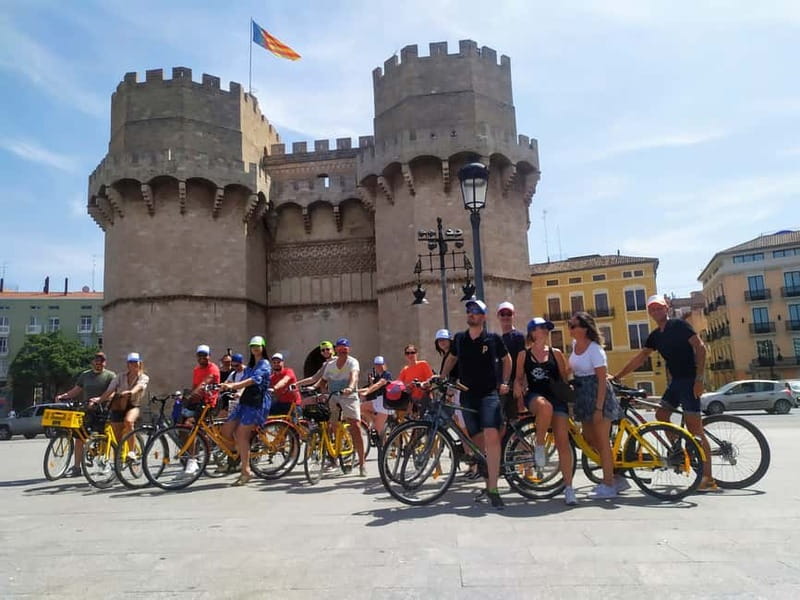
After the cathedral area, the route brings you to Torres de Serranos, the former city gate made of twin towers. This is one of those locations where the photo looks impressive even before you climb, because the towers frame the idea of “city defense” in a way that still feels real.
You’ll get a guided photo stop, and you can also pay a small extra fee to climb to the top for panoramic views of Valencia. I’d recommend doing it if you’re comfortable with steps and you want the payoff: from up there, you can connect the old quarter to the route you’ve been riding and picture where you’re headed next.
The timing works well too. The climb is optional, so even if you skip it, you still get the structure and the story. If you do climb, just remember you’ll want to keep an eye on time so you don’t hold up the group.
Turia Gardens on bike: the calm, green reset
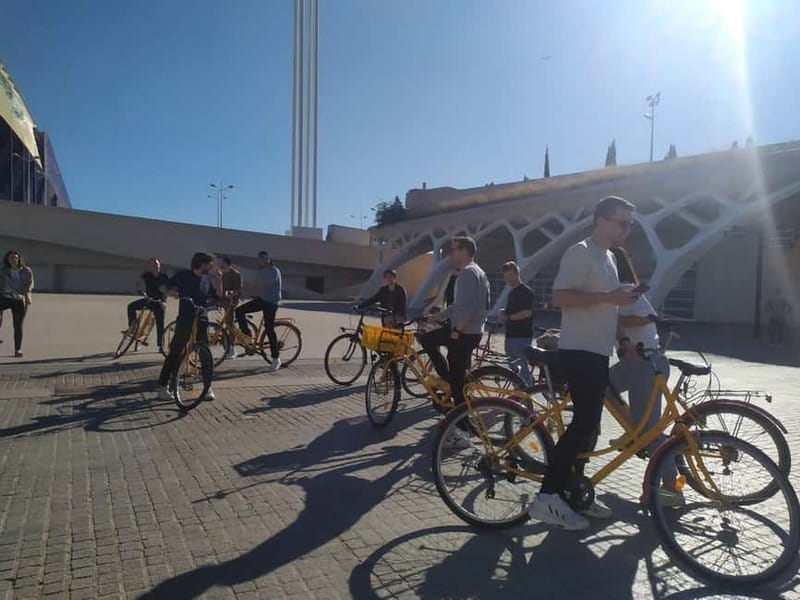
Now the vibe changes. You head into the Turia Gardens, described as one of Spain’s largest urban parks and stretching over 9 kilometers along the old riverbed. The tour calls out bike lanes here for a reason: it’s a rare Valencia sightseeing moment that feels relaxed and open.
The itinerary builds in time—about 25 minutes—and you’re riding through the “green heart” of the city rather than threading through tight streets. This is where your guide’s history talk may shift into “how to see the city differently,” because the park tells a different story than the Gothic quarter does.
If you’re planning your day, this is also a great mental break. After several stops with architecture and plazas, the park lets you reset your senses. It’s also a good place for photos that aren’t just monuments—think paths, trees, and the long lines of the gardens.




City of Arts and Sciences: futuristic Valencia, same easy riding
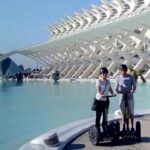
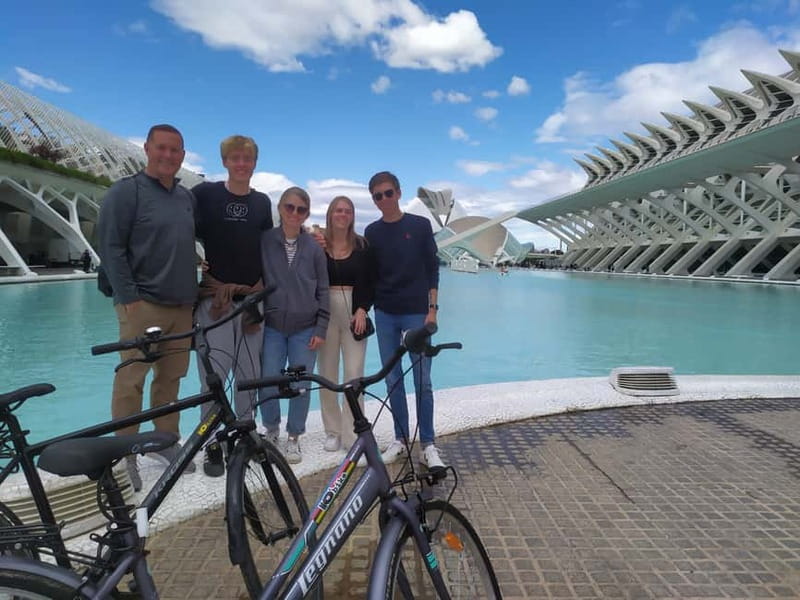
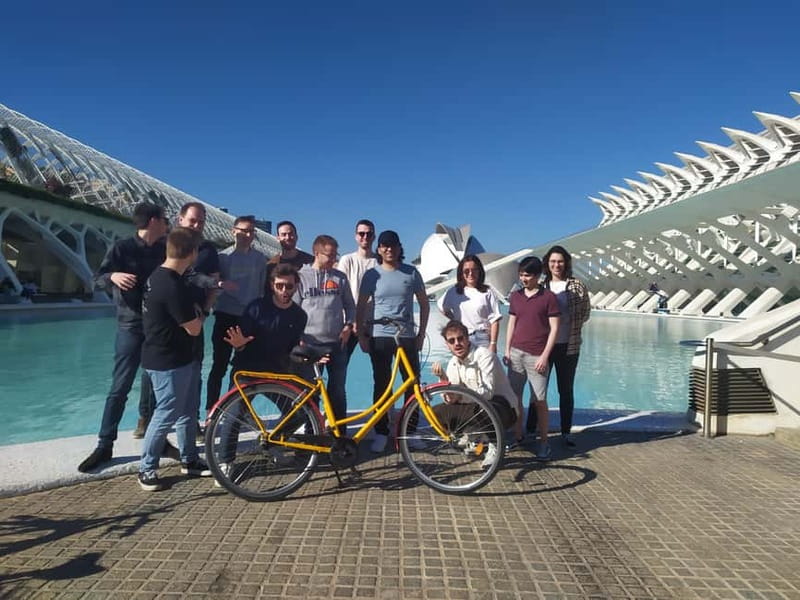
Your final big cultural landmark is the City of Arts and Sciences, built on the former Turia riverbed. You’ll stop here for about 20 minutes with guided commentary and photo time.
What I like about hitting it at the end of the old-town circuit is that it changes the story you’ve been hearing. You start with Roman traces, you move through medieval trade and civic power, and then you finish with a science and culture complex that feels like Valencia’s future leaning forward.
Even without going inside museums (which aren’t included), the exterior and layout are still worth it. You can get the scale in a way that’s hard to do from a single walking street. And because you arrive by bike lanes, you spend less time fighting for space or trying to solve transport mid-sightseeing.
If you’re the kind of person who likes to understand why a city invests in particular types of buildings, this stop delivers. It also pairs nicely with an afternoon beach walk once you finish.
Ending near Playa de la Malvarrosa (and what to do with your extra time)
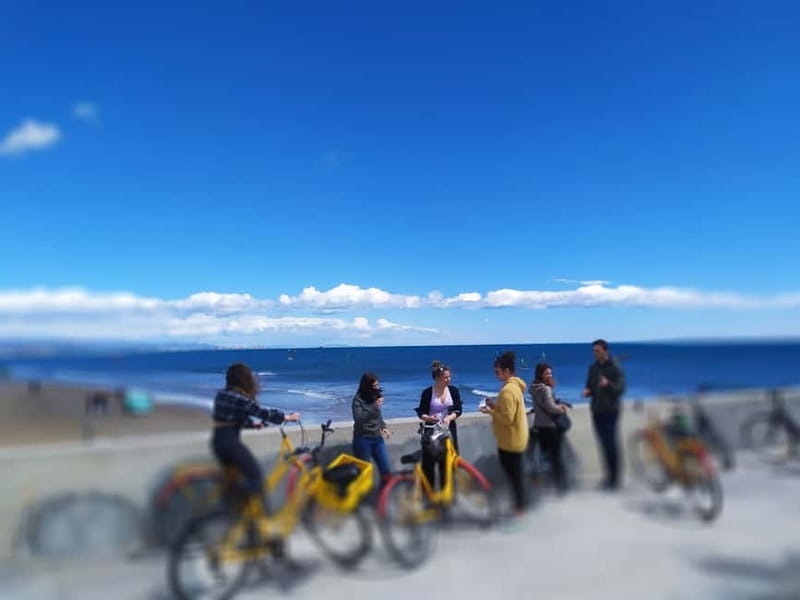
The tour finishes at Playa de la Malvarrosa. That matters more than it sounds. A lot of city tours end in a back-alley drop-off where you have to plot the next move. Here, you end where you can naturally transition into downtime.
You may be able to join the group back to the center, or keep the bike and return later the same day or on following days—this option is listed with an extra fee. If you do keep the bike, you’ve got the chance to build your own loop: beach air, a snack stop, and then a slower ride back through neighborhoods you want to revisit.
Either way, finishing at the coast is a smart way to avoid that post-tour letdown. You don’t feel trapped in “one more museum” mode. You get an easy emotional landing.
Price and value for a 150-minute guided bike tour
At $29 per person for 150 minutes, this is one of those prices that can work for both budget travelers and comfort-seekers. Here’s why the value is real, not just a number:
- You get a local live guide in Italian, which is a meaningful upgrade over “audio-only” tours.
- You get a bike and safety gear—not just a route.
- You get insurance coverage for participants.
- You get a route packed with major sights and multiple scheduled photo stops.
- The itinerary is built for flexibility: you can stop to take photos as you like.
The biggest value is that you’re not just visiting places; you’re being helped to connect them. One of the most praised themes in the guide experience is how guides keep the ride moving while still answering questions and providing historical context from Roman times to more modern Valencia.
The main cost consideration is that you’ll still be responsible for any optional extras (like climbing Torres de Serranos, where there’s a small fee). Also, museum entrances aren’t included, so if you’re expecting ticketed indoor time, set that expectation now.
Who this tour fits best (and who should choose something else)
This is a great fit if:
- You want an easy way to cover a lot of ground on a first visit.
- You enjoy history, but you also want it explained while you ride.
- You care about photos and want time to stop at the right moments.
- You’re comfortable cycling and can handle some time in motion.
It’s less ideal if:
- You can’t or don’t want to ride a bicycle (it’s marked as essential, and it’s not suitable for wheelchair users).
- You want a mostly indoor museum day with ticketed entry, since museum entrances aren’t included.
- You hate organized group timing. The pace allows stops, but it’s still a guided circuit.
For many people, this will be a perfect “morning orientation.” Then you can build the afternoon around what you loved most.
Should you book this Valencia bike tour with Mo’bike?
Yes, if you want a practical way to see Valencia’s top sights without turning your day into logistics math. The combination of Italian-guided context, frequent photo time, and the shift from old town to Turia Gardens to City of Arts and Sciences is exactly the kind of structure that helps the city stick in your memory.
If you’re an experienced cyclist, great—you’ll likely enjoy the smooth flow. If you’re only mildly confident, make sure you’re truly comfortable before committing; the tour expects you to ride. And if you care about architecture and city history explained in a friendly, energetic way, guides like Marco and Michelangelo are repeatedly highlighted as a big reason people rate the experience highly.
Book it when you can give yourself a light schedule afterward. The payoff at Playa de la Malvarrosa is a nice final gift, and it turns the tour from a checklist into a proper day in Valencia.
FAQ
How long is the Valencia bike tour with Mo’bike?
The tour lasts about 150 minutes.
What language is the live tour guide?
The live tour guide speaks Italian.
Where does the tour start?
The meeting point is MO’bike, at Carrer del Músic Peydró, 7, 46001 València.
Are bikes and safety equipment included?
Yes. The tour includes high-quality bicycles and safety equipment.
Do I need to know how to ride a bicycle?
Yes. You need to know how to ride a bicycle.
Is hotel pick-up or drop-off included?
No. Hotel pick-up and drop-off are not included.
Are museum entrances included?
No. Museum entrance tickets are not included.
Where does the tour finish?
The tour finishes at Playa de la Malvarrosa.
Can I climb Torres de Serranos?
The tour info says you can climb Torres de Serranos for a small extra fee.
What should I bring?
Bring comfortable shoes, a sun hat, sunscreen, and comfortable clothes.
If you want, tell me your travel month and whether you’re comfortable on bikes. I’ll suggest the best time of day to ride so the photos and the Turia Gardens stretch feel easy.