REVIEW · VALENCIA
Valencia: Top 25 Highlights Guided Bike Tour
Book on Viator →Operated by Bikes & Tours · Bookable on Viator
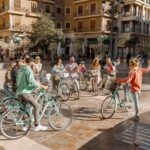
Valencia works fast when you’re on a bike. This 2.5-hour loop strings together Old Town icons and modern City of Arts and Sciences sights in one smooth plan. I love how the route stays easy and mostly flat, so you spend energy on enjoying the views instead of grinding hills. I also like the strong guide energy, with big photo-stop timing and clear explanations that help you know where to go next. The main thing to consider: several famous places are mostly “look and photograph” stops, so you may not get inside time even if the stop lists free entry.
If you’re riding a regular bike, keep in mind that mounting and stopping can feel a bit awkward for heavier bikes. And if your group mixes e-bikes and standard bikes, it can create small pacing gaps in pedestrian-heavy sections. Plan your schedule with a little buffer, especially for photo time and city turns.
In This Review
- Key Highlights You’ll Actually Feel on the Ride
- Starting Point and the Bike Feel in Valencia
- Russafa to Estació del Nord: Creative Valencia Without the Car Hassle
- Plaza de Toros and Plaça de l’Ajuntament: Classic Squares, Neat Symmetry
- Mercado Central and La Lonja de la Seda: When You Want the Inside Later
- Valencia Cathedral and Mare de Déu Square: The Old Town Core
- Turia Garden and Palau de la Música: The Part That Feels Like a Secret Shortcut
- City of Arts and Sciences Entrance: Calatrava’s Eyeball and the “Wow” Zone
- L’Àgora and What’s Included vs Not Included
- Oceanogràfic and the Science Museum: Big Tickets, Big Choices
- Price and Value: Why $32.67 Can Make Sense
- Guides, Pacing, and Safety: The Human Part That Makes It Work
- Who This Bike Tour Fits Best
- Quick Practical Checklist Before You Go
- Should You Book This Valencia Bike Tour?
- FAQ
- How long is the Valencia bike tour?
- What’s the price per person?
- Is the tour offered in English?
- Are there entry fees at the stops?
- Do I need to bring a mobile ticket?
- Is the ride suitable for most people?
- What if weather is bad?
Key Highlights You’ll Actually Feel on the Ride
- Flat city cycling that makes it realistic for a wide range of fitness levels
- Two “Valencia worlds” in one tour: historic squares and medieval architecture, then futuristic science and arts buildings
- Turia riverbed bike path energy where the vibe calms down compared to busy street traffic
- Major photo stops at places like Mercado Central and the City of Arts and Sciences area
- Small group size (max 14), which helps keep the ride organized and safe
Starting Point and the Bike Feel in Valencia
The tour starts at C. de Puerto Rico, 23, L’Eixample, 46004 València, and you roll back there at the end. It’s offered in English, and you get a mobile ticket, which is handy if you’re hopping around the city using transit.
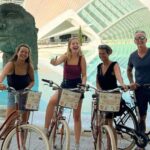
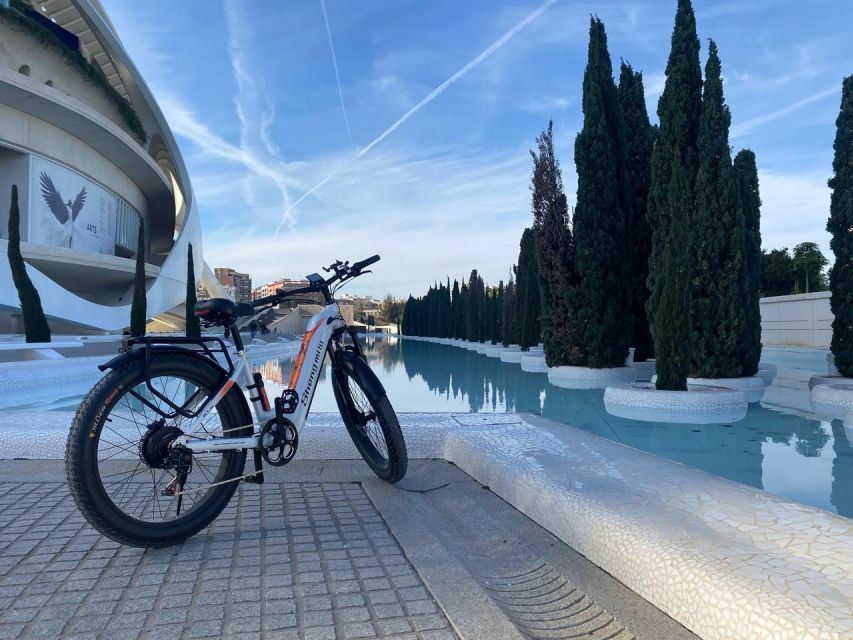
What matters most for your comfort is the bike choice. From what I’ve seen in real experiences, you’ll be able to select either an e-bike or a standard bike, and some people switch after arriving if it makes more sense for them. Valencia is flat, so a standard bike can be very doable, but do expect some heavier bike handling when you’re getting on/off and when the group stops in tight spots.
The tour lasts about 2 hours 30 minutes, and the route covers a lot of “big name” locations without feeling like you’re rushing every second. Still, you’re also in a group, so you’ll be following turns, regrouping at intersections, and moving with the flow. If you prefer a slower, do-everything-on-your-own pace, keep that in mind.
You can also read our reviews of more cycling tours in Valencia
Russafa to Estació del Nord: Creative Valencia Without the Car Hassle
You begin in Russafa, one of Valencia’s most lively neighborhoods—known for culture, food, and nightlife. On a bike, this neighborhood feels like it gives you “real city motion” rather than a sterile checklist. You’ll get quick context for what kind of Valencia you’re about to explore, and it sets up the rest of the tour nicely.
Next comes Estació del Nord, the modernist station opened in 1917 and designed by Demetrio Ribes. The station’s colorful tiles and floral motifs are the point here. Even if you’re not going inside, you’ll get a close look at why it’s considered one of the city’s standout architecture moments. This is also a good spot to slow down for photos, since the building is built for visual impact.
Practical tip: These early stops are about orientation. If you want to return later, pay attention to landmarks that help you remember the “shape” of the neighborhood: street layouts, transit cues, and where big plazas sit in relation to each other.
Plaza de Toros and Plaça de l’Ajuntament: Classic Squares, Neat Symmetry
From Estació del Nord, you head toward Plaza de Toro, a neoclassical landmark. It’s traditionally linked to bullfighting, but it also hosts concerts and cultural events now. Here, you’re mostly in “see it from the street” mode, since the stop doesn’t include admission.
Then it’s on to Plaça de l’Ajuntament, the largest square in Valencia. You’ll see a prominent fountain and surrounding buildings from the 19th and early 20th centuries. This square is the kind of place where a quick stop actually works—because the whole point is to take in the scale and the layout of the space.
What I like about squares on a bike tour is that you experience them the way locals do: you approach from real streets, park the bike, look up, take photos, then roll on. It’s faster than walking, and less chaotic than trying to drive and find parking.
Mercado Central and La Lonja de la Seda: When You Want the Inside Later
Next up is Central Market of Valencia (Mercado Central), designed in 1914 by Francisco Guardia and Alejandro Soler. It’s described as the oldest and largest market in Spain, and the modernist architecture here is a big reason to stop. Admission is listed as free, and in practice you get plenty of time to appreciate what you’re seeing and get photos.
After that, you pass by La Lonja de la Seda, the 15th-century UNESCO Gothic silk exchange. Admission is not included for this stop. Still, the building’s exterior presence does a lot of work for the tour. If you love medieval architecture, you’ll likely want to come back for a longer visit that includes interior time.
Here’s the key thing to understand: the tour is set up for the “overview” experience. If your goal is deep museum-level time, treat this as your guided sampler and use it to pick what to revisit on your own.
Valencia Cathedral and Mare de Déu Square: The Old Town Core
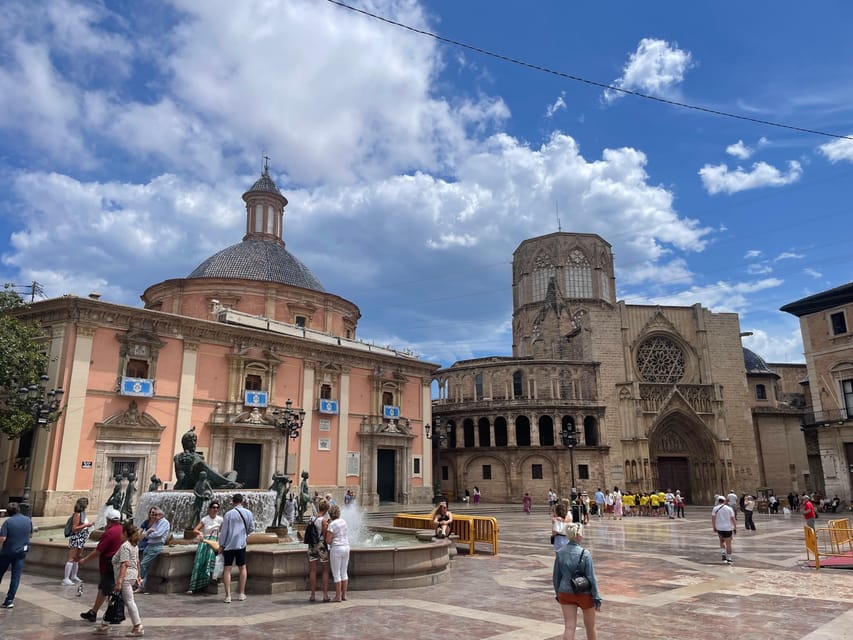
You then reach Valencia Cathedral, where several architectural styles overlap—Gothic, Baroque, and Renaissance—with earlier layers including a time as a Roman temple and a period as a mosque. The stop lists free admission, and the tour timing makes sense for a quick orientation and photos.
Close by is Plaça de la Mare de Déu, set in the heart of the Old Town. In the center sits the Fuente del Agua de la Acequia fountain, with historic buildings such as the cathedral and a basilica nearby. This is a “stand here and look around” stop, and it helps you feel the Old Town rhythm before you move toward the greenery.
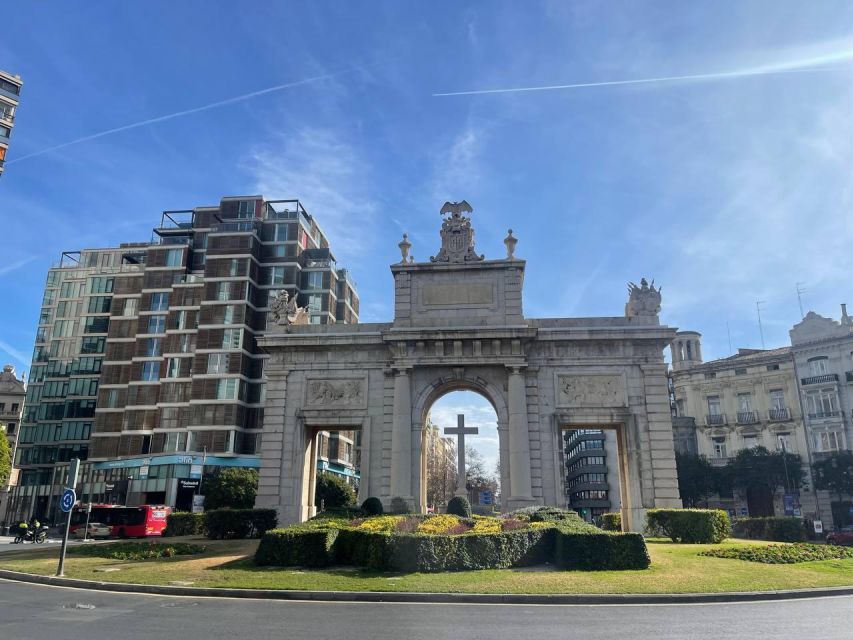
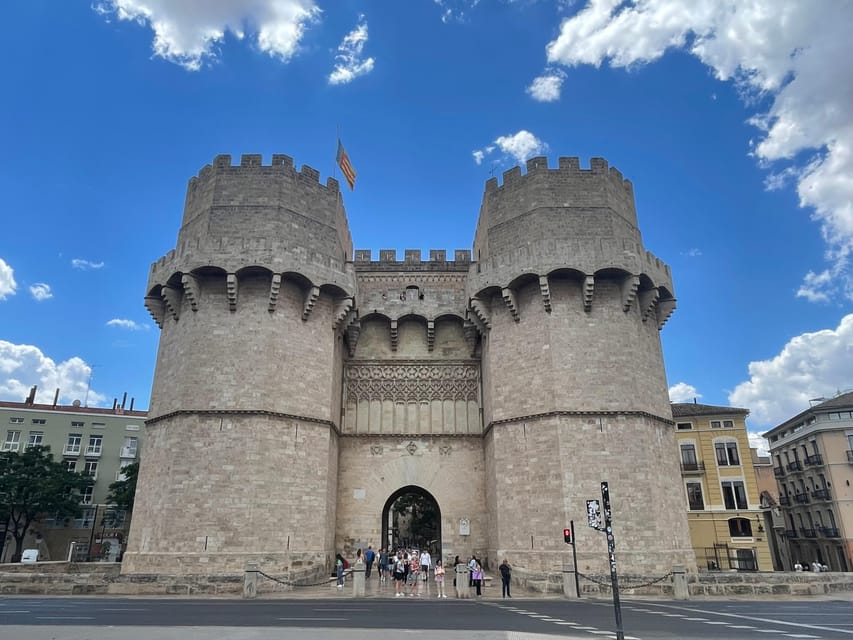
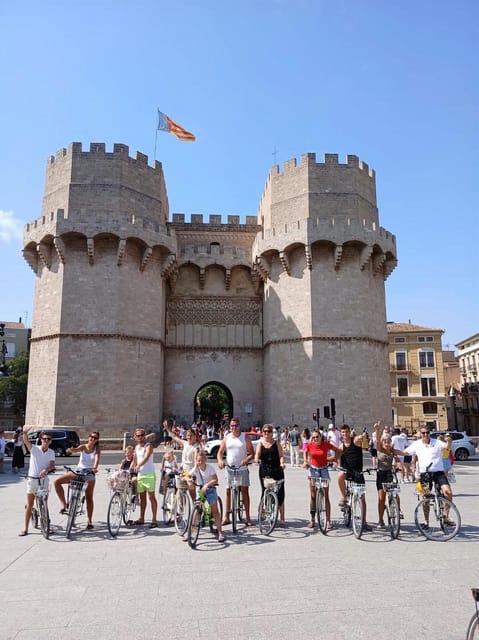
After that comes Torres dels Serrans—one of the remaining old city gates. Valencia once had 12 gates, but most were lost. Today, you have two left, and Torres de Serranos is one of them. Admission is listed as free. The towers give you a nice sense of “how the city used to be walled,” which helps the older parts of the tour click in your head.
You can also read our reviews of more guided tours in Valencia





Turia Garden and Palau de la Música: The Part That Feels Like a Secret Shortcut
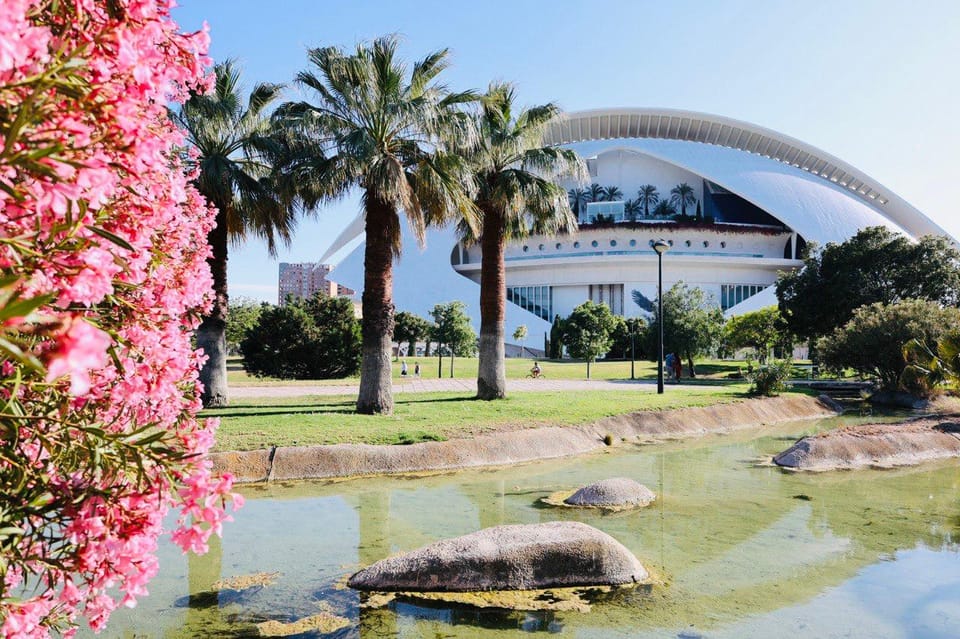
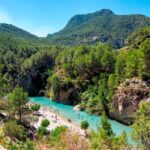
Now you shift into greenery with Jardi del Turia, a long urban park that runs for about 9 kilometers along the former riverbed. The story here is big: after a devastating flood, Valencia decided not to build a highway and instead turned the space into parkland. On a bike, that decision becomes real. You get to leave the dense street traffic behind for stretches.
Next, you stop near Palau de la Música de València, the concert hall. The building is connected to the architects and design energy tied to the Turia Park redevelopment, and it was finished in 1987. Admission is listed as free for the stop, and the short time works because the building’s façade and setting are visually clear even in a quick pass.
In this part of the ride, you’ll also feel why bikes are so convenient in Valencia. You move with momentum, but you’re not stuck walking between far-apart points while staring at your phone for navigation.
City of Arts and Sciences Entrance: Calatrava’s Eyeball and the “Wow” Zone
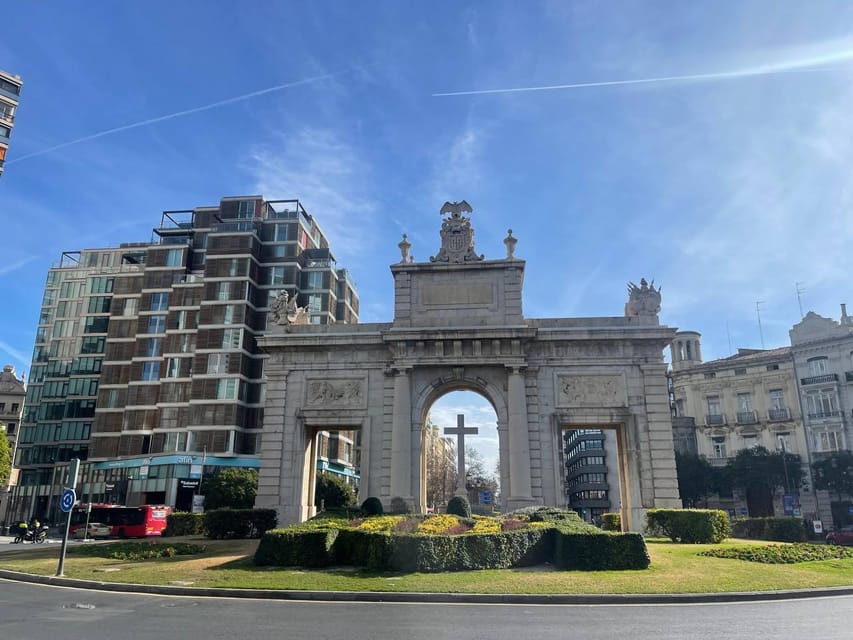
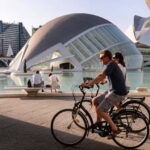
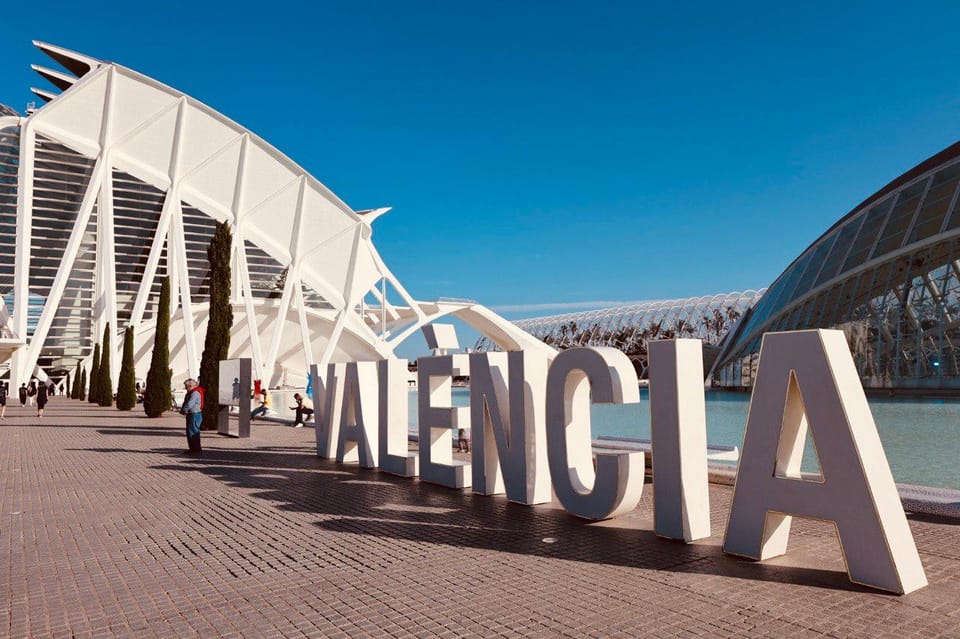
Once you reach the City of Arts and Sciences area, the tour switches from medieval layers to futuristic shapes. The first major stop here is Hemisferic, also nicknamed the Eye of Knowledge. It was designed by Santiago Calatrava and completed in 1998, and it currently functions as an IMAX cinema. Admission isn’t included; it lists from €6.70.
Then you move to L’Umbracle Terraza, described as a sculpture garden and outdoor art gallery. Admission is listed as free. If you like public art and modern design, this stop gives you a gentler pace compared with the larger “wow” buildings.
From there, it’s to the Queen Sofia Palace of Arts (Palau de les Arts Reina Sofía), also associated with Calatrava’s design language. It’s an opera and performing arts venue and opened in 2005, and this stop lists free admission. Even when you’re not going inside, it’s a good architecture break that keeps the tour from feeling like a sprint of ticketed attractions.
L’Àgora and What’s Included vs Not Included
Next comes L’Ágora, a large covered multifunction space designed by Calatrava. The stop lists free admission, and it’s known for a glass roof system and adjustable elements controlling natural light. It’s the kind of building where a short “look around” moment helps you understand the scale.
At this point, you’re about two-thirds into the “science and arts” cluster. The practical value is that you can decide what you want to pay for on a return visit, because you now have the layout in your mind.
Oceanogràfic and the Science Museum: Big Tickets, Big Choices
Two of the biggest ticket items on the route are Oceanogràfic Valencia and the Science Museum (Museo de las Ciencias Príncipe Felipe).
- Oceanogràfic Valencia: Admission isn’t included; it lists €25.75. It’s described as the largest aquarium in Europe, with over 45,000 animals across more than 500 species, plus a large dolphinarium.
- Museo de las Ciencias Príncipe Felipe: Admission isn’t included; it lists from €6.90. It’s an interactive science museum, and the building is said to resemble a whale skeleton.
These stops are extremely good reasons to take this tour even if you know you won’t buy tickets today. You’ll get your bearings instantly. Then, when you return later, you’ll know exactly which building to prioritize and how much time to set aside.
Also: if you’re traveling with kids or you’re the type who likes hands-on exhibits, the science stops are what will tempt you most. If you don’t do aquarium or interactive museums, focus on the architecture and save the spending for a different day.
Price and Value: Why $32.67 Can Make Sense
At $32.67 per person for about 2.5 hours, this tour can be great value when you consider what you get: a guided route across major Valencia landmarks, a bike that removes transit friction, and a plan that covers both Old Town and the modern City of Arts and Sciences area.
But here’s the honest math: not every attraction is entered. Several stops list admission as not included, including La Lonja de la Seda, Hemisferic, Oceanogràfic, and the Science Museum. Even some places listed as free can still feel like a quick look and photo, not a full inside visit. In other words, the tour is paying you back through time saved and smart orientation, not by covering every ticketed attraction.
If you like to see lots of highlights quickly—then return on your own for longer indoor visits—this price often lands in the sweet spot.
Guides, Pacing, and Safety: The Human Part That Makes It Work
The ride quality is heavily tied to the guide. Real experiences attached to this tour highlight names like Daria, Jorge, Liliana, Shakti, Jorge, Martin, Victor, and Luis. The consistent theme is clear explanations and good city handling, including how to manage turns and keep the group together.
Pacing seems to land well for most people: multiple stops are set long enough for you to hear points, take photos, and keep moving without constant “hurry up” energy. Still, a small number of experiences mention the tour running longer than advertised, and one person noted that a promised water stop didn’t happen. My take: bring a small bottle even if you don’t expect it. It’s an easy fix for a rare hiccup.
One more detail: some riders find it harder when the group mixes e-bikes and regular bikes, especially around pedestrian-congested zones. If you want the smoothest experience, choose the bike type that matches your comfort level at low speeds and stops.
Who This Bike Tour Fits Best
This is a strong match if you want:
- A Day 1 orientation to Valencia’s layout
- A way to cover far-apart sights without parking stress or long walks
- Architecture and city storytelling with photo stops
- A mostly flat cycling experience
It may be less ideal if you:
- Want inside time at every major site
- Prefer slow, wandering sightseeing with no group pacing
- Feel unsure about riding and stopping in tighter pedestrian areas
If you’re a solo traveler, a small group can also feel friendly. Some people have been treated like they got a near-private feel when the group size was tiny, which is a nice bonus when it happens.
Quick Practical Checklist Before You Go
- Wear closed-toe shoes you can walk in for short stops.
- Bring water, just in case.
- Have a rough plan for what you might pay for later: Oceanogràfic and the science museum are the big-ticket “return” options on this route.
- If you want a more comfortable ride, seriously consider an e-bike, especially if you don’t bike much at home.
Should You Book This Valencia Bike Tour?
Yes, if your goal is to get a fast, guided overview of Valencia’s major highlights across both Old Town and the City of Arts and Sciences—without burning a full day on transit or hunting for parking. It’s also a good choice when you’re trying to decide what to revisit later, because the stops give you a clear map of priorities.
Think twice if your dream day is “enter everything with ticketed time.” This tour is built more for route coverage, photo moments, and context than for deep indoor visits at every stop. Still, even then, it’s a smart primer: once you see the layout by bike, you’ll plan your next hours with way more confidence.
FAQ
How long is the Valencia bike tour?
It runs for about 2 hours 30 minutes.
What’s the price per person?
The price is listed as $32.67 per person.
Is the tour offered in English?
Yes, the tour is offered in English.
Are there entry fees at the stops?
Some stops have admission included (listed as free), while others do not. The tour lists admission amounts for some places, like Hemisferic (from €6.70), Oceanogràfic (€25.75), and the Science Museum (from €6.90).
Do I need to bring a mobile ticket?
You’ll receive a mobile ticket.
Is the ride suitable for most people?
Most travelers can participate, and there’s a maximum weight limit of 120 kg.
What if weather is bad?
This experience requires good weather. If it’s canceled due to poor weather, you’ll be offered a different date or a full refund.