REVIEW · MALAGA
1.5-Hour Roman Theater and Alcazaba Castle Walking Tour
Book on Viator →Operated by Córdoba a Pie | Visitas Guiadas y Free Tours · Bookable on Viator
Two views, one powerful walk.
In about 1.5 hours, this Roman Theatre and Alcazaba walking tour takes you from imperial-era ruins to the fortress walls above Málaga. I especially like the harbor-and-city panoramas you earn at Alcazaba, and I like that you get inside both sites instead of just looking from the street. One real consideration: the Alcazaba route includes a steep, continuous climb on uneven pavement, so it’s not ideal for slower mobility.
This is a smart pick if you want big context without a full-day commitment. You’ll travel with a professional guide, in English, with a maximum group size of 30. And since entrance fees are included, you’re not standing around figuring out tickets while the day slips by.
You also start right at the Pirámide de Cristal (C/ Alcazabilla, 4), and the tour ends back at the same spot—easy to plug into your Málaga day. Expect good weather to matter, and wear shoes you trust on rocky paths.
In This Review
- Key things to notice before you go
- Why Alcazaba and the Roman Theatre work so well together
- Start at Pirámide de Cristal: easy meeting point, clear plan
- Alcazaba Castle: courtyards, Catholic Monarchs, and the best views in the hour
- Arms Courtyard and the feeling of power changing hands
- Cuartos de Granada: panoramic payoff over harbor and center
- The drawback: steep, uneven climb
- Teatro Romano de Málaga: a short stop that still hits hard
- Romans and Muslims: the layers you can actually recognize
- Timing and group size: what 1.5 hours feels like on foot
- What’s included: $21.72 worth it when you want both sites
- Practical shoe-and-sun advice
- Guide factor: English comfort can vary, but stories come through
- Who should book this tour (and who should think twice)
- When to fit it into your Málaga day
- Should you book? My take on the value
- FAQ
- FAQ
- How long is the Roman Theatre and Alcazaba walking tour?
- What sites does the tour include?
- Are entrance tickets included in the price?
- What language is the tour offered in?
- Is the tour very strenuous?
- Where do I meet the guide?
Key things to notice before you go
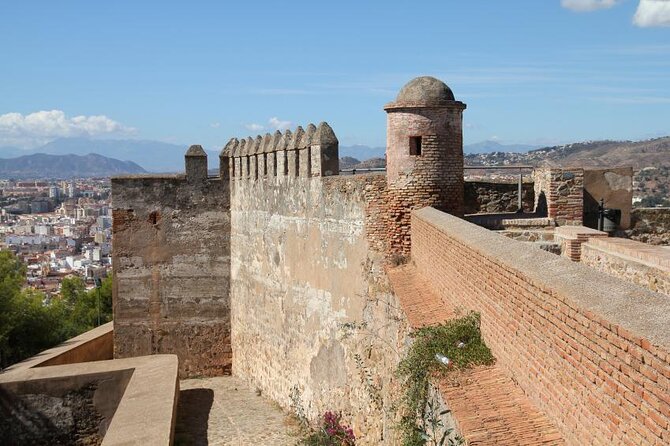
- Two eras on one route: Roman Theatre ruins plus Alcazaba fortress courtyards and ramparts
- Views you earn on purpose: the Cuartos de Granada areas open to wide harbor and city views
- Entrance fees handled for you: tickets are included for both stops
- English guide quality can vary by person: guides like Maria, Carmen, Alberto, Manuel, Queco, Samuel, and Gandi have handled English in past groups, but accents and clarity can affect comfort
- Steep walking is part of the deal: plan for uneven pavement and a continuous climb near Alcazaba
- Small-group feel: with a max of 30, the tour usually stays manageable and question-friendly
Why Alcazaba and the Roman Theatre work so well together
Málaga’s story doesn’t sit in one museum room. It stacks. One moment you’re looking at the physical footprint of Roman city life; the next you’re moving through the fortress logic of al-Andalus, when defense and status were built into every corner.
That’s why this tour’s pacing works: you’re not just hopping between two famous attractions. You’re walking a line of time—Romans to Muslims to Christian rule after the conquest—and seeing how each power shaped the city’s spaces. The route is short enough to keep energy up, but structured enough that you get the “why” behind what you’re looking at.
The other thing I like is the practical value: entrance fees are included, so the cost feels less like a gamble and more like you’re buying a guide + access to two key sites. At $21.72 per person, that’s a reasonable deal for a guided visit that doesn’t end at the ticket booth.
You can also read our reviews of more walking tours in Malaga
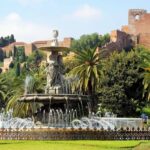
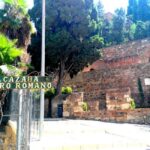
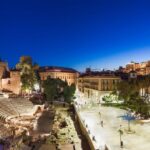
Start at Pirámide de Cristal: easy meeting point, clear plan
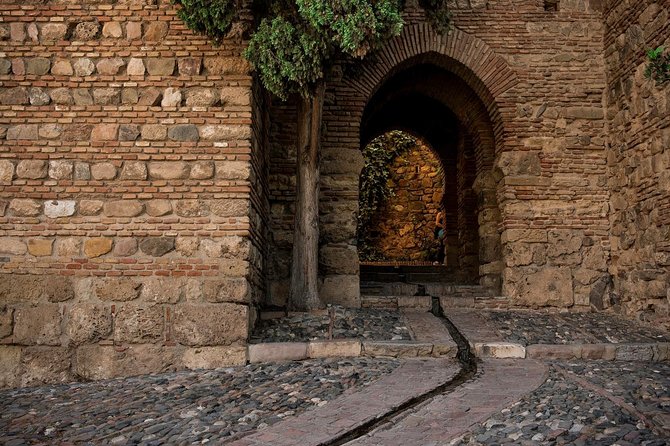
The meeting point is Pirámide de Cristal on C/ Alcazabilla (address: 4, 6, Distrito Centro, 29015 Málaga). The tour ends back at the same location, so you’re not scrambling for a new meeting point or figuring out your own last leg.
This matters more than it sounds. In Málaga, it’s easy to lose time when you’re mixing self-guided strolls with paid sites. Starting in the same area where the Alcazaba climb begins makes the rest feel less stressful, especially if you’re pairing this with lunch later or another nearby stop.
Alcazaba Castle: courtyards, Catholic Monarchs, and the best views in the hour
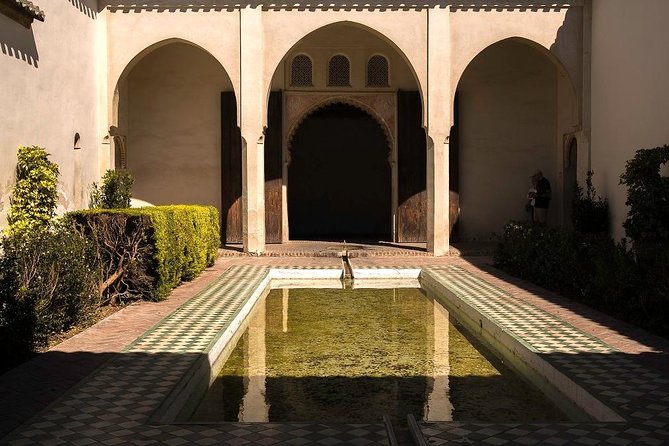
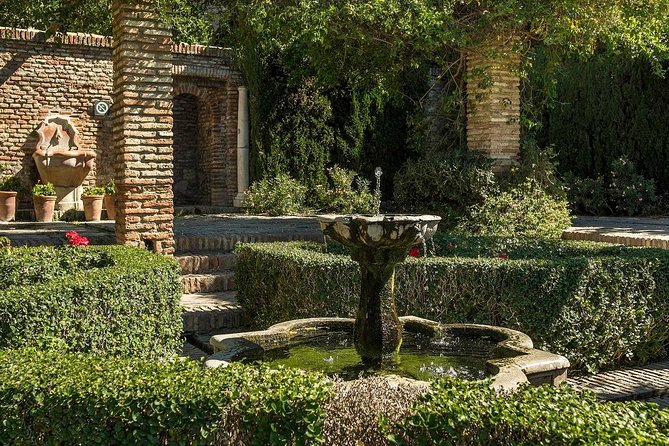
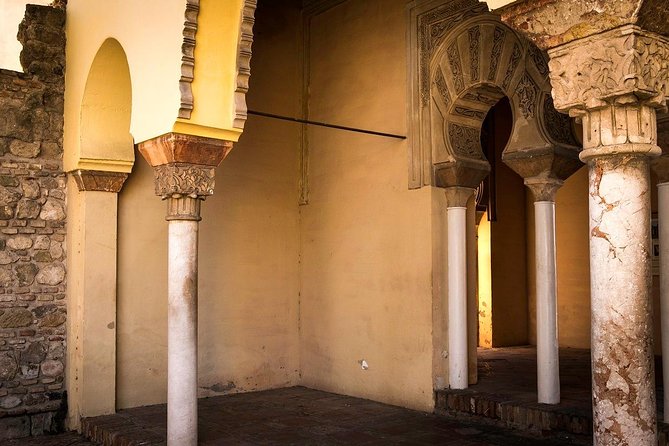
The Alcazaba segment is where the tour earns its keep. You’re not just touring walls—you’re moving through spaces shaped by different rulers and different needs: beauty, control, ceremony, and defense.
Arms Courtyard and the feeling of power changing hands
One of the standout stops is the Arms Courtyard, linked to the period when the Catholic Monarchs used parts of the complex after the conquest of the city. Even if you don’t know the dates cold, you can feel the logic of the space. It’s the kind of courtyard that makes sense when you understand rule wasn’t only political—it was physical.
If you enjoy architecture that tells a story, this is the part that clicks. You start seeing how later rulers repurposed earlier structures instead of wiping the slate clean. That theme—continuity with change—shows up again and again in Málaga.
Cuartos de Granada: panoramic payoff over harbor and center
Then you move to the Cuartos de Granada areas, which come with spectacular panoramic views over the harbor and the center of the city. This is your “stop and look” moment. The ramparts give you a wide angle on Málaga, and it helps you place everything you’ve been seeing from street level.
I like this because it turns sightseeing into orientation. After you’ve got the harbor view from up high, your future walks make more sense. You’ll recognize where you are, where the cruise area sits, and how the old city wraps around the water.




The drawback: steep, uneven climb
Here’s the blunt part. Alcazaba involves a steep, continuous climb on uneven pavement. That’s not a dealbreaker for most people, but it is a real issue for the elderly or anyone with mobility limits. If you’re unsure, bring sturdy shoes and plan your pace. Take breaks when you need them, because the views are worth slowing down for.
Teatro Romano de Málaga: a short stop that still hits hard
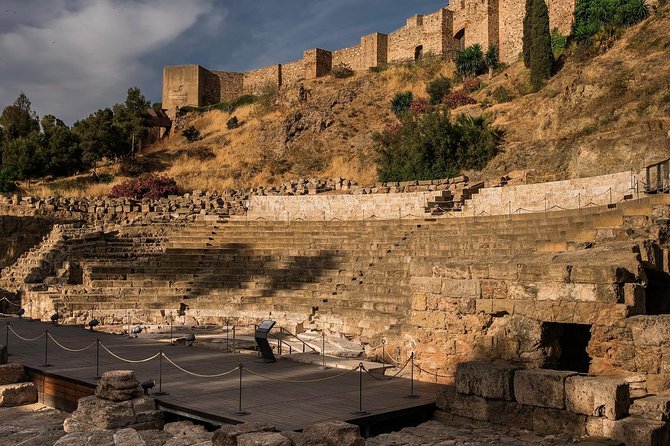
After Alcazaba, the tour shifts to the Teatro Romano de Málaga. This is the Roman Theatre area plus the Visitors Center, which helps connect ruins to the bigger picture of what the city looked like in the imperial era.
Even though the theatre stop is brief—about 15 minutes—it’s designed to give you a mental snapshot rather than a rushed glance. The key is context: Romans built their public spaces for gatherings and performance; later cultures built on top of those realities, adapting the city as power shifted.
Romans and Muslims: the layers you can actually recognize
The tour frames the theatre through the idea that both Romans and Muslims left major marks on Málaga. That matters because you’re not just learning dates—you’re learning how the city kept reinventing itself.
When you stand near the theatre remains, you get a clearer sense of why this area mattered. It’s not only “a nice ancient site.” It’s evidence of how important Málaga was to different civilizations and how public life was organized.
Timing and group size: what 1.5 hours feels like on foot
This is listed at about 1 hour 15 minutes, and in practice it feels like a focused walk rather than a long, meandering hike. The Alcazaba time is longer (about an hour), and the theatre stop is shorter (about 15 minutes). That split is smart: Alcazaba takes physical effort, and the theatre gives you a payoff that doesn’t over-stretch your energy.
Group size is capped at 30 travelers. That number matters because it usually means you can ask questions without the guide constantly shifting to keep everyone together. Still, with any walking tour, you’ll be moving with the main group—so keep an eye on your footing on uneven sections.
If you’re visiting with kids, the duration is manageable. The pacing is designed to keep the trip from becoming a stamina contest.
What’s included: $21.72 worth it when you want both sites
At $21.72 per person, the headline value is simple: the tour includes professional guidance and all entrance fees. That’s the difference between paying for a “story walk” and paying for access to two major attractions.
You also get:
- Mobile ticket (so you’re not juggling paper confirmations)
- English guiding
- Fees and taxes handled
- No hotel pickup or drop-off (you meet at the Pirámide de Cristal area)
And you’ll still plan for what’s not included: food and drinks, plus transportation to and from the meeting point. In Málaga, that’s usually fine because the start point is centrally located near public transportation.
Practical shoe-and-sun advice
This is a walking tour with real elevation changes. Bring comfortable, closed-toe shoes. If you’re going in warmer months, start early and carry water, even though drinks aren’t included.
Guide factor: English comfort can vary, but stories come through
One of the most praised parts is the guide experience—people often mention warm, engaging explanations and patient answers. Names like Maria, Carmen, Alberto, Manuel, Queco, Samuel, and Gandi show up repeatedly as examples of how guides bring the sites to life.
Still, there’s a real-world caution: English clarity can vary by accent and by how new the guide is to English. If you rely on English being crystal-clear, choose a time slot where you feel most confident, and don’t hesitate to ask the guide to repeat something. With a group this size, answers tend to come without too much delay.
Who should book this tour (and who should think twice)
This is a strong choice for:
- First-time visitors who want two top sites without doing them separately
- People who like “layers of history” told through the spaces themselves
- Travelers who want guided access with entrance fees handled
Think twice if:
- You have mobility challenges or need minimal stairs/uneven ground
- You want a totally flat walking experience
- You expect a long, slow museum-style pace
If you’re somewhere in the middle—okay with stairs but not okay with rough ground—this tour can still work, but only if you pace yourself and accept that Alcazaba is the harder part.
When to fit it into your Málaga day
Because it’s about 1.5 hours and starts near the Alcazaba approach, I’d plan it earlier rather than later. Morning light makes the harbor views better, and you’re less likely to feel rushed on uneven pavement.
Also, the tour gives you context that makes future self-guided exploring easier. After you understand how the Roman Theatre sits in the broader city story and how Alcazaba overlooks Málaga, you’ll notice more on your remaining walks.
Should you book? My take on the value
Yes—if you’re the kind of traveler who wants smart context and good views without spending extra time on logistics. This tour pairs the Roman Theatre with Alcazaba in a way that makes sense: you start with the fortress energy, then you shift into the Roman past, and you leave with both orientation and atmosphere.
The value is especially strong because entrance fees are included, which makes the $21.72 price feel straightforward. The main reason to skip is physical comfort: Alcazaba’s climb is continuous and uneven. If that’s not your friend, choose a different route or plan for slower breaks.
FAQ
FAQ
How long is the Roman Theatre and Alcazaba walking tour?
The tour lasts about 1 hour 15 minutes.
What sites does the tour include?
You visit Alcazaba Castle and the Teatro Romano de Málaga, including the Visitors Center.
Are entrance tickets included in the price?
Yes. Admission tickets for both sites are included, along with all fees and taxes.
What language is the tour offered in?
The tour is offered in English.
Is the tour very strenuous?
It requires moderate physical fitness. There is a steep and continuous climb on uneven pavement, so it may be difficult for those with mobility issues or who are elderly.
Where do I meet the guide?
You meet at Pirámide de Cristal, C/ Alcazabilla, 4, 6, Distrito Centro, 29015 Málaga, Spain, and the tour ends back at the meeting point.