REVIEW · GRANADA
Albayzín y Sacromonte, Unesco Heritage Neighborhoods
Book on Viator →Operated by My Top Tour · Bookable on Viator
Granada’s hills make you work, then pay off. This guided walk through Albayzín and Sacromonte turns winding streets and cliffside caves into a clear, story-filled evening plan. I love how you get the neighborhood layout sorted fast, so you’re not hunting for your way through narrow lanes. I also love the timing: you’re set up for big views of the city and the Alhambra as daylight fades. The main thing to consider is that it’s a walk with slopes and stairs, so pack for comfort.
You’ll see palaces, churches, mansions, and the older Muslim footprint in the streets and buildings, plus the cave world of Sacromonte. Expect a small group (up to 15) led by an official guide in English, with a smooth pace and time for photos. One possible drawback: because this is a people-run walking tour, if you’re sensitive to last-minute uncertainty, build in a bit of extra buffer at the meeting point and double-check details before you go.
If you’re chasing Granada’s most atmospheric neighborhoods, this is an efficient way to do both without getting lost. It’s also a great way to understand how everyday life, faith, and music all shaped these hills.
In This Review
- Key highlights you’ll feel on the ground
- Why this 5:00 pm Albayzín–Sacromonte walk is such a smart plan
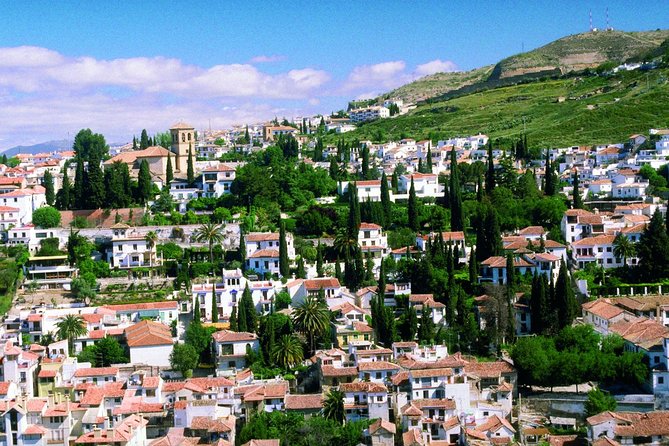
- Entering the Albayzín Murallas: Muslim Granada, cármenes, and mirador magic
- What to look for (besides the views)
- The viewpoints that anchor the walk
- Sacromonte caves: ravines, red hills, and the flamenco core
- How the caves are arranged
- Time-wise, it’s a quick but meaningful stop
- Photo angles: where the Alhambra view actually comes from
- Price and value: why $21.78 can be a great deal here
- Logistics that matter: small group, clear meeting spot, and real walking
- Footwear and pace: who this tour suits best
- Guides and style: what good leadership looks like in Granada
- Should you book Albayzín and Sacromonte UNESCO neighborhoods?
- FAQ
- What is the meeting point for the tour?
- Where does the tour end?
- What time does the tour start?
- How long is the experience?
- Is the tour offered in English?
- How many people are in the group?
- What’s included in the price?
- Are monument tickets included?
- Can I cancel for a refund?
- Is the tour suitable for most people?
Key highlights you’ll feel on the ground
- Official English guide so navigation is handled and you can focus on the sights
- Murallas of the Albayzín with mosques remnants, cisterns, and carved-out cármenes gardens
- Sacromonte caves laid out like streets along ravines, with a strong flamenco identity
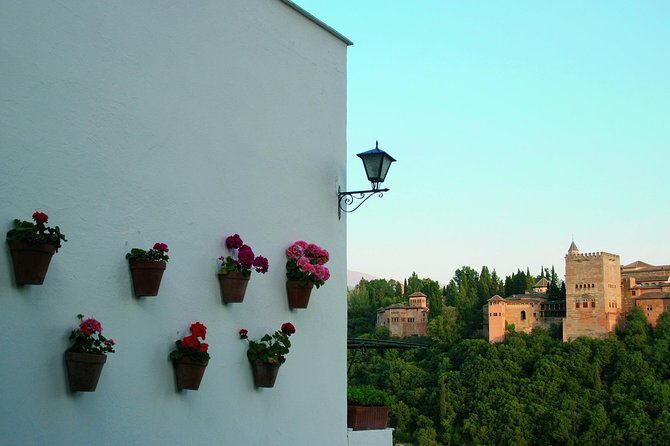
- Photo angles to the Alhambra plus views over the Sierra Nevada from higher viewpoints
- Small-group size (max 15) for better flow through tight streets
Why this 5:00 pm Albayzín–Sacromonte walk is such a smart plan
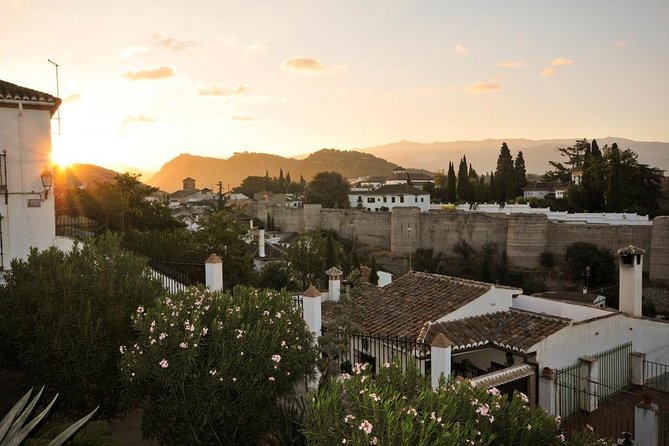
The tour starts at 5:00 pm in Granada, which is exactly when the city begins to feel cinematic. The streets in these neighborhoods can be confusing even when you’re trying hard. A guide matters here, because the payoff is in small turns, uphill shortcuts, and viewpoints you’d never notice on your own.
This is also an efficient hit. You get both neighborhoods in about 2 to 3 hours (the provided visit time is 2 hours 30 minutes). For the price—$21.78 per person—you’re mostly paying for interpretation and routing. That’s a good deal if you want context without paying monument admission all day.
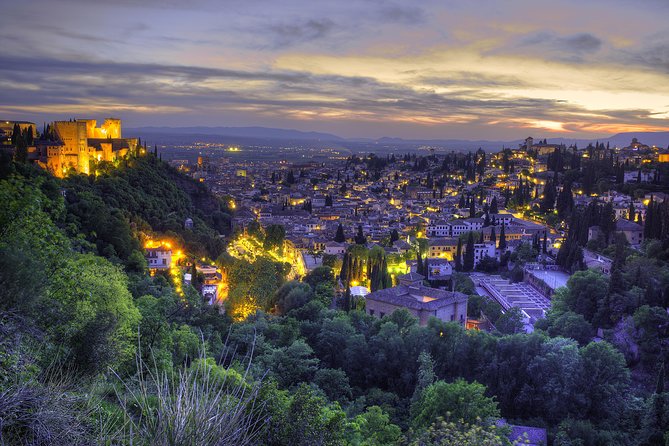
One more reason I like the timing: as you move higher, light changes quickly. You’ll naturally find yourself pausing at miradors, and the city and the Alhambra look better with the late-day glow than they do in harsh midday sun.
You can also read our reviews of more historical tours in Granada

Entering the Albayzín Murallas: Muslim Granada, cármenes, and mirador magic
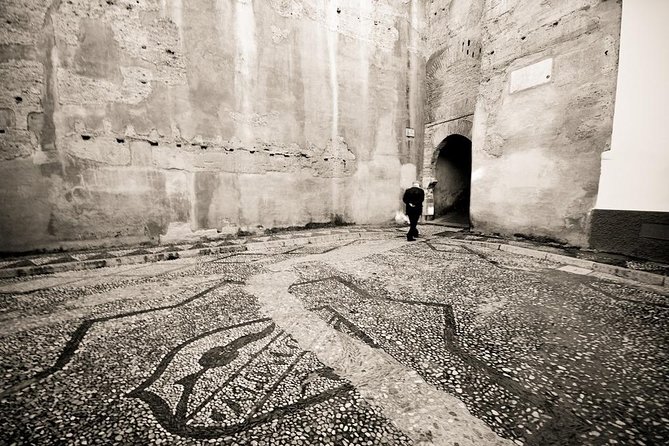
The Albayzín is one of Granada’s ancient cores, historically tied to Muslim Granada alongside the Alhambra and other nearby districts. The feeling you get here is all about layers—old stone, older streets, and an everyday rhythm still visible in the neighborhood’s character.
At the start in the area of the Murallas del Albayzín, you’ll get oriented to what made this place so dense and active. It’s described as a neighborhood that once held around 40,000 residents and had roughly 30 mosques. That’s not just trivia. It helps you read what you’re seeing: the street shapes, how spaces cluster, and why certain landmarks land where they do.
What to look for (besides the views)
Your walk focuses on the neighborhood’s physical “evidence” of the past:
- Remains of mosques and minarets, plus Spanish-Muslim cisterns
- Palaces, mansions, and churches, which show later layers in the same landscape
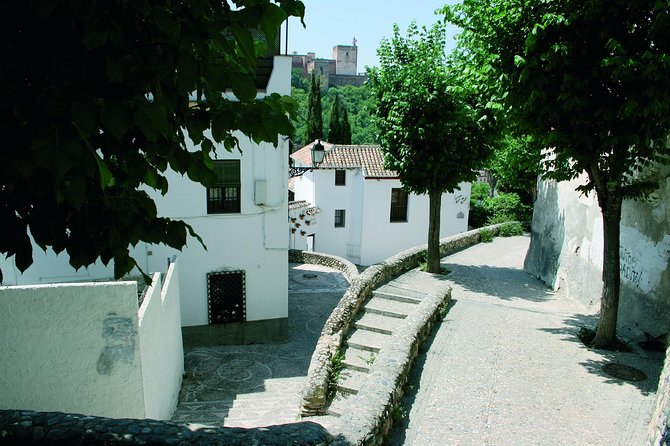
- Narrow, winding streets that feel elusive because they’re meant to be like that
Granada’s signature homes show up too. In the Albayzín you’ll hear about cármenes—houses with gardens, often with typical Granada and Mudejar tower elements. Even if you don’t enter private properties, the cármenes explain why the neighborhood feels lush in pockets, not flat and uniform like some historic areas.
The viewpoints that anchor the walk
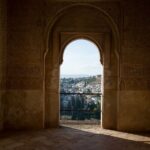
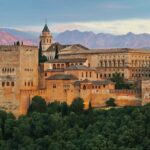
Two miradors are highlighted: San Nicolás and San Cristóbal. These are the spots where the city opens up and you can connect the dots between the hills, the urban layers, and the Alhambra beyond. If you care about photos, this is where your camera will earn its keep.
Tip: wear shoes you can trust on uneven stone. The streets are narrow, and the “romantic cobblestones” side is real. You’ll want traction more than style.
Sacromonte caves: ravines, red hills, and the flamenco core
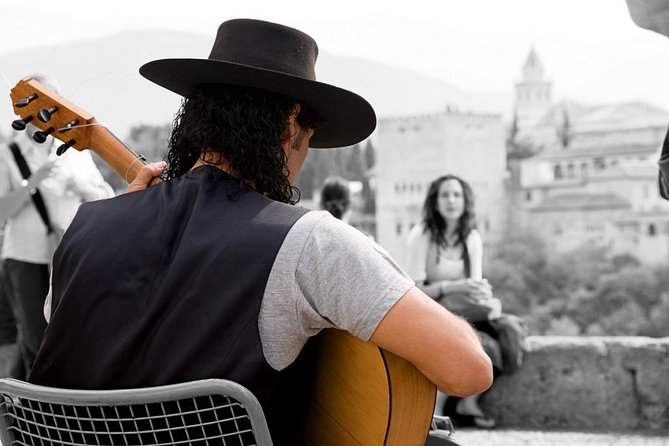
After Albayzín, you shift into Sacromonte, Granada’s hillside neighborhood known for its cave dwellings. It’s often described as the traditional suburb of the Granada gypsies (Roma community), with roots reaching back through movement across Europe and Africa before arriving in Spain in the 15th century. You’ll also hear the mention of caló, the community’s language.
The terrain here is part of the show. Sacromonte is pictured as a reddish, dry hill with plants like pitas and prickly pears, and it opens into sweeping panoramas. From these heights, you get views toward the Alhambra, the lighter slopes of nearby areas, and across the Valparaíso Valley, where the Darro runs.

How the caves are arranged
The caves aren’t lined up like a single monument. They’re grouped around ravines, forming something like streets. That layout matters because it changes how you move: you’re not just seeing interiors. You’re understanding a whole neighborhood built into the hill.
Caves have long housed communities and performers, including flamenco artists. The most famous expression of Sacromonte’s culture is the zambras—performances tied to the cave setting. Even when you’re not watching a show, learning how the caves supported community life makes the spectacle make more sense.
Time-wise, it’s a quick but meaningful stop
This portion is about 45 minutes. That’s long enough to understand the “why” behind Sacromonte’s famous identity, without dragging you through a slow pace when you also want to enjoy views and photos.
Photo angles: where the Alhambra view actually comes from
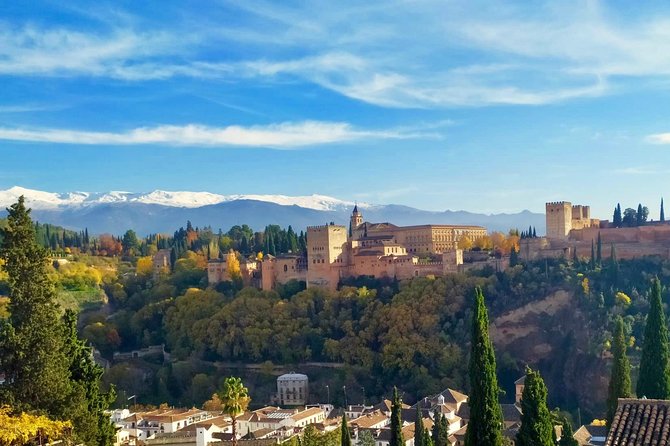
A lot of Granada tours promise views. This one is honest about where they come from: higher viewpoints in Albayzín plus panoramic overlooks as you work your way through Sacromonte’s hillside setting.
You’ll aim your camera toward:
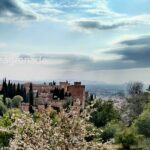
- The Alhambra towers from above the city
- Granada’s wider grid as hills frame the skyline
- Sierra Nevada views (the tour highlights this), which can look dramatically different depending on haze and light
The practical takeaway: don’t rush the stops. The best shots usually require standing still for a second, not sprinting to the next bend. Also, if you’re with someone who takes lots of photos, this tour generally works because the pace is meant for walking with pauses—not for covering a checklist at full speed.
Price and value: why $21.78 can be a great deal here
Let’s talk value in plain terms.
You’re paying $21.78 per person for:
- an official tourism guide
- a 2 hours 30 minutes visit time
- a guided route that handles the hardest part of Granada hills: orientation
Not included:
- monument tickets
- food and drinks
That means the price is mostly for the “human map” and the storytelling that helps you understand what’s in front of you. If you’re the type who reads signs but still wants the context behind them, the guide time is what you’re really buying.
And since the stops include free admission tickets for the listed areas, you’re not stuck paying extra just to participate in the neighborhood experience itself. Just be aware that if you decide later to enter specific monuments or pay for special sites, those are separate.
If you’re trying to cover both neighborhoods in one outing without spending hours planning, this is a strong value.
Logistics that matter: small group, clear meeting spot, and real walking
This tour caps at 15 travelers, which is the sweet spot for Granada’s tight streets. Fewer people means you can actually hear the guide and squeeze into viewpoints without feeling like you’re in a moving crowd.
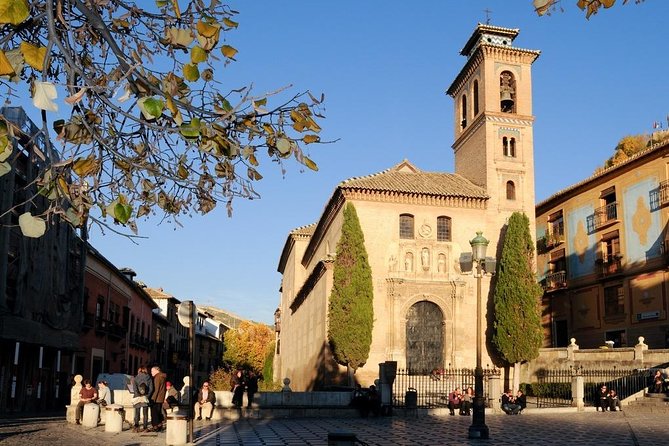
The meeting point is Plaza de Santa Ana (Pl. de Sta. Ana, Granada) with a start time of 5:00 pm. The end point is in the Albaicín area. That’s useful because you can keep wandering afterward, grab a drink, or catch public transport without immediately changing neighborhoods again.
It’s also described as near public transportation, which helps if you’re coming from somewhere else in Granada. In a city like this, the ability to get back out easily after your walk is a hidden comfort.
One more practical note: wear a layer. Hills keep wind in circulation, and evenings can cool down faster than you expect.
Footwear and pace: who this tour suits best
This is a walking tour through winding streets, inclines, and stairs. It’s not described as extreme, but it’s not a flat, casual stroll either. You’ll get your heart rate up a bit on the slopes.
I think this tour suits you if:
- you want history in street-level form, not museum-style only
- you enjoy neighborhood wandering with a guide calling out what matters
- you want strong Alhambra and city views
- you’re okay with stairs and uphill bits in exchange for atmosphere
It might be tougher if you have mobility issues or you dislike uneven cobblestones. The tour says most travelers can participate, but “can participate” and “will enjoy” aren’t the same thing.
Guides and style: what good leadership looks like in Granada
The quality of a walking guide really shows in places like this. The tour is led by an official tourism guide, and names shared include Ana, Jaime, Juana, and Alexandra—all associated with positive experiences tied to clear history and smooth navigation.
Here’s what that means for you:
- You don’t just learn facts. You learn how the neighborhoods relate to each other, which makes everything click.
- You get a rhythm that lets you stop for photos without losing the thread of the story.
That also brings up a fair consideration. There have been cases where a guide didn’t show up at the meeting point. It’s not something you should ignore if you’re the type who hates uncertainty. My best practical advice: arrive a few minutes early, use the exact meeting location, and keep your booking details handy.
If something feels off on arrival, use the provider support email listed for issues: [email protected].
Should you book Albayzín and Sacromonte UNESCO neighborhoods?
I’d book it if you want an evening plan that combines atmosphere, views, and understanding—without spending half your day figuring out routes through hill neighborhoods. For $21.78, the guide time and the small-group setup are the real value.
Skip it (or consider an alternate format) if:
- you need step-free walking
- you strongly prefer monument entrances over neighborhood storytelling
- you’re uncomfortable with the uphill, stair-heavy feel that comes with Granada’s historic hills
If your goal is to see Granada’s UNESCO neighborhoods with clarity and great photo angles, this is a solid choice.
FAQ
What is the meeting point for the tour?
The tour starts at Plaza de Santa Ana (Pl. de Sta. Ana, Granada, Spain).
Where does the tour end?
It ends in the Albaicín, Granada, Spain.
What time does the tour start?
The start time is listed as 5:00 pm.
How long is the experience?
It runs for about 2 to 3 hours.
Is the tour offered in English?
Yes, it’s offered in English.
How many people are in the group?
The tour has a maximum of 15 travelers.
What’s included in the price?
You get an official tourism guide and 2 hours 30 minutes of visit time.
Are monument tickets included?
Monument tickets are not included, and the tour notes that admission tickets are free for the listed areas.
Can I cancel for a refund?
Yes. Free cancellation is available if you cancel at least 24 hours before the start time for a full refund.
Is the tour suitable for most people?
It’s described as suitable for most travelers, but it does involve walking through hillside neighborhoods and stairs.