REVIEW · GRANADA
Alhambra Ticket with Audio Guide in Granada
Book on Viator →Operated by Play Granada · Bookable on Viator
The Alhambra rewards slow wandering. This self-guided ticket turns the monument into an easy on-your-own walk, with an English audio guide that helps you connect the dots while you move. I especially like the flexibility—you can pause when a view or detail catches your eye—and you get a route that covers both fortress and gardens, not just one side of the complex.
The one big consideration: this setup depends on your phone having internet, and the audio experience can turn frustrating if your signal drops while you’re inside.
In This Review
- Quick take before you buy
- Know What You’re Getting: Alcazaba and Generalife, Not the Nasrid Palaces
- Price and Value: Is $30 a Smart Deal or an Expensive Detour?
- Meeting at Play Granada: The Logistics That Can Make or Break Your Morning
- Puerta de la Justicia and Puerta del Vino: Reading History in Stone
- Plaza de los Aljibes: A Quick Panoramic Pause Above the Water Reservoirs
- Alcazaba and Torre de la Vela: The 360° Granada Moment
- Palace of Carlos V: When Renaissance Style Smashes the Pattern
- El Partal Gardens and Torre de la Cautiva: Water, Tilework, and Calm
- Generalife: The Water Channel, the Cooling Stairway, and the Oleander Walk
- Making the Audio Guide Work When the Phone Signal Plays Games
- Who Should Book This Ticket (and Who Might Be Happier Booking Elsewhere)?
- Should You Book This Alhambra Ticket with Audio Guide?
- FAQ
- Is the audio guide available in English?
- How long does the visit take?
- What areas are included with the ticket?
- Where do I collect the monument ticket?
- Do I need a smartphone and internet for the audio guide?
- What identification do I need?
Quick take before you buy
- Self-guided means real pacing: no group pressure, so you can linger at arches, courtyards, and viewpoints.
- Major highlights are covered: Alcazaba, Generalife gardens, and the Palace of Carlos V are part of the included entry.
- Important gap to notice: the Nasrid Palaces entry ticket is not included.
- Phone needed for audio: a working smartphone with internet is required, and cellular can be spotty in the complex.
- Ticket pickup is in town: you collect your monument ticket at Play Granada before heading up to the Alhambra area.
Know What You’re Getting: Alcazaba and Generalife, Not the Nasrid Palaces
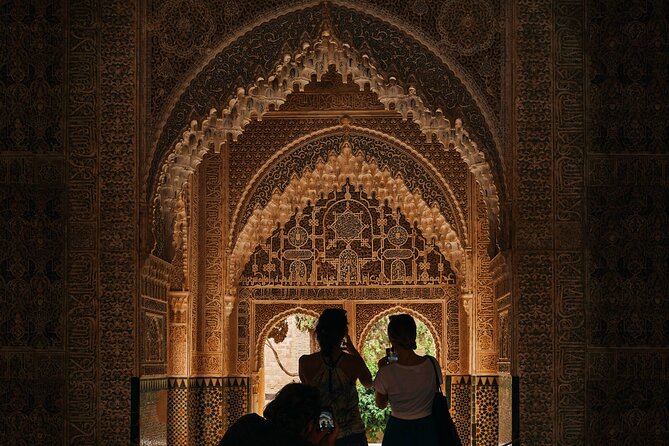
This ticket is built around the Alhambra’s older bones plus the sultan’s escape from court life. You get admission that covers Alcazaba, Generalife Gardens, and the Palace of Carlos V. That’s a strong spread: defensive walls, top-floor views, and a big Renaissance-style statement that feels almost like a surprise guest at a Moorish party.
What you should plan around is the missing piece: the Nasrid Palaces entry is not included. Those are often the most in-demand rooms. If you want the full “must-see palace rooms” experience, you’ll need to add that separately (and confirm opening times). If you’re happy with exteriors, gardens, courtyards, towers, and views, you’ll still have an unforgettable day.
On the route, you’ll also pass major gates and plazas. Some parts of what you’ll see are free to enjoy—like the entrance gateway landmarks—while the paid areas connect you to the top viewpoints and garden core.
A few more Granada tours and experiences worth a look



Price and Value: Is $30 a Smart Deal or an Expensive Detour?
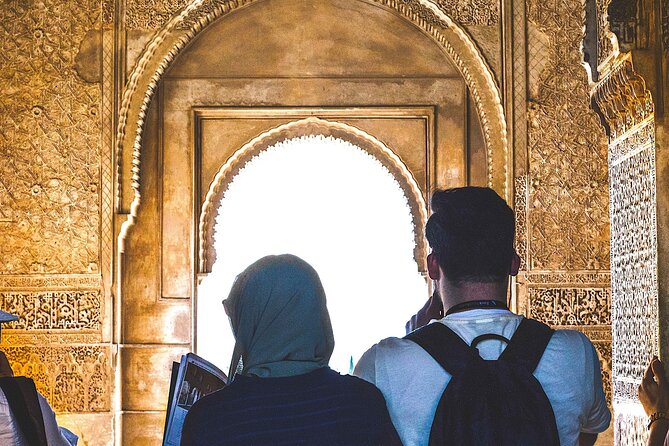
At $30.01 per person, this can look like a bargain for an Alhambra day. And if you mainly care about Alcazaba views, Carlos V’s courtyard, and Generalife gardens, it can feel well matched to what you get.
But price value in the Alhambra world isn’t just about the number. It’s about what’s covered versus what you’re missing. Because Nasrid Palaces are not included, the true comparison is: does your day plan require those specific palace interiors?
If you find yourself thinking, I really want the top palace rooms, then this may cost more than it should overall once you add the missing ticket. If your priorities are views, architecture mix, and garden water features, then the current bundle can make sense.
Also, this is a ticket collection model rather than a digital-entry model. That adds time and friction. If you’d rather minimize steps and uncertainty, booking the most direct option from official channels often feels safer and simpler.
Meeting at Play Granada: The Logistics That Can Make or Break Your Morning
Your official start point is Play Granada, Carrera del Darro, 1, Albaicín (18010). You’re not just showing up at the main Alhambra entrance. You’re collecting a monument ticket at that meeting location first, then heading onward.
That matters because you’ll want to:
- redeem your monument ticket at the meeting point
- have an original ID or passport ready (driving license can work as an ID option)
- show up with a working smartphone with internet for the audio
The audio requirement is the most important practical detail. Inside the Alhambra complex, coverage can be spotty, and the audio depends on a live connection. If your phone struggles with signal or you rely on offline mode that isn’t provided, you can end up walking without the guide you paid for.
Tip: wear shoes you can trust on uneven stone and changes in elevation. This is not a flip-flop day.
Puerta de la Justicia and Puerta del Vino: Reading History in Stone
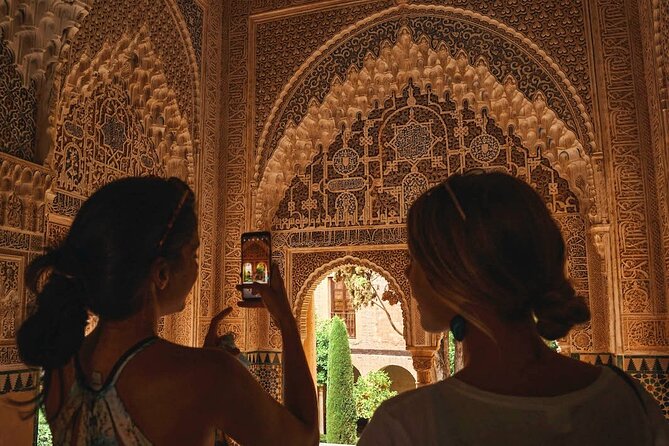
The first moments are about context. You’ll pass through the kind of entrances where you can almost feel the change in control.
Puerta de la Justicia marks a symbolic transition. The horseshoe arch and the Christian coat of arms reflect the shift from Moorish rule to the Spanish conquest in 1492. Even if you don’t read every explanation, the structure itself does a lot of storytelling here.
A little later, you’ll reach Puerta del Vino, a horseshoe-arched gate that once led toward the royal palaces. The name links to wine-trading stories, though there’s also an idea that it comes from decorative colors. That mix of legend and architecture is part of why the Alhambra can feel so personal: it’s history with human fingerprints.
These are relatively short stops, but they’re useful. They set the tone before the real climbs and open courtyards.
Plaza de los Aljibes: A Quick Panoramic Pause Above the Water Reservoirs

Before you hit the fortress area, you’ll stand at Plaza de los Aljibes, a wide open esplanade above the Alhambra’s water reservoirs. This is one of those spots where the monument slows down and lets you look.
You’ll get a panoramic view toward Granada’s Albaicín and Sacromonte neighborhoods. This is also where the Alhambra’s design mix shows up clearly—Islamic architecture principles combined with later layers. Even if you’re a first-timer, this view helps everything you see next make more sense.
Give yourself a minute here to stand still. It pays off later, especially when you’re climbing for the 360° view.
You can also read our reviews of more guided tours in Granada

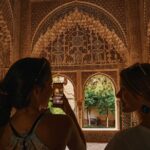


Alcazaba and Torre de la Vela: The 360° Granada Moment
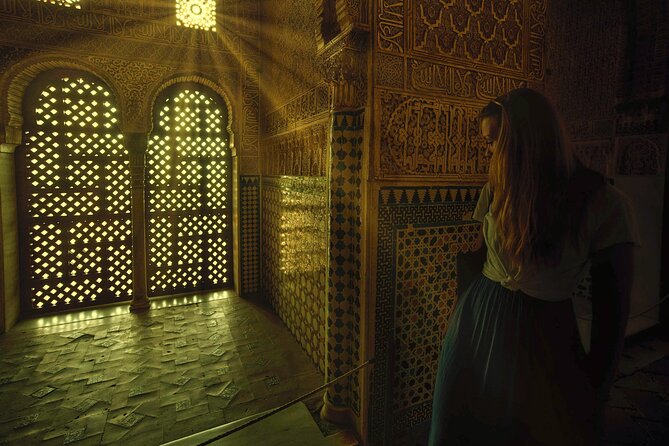
The heart of the “fortress” side is Alcazaba, the oldest part of the Alhambra complex that once functioned as a military stronghold. If you want the Alhambra to feel alive instead of purely decorative, this is where you start to get it.
Climb up to Torre de la Vela (Watchtower) for breathtaking 360° views of Granada. From up there, you understand why these walls mattered. The city stretches out below, and the Alhambra looks less like a museum and more like a command post perched above the world.
There’s also a historical detail baked into the tower’s story. The tower bell was famously rung every January 2nd, linked to the day the Catholic Monarchs took the city from the Nasrids. It’s the kind of small fact that turns a view into a memory.
Palace of Carlos V: When Renaissance Style Smashes the Pattern

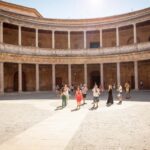
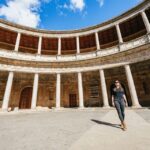
Then comes a dramatic shift: Palacio de Carlos V. You’ll see a strong Renaissance contrast to the Islamic structures around it. Built in the 16th century by Emperor Charles V, it was meant to show Spanish dominance—so yes, the vibe changes on purpose.
Inside, the centerpiece is the massive circular courtyard, widely treated as one of Spain’s finest Renaissance designs. If you only expect one style in the Alhambra, this is your reality check—in a good way. It’s a reminder that Granada is a layered city, not a single time period frozen in amber.
If your audio guide is working, this is a good place to listen carefully. The contrast is easier to appreciate when you understand why the courtyard and design choices were made.
El Partal Gardens and Torre de la Cautiva: Water, Tilework, and Calm
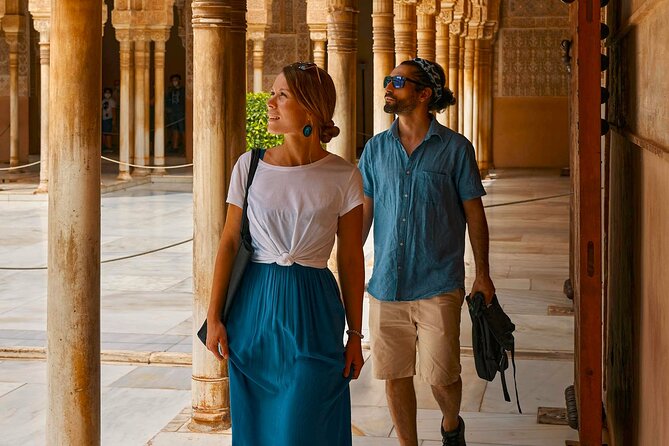
The route continues into the garden side with Palacio El Partal and its gardens. This is where the Alhambra gets softer and more reflective. You’ll find reflective pools, Moorish towers, and lush vegetation—plus that feeling of stepping into an outdoor room.
Near the gardens, you can look for Torre de las Damas (Ladies’ Tower). It preserves Nasrid-style balconies overlooking the garden area. It’s one of those spots where you get a layered view: you’re looking at the tower, but you’re also looking through space toward the gardens.
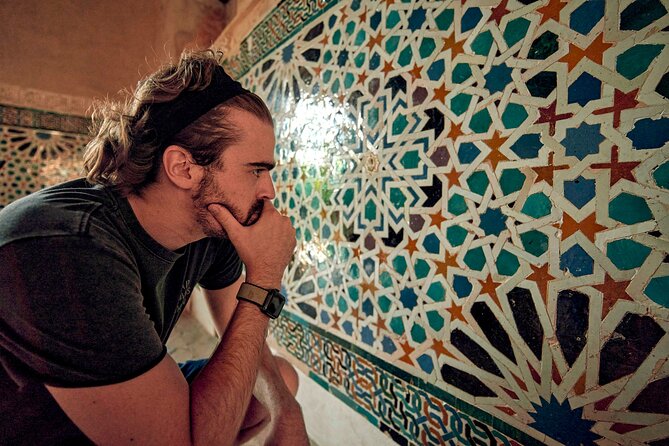
Then there’s Torre de la Cautiva, described as a richly decorated residential tower. This is the kind of place you’ll enjoy most if you like close attention—stucco and tilework are the stars here. The name refers to a Christian noblewoman rumored to have lived there after being taken by the sultan. Even if you don’t go searching for the legend, you’ll still appreciate the craftsmanship.
This segment is also a nice pacing reset after the climbs. It helps balance the day.
Generalife: The Water Channel, the Cooling Stairway, and the Oleander Walk
Next you move into Generalife, the summer palace and gardens of the Nasrid sultans. This estate is designed for retreat—less formality, more calm.
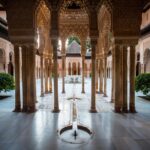
A standout is the Court of the Water Channel (Patio de la Acequia), one of the most iconic Generalife scenes. Fountains flow, flowers add fragrance, and delicate archways frame the water. It feels like a paradise-like setting because the design treats water as architecture, not just decoration.
Close by, check out Escalera del Agua. This Nasrid-era stairway uses flowing water channels carved into the stone handrails. It cools the area as you ascend, and you’ll hear trickling water as you move. It’s practical and atmospheric at the same time.
Then end with the Paseo de las Adelfas (Oleander Walkway), where the walk closes in on reflection. It’s a gentle ending after higher energy viewpoints and palace courtyards.
Along the way, you may also pass the Generalife Theatre, a modern open-air theater used for cultural events, including Granada’s International Festival of Music and Dance. Even if there’s no performance that day, it gives the garden a lived-in feel.
Making the Audio Guide Work When the Phone Signal Plays Games
This ticket includes a self-guided audioguide with storytelling and navigation assistance, but it comes with a big “real world” requirement: you must have a smartphone with internet.
That’s not a small detail. In older stone settings like the Alhambra, signal can be patchy. If your audio starts cutting out, you can still enjoy the monument, but the guide loses its edge—especially when it helps you connect what you’re seeing to the larger story.
Practical move: treat your phone like part of the tour. Keep it charged, use airplane mode only if the audio is fully offline (and the setup you get allows it—this ticket requires internet, so assume it might not), and expect some weak spots.
Also, because you’re exploring at your own pace, you’ll want to stay mindful of time for the parts that are included. If you get stuck listening too long at a viewpoint, it’s easy to run short on the later garden sections that you’d planned for.
Who Should Book This Ticket (and Who Might Be Happier Booking Elsewhere)?
This works best if you:
- want flexible pacing and don’t need a live guide
- care about the Alcazaba tower views and Generalife gardens
- enjoy moving through spaces slowly enough to notice details in architecture and water design
- are comfortable with a walk-heavy day and moderate physical effort
You might be happier booking in a more direct way (or adding the missing palace ticket) if you:
- consider the Nasrid Palaces interiors a must
- prefer to avoid any stop-and-start logistics like collecting tickets at an office first
- know your phone is often unreliable with internet in busy old-city areas
Should You Book This Alhambra Ticket with Audio Guide?
Book it if your priority is a self-paced Alhambra day focused on Alcazaba, Carlos V, and Generalife—and you’re ready to rely on your phone for audio. The included route is strong, and the architecture mix makes it feel like a full story instead of a checklist.
Skip or rethink it if you’re expecting the Nasrid Palaces to be part of what you’re paying for, or if you’d rather minimize phone-signal dependence and ticket-collection steps. In that case, add what you’re missing first, or consider a more direct purchase path that matches your exact wish list.
Bottom line: this can be a great way to experience the Alhambra at your pace—just be precise about what’s included and plan for the phone-and-internet reality.
FAQ
Is the audio guide available in English?
Yes. The experience is offered in English.
How long does the visit take?
Plan on about 2 to 3 hours.
What areas are included with the ticket?
Your entry includes access to the Alcazaba, Generalife Gardens, and the Charles V Palace. The Nasrid Palaces entry ticket is not included.
Where do I collect the monument ticket?
Collect your monument ticket at Play Granada, Carrera del Darro, 1, Albaicín, Granada. You then visit the Alhambra on your own.
Do I need a smartphone and internet for the audio guide?
Yes. You need a working smartphone with internet to use the audioguide.
What identification do I need?
You need original ID (passport or driving license/ID) to access the monument.