REVIEW · ALMERIA
Almería: Caves of Sorbas Tour
Book on GetYourGuide →Operated by Cuevas de Sorbas · Bookable on GetYourGuide
Crawling into a crystal-lit world changes how you see rock. This gypsum karst cave system in Sorbas, near Almería, is the largest underground cave system in Spain, and you’ll walk through galleries shaped by water over thousands of years. I love the helmet-light effect on crystals and the clear guidance from instructors like Heike and Marlon, who keep the route understandable even when it gets physically awkward. One thing to consider: you do have to climb and crawl a bit, so it’s not a casual stroll.
You’ll move through sections where the cave tightens, where you’ll look down and up at formations, and where the guide’s pace matters. At about 2 hours long, it’s a strong value for the gear, safety support, and the chance to see formations up close—especially the stalactites and stalagmites that show how gypsum behaves with time and water.
In This Review
- Key points worth knowing
- Almería’s Sorbas Caves: gypsum karst you can actually feel
- The 2-hour guided flow: what happens once you’re underground
- Yeso Cave: stalactites, stalagmites, and why gypsum looks alive
- Barranco del Infierno: the water story behind the galleries
- Helmet-light crystals and the real “how it feels” part
- Price and value: why $25 can feel fair here
- What to wear: sports shoes, no heels, and optional rental boots
- How the different cave routes change the experience
- Who should book (and who should skip) this underground crawl
- Should you book the Almería Caves of Sorbas Tour?
- FAQ
- How long is the Almería: Caves of Sorbas tour?
- How much does the tour cost?
- What is included with the tour?
- Is the tour guided?
- Are cameras or video recording allowed in the caves?
- What should I bring and wear?
- Do I need to climb or crawl during the tour?
- Can children join?
- Is this tour suitable for claustrophobia, pregnancy, or mobility issues?
- What language is the instructor, and can I cancel?
Key points worth knowing
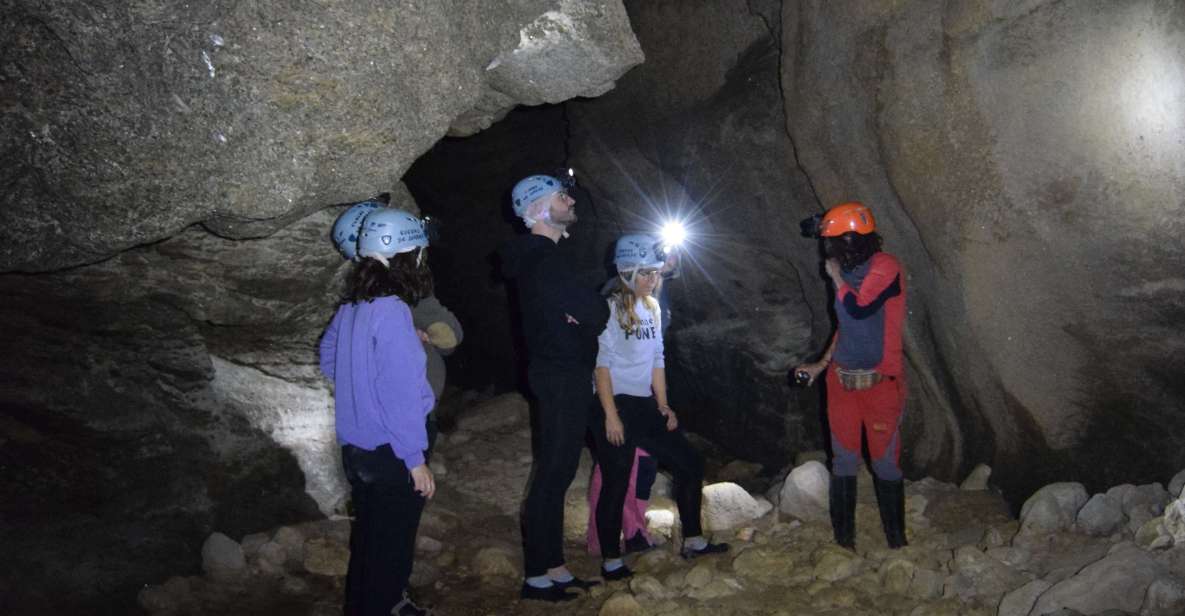
- Helmet lighting makes the crystals pop, especially when they catch the light at the right angles
- Gypsum karst tells a clear story of water erosion, not just pretty shapes
- Yeso Cave is a highlight with specialized guided attention
- The route includes some crawling and climbing, aimed at self-sufficient visitors
- Cameras and video recording are banned, so expect to watch and remember, not document
- Overalls and boots are often available for rent if you want extra grip and coverage
Almería’s Sorbas Caves: gypsum karst you can actually feel
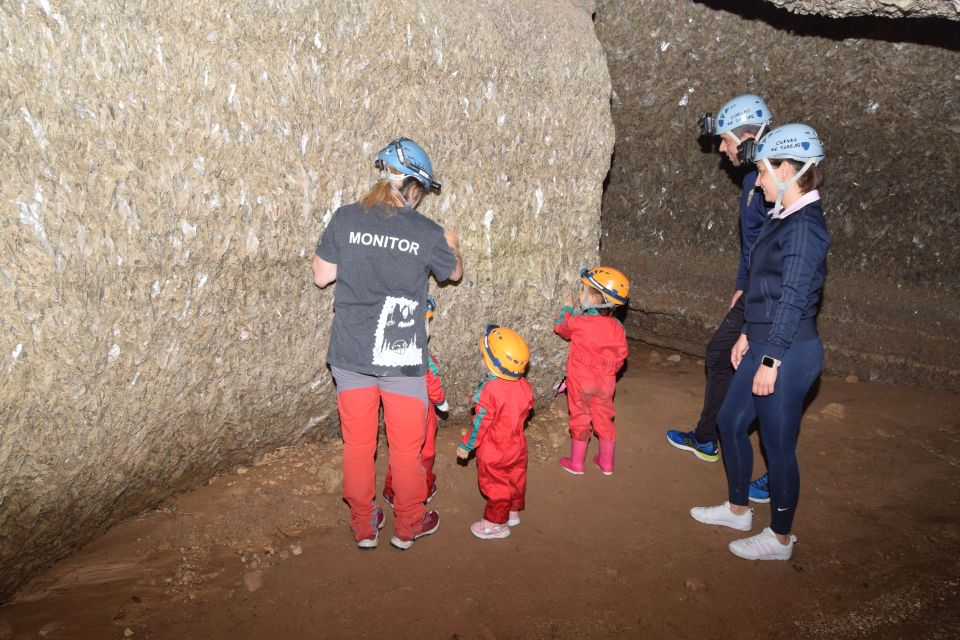
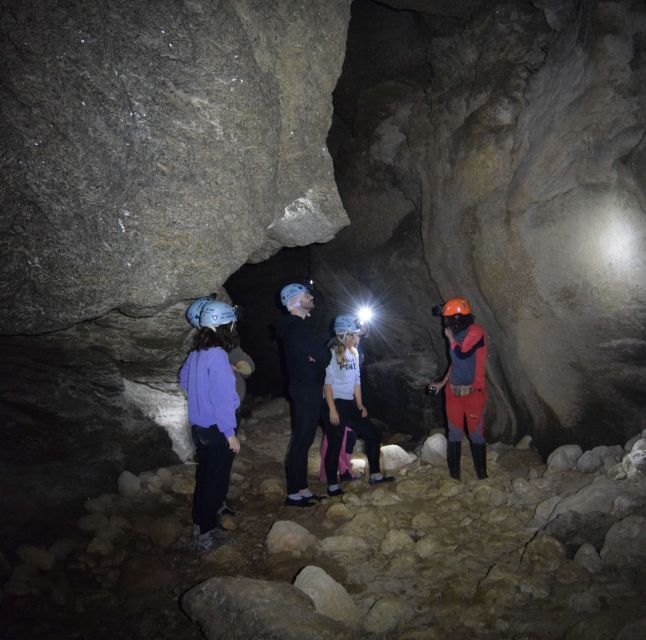
If you think of caves as dark and static, Sorbas will correct that idea quickly. This complex is built on gypsum karst, which is the kind of rock that reacts to water over long periods. When you’re down there, you can see evidence of that process in the form of smooth, carved surfaces and mineral shapes that look like they’re “frozen” mid-creation.
The atmosphere is also different from what many people picture. You’re not just walking a corridor with rope lines. You’re moving through uneven ground, passing close to formations, and using your hands at moments where the cave asks for it. The payoff is that the cave stops feeling like scenery and starts feeling like a real place with real texture.
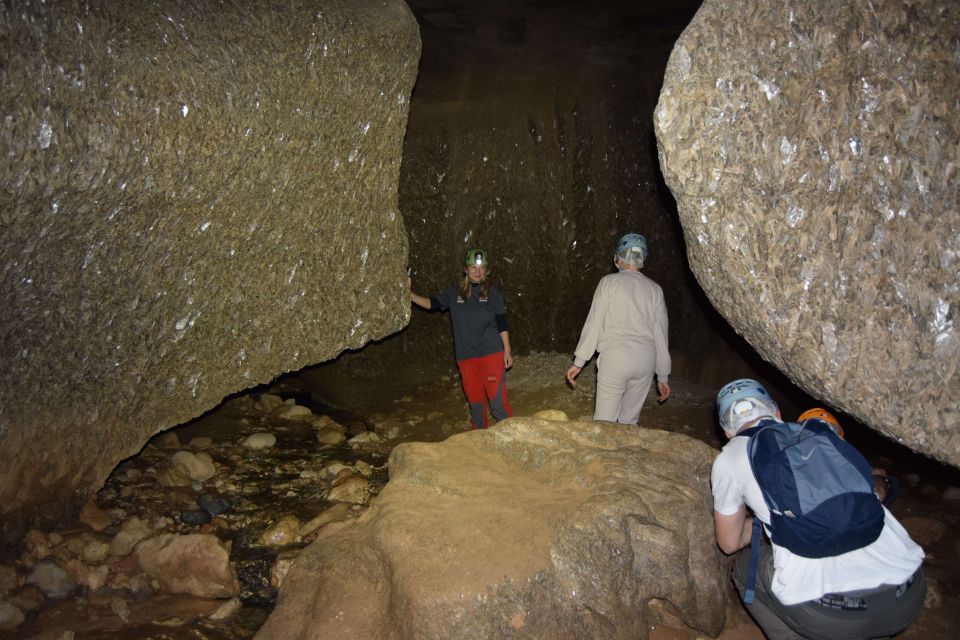
And yes, the helmet light matters. When your light hits the minerals at close range, you get sharp, sparkling reflections that would be harder to notice in daylight. It’s one of those small details that makes the whole experience feel more vivid and real.
You can also read our reviews of more tours and experiences in Almeria.


The 2-hour guided flow: what happens once you’re underground
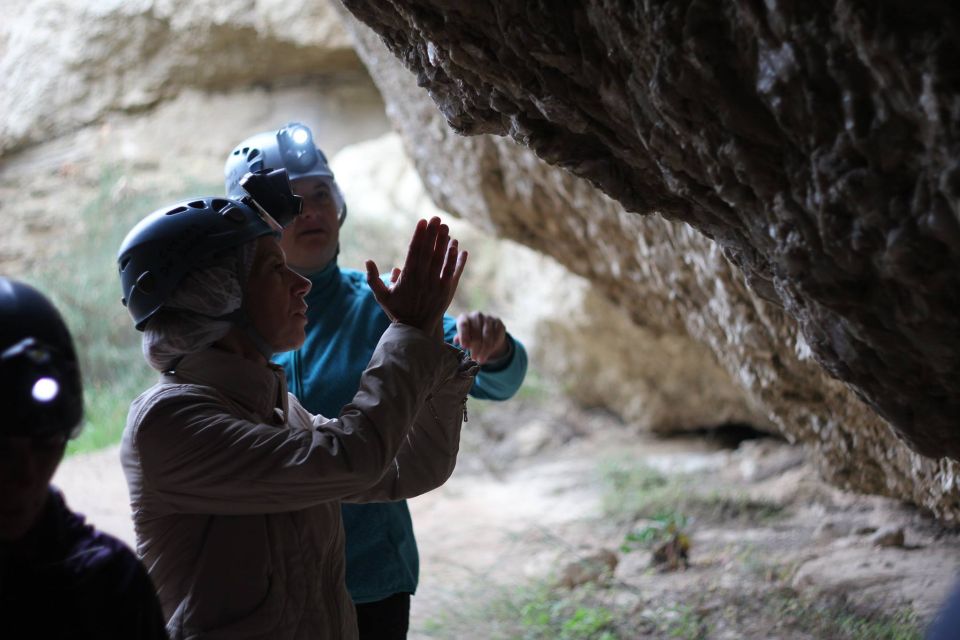
This is a 2-hour tour, which is long enough to let the cave “open up” visually, but not so long that you’re stuck in the same physical positions for too much time. The route centers on a guided walk through key galleries, plus time to observe formations and the way water has shaped the rock.
Here’s the overall feel of the timing:
- You start moving right away, with helmets and lights set up so you can see safely.
- Then you follow your guide through the cave’s main sections—looking for the mineral highlights and paying attention to where the route changes from easy walking to more awkward sections.
- You’ll pause at points where the guide points out how water erosion and time have altered the gypsum structure.
- The visit focuses on observation and movement, not long, complicated stops.
The tour is described as something that includes walking, climbing, and crawling along the way. That’s not a scare tactic; it’s simply what makes this experience different from a “sit on a tram” kind of cave tour. If you go in expecting an even floor and a straight path, you’ll feel stressed. If you go in expecting to adjust your body and follow directions, you’ll be fine—and you’ll likely have more fun.
Also note: young children need to be able to walk during the visit. Overalls and boots being available for rent can help some families, but the key requirement is physical readiness.
Yeso Cave: stalactites, stalagmites, and why gypsum looks alive
One of the named highlights is Yeso Cave. The cave route is guided, and you’ll get specialized direction on what you’re seeing—especially the shapes created by gypsum deposits.
What I like about formations in gypsum caves is that they don’t just look decorative. They look affected by conditions: airflow, mineral seepage, and moisture patterns. In Sorbas, the experience leans hard on the visual evidence of mineral growth. When you’re under helmet light, the shapes can look sharper and more three-dimensional than you’d expect from typical cave photos.
You’ll also spend time appreciating how the formations relate to the environment:
- Stalactites and stalagmites show how mineral-rich water has deposited material over time.
- The rock textures help you understand that water doesn’t only “create” caves—it also keeps changing surfaces long after the main structure formed.
- The guide’s emphasis on what the cave collects and drains helps you see the underground system as functional, not just decorative.
This is where the tour becomes more than a pretty walk. If you enjoy geology—textures, mineral behavior, water effects—you’ll get more out of each stop.
A potential drawback: if you hate being focused on your footing, you may find yourself looking down more than you want. The cave is worth it, but you need to accept that attention will be split between your steps and the formations.
Barranco del Infierno: the water story behind the galleries
Another key area is the Barranco del Infierno Cave, which is also described by this tour as the cave complex known by that name, and it was the first cave complex discovered in the area. That “first discovered” detail matters because it hints at how these caves moved from unknown to mapped and guided—still natural, but now accessible to visitors in a structured way.
The tour’s main lesson here is water as a sculptor. You’ll see the effects of:
- erosion from water movement over long periods
- the shaping of plaster rock surfaces
- an underground system that gathers rain and floodwater and drains it through the galleries
In plain terms, you’re seeing a living system that only works when water moves. On a surface, you might miss that link. Under the ground, it’s harder to deny: the cave galleries connect like a network, and the rock bears the signs of flow.
When you’re standing in those narrower areas, it helps to watch how the guide describes the water pathway. Even if you don’t remember every term, you’ll leave with a clear mental image: rain becomes underground flow, and the flow becomes shape.
Also, the cave’s timing feels different. You’re underground, in cool, dim space, moving slowly enough to notice change. That makes the water theme feel personal, not abstract.
Helmet-light crystals and the real “how it feels” part
Let’s talk about the experience layer most people worry about: what it feels like when you’re actually moving through the cave.
You’ll notice:
- slippery or uneven textures are part of the environment (which is why the tour stresses sports shoes with a good grip)
- occasional close quarters where you’ll need to adjust your body position
- moments where you have to climb or crawl in a controlled way
When the tour says the reflections happen when crystals get light from your helmet, it’s not just marketing. It’s practical. Your light source is close to your body, so it changes angle instantly as you move. That means you can spot mineral sparkle by shifting slightly—almost like “drawing” with your headlamp.
The guide can also make a difference here. In the feedback I’ve read for this experience, instructors such as Heike get praised for being careful with guidance and for helping children feel secure on tougher sections. Another guide name that comes up is Hika. And Marlon is also mentioned for being a strong guide experience for kids and adults. Different personalities, similar goal: keep the route safe and understandable.
One more note: no cameras and no video recording. This changes the vibe. You can’t spend your whole time hunting shots. Instead, you look, follow the guide, and store the moment in your head.
If you’re the kind of person who likes proof photos, this rule may feel annoying at first. But the upside is that you’ll likely enjoy the cave more because you’re not constantly lowering your face or hands to frame a shot.
Price and value: why $25 can feel fair here
At about $25 per person for 2 hours, this tour is priced in a way that feels realistic for a guided, gear-included underground experience.
You’re not just paying for access. You’re paying for:
- helmet and lighting (so you’re not relying on your own gear)
- other safety elements
- an instructor who leads the route and keeps you on it
- assistance and civil liability insurance
That’s a lot bundled into a relatively short time. And because this is a gypsum karst cave system that requires careful movement, the presence of a professional instructor matters.
If you compare cave tours, the big cost drivers are usually equipment and guiding time. Here, the pricing is simple and the length is compact, so it doesn’t feel like you’re paying for half a day of “stand around” time.
My value check is this: if you want a hands-on, guided cave experience with gear included and you can handle crawling/climbing sections, this $25 price point is easy to justify.
What to wear: sports shoes, no heels, and optional rental boots
This tour is very clear about clothing. You’ll want:
- comfortable clothes
- sports shoes that are attached to the foot, without heels
- sportswear that you don’t mind getting slightly messed up
The route includes climbing and crawling, so you want footwear that stays put and doesn’t make you nervous on uneven ground. No heels is also about stability when you’re changing positions.
If you prefer extra protection, overalls and boots are available for rent. That can help if you’re traveling with regular city shoes or clothes that aren’t ideal for damp, dusty cave conditions.
And remember the rule: cameras and video recording are not allowed. Plan around that by leaving the gear away. Your phone can still be useful, but don’t expect to film inside.
If you’re tempted to wear fashion sneakers, don’t. If you wear hiking boots, great—just make sure they’re the kind that you can move in comfortably and that won’t snag during crawling sections.
How the different cave routes change the experience
This specific tour focuses on key caves within Cuevas de Sorbas. But it’s good to know there are other routes if this one matches your style—or if you want a bigger challenge later.
You’ll see options such as:
- the Combined Route, described as more fun with a little more difficulty
- the Technical Route, aimed at adventurers who want more challenge
- the Cueva del Agua Route, described as amazing and specifically noted for summer
How this helps you plan: if you’re comfortable with the basic walking and don’t mind some crawling, the standard experience is a solid introduction. If you’re looking for more effort and variety, the Combined or Technical options might fit better.
And if you’re traveling in summer and want a different kind of cave experience, the Cueva del Agua Route is worth considering.
The best move is to choose based on your comfort level, not on pure excitement. A “more difficult” cave route can mean more awkward movement, not just more dramatic views.
Who should book (and who should skip) this underground crawl
This tour is a great fit for people who:
- enjoy guided learning about natural cave systems
- like geology themes such as water erosion and mineral formation
- can handle being on uneven ground for a couple of hours
- want an active cave experience rather than a passive one
It’s also a nice option for families when the kids are capable walkers and can follow safety instructions. In the feedback for this experience, kids around the 10–16 range are mentioned as having a good time, as long as they could manage the physical parts.
But it’s not for everyone. The tour is not suitable for:
- children under 3 years
- pregnant women
- people with mobility impairments
- people with claustrophobia
- people with heart problems
- people over 264 lbs (120 kg)
The claustrophobia point is especially important. Even if the route isn’t described as fully “claustrophobic nightmare mode,” there are crawling and climbing sections, and those tighten the experience. If you’re unsure, it’s better to choose a different kind of cave tour that’s more open.
Also, because cameras aren’t allowed, if your main goal is documenting every moment, you may want to adjust your expectations ahead of time.
Should you book the Almería Caves of Sorbas Tour?
Book this tour if you want a guided, active cave experience that teaches you how water and time build gypsum karst. You’ll probably love it most if you enjoy hands-on nature and you don’t mind that the route asks your body to cooperate.
Skip it if you can’t handle crawling and climbing, if you have claustrophobia, or if your health or mobility means you’d struggle with uneven, cave-floor movement. The restrictions are there for a reason.
If you’re deciding between routes, think of the standard tour as a strong “best first step” into Cuevas de Sorbas. If you come back feeling energized, then the Combined, Technical, or Cueva del Agua options can be your next move.
FAQ
How long is the Almería: Caves of Sorbas tour?
The tour lasts 2 hours.
How much does the tour cost?
The price is $25 per person.
What is included with the tour?
You get a helmet, lighting, and other safety elements, plus assistance and civil liability insurance, and a professional instructor.
Is the tour guided?
Yes. A professional instructor leads the visit.
Are cameras or video recording allowed in the caves?
No, cameras and video recording are not allowed.
What should I bring and wear?
Wear comfortable clothing and sports shoes attached to the foot, without heels. Sportswear is recommended.
Do I need to climb or crawl during the tour?
Yes, you will have to climb and crawl a bit along the way. The route is aimed at people who can fend for themselves.
Can children join?
Young children need to be able to walk for the visit. The tour is not suitable for children under 3 years.
Is this tour suitable for claustrophobia, pregnancy, or mobility issues?
No. It’s not suitable for claustrophobia, pregnant women, or people with mobility impairments.
What language is the instructor, and can I cancel?
The instructor is Spanish. You can cancel up to 24 hours in advance for a full refund, and you can reserve now and pay later.