REVIEW · CADIZ
Andalusian Horses Dance Show
Book on Viator →Operated by FUNDACION REAL ESCUELA ANDALUZA DEL ARTE ECUESTRE · Bookable on Viator
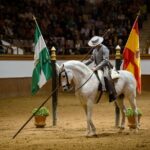
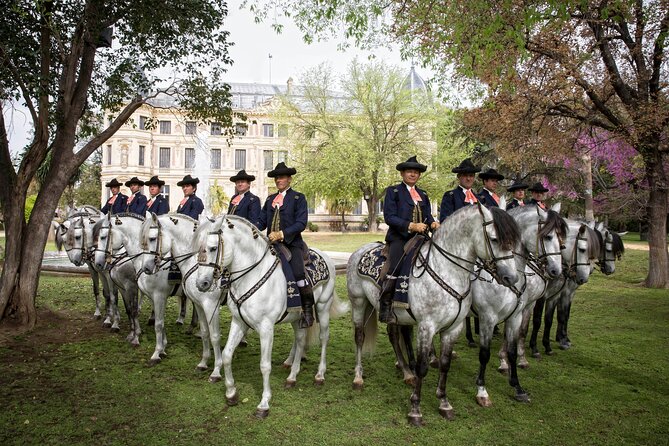
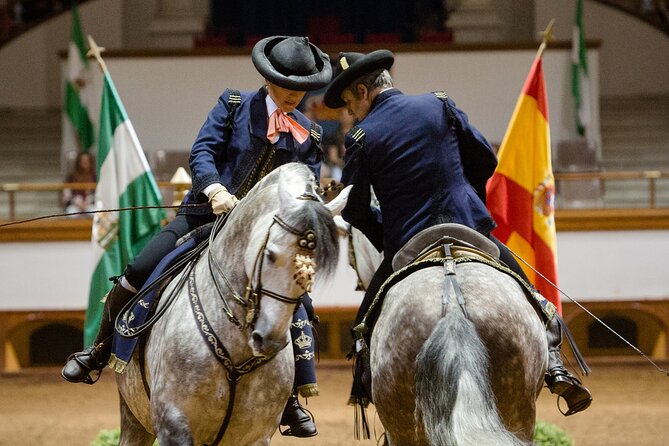
Horses in sync with centuries of training. This Andalusian Horse Dance show at the Royal Andalusian School of Equestrian Art in Jerez strings together multiple disciplines—doma vaquera, classical dressage, carriage driving, and more—into about 1 hour 30 minutes. I love how the program showcases traditional riding techniques rather than turning the experience into generic entertainment.
I also like the practical setup. You get a clear entry point, and the venue has a cafe plus enough atmosphere around the school to make it a solid family outing, not just an event you rush into and out of.
One thing to consider: you can’t really choose your exact seats. Tickets are allocated by category and order of purchase, and a few visitors reported restricted sightlines. If you’re sensitive to missing narration, note that explanations may lean Spanish even when announcements cover multiple languages.
In This Review
- Key things to know before you go
- Where the show lives: Royal Andalusian School in Jerez
- The 90-minute show format: 6 to 8 choreographies in rotation
- What you’ll likely see: the main acts and what they mean
- Timing and meeting point: planning for a calm arrival
- Seats and sightlines: what can go wrong (and how to reduce the risk)
- Music, narration, and what to watch if you do not speak Spanish
- Family-friendly? Yes, with the usual kids-and-comfort caveats
- Value for money: is $33.43 a fair deal?
- How it fits into a day in Jerez (and from Cádiz)
- Rules to remember before you walk in
- Should you book the Andalusian Horses Dance show?
- FAQ
- Where is the show located?
- What time does the experience start?
- How long is the show?
- What does the ticket include?
- Do I need to print anything?
- Can I choose my seat or row?
- Are photos or videos allowed?
- Can the show program change?
- How far in advance should I book?
- What’s the cancellation rule?
Key things to know before you go
- Multiple disciplines, one sitting: you’ll usually see 6 to 8 choreographies in a single show.
- Andalusian-specific styles: doma vaquera alongside classical Haute École work.
- Grand finale in the arena: expect a coordinated carousel-style maneuver to end strong.
- Seat selection is limited: category-based seating means your view can vary.
- Arrive with buffer time: the grounds and cafe are worth a quick look.
- No filming rules: you won’t be allowed to record or take photos unless you’re authorized.
Where the show lives: Royal Andalusian School in Jerez
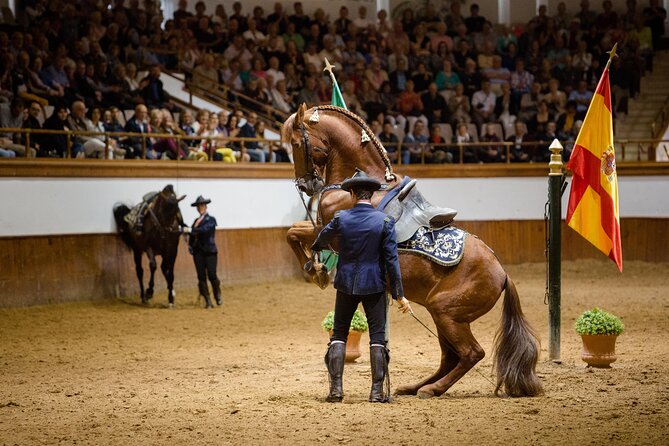
This experience takes place at the Royal Andalusian School of Equestrian Art in Jerez de la Frontera. The show itself is titled How the Andalusian Horse Dance, and it’s run by the Fundacion Real Escuela Andaluza del Arte Ecuestre. If you’re building an Andalusia itinerary, this is one of the more “stop-and-stare” activities: you’re not bouncing between sites, you’re settling in to watch training, music, and precision inside a real equestrian school.
The venue location is also convenient for exploring after. When the performance ends, you’re in the center of Jerez—close enough to grab a coffee, wander historic lanes, or connect to other things you planned for the day.
Why this matters: you get the show’s payoff without turning the day into logistics math. For many people, Jerez itself is the real draw, and the horse school is the easy anchor.
A few more Cadiz tours and experiences worth a look
The 90-minute show format: 6 to 8 choreographies in rotation
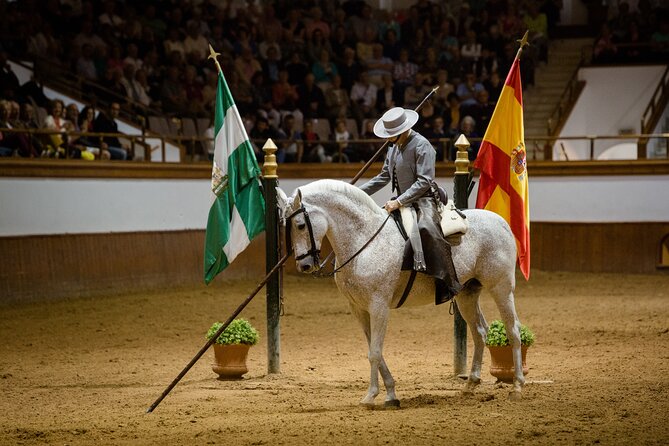
The biggest idea here is variety. Each day’s program includes between six and eight styles of choreography, all drawn from the school’s established repertoire. The show isn’t a random assortment either; it’s organized so the difficulty and entertainment value stay consistent throughout.
As you watch, you’ll notice a key pattern: the riders and horses shift from one “language” of movement to another. Some segments are built around speed and rhythm changes. Others are about collection and balance. Others are teamwork and symmetry. Even if you only catch part of the choreography, you can still tell the school is trying to teach you how many forms of Andalusian equestrian art exist.
What you’ll likely see: the main acts and what they mean
Here are the performance blocks described for the repertoire, with what each one feels like from the audience side.
Doma vaquera: the cattle-herder roots
Doma vaquera is based on techniques honed by traditional cattle herders. The horseman rides around the arena using one hand, first trotting and later galloping, then changing rhythm before moving into maneuvers like pirouettes and arreones (a burst into gallop).
Why you’ll care: this segment gives context. You’re not only seeing refined arena work; you’re seeing a practical style shaped by work in the field, translated into performance. It tends to be the most “alive” feeling movement-wise because of the rhythm changes and acceleration.
Classical dressage pieces: the horses answer the music
In the classical dressage sections, horses perform advanced exercises to classical music. The show’s listed choreographies include pieces such as The Colts, Airs on Horseback, Pas de Deux, Passage and Piaffer, Domino on Horseback, Airs above the ground, and Fantasy.
What to look for: pay attention to how small cues create big results. These horses aren’t just following; they’re executing precise movements on timing and balance. If you’ve ever watched dressage and thought it looks slow, this is different. You’ll still see controlled pauses, but you’ll also see sudden clarity—moments where everything snaps into perfect alignment.
Carriage driving: the harness, the attitude, the control
Carriage driving in this show has horses drawing carriages with classical harness. Historically, these carriages were used for transport, but here they’re used for sport and exhibitions.
From your seat, the wow-factor is how smoothly the horses handle the pace and turns while looking fully “in character.” The coachmen also add energy, because the driving skill isn’t passive—it’s constantly adjusted.
Work in hand: Haute École without being in the saddle
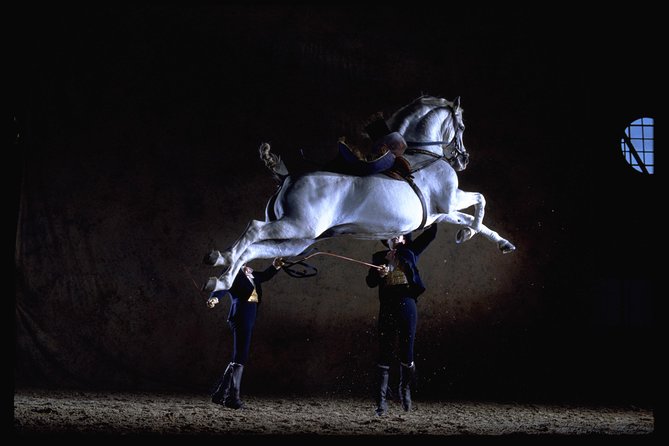
Work in hand is one of the most mind-bending parts. The horse obeys commands even when the horseman is not in the saddle, performing classical Haute École dressage exercises such as levades, caprioles, courbettes, piaffe (between pillars), the Spanish walk, and long reins.
This segment is where you can really feel the training relationship. You’ll watch for the horse’s responsiveness and for how the movement stays collected, not frantic. Even if you don’t know the technical vocabulary, your eyes will understand: the horse is thinking and responding.
The carousel: group precision as a finale
The show ends with a coordinated carousel maneuver. In this grand finale, horses and riders work together in unison in the center of the arena.
Why it’s a good ending: the show has already taught you the “solo” skills—rhythm changes, collection, response to cues. The finale asks a different question: can multiple trained horses execute advanced movements together, staying synchronized? That’s where the atmosphere often shifts from impressive to jaw-drop.
Timing and meeting point: planning for a calm arrival
Your start time is listed as 12:00 pm. The ticket redemption point is at the Royal Andalusian School of Equestrian Art, Av. Duque de Abrantes, s/n, 11407 Jerez de la Frontera, Cádiz, Spain.
Practical tip I’d follow: arrive early, not at the last second. One good piece of advice that shows up again and again is to give yourself about 30 to 45 extra minutes to visit the grounds. There’s a cafe inside too, so you can settle in without turning your visit into a race.
Also: bring a printed receipt. The venue asks for the printed receipt at the ticket office for admission.
Seats and sightlines: what can go wrong (and how to reduce the risk)
Let’s talk straight about seating. Tickets are sold by category, and there’s no right to select a row or seat number. Seats are allocated according to the order of purchase or booking. That means your experience can be a little unpredictable.
Some visitors specifically praised that higher seats can improve view. Others mentioned getting seats with restricted sightlines that blocked part of the arena view. Front-row expectations can also vary depending on where your line of sight lands.
How to reduce the risk:
- If your booking flow offers different price categories, treat higher categories as “better sightline insurance.”
- If you arrive early, you may still have time to confirm you’re in the correct area and settle before the crowd thickens.
- Focus on the center of the arena movements during the final choreography, since that’s where synchronized action happens.
The good news: even with less-than-perfect seats, this is still a strong show because the horses repeat major segments clearly enough that you won’t feel lost. The only time it becomes frustrating is when a large portion of the arena is blocked.
Music, narration, and what to watch if you do not speak Spanish
This show is built around classical music and formal equestrian choreography, so you can enjoy a lot even if your Spanish is limited. That said, there’s a nuance: narration before each segment is listed as Spanish-only in at least one visitor experience, even though announcements may come in multiple languages.
Here’s my suggestion. Don’t try to “translate” the entire show in your head. Instead:
- Watch for transitions: rhythm changes often signal which discipline you’re entering.
- Look at what the horse is doing, not just the rider’s posture. In segments like work in hand, the horse’s responsiveness is the story.
- Let the music guide you. The dressage pieces are timed and shaped by the score, so your brain starts grouping movements correctly once you catch the pattern.
If you’re the type who loves context, you might want to read a bit about the disciplines before you go. It will make what you see feel less like fancy movements and more like a training system with rules.
Family-friendly? Yes, with the usual kids-and-comfort caveats
This is described as ideal for families, and the show format supports that. It’s visual, not text-heavy, and it moves through multiple acts without dragging for hours.
Two comfort considerations:
- The arena can get warm in summer, so bring a fan if that’s allowed for your visit and for your own comfort.
- The experience runs about 90 minutes. That’s short enough for many families, but plan bathroom and snack timing before you settle.
If you’re traveling with kids, the show is a good pick because horses stay the focus from start to finish.
Value for money: is $33.43 a fair deal?
At $33.43 per person, the value is mostly about density. You’re paying for a packed hour-and-a-half featuring several major equestrian disciplines—doma vaquera, classical dressage segments (with multiple named choreographies), carriage driving, work in hand, and a group finale.
You also get the entrance to the show included. There’s no suggestion that you’re paying extra just to access the performance itself.
Where the math gets a little tricky is seating variability. If you get a restricted view, your satisfaction can drop even if the show is excellent. That’s why I treat category choice and early arrival as part of the value calculation, not an optional detail.
In plain terms: if you like horses, discipline, and choreography, this price usually feels like money well spent. If you’re very sensitive to missing visuals, you’ll want to plan your seat category carefully.
How it fits into a day in Jerez (and from Cádiz)
This show is based in Jerez, while Cádiz is a different place—so your day depends on how you’re already traveling. Many people connect Jerez to other Andalusia plans, and because the show ends in town, it works well as either:
- a midday anchor, then a walk and lunch afterward, or
- a focused “experience block” that breaks up a longer travel day.
Transport note from real-world visits: taxis can be expensive depending on where you start from (one experience highlighted costly taxi rides from a cruise port setting). If you’re trying to keep costs down, consider using public transport where it fits your route, or compare ride options rather than assuming the first taxi you see will be the best deal.
Rules to remember before you walk in
A few venue rules are worth knowing so you don’t get stuck at the gate:
- No filming or recording, and no photos unless you’re an authorized professional.
- Avoid bringing bottles, cans, animals, or other items the management considers unsuitable.
- The program can change, so don’t plan other tightly timed activities back-to-back.
These are common for performance venues, but it’s better to go in informed.
Should you book the Andalusian Horses Dance show?
Book it if you want one strong, culture-focused equestrian performance in Jerez. I think it’s a great choice for horse lovers and families because the show blends multiple styles—cattle-herder-inspired doma vaquera, classical dressage precision, carriage driving, and work in hand—then closes with a group finale that makes the whole thing feel like a complete arc.
Skip or rethink if:
- you’re very particular about seat sightlines and can’t tolerate the possibility of restricted views, since seating is category-based without seat selection
- you need detailed explanations in a language you speak, since narration may be Spanish-led even when announcements cover multiple languages
If you do book, my best advice is simple: pick the best seat category you can afford, arrive early to settle, and focus on watching the horses’ responses and transitions. Do that, and you’ll feel like you got much more than just a show—you’ll feel you witnessed a training tradition translated into art.
FAQ
Where is the show located?
It takes place at the Royal Andalusian School of Equestrian Art in Jerez de la Frontera, at Av. Duque de Abrantes, s/n, 11407 Jerez de la Frontera.
What time does the experience start?
The start time is listed as 12:00 pm.
How long is the show?
It runs about 1 hour 30 minutes (approx.).
What does the ticket include?
Your admission includes entrance to the show How the Andalusian Horse Dance.
Do I need to print anything?
Yes. It’s essential to present your printed receipt at the ticket office.
Can I choose my seat or row?
No. Tickets are allocated by category without the right to select a specific row or seat number, and seats are assigned according to booking order.
Are photos or videos allowed?
No. You are not allowed to film, record, or take photographs unless you are an authorized professional.
Can the show program change?
Yes. The management reserves the right to alter or change the program.
How far in advance should I book?
On average, it’s booked 31 days in advance.
What’s the cancellation rule?
Free cancellation is allowed up to 24 hours in advance for a full refund. Cancel less than 24 hours before the start time and the amount paid is not refunded.