REVIEW · BARCELONA
Barcelona: Mies van der Rohe Pavilion Ticket and Audio Guide
Book on GetYourGuide →Operated by Fundació Mies van der Rohe · Bookable on GetYourGuide
A box of light and steel. The Mies van der Rohe Pavilion turns Barcelona into a quiet lesson in restraint, with modern architecture pared down to essentials and an audio guide that helps you read every material choice. I like that you can take it slow in a site built for calm, and I love how the guide adds history context so it feels meaningful, not just photogenic.
The main catch is the pavilion is intentionally minimal. On some days it can also be affected by artistic interventions, so it may not always look exactly like the classic photos.
In This Review
- Key things to know before you go
- Entering the Pavilion: What Your $10 Buys You
- Where the Pavilion Fits in Barcelona’s Big Picture
- The Walkthrough: How to Experience the Pavilion Properly
- Interiors, Exteriors, and the Art of Very Little
- The Material Story: Why Stones and Sourcing Matter
- 1929 Roots, Then a Reconstruction That Proves Its Importance
- Timing Your Visit: Small Space, Big Impact
- Rules Inside the Pavilion (and Why They’re There)
- Wheelchair Access: A Comfortable Yes for Mobility
- Who Should Book This Ticket and Audio Guide
- Should You Book This Pavilion Ticket?
- FAQ
- How much does the Mies van der Rohe Pavilion ticket cost?
- How long is the experience?
- Is an audio guide included, and what languages are available?
- Can I enter without waiting in line?
- Is the pavilion wheelchair accessible?
- What items are not allowed at the pavilion?
Key things to know before you go
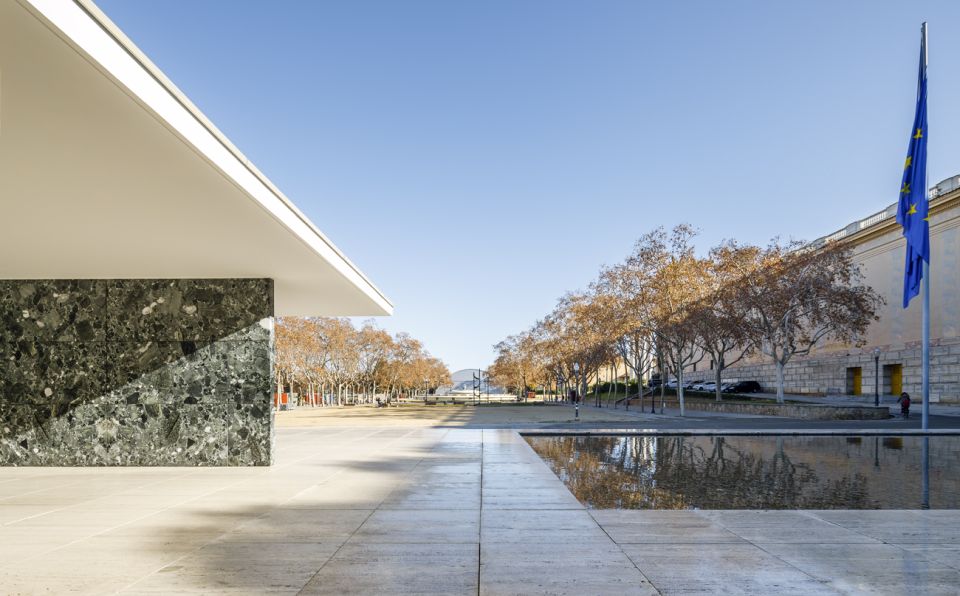
- A 1929 German national pavilion with modern impact: built for the Barcelona International Exhibition, then destined for a different fate.
- Dismantled, then rebuilt and reopened in 1986: the reconstruction is part of the story, not an afterthought.
- Audio guide included in 5 languages: Spanish, Catalan, English, French, and German.
- A careful material palette from far away: materials brought from the Alps, Tivoli, Atlas, and Tinos.
- Skip-the-ticket-line entry: you spend more time inside the space and less time waiting outside.
- A calm, short visit that can feel very quiet: the setting also attracts professional photography and modeling work at times.
Entering the Pavilion: What Your $10 Buys You
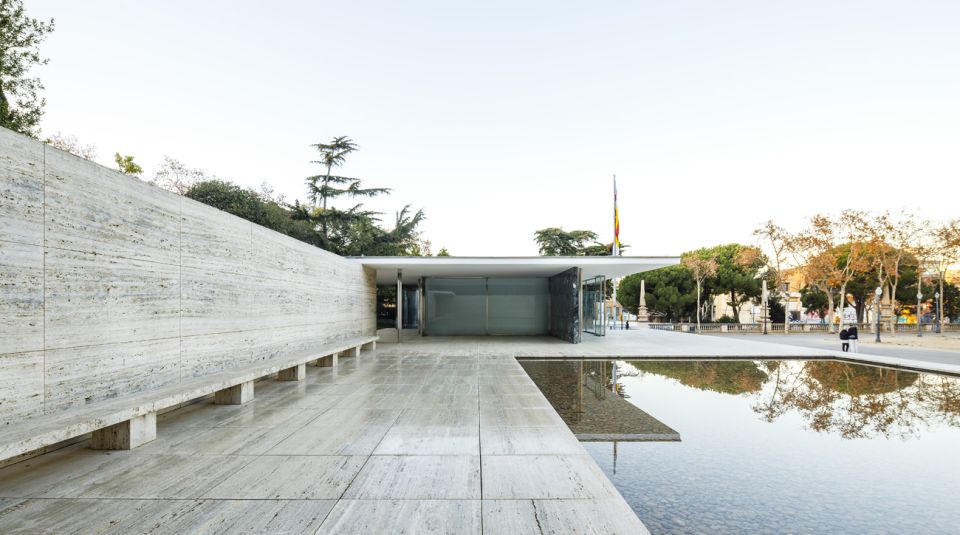
For about $10 per person, you’re not paying for a long guided tour. You’re paying for access to a single, famously influential modernist work plus an audio guide that gives you the right lens to see it clearly.
That value makes sense here. The pavilion’s power is in small, precise relationships—interior to exterior, line to plane, material to light. Without context, it can feel like a tidy courtyard. With the audio guide, it starts to click as a design manifesto.
Also, you can keep your plans flexible with free cancellation up to 24 hours in advance and reserve now, pay later. Those features matter because opening hours can shift, and the site occasionally hosts artistic interventions that may change appearances.
A few more Barcelona tours and experiences worth a look


Where the Pavilion Fits in Barcelona’s Big Picture
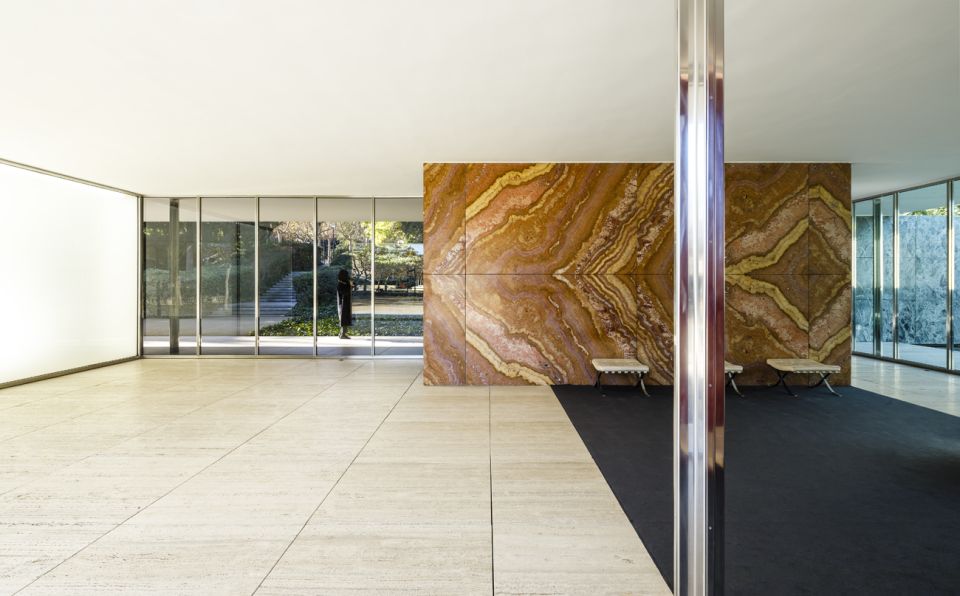
Barcelona is loud with history and styles. This is different. The Mies van der Rohe Pavilion is Modern Movement architecture, stripped down so far that it almost dares you to slow down and look.
It helps to know what you’re seeing: it was designed by Ludwig Mies van der Rohe and Lilly Reich as the German national pavilion for the 1929 Barcelona International Exhibition. After the event, the pavilion was dismantled. Later, its importance was taken seriously enough to justify rebuilding it. It reopened on the original site in 1986.
That background turns your visit into more than a stop on a list. You’re visiting a building whose influence outlived its original purpose—and whose reconstruction signals how much architects still care about exact form.
The Walkthrough: How to Experience the Pavilion Properly
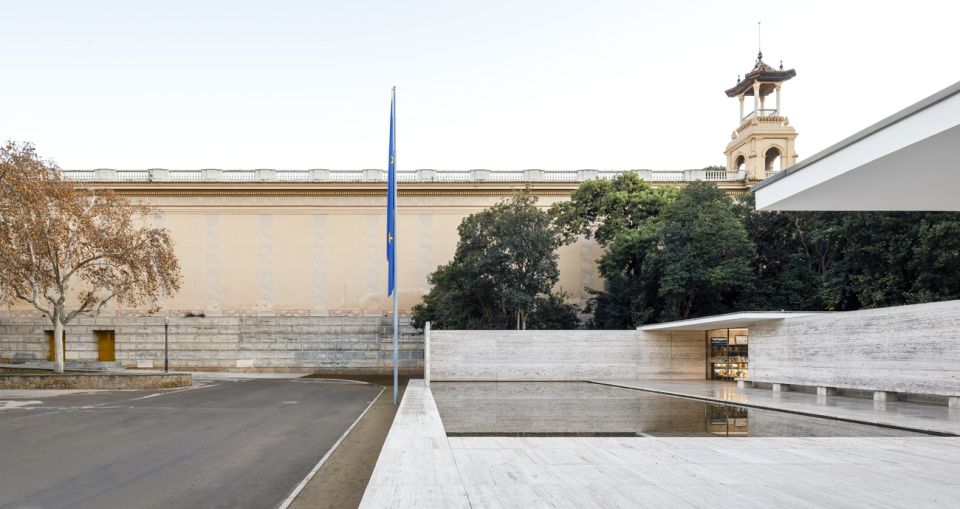
This is a 1-day visit, but it’s not a full-day stroll. Think of it as a focused architecture session.
Your experience usually flows like this:
- You enter with your ticket and go straight into the space.
- You follow the audio guide at your own pace, using it as a route for what to notice.
- You move through the pavilion’s interiors and around the exterior edges, where the design’s logic becomes visible.
Here’s the practical mindset that works best: don’t try to cover everything fast. Instead, pick a few questions and let the audio guide answer them—Where does the boundary blur? How does the materials palette create contrast? Why do the lines feel so calm?
If you want a little extra time outside the main structure, you might also notice a short nature trail nearby during your visit. It’s not the star of the show, but it’s a nice way to step out of the geometric thinking and reset your eyes.
Interiors, Exteriors, and the Art of Very Little
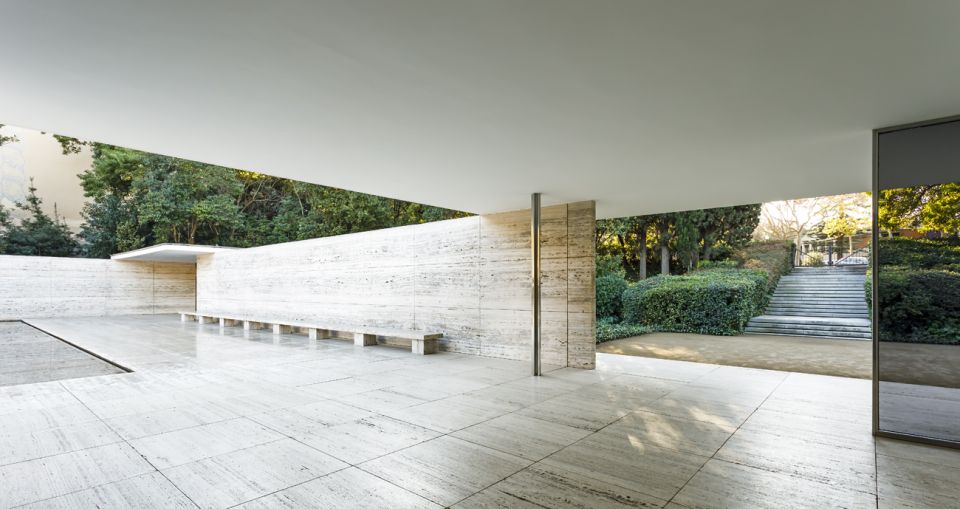
Mies built the pavilion around purity of form. That might sound abstract, but it’s obvious once you’re standing there.
The pavilion’s design emphasizes:
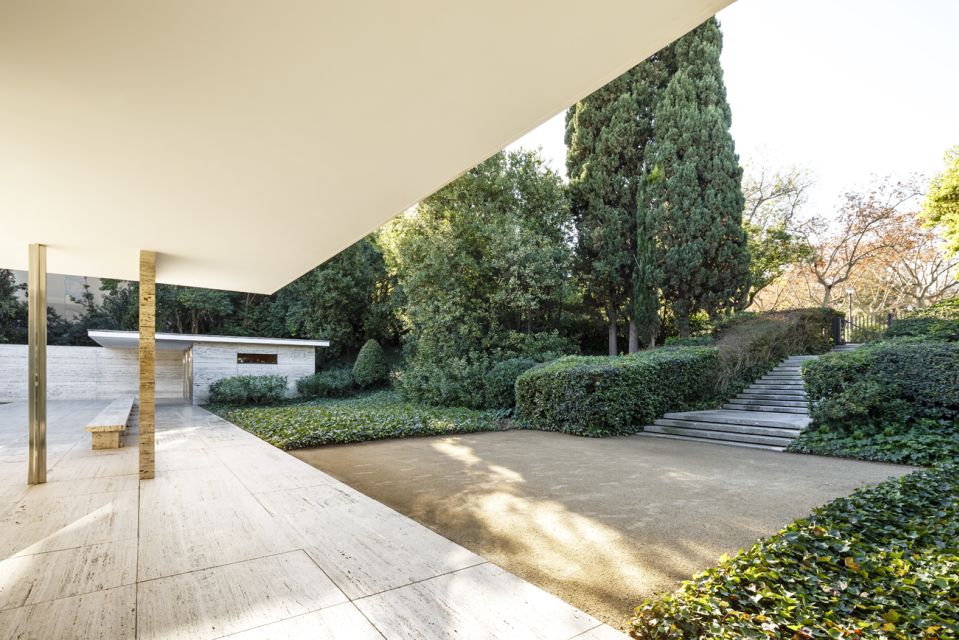
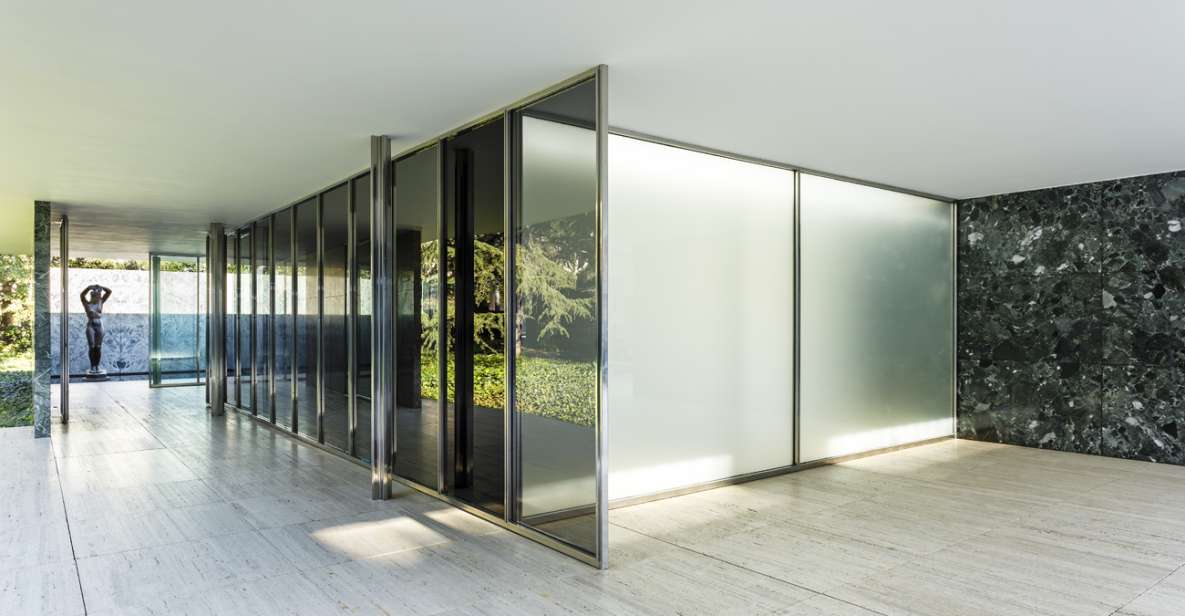
- Linear interplay between interiors and exteriors
- Precise contrasts in a carefully selected palette of materials
- A balance that stays calm instead of demanding attention
What you’ll likely feel in person is the way the structure guides your gaze without forcing it. The space reads as ordered, not crowded. Even if there are people around, the pavilion has a way of making you slower.
One helpful tip: pause at transitions. Look at how the same design decisions feel different when you shift your viewpoint—inside the plane of walls, then outside where sky and open space add extra definition.
The Material Story: Why Stones and Sourcing Matter
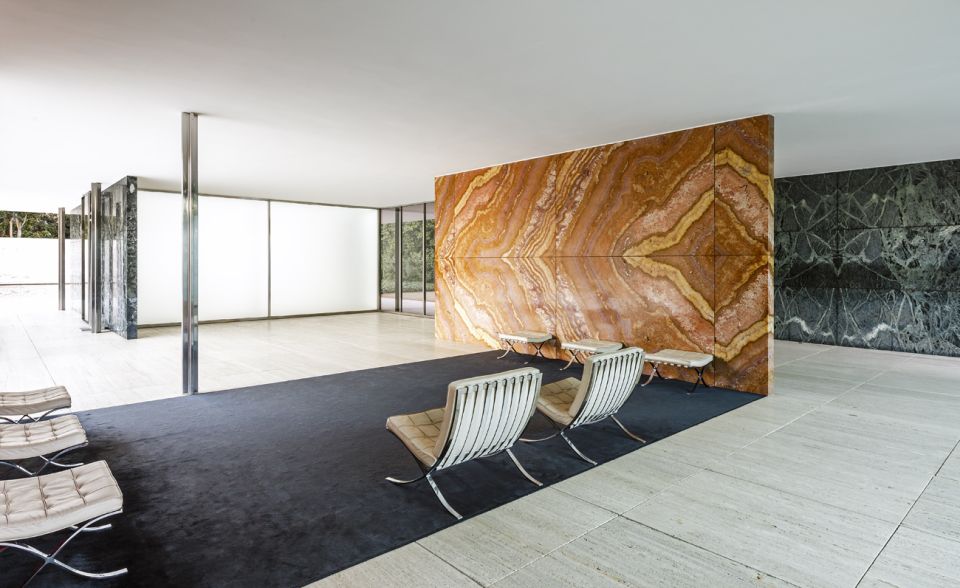
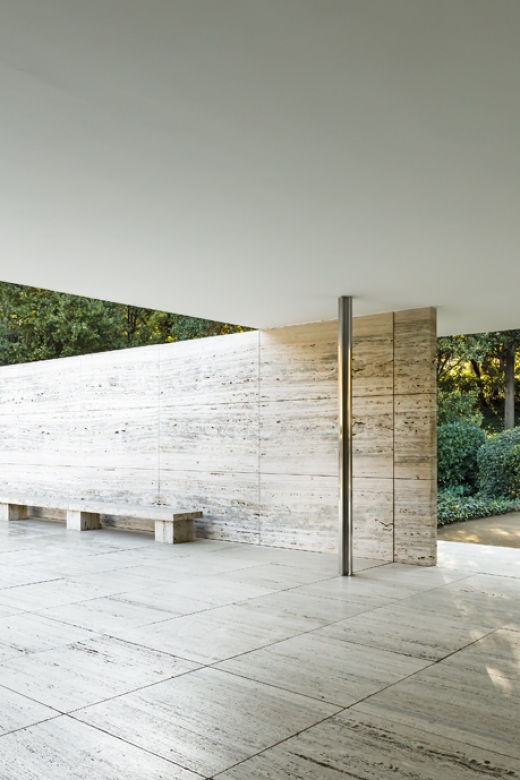
One of the most fascinating parts is that the pavilion wasn’t built from random local leftovers. The materials and palette were selected and brought from distant places—the Alps, Tivoli, Atlas, and Tinos—to achieve the right contrasts.
That detail matters because it explains why the pavilion feels so controlled. Texture and tone aren’t just decoration. They help define where space begins and ends, and they create a sense of precision.
If you listen closely to the audio guide, you’ll get a better sense of how these choices support the pavilion’s overall sobriety. It’s the kind of design thinking you’ll see echoed in later modern architecture: less ornament, more structure, and materials treated like components of the idea.
You can also read our reviews of more guided tours in Barcelona





1929 Roots, Then a Reconstruction That Proves Its Importance
The pavilion’s timeline is part of its meaning.
Created for the 1929 Barcelona International Exhibition as Germany’s national pavilion, it was later dismantled when the event ended. That sounds like a temporary exhibition structure. But the story didn’t end there.
Because of its significance, it was later reconstructed and reopened in 1986 on the original site. That means the pavilion you see now isn’t simply preserved—it’s restored as a reference point. It’s a living argument for why architects still study this building as a benchmark for the modern movement.
You’ll feel this most when you think of influence. This pavilion didn’t just win attention in Barcelona in 1929; it shaped how generations learned to understand space. That’s why it can feel both simple and weighty at the same time.
Timing Your Visit: Small Space, Big Impact
This is a short visit by nature. So timing matters more than you might expect.
A good strategy is to plan to arrive close to your scheduled start time so you can settle in before you’re rushed. The site is calmer when you’re not trying to squeeze attention into a ticking clock.
Also, since it’s a small pavilion, your experience can shift depending on what’s happening at the time:
- It may be used by professional photographers and models, which can make the scene feel more active while still staying respectful of the architecture.
- Occasionally, the pavilion hosts artistic interventions that can alter its appearance.
Neither of those is necessarily bad—it just means you should treat the pavilion like a working space, not a museum display behind glass.
Rules Inside the Pavilion (and Why They’re There)
The pavilion has clear rules, and they’re there for a reason: keeping the site clean, quiet, and safe for delicate architectural surfaces.
You should expect:
- No smoking
- No food and drinks
- No pets (assistance dogs are allowed)
- No tripods
If you show up with these things in mind, you’ll avoid the awkward moment of being asked to adjust plans.
And if you care about getting the most from the audio guide, you’ll also appreciate the lack of extra distractions like roaming snacks or complicated setup gear. The rules protect the quiet focus of the space.
Wheelchair Access: A Comfortable Yes for Mobility
The pavilion is wheelchair accessible, which is a big deal for architecture like this. Clean, open layouts often work well for mobility needs, and this site is explicitly designed to be accessible.
If you’re traveling with someone who uses a wheelchair or mobility device, it’s a visit that can feel less stressful than more constrained historic attractions.
Who Should Book This Ticket and Audio Guide
This ticket is a great fit if you:
- Love architecture and want a focused, self-paced experience
- Prefer calm visits over large crowds and long museum circuits
- Want context for why a modernist building matters, including its 1929 origins and 1980s reconstruction
It may be less satisfying if you want:
- A big, multi-stop guided day with lots of variety
- A heavy amount of walking or sightseeing beyond this single pavilion
- An experience that feels like a classic guided tour with live commentary at every moment
Still, even if modern architecture isn’t your hobby, the pavilion can win you over through design logic alone—when the scale is right and your attention is ready.
Should You Book This Pavilion Ticket?
Yes, you should book it if you’re the kind of person who notices proportions, materials, and how space behaves. For the cost, you’re buying access plus an audio guide in 5 languages, and that’s what turns a minimalist building into a clear story.
Skip it only if you need a full-day itinerary with lots of variety or you dislike quiet places where the main excitement is in slow observation. For the rest of you, this is one of those rare stops where paying attention changes the entire experience.
FAQ
How much does the Mies van der Rohe Pavilion ticket cost?
The price is listed as $10 per person.
How long is the experience?
The activity is valid for 1 day.
Is an audio guide included, and what languages are available?
Yes. The audio guide is included and available in Spanish, Catalan, English, French, and German.
Can I enter without waiting in line?
The experience includes skip-the-ticket-line entry.
Is the pavilion wheelchair accessible?
Yes, it is wheelchair accessible.
What items are not allowed at the pavilion?
Smoking is not allowed, and food and drinks are not allowed. Pets are not allowed (assistance dogs are allowed), and tripods are not allowed.