REVIEW · BARCELONA
Barcelona: Paradox Museum Entry Ticket
Book on GetYourGuide →Operated by Paradox Museum Barcelona · Bookable on GetYourGuide
Your brain gets tested in every room. Paradox Museum Barcelona is a hands-on ticket to 70+ interactive paradox exhibits that mess with your senses, your timing, and your photos, all in a one-way flow of rooms. I like that it’s designed to be more than just looking around: you follow clear signs, try the tricks, and use your own body to see how perception changes what feels real.
Two things I really like are the photo-friendly layout (with marked picture points so you know where to stand) and the fact that you’re not just watching science, you’re doing it. A possible drawback: if you prefer free-roaming at your own pace, the one-way maze can feel a little choreographed, and some areas rely on exhibit text/QR codes rather than constant staff instruction.
In This Review
- Key things to know before you go
- Paradox Museum Barcelona in plain terms: what you’re actually buying
- Price and timing: is $19 worth 75 minutes?
- The one-way flow maze: how to not waste time or miss photo spots
- Gravity tricks, camouflage illusions, and the paradox tunnel
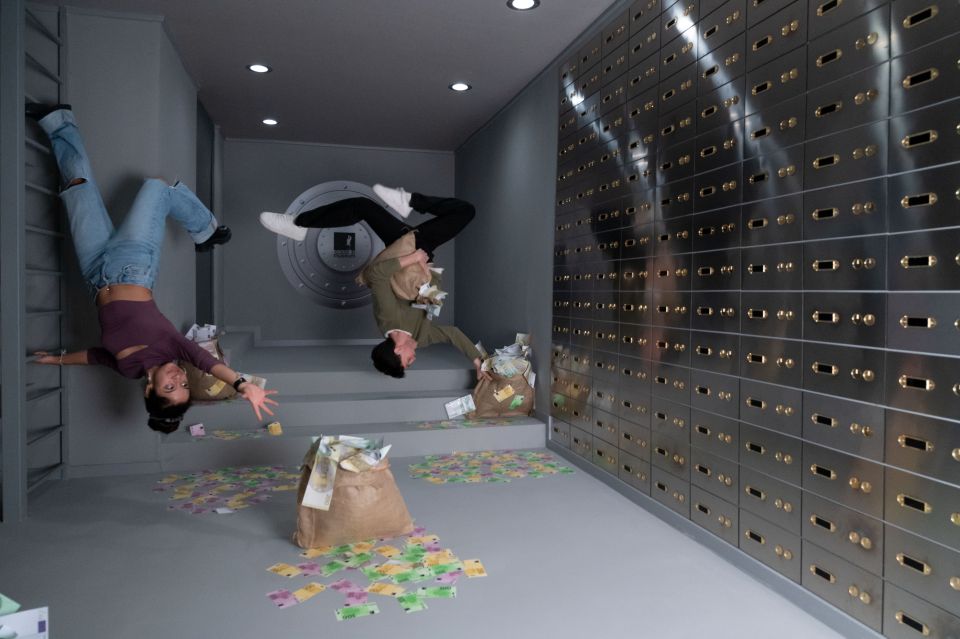
- Zero Gravity Room: the floating look, without leaving Earth
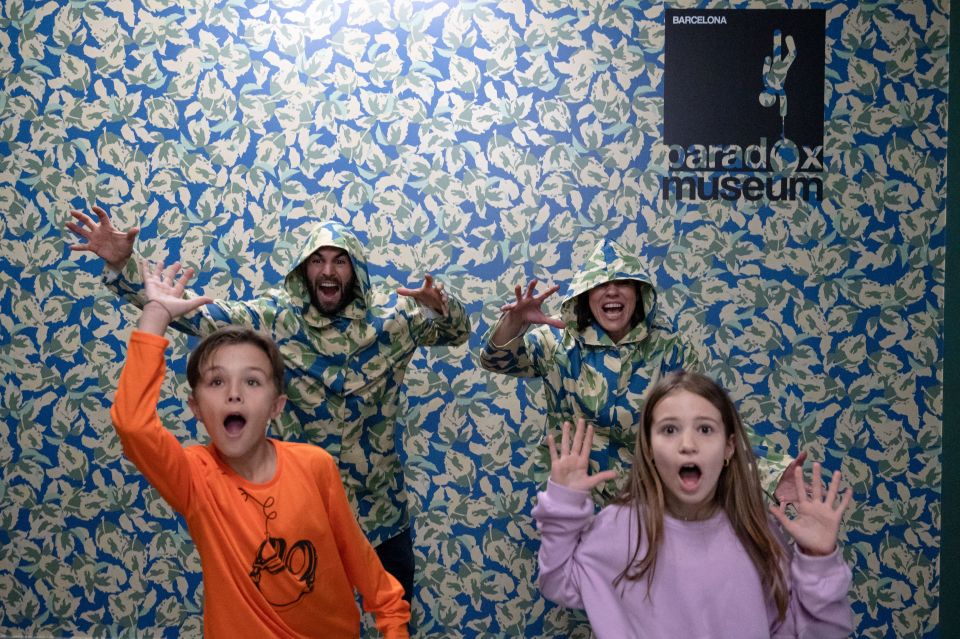
- Camouflage Room: blend in with the walls
- Paradox Tunnel: walking straight that feels wrong
- Photos, QR codes, and staff help that actually matters
- Marked picture angles
- QR codes for extra context
- Staff can help with group photos
- What the exhibits teach your senses (without killing the fun)
- Who should book Paradox Museum Barcelona (and who might skip)
- Practical tips to get the most out of your 75 minutes
- Wear shoes you can move in
- Pace yourself: one-way doesn’t mean frantic
- Use QR codes when a station confuses you
- Ask staff early if you need photo help
- Plan food outside the museum
- Paradox Boutique: where the fun becomes souvenirs
- Should you book this Paradox Museum Barcelona ticket?
- FAQ
- How long does the Paradox Museum Barcelona ticket take?
- What’s included in the $19 ticket?
- Is this a one-way route through the museum?
- Can I bring food and drinks inside?
- What languages are available during the visit?
- Is Paradox Museum Barcelona wheelchair accessible?
Key things to know before you go
- 70+ interactive paradox exhibits you physically try, not just read about
- Marked photo points that help you get the shot fast
- One-way flow layout with signs guiding you room to room
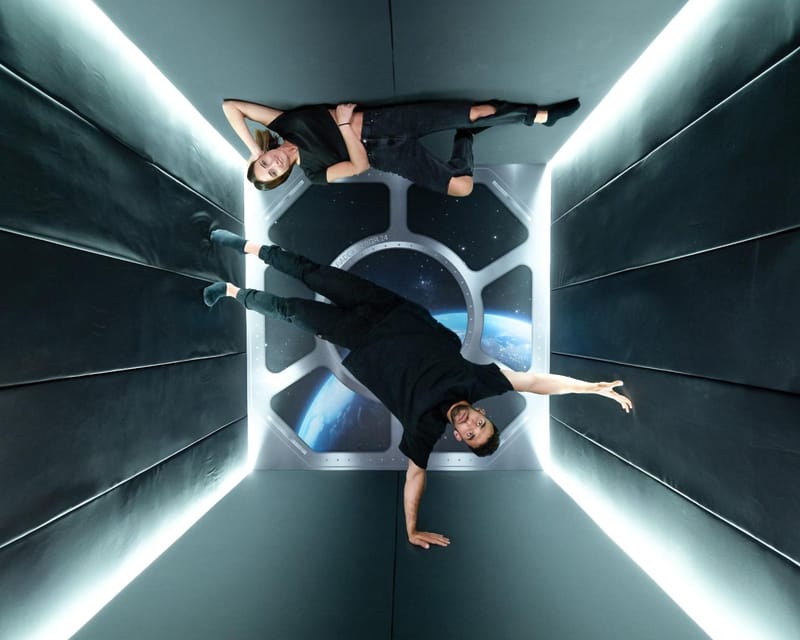
- Zero Gravity Room for that floating illusion and memorable photos
- Camouflage Room + Paradox Tunnel for body tricks that break expectations
- Paradox Boutique at the end for original gifts
Paradox Museum Barcelona in plain terms: what you’re actually buying
You’re buying a 75-minute ticket to a small, focused museum experience built around paradoxes—ideas where what your eyes expect doesn’t match what’s happening. The point isn’t to teach you math in a classroom way. It’s to show you, in practical terms, that your senses have limits and assumptions. Then it asks you to test those assumptions with your hands, your feet, and your phone camera.
The museum also keeps you moving. It’s not a wander-in-any-direction type of place. Instead, you follow a one-way route using signs, moving through a maze of exhibit stations that are designed to be taken in order. That matters because it reduces waiting and confusion, and it helps you avoid the “where do I go next?” feeling that can happen at bigger museums.
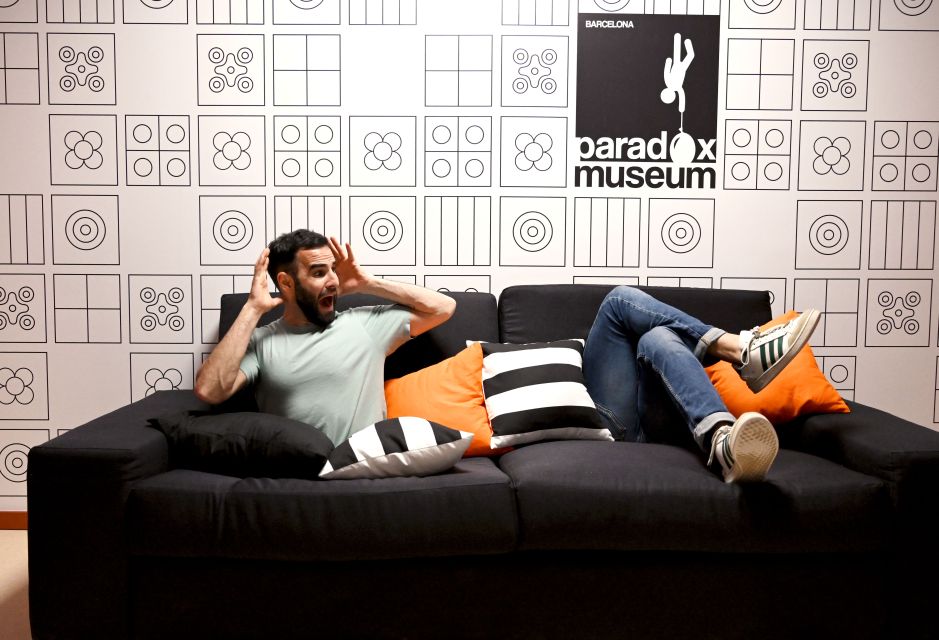
And yes, this is a museum where photos are part of the activity. Many rooms are set up for clear angles—so you’re not guessing what to do to get the illusion in frame.
A few more Barcelona tours and experiences worth a look


Price and timing: is $19 worth 75 minutes?
At $19 per person for about 75 minutes, this is priced like a short, high-effort attraction, not like a long gallery visit. For the value side, you’re getting access to all exhibition areas and 70+ interactive displays in one ticket. That’s the key: your time doesn’t disappear into empty hallways or slow crowding.
In terms of how long it really feels, 75 minutes is enough to do most exhibits carefully and still take photos at the main stations. If you rush, you’ll finish early and miss some of the best “try it again from a different angle” moments. If you slow way down, you’ll still likely be fine—just plan to keep moving rather than getting stuck on one optical trick for too long.
Also, you’re not paying extra for special access. The all-access entry covers the exhibition areas, and the experience is built as a continuous flow, so you don’t have to piece together multiple tickets.
What it doesn’t include is food and drinks. So plan to eat before or after. If you arrive hungry, it can change your mood, because the best way to enjoy this kind of museum is to focus on details—where you stand, how you move, and what your senses tell you.
The one-way flow maze: how to not waste time or miss photo spots
The museum is designed as a one-way experience with signs to follow to each exhibit. I actually think that’s a strength, especially if you’re visiting with a friend, a couple, or kids. It reduces indecision and keeps the flow moving.
But you still want a simple strategy so you don’t lose time at the start:
- When you enter, scan for the marked photo points rather than rushing straight into the first room. Those spots are meant to guide you to the best angle.
- Read the quick instructions on the exhibit (and use the QR code when you want more context). Even a small instruction can change how the illusion works.
- Take one test photo early, then adjust. A lot of these displays give better results once you confirm your camera angle and distance.
Because it’s one-way, you can’t double back. So if you see a station that looks especially fun—like the Zero Gravity and Paradox Tunnel—don’t leave them for later in a distracted haze. Do them while you’re still warmed up.
Gravity tricks, camouflage illusions, and the paradox tunnel
This museum’s star moments are physical, body-based illusions. You’re not just looking at a screen—you’re becoming part of the setup.
Zero Gravity Room: the floating look, without leaving Earth
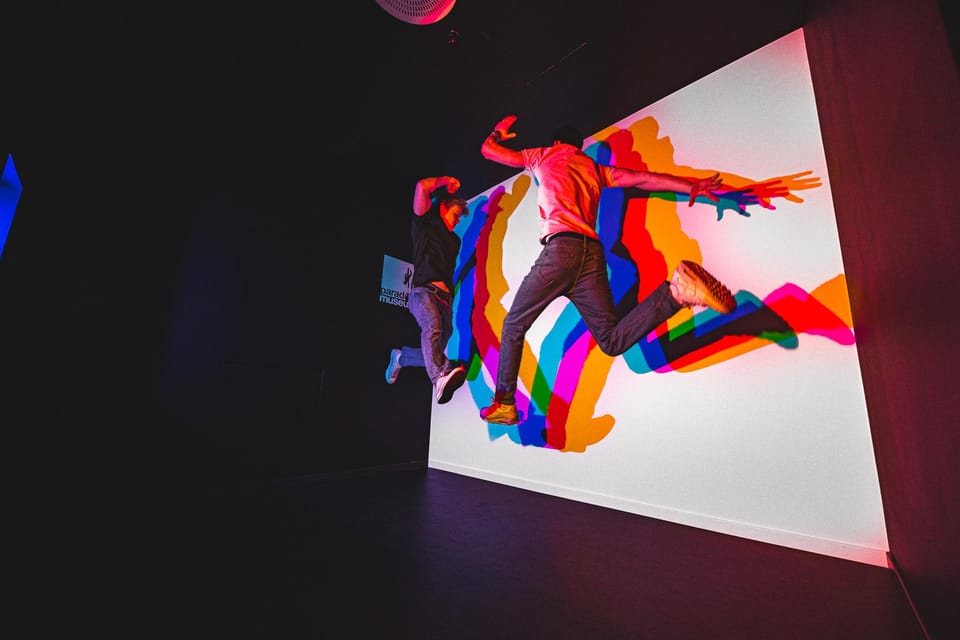
The Zero Gravity Room is built for the classic “wait, how is that possible?” reaction. The illusion gives you the chance to pose as if gravity has changed. If you want photos that look convincing, treat this like a photo set: follow the station’s prompt, try the pose once, then fine-tune your stance.
It’s also a great “first wow” moment for many people because it hits fast. Even if you’re not in a mood to read every explanation, you’ll understand the point within seconds—your eyes and body are being asked to cooperate with a trick.
You can also read our reviews of more museum experiences in Barcelona



Camouflage Room: blend in with the walls
In the Camouflage Room, the goal is less about floating and more about disappearance. You blend in with the walls, and the illusion works because your brain expects your position to be obvious. Instead, the design trains your perception to miss what’s right in front of you.
This is one of those rooms where photos matter. A phone shot from the right spot can be the difference between “cool trick” and “how did they do that?”
Paradox Tunnel: walking straight that feels wrong
The Paradox Tunnel is about directional mismatch—walking straight in a way that becomes impossible. Even if you’ve seen similar attractions elsewhere, this kind of station can still surprise you, because your body tries to follow what your eyes say should happen.
If you’re doing it with someone else, it’s also a social moment: you can compare what feels right, then laugh at how quickly your confidence disappears once you’re inside.
Photos, QR codes, and staff help that actually matters
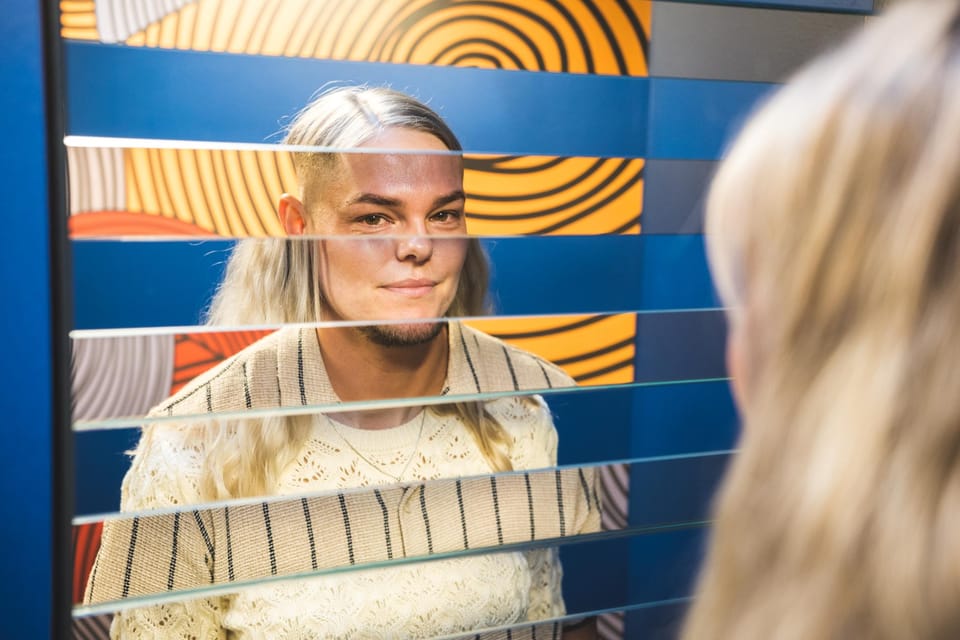
This museum leans hard into three things: picture points, exhibit guidance, and staff support.
Marked picture angles
Many rooms have marked photo points that tell you where to stand for the best illusion angle. That’s not a small detail—it saves you time. Instead of wandering around trying to line up a shot, you can get in position and focus on the trick.
It also helps if you’re traveling solo. Some setups are easier when someone can photograph you. If you don’t have a partner to help, you can still get the photos you want by asking staff for assistance.
QR codes for extra context
You’ll see QR codes at stations. Scan them if you want deeper explanations. It’s a nice way to tailor the experience: you can go quick and have fun, or slow down and understand what you’re experiencing.
Staff can help with group photos
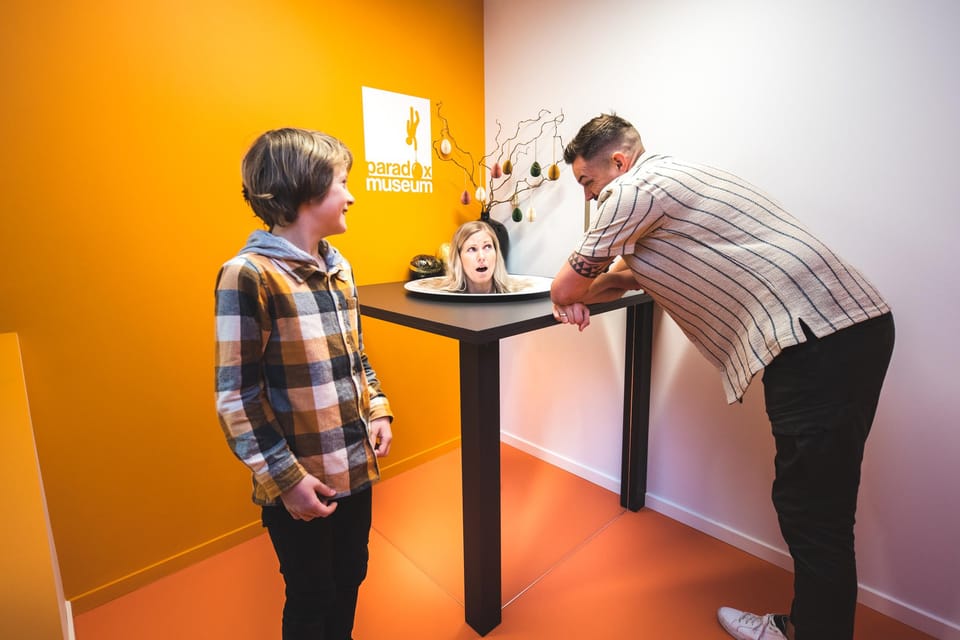
The staff can take care of group photos. That’s especially handy if you don’t want to manage your phone camera while you’re inside the illusion areas. It also helps when you want a picture where everyone is actually in frame—something that can be harder in rooms built for specific positions.
One more practical tip: if you want a bit more clarity in a room, ask. Staff can answer questions, and the experience works better when you follow the instructions.
What the exhibits teach your senses (without killing the fun)
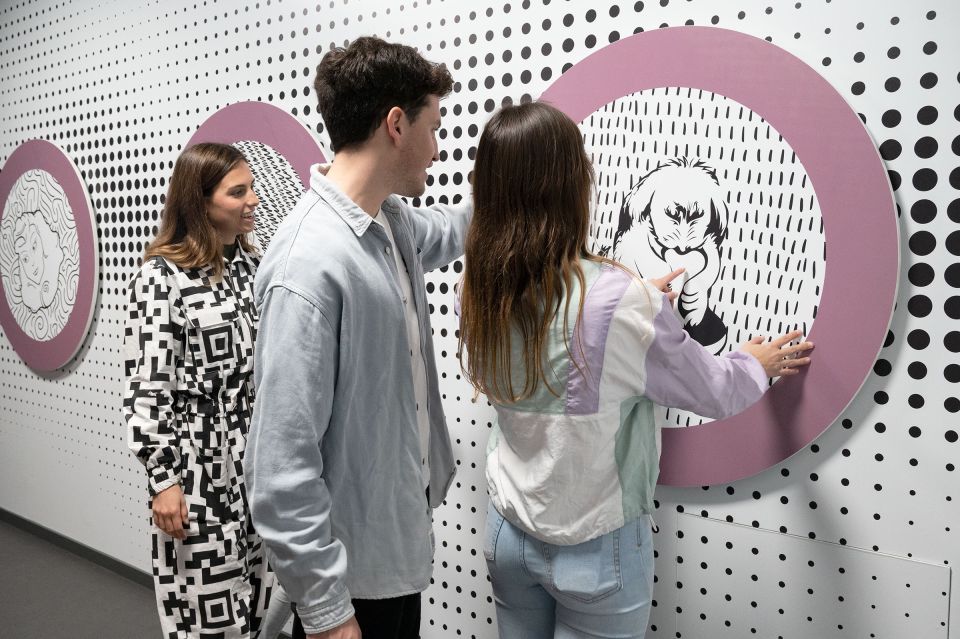
Paradox Museum Barcelona is basically a hands-on argument that perception isn’t a recording—it’s a construction.
You’ll go through exhibits that encourage you to:
- experiment using your senses
- reflect on how you interpret reality
- see reality through altered perceptions
- connect those sensations to scientific concepts
The best part is that this doesn’t feel like a lecture. The museum keeps things playful. You’re allowed to be curious, try something, and figure out what’s going on in real time.
This also explains why the museum works across ages. The core activity is physical and visual, so kids can enjoy the comedy of it, while adults can appreciate the science behind why it tricks you.
Who should book Paradox Museum Barcelona (and who might skip)
This is a strong fit if you want:
- an easy indoor plan in Barcelona
- something interactive rather than passive
- a couple-friendly activity with lots of photo moments
- a family outing that still works for teens
You’ll also get a lot out of it if you like short attractions with clear structure. The one-way flow keeps things simple.
You might reconsider if:
- you hate following signs and prefer total freedom to wander
- you dislike phone-assisted activities (because photos are part of the design)
- you’re expecting a traditional museum format with rotating historical exhibits
Also keep in mind: since some exhibit setups are easier with another person (especially if someone needs to take the photo), a solo visit can be a touch trickier for certain shots—but staff assistance can help.
Practical tips to get the most out of your 75 minutes

Here’s how I’d approach it so you don’t feel rushed or frustrated.
Wear shoes you can move in
Some stations ask you to move, pose, or step into a specific spot. Comfortable shoes help because you’ll be walking the one-way route and adjusting your position for the best illusion.
Pace yourself: one-way doesn’t mean frantic
Aim to complete the route without sprinting. If you rush, you’ll miss instructions, and the illusion might not work the way you expect.
Use QR codes when a station confuses you
If an exhibit is “fun but unclear,” use the QR code to understand the mechanism. You don’t need to do it everywhere, but it can turn a moment of confusion into a satisfying click.
Ask staff early if you need photo help
If you’re traveling with a group, solo, or you want photos that include everyone, ask staff for help sooner rather than later. It reduces awkward moments of trying to coordinate while you’re standing inside a perfect pose zone.
Plan food outside the museum
Food and drinks aren’t allowed. So eat beforehand, or plan a nearby snack stop after. It keeps your focus on the exhibits instead of managing hunger mid-route.
Paradox Boutique: where the fun becomes souvenirs
At the end, you can visit the Paradox Boutique. It’s a straightforward final stop to grab original items, and it gives you something tangible to remember the tricks you just tried.
If you like practical souvenirs—things that connect to the theme rather than generic postcards—this is the part worth a quick browse before you head back into Barcelona life.
Should you book this Paradox Museum Barcelona ticket?

Book it if you want a short, high-reward indoor experience with clear structure, tons of hands-on paradoxes, and serious photo potential. The $19 price for 75 minutes is fair when you consider that you’re getting 70+ interactive exhibits and access to everything on site.
Skip (or swap for something else) if you’re looking for a traditional museum day, you hate following a set route, or you’re not into attractions where your body and camera both play a role.
If you’re traveling with a partner, friends, or family and you want something different from the usual Gaudí-and-galleries routine, this is a smart, low-stress choice.
FAQ
How long does the Paradox Museum Barcelona ticket take?
The experience lasts about 75 minutes.
What’s included in the $19 ticket?
Your ticket includes admission to Paradox Museum Barcelona and access to all exhibition areas.
Is this a one-way route through the museum?
Yes. It’s a one-way flow experience where you follow signs to each exhibit.
Can I bring food and drinks inside?
No. Food and drinks are not allowed.
What languages are available during the visit?
The museum staff/instructor support includes Catalan, English, French, Portuguese, and Spanish.
Is Paradox Museum Barcelona wheelchair accessible?
Yes. It is wheelchair accessible.