REVIEW · BILBAO
Basque Pintxos and Tapas Cooking Class in Bilbao
Book on Viator →Operated by Gastronomía Bilbao · Bookable on Viator
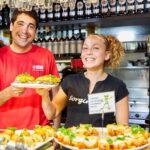
If you like food with a story, this class fits. You get a hands-on way to learn Basque pintxos and the seasonal thinking behind them, all while you cook and taste what you make. I especially like that it is led by chef Mikel, and that the group stays small at up to 12 people.
The main thing to consider is simple: this is real cooking time. If you want a pure tasting walk with no stove time, you might prefer a lighter food tour instead.
In This Review
- Key things to know before you go
- Basque Pintxos and Tapas in Bilbao: What You Gain Beyond a Tasting
- Salbe pl. at 6:00 pm: Meeting Point, Timing, and First Drinks
- How the Cooking Class Works (and Why Small Groups Help)
- The Pintxos You’ll Cook: Bilbainito, La Gilda, Brandada, and Txampi Mushrooms
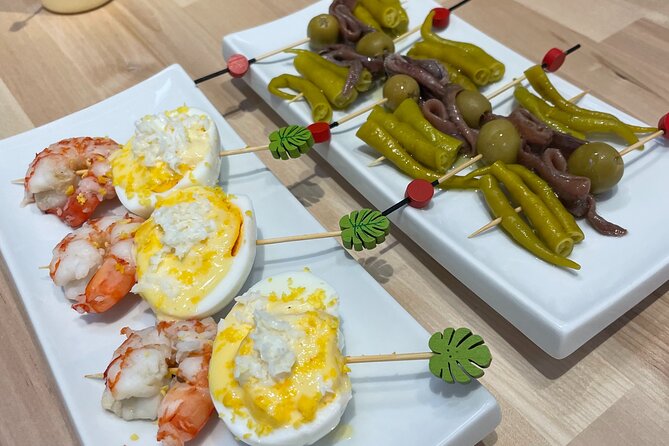
- Bilbainito: Boiled egg, prawns, and homemade mayo
- La Gilda: Olives, local peppers, and anchovies
- Cod Brandada: Fresh bread with Basque potato and grilled cod
- Spicy Garlic Mushrooms: Cooking with txampis (Basque mushrooms)
- Charcuterie Board and Wine: The In-Between Treat That Keeps You Energized
- Dessert: Torrijas and the Basque Toast Sweet Finish
- Mikel’s Teaching Style: Friendly, Conversational, and Practical
- Price and Value: Is $96.54 Worth It?
- Who Should Book This Bilbao Pintxos Class
- Practical Tips to Make Your Evening Go Smoothly
- Should You Book This Bilbao Basque Pintxos Cooking Class?
- FAQ
- What is the duration of the Basque pintxos and tapas cooking class?
- Where does the cooking class meet?
- What time does the class start?
- Is the class offered in English?
- How many people are in the class?
- What food will I cook and eat?
- Is there wine or drinks included?
- Do I receive a mobile ticket?
- What happens at the end of the class?
- What is the cancellation policy?
Key things to know before you go
- Chef-led, 100% hands-on cooking so you are not just watching
- 4 pintxos + charcuterie + dessert included, with local wines and drinks
- Small group (maximum 12) in an actual cooking school setting
- English offered for a smooth experience from start to finish
- Chef Mikel’s style mixes practical technique with Basque food context
Basque Pintxos and Tapas in Bilbao: What You Gain Beyond a Tasting
Bilbao is famous for pintxos, but this class helps you understand them in a way that sticks. You are not only eating Spanish food. You are making it, learning what matters, and getting tips you can actually use at home.
You also get a mix of traditional and modern Basque pintxos. That matters, because Basque food has its own logic: local ingredients, seasonal choices, and simple combinations done well. When you cook several styles in one evening, you start to see the pattern. And you get to taste the results right away, not later on a random plate somewhere else.
You can also read our reviews of more cooking classes in Bilbao
Salbe pl. at 6:00 pm: Meeting Point, Timing, and First Drinks
The class meets at Salbe pl., 6, 48007 Bilbao and starts at 6:00 pm. It runs about 2 hours 30 minutes, and it ends back at the meeting point.
This matters because you will leave with a full evening plan. Instead of wandering at 6 pm trying to decide where to eat, you get a structured start, a warm setting, and a reason to focus. It also helps that the tour is in English, and the group is limited to a maximum of 12 travelers, so you are not lost in a crowd.
Expect a good opening rhythm too. You start with an open bar of local wines and drinks. From the way the evening is described, that is not just a token pour. It sets the tone while you get oriented in the kitchen.
How the Cooking Class Works (and Why Small Groups Help)
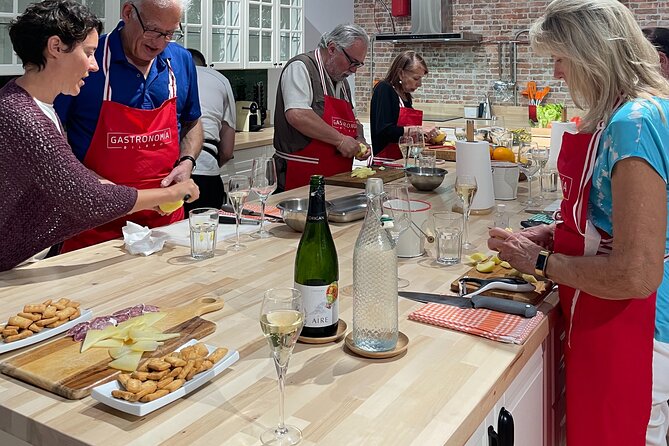
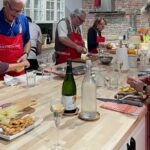
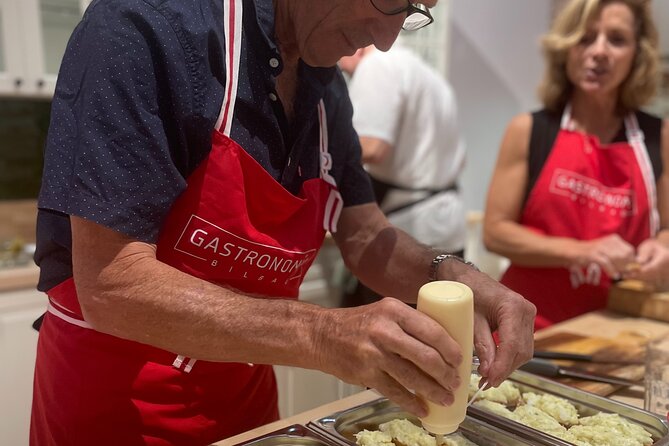
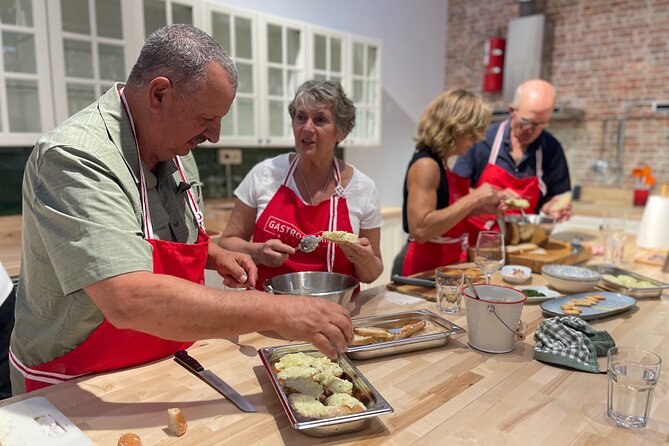
This is a recently opened cooking school in Bilbao, and the tone is practical. The chef, Mikel, keeps people on track and encourages conversation. That combo is important. In a cooking class, you want clear guidance, but you also want a relaxed pace.
Because it is hands-on and capped at 12 people, you generally get more attention during the steps. You are working as a group, but you are not swallowed by it. You also get the fun of learning in a shared kitchen—everyone is busy, but the vibe stays friendly.
One detail I like: the class does not treat pintxos as only recipes. It includes talk about why certain seasonal ingredients show up in Basque cooking, which helps you understand what you are tasting. And if you like home-cooking, you will likely appreciate that Mikel shares ideas and tips beyond the exact dishes on the menu.
The Pintxos You’ll Cook: Bilbainito, La Gilda, Brandada, and Txampi Mushrooms
You taste four different pintxos that you create, and each one teaches something different about Basque flavor balance. Here is the lineup and what makes each choice useful.
Bilbainito: Boiled egg, prawns, and homemade mayo
This one is classic Basque comfort. You get the satisfaction of building a pintxo around a creamy element—home made mayo—plus a seafood bite with fresh prawns and a boiled egg base. If you have ever wondered how Basque pintxos can feel both casual and precise, this is a great example.

La Gilda: Olives, local peppers, and anchovies
This pintxo is all about salty, tangy, and bold intensity. Olives and local peppers bring brightness, while anchovies bring that salty depth that makes these bites addictive. It is a good one for learning how cured and briny ingredients work together without turning heavy.
Cod Brandada: Fresh bread with Basque potato and grilled cod
For this dish, you work with fresh bread, local Basque potato, and desalted grilled cod. The point is texture and balance—creamy cod brandada style with sturdy bread to hold it together. It is also a nice lesson in how Basque cooking often uses potato as a bridge ingredient, giving comfort and body while letting seafood stay front and center.
Spicy Garlic Mushrooms: Cooking with txampis (Basque mushrooms)
If you like the idea of Basque seasonal ingredients, this is the part that feels most tied to the region. The class calls them txampis, Basque mushrooms, and you cook spicy garlic mushrooms using them. Mushrooms can be tricky in some kitchens, but cooking them in a class setting with guidance helps you learn the feel of the flavors and timing.
Charcuterie Board and Wine: The In-Between Treat That Keeps You Energized
You do not just cook and then leave hungry. You get to enjoy a charcuterie board as part of the tasting spread.
This matters for two reasons:
- It rounds out the evening so you are not living on pintxos alone.
- It gives you a baseline while you taste your own work and adjust mentally for what you like best.
And yes, the wine pours are part of the experience. The open bar and the reported generous vibe are not small details here—they help make the whole class feel like an event, not a rushed lesson.
Dessert: Torrijas and the Basque Toast Sweet Finish
Every good pintxo experience deserves a proper dessert stop. Here, it is Torrijas, described as the Basque toast.
Torrijas is a sweet bread-forward dessert, and it works well after savory bites. It feels comforting, and it gives you a clear final flavor memory for the evening—not just a plate of salty food.
If you are the type who remembers desserts long after the main meal, this is a strong ending. It is specifically highlighted in the class flow as the dessert you get to finish with.
Mikel’s Teaching Style: Friendly, Conversational, and Practical
Chef Mikel is at the center of the experience, and the feedback around him is consistent: he is friendly, conversational, and focused on keeping the group moving. That is exactly what you want in a class where multiple recipes are happening in sequence.
A few teaching strengths show up clearly:
- He combines Basque food context with the cooking steps, so you understand what you are making.
- He shares tips and ideas, not just instructions for the specific pintxos.
- He seems to run the kitchen smoothly, which helps beginners feel confident.
There is also a small souvenir that makes the whole night feel complete: a commemorative apron. It is the kind of item you will actually keep, especially if you like cooking.
Price and Value: Is $96.54 Worth It?
At $96.54 per person, the price is not the cheapest thing you can do in Bilbao. But it includes several layers of value that add up fast.
What you get for the money:
- Four pintxos you cook and taste
- A charcuterie board
- Dessert (torrijas)
- Local wines and drinks via an open bar
- An English-led class in a small group (max 12)
- A kitchen-led evening with an apron souvenir mentioned in feedback
When you compare that to what four separate pintxos stops plus drinks might cost, plus the fact that you are learning and eating as part of a planned dinner, the math starts to look fair. The small-group size also matters. You are more likely to get help when you need it, and the evening does not turn into a passive show.
The one value check I would make: if you already have zero interest in cooking and you just want to roam for pintxos, you may be happier with a walk-and-taste style tour. But if you want to learn how Basque flavors come together, this is a strong deal.
Who Should Book This Bilbao Pintxos Class
This fits best if you:
- Want a hands-on intro to Basque pintxos (great for first time in Bilbao)
- Like cooking classes that include real technique and helpful food tips
- Enjoy small-group experiences where you can ask questions and stay social
- Prefer English instruction and a well-run evening in an actual cooking school setting
It may not be the best match if you:
- Want a slow-paced walking tour only
- Have a very light interest in cooking but a strong interest in pure restaurant hopping
- Plan to spend the night on a strict, non-alcohol schedule (there is an open bar, though you control what you drink)
Practical Tips to Make Your Evening Go Smoothly
Here are a few practical things that will help you enjoy the class more:
- Come ready to cook. If you arrive starving, you will be happier from the first course onward.
- Wear comfortable shoes. Even though it is not described as physically intense, you will be standing and working.
- Keep an eye (and an ear) out during ingredient explanations. The class focuses on traditional significance and seasonal ingredients, which makes your tasting make sense.
- If you are a planner, booking earlier is a good idea. This one is typically booked about 24 days in advance on average.
Should You Book This Bilbao Basque Pintxos Cooking Class?
I’d book it if you want more than a plate of pintxos. This class is built for people who learn by doing—so you leave Bilbao knowing how several key pintxos are assembled, not just what they taste like.
It also scores well on pacing and vibe, especially thanks to Mikel’s friendly, conversational approach and the small group size. You get a full evening meal experience: cooking, tasting, charcuterie, wine, and torrijas.
If you are unsure, use this quick test: do you want to spend 2.5 hours actively cooking and tasting in one go? If yes, this is an excellent choice for your Bilbao food night.
As for timing and commitment, the experience offers free cancellation up to 24 hours before the start time for a full refund, so you can book with less stress.
FAQ
What is the duration of the Basque pintxos and tapas cooking class?
The class lasts about 2 hours 30 minutes.
Where does the cooking class meet?
It meets at Salbe pl., 6, 48007 Bilbao, Bizkaia, Spain.
What time does the class start?
The start time is 6:00 pm.
Is the class offered in English?
Yes, the class is offered in English.
How many people are in the class?
The class has a maximum of 12 travelers.
What food will I cook and eat?
You taste four different pintxos that you create, enjoy a charcuterie board, and finish with dessert: torrijas.
Is there wine or drinks included?
Yes. The class includes a lovely open bar of local wines and drinks.
Do I receive a mobile ticket?
Yes. It is listed as having a mobile ticket.
What happens at the end of the class?
The activity ends back at the meeting point.
What is the cancellation policy?
You can cancel for a full refund up to 24 hours in advance of the experience’s start time.