REVIEW · CARTAGENA SPAIN
Cartagena : Roman Theatre Museum Entry Ticket
Book on GetYourGuide →Operated by CARTAGENA PUERTO DE CULTURAS · Bookable on GetYourGuide
Cartagena hides a Roman stage. I love how the Roman Theatre Museum, designed by Rafael Moneo, turns archaeology into something you can actually walk through, and then you step outside to stand in a theatre built for 7,000 spectators. One thing to plan for: there’s no place to buy food or drinks during your visit, and the outdoor steps can be tricky if you’re not very steady on your feet.
This is a smart stop when you want a focused slice of Roman Spain without committing to a full tour day. You’ll follow the story of how the theatre site was buried, rediscovered, and reshaped over time, including what Roman performances meant in a political world.
Just keep an eye on the hours: the museum closes at 2:00 PM on Sundays, so go earlier if you’re visiting on a weekend.
In This Review
- Key things I’d plan for
- Roman Theatre Museum Cartagena: why this Roman theatre hits different
- Rafael Moneo’s museum: where the story starts
- The Passageway of History: from buried ruins to rediscovery
- Roman performances, politics, and the meaning of a stage
- Walking the theatre: what you’ll see outside
- Audio guide tip: the fastest way to make it click
- Timing your visit: how long to plan
- Price and value: $8 that actually feels fair
- Who should book this ticket (and who might skip it)
- Practical tips so your visit goes smoothly
- So, should you book the Roman Theatre Museum ticket?
- FAQ
- How much does the Cartagena Roman Theatre Museum ticket cost?
- How long can I use the ticket?
- Is an audioguide included?
- What time does the museum close on Sundays?
- Do I need a voucher, and can I use a QR screenshot?
- Is the site wheelchair accessible?
- Are food and drinks allowed inside?
- Where is the meeting point?
Key things I’d plan for
- Rafael Moneo-designed museum: modern architecture built to frame real Roman remains
- Passageway of History: a guided-feeling route through burial and rediscovery
- 1st century B.C. beginnings: you get context for when this theatre took shape
- Roman house mosaics: look for mosaic tiles tied to earlier life on the site
- Optional audioguide: helps you connect what you’re seeing to Roman plays and politics
- Voucher required: bring the voucher (not just a QR screenshot)
Roman Theatre Museum Cartagena: why this Roman theatre hits different
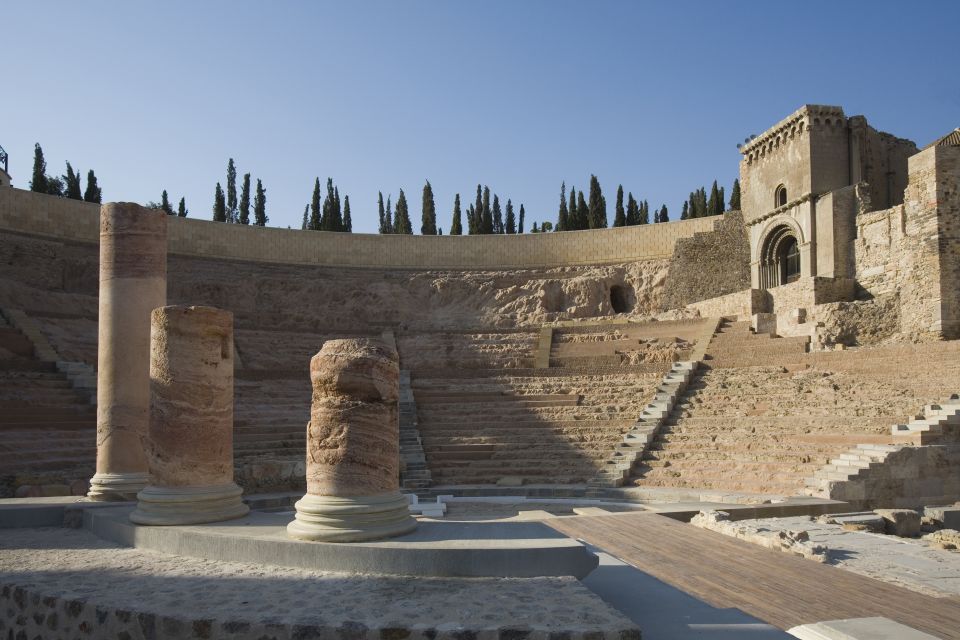
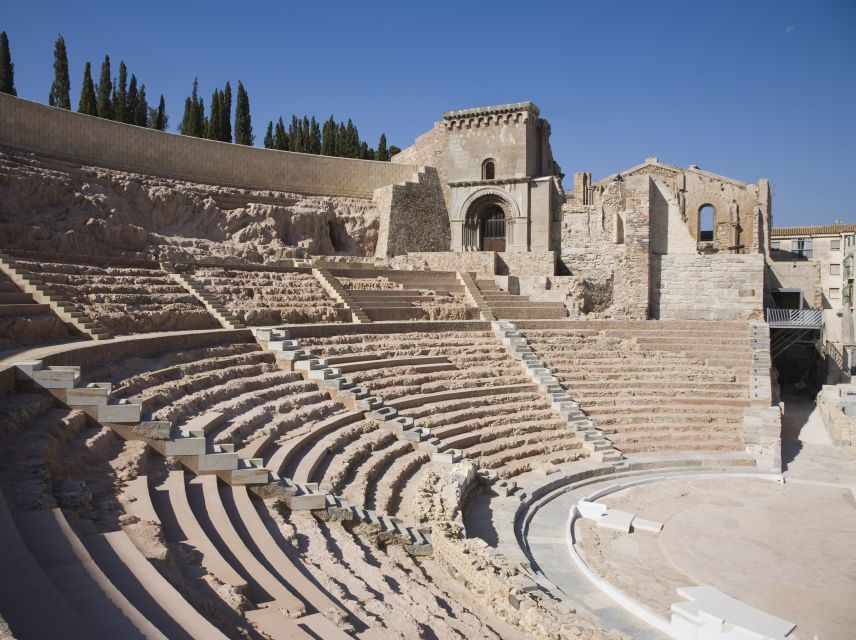
The Roman Theatre in Cartagena is one of the largest you’ll find in Spain, with an estimated 7,000-spectator capacity. That scale matters. When you’re standing in the open-air seating area, it’s easier to imagine how a stage could dominate a city square and shape public opinion. This isn’t just about stone. It’s about why Romans built cultural power into public spaces.
What makes this visit especially satisfying is the pairing: you get a museum inside, then you walk out to the theatre remains. The museum gives you the why, and the theatre gives you the where. Together, they turn archaeology into a readable story, not a pile of broken walls.
For value, the ticket price (about $8 per person) is hard to beat. You’re paying for both the indoor museum route and access to the theatre site. That means you can spend your time the way you like—reading a bit, then wandering outside to look up and around, then going back indoors if something catches your eye.
A few more Cartagena Spain tours and experiences worth a look
Rafael Moneo’s museum: where the story starts
Before you reach the actual theatre, you’ll move through the Roman Theatre Museum, created by the famous Spanish architect Rafael Moneo. Even if you’re not an architecture fan, you’ll feel the intent. The museum is designed as a bridge between modern visitors and ancient layers, so you don’t just see objects—you get a sense of how the site was assembled and interpreted.
Inside, the museum focuses on archaeological finds from the Roman period. You’ll spend time looking at artefacts and remains that explain what the theatre was built on top of and what happened as centuries passed. One highlight in the narrative is the earlier Roman house on the site, including mosaic tiles, which were destroyed when the theatre was constructed.
I like this approach because it changes how you think about ruins. You stop seeing the theatre as a standalone monument. You start thinking about the neighborhood it replaced, the buildings Romans lived and worked in, and how urban planning can erase earlier life.
If you choose the audioguide, you’ll have an extra layer of clarity as you move between floors and display areas. The audio is offered in Spanish, English, French, German, and Russian, so you can match your comfort level without hunting down a human guide.
The Passageway of History: from buried ruins to rediscovery
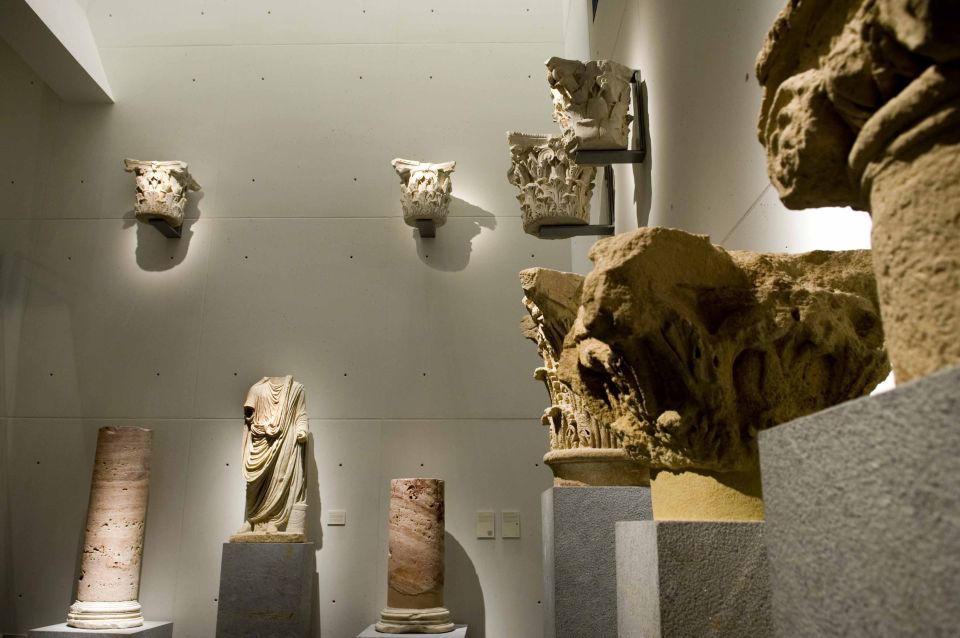
The site is presented like a route, and that helps you follow the timeline without feeling lost. You’ll go through the museum’s Passageway of History, learning about the processes by which the Roman theatre was buried over time and later rediscovered.
The museum experience is especially good if you like cause-and-effect. You’re not only shown what survived—you’re told how it got covered and why it mattered when it was found again. That context makes the open-air theatre feel more dramatic, because you understand it wasn’t always visible.
As part of the story, you’ll learn about how the theatre site developed dating back to the 1st century B.C. That’s a key detail. It anchors the entire visit in real Roman chronology, so what you see outdoors doesn’t feel like an isolated ruin. It becomes a long-term project that changed as the city changed.
Roman performances, politics, and the meaning of a stage
One of the most interesting parts of the museum is the way it connects the theatre to Roman cultural life. You’ll learn how plays were performed during Roman times and how art and public spectacle carried political implications. This is the kind of framing that makes the site more than a visual experience.
When you picture Roman theatre, it’s easy to think only about entertainment. The museum encourages you to think bigger: the audience, the public setting, and the way culture could reinforce power and identity. Even if you don’t read every label, that theme keeps popping up as you move.
I also like that this isn’t heavy-handed. It’s delivered through your path around the exhibits. You keep walking, and the story builds.
Walking the theatre: what you’ll see outside
Once you finish the museum route, you step into the open-air theatre area. This is the part you’ll remember. You get to walk around the theatre remains and take in the way it was designed for viewing.
A useful tip: the theatre entrance is not separate from the museum in a simple way. The most reliable approach is to treat the museum as the way in. If you’re using maps, you might accidentally land at the exit area rather than the entrance—so follow signs and enter through the museum route.
From the outdoor viewing area, you can take your time looking. The theatre’s preserved structure gives you real spatial context: how close the seating would have felt to a performance space, and how the building shaped movement through the site.
There are practical realities, though. Some parts involve stairs and open steps. If you’re concerned about stability or uneven surfaces, plan carefully and consider whether you’ll be able to access all areas comfortably. The site is presented in a way that reflects the original architecture, so it doesn’t feel like a flat, sanitized modern attraction.




Audio guide tip: the fastest way to make it click
If you want this visit to feel like more than a quick wander, the audioguide is a strong choice. The audio is described as helpful for understanding the history of the Roman Theatre, and it also makes the timeline easier to follow while you’re moving between indoor displays and outdoor remains.
Even at a self-paced place, the risk is that you’ll see objects without a clear narrative. The audioguide helps prevent that. You’ll hear how Romans staged plays, why the theatre mattered, and what the finds are connected to—so your walk feels connected rather than random.
If you’re traveling with kids, this also helps you keep the story moving. A basic Roman theatre explanation can be the difference between a “cool rocks” visit and a “wait, that makes sense” visit.
Timing your visit: how long to plan
The ticket is valid for 1 day, but you’ll still want a realistic on-the-ground time plan. In practice, this is best as a couple-hours-plus stop rather than a five-minute photo break. The museum route is a real experience, and the outdoor theatre area asks for slow walking and looking up.
One more timing note: the Roman Theatre Museum closes at 2:00 PM on Sundays. If you’re visiting on a Sunday, I’d go early in the day. Otherwise, you risk arriving when your visit window is already tight.
Weather can affect comfort. On hot days, you’ll want to move smart—especially because food and drinks aren’t allowed during the visit.
Price and value: $8 that actually feels fair
At about $8 per person, this ticket offers strong value because it includes both the museum and access to the theatre site. Many attractions force you to choose between “museum time” and “outdoor site time.” Here you get both with one admission.
You’re also paying for a specific kind of experience: not a generic Roman wall, but a curated narrative tied to a known architect (Rafael Moneo) and anchored by a major Roman theatre that could seat thousands. If Roman history is even a little on your radar, the ticket makes sense.
The audioguide option can add value for the price, because it turns seeing into understanding. If you skip it, you can still enjoy the visuals, but the story thread becomes more your job.
Who should book this ticket (and who might skip it)
This ticket is best for people who like:
- Roman archaeology presented in a walkable story
- Museums that explain context, not just objects
- A self-paced visit with meaningful outdoor viewing
It may feel like less of a fit if you:
- Want a long guided tour with lots of conversation
- Need extensive indoor seating areas (food and drinks aren’t part of the experience)
- Have limited ability on stairs and open steps, since parts of the outdoor access can be challenging
That said, it’s listed as wheelchair accessible, so it’s worth considering if you need mobility options. Just be aware that outdoor terrain and stair access may still affect which views you can reach comfortably.
Practical tips so your visit goes smoothly
A few small things make a big difference here.
First, plan on finding the entrance through the museum. If you’re relying on phone directions, you might end up at the wrong spot. Look for the correct museum entry and follow site signs. Once you’re inside, the flow is clear.
Second, bring the right ticket format. A voucher is mandatory, and a voucher QR screenshot isn’t accepted. Save yourself stress and have the voucher ready to show.
Third, consider the audioguide if your goal is understanding. It’s one of the easiest upgrades you can make without spending hours reading every label.
Finally, remember the rules: no food or drinks and no pets except assistance dogs. If you want water and snacks, handle that before you arrive.
So, should you book the Roman Theatre Museum ticket?
I think you should book if you want an efficient, high-impact Cartagena stop that combines an architectural museum with an outdoor Roman theatre you can actually walk around. The $8 price feels fair for what you get: scale (7,000-seat theatre), story (burial, rediscovery, Roman daily and political life), and a clear self-paced structure.
Skip it only if Roman theatre isn’t your thing, or if you know you’ll struggle with steps and uneven outdoor access. For most people, though, this is one of the most memorable ways to connect Cartagena to its ancient roots without wasting a whole day.
FAQ
How much does the Cartagena Roman Theatre Museum ticket cost?
The ticket price is listed as $8 per person.
How long can I use the ticket?
The activity is listed as valid for 1 day. You should check availability for starting times.
Is an audioguide included?
The ticket includes the museum and Roman Theatre site entrance. An audioguide is optional if that option is selected.
What time does the museum close on Sundays?
The Roman Theatre Museum closes at 2:00 PM on Sundays.
Do I need a voucher, and can I use a QR screenshot?
A voucher is mandatory, and it is not valid as just a voucher or QR screenshot. Bring the voucher as required.
Is the site wheelchair accessible?
Yes, the activity is listed as wheelchair accessible.
Are food and drinks allowed inside?
No. Food and drinks are not allowed during the visit.
Where is the meeting point?
The meeting point may vary depending on the option booked. It’s not fixed in the provided details.