REVIEW · SEVILLE
Cultural Walking Tour of Seville Monumental
Book on Viator →Operated by Sevilla Free Tours · Bookable on Viator
Seville’s secrets come fast on foot. This 2-hour walking tour gives you a clear orientation through the city’s most important sights, with just enough context to help you decide what to see longer later. I like the $8.45 price because you’re paying mostly for the human story and local connections, not entry fees.
My favorite part is the way the guides bring the monuments to life in small, manageable chunks. On different runs, I’ve seen guides such as Ferdinand, Fernando, Francisco, Lidia, and Valentin praised for humor, energy, and keeping everyone together, with the pace described as easy and not rushed.
One watch-out: in busy areas, city noise and crowds can make the guide harder to hear. If you’re sensitive to that, you’ll want to position yourself well and focus on the guide in each stop rather than drifting to the sights.
In This Review
- Key things that make this Seville walk worth it
- A smart way to start Seville: history, sights, and direction in 2 hours
- Meeting at Plaza Nueva: how the tour is organized on the ground
- Catedral de Sevilla and Torre Giralda: Gothic scale plus Islamic roots
- Practical tip
- The Alcázar area: why royal Seville feels “clustered”
- Archivo General de Indias: colonial paperwork, 400 years of it
- Puerta de Jerez and Torre del Oro: city walls and river control
- Hotel Alfonso XIII and the Real Fábrica de Tabacos: Seville’s power changes jobs
- Plaza de España finish: Expo 1929 and a place to linger
- What I’d do right after
- Price and value: what $8.45 covers (and what it doesn’t)
- When to book and how to pick the right day
- Best fit: who should book this tour
- Should you book this Seville Monumental walking tour?
- FAQ
- How long is the Cultural Walking Tour of Seville Monumental?
- How much does the tour cost?
- Is the tour offered in English?
- Where do I meet the guide?
- Where does the tour end?
- Is a mobile ticket used?
- Are admission tickets included for the monuments?
- What group size should I expect?
- Does it run in any weather?
- Can I cancel and get a refund?
Key things that make this Seville walk worth it
- Great value for the guided orientation at $8.45, especially if it’s your first day in town
- English-language group option with guides splitting groups by language and guide
- A tight route that hits UNESCO-level stops without demanding a long day
- Clear historical storyline, linking Gothic power, Islamic roots, colonial archives, and river trade
- A satisfying finish at Plaza de España, so you can keep wandering after the tour ends
- Most major monument entry isn’t included, so you can plan what you’ll pay for next
A smart way to start Seville: history, sights, and direction in 2 hours
I love tours that act like a good map, not a long lecture. This one is built for that job. In about two hours, you walk between major landmarks and get the “why it matters” behind each one, so Seville stops being a collection of buildings and starts feeling like a connected story.
The value is real because you’re not buying a bundle of timed-entry perks. Instead, you’re buying interpretation—what to look for, how the eras connect, and where the city’s power shifted over centuries. That’s especially useful if you’re short on time or you’re trying to pick the best “next visit” for your personal interests.
You can also read our reviews of more walking tours in Seville

Meeting at Plaza Nueva: how the tour is organized on the ground
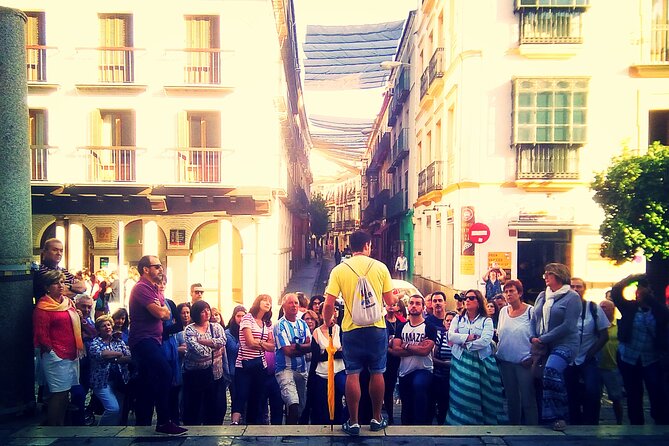
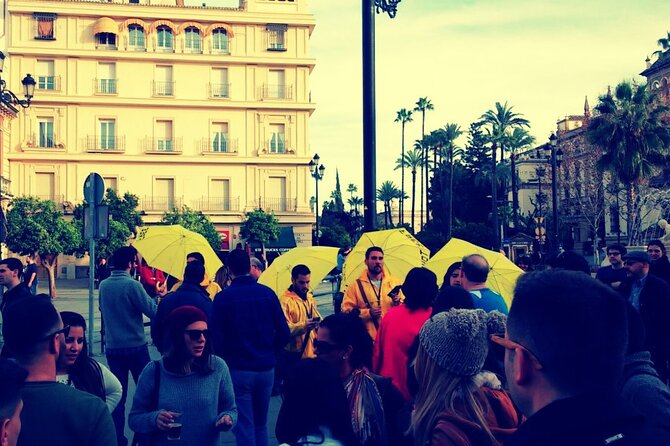
The tour starts at Ayuntamiento de Sevilla, Plaza Nueva (Pl. Nueva, 1, Casco Antiguo). You’ll meet at the square, get a quick presentation of how the visit runs, and then the group is divided by guide and language before the walk begins. That division matters. In English, it often means you’re not stuck in a mixed-language scrum, and the small-group feel shows up in the way guides manage attention.
You’ll also use a mobile ticket, which keeps things simple on your phone. The tour is near public transportation, which helps if you’re not staying in the oldest part of the city.
Catedral de Sevilla and Torre Giralda: Gothic scale plus Islamic roots
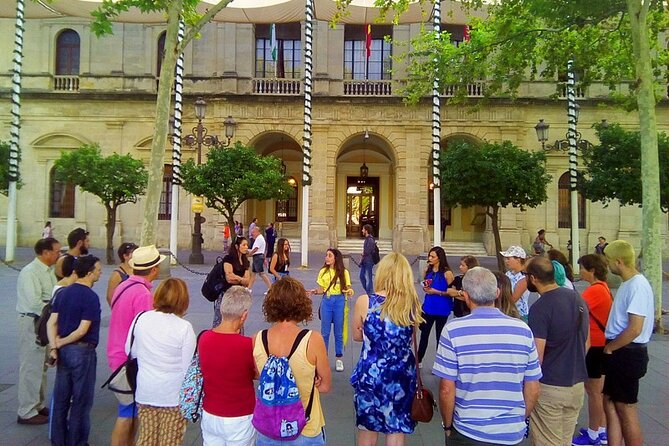
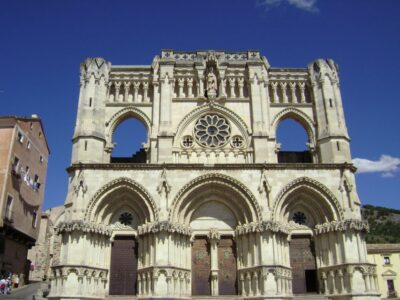
The walk’s “big wow” moments start early. At Catedral de Sevilla, you’ll hear the story of the largest Gothic cathedral in the world. Even if you’ve seen Gothic churches elsewhere, this one’s scale is the headline—and the guide helps you understand what you’re looking at beyond the obvious exterior massing.
Next is Torre Giralda, where the focus shifts to the Islamic part of what you’re seeing—an important reminder that Seville’s religious and architectural identity didn’t appear from nowhere. Torre Giralda is one of the city’s icons, and the connection to the cathedral’s broader origins is the kind of context that makes your later cathedral visit feel more intentional.
There’s also a stop in one of the busiest squares connected to the cathedral area. The guide uses that lively setting to explain the cathedral’s role in the city’s history—useful because you’re standing in the real place where that history plays out today (crowds, traffic flow, and all).
Practical tip
If you want photos, don’t just aim at the monument. Aim at the details the guide calls out first—then grab your wide shots after.
The Alcázar area: why royal Seville feels “clustered”
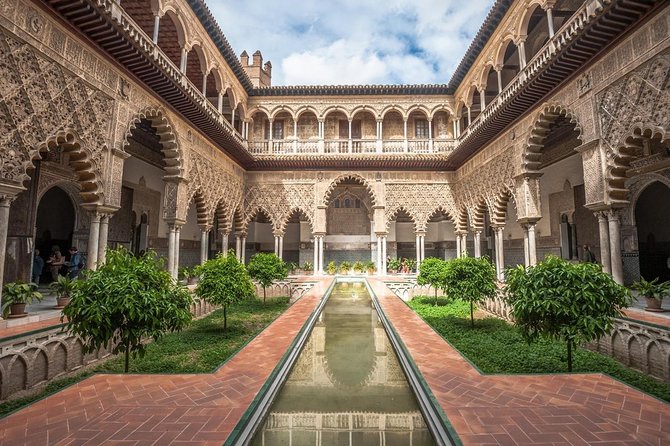
Then you move into Real Alcázar de Sevilla, described as the most visited and also one of the oldest monuments in Seville. Even without stepping fully inside on this tour, the story you get around it helps you understand why the Alcázar is central to the city’s identity.
You’ll also pause in a key square where the guide explains how the city’s life in ancient Seville took shape—and how this area connects the major anchors nearby: Real Alcázar, Catedral de Sevilla, and the General Archive of the Indies. This is the tour’s clever geography lesson. You start to see why so many “must-see” buildings stack together in the same part of town.
One important consideration: admission tickets aren’t included for these major monuments. So, enjoy the framing and the exterior context on the walk, then decide which places you want to pay to see in-depth.




Archivo General de Indias: colonial paperwork, 400 years of it
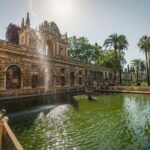
Next comes the Archivo General de Indias. This stop gets special attention for a reason: it’s described as the largest collection of documents preserved from the colonial period, and it covers more than 400 years of American colonization history.
If archives sound dry to you, the guide’s job here is to make it feel human. Think of it as the administrative backbone—letters, records, and decisions that helped shape travel, trade, and governance. You’ll leave with a better sense of why Seville mattered far beyond Spain. It wasn’t just a local power center; it was tied to global systems of movement and paperwork.
Puerta de Jerez and Torre del Oro: city walls and river control
Now the tour stretches from “royal and religious power” into “trade and security,” using two very different but connected landmarks.
At Puerta de Jerez, the guide points out its historical role: it marked the access and exit walls of the city and was a major door toward Jerez de la Frontera. It’s a reminder that even if you only see open streets today, Seville was once a place with controlled entry points.
Then you’ll reach Torre del Oro, tied to Puerta and Puerto de Indias. The story here is navigation and surveillance—how the Guadalquivir River was monitored, controlled, and watched. It’s one of the best stops for understanding how the city’s economy wasn’t abstract. It was operational. Ships arrived, trade moved, and the city watched the water like a lifeline.
Hotel Alfonso XIII and the Real Fábrica de Tabacos: Seville’s power changes jobs
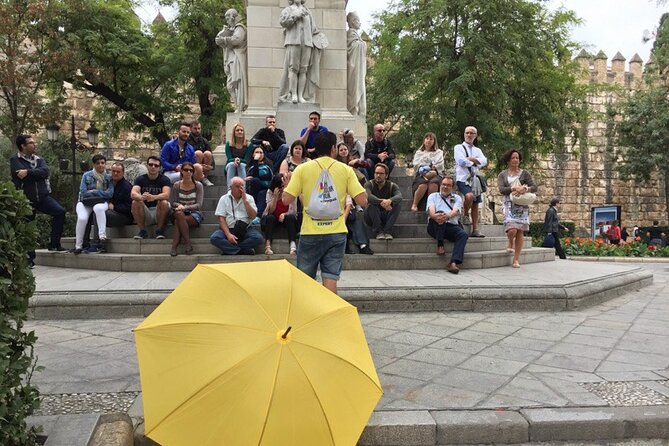
You also get two stops that show Seville’s power evolving.
First is Hotel Alfonso XIII—a famous luxury hotel. Even on a walking tour, it works as a quick “then-and-now” marker. The city’s importance didn’t vanish; it transformed into prestige, hospitality, and modern cultural identity.
Then comes Real Fabrica de Tabacos, introduced as the economic engine of Seville in the 18th century. That’s a valuable contrast after castles and cathedrals. You see how the city’s momentum came from industry and production, not only from court and church. If you’re the type who likes history that explains daily life, this stop gives you that angle.
Plaza de España finish: Expo 1929 and a place to linger
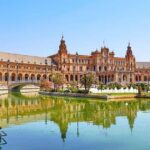
The tour ends at Plaza de España. The guide calls it the jewel in Seville and highlights that it was the pavilion of Spain during the Expo 1929. It’s the kind of finale that feels satisfying because it’s open, photogenic, and easy to keep exploring after your guided portion ends.
You’ll also start to understand why this plaza pairs well with the rest of the route: you’re moving from medieval and colonial-era stories into a 20th-century statement of identity, built to impress and welcome visitors.
Also note that admission at this stop is listed as free, which is a nice bonus at the end of a tour where entry to other monuments may cost extra.
What I’d do right after
Stay outside with the plaza setting. Walk it at a slower pace. Sit for a minute. It’s a good payoff after a two-hour history sprint.
Price and value: what $8.45 covers (and what it doesn’t)
At $8.45 per person, this tour is priced like a city “orientation hit,” not a full museum day. That’s why it works.
What you’re getting:
- Guided storytelling in English
- A structured route with multiple iconic stops
- A pace that keeps you moving but doesn’t feel like a race
What you should plan for:
- Most major monuments are not included in entry at the stops where the tour lists admissions as not included. That likely means you’ll pay separately if you want to go inside the Catedral de Sevilla, Torre Giralda, Real Alcázar, and other key sites.
If you’re trying to keep daily costs controlled, this is a smart strategy: take this guided walk early to learn the “best priorities,” then choose which monuments deserve paid entry based on what grabs you most.
When to book and how to pick the right day
This experience is on the schedule as long as weather cooperates. It’s noted that it requires good weather, and if it’s canceled due to poor weather you’ll be offered another date or a full refund.
As for timing, it’s also said that it’s commonly booked about 15 days in advance on average. If your trip window is tight, I’d book early rather than waiting.
Best fit: who should book this tour
You’ll probably enjoy it most if:
- You want an early introduction to Seville’s top historic stops
- You like history explained in practical chunks rather than a long museum-style session
- You’re okay with a short walk and prefer to choose deeper paid visits later
- You’d like an English guide and an organized route without complicated planning
It may be less ideal if:
- You need long time inside each monument. This route is built for orientation, not deep entry sessions.
- You struggle with hearing a guide over street noise, especially in crowded cathedral-area squares. (Position yourself well, and don’t let your attention drift.)
Should you book this Seville Monumental walking tour?
Yes—if you want your first day in Seville to feel guided and efficient. The route connects Gothic, Islamic, colonial, and river-trade themes without turning it into a heavy day, and the Plaza de España finish makes it easy to keep the momentum going on your own.
Book it when you:
- Arrive and want quick bearings
- Want a low-cost way to sort your priorities for the monuments that charge admission
- Prefer a manageable group walk that doesn’t feel rushed
Skip it only if you’re looking for long interior time at each attraction or you know you won’t be able to hear a guide in crowded outdoor conditions.
FAQ
How long is the Cultural Walking Tour of Seville Monumental?
It runs for about 2 hours.
How much does the tour cost?
The price is $8.45 per person.
Is the tour offered in English?
Yes. The tour is offered in English.
Where do I meet the guide?
The meeting point is Ayuntamiento de Sevilla, Plaza Nueva, Pl. Nueva, 1, Casco Antiguo, 41001 Sevilla.
Where does the tour end?
The tour ends at Plaza de España, 41013 Sevilla.
Is a mobile ticket used?
Yes. You’ll receive a mobile ticket.
Are admission tickets included for the monuments?
No. The tour lists admission tickets as not included for major stops like the Catedral de Sevilla, Torre Giralda, Real Alcázar de Sevilla, and others mentioned. Plaza Nueva and Plaza de España are listed as free admission.
What group size should I expect?
The tour has a maximum of 35 travelers.
Does it run in any weather?
It requires good weather. If canceled due to poor weather, you’ll be offered another date or a full refund.
Can I cancel and get a refund?
Yes. There is free cancellation. You must cancel at least 24 hours before the experience start time for a full refund.