REVIEW · GRAN CANARIA
Guided tour of the Banana World
Book on Viator →Operated by Mundo Del Plátano Gran Canaria · Bookable on Viator
Bananas have a secret life in Gran Canaria. This guided visit at Banana World in Trasmontaña pairs a real banana farm with a restored 1804 Canarian house and then caps it with banana tastings in English.
I really like two things here. First, you get a clear picture of banana cultivation and how the island grows them, not just a quick look at plants. Second, the tour includes practical tastings, from banana-based wines to small banana montaditos that make the whole subject taste real.
One possible consideration: on busier departures, the group can feel crowded for hearing explanations and asking questions.
In This Review
- Key highlights before you go
- Banana World at Trasmontaña: farm views plus a restored 1804 house
- The short guided flow: what you do in about 50–60 minutes
- Stop 1 at Trasmontaña: banana cultivation and the 1804 Canarian house
- Banana tastings: banana wine, montaditos, jams, and more
- The guide experience in English: what to expect from names like John and Maria
- Small-group reality: how crowd size affects the experience
- Meeting point at Cam. del Laurel: arrive smart so you don’t miss the start
- Getting there from Las Palmas (and the cruise port) using public buses
- Parking and what’s included versus what you’ll pay separately
- Value check: is $18.14 a good deal for this banana experience?
- Who should book Banana World (and who should plan differently)
- Weather matters: plan for a day that works outdoors
- Should you book Banana World in Gran Canaria?
- FAQ
- What is Banana World in Gran Canaria?
- How long is the tour?
- What does it cost?
- What language is the tour offered in?
- Where does the tour start?
- Is a mobile ticket used?
- What’s included in the price?
- What is not included?
- How big are the groups?
- What happens if the weather is bad?
- Is it free to cancel?
Key highlights before you go
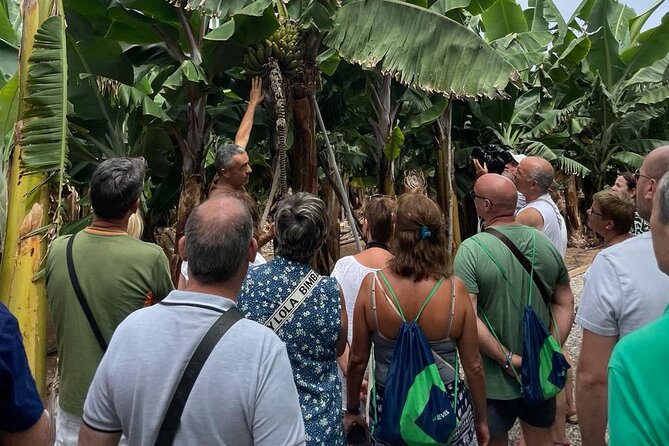
- Trasmontaña farm + banana museum vibe in a short, focused 50–60 minutes
- Restored 1804 Canarian house used as an interpretation center
- Banana wine and multiple banana tastings included at the end
- English-speaking guides, with names like John, Dani, Fatima, Ion, Maria, Ismael, JC, and Steven showing up
- Time to explore afterward (you’re not rushed straight out the door)
- Small-group format with a maximum of 40 travelers
Banana World at Trasmontaña: farm views plus a restored 1804 house
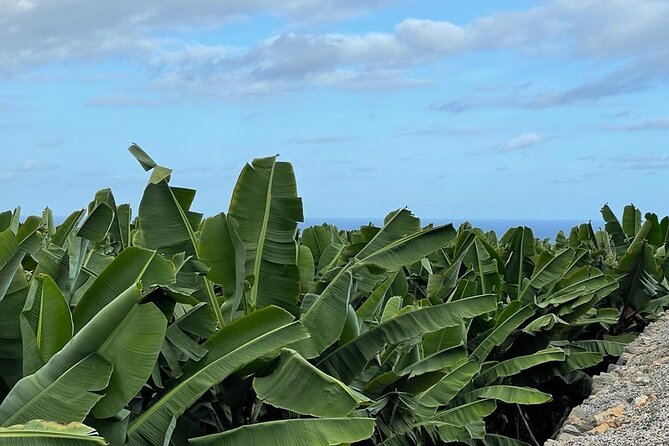
Banana World isn’t a long day trip. It’s a tight, guided hit of Gran Canaria’s banana story, with the emphasis on how cultivation works on the island. You also get the added bonus of a Canarian home that dates to 1804, fully restored to match its original architecture, which helps the visit feel more grounded than a standard plantation walk.
The best part for me is that the tour doesn’t treat bananas as a single product. It treats them as a plant with different varieties, growing conditions, and a whole local food-and-goods ecosystem around it. Even if you think you know bananas, you’ll likely leave with at least a few new facts and a better sense of what makes Canary-grown fruit different.
You can also read our reviews of more guided tours in Gran Canaria

The short guided flow: what you do in about 50–60 minutes
This is an easy schedule to fit into a day around Las Palmas. The tour runs about 50 minutes to 1 hour, and it’s offered in English. A mobile ticket is used, so you don’t need to hunt for paper at the start.
You’ll move through the farm with your guide, then shift indoors to the interpretation center and shop area linked to the property. The end of the experience is where the included tastes come in, so plan to be ready to sample rather than treat it like a quick photo stop only.
Stop 1 at Trasmontaña: banana cultivation and the 1804 Canarian house
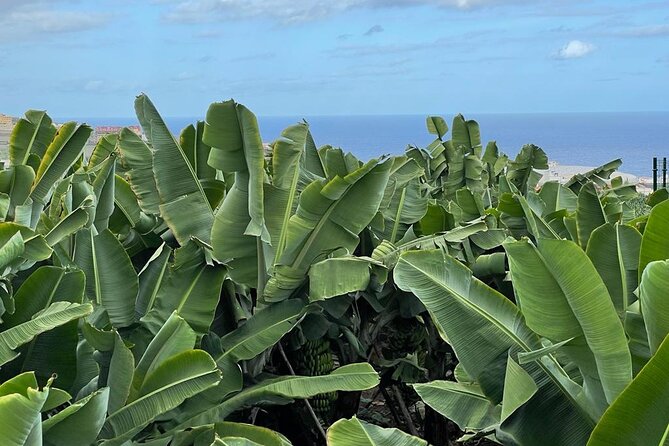
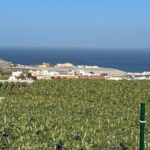
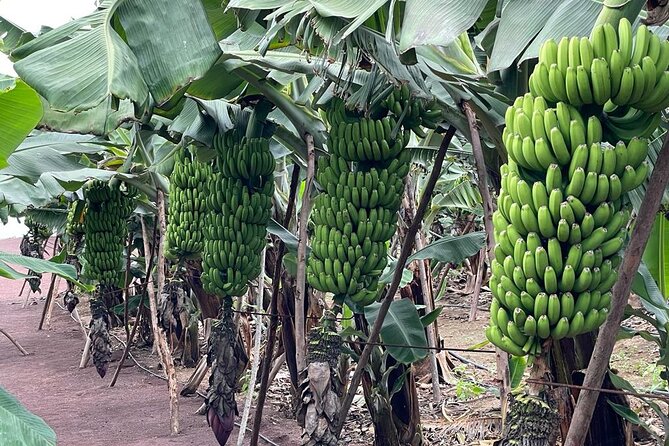
Your main stop is at the Gran Canaria Banana Museum area at Trasmontaña. The tour guides you through a banana farm and explains how bananas are cultivated, not just where they grow. This matters because bananas are often misunderstood as a simple “plantation = palm trees everywhere” story. Here, you learn the practical side of cultivation and how it’s managed.
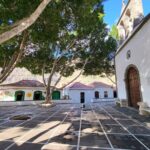
Then you step into the restored Canarian house dating from 1804. Inside, you’ll find an interpretation center where the banana story is packaged in a visitor-friendly way. In other words, you get both the real-world setting (the farm) and the context (the museum-style interpretation). For a short tour, that double approach is smart: you don’t have to guess what you’re seeing in the rows.
A restored house also changes the feel of the visit. Instead of it being only outdoors, you get a calmer indoor space where the guide can focus on explanations and where you can slow down if you want to read more or ask a follow-up question.
Banana tastings: banana wine, montaditos, jams, and more
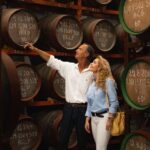
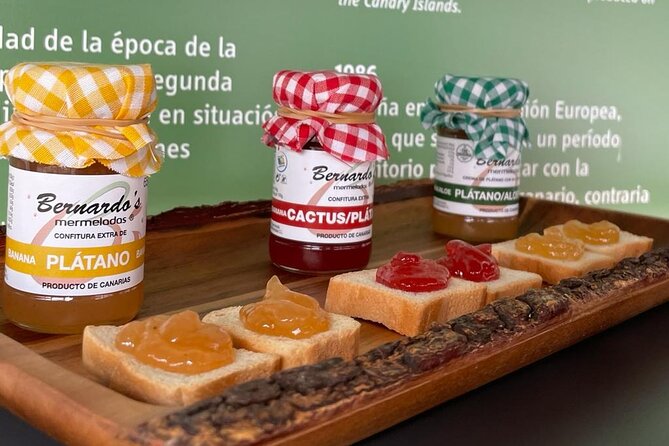
This tour is built around the idea that bananas are local, not imported novelty. The included tastings include banana-based wines made in the Canary Islands, plus snacks that are small montaditos made with banana products.
What you can expect as included snacks:
- banana jam montaditos
- banana with cactus
- banana with aloe vera
You’ll also have time at the end to sample other banana-related products at the shop area. Based on the experience reports you provided, people often come away liking the jams and liqueur options, and you may spot cosmetic lines made with bananas too. (If you’re shopping for gifts, this shop is part of the value.)
Not included: coffee and/or tea. So if you’re the type who needs caffeine before walking around, grab it before you arrive. The tastings are part of the program, but they aren’t a replacement for a hot drink break.
The guide experience in English: what to expect from names like John and Maria
The tour is in English, and guides here tend to be described as friendly and engaging. You might be guided by someone like John, Dani, Fatima, Ion, Maria, Ismael, JC, or Steven. Even when styles vary, the common thread is that you get lots of information in a short time.
Because the schedule is compact, you’ll get the best results if you come with a couple of questions. Ask about banana varieties, how cultivation is managed on Gran Canaria, or why certain products (like banana jam or banana wine) are popular on the islands. That’s where the guide can turn a general explanation into something you’ll remember.



Small-group reality: how crowd size affects the experience
The tour has a maximum of 40 travelers, which is solid for a short farm walk. Still, if you’re sensitive to noise, it can help to pick a less busy time if that option is available when you book.
In practical terms: when groups are large, hearing every detail becomes harder, and questions take longer to land. If you’re traveling with a group that likes to move at their own pace, or you want lots of back-and-forth with the guide, treat this as a “best for curiosity” tour rather than a private Q&A session.
The good news is that the tour isn’t just a single-file walk. You’ll also have time around the interpretation center and shop area, which gives you a second chance to slow down and process what you learned.
Meeting point at Cam. del Laurel: arrive smart so you don’t miss the start
The official meeting start is at Cam. del Laurel, 7, 35413 Arucas, Las Palmas, Spain. One important detail: some people have found it’s easiest to go right to the entrance/shop area rather than waiting outside for a guide.
Your practical game plan:
- Be there a few minutes early.
- Look for the shop/entrance area tied to the start point.
- If there’s an instruction to register inside, do it there so you’re definitely in the right group.
This matters because the tour is short. Losing even 10–15 minutes can feel like a lot when your whole visit is under an hour.
Getting there from Las Palmas (and the cruise port) using public buses
You’re told it’s near public transportation, which is great because the area isn’t automatically “easy by car only.” If you’re coming from Las Palmas, public buses are a realistic option.
If you’re visiting from the cruise port area (Muelle de Cruceros), one workable route uses Bus 210:
- Start at Ambulatorio De Alcaravanera, where the 210 (GLOBAL – L210 Arucas) blue bus departs
- Ride to the El Lomito bus stop
- Walk about 10–15 minutes to Cam. del Laurel (Cam. del Laurel, 10 is mentioned as close to the building area)
For returning to the cruise port, the same 210 bus picks up directly across from where you were dropped off (El Lomito).
There’s also a slightly less direct option with more walking and maybe one connection via Santa Catalina bus station (Intercambiador Santa Catalina) and Mesa y López (C.S. Alcaravaneras). Bus rides are listed at about 1.50 Euros per person, and payment can be cash or credit card.
Two quick tips:
- Build in extra buffer time if you’re on a cruise day with limited flexibility.
- Wear shoes you don’t mind for a short walk on roads near the pickup points.
Parking and what’s included versus what you’ll pay separately
If you’re driving, parking fees are included. That’s helpful because small attractions sometimes nickel-and-dime parking even when the tour itself is affordable.
What’s included on the tour:
- Alcoholic beverages to taste different banana-based wines
- Snacks (montaditos with banana jam, banana with cactus, and banana with aloe vera)
- Parking fees
- Admission ticket access for the experience
- Guided tour in English
- Mobile ticket use
What’s not included:
- Coffee and/or tea
- Private transportation
So if you’re planning meals, don’t count on this being a full lunch substitute. It’s more like: guide + education + tastings + a bit of time to browse and shop.
Value check: is $18.14 a good deal for this banana experience?
At $18.14 per person, this tour sits in the “small price, high interest” category. The big value drivers are:
- you get both the farm walk and a museum/interpretation center in one hour
- you receive multiple included tastings tied directly to the banana story
- you also get time to browse banana products and banana-based cosmetics in the shop area afterward
It’s not a long, multi-hour adventure. Think of it as a concentrated learning-and-sampling stop. If you want a quick, memorable experience without spending a whole half-day, it fits well.
If you’re someone who hates group settings, or you only want sightseeing photos and dislike tastings, you might judge it as less worthwhile. But for anyone who likes food, plants, or island culture, it’s a strong use of time.
Who should book Banana World (and who should plan differently)
This tour is a good match if you:
- enjoy food-related experiences and want tastings included
- like agricultural stories and want a practical explanation
- want something short and easy to fit into an itinerary
- enjoy visiting small museums or interpretation centers along with outdoor walking
It may be less ideal if:
- you dislike groups and struggle in crowded settings
- you want a long, in-depth historical lecture (this is short by design)
- you expect coffee/tea to be provided (it isn’t)
Kids can usually handle it because the tour is short and the setting is outdoors plus museum indoors. Bring sunscreen and water for the farm portion, and keep your expectations realistic about time: it’s built to be around an hour.
Weather matters: plan for a day that works outdoors
The experience requires good weather. If it’s canceled due to poor weather, you’ll be offered another date or a full refund. That’s important because this visit includes an outdoor farm component, so you’ll want to check the forecast the morning of.
If you’re traveling in a season with changeable skies, pick a day with at least some forecast stability and don’t schedule it as your only outdoor activity.
Should you book Banana World in Gran Canaria?
I think Banana World is worth it for most visitors who want an authentic, island-focused experience without paying big-tour prices. The combination of the restored 1804 house, the real banana farm walk, and the included banana wine tastings is a smart bundle.
Book it if you like food culture, you enjoy learning how things are grown, and you want a guided stop that leaves room for shopping afterward. I’d skip it only if you’re very sensitive to noise/crowds or you’d rather spend your time elsewhere on Gran Canaria.
If you do book, go in with curiosity, arrive a few minutes early at Cam. del Laurel, and treat the tastings as part of the experience, not as an optional bonus.
FAQ
What is Banana World in Gran Canaria?
It’s a guided experience at the Gran Canaria Banana Museum and banana farm in Trasmontaña, with a visit to a restored 1804 Canarian house interpretation center and included banana tastings.
How long is the tour?
The tour lasts about 50 minutes to 1 hour.
What does it cost?
The price is $18.14 per person.
What language is the tour offered in?
The tour is offered in English.
Where does the tour start?
The meeting point start is Cam. del Laurel, 7, 35413 Arucas, Las Palmas, Spain.
Is a mobile ticket used?
Yes, the tour uses a mobile ticket.
What’s included in the price?
Included: banana wine tastings, snacks (montaditos with banana jam, banana with cactus, and banana with aloe vera), parking fees, and admission ticket access.
What is not included?
Coffee and/or tea are not included, and private transportation is not included.
How big are the groups?
The activity has a maximum of 40 travelers.
What happens if the weather is bad?
The experience requires good weather. If it’s canceled due to poor weather, you’ll be offered a different date or a full refund.
Is it free to cancel?
Yes, there is free cancellation. You can cancel up to 24 hours in advance for a full refund. Within 24 hours, refunds aren’t available.