REVIEW · GRANADA
Guided visit to the Alhambra, Nasrid Palaces and Generalife
Book on Viator →Operated by Granada Turismo y Ocio · Bookable on Viator
This is one of those visits where Alhambra design stops being a blur and starts making sense—courts, towers, stucco, woodwork, gardens, and Christian-era changes all in one tight walk. I especially like how the guide points out the craft behind the look (not just the scenery) and then ties it to what you’re actually seeing in front of you. One thing to consider: the tour is not built for reduced mobility, and you’ll want to be ready for steps and uneven ground.
It also helps that the experience tends to run smoothly with small groups (up to 30), and the explanations can be very clear—people have highlighted guides like Noelia and Victoria for staying friendly and easy to follow. If your schedule is tight, double-check your exact start time because this is non-refundable once booked.
In This Review
- Key highlights you’ll feel on the ground
- How a 3-hour guided Alhambra visit actually helps you
- Ticket value: what’s included (and what’s not)
- Nasrid Palaces: Comares, Lions, and the ceiling craft you’ll remember
- Comares Palace, Mexuar, and the feeling of power
- Comares Tower and the Throne Room
- Palace of the Lions: the courtyard fountain and the room names that anchor the visit
- Partal area and the Torre de las Damas
- Alcazaba: climb to the Torre de la Vela for big views
- Defensive structure, then the Torre de la Vela viewpoint
- Jardín de los Adarves and Puerta de las Armas
- Palace of Carlos V: the 16th-century layer that changes the vibe
- Calle Real de la Alhambra: church, convent, ruins, and the city’s everyday bones
- Palacio de los Abencerrajes ruins and what “dry land” means here
- Medina area: workshops and ovens
- Generalife: orchards and the garden maze logic
- Generalife Palace and its communication with the city
- Patios you’ll recognize by name
- What it’s like with the guide: clarity wins
- Timing, meeting point, and how to be ready
- Price and booking value: who should choose this format?
- Should you book this Alhambra and Generalife guided visit?
- FAQ
- How long is the guided visit?
- What areas of the Alhambra are included?
- Is admission included in the price?
- What language is the tour offered in?
- Where does the tour start?
- How big is the group?
- Is it suitable for people with reduced mobility?
- Are service animals allowed?
- Is the booking refundable or changeable?
Key highlights you’ll feel on the ground
- Nasrid Palaces’ star rooms: Comares Tower’s Throne Room and the Palace of the Lions with the famous fountain and key annex rooms
- Craft details, not just photos: explanations of stucco techniques and preserved wood ceiling work
- A real viewpoint payoff: Torre de la Vela for wide views of Granada, Albaicín, and the Vega de Granada
- Garden + city connection: Generalife runs from Cerro del Sol down through orchards and the Patio de la Acequia
- Christian-era layers still visible: Santa María de la Alhambra and the former convent area tied to historical figures
- Good group size: max 30 people, English service, about 3 hours total
How a 3-hour guided Alhambra visit actually helps you
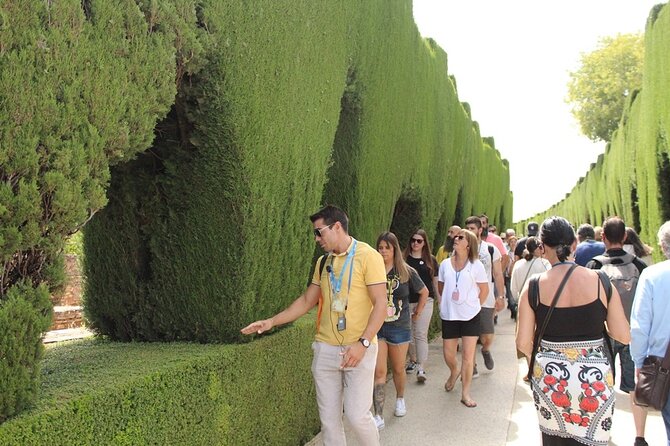
The Alhambra can feel like you’re wandering through postcards. That’s fun for about ten minutes. After that, you start asking: Why is this court here? What’s that tower doing? Why do the ceilings look the way they do?
That’s where this tour earns its keep. You cover the Nasrid Palaces, the Alcazaba, the Palace of Carlos V, the main Calle Real area, and the Generalife gardens—without you having to plan every turn and puzzle out the palace layout yourself.
You’re not racing through with a frantic headset. The pace is structured enough that you get context for each stop, and you’re out before the late-afternoon crush.
You can also read our reviews of more guided tours in Granada

Ticket value: what’s included (and what’s not)
This is a ticket-and-guide format, and the admission is split by site:
- Admission is included for the Nasrid Palaces (about 1 hour)
- Admission is included for the Alcazaba (about 25 minutes)
- Admission is included for the Palace of Carlos V (about 15 minutes)
- Admission is free for the Calle Real de la Alhambra public area (about 25 minutes)
- Admission is included for Generalife (about 45 minutes)
Price is listed at $66.42 per person for about 3 hours in English. With that range of sites covered, the value is strongest for first-timers who don’t want to spend time figuring out which tickets cover what.
Also, groups are limited to 30, which matters here. The Alhambra’s popular areas can get tight; smaller groups generally make it easier to hear and see.
Nasrid Palaces: Comares, Lions, and the ceiling craft you’ll remember
You start in the Nasrid heart of the complex, and the flow is smart. It goes from the administrative and ceremonial spaces into the palace that made the “wow” part famous.
Comares Palace, Mexuar, and the feeling of power
First you visit the Comares Palace and its administrative area called the Mexuar. The guide explains the layout and what each space was meant to do. Even if you don’t speak Arabic or Spanish, the palace organization reads like a map of how rulers wanted life to work.
Then there’s the Patio de los Arrayanes—with its porticos and the long reflecting pool. This is one of those places where you start noticing proportions: how walls, arches, and water work together to create a calm “stage.”
A big payoff here is the focus on construction: you’ll hear about stucco construction techniques and the wood techniques used for the original ceiling that are still preserved. When you understand that craft, the decoration stops being “just pretty” and starts looking like engineering plus art.
Comares Tower and the Throne Room
Next comes the Comares Tower, where the majestic Throne Room is located. Even without lingering forever, you get the sense of what this space was built to communicate—authority, ceremony, control of light and sightlines.
If you love details, this part gives you language to describe what you’re seeing instead of relying only on your camera.

Palace of the Lions: the courtyard fountain and the room names that anchor the visit
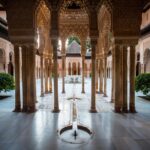
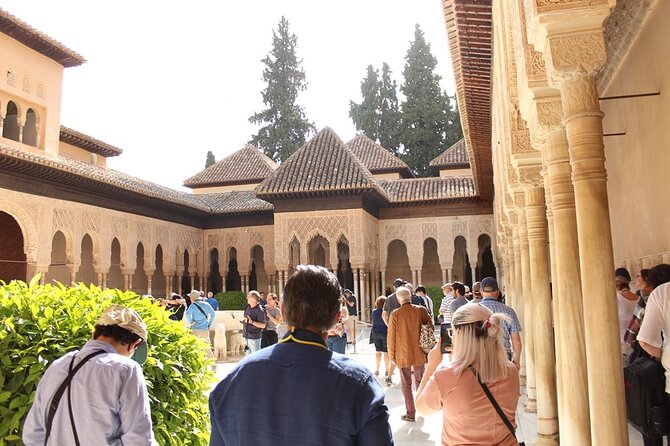
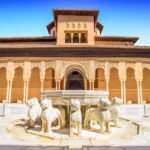
Then you shift to the Palace of the Lions, associated with Sultan Mohammed V. The star moment is the patio with the famous fountain, and the guide’s explanation helps you see why that courtyard layout matters.
You also move into annex rooms tied to famous names like the Room of Two Sisters and the Room of the Kings. Those labels are more than trivia. They help you keep your mental map straight when you’re surrounded by repeating patterns and arches.
Partal area and the Torre de las Damas
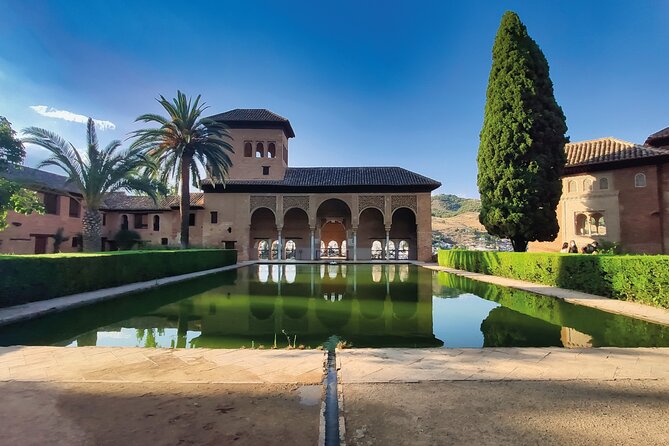
You finish the palaces portion in the Partal area, including the Torre de las Damas. This is a nice way to end the palace sequence—less “indoor pageant,” more open-air feeling.
Possible drawback here: the palaces section can be visually dense. If you’re the type who wants time to sit and sketch, you’ll have to accept you’re moving. The upside is you’ll leave with a clearer understanding than you’d get from wandering.
Alcazaba: climb to the Torre de la Vela for big views
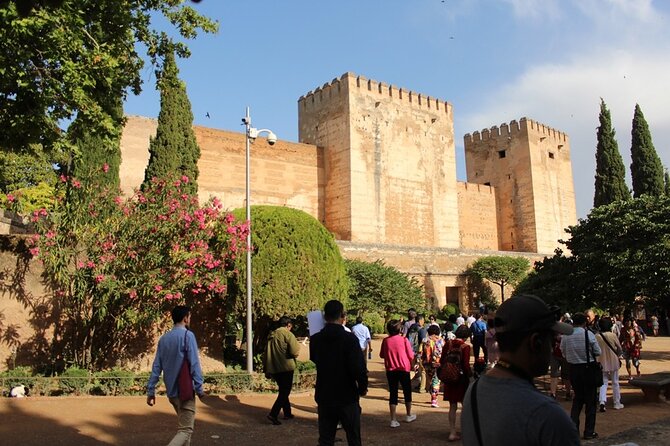
After the palaces, the tone shifts to defense. The Alcazaba is the military part of the Alhambra, so you start thinking about why the city was built where it was—and how it was meant to hold out.
Defensive structure, then the Torre de la Vela viewpoint
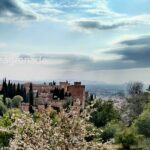
You’ll get explanations of the defensive structure of the palatine city. Then you climb up to the Torre de la Vela. The reward is the view of Granada, Albaicín, and the Vega de Granada.
Just as important as the view is the story about the tower’s function and what happened during the Christian conquest. It’s the kind of contextual detail that turns a photo stop into a historical moment.
Jardín de los Adarves and Puerta de las Armas
You also visit the Jardín de los Adarves and Puerta de las Armas. Even if you can’t linger, these spots connect the dots between “fortress” and “lived-in palace city.”
Consideration: this stop involves climbing and walking on terrain that may feel awkward if you have mobility limitations. The tour is marked as not recommended for reduced mobility.
Palace of Carlos V: the 16th-century layer that changes the vibe
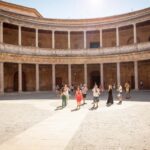
Next is the Palace of Carlos V, a 16th-century building that adds a different architectural language to the complex.
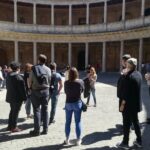
You’ll get an explanation of the facades and the main courtyard, plus how the building was constructed and the symbols involved. There’s also guidance on where the museums inside the palace are located, so if you want to return on your own later, you’ll know which direction to go.
This stop is short (about 15 minutes), but it’s a smart “reset” between the Nasrid spaces and the public streets.
Calle Real de la Alhambra: church, convent, ruins, and the city’s everyday bones
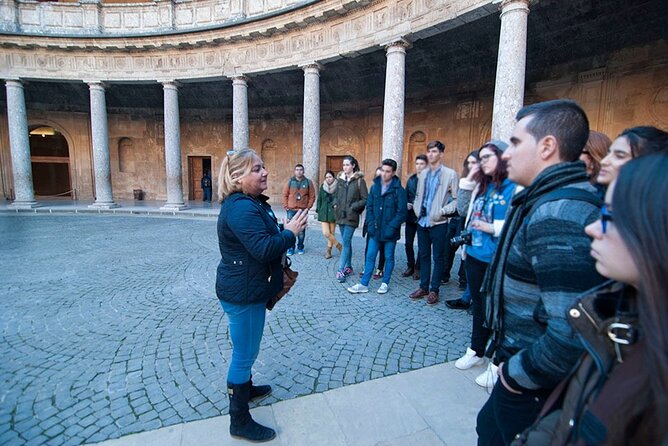
The Calle Real de la Alhambra is the covered public area, and it’s one of the best places to understand Alhambra as a city, not just a palace.
You’ll hear explanations of the structure of the city and how Christian rule modified parts of it. The tour highlights the church of Santa María de la Alhambra and the convent of San Francisco, now converted into a national hostel. That convent area is linked to the burial of Queen Elizabeth—a detail that adds weight to what might otherwise seem like background architecture.
Palacio de los Abencerrajes ruins and what “dry land” means here
You then visit the area of the dry land where the ruins of the Palacio de los Abencerrajes are located. The Abencerrajes were a prominent Nasrid court family, and hearing that context helps you understand why those ruins matter even if they look fragmentary.
Medina area: workshops and ovens
Finally, you move through the medina area, where you can see ruins of workshops and ovens used to build the decorations. This is the “how it was made” piece. It’s a reminder that all that ornament had a production life—people worked, cooked, and crafted for the next level of beauty.
Generalife: orchards and the garden maze logic
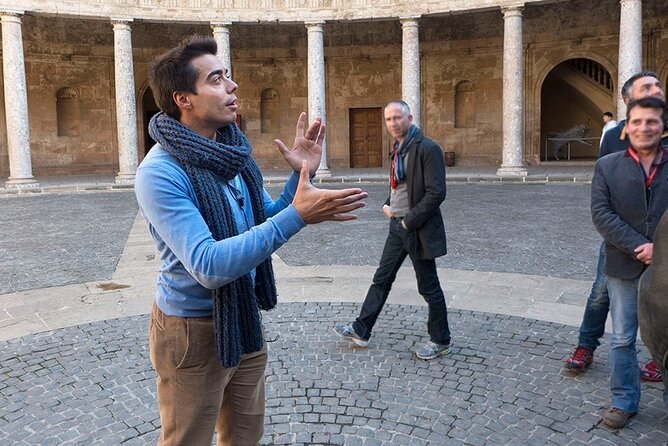
Generalife is where you slow down a bit and start smelling green things instead of stucco and stone.
You go to the Cerro del Sol hill first. From here, you’ll see Nasrid orchards and also the Christian labyrinth gardens. The guide explains the flora of the gardens and the fruits produced in the orchards, which is a nice shift from “palace symbolism” into something more practical and sensory.
Generalife Palace and its communication with the city
You then visit the Generalife Palace and learn about its physical communication with the city of the Alhambra. That connection matters because it shows this place wasn’t just for strolls. It was planned as part of the larger power world.
Patios you’ll recognize by name
Inside the Generalife complex, you’ll visit several patios:
- Patio de Polo
- Patio de la Guardia
- Patio de la Acequia (where you’ll see the summer house of the Sultan)
- Patio de la Sultana (with cypress and tall gardens)
These named spaces are helpful because Generalife can look “all gardens” if you’re not given a map in words. The guide’s explanation keeps you oriented.
You exit the enclosure through the Paseo de las Adelfas.
Why this matters: Alhambra visitors often rush through Generalife because it feels less dramatic than a tower or a throne room. But this tour frames it as a designed system—orchards, water, shade, and garden geometry working together.
What it’s like with the guide: clarity wins
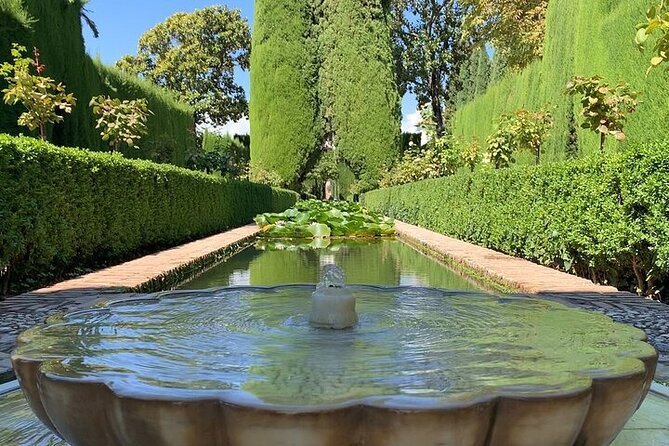
This experience can rise or fall based on the guide. The good news: the tour is known for explanations that are clear and attentive.
In particular, people have mentioned guides such as Noelia and Victoria for being super organized and easy to follow. That kind of guidance is not just pleasant—it’s practical. If you know why the ceiling patterns are there, or what a courtyard arrangement is meant to do, you can enjoy the details instead of just collecting snapshots.
Also, group size helps. With a maximum of 30, you’re less likely to get separated from the storytelling.
Timing, meeting point, and how to be ready
The tour runs about 3 hours. You start at the Alhambra Meeting Point | Tienda de Souvenirs y Alhambra tours at P.º de la Sabica, 1, Local, Centro, 18009 Granada. The activity ends in a different location, so don’t plan a super tight connection immediately after.
On average, it’s booked around 60 days in advance, so if you’re visiting during peak season, it’s wise to book early. The tour is offered in English.
Getting there is generally manageable: it’s listed as near public transportation, and service animals are allowed.
Price and booking value: who should choose this format?
At $66.42 per person for about 3 hours covering multiple major areas, this isn’t the cheapest way into the Alhambra. But it’s not trying to be either. The value is in the structure: you get guided pacing, admission included for most major sections, and explanations that make the architecture and history easier to process.
This tour fits you best if:
- You’re a first-timer and want meaning, not just monuments
- You prefer an organized route with limited time on your side
- You want to hear about craft and design (stucco, wood ceilings, and palace layout)
- You like a smooth, adult pace without long museum wandering
A possible drawback is that the experience is non-refundable and cannot be changed once booked. Add that to the fact that—on at least one occasion—start times were adjusted, and you should avoid booking if your schedule is still shaky.
Should you book this Alhambra and Generalife guided visit?
Yes, if you want the Alhambra to make sense quickly. This tour is built around the big hitters—Nasrid Palaces, Alcazaba, Carlos V, and Generalife—and it gives you the story behind what you’re seeing, including construction details and clear guidance in English.
If you have reduced mobility, you might want to look for a different format, because this one isn’t recommended for that. And if your travel plans are fragile, remember the booking is non-refundable, so pick your timing with care.
FAQ
How long is the guided visit?
It’s approximately 3 hours.
What areas of the Alhambra are included?
You visit the Nasrid Palaces, the Alcazaba, the Palace of Carlos V, the Calle Real de la Alhambra area, and Generalife.
Is admission included in the price?
Admission is included for the Nasrid Palaces, Alcazaba, Palace of Carlos V, and Generalife. The Calle Real de la Alhambra section is listed as free.
What language is the tour offered in?
The tour is offered in English.
Where does the tour start?
The meeting point is Alhambra Meeting Point | Tienda de Souvenirs y Alhambra tours, P.º de la Sabica, 1, Local, Centro, 18009 Granada, Spain.
How big is the group?
The tour has a maximum of 30 travelers.
Is it suitable for people with reduced mobility?
It is not recommended for people with reduced mobility.
Are service animals allowed?
Yes, service animals are allowed.
Is the booking refundable or changeable?
This experience is non-refundable and cannot be changed for any reason.