REVIEW · JEREZ DE LA FRONTERA
Jerez de la Frontera: Andalusian Horse Dance and Museums
Book on GetYourGuide →Operated by Fundación Real Escuela Andaluza del Arte Ecuestre · Bookable on GetYourGuide
Andalusian horses put on a full-body ballet. At Jerez’s Royal Andalusian School of Equestrian Art, the How the Andalusian Horses Dance show blends classical training, music, and 18th-century costumes with museum time in the same palace grounds.
I love that the program is two-part: a polished equestrian performance, plus indoor learning in museums you can actually walk through at your own pace. Art Equestrian Museum and the Carriage Museum add a practical, hands-on look at tack, harness work, and the craft behind the spectacle.
One thing to plan for: the seating can be uncomfortable for some people, and if the day runs hot, you’ll feel the wait time more than you might expect. Heat and seating are the main downsides to watch for.
In This Review
- Key things to know before you go
- Why Jerez’s horse-ballet show is different from the usual attraction
- Getting oriented inside the Visitor Reception Centre and palace grounds
- Art Equestrian Museum: 11 rooms that explain the craft behind the choreography
- The show timing: what’s included and how the 90 minutes tend to flow
- How the Andalusian Horses Dance: the choreography and the movements to watch for
- Pas de deux and unison: how the riders and horses synchronize
- Carriages and driven work: the museum world comes alive in motion
- Carriage Museum: harnesses, vehicles, and equestrian costumes
- Practical tips for a smooth 3.5 hours in Jerez
- Price and value: is $38 worth it?
- Who should book this, and who should rethink it
- Should you book the Jerez Andalusian Horse Dance and Museums?
- FAQ
- What time does the horse show run?
- How long does the whole experience take?
- Can I visit the digital cinema before the show?
- What museums are included, and when can I enter them?
- Is the palace always open?
- Are cameras or video recordings allowed?
- What ID do I need to bring?
- Is free cancellation available?
Key things to know before you go
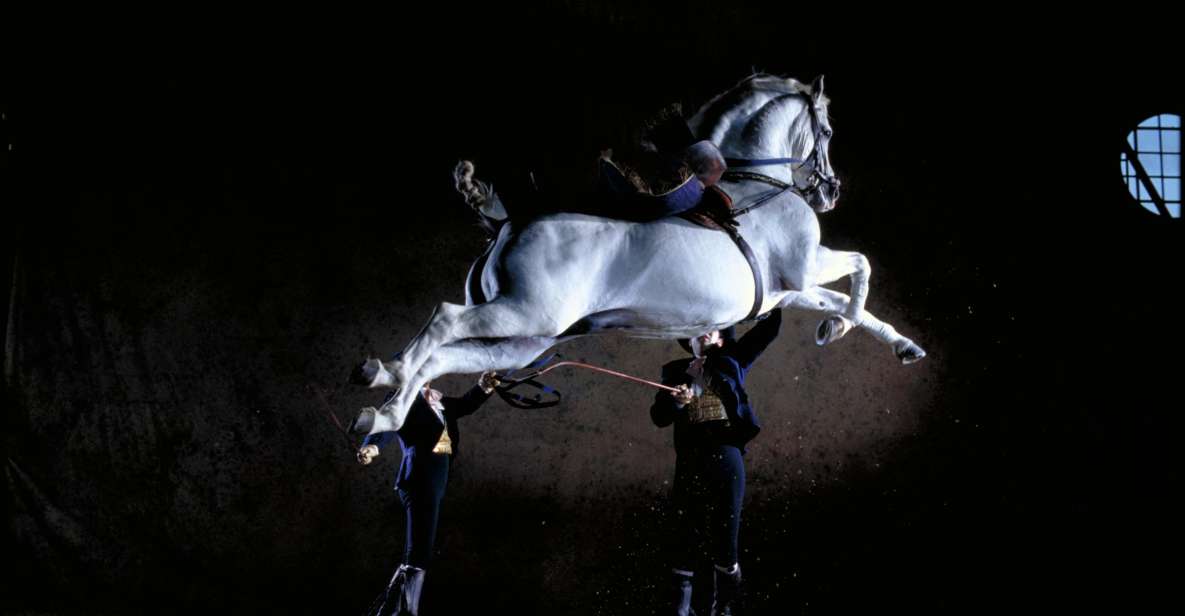
- A real show, not just a demo: you’ll watch 6–8 choreographies with advanced haute école movements to Spanish music
- Two museums in one visit: the Art Equestrian Museum (11 rooms) plus the Carriage Museum with vehicles, harnesses, and costume displays
- The grounds matter: you pass through gardens and palace spaces before the arena show, so the visit feels like more than a ticketed event
- High-skill horse-and-rider unison: advanced exercises happen as a coordinated group, not scattered solo tricks
- Strict rules around recording: cameras and video recording are not allowed, so plan to experience it in real time
Why Jerez’s horse-ballet show is different from the usual attraction
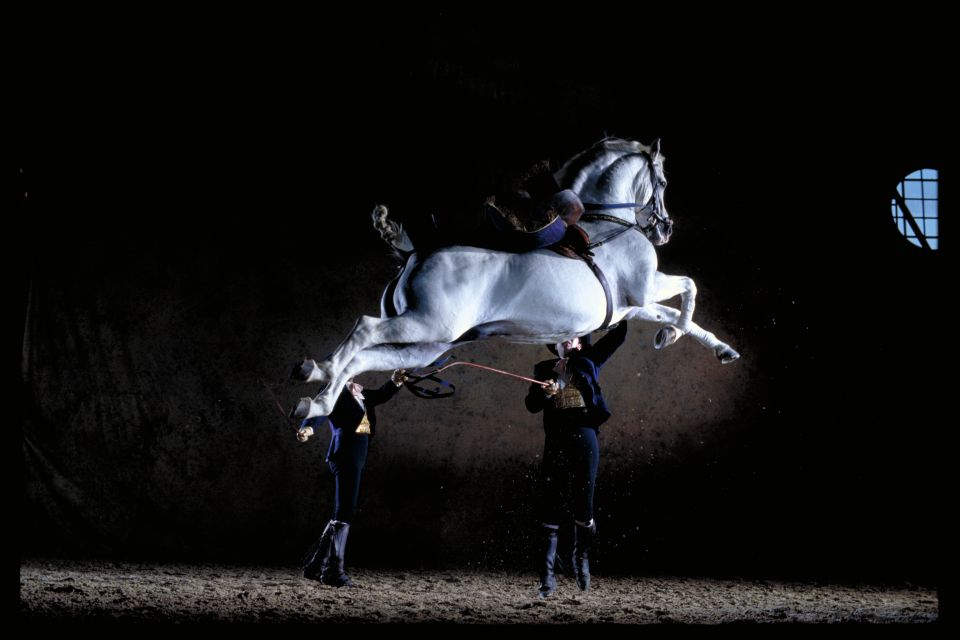
Jerez de la Frontera is where Andalusian horses are treated like living art. This isn’t just a short parade or a quick performance. It’s a structured show built around classical dressage foundations, with choreography that borrows from traditional equestrian work styles too.
What I like most is the “why” behind the movements. You’re not only seeing the end result. You’re watching trained horses and riders perform things with names you’ll start to recognize—like piaffe and other haute école exercises—then you’ll get context in the museums.
If you’re a first-time visitor to this world, the show can feel like a dance recital. If you already love dressage, it feels like a concentrated masterclass—short enough to fit into a normal day in Andalusia.
You can also read our reviews of more tours and experiences in Jerez De La Frontera.
Getting oriented inside the Visitor Reception Centre and palace grounds
Your path starts at the Visitor Reception Centre. Before the show time, you can enter a digital cinema with an audio-visual presentation about the history of equestrian art in Andalusia. It runs until 11:00 AM, so arriving early helps you get this portion in.
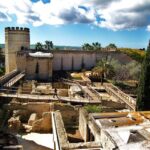
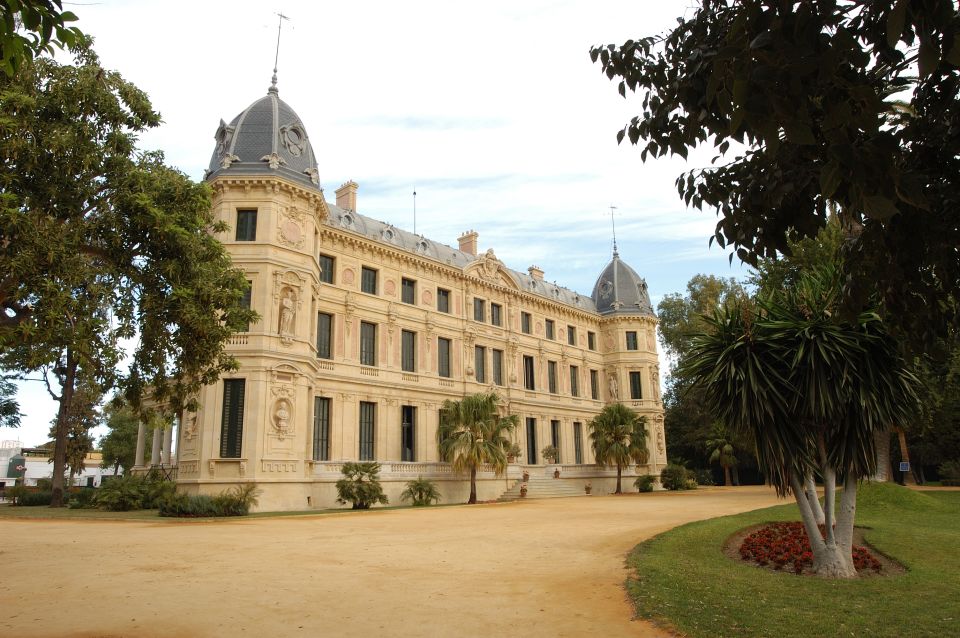
After the film, you move through the gardens, which have a mix of plants and open space—nice when you want a breather before you sit for the show. The palace buildings rise above the gardens, and the setting alone gives the visit a more formal, old-world feel than a standard arena.
One practical detail: the Palace itself is closed on Saturdays and public holidays. The same goes for the Saddlery, which you’ll want to see if your visit lands on one of those days. Still, you’ll likely be able to enjoy the museums and the main show as scheduled.
Art Equestrian Museum: 11 rooms that explain the craft behind the choreography
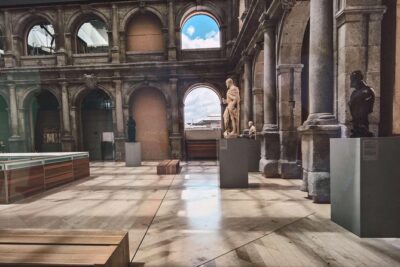
The Art Equestrian Museum is in the basement area of the palace. It’s not just a single display room—you’re looking at 11 rooms, which matters because equestrian art has lots of angles: training styles, equipment, and how the Andalusian horse became central to the region’s identity.
You’ll see exhibits focused on the origins and history of equestrian art in Andalusia, plus the role of the horse in that story. The museum also includes the Saddlery area, where harnesses are made and repaired—exactly the kind of detail that helps you understand what you’re watching in the arena.
If you want a simple mental model, think of it like this:
- the show gives you the performance
- the museums explain the tools and traditions that make that performance possible
In the visits I reviewed, English-language information was available alongside Spanish. That’s a big plus if you’re not fluent, because it lets you connect names like levades, caprioles, and courbettes to what you’re seeing.
The show timing: what’s included and how the 90 minutes tend to flow
The show itself runs from 12:00 PM to 1:30 PM. Tickets include entry to the show, and the format is designed so you’re not just sitting—part of the experience connects to what you can see around the premises and the museum areas before you settle in.
Many people plan for a full block of sightseeing on-site because the attraction doesn’t behave like a quick stop. It’s more like a small cultural campus with timed components.
Also, plan your day around the fact that this is a performance day venue, and parts of it may close later in the afternoon. If you’ve got a train or connection to catch, build in extra slack.
How the Andalusian Horses Dance: the choreography and the movements to watch for
Now for the main event: How the Andalusian Horses Dance at the Royal Andalusian School of Equestrian Art. The choreography is balletic in how it looks, but it’s built on very real dressage mechanics.
You’ll get:
- Spanish music as the soundtrack
- 18th-century style costumes
- movements based on classical dressage, Doma Vaquera, and traditional equestrian chores
Each show includes 6–8 different choreographies. The names you may hear include:
- The Colts
- Airs on Horseback
- Pas de Deux
- Passage and Piaffer
- Domino on Horseback
- Airs Above the Ground
- Fantasy
What makes this special is the blend of “pretty” and “serious.” Movements aren’t random. They’re chosen so you can see how the horse changes balance, rhythm, and collection.
If you’re trying to follow along, focus on these haute école highlights mentioned in the program:
- levades
- caprioles
- courbettes
- piaffe between pillars
- the Spanish walk
Those are the kinds of terms that can turn a good show into a great one for you, because you start noticing the precision instead of just the spectacle.
Pas de deux and unison: how the riders and horses synchronize
A big part of the emotional impact here is the timing. Several parts of the show are designed so horses and riders perform in unison, not just one at a time. When you watch the group work together, you see that the training is as much about communication and consistency as it is about athletic feats.
There’s also a strong showmanship element from the riders—clear control, clean transitions, and a calm presence even when horses are performing advanced moves.
If you’ve seen other European classical horse traditions, you’ll probably notice a similar devotion to precision. The difference is the cultural framing: the program is deeply Andalusian in music, style, and the way traditional equestrian routines get woven into “ballet-like” choreography.
Carriages and driven work: the museum world comes alive in motion
The experience doesn’t stop with the mounted performances. You’ll also see horses demonstrate their ability to draw carriages, using classical harnesses and coachmen who show their skills.
This portion matters because it connects the show to real equipment and real jobs horses historically did. Even though these days the carriage work is largely sport and exhibition, you’re still seeing the horse’s strength and training expressed through harness work, not just arena dressage patterns.
After the show, you’ll be well set up to appreciate the Carriage Museum, because you’ll already have a sense of how the harnessing and driving translate from motion to display.
Carriage Museum: harnesses, vehicles, and equestrian costumes
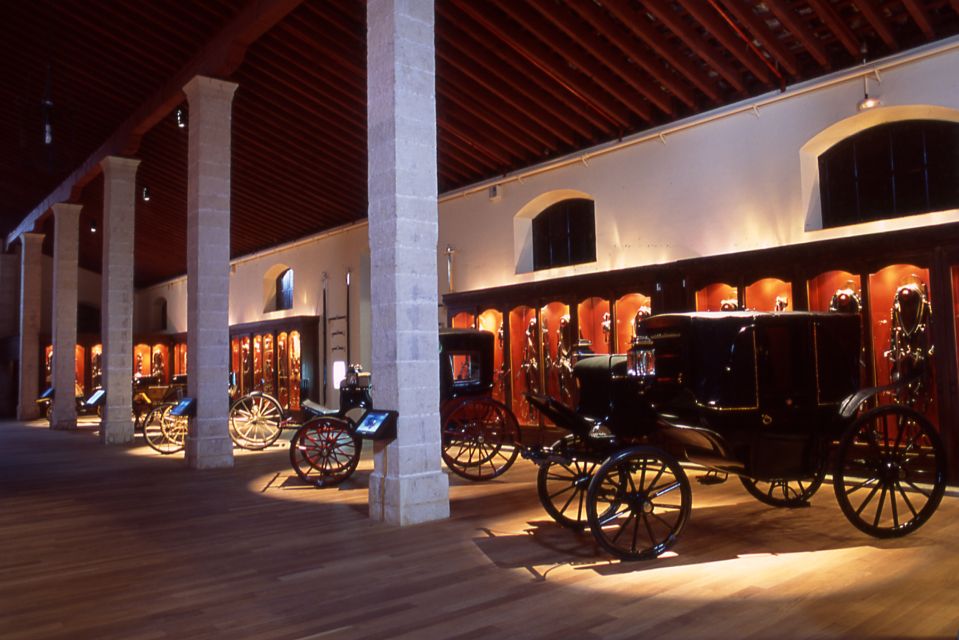
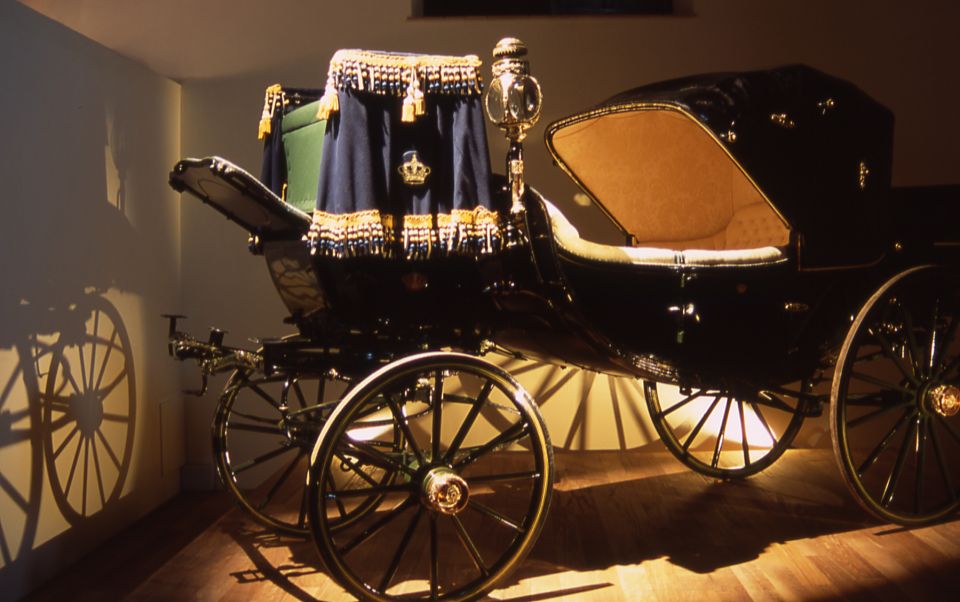
When you move into the Carriage Museum, the focus shifts from movement to objects. You’ll find harnesses and equestrian costumes, and you’ll see vehicles used historically for transport that now function for sport and exhibition.
This part of the visit is a great payoff if you like “how things work.” The museum helps you connect:
- the visual elegance of the horses and riders
- the practical craft of harnesses and saddlery
- and the style choices behind equestrian costumes
The Carriage Museum is included and open until 3:00 PM. If you’re trying to fit everything in, you’ll want to manage your time so you don’t end up rushing through the last room.
Practical tips for a smooth 3.5 hours in Jerez
This activity runs about 3.5 hours, so timing matters more than with a full-day tour. You’ll get a lot packed into that window, and a few details will make your visit calmer.
Plan for warm weather. Some visitors specifically called out very hot conditions, with temperatures reported around the high 30s. Wear breathable clothes, and if there’s a snack bar option on-site during your visit, it can be a simple way to stay comfortable before the show.
Bring ID. You’ll need a passport or ID card. Keep it handy so you don’t waste time at entry.
Camera rules can be strict. Cameras and video recording are not allowed. If you care about photographing details, assume you won’t be able to film the museum areas and plan your memories for your brain, not your camera roll.
Know the meeting flow. When you arrive at the Royal Andalusian School, go to the ticket office to exchange your ticket.
Transportation reality check. If you’re coming from the train station area, a taxi ride is often short (about 10 minutes in local accounts). Parking can be difficult in the surrounding streets, with fines reported, so if driving is your plan, give yourself extra time—or consider dropping off and walking.
Price and value: is $38 worth it?
At $38 per person for about 3.5 hours, the value depends on whether you want both parts: the show and the museums.
Here’s why it’s priced fairly for the right kind of visitor:
- You get the 90-minute show window (12:00–1:30)
- You also get museum access, including an 11-room museum and the Carriage Museum
- The experience includes context: equipment, harnessing, and the historical story behind the training tradition
The show alone could be expensive elsewhere, but what you’re paying for here is the full package—performance plus explanation plus objects you can see afterward.
The main value risk is your day of the week. Since the Palace and Saddlery close on Saturdays and public holidays, you might feel like you missed part of the museum experience if you’re expecting that specific setting.
Who should book this, and who should rethink it
You’ll enjoy this most if you:
- genuinely like horses (dressage people tend to love it)
- enjoy cultural craft—tack, harnesses, costumes, and equipment
- want a structured, time-efficient attraction that still feels deep
It may not be ideal if:
- you need a totally photo-friendly visit (recording rules are strict)
- you’re sensitive to long seating and hot weather
- you’re in a hurry and can’t spare a few hours on-site for the museum stops
If you’re traveling with kids, it can be a hit. One account described even a young child being captivated—horses have a way of cutting through adult impatience fast.
Should you book the Jerez Andalusian Horse Dance and Museums?
Yes, if you want a real equestrian performance plus museum context in one location. The choreography is built around advanced classical movements (like levades and piaffe), and the Art Equestrian Museum and Carriage Museum help you understand what’s behind the spectacle.
If you do book, go early enough to catch the digital cinema until 11:00 AM, and give yourself time to see the museum spaces without rushing. Also, be smart about your departure plans: when big groups finish, getting taxis can get tricky, and some on-site areas close by mid-afternoon.
If your goal is a fast photo stop, this probably won’t match your expectations. If your goal is a cultured, horse-focused afternoon where you learn while you watch, this is a strong booking choice in Jerez.
FAQ
What time does the horse show run?
The show is included from 12:00 PM to 1:30 PM.
How long does the whole experience take?
Plan on about 3.5 hours total.
Can I visit the digital cinema before the show?
Yes. The audio-visual presentation in the Visitor Reception Centre is included and runs until 11:00 AM.
What museums are included, and when can I enter them?
The Art Equestrian Museum is included from 10:00 AM to 2:00 PM, and the Carriage Museum is included from 10:00 AM to 3:00 PM.
Is the palace always open?
No. The Palace itself is closed on Saturdays and public holidays. The Saddlery is also closed on those days.
Are cameras or video recordings allowed?
The tour rules state that cameras and video recording are not allowed.
What ID do I need to bring?
Bring a passport or ID card.
Is free cancellation available?
Yes. You can cancel up to 24 hours in advance for a full refund.