REVIEW · MALAGA
Malaga: Walking Tour of Must-See Attractions
Book on GetYourGuide →Operated by Guydeez Tours · Bookable on GetYourGuide
Malaga can feel like three cities at once, and this walk strings them together fast. You start in the center and move through big landmark moments without spending the whole day in transit. I love how the route pairs famous names with very visual clues to what Malaga used to be.
Two things I particularly like: you get archaeological context for the Roman Theater (not just a photo stop), and you also hit the Picasso trail with real places, including the church tied to his baptism. A third plus is the guide-led pacing—short visits, clear explanations, and helpful suggestions for what to do next.
One possible drawback: there’s no food or drinks built in. Plan to eat before or after, and bring a bottle of water if you’re sensitive to warm weather.
In This Review
- Key moments to expect on this Malaga walk
- A 2-hour route that maps Malaga’s layers
- Alameda Principal: the easy start in Malaga’s core
- Plaza de la Merced: Picasso’s childhood neighborhood vibe
- Malaga Cathedral: big architecture, quick orientation
- Alcazaba: the 11th-century fortress you can feel
- Malaga Museum area: Fine Arts and Archaeology in one stop
- Church of Santiago: where Picasso was baptized
- Costa del Sol photo stop: a quick coastline reality check
- Calle Larios (and Marqués de Larios): shop, people-watch, reset
- Roman Theater of Málaga: 1st-century BC, explained in plain language
- Price and value: what $35 buys you in real time
- What you’ll learn, beyond the postcard photos
- Who this walking tour suits best
- Should you book this Malaga walking tour?
- FAQ
- How long is the walking tour?
- What is the meeting point?
- What does the tour cost?
- What is included in the tour?
- Are food or drinks included?
- Is the tour wheelchair accessible?
Key moments to expect on this Malaga walk
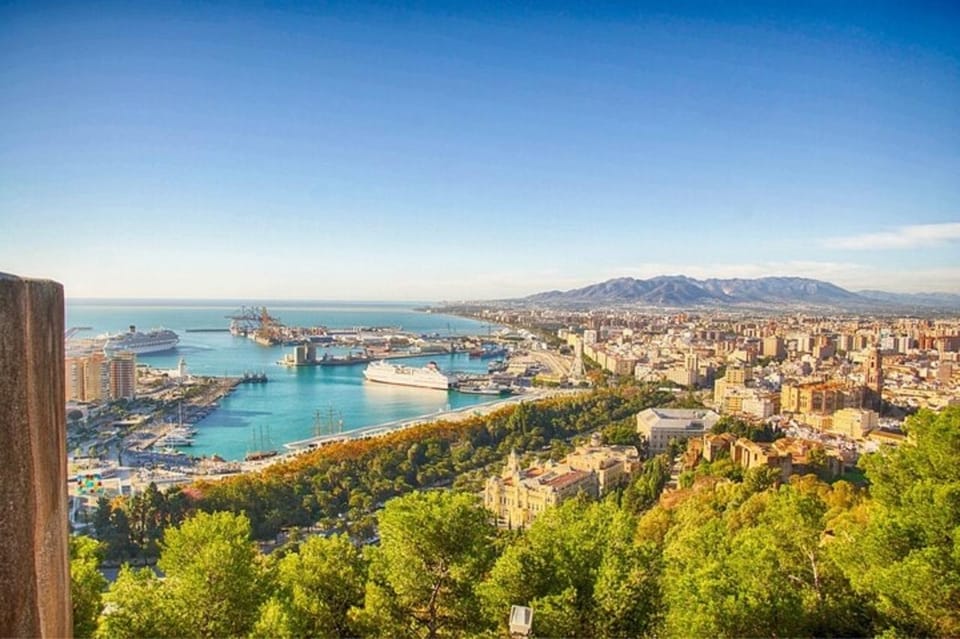
- Alameda Principal start at a practical city-center hub, so you can arrive, park, or grab coffee quickly
- Plaza de la Merced and Picasso’s neighborhood energy, with photo time and guided context
- Malaga Cathedral as a visual anchor point early in the route
- Alcazaba (11th-century Moorish fortress) and the “why this location mattered” viewpoint feel
- Church of Santiago (1490), including the Picasso baptism connection
- Teatro Romano de Málaga tied to the 1st century BC, not just a landmark sign
A 2-hour route that maps Malaga’s layers
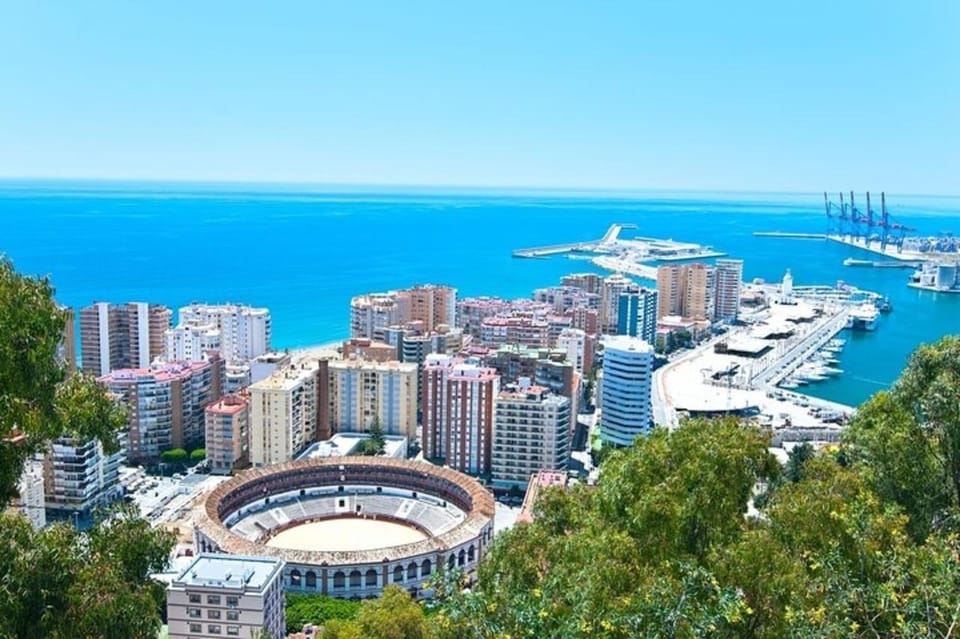
This is the kind of tour that works when you want the highlights but also want to understand them. In just two hours, you’ll connect the dots between Roman remains, Moorish rule, Christian Spain, and modern artistic fame—without needing a museum pass for every stop.
You’ll be moving on foot from the center to major sights, and the visits are timed to keep things efficient. That matters in Malaga, where the day can feel long if you’re relying on guesswork and private photos-only detours.
Also, you’re not stuck with one pace. The tour is marked as wheelchair accessible, and private group options exist if you want a quieter version of the walk. Expect it to be guided and conversational, not a rigid lecture where you’re afraid to ask questions.
You can also read our reviews of more walking tours in Malaga
Alameda Principal: the easy start in Malaga’s core
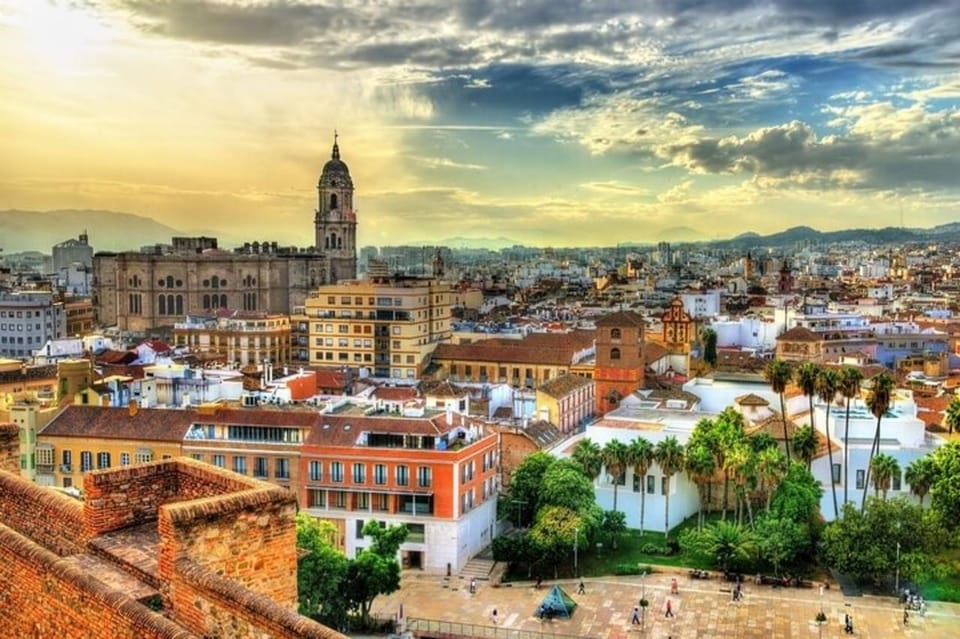
Your meeting point is Alameda Principal, 1. That’s a smart choice because it places you right in the heart of things—close to the Cathedral area and not far from the Picasso Museum zone.
I like starting here because you can get oriented fast. Before you even reach the first major landmark, the guide can set the storyline: how Malaga grew, where power shifted, and why certain buildings still matter today.
If you’re arriving from elsewhere in town, this starting point generally makes life easier than meeting at the far edge of a neighborhood. It’s the kind of location where you can also handle small needs quickly—bathrooms, a quick snack before the walk (since food isn’t included), or just grabbing a sweater if the evening cools down.
Plaza de la Merced: Picasso’s childhood neighborhood vibe

One of the first stops is Plaza de la Merced, with time for a photo, sightseeing, and a guided walkthrough. This square is tied to Picasso’s early life, so it’s more than a postcard pause.
What I like here is the way the guide can turn place into story. You’re standing in a real urban setting, and with the background you get, the area starts to make sense as a starting point for Picasso’s world—before you move on to the religious landmark that completes the connection.
Time is short here (about 15 minutes), so don’t expect a long coffee stop. Use the moments well: take your quick photos, then listen. The value is in what you learn while you’re standing in the spot.
Malaga Cathedral: big architecture, quick orientation
Next up is Malaga Cathedral. You get photo stop time plus a visit and guided tour. Even if you’re not an architecture superfan, a cathedral is where the city’s priorities show up in stone—so it’s a great mid-warm-up moment after the square.
I recommend watching for two things while you’re there: first, how the Cathedral sits in the urban fabric (not isolated like some sites), and second, how the guide frames it alongside earlier eras you’ll see later on. This is where the tour starts to feel like a timeline instead of a checklist.
Keep in mind: the tour keeps a brisk tempo. If you love to linger, you may feel slightly rushed. That’s not a flaw in the guide—it’s part of the design for a 2-hour experience. If you’re the type who wants to spend a long time inside, consider this tour as your “get the story and hit the key sights” option.
Alcazaba: the 11th-century fortress you can feel
The route then turns toward Alcazaba of Málaga, a Moorish fortress from the 11th century. You’ll get photo time and a guided visit, and the stop is brief but packed with meaning.
Fortresses aren’t just pretty walls. They’re built for advantage: controlling approaches, watching routes, and proving power. With the guide’s explanations, Alcazaba becomes a viewpoint lesson—how geography and defense shaped what Malaga looked like.
Practical note: this stop can involve uneven walking and possibly steps, depending on exactly where you go during the guided visit. Because the tour is listed as wheelchair accessible, you’re not left out—but it’s smart to be ready for changing surfaces.
If you only do one “big history” stop on your Malaga trip, Alcazaba is a strong candidate. It’s one thing to hear the timeline; it’s another to stand where defense strategy became architecture.




Malaga Museum area: Fine Arts and Archaeology in one stop
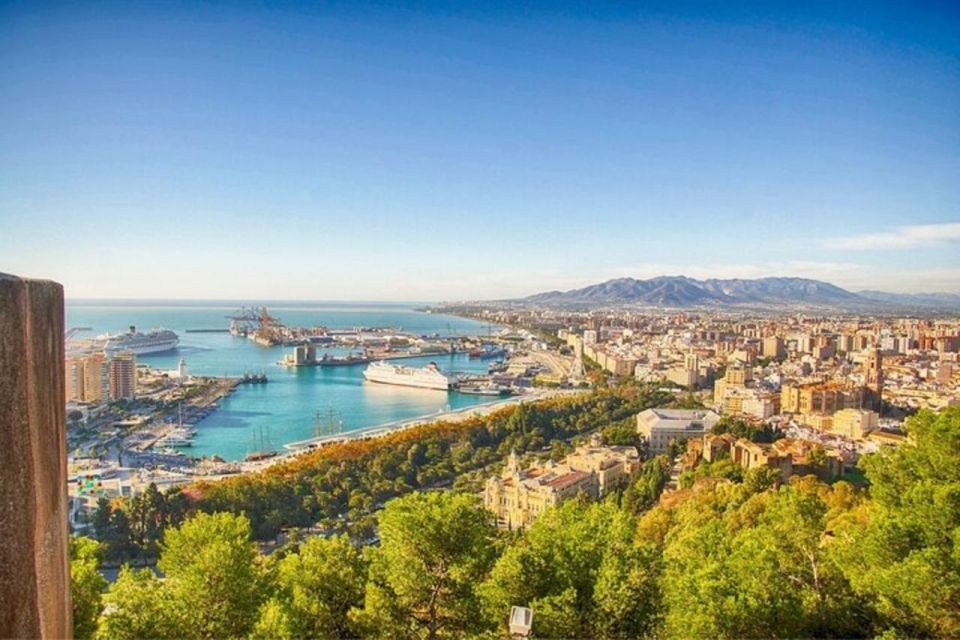
From the fortress, the tour moves to the Malaga Museum area, where you’ll find both the Fine Arts and Archaeology museums. You’ll get a photo stop plus a guided visit and sightseeing time.
I like this stop because it gives you a controlled way to switch gears: from outdoor ruins and fortifications into what people built, collected, and preserved. It’s the moment when the city starts to feel like an artwork itself—layers of material culture rather than one single “must-see.”
The time here is tight, so focus on the guide’s prompts. If you’re the kind of person who likes taking notes, this is a good place to jot down what you want to see later if you have time. Even without extra museum hours, you’ll leave with a clearer sense of what you’re looking at when you do return on your own.
Church of Santiago: where Picasso was baptized
The Church of Santiago is one of the most memorable stops for art-minded visitors. It’s described as the oldest church in Málaga, and it was erected in 1490. The most important detail for many people: Picasso was baptized here.
This is the kind of place where the guide’s explanation changes your experience. You’re not just seeing a historic Christian temple; you’re also connecting Picasso’s later fame to a specific address in his early life.
Plan to slow down slightly even if the stop is only about 15 minutes. When a tour hits a location with a personal-history connection like baptism, you tend to absorb more than usual. And because the tour is guided, you don’t have to piece together the symbolism and timeline by yourself.
If you like art history, this stop is a reason alone to take the tour. It links the present to the past through one person, one building, and one moment in time.
Costa del Sol photo stop: a quick coastline reality check
At one point on the walk, there’s a photo stop related to Costa del Sol. This isn’t marketed as a beach-time segment; it’s more of a “put Malaga in context” moment.
I find these quick coastline tie-ins useful, especially if you’re only seeing the old town. Malaga feels different when you remember it’s a coastal city with a broader regional identity. The guide can help you make sense of that connection without turning the tour into a long detour.
Don’t expect extended views or time for a swim. Use it for photos, listen to the context, and keep your energy for the later stops.
Calle Larios (and Marqués de Larios): shop, people-watch, reset
The tour then heads to Calle Larios, also referred to as Calle Marqués de Larios. This is Malaga’s emblematic pedestrian street, and it’s also one of the busiest streets in the historic center.
You’ll get photo stop time plus sightseeing and shopping time. I like this part because it’s where the city’s everyday energy shows up. After stone history and fortifications, the street brings you back to the present: storefronts, movement, and local life.
This is a good moment to do a practical reset. If you want small gifts, snacks for later, or just a quick look at local shops, this is your window. Because the tour doesn’t include food or drinks, you can use the street time to grab something for after.
One consideration: if you prefer quiet, this section may feel crowded. That’s also why it’s useful—you learn what Malaga’s center feels like on a normal day, not just in museum settings.
Roman Theater of Málaga: 1st-century BC, explained in plain language
The final major history anchor on the walk is Teatro Romano de Málaga (the Roman Theater), tied to the 1st century BC. You’ll get a photo stop plus a guided visit and sightseeing time.
Roman theaters are special because they’re built for gathering and performance, which is basically the social engine of a city. With the guide’s explanation, you’re not only looking at stone. You’re imagining how public space worked in ancient Malaga.
I also like that the tour doesn’t treat archaeology like a distant topic. It helps you understand what’s still visible, what it implies, and how it connects to the city’s other layers. If you’re hoping for “wow” plus understanding, this is where it usually lands.
Time is limited, so look for the key points your guide highlights. If the guide points out a specific element, it’s worth your attention—it’s likely the detail that turns the site from scenery into story.
Price and value: what $35 buys you in real time
The price is $35 per person for a 2-hour walking tour. That’s not “cheap,” but it’s not trying to be. The value is in the guided structure: multiple major sights, short timed visits, and a coherent explanation that helps you avoid random wandering.
If you were to do this on your own, you’d still likely pay for entry fees at some places, plus you’d spend time figuring out what to prioritize and how everything connects. Here, the guide handles that sorting for you, and you get a compact plan.
Also, the guide language options matter: English, French, Italian, and Spanish are listed. That can make the difference between a tour that’s just walking and a tour you actually enjoy.
From the experience quality angle, the rating is high at 4.8 based on 79 reviews, and the guides are repeatedly described as prepared, responsive, calm, and friendly. Names that come up include David, Borja, and Maura—and that consistency matters because it affects whether the history feels clear or confusing.
One more value note: you’re not locked into a long day. If you only have a half-time window in Malaga, this format is a strong fit.
What you’ll learn, beyond the postcard photos
This tour is designed to teach you how to notice. When you’re walking, you’re constantly passing clues: where a building sits, how one era overlays another, and why certain locations became power centers.
The route also helps you plan the rest of your trip. The guide is specifically set up to share insights about other things to do in Malaga after you finish. Even if you don’t follow every suggestion, you’ll usually leave with a short list that matches your interests—art, history, or just better ways to use your remaining time.
If you love cities that change their story depending on where you stand, you’ll appreciate the mix. A Roman Theater plus Moorish fortress plus Picasso-linked church is a lot of perspective in one compact walk.
Who this walking tour suits best
This works well if you want:
- Major sights in 2 hours without overplanning
- Guided connections between Roman, Moorish, Christian, and Picasso-era Malaga
- A chance to ask questions instead of Googling every block
It’s less ideal if you want hours of free time at each stop or you hate walking with short, timed segments. Also, because food or drinks aren’t included, plan to handle meals on your own.
If you’re traveling with limited time but still want meaning—not just a photo map—this is a smart way to use your day.
Should you book this Malaga walking tour?
I’d book it if you want a fast, guided hit of Malaga’s big eras and you’ll actually listen while you walk. The strongest reason is the mix: Roman remains explained clearly, a real fortress stop, and Picasso tied to a specific church in the city.
I wouldn’t book it as your only Malaga plan if you’re the type who needs long museum time or deep independent exploration. But as a first or mid-trip orientation, it’s the kind of tour that makes the rest of your trip easier to enjoy.
If you’re unsure, a simple rule: if you’re excited by history plus art plus short walks, you’ll likely be happy with this one.
FAQ
How long is the walking tour?
It lasts about 2 hours.
What is the meeting point?
Meet your guide in the heart of Málaga at Alameda Principal, 1.
What does the tour cost?
The price is $35 per person.
What is included in the tour?
A live guide and the walking tour are included.
Are food or drinks included?
No, food or drinks are not included.
Is the tour wheelchair accessible?
Yes, it’s listed as wheelchair accessible.