REVIEW · GIRONA
Medieval Three Villages Small Group Day Trip from Barcelona
Book on Viator →Operated by Explore Catalunya · Bookable on Viator
Few places do medieval Catalonia this efficiently.
This small-group day trip hits Besalú for Romanesque sights and the 12th-century mikveh (Jewish bath), then slows down in Rupit for real wandering, lunch on your own, and the baroque Church of Sant Miquel. I also love the cliff-view payoff at Tavertet, where the walk turns into a big, open panorama over Pantà de Sau. One heads-up: it’s a long day (about 10.5 hours), and the stops include cobblestones and short walks, so dress for cool mountain weather.
You start in central Barcelona near Palau de la Música, get on an air-conditioned drive, and spend the day moving between medieval towns that feel different from each other. Guides like Rod and Sergio (and others) consistently set a good pace—enough structure to understand what you’re seeing, plus time to just look and wander.
In This Review
- The Best Bits at a Glance
- A Day of Medieval Catalonia, Built for Real Wandering
- Start Point by Palau de la Música and the Early-Departure Rhythm
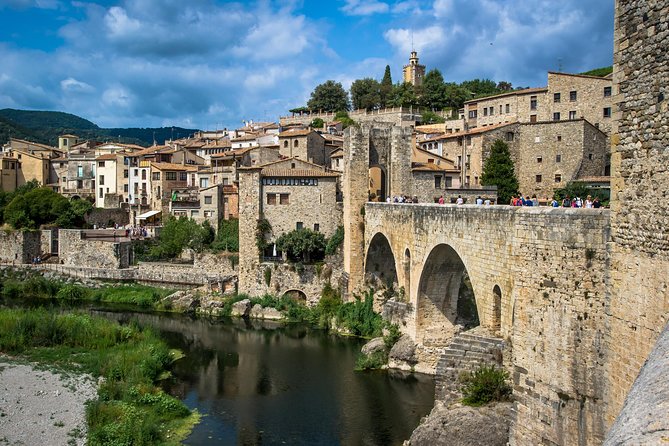
- Besalú: Romanesque Bridge, St. Pere, and the Mikveh Baths
- Castellfollit de la Roca: The Basalt Cliff Town You’ll Want to Photograph
- Rupit’s Cobblestones: Hanging Bridge, Sant Miquel, and Castle Ruins
- Cingles de Tavertet: Sandstone Cliffs and the Ter River Valley Stops
- Tavertet: 16th- and 17th-Century Homes, Sant Cristòfol, and Lake Views
- The Return to Barcelona Through Magatalls and El Montseny
- Price and Value: What $119.72 Buys You
- Who Should Book This Medieval Villages Tour (and Who Might Pass)
- Should You Book the Medieval Three Villages Day Trip?
- FAQ
- How long is the Medieval Three Villages day trip?
- What is the meeting point in Barcelona?
- Where do you end the tour?
- What language is the tour offered in?
- Is lunch included?
- How many people are in the group?
- Is transportation provided?
- What is the cancellation policy?
- Is there anything about fitness level?
The Best Bits at a Glance
Besalú’s Romanesque highlights: the 12th-century bridge and other medieval anchors, with guided time to orient you fast.
The mikveh and synagogue stop: a rare, specific window into Jewish life in medieval Catalonia.
Rupit’s free time: hanging wooden bridge, 16th-century streets, Sant Miquel, and castle ruins if you want a hike-style finish.
Basalt-and-cliff scenery: Castellfollit de la Roca and then Tavertet’s views over Pantà de Sau.
El Montseny countryside drive: UNESCO Biosphere scenery between towns, not just highway scenery.
Small group energy: capped at 20 people, often feeling easy and personal rather than rushed.
A Day of Medieval Catalonia, Built for Real Wandering
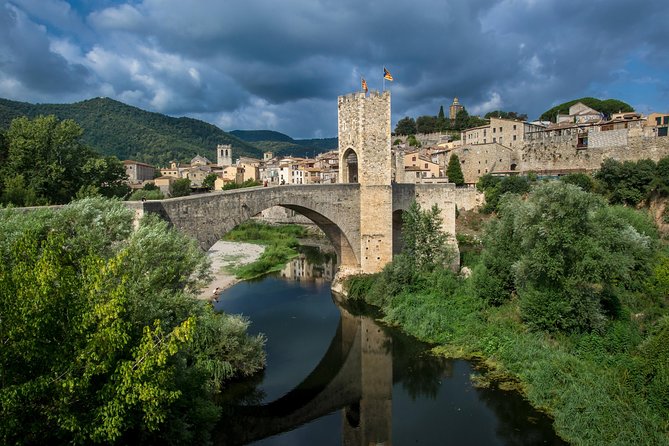
This is one of those Barcelona day trips that feels like you’re getting out of the city on purpose. You’re not just checking boxes—you get guided walking time where it matters, then you get enough freedom to enjoy the villages at human speed.
The best part for me is the balance: medieval details in Besalú, a slower, scenic hamlet in Rupit, then cliff views at Tavertet. Each stop has its own mood, so the day doesn’t blur together.
The only drawback is timing. You’ll be out all day, and you’ll be walking on uneven surfaces (cobblestones, old lanes, a few short climbs). Plan to keep your expectations simple: you’ll see major sights, but you won’t be doing marathon museum time.
You can also read our reviews of more tours and experiences in Girona.


Start Point by Palau de la Música and the Early-Departure Rhythm
You meet at Explore Catalunya, right next to Palau de la Música (C/ Palau de la Música, 1). Start time is around 8:30am, and the day runs until about 6:45pm when you return to Barcelona near Arc de Triomf.
You’ll have a little pre-departure buffer at the office—restrooms are available, and it’s a smart moment to grab a coffee if you rely on one to function. Then the group heads out by air-conditioned vehicle for the drive to Girona province.
This early start matters. It helps you reach Besalú with less of the peak crowd pressure and gives you the best shot at smoother village wandering. It also gives you a practical trick for the day: you can pace your energy for the cobblestones, instead of arriving late and trying to “catch up.”
Besalú: Romanesque Bridge, St. Pere, and the Mikveh Baths
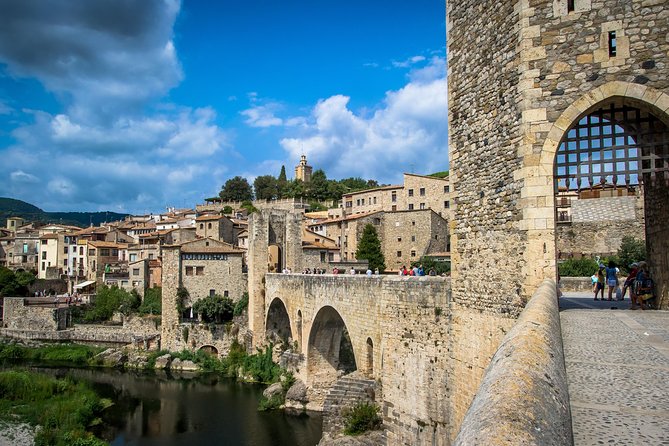
Besalú is the main medieval set piece of the day. Once you arrive, you begin with a guided walking look through the old streets—medieval stone and layout that make more sense after someone points out what you’re seeing.
I especially love the way Besalú gives you a complete “story loop” in a compact area. You’re not only seeing pretty architecture; you’re also learning the religious and cultural layers that shaped the town.
Key stops you should keep your eyes open for:
- The 12th-century Romanesque medieval bridge: it’s one of those structures that makes you stop walking, even if you’re not a bridge person.
- Monastery of St. Pere (11th century): a strong anchor point for understanding the town’s medieval prominence.
- Jewish Baths (mikveh, 12th century): this is the standout cultural stop. You’ll see how ritual life was built into the architecture.
- A stop near a medieval synagogue: it ties the story together beyond the bathhouse.
Guides like Rod and Sergio have a way of turning architecture into actual context—why it was built, how the town functioned, and what people valued. That makes your time in Besalú feel richer without turning into a lecture.
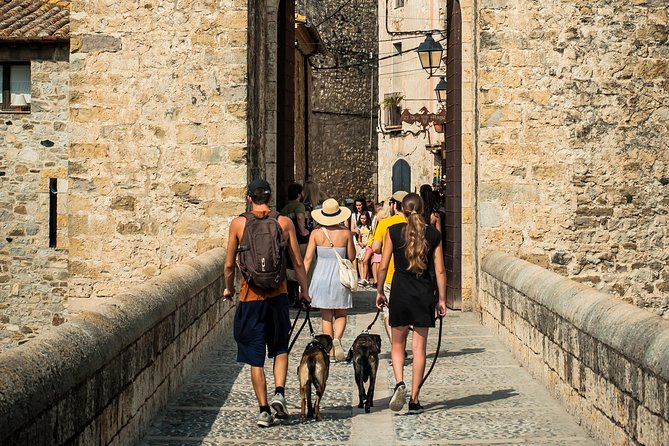
Practical note: Besalú has narrow streets and people-moving lanes. Wear comfortable shoes and plan to pause often for photos—but also for just watching daily life.
Castellfollit de la Roca: The Basalt Cliff Town You’ll Want to Photograph
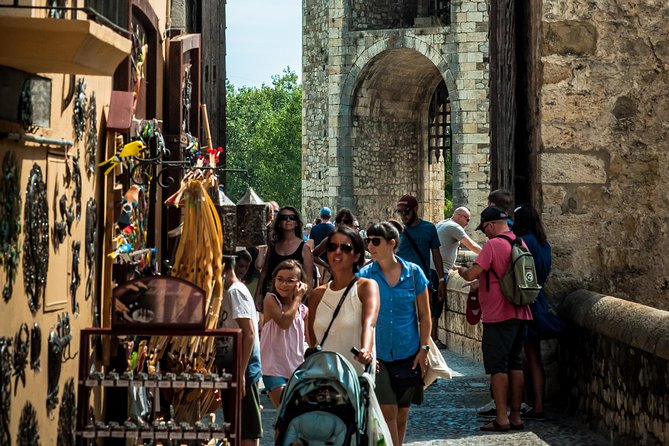
Between Besalú and Rupit, you’ll pass by Castellfollit de la Roca, a tiny community built right on the edge of a basalt cliff. The scale is part of the charm: about 1,000 habitants packed into roughly 1,000 square meters.
Even if your time there is brief, the visual impact is big. It’s the kind of place that makes you understand how geology shapes settlement—cliff-edge buildings, dramatic angles, and long views.
This stop works best if you’re the type who likes “one great photo moment” rather than needing a full itinerary block. If that’s you, you’ll probably love it. If you need lots of time shopping or sitting, you may want to use Rupit as your main decompression stop.
Rupit’s Cobblestones: Hanging Bridge, Sant Miquel, and Castle Ruins
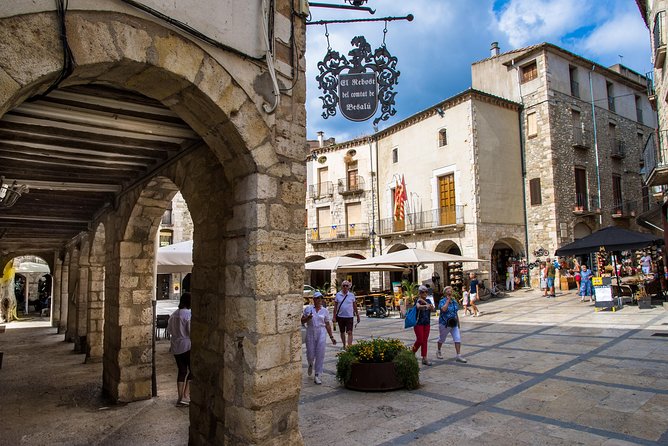
Rupit is where the day slows down and becomes more personal. You get about two hours to explore at your own pace after a bit of guided orientation.
The village vibe is built from small details:
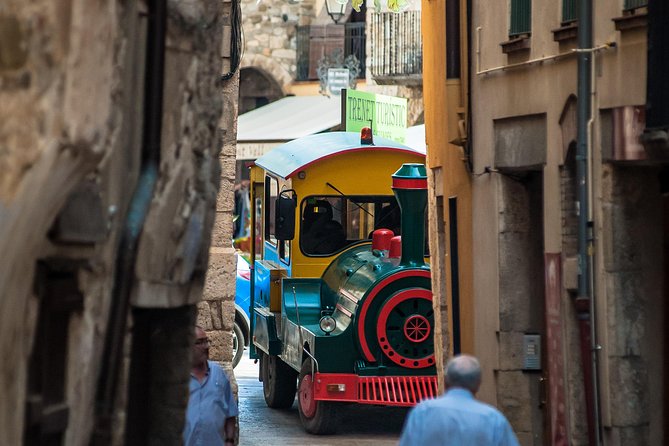
- Cobblestone lanes with atmosphere
- 16th-century houses lining the streets
- A hanging wooden bridge, which is both scenic and a nice little “Rupit moment” for photos
- Church of Sant Miquel, baroque in feel and a great spot to reset your bearings
Then comes the part you’ll plan around: lunch is on your own. Rupit has traditional restaurants, and your guide can help you choose and sometimes suggest reservation strategies. One useful real-world tip: restaurants can fill up, so don’t wait too long to decide once you arrive.
After lunch, you can go two ways:
- Visit the ruins of the Castle of Rupit on a rocky peak (expect a more active feel).
- Or keep it easy and linger in town—coffee, a slow walk, and just soaking up the quieter rhythm.
This stop also shows why small groups matter. When the guide can answer quick questions and point you to a good lunch plan, your two hours feel like a full mini-trip instead of a timed break.




Cingles de Tavertet: Sandstone Cliffs and the Ter River Valley Stops
After Rupit, you’ll drive toward Cingles de Tavertet—sandstone cliffs in the Ter River Valley. This is where the scenery starts stacking up.
Along the way, you may pass culturally interesting landscape points, including a megalithic tomb and the Iberian Wall. You won’t spend museum-style time there, but having the context in your head makes the roadside stops feel more meaningful.
The drive also helps you understand the geography between villages. It’s not random between-town travel; it’s part of the “Catalonia countryside” experience you came for.
If the weather turns, cliffs can get breezy. Bring a light layer even if Barcelona is warm.
Tavertet: 16th- and 17th-Century Homes, Sant Cristòfol, and Lake Views
Tavertet is your final guided medieval village stop, and it’s designed for a mix of structure and free time.
You’ll take a short walk to dramatic cliffs overlooking Pantà de Sau lake. It’s the kind of viewpoint that makes you stop counting minutes.
Then you’ll explore more of the village with your guide, including the preserved homes from the 16th and 17th centuries—48 of them—so you get a sense of how the settlement has been kept and how the village reads as a unit.
Next up is the 11th-century Romanesque Church of Sant Cristòfol. Even if you’re not chasing religious architecture, Romanesque churches tend to reward a little attention: simple forms, strong stone presence, and a calm interior feel.
After that, you get break time. You can grab a coffee at your own expense, or take a short walk toward a scenic overlook around Panta de Sau lake.
One more practical note from experience-style advice: Tavertet can feel colder than you expect because you’re higher up. Pack a jacket. A few people have mentioned being surprised by the mountain chill, so don’t assume warm weather follows you.
The Return to Barcelona Through Magatalls and El Montseny
Your ride back isn’t just a transfer. You’ll have a chance to enjoy countryside views like Magatalls and the UNESCO Man and Biosphere-listed El Montseny natural park.
This part matters because it changes how the day lands in your head. You go from medieval stone scenes to living green hills, so the tour ends with a calmer visual mood instead of ending abruptly after Tavertet.
You’re dropped back in Barcelona around 6:45pm, near Arc de Triomf. Your guide will help you figure out getting back to your hotel, including transit pointers and dinner suggestions.
Price and Value: What $119.72 Buys You
At $119.72 per person, you’re paying for:
- a local guide
- an air-conditioned vehicle
- and the kind of day where transportation time is handled for you so you can spend your energy in the villages
Another value signal: the experience lists admission as free for the stops covered by the tour, so you’re not stacking extra ticket costs on top of the base price. Plus, the day is built around multiple locations—Besalú, Rupit, and Tavertet—with viewpoints and countryside context.
You’re also paying for time management. A day trip like this can fall apart if you try to DIY it: scheduling, transit between villages, and knowing what to look for. This format gives you guided context where it helps, then time where it doesn’t.
Is it perfect value for everyone? If you hate long days or want only one slow village with no driving, it might feel like too much. But if you like seeing medieval Catalonia in a single day without stress, this is a strong deal.
Who Should Book This Medieval Villages Tour (and Who Might Pass)
This tour fits best if you:
- want medieval architecture plus real scenery
- enjoy guided orientation but still want time to wander
- like small-group pacing (it caps at 20 people)
I’d think twice if you:
- need a very relaxed day with minimal walking
- expect a long stop for shopping in all villages
- want lunch included (it’s on your own in Rupit)
If you’re traveling with teens or older family members, it can work well because you can choose how active you want to be—castle ruins are optional, and village wandering is flexible.
Should You Book the Medieval Three Villages Day Trip?
Yes, if your goal is a well-paced Girona-area medieval day from Barcelona that mixes guided insights with time to enjoy the villages at your own speed.
Book it if you care about more than postcards—Besalú’s mikveh stop and Rupit’s street-and-bridge feel make this day more specific than generic medieval tours. Also, the small-group cap gives it a better rhythm than big bus days.
Skip it only if you know you’ll hate a full day out, cold mountain air surprises, or you need lunch costs and plans fully handled. If you’re okay planning lunch once you reach Rupit and bringing good walking shoes, this is a day trip you’ll remember long after you’ve returned to Barcelona.
FAQ
How long is the Medieval Three Villages day trip?
The tour lasts about 10 hours 30 minutes (approx.).
What is the meeting point in Barcelona?
You meet at Explore Catalunya, C/ Palau de la Música, 1, Ciutat Vella, 08003 Barcelona, Spain.
Where do you end the tour?
You end near Arc de Triomf, Ciutat Vella, 08018 Barcelona, Spain.
What language is the tour offered in?
The tour operates in English.
Is lunch included?
No. Food and drinks are not included unless specified. Lunch is available in Rupit for your own expense.
How many people are in the group?
The tour has a maximum of 20 travelers.
Is transportation provided?
Yes. You’ll ride in an air-conditioned vehicle, and the tour includes a local guide.
What is the cancellation policy?
You can cancel for free up to 24 hours in advance for a full refund.
Is there anything about fitness level?
Yes. You should have a moderate physical fitness level for the walking involved.