REVIEW · MERIDA SPAIN
Merida: Roman Theater and Amphitheater Guided Tour
Book on GetYourGuide →Operated by Activa Tours · Bookable on GetYourGuide
That’s where Roman entertainment gets real. This Roman Theater and amphitheater guided tour in Mérida turns stone ruins into a living system: who sat where, why the show mattered, and how gladiator spectacle worked in Augusta Emerita.
I like two things right away. First, the tour is built around the theater’s actual circulation and layout, so you don’t just see seats; you learn how people were sorted and guided through the building. Second, the guide connects the ancient purpose to what’s happening there today, including the International Classical Theater Festival.
One drawback to plan for: you only have about 1 hour, so if you want maximum time in every corner, you may feel a little rushed. That also means the tour is best when you’re comfortable with a brisk pace.
In This Review
- Key things worth your attention
- Why Augusta Emerita built theater and arena like it mattered
- Where to start: Activa Tours office and the Margarita Xirgu square
- Entering the Roman Theater through the vomitorium (and why that detail matters)
- The orchestra, the stage, and the scenic front behind the performance
- When an ancient venue stays alive: the International Classical Theater Festival
- The Roman amphitheater ruins: not Colosseum-sized, but built for impact
- Gladiator fights, wild beasts, and why the crowd cared
- How the 1-hour format feels on the ground
- Price and included value: what $23 buys you (and what it doesn’t)
- Best for history fans who like structure, not just photos
- Final verdict: should you book this Roman Theater and Amphitheatre tour?
- FAQ
- How long is the Mérida Roman Theater and Amphitheater guided tour?
- Where does the tour start?
- How much does the tour cost?
- Is entrance to the sites included?
- Is the tour guided, and what language is used?
- Does the ticket include food or drinks?
- Is there a skip-the-line option?
- Is the tour wheelchair accessible?
- Is it suitable for people with mobility impairments?
- What should I bring for the tour?
Key things worth your attention
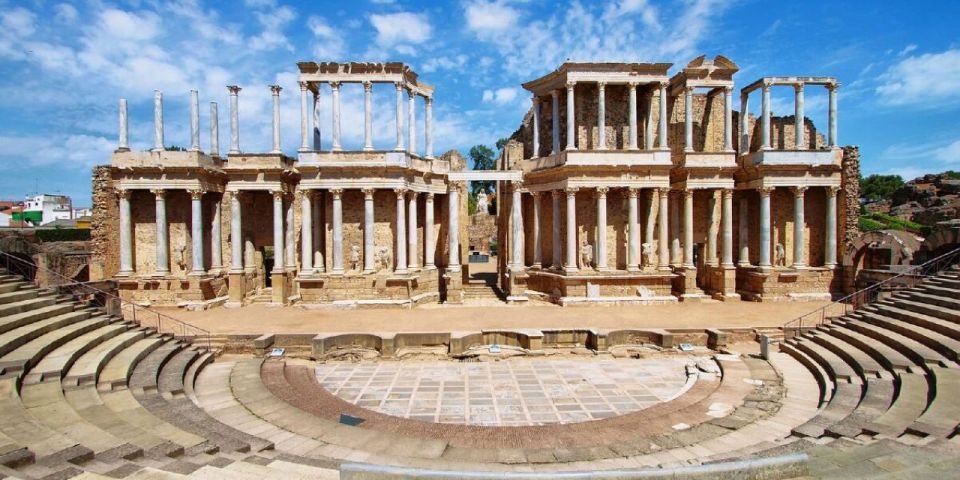
- Vomitorium route through the theater: you understand how spectators were channeled into their areas
- Cavea seating by social rank: the layout tells a story about Roman hierarchy
- Orchestra, stage, and scenic front: you get the full performance geometry, not just the view
- Gladiator-fight setup in the amphitheatre arena: the spectacle system becomes easier to picture
- International Classical Theater Festival context: the guide links ancient space to modern use
- Clear Spanish guiding that stays interactive: the best tours keep you involved, not talked at
Why Augusta Emerita built theater and arena like it mattered
Mérida’s Roman past is not quiet, tidy, or decorative. It’s political. The Empire knew that keeping Roman citizens satisfied helped keep the system stable, and public buildings were part of that bargain. In Augusta Emerita, the show spaces were designed to impress and to organize people.
That’s the big idea behind this tour: you’re not just touring monuments. You’re learning how architecture served entertainment, status, and control all at once. When the guide points out where you stand versus where audiences would have been, the building starts to make sense as a machine for crowd movement and public hierarchy.
And yes, you also get the story behind the gladiator spectacle. The amphitheater doesn’t have to be the size of Rome’s Colosseum to hit hard. What made these events famous was the combination of training, public expectation, and the escalation of stakes as fights progressed, including the use of wild beasts.
You can also read our reviews of more tours and experiences in Merida Spain.
Where to start: Activa Tours office and the Margarita Xirgu square
The tour starts at the Activa Tours office, where you’ll meet your guide before heading to the main site. From there, the story of Mérida’s Roman performance spaces takes shape fast, because the theater and amphitheater are right in the core area.
A practical note: bring comfortable shoes. The tour is short, but you’re moving through uneven ancient terrain and standing inside stone spaces where you’ll want a stable footing. Also wear something comfortable enough for indoor viewing and outdoor transitions, since Mérida can feel warm even when you’re not expecting it.
If you’re traveling with a group, it helps to arrive a few minutes early. This kind of guided flow works best when everyone is ready on time, especially because the tour is only 1 hour long.
Entering the Roman Theater through the vomitorium (and why that detail matters)
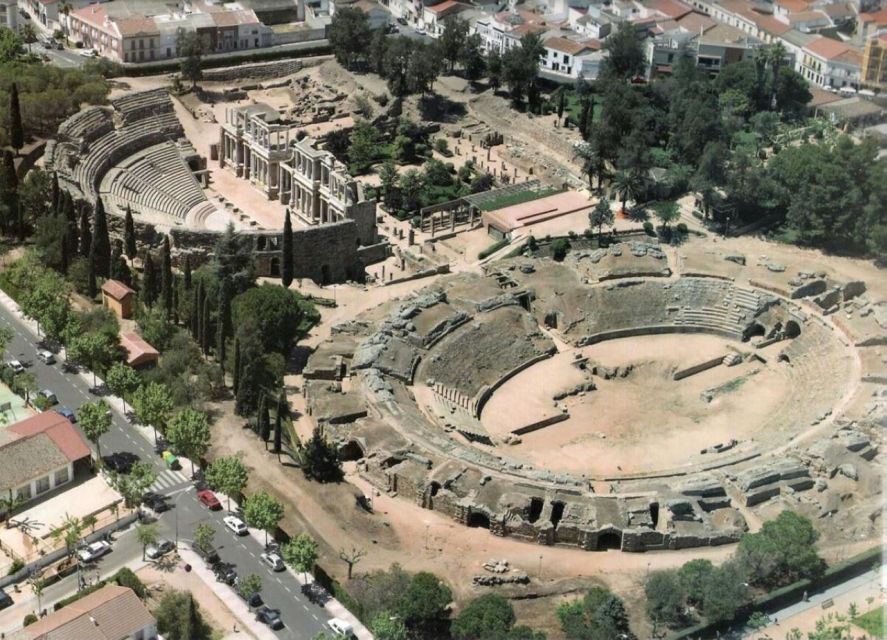
The most memorable part is how the tour begins inside the Roman Theater and Amphitheater complex. Instead of starting at a scenic overlook, you enter in a way that mirrors how spectators would have moved.
You’ll go through the “vomitorium” to reach the cavea, the seating area. This is one of those moments where a single architectural term becomes useful. The vomitorium isn’t just trivia. It’s part of the design logic: how you get people in, where they funnel, and how the crowd is distributed without chaos.
From there, you learn how spectators were arranged according to social rank. That’s a key theme of the whole experience. The building makes hierarchy visible. You’re not guessing who mattered; the layout shows it.
Two things I appreciate here as a visitor:
- You’re standing where the system would have worked, not just looking at it from outside.
- The guide’s explanation turns “rows and curves” into an organized social map.
The orchestra, the stage, and the scenic front behind the performance
Once you’re oriented in the theater, the guide takes you through the performance anatomy.
You’ll spend time at the orchestra, the area used for key participants such as a choir, and then move to the stage, where performances actually took place. This is where many ruins tours stay vague. Here, you get a clearer sense of what the audience was facing, where the action concentrated, and how sound and sightlines were part of the design.
Then comes the dramatic part: behind the stage, you learn about the majestic scenic front, which is one of the most recognizable symbols of the city. Even if you’ve seen Roman theaters elsewhere, Mérida’s presentation helps you understand why these stages were more than decoration. They gave performances scale and made the venue feel official—like the whole city was watching.
This is also where the tour earns its time. Because it’s only an hour, the guide doesn’t wander. You get the essential parts that explain how theater worked.
When an ancient venue stays alive: the International Classical Theater Festival
Here’s a clever twist: the theater isn’t just a museum shell. The guide connects the space to the International Classical Theater Festival, which currently uses the venue. You’ll hear how the festival came about and who it is due to.
That context matters because it changes how you interpret the stones. If you only learn the ancient use, the theater can feel like a closed chapter. But when you understand how modern programming fits into the same space, you start to see continuity: public performance still brings people together, and the building still shapes how audiences experience spectacle.
If you time your visit close to festival dates, you might feel the energy of the place more strongly. Even without a performance running that day, the guide’s festival story gives you a sense of why the theater still feels important.
The Roman amphitheater ruins: not Colosseum-sized, but built for impact
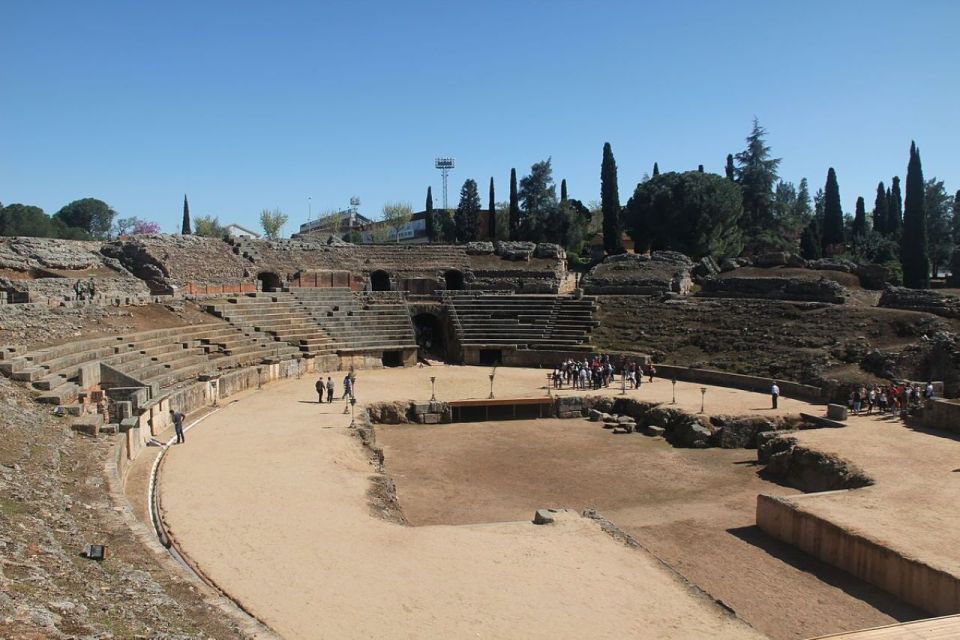
Next, you move beside the theater to the remains of the Roman amphitheatre. The setting is different from the theater world. Instead of focusing on audience seating and stage geometry, you pivot to the arena logic.
The tour makes a fair point: the amphitheater doesn’t resemble the Colosseum in size. But size isn’t the only metric that matters. This arena is tied to gladiator fights, and the key question becomes: how did it work, and what did it mean to the colony?
When you access the amphitheater arena, you can picture the power dynamic from the ground up. The gladiator story becomes more concrete because you’re standing where the action would have taken place, not just looking down from afar.
Gladiator fights, wild beasts, and why the crowd cared
The guide helps you connect the amphitheater design to the spectacle itself: gladiator fights were a major draw, and they were clearly important to citizens of the colony. The idea is not just that fights happened, but that people celebrated them as public entertainment.
You’ll learn how fights played out in the space and how popularity increased when wild beasts were added to the spectacle. That detail is important, because it explains how these events escalated to keep attention and expectation high.
What I like about how the tour tells this part is that it doesn’t treat gladiators as random violence. It frames them as part of a system of public attention, status, and civic life. Once you see the arena as an instrument, the gladiator element makes more sense.
How the 1-hour format feels on the ground
One hour is short. That can be a problem if you want to linger, read every stone, or stop for photos nonstop. But it can also be perfect if you want the building explained without a long lecture.
The strongest tours use the time well:
- You get the key transitions: outside to inside, vomitorium to cavea, orchestra/stage/scenic front, then amphitheatre arena.
- The guide keeps explanations tied to what you can physically see.
- Some guides add interaction, which makes the flow feel less like a checklist.
If you end up with one of the guides praised in Spanish, names such as Ana Gonzalez, Luis, or Iría have shown up in feedback tied to clear narration and friendly delivery. You might not get the same person, but the style matters: good guiding makes the architecture click fast.
My practical advice: during the tour, pick one moment to focus on—either the cavea rank layout or the amphitheatre arena fight setup. Trying to memorize everything at once is harder than it sounds when you’re moving.
Price and included value: what $23 buys you (and what it doesn’t)
At $23 per person for 1 hour, the value comes from what’s included. You get entrance to the theater and Roman amphitheatre, plus an express security check that helps you get in with less hassle.
That’s the big deal in sites like this: if you spend too long stuck at access points, the tour becomes less enjoyable. Here, the express approach helps preserve your short time for the explanations that make the visit worthwhile.
What’s not included is also straightforward: food and drinks. Since this is a 1-hour guided visit, that’s usually fine. Just plan to eat before or after, and keep water handy in your day plan.
If you’re deciding whether this is worth it for you, ask one question: do you want the building explained while you’re inside it? If yes, $23 is a reasonable price for that kind of on-site interpretation in the center of Mérida.
Best for history fans who like structure, not just photos
This tour is a strong fit if you:
- like Roman architecture and want to understand how design served social life
- enjoy learning in context, meaning you want the why behind the what
- prefer guided clarity over wandering alone
- speak Spanish or don’t mind a Spanish-only narration
It’s also a good option for first-timers in Mérida because it covers two major Roman performance spaces in one shot. You’ll leave with a clearer mental map of where crowds sat, where performances happened, and how the arena staged combat.
Where you should slow down: if you have mobility impairments, read the accessibility note carefully. The activity is listed as wheelchair accessible, but it also states it is not suitable for people with mobility impairments. If that applies to you, contacting the operator before booking is the smart move, so you’re not surprised by the on-site reality.
Final verdict: should you book this Roman Theater and Amphitheatre tour?
With a reported rating around 4.6 out of 5, this is the kind of tour that tends to win on explanation quality and value. The best parts are the clear walk-through of the theater’s inner logic (vomitorium, seating distribution by rank, orchestra/stage/scenic front) and the way the amphitheatre arena helps you picture gladiator fights.
If you’re in Mérida for a short stay and want a guided framework that makes the stones understandable, I’d book it. Just go in knowing it’s fast. If you want long time for photos and quiet reading, consider pairing this with a slower self-guided visit after.
FAQ
How long is the Mérida Roman Theater and Amphitheater guided tour?
The tour lasts 1 hour.
Where does the tour start?
You meet at the Activa Tours office.
How much does the tour cost?
The price is listed as $23 per person.
Is entrance to the sites included?
Yes. Entrance to the Roman Theater and the Roman amphitheatre is included.
Is the tour guided, and what language is used?
Yes. It has a live tour guide in Spanish.
Does the ticket include food or drinks?
No. Food and drinks are not included.
Is there a skip-the-line option?
Yes. There is an express security check.
Is the tour wheelchair accessible?
The activity is listed as wheelchair accessible.
Is it suitable for people with mobility impairments?
The activity states it is not suitable for people with mobility impairments, even though it is listed as wheelchair accessible. If this applies to you, it’s worth checking directly before booking.
What should I bring for the tour?
Wear comfortable shoes and comfortable clothes.