REVIEW · MERIDA SPAIN
Complete Roman Tour in Merida (Spain)
Book on GetYourGuide →Operated by Lucía GM · Bookable on GetYourGuide
Mérida turns Roman history into real streets. This is one of the best ways I know to see a full stretch of Roman Mérida—from a well-preserved villa home to the Theatre—while you’re guided by Lucía GM and her stories, questions, and practical photo advice. Expect stops that feel made for movies, especially once you’re standing where chariot races and amphitheatre action would’ve happened.
What I like most is the mix: you get day-to-day Roman life (with mosaics, rooms, and domestic details) plus the big public spectacles, all paced so it still feels like a walk through a city, not a rushed checklist. The one consideration is that the main archaeological site ticket is not included, and you’re covering ground with some steps, so bring solid shoes and plan for a fair bit of walking.
In This Review
- Key takeaways before you go
- Why Roman Mérida feels different than other ruins
- The walking route that makes the day work
- Casa Romana del Anfiteatro: start where Romans actually lived
- Roman Circus of Mérida: the seat-and-track feeling
- Roman Baths of Mérida: heating systems and the snow well
- Temple of Diana and the Roman Forum stretch: religion plus street life
- Amphitheatre time: gladiators, beasts, and even boat battles
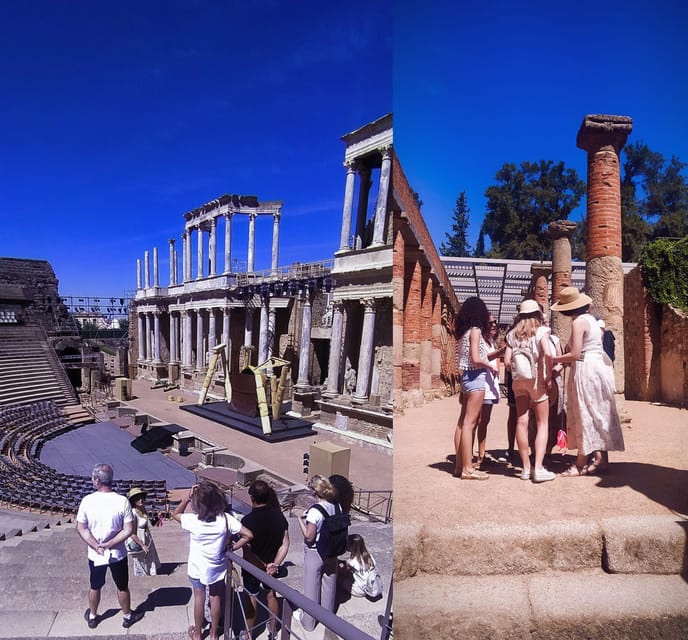
- Roman Theatre of Mérida: the biggest stage in Spain
- Optional museum add-on: one hour in Roman Art
- Tickets and the real value of the entrance into the archaeological site
- What’s included: the small details that make it easier
- Practical tips: what to wear, how to pace, and when it matters
- Who should book this Roman Tour in Mérida
- Should you book this Roman Tour in Mérida
- FAQ
- Where does the tour start?
- How long is the Complete Roman Tour in Mérida?
- What’s included in the tour price?
- Are the archaeological site tickets included?
- What languages are available for the guided tour?
- Is there a museum option?
- What should I bring?
- Is there free cancellation?
- Can I reserve now and pay later?
- Is the tour suitable for people with mobility or knee/foot issues?
Key takeaways before you go
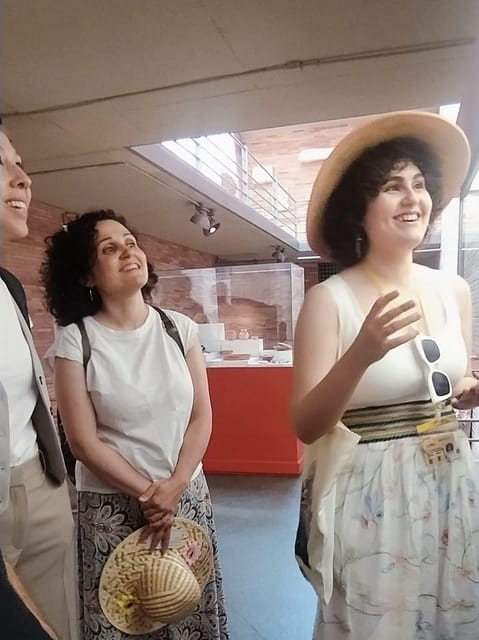
- A tight “greatest hits” route across Mérida’s Roman Temple, Circus, Baths, Amphitheatre, and Theatre in one outing
- Lucía GM’s multilingual approach (tour runs in English or Spanish, and she’s able to work across languages when needed)
- Radio guide with earphones so you can hear clearly while walking between sites
- Photo help baked into the tour (the guide gives advice on angles and timing as you go)
- A single entrance ticket unlocks more than this tour once you buy it at the start
Why Roman Mérida feels different than other ruins
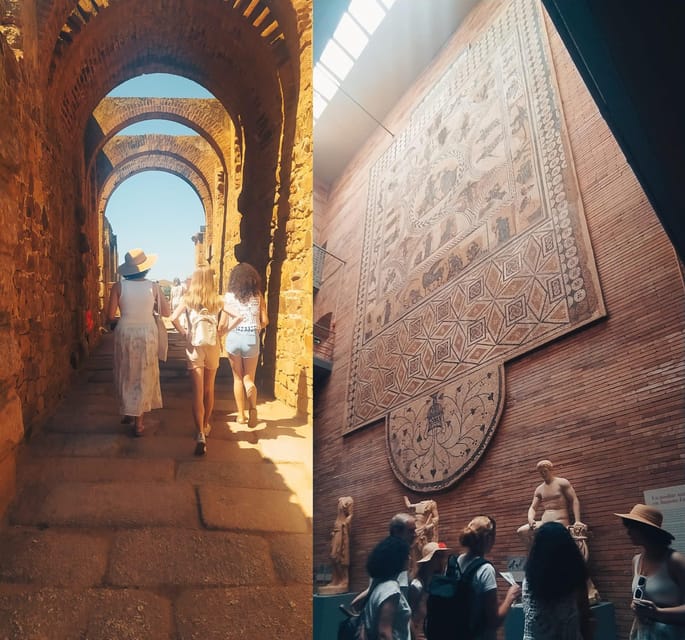
Most Roman ruins are amazing, but they can feel scattered. Here, Mérida gives you a rare concentration of monumental sites—so you can connect the dots between religion, public games, everyday living, and civic life without changing towns or spending extra days chasing locations.
This tour also helps you read what you’re seeing. You’re not just staring at stone; you’re getting context for what these buildings were for, what people did inside them, and why the layout mattered. That’s what turns a set of ruins into a place.
And yes, it’s funny how quickly the amphitheatre stops being “old walls” and starts being a stage.
You can also read our reviews of more tours and experiences in Merida Spain.
The walking route that makes the day work
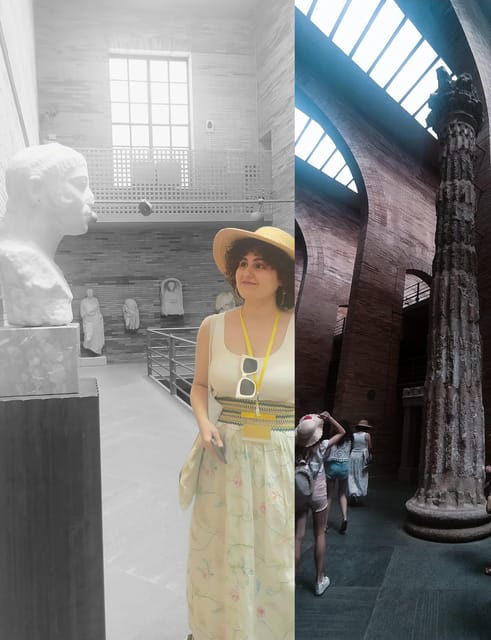
The tour starts at Casa Romana del Anfiteatro (Casa Romana del Anfiteatro on José Ramón Mélida Street), where the guide waits by the big MÉRIDA letters. From there, the route is structured to move you through the city’s Roman core in a logical flow: home → entertainment venues → baths → religion → amphitheatre → theatre.
Timing matters here. The full outing runs about 3–4 hours, with shorter visits at each stop and a longer theatre moment plus a break. If you’re choosing between the museum add-on and skipping it, this route is designed so the standard tour still feels complete, and the extra time can be layered on top.
Casa Romana del Anfiteatro: start where Romans actually lived
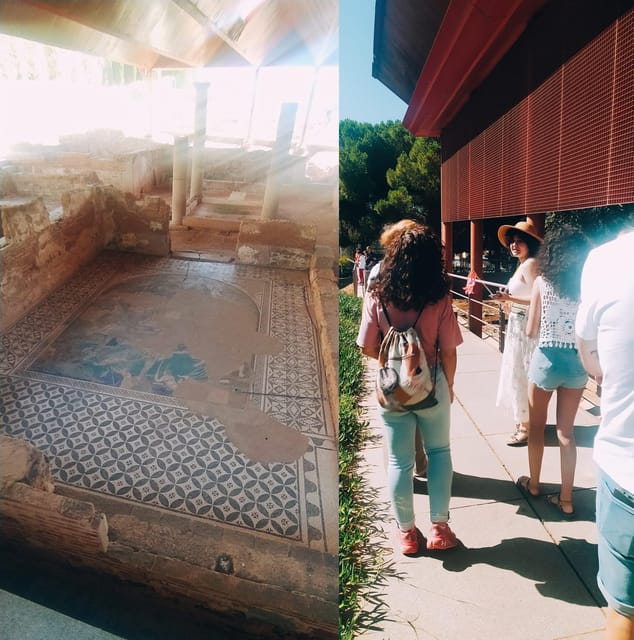
You begin in a Roman home experience, and that choice is smart. The villa is one of the best preserved Roman houses in Spain, and it’s where the tour shifts from monument mode to daily life.
This is where you’ll notice details that don’t show up as clearly in big public buildings: room layout, garden space, and the small objects that hint at habits and taste. You also get the mosaics—colorful floors that were part of everyday movement, not just decoration for tourists.
Why this stop is valuable: it gives you a baseline. Once you’ve seen how people ate, arranged rooms, and filled domestic space, the later sites (Circus, baths, amphitheatre) make more sense as places where those same people came to relax, compete, and worship.
Roman Circus of Mérida: the seat-and-track feeling
Next comes the Roman Circus of Mérida, described as one of the largest and best preserved in Europe. This is the part where the architecture suddenly “clicks” because you can still imagine the action.
You’ll be shown the space for chariot races: the seating and the pathways where speed, crowd noise, and turning points would’ve mattered. Even without reenactments, the scale helps you feel why the circus was a major event in daily Roman life.
One practical note: plan for bright light. This is an open-air space, and you’ll want sunscreen even if the morning feels cool. Comfortable shoes matter here too, because you’re moving between viewpoints.
Roman Baths of Mérida: heating systems and the snow well
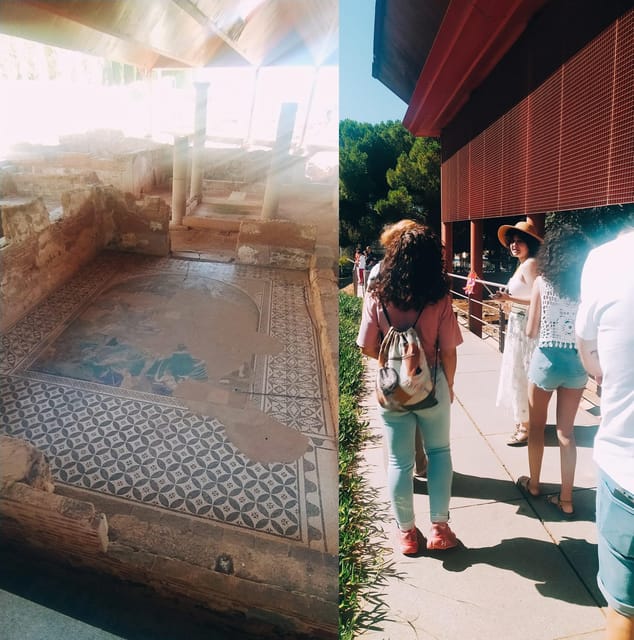
At Termas Romanas de Mérida, the tour turns technical in a good way. You’ll see how multiple pools could be heated or cooled through furnaces, which makes the baths feel like a piece of engineering, not just a plunge pool.
The tour also points out the snow well, which is a memorable detail for anyone who likes “how did they do that” moments. It’s the kind of feature that instantly makes Roman life feel more real, because it connects to climate, comfort, and logistics.
What to expect from this stop: it’s one of the easiest places to ask questions, because the structures invite curiosity. You’ll also appreciate this stop most if you’re the type who likes explanations of everyday systems.
Temple of Diana and the Roman Forum stretch: religion plus street life
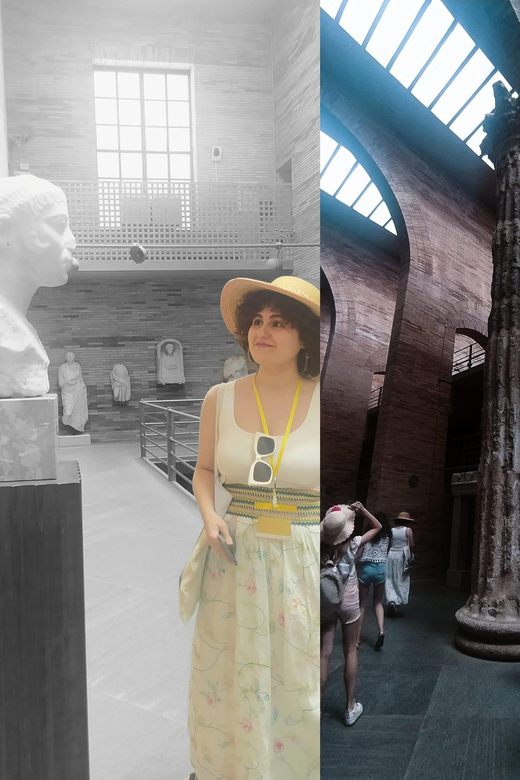
The tour then moves toward Temple of Diana, where you’re guided through the religious sphere of worship—so you understand the temple as a space with meaning, not just a photo backdrop.
On the way, the route includes the remains of the Roman Forum area, where handmade terracotta and mosaic crafts appear in the present day. That mix is helpful. It reminds you that cities evolve, and sometimes the “street energy” survives even when the temples do not.
This portion also works well for families and mixed-age groups. You’re getting story-driven context without losing sight of what the buildings actually are.
Amphitheatre time: gladiators, beasts, and even boat battles
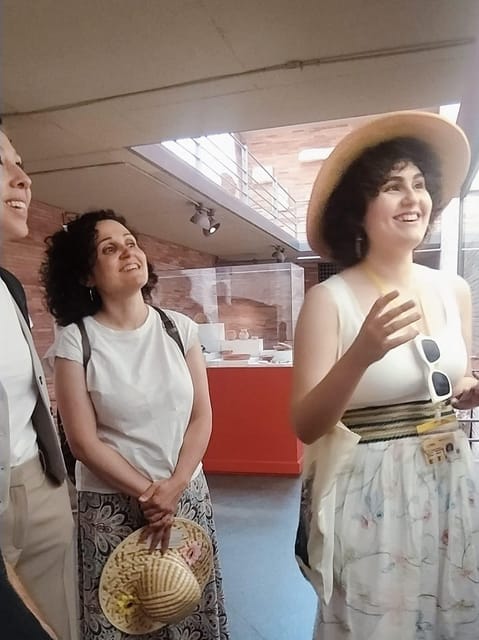
Entering the Roman amphitheatre is the moment the tour leans hardest into spectacle. The tour describes gladiatorial combats and fights with wild beasts, and it also mentions boat battles—exactly the kind of detail that makes you look twice at the space.
What makes this stop land: the amphitheatre is a structure designed for crowd views. When you’re guided, you learn where people would’ve stood, how the setting works, and why the “stage” is so effective even today.
If you’re worried about energy levels, this is a point to pace yourself. You’ll want to be ready for photo-taking and short walks between angles, and the ground may feel uneven in places. Bring your best shoes and plan to pause without rushing.
Roman Theatre of Mérida: the biggest stage in Spain
The finale (after an amphitheatre moment) is the Roman Theatre of Mérida, which is highlighted as the largest and best preserved in Spain. This stop is where the scale really matters. The theatre’s shape, seating levels, and stage-to-crowd relationship are easier to understand once you’re standing in it.
The tour also includes a break time here and points out the way classical theatre lives on through a summer festival with renowned actors. Even if you’re visiting outside festival season, that connection helps you see the theatre as a living tradition rather than a dead ruin.
For me, this is the best “I get it” stop: once you’re at the theatre, you instantly understand why Romans cared about performance, storytelling, and public culture.
Optional museum add-on: one hour in Roman Art
If you choose the +Museum Option, there’s a break for snacks and refreshments, then at 13:00 you can take a one-hour tour of the Archaeological Museum of Roman Art.
This add-on is built for people who want objects, not just architecture. You’ll see artifacts from jewels and toys to gigantic sculptures and mosaics, and the goal is to help you read the “secret messages” the inhabitants left behind.
Should you add it? If you’re the kind of visitor who likes to match what you saw outdoors with what survives in collections, yes. If you’re more into walking the monuments and getting photos, you may prefer to keep your afternoon free.
Tickets and the real value of the entrance into the archaeological site
A big part of the value here is what happens after you buy the archaeological site ticket at the start of the tour. The tour price is advertised as low (about $29 per person), but the archaeological site entrance ticket is sold exclusively by the Archaeological Consortium of Mérida and is not included in the tour cost.
Why it’s still good value: that entrance ticket doesn’t only cover this guided route. Once you have it, you can visit the rest of the archaeological site on your own, including the Muslim citadel and Muslim quarter, plus the Basilica of Saint Eulalia.
So you get a “two-layer” day:
- Guided highlights that explain the Roman core
- Extra time after the tour to branch into other layers of Mérida’s past
Just be ready for the ticket purchase step at the beginning. The guide can explain discounts and free tickets, but the guide can’t resell or replace that ticket online.
What’s included: the small details that make it easier
This tour isn’t only about walking between monuments. It’s set up to make the experience easier to follow and better for photos:
- Radio guide with earphones, so you don’t lose the narration in open-air spaces
- Illustrative images to help you connect details to what’s in front of you
- Games for children, which can keep younger kids engaged at longer stops
- Help and advice for pictures, offered throughout the walk
There’s also guidance through key sites—Diana’s Temple, Roman Baths, Roman Circus, the Roman Villa of the Amphitheatre, and the Roman Theatre and Amphitheatre—with the guide switching between the story points so you’re not stuck staring without context.
Practical tips: what to wear, how to pace, and when it matters
The tour recommends comfortable shoes and sunscreen, and I’d treat that as non-negotiable. You’re walking between multiple sites and spending real time standing around to look, read, and take photos.
Also consider stair and step situations. One clear caution from firsthand experience is that this tour involves walking and stairs, and it may not suit people with mobility, knee, or foot issues. If that’s you, think carefully before booking.
Weather planning is equally important. Mérida can be hot, and even when the heat is manageable, you’ll still feel it during an open-air circus and theatre sequence. If you’re visiting in warmer months, plan extra hydration and slow down at each stop so you don’t rush your own experience.
Who should book this Roman Tour in Mérida
Book this if you want:
- A single-day path through the biggest Roman sites in Mérida
- A guide-led explanation that makes monuments feel usable and meaningful
- Photo support so your pictures look like they belong in a travel journal, not just a phone dump
It’s also a good fit for families, thanks to games for children and a story-forward approach. If you’re traveling alone, the guide’s attention can keep the experience personal rather than robotic.
Skip it (or consider a different option) if you want minimal walking, or if stairs and longer site-to-site movement are major obstacles for you.
Should you book this Roman Tour in Mérida
Yes, I’d book it if your goal is a fast, high-value introduction to Mérida’s Roman core—and if you’re willing to handle the site ticket purchase at the start. The route is smart, the order helps everything make sense, and the combination of home-life details plus big entertainment venues is what makes this more than a basic ruins walk.
If you’re picky about logistics, just remember two things: the archaeological ticket isn’t included, and the day involves walking and some stairs. Get good shoes, arrive ready for a ticket purchase, and you’ll come away understanding why Mérida is so famous for Roman remains.
FAQ
Where does the tour start?
The meeting point is Casa Romana del Anfiteatro, where the guide waits in front of the large MÉRIDA lettering.
How long is the Complete Roman Tour in Mérida?
The duration is listed as 3 to 4 hours.
What’s included in the tour price?
You get a radio guide with earphones, illustrative images, games for children, help and advice for pictures, and a guided tour in English or Spanish through major Roman sites including Diana’s Temple, Roman Baths, Roman Circus, the Roman Villa of the Amphitheatre, and the Roman Theatre and Amphitheatre.
Are the archaeological site tickets included?
No. The archaeological site ticket is sold exclusively by the Archaeological Consortium of Mérida, and it is purchased at the beginning of the tour.
What languages are available for the guided tour?
The tour is offered in English or Spanish.
Is there a museum option?
Yes. With the +Museum Option, there’s a one-hour tour at 13:00 in the Archaeological Museum of Roman Art.
What should I bring?
Bring comfortable shoes and sunscreen.
Is there free cancellation?
Yes. You can cancel up to 24 hours in advance for a full refund.
Can I reserve now and pay later?
Yes. There’s a reserve now & pay later option.
Is the tour suitable for people with mobility or knee/foot issues?
The tour involves walking and stairs. Based on firsthand cautions, it may not be a good fit for people with mobility, knee, or foot issues.