REVIEW · LANZAROTE
North Lanzarote: The Work of César Manrique
Book on GetYourGuide →Operated by Canary Trip Booking · Bookable on GetYourGuide
Volcanic bubbles and Manrique art come together. This 8-hour north Lanzarote tour strings together historic Teguise, the mood-light drama of Cueva de los Verdes, and the César Manrique Foundation in Tahiche, where art feels grown out of the rock.
I especially like the way Cueva de los Verdes turns a bus day into something almost cinematic, with volcanic formations that feel older than your sense of time. I also love the plant stops: Jardin de Cactus is built for people who actually want to see what’s in the ground and how it survives.
One possible drawback is pacing: a few key visits can feel a touch short, especially at the cactus and aloe stops, so you’ll want to enjoy quick looks rather than slow study.
In This Review
- Key highlights to look forward to
- North Lanzarote in one day: where art meets geology
- Starting in Teguise: old capital vibes, real island streets
- The view stop: El Valle de las Mil Palmeras on the way to Haría
- Cueva de los Verdes: traveling through volcanic time
- Lunch break and small-route reality in an 8-hour tour
- Jardin de Cactus: more than a stroll through spines
- Aloe Museum: learning what aloe vera is actually good for
- Arrieta and Mala: quick town moments that shape the day
- Guatiza prickly pears and cochineal: the dye story you can’t unsee
- The Manrique move: old quarry to Manrique Foundation in Tahiche
- Guide quality matters more than you think
- Booking value: what you really get for about $101
- Getting around and comfort: small warnings to take seriously
- Who should book this tour (and who might prefer something else)
- Should you book North Lanzarote: The Work of César Manrique?
- FAQ
- Where is this tour located?
- How long is the tour?
- What does the tour include?
- Is pickup included?
- Which languages are available for the live guide?
- Are tickets handled in advance?
- Do I need to bring anything specific?
- Are pets allowed?
- Is the bus wheelchair accessible?
- Can I cancel for a full refund?
- Is there an option to book without paying immediately?
Key highlights to look forward to
- César Manrique Foundation in Tahiche: volcanic bubble formations plus Manrique’s art-and-nature philosophy
- Cueva de los Verdes: travel through a cave shaped by volcanic eruptions
- Jardin de Cactus: more than 1200 species, turning the tour into a mini botanist’s day
- Old capital Teguise: paved streets and historical plazas with strong old-island character
- Aloe Museum: practical learning about aloe vera benefits
- Guatiza prickly pear fields: cochineal production and natural dye made from the island’s ecosystem
North Lanzarote in one day: where art meets geology
North Lanzarote works best when you let it surprise you. This tour is built around the idea that César Manrique didn’t treat nature like a backdrop. He treated it like a partner—then shaped it with architecture, gardens, and art that fit the volcanic island instead of fighting it.
You ride an air-conditioned bus between stops with an official live guide (English, German, and French available). You also get tickets arranged for the cave, cactus garden, and the foundation, plus lunch, so the day has less friction and more looking time.
For value, I think this price makes sense because you’re not just paying for transportation. You’re paying for a packed route that includes multiple paid attractions (cave, cactus garden, Manrique Foundation), an organized guide, and lunch in an 8-hour window.
You can also read our reviews of more tours and experiences in Lanzarote.



Starting in Teguise: old capital vibes, real island streets
Your day gets going in and around Teguise, the old municipal capital. Expect paved streets and historical plazas, the kind of place where you can slow down without it turning into a long walk marathon. Even from inside the flow of a group tour, this stop feels like an anchor: it gives north Lanzarote a human-scale rhythm before the geology takes over.
The guide keeps the context moving, too. You’ll get a sense of how the island developed around its dry, volcanic environment, and how Manrique later leaned into that identity rather than trying to soften it.
If you like wandering on your own for a few minutes—finding a viewpoint, stepping into a quiet plaza—this is the part where you’ll likely enjoy the freedom most.
The view stop: El Valle de las Mil Palmeras on the way to Haría
Between towns, the bus route gives you one of those quick Lanzarote rewards: a view over El Valle de las Mil Palmeras (the valley of the thousand palm trees). It’s not the kind of sight you stare at for an hour, but it’s a nice reset. It also helps you understand why north Lanzarote feels different from the more stripped-down coastline areas.
Then you continue toward Haría and the surrounding roads. This segment is more about perspective than places-with-a-ticket, so think of it as the tour’s visual breath.
Cueva de los Verdes: traveling through volcanic time
Then comes the big mood shift. Cueva de los Verdes (Verde Cave) is where the tour starts feeling like a story you can walk through.
You’re taken through a cave formed by volcanic eruptions—so you’re not looking at a man-made tunnel, you’re inside the island’s volcanic history. The provided description talks about the interior being uniquely beautiful and indescribable, and that matches the way these lava-carved spaces often land with visitors: even a short visit can feel like stepping into a different planet.
Practical note: because the tour is only 8 hours, the cave stop is likely timed. If you’re the type who needs extra minutes to look up at details, you may feel you’re moving on quickly. Still, it’s one of the most worthwhile stops because it’s a genuine change of atmosphere, not just another garden gate.
Lunch break and small-route reality in an 8-hour tour
Lunch is included, which is a comfort during a long day. The trade-off is that lunch time has to fit the rest of the itinerary, so you won’t get a free, slow-food experience.
Some people have said the food wasn’t their favorite, and that’s worth keeping in mind. If you’re picky about meals, treat lunch as the fuel portion of the day, not the main event. The real payoff is what’s scheduled after lunch.


Jardin de Cactus: more than a stroll through spines
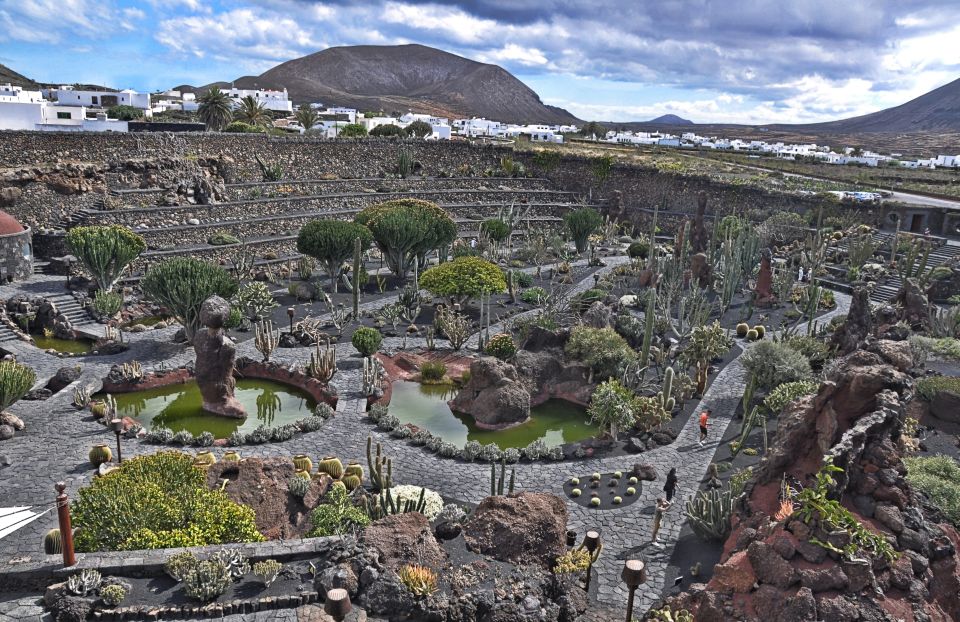
If you want something different from typical “look at plants” tourism, Jardin de Cactus is where this tour earns points. You’ll walk through a collection with more than 1200 species of cactus, which means the garden isn’t just about a few photogenic plants. It’s about variety, survival, and how adaptation turns into design.
The best part is that cactus can look repetitive until you see enough species in one place. Then you start noticing different shapes, growth styles, and how these plants manage water in a place where water is a serious constraint. This stop feels a bit like a lesson you didn’t know you signed up for—plant-focused, but not dull.
One caution from experience with this style of tour: some visits can feel short. If you love gardens and want to read labels carefully, you may wish you had a bit more time here. If you’re more into quick visual browsing, you’ll still likely enjoy it.
Aloe Museum: learning what aloe vera is actually good for
After the cactus garden, the tour shifts to a plant with a global reputation: aloe vera. At the aloe museum, you’ll learn about the benefits of aloe vera, which gives this stop more purpose than just a pretty collection.
I like that this segment follows the cactus garden logically. You go from a broader survival plant story (cacti) to a familiar medicinal/cosmetic plant story (aloe). The learning makes the island feel more connected to everyday life, even if you’re thousands of miles from home.
As with other ticketed stops, time matters. Some visitors felt the visit was on the short side. If aloe is a priority for you, keep your expectations realistic: you’ll likely get the highlights rather than a slow, deep study.
Arrieta and Mala: quick town moments that shape the day
You pass through Arrieta and Mala. These stops tend to function like “stretch your legs and reset” breaks rather than big standalone attractions.
That’s helpful if you’re eager to keep moving and don’t want the day to drag. It can also be a slight disappointment if you came for village wandering and hoped for more time in one place. Either way, the value here is that it keeps the route feeling like north Lanzarote is lived in, not just toured.
Guatiza prickly pears and cochineal: the dye story you can’t unsee
Then you reach Guatiza and the prickly pears plantations. Here’s what makes this stop interesting: you learn how natural dye, cochineal, is produced.
Cochineal is one of those historical-for-science facts that makes you see “plants as industry” instead of only “plants as scenery.” Prickly pears are common in Lanzarote, but the cochineal connection adds a human layer to what you’re looking at—like the island has been harvesting value from this ecosystem for a long time.
If you like practical stories—how an environment feeds culture and trade—this is one of the best moments to pay attention.
The Manrique move: old quarry to Manrique Foundation in Tahiche
Manrique’s genius wasn’t only about art. It was about placing art inside the island’s natural logic.
Along the way, you’ll visit the old quarry, described as where César Manrique perfectly fused nature and art. Even without technical details, you can feel the concept: rock becomes structure, and architecture becomes a way of framing what the volcanic environment already wants to do.
Finally, you arrive at the César Manrique Foundation in Tahiche, in the old house of the Lanzarote-born artist. This is a key stop because it’s not just a museum. It’s a home, a workspace, and a landscape idea—together. You’ll contemplate Manrique’s work and also see paintings and sculptures by other avant-garde artists.
What I like most here is the consistency: the tour already taught you to look at volcanic formations and plant survival. The foundation ties those themes together with visible, crafted design.
If Manrique is a reason you booked this tour, this is the moment you’ll likely feel the most satisfied.
Guide quality matters more than you think
This tour is run with a live guide, and that can make a noticeable difference because there’s a lot going on in one day.
One name that shows up in feedback is Juan Carlos. People describe him as friendly and smiling, but some comments also mention a strong French accent that made it harder to follow at times. That doesn’t necessarily mean the tour will be difficult in your language, but it does suggest you should plan for possible comprehension hiccups if you’re counting on perfect clarity.
If language flow matters to you, consider booking in the language you’re most comfortable with, and don’t be shy about asking the guide to repeat key points when something matters.
Booking value: what you really get for about $101
At $101 per person, you’re paying for a full day that includes:
- An air-conditioned bus and official guided route
- Tickets for Cueva de los Verdes, Jardin de Cactus, and the César Manrique Foundation
- A visit to the Aloe Museum
- Lunch
- Skip-the-ticket-line handling for key attractions
- Travel insurance for the trip duration
So the value isn’t just the attractions. It’s the reduced “what do I do next” stress. You also avoid ticket line waiting at the main stops, which is meaningful in popular places.
Where value can drop is when the pacing doesn’t match your style. If you want long stays, you may feel the day moves too fast. If you like structured highlights and a guide’s interpretation, this is a good fit.
Getting around and comfort: small warnings to take seriously
Bring comfortable shoes—there’s a lot of walking in gardens and in and around attractions.
Also note a comfort/access detail: buses are not adapted to wheelchair users. If accessibility is a concern, you should treat this as a firm limit.
Pickup is included, but timing and exact pickup point can vary by where you start. In practical terms: confirm your pickup details closely, and give yourself a little buffer time so you’re not stuck chasing a bus at the last minute.
Who should book this tour (and who might prefer something else)
This tour is a strong choice if you:
- Want a focused north Lanzarote route in one day
- Like art that’s tied to real place (Manrique’s approach fits perfectly here)
- Enjoy plant and nature learning—especially cactus variety and aloe context
- Prefer guided structure over building your own driving day
It might be less ideal if you:
- Want slow museum pacing and long time for reading at each site
- Are extremely sensitive to meal quality (lunch quality has been mixed for some people)
- Struggle with reading or listening if your tour language has a strong accent
Should you book North Lanzarote: The Work of César Manrique?
If your goal is to see north Lanzarote’s top Manrique-linked moments—plus cave, cactus garden, aloe, and prickly-pear cochineal—you’ll probably be happy you booked. The itinerary is tightly packed, but that packing is what creates the day’s payoff: volcanic cave drama in the morning, plant-focused learning midday, and Manrique’s island philosophy by the end.
I’d book this if you’re flexible about time inside each stop and you enjoy highlights with a guide’s explanations. I’d think twice if you hate rushed pacing or if lunch quality is a deal-breaker for you.
FAQ
Where is this tour located?
It takes place in the north of Lanzarote in the Canary Islands, Spain.
How long is the tour?
The duration is 8 hours.
What does the tour include?
It includes an air-conditioned bus, an official guide, tickets to Cueva de los Verdes, Jardin de Cactus, and the César Manrique Foundation, a visit to the Aloe Museum, lunch, and travel insurance for the duration of the trip.
Is pickup included?
Yes, pickup is included, but the exact pickup point and time depend on your location. The supplier should reconfirm details after booking.
Which languages are available for the live guide?
The live tour guide is available in English, German, and French.
Are tickets handled in advance?
Yes, you get ticket access for the included attractions and skip the ticket line.
Do I need to bring anything specific?
You should bring comfortable shoes.
Are pets allowed?
No, pets are not allowed.
Is the bus wheelchair accessible?
Buses are not adapted to wheelchair users.
Can I cancel for a full refund?
You can cancel up to 24 hours in advance for a full refund.
Is there an option to book without paying immediately?
Yes, you can reserve now and pay later.