REVIEW · SEVILLE
Seville Ultimate Food Tour
Book on Viator →Operated by Devour Seville Food Tours · Bookable on Viator
Churros and ham slice through Seville’s morning. In a small group 3-hour food-to-dessert walk, you zip from markets to a convent and end at Plaza Nueva while tasting Seville favorites like Iberian ham, nuns’ cookies, vermouth tapas, and adobo-fried fish.
I love the variety of the tastings: charcuterie, churros and hot chocolate, convent sweets, savory tapas, and freshly fried fish. I also love that your guide gives you the why behind each stop, so you learn what the dishes mean in Seville, not just what to eat.
One catch: it’s mostly standing and walking (about 3.5 km), and while they can adapt for many diets, the tour is not suitable for vegans or celiac disease.
In This Review
- Key highlights you’ll feel fast
- Setas de Sevilla: market energy and Iberian ham done right
- Why this stop is worth your time
- Bar El Comercio: churros, hot chocolate, and owner-led tradition
- Santa Cruz: stepping into a convent for nuns’ homemade cookies
- What you’ll likely love here
- La Candelaria: vermouth and Holy Week tapas inside a bar-museum
- Why Holy Week fits a food tour
- Freiduría La Isla: adobo fried fish, a father-and-son show, and paper-cone style
- Walking route logic: Arenal, Santa Cruz, and Alfalfa in a practical order
- A small group changes what you get
- What you eat and drink: enough for a light meal, built from breakfast to dessert
- Practical tip: plan your day around it
- Price and value: what $83.44 buys you in real terms
- Dietary needs: what they can adapt and where the limits are real
- Who should choose this tour (and who should skip)
- Timing, meeting points, and how to avoid first-stop stress
- Who this tour suits best: first-timers, families, and food-focused walkers
- One more practical note for families
- Should you book the Seville Ultimate Food Tour?
- FAQ
- How long is the Seville Ultimate Food Tour?
- How many stops and tastings are included?
- What are the start and end locations?
- How big is the group?
- What language is the tour offered in?
- Can vegetarians or pescatarians join?
- Is the tour suitable for vegans or celiac disease?
- What cancellation options are available?
Key highlights you’ll feel fast
- Setas de Sevilla start for paper-thin Iberian ham cut right in front of you
- Bar El Comercio churros with the owner’s no-nonsense, tradition-first approach
- Santa Cruz convent cookies in a historic Jewish-quarter setting
- Holy Week at La Candelaria where you pair history with vermouth and two tapas
- Fried fish at Freiduría La Isla with adobo marinade and a style of wine Seville people love
- Small group (10 or fewer) means more time for questions and ordering tips
Setas de Sevilla: market energy and Iberian ham done right
You kick things off at Setas de Sevilla, at street level where local life is happening daily. It’s the kind of meeting point that helps you start the tour like a local: short, practical, and close to where the action actually moves. The visit is focused and quick—about 45 minutes—so you’re tasting while the market is still feeling lively.
The centerpiece here is the charcuterie stall. You watch Iberian ham get cut into impossibly thin slices, then you taste what you’re seeing. The payoff is twofold: you get a real sensory lesson (texture, saltiness, fat melt), and you also learn how seriously Seville takes its cured meats. This is one of those starts that makes the rest of the tour click, because you stop thinking of ham as a snack and start thinking of it as a Seville tradition with real rules.
You can also read our reviews of more food & drink experiences in Seville

Why this stop is worth your time
- You get a hands-on intro to one of Spain’s most famous cured products, in the place where people buy it every day.
- You’re not just handed food—you’re taught how it’s made and why it’s served in such specific ways.
Bar El Comercio: churros, hot chocolate, and owner-led tradition
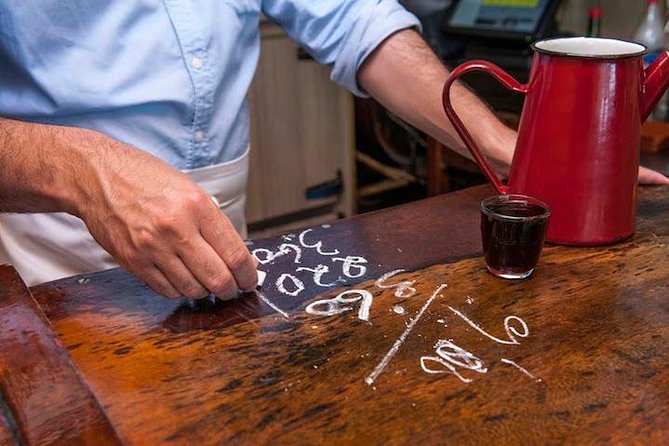
Next comes Bar El Comercio, and this stop is all about comfort food with serious pedigree. You sit by the bar—about 20 minutes—and you watch the owner, Paco, make a fresh batch of churros while the hot chocolate is ready to pair. That pacing matters. Warm churros taste different when they’re made for your moment, not shipped out to sit under a lamp.
The room itself feels like a Seville time capsule: black-and-white tiled floor, ham legs hanging overhead, and a fun local detail that Paco was born upstairs. Even if you’re not into decor, it helps you understand the atmosphere: this isn’t trying to impress tourists. It’s built for locals who want their daily favorites.
You taste the churros and the hot chocolate, and the whole point is simple: learn how Seville balances fried dough with chocolate that’s hot enough to make the pairing feel effortless. Some people claim these are the best in Spain. I’d treat that as local confidence, not a test. What matters is that the bar’s approach is clearly rooted in habit, not hype.
Santa Cruz: stepping into a convent for nuns’ homemade cookies
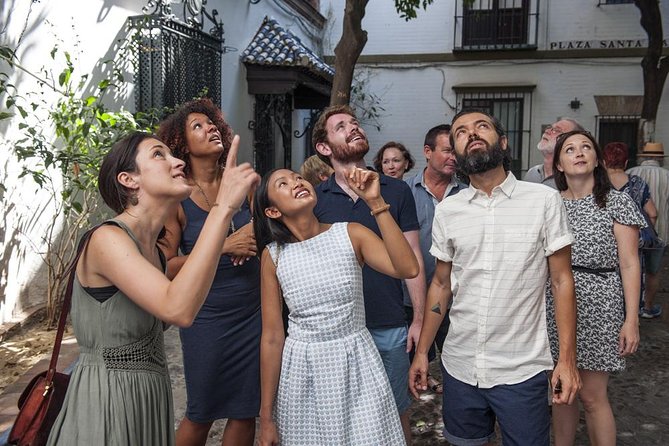
After the market and bar, the tour slows into a more reflective stop: Barrio Santa Cruz, the old Jewish quarter. You’ll step into a historic convent environment and enjoy one of Seville’s most memorable sweet bites—the nuns’ homemade cookies.
This is about 35 minutes, and the admission here is listed as free. That matters in a practical way: it keeps your tour value strong while still giving you a meaningful cultural setting. You’re not just eating something sugary—you’re eating it in the context of how convents shaped local baking traditions, year after year.
What you’ll likely love here
- The setting: Santa Cruz is one of Seville’s most atmospheric neighborhoods.
- The contrast: you move from savory market food into sweets made with a long tradition behind them.
One note: if you’re hoping for purely kid-friendly sugar with zero history, this stop may take a couple minutes to “get rolling.” But that context is exactly what makes the cookie tasting more satisfying.
A few more Seville tours and experiences worth a look

La Candelaria: vermouth and Holy Week tapas inside a bar-museum
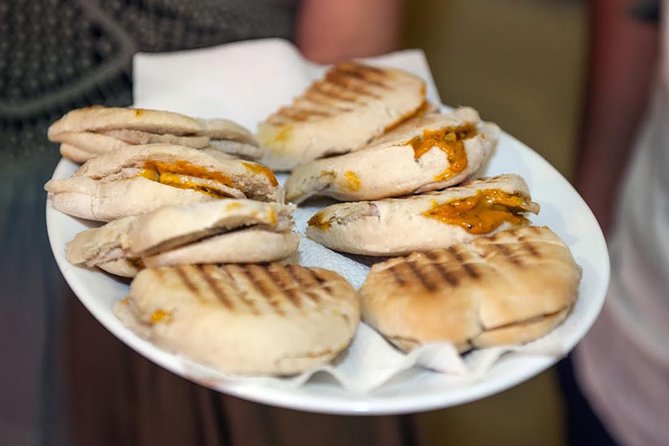
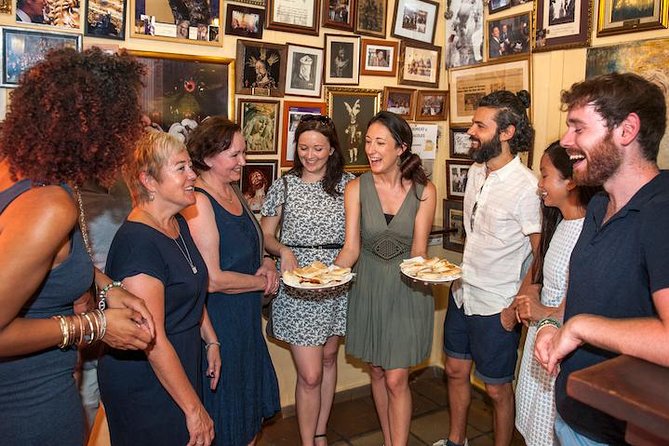
At La Candelaria, you enter a place that’s part bar and part museum, dedicated to Holy Week. The walls show photos, plaques, and memorabilia. You’re essentially watching the celebration’s story build itself as you walk in and sit down.
This stop is around 45 minutes. You’ll have time to settle with a glass of vermouth and then enjoy two tapas. One highlight is the montadito sandwiches, filled with shredded pork, plus marinated potatoes. This is tapas as Seville does it: snack-sized, flavor-forward, and designed for lingering rather than rushing.
Why Holy Week fits a food tour
Food in Seville isn’t separate from culture. It’s tied to seasons, celebrations, and local identity. Holy Week is one of the biggest events on the calendar, so pairing it with small plates and a classic pre-meal drink helps you understand why the city eats the way it does—especially when crowds, traditions, and routine overlap.
Freiduría La Isla: adobo fried fish, a father-and-son show, and paper-cone style
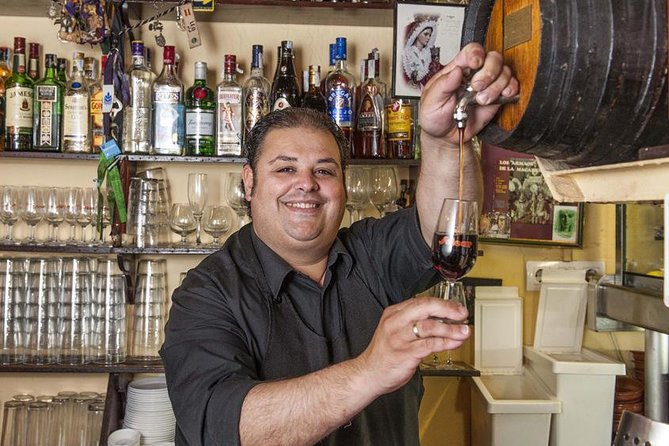
Now for something that feels like Seville in motion: Freiduría La Isla. You’ll meet a father-and-son team that keeps the pace energetic, and you’ll be sitting down for one of the tour’s most unmistakably local-style tastings—freshly fried fish.
This stop runs about 35 minutes, and it’s built around their famous adobo marinade. The description notes it’s special to this part of the world, so you’re tasting more than a fried piece. You’re tasting a flavor profile shaped by local technique and local taste.
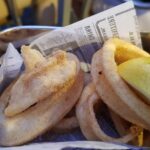
There’s also a seasonal detail that locals love: during April Fair, the fried fish is served in paper cones, and it’s commonly enjoyed with one of the driest white wines in the world. You might not be in Seville in April, but even hearing that tradition helps explain why the fish pairing works. Dry wine cuts the fat. The adobo carries the flavor. The combination is a Seville habit, not a random “food pairing.”
Walking route logic: Arenal, Santa Cruz, and Alfalfa in a practical order
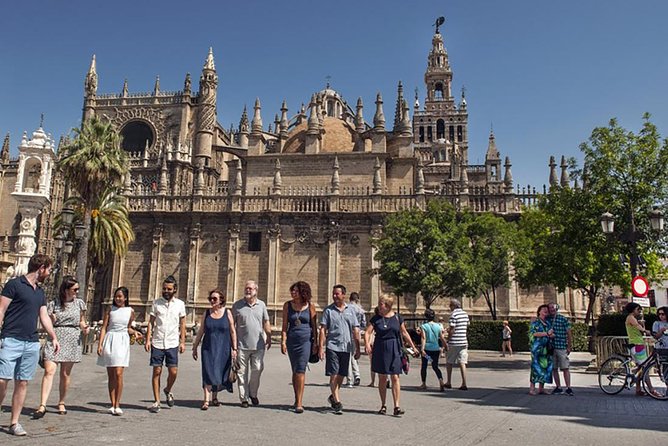
The tour isn’t just a list of food stops. It’s a city route with an actual plan. You move through neighborhoods like Arenal, Santa Cruz, and Alfalfa, which gives you a quick sense of how Seville is organized—and how people actually move through it.
As you walk, your guide shares stories about culinary traditions shaped by different cultures, and you also get practical guidance on how to order, where to go next, and how to eat like a Sevillano. That’s a big deal on a short trip. Seville can be easy to wander around in, but it’s harder to know where to eat without turning into a repeat customer at the same tourist traps.
This tour also takes you past picture-perfect plazas plus hidden alleyways away from the biggest main-street crowds. You’re getting orientation while you eat, and that saves you time later.
A small group changes what you get
Because the group stays at 10 or fewer, your guide can answer questions in real time. In a big group, everyone gets through the tasting line. Here, you get more chance to ask, like what to order when you see a menu full of confusing words, or how tapas ordering works when you want to pace yourself.
What you eat and drink: enough for a light meal, built from breakfast to dessert
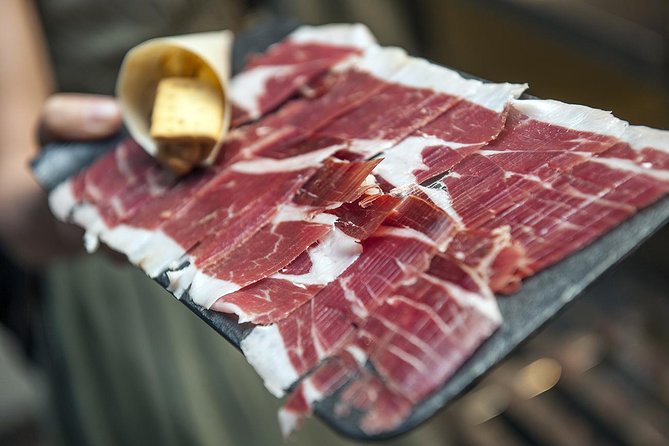
Across all stops, you’re looking at 7+ food tastings and 2 drinks. The tour is designed as a full “mini meal” experience, often described as moving from breakfast-style bites through dessert.
You can expect a mix of:
- savory cured meat (Iberian ham)
- fried snack sweetness (churros with hot chocolate)
- convent-style baking (nuns’ cookies)
- two tapas plates plus vermouth
- freshly fried fish with adobo marinade
You’ll also get the “why” behind each part of the menu, including context around Seville’s classic sherry wines. Even when your specific tasting is something else, learning how sherry fits into Seville’s drinking culture helps you order confidently when you sit down afterward.
Practical tip: plan your day around it
If you do this tour early or late morning, you’ll likely feel satisfied enough to go lighter for lunch. If you do it closer to dinner, you’ll still need a real meal afterward, but you’ll have better instincts for where to go and what style of tapas to order.
And yes—based on the kind of people who love this tour, you should think about what you wear. Loose pants help. This is a lot of food for a few hours.
Price and value: what $83.44 buys you in real terms
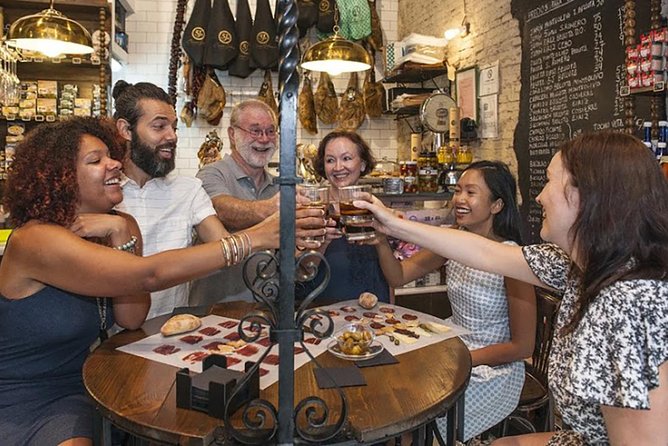
At $83.44 per person, the price looks straightforward until you break down what’s included. You’re not just paying for a guide and some bites. You’re paying for:
- a local English-speaking culinary expert
- small-group time (10 or fewer)
- 7+ tastings and 2 drinks
- food stops that include admission/tickets at multiple venues (and at least one stop where admission is free)
Also, the walking portion matters. 3.5 km isn’t extreme, but it’s enough to count as a city outing. The tour is structured so you earn that walking with tastings and stops you’d struggle to find on your own.
So the value question becomes: could you build something similar on your own for less? Maybe. But you’d need luck, timing, and the ability to land in the right places fast—especially for churros with fresh preparation and a convent-cookie stop that’s hard to “DIY.” This tour buys you that efficiency.
Dietary needs: what they can adapt and where the limits are real
This tour can be adapted for:
- vegetarians
- pescatarians
- gluten-free needs (not celiac)
- dairy-free
- non-alcoholic options
- pregnant women
The key practical warning is that there may not be a replacement option at every stop. And the tour is not suitable for vegans or for people with celiac disease.
If you have allergies or dietary restrictions, the tour data asks you to email the Guest Experience team after booking so they can arrange ingredients. I strongly recommend doing that sooner rather than later. It’s the difference between a smooth tasting plan and last-minute guessing.
Who should choose this tour (and who should skip)
- Great for people who eat a wide range of Spanish food and want help ordering.
- Better for vegetarians/pescatarians than for vegans.
- Not a fit if you need celiac-safe handling.
Timing, meeting points, and how to avoid first-stop stress
You meet at Setas de Sevilla (Pl. de la Encarnación, s/n, Casco Antiguo, 41003 Sevilla) and end at Plaza Nueva (Pl. Nueva). There’s no hotel pickup, so you’ll want to arrive a few minutes early with Google Maps open.
The tour runs about 3 hours, and it includes considerable standing and walking. That means you should treat it like a guided food outing, not a sit-down meal with long breaks. If you’re sensitive to standing, wear supportive shoes and plan to take a breath at each stop when the group pauses.
Because the start is at a big landmark area, your best move is simple: arrive early and confirm the exact guide location on-site.
Who this tour suits best: first-timers, families, and food-focused walkers
This is one of those tours that works for a lot of different travelers. The small group size and nonstop food stops make it engaging, and the guide stories help even people who think they hate history.
In the guide lineup, you’ll hear names like Maria R., Alex, Sophie, Alejandro, Elena, Borja, Mercedes, Ousin, and Manuel M—often praised for energy and for explaining both food and the city. That matters because the tour isn’t only about taste; it’s about helping you understand why tapas and Seville-style eating look the way they do.
It’s also a good choice if you want an orientation walk. You end centrally at Plaza Nueva, and you’ll come away with specific next-step advice: where to try tapas, what to order, and how to pace a meal.
One more practical note for families
If you’re traveling with kids, the structure helps: repeated food stops keep attention up, and the route goes through neighborhoods rather than only one street. Just make sure the standing time doesn’t clash with your child’s patience.
Should you book the Seville Ultimate Food Tour?
Book it if you want a short, concentrated Seville food education with tastings spread across markets, bars, a convent setting, tapas culture, and fried fish tradition. If you can walk about 3.5 km and you eat more than a very narrow list, it’s a strong use of a few hours in the city.
Skip it if you are vegan or need celiac-safe options, or if you hate standing/walking for long stretches. Also skip if you want a quiet, sit-down dinner experience. This tour is active by design.
FAQ
How long is the Seville Ultimate Food Tour?
It lasts about 3 hours.
How many stops and tastings are included?
The tour includes 7+ food tastings and 2 drinks, served over multiple stops.
What are the start and end locations?
It starts at Setas de Sevilla (Pl. de la Encarnación, s/n, Casco Antiguo, 41003 Sevilla) and ends at Plaza Nueva (Pl. Nueva, Sevilla).
How big is the group?
The tour is limited to 10 people or fewer.
What language is the tour offered in?
This tour is offered in English.
Can vegetarians or pescatarians join?
Yes. The tour can be adapted for vegetarians and pescatarians.
Is the tour suitable for vegans or celiac disease?
No. It is not suitable for vegans or for people with celiac disease.
What cancellation options are available?
There is free cancellation up to 24 hours in advance for a full refund.
If you’d like, tell me your travel dates and whether anyone in your group is vegetarian, gluten-free, or has allergies, and I’ll help you decide if this route matches your plan.