REVIEW · SEGOVIA
Skip the Line Admission Ticket to Cathedral of Segovia
Book on Viator →Operated by Catedral Segovia · Bookable on Viator
Segovia’s cathedral feels enormous, even inside. This skip-the-line mobile ticket helps you get moving fast, and it includes a free stop at the Episcopal Palace. The only real catch is that you may still face a quick QR validation at the ticket counter, and entry can feel time-sensitive near closing.
What makes this visit special is what you find once you’re in: a wide, simple Gothic interior lit by 16th-century Flemish windows, plus a late-Gothic cloister that’s older than the cathedral itself. If you like art details and want to wander without being rushed, this is a very efficient way to do Segovia.
In This Review
- Quick hits you’ll care about
- Why a skip-the-line ticket matters in Segovia
- Price and what you’re really paying for
- Timing: the opening hours are generous, but closing can feel strict
- Arriving and getting in: north transept entrance and QR validation
- Inside first: a vast, simple Gothic space
- The central choir and the 15th-century surprise
- Chapels you should target: 20+ reasons to take your time
- The high altar and Sabatini’s 18th-century altarpiece
- Blessed Sacrament Chapel: stained glass, carved stalls, and painted drama
- Cloister doorways: the late-Gothic cloister is older than you think
- The museum in the chapter house: religious art in a small, readable space
- Episcopal Palace: the included add-on you shouldn’t ignore
- How long should you plan for a satisfying visit?
- The bell tower question: 190 narrow steps, if you add it
- Self-guided help: using the QR-linked map for room-by-room context
- Getting value from the included experience (and when you might skip)
- Who this ticket suits best
- Should you book this Skip the Line Admission Ticket to Segovia Cathedral?
- FAQ
- What is included with the admission ticket?
- How long does the visit take?
- What hours is the cathedral open?
- Do I need a printed ticket?
- Where is the entrance to the cathedral?
- Are children allowed?
Quick hits you’ll care about

- Mobile ticket so you’re not hunting for paper.
- North-transept entrance once you’re inside, you’ll immediately understand the layout.
- Chapels with standout sculpture including works by Gregorio Fernández.
- Blessed Sacrament Chapel with flamboyant Churriguera-style decoration, stained glass, and choir stalls.
- Cloister detail: late-Gothic cloister transported from an older cathedral, plus tombs under the pavement.
- Small museum add-on with religious art and a white-and-gold 17th-century ceiling.
Why a skip-the-line ticket matters in Segovia
Segovia Cathedral has the kind of scale that can swallow your time. One minute you’re planning to see a few rooms, and the next you’re reading the carvings in chapel corners, then realizing you’re already in the cloister.
This ticket is built for exactly that. You’re not stuck searching for the right booth at the last second. Instead, you get a prebooked, mobile admission that’s meant to help you start walking through the cathedral quickly, then move room to room at your own speed.
It’s also good value because it comes with a free visit to the Episcopal Palace of Segovia. Even if you only spend a short time there, it’s a smart way to stretch your hour or two in the area.
A few more Segovia tours and experiences worth a look

Price and what you’re really paying for
At $5.15 per person, the price is less about a guided experience and more about buying back your time. The cathedral is the headline, but the included Episcopal Palace turns this into a budget-friendly way to get more out of the stop.
Most visits here are self-paced. That means your money is going toward smooth entry and access, not toward a big-ticket tour program.
If you’re the type who prefers to go slow and look closely, this ticket makes financial sense. If you only want quick photos from the main nave and you hate waiting anywhere, you might consider whether you truly need a skip-the-line product.
Timing: the opening hours are generous, but closing can feel strict
The cathedral’s hours run 9:30 AM to 7:00 PM daily. That’s a wide window on paper, which is great for fitting it into a Segovia day.
But here’s the practical lesson: don’t treat the closing time as a soft suggestion. There are cases where entry doors shut earlier than expected, and you don’t want your cathedral moment to end with you standing outside. If you arrive late in the day, build in extra buffer.
A simple strategy: aim to be inside at least 45 minutes before closing. It gives you enough time to see the big rooms, then take a second run through chapels and the cloister.
Arriving and getting in: north transept entrance and QR validation
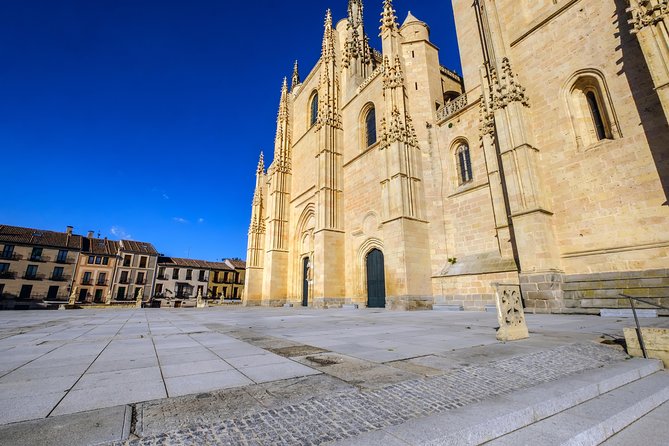
Once you’re through the process, entrance is through the north transept. That’s helpful because it shapes your first views—so you’re not wandering in confusion trying to figure out where the choir and altar sit.
You’ll also likely use a QR-based check-in. Even with a skip-the-line ticket, it’s possible to queue briefly to get your QR validated at the ticketing counter. It’s usually not a disaster, but it’s worth knowing so you don’t plan for zero waiting.
Also, keep your phone charged. A mobile ticket is convenient, but you don’t want battery anxiety right at the door.
Inside first: a vast, simple Gothic space
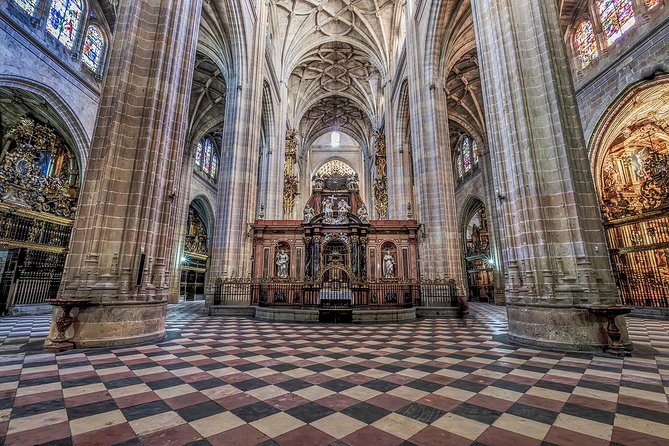
The interior is described best as light, bare, and uncluttered. Compared to some cathedrals that overwhelm you with gold and clutter everywhere, Segovia’s space is more about proportion and quiet drama.
A big part of that feeling comes from the 16th-century Flemish windows, which throw soft illumination across the interior. It’s the kind of lighting that makes you slow down, because it’s hard to rush when the view keeps changing.
You’ll also notice how the space is organized around major focal points rather than endless decorative distractions. If you like architecture you can actually read, this cathedral is made for you.




The central choir and the 15th-century surprise
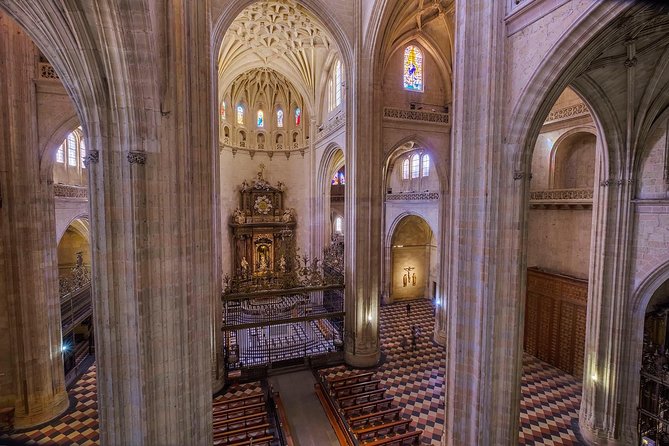
One of the smartest things about this cathedral’s layout is that it isn’t just one era. In the center you’ll see a large Gothic choir dating to the 15th century, placed there even though it predates the cathedral itself.
That moment is worth pausing for. It changes the way you interpret the building: this isn’t only a fresh start; it’s also continuity, reuse, and evolution.
If you’re standing still for a minute and letting your eyes adjust, you’ll also be able to understand the axis of the church—where the altar sits, how chapels line the space, and why the choir feels like a hub.
Chapels you should target: 20+ reasons to take your time
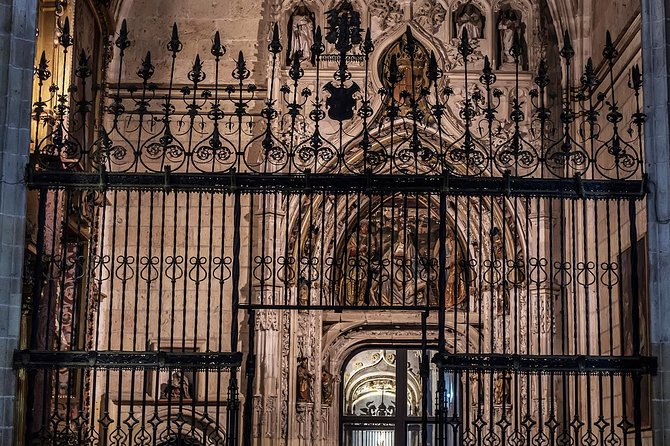
The walls and apse are lined with more than 20 chapels, so your visit can go in two directions: quick scan or deep look. I recommend choosing a handful of chapels and giving each one enough attention to feel the art.
A standout on the right early on is the third chapel from the entrance, the Capilla de San Cosme y San Damian. Inside, you can see a lamentation group in wood by the 17th-century Baroque sculptor Gregorio Fernández.
This is exactly the sort of detail that makes Segovia Cathedral feel more than just a big room. It turns your visit from architecture-only into sculpture-and-story too.
The high altar and Sabatini’s 18th-century altarpiece
At the east end, across from the choir, you’ll find the high altar with an 18th-century altarpiece by Sabatini. This is the kind of transition that keeps the building from feeling stuck in one style.
Even if you’re not a formal art person, you’ll likely appreciate how the altarpiece anchors the space. It gives you a clear “end point” for your gaze, which helps you map the rest of the chapels without getting lost.
Blessed Sacrament Chapel: stained glass, carved stalls, and painted drama
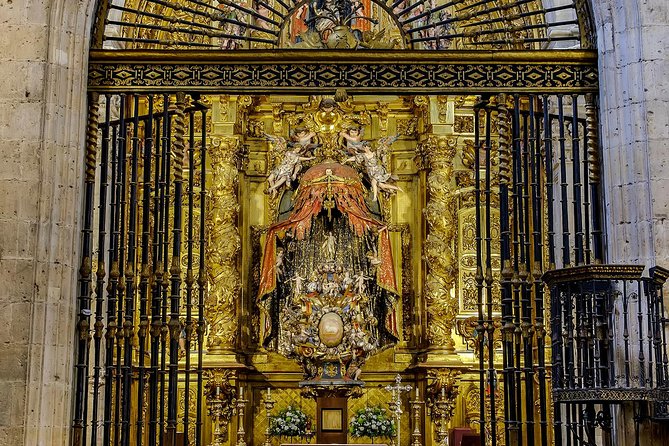
The Blessed Sacrament Chapel is a must-see stop. It’s described as created with dramatic, flamboyant style (Churriguera is associated with the work), and the results are very eye-catching.
Expect:
- Stained-glass windows
- Elaborately carved choir stalls
- Paintings from the 16th and 17th centuries
One painting detail to look for is the reredos portraying the deposition of Christ from the cross by Juan de Juni. Even if you don’t read every caption, the subject is clear—and it connects the chapel’s sculpture and carving to the broader Baroque devotional style.
This is also a great place to slow down. The chapel is compact compared to the main interior, and you can actually see how the art is staged for worship and contemplation.
Cloister doorways: the late-Gothic cloister is older than you think
From the cathedral interior, you can find a door opening into the late-Gothic cloister. It’s accessed from the southern transept, and it’s important historically because the cloister is older than the cathedral.
The cloister and its elaborate door are credited to architect Juan Guas, and the big idea is that elements were transported from an older cathedral. That means you’re not just looking at a pretty courtyard—you’re viewing parts with a complicated past.
Also don’t rush the ground. Under the pavement inside the cloisters are the tombs of Juan and Rodrigo Gil de Hontañón. It’s one of those details you feel grateful for when you slow your pace, because it adds meaning to an area that might otherwise seem like a quiet hallway.
The museum in the chapter house: religious art in a small, readable space
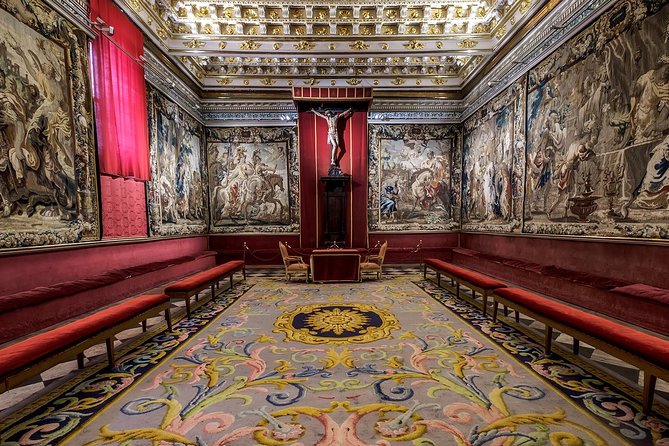
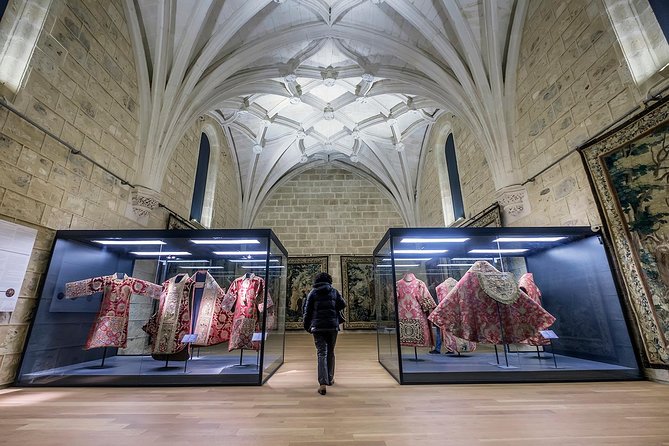
Off the cloister, there’s a small museum of religious art. It sits partly in the first-floor chapter house and features a white-and-gold 17th-century ceiling with Mudéjar artesonado work.
This is a nice counterbalance to the cathedral’s big architectural scale. Instead of chasing rooms, you can settle into a calmer pace and focus on objects: jewelry, paintings, and rare antique manuscripts.
If you’re short on time, you can still get value here by scanning slowly through the room rather than skipping it entirely. The museum isn’t trying to be the whole show—it’s trying to give you context for what you just saw.
Episcopal Palace: the included add-on you shouldn’t ignore
Your ticket includes a free visit to the Episcopal Palace of Segovia. The palace is a separate experience from the cathedral interior, so it works best as a second stop rather than a rushed afterthought.
If your schedule is tight, I’d treat it like a quick-but-thorough circuit: a few rooms, a short look at key decorative elements, then back out. Even a brief visit adds payoff because it extends your understanding of the cathedral’s role in the city.
How long should you plan for a satisfying visit?
The experience is listed for about 1 to 2 hours. In real terms, I’d treat that as a range based on your style.
- If you’re a speed-walker with a checklist: 60 minutes can work.
- If you want art details (Gregorio Fernández, Juan de Juni) plus the cloister and the museum: plan closer to 90 minutes.
A good pacing trick is to split the visit into three chunks. First, focus on the main interior and choir/altar. Second, do your chapel “targets.” Third, finish with cloister + museum so you don’t run out of time before the quieter sections.
The bell tower question: 190 narrow steps, if you add it
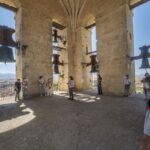
Some people also choose to add a bell tower visit. There’s mention of 190 steps, and the stairs are described as narrow—so it’s not for anyone who dislikes heights or tight steps.
Because the bell tower isn’t explicitly part of what’s listed as included, treat it as an optional add-on if it’s offered during your visit. If you decide to do it, start earlier rather than later so you’re not rushing through the cathedral after.
Self-guided help: using the QR-linked map for room-by-room context
A smart feature here is the self-guided support. There’s a map with a QR code that links to a self-guided tour format where you can click for descriptions and photos of rooms and artifacts.
This is especially useful if you don’t have the patience to read every label. It also helps you connect what you’re seeing with what it represents, without turning your visit into a classroom.
If you’re the kind of traveler who likes control, this fits you well: you choose the pace, then use the QR map when you want an extra layer of meaning.
Getting value from the included experience (and when you might skip)
This works best if you:
- Want to see the cathedral at your pace rather than follow a group schedule.
- Like art details in chapels and altars.
- Appreciate older elements, like the cloister transported from an earlier cathedral.
It may not be your best choice if:
- You only want a quick glance and don’t care about chapels, cloister, or small museum rooms.
- You’re arriving very close to closing time and hate any risk of doors shutting.
Who this ticket suits best
This is a strong fit for independent travelers who want control but also like having entry handled for them. It also fits families at the right pace, as long as kids are with an adult.
One more practical note: the experience is capped at a maximum of 1 traveler. That can make it feel more flexible and less crowded, depending on how the site processes tickets.
Should you book this Skip the Line Admission Ticket to Segovia Cathedral?
If you’re going to Segovia and you want a serious cathedral visit without wasting time at the ticket line, yes—book it. At $5.15, you’re paying for efficient entry plus the added bonus of the Episcopal Palace.
I’d book especially if:
- You’re visiting during busier stretches of the day.
- You like to wander through chapels and want the freedom to linger.
- You want the QR map support for a room-by-room walkthrough.
If you’re only passing through briefly and your priorities are elsewhere, you might still visit the cathedral, but you could save money by going for basic entry instead. Still, for most visitors, this ticket is a practical way to turn limited time into meaningful seeing.
FAQ
What is included with the admission ticket?
The ticket includes admission to Segovia Cathedral and a free visit to the Episcopal Palace of Segovia.
How long does the visit take?
The experience is listed as lasting about 1 to 2 hours.
What hours is the cathedral open?
It runs Monday through Sunday from 9:30 AM to 7:00 PM.
Do I need a printed ticket?
No. This experience uses a mobile ticket.
Where is the entrance to the cathedral?
Entrance is through the north transept.
Are children allowed?
Children must be accompanied by an adult.