REVIEW · SEVILLE
Spanish Cooking Class and Dinner in Seville
Book on Viator →Operated by Taller Andaluz de Cocina · Bookable on Viator
Seville at 6:00 pm is made for food lessons. This Spanish cooking class and dinner puts you right in the Mercado de Triana with a chef-led session that turns market ingredients into a full 3-course meal, plus drinks. You’ll learn the building blocks of Spanish flavor like sofrito, not just copy a recipe.
I especially like the mix of hands-on prep and clear step-by-step guidance from the chef team. You also get written recipes afterward, so the experience doesn’t disappear the moment you leave the market.
One possible drawback: the format is chef-led, so even if you’re there to cook, some steps may be demonstrated rather than done by you. If you prefer 100% cooking time at your station, ask how the class is paced for your group.
In This Review
- Key Things to Know Before You Go
- Mercado de Triana Kitchen Energy (and Why It Matters)
- What You Actually Make: Salmorejo to Paella Valenciana
- Starter: Salmorejo Cordobés (or a Gazpacho Alternative)
- Side/Second course: Spinach with Chickpeas (plus Tapa Variations)
- Main: Paella Valenciana (the chicken-and-veg version)
- Dessert: Lemon sorbet with cava
- How the Hands-On Cooking Works (Without Pressure)
- Drinks and the End-of-Class Dinner Payoff
- Dietary Restrictions and the Menu Flexibility You’ll Want
- Timing, Group Size, and Where to Stand in the Market
- Price Check: Is $84.69 Good Value?
- Who This Class Suits Best (and Who Might Not)
- Should You Book This Seville Spanish Cooking Class?
- FAQ
- FAQ
- What time does the Spanish Cooking Class and Dinner start in Seville?
- How long is the experience?
- Where do I meet the group?
- Is the class offered in English?
- What dishes are included in the 3-course menu?
- Do I get recipes to take home?
- Are dietary restrictions accommodated?
- What drinks are included with the meal?
- Is transportation or pickup included?
- What’s the maximum group size?
- Can I get a full refund if my plans change?
Key Things to Know Before You Go
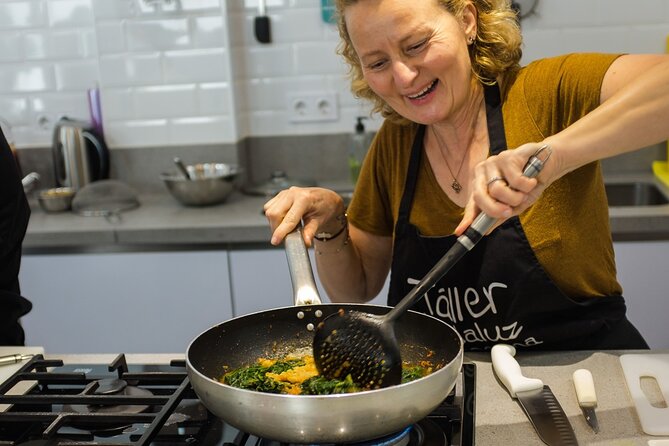
- Mercado de Triana setting: you’re cooking in the heart of Seville’s food market scene, not a generic kitchen room
- 3-course menu built around Spanish staples: salmorejo, a chickpea-based tapa course, paella valenciana, and lemon sorbet with cava
- Up to two drinks with dinner: choose from soft drinks, Spanish wine, or local beer
- Diet swaps are real: vegan, gluten-free, and no pork/seafood options can be accommodated if you tell the team in advance
- Max 16 people: a small group size makes it easier to get involved and ask questions
Mercado de Triana Kitchen Energy (and Why It Matters)
The best part of this class is where it happens. Instead of starting with a bland, sterile demo kitchen, you meet at Taller Andaluz de Cocina inside or by Mercado de Abastos de Triana (Pl. del Altozano, local 75–77). That matters because Spanish cooking is ingredient-driven. The market context helps you understand why the dishes taste the way they do: fresh produce, familiar flavors, and techniques that home cooks use all the time.
You’ll start at 6:00 pm, and the session runs for about 3 hours. That timing is smart for Seville. You get daylight energy early in the evening, then settle into a meal right when locals start shifting from afternoon to dinner mode.
The class is in English, and it’s limited to up to 16 travelers. Smaller groups make the difference between watching a show and actually contributing to the meal. Even when the chef needs to demonstrate a step (more on that soon), you’ll usually have enough space and attention to stay engaged.
You can also read our reviews of more cooking classes in Seville
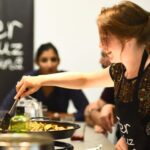
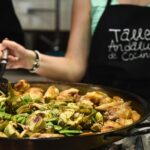

What You Actually Make: Salmorejo to Paella Valenciana
This is a three-course setup. The menu is classic, with a few swap options depending on the day. Here’s the core you should plan around:
Starter: Salmorejo Cordobés (or a Gazpacho Alternative)
Your starter is Salmorejo Cordobés, a thick, creamy Spanish cold soup often served with a spoon and eaten like comfort food. It’s one of those dishes that looks simple until you understand the texture goal. You’re not just chopping ingredients; you’re learning how to combine them for the right consistency.
On some occasions, the starter may be gazpacho instead. Either way, you’re getting a base lesson in cold-sauce flavor building, and that ties back to the cooking technique the chef highlights: traditional flavor starts with the right combinations and timing.
Side/Second course: Spinach with Chickpeas (plus Tapa Variations)
Next comes spinach with chickpeas. It’s hearty, plant-forward, and very Spanish in spirit. You also have alternate options on some nights, like Flamenco eggs, cod fritters, or garlic prawns. If you’re sensitive to seafood or pork, this is one of the places where the menu flexibility is useful. Tell the organizer what you avoid, and they can guide swaps.
Main: Paella Valenciana (the chicken-and-veg version)
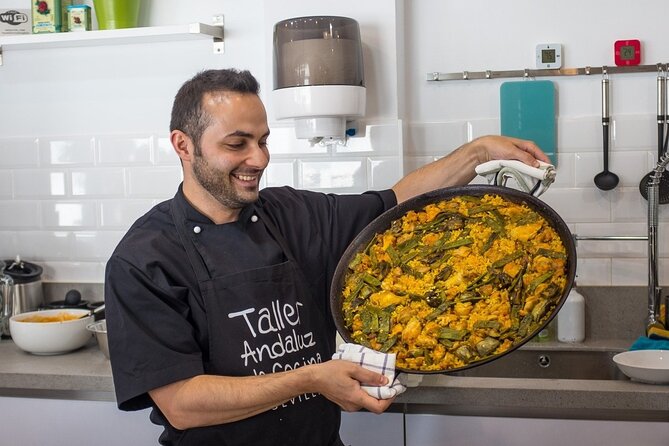
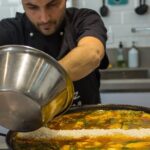
The star is Paella Valenciana—the authentic style with chicken and vegetables. This dish deserves its own spotlight because paella is one of the first Spanish foods people try to copy at home, and it’s also one of the easiest to mess up.
This class focuses on method and fundamentals: you’ll be working with the rhythm of cooking while the chef explains what’s happening and what you’re aiming for (especially with texture and doneness). If you’ve ever made rice that turned out either too mushy or too dry, this is the part that can fix that.
A few more Seville tours and experiences worth a look




Dessert: Lemon sorbet with cava
To close the meal, you’ll do lemon sorbet with cava. The pairing works because it keeps the sweetness crisp and not heavy after paella. It also gives you something you can recreate without needing rare ingredients.
How the Hands-On Cooking Works (Without Pressure)
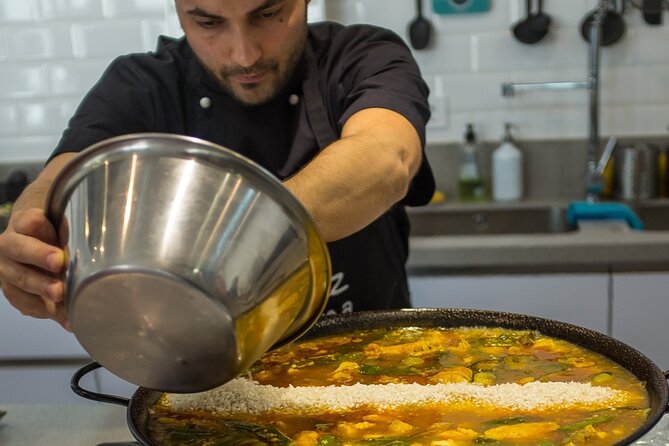
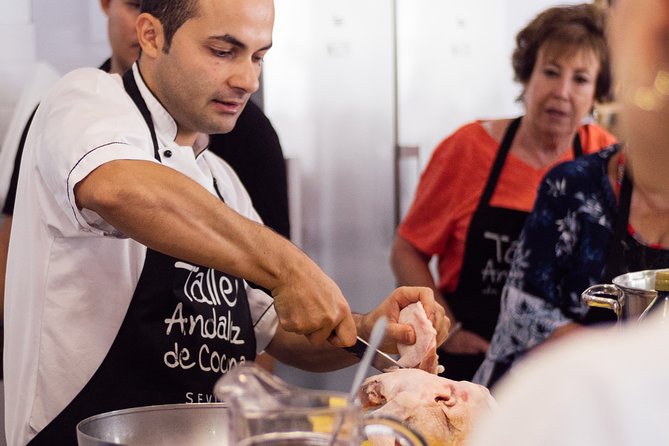
This class is chef-led, not a total do-it-yourself workshop. That’s actually good news. In a group setting, food safety and timing matter, and paella especially has moments where you can’t slow the process down because someone is still chopping onions.
What you should expect is a mixed format:
- The chef teaches key steps clearly.
- You get involved in the tasks that match the flow and the skill level of the group.
- Some steps may be demonstrated while you watch and learn, then you jump into another part of the prep.
That approach shows up again and again in the way the class is described. The chefs and assistants keep things friendly and practical, with a focus on tips that make cooking easier later. Multiple instructors have been praised for explaining things step by step, including names like Leo, Carlos, David, and Dom, along with assistants such as Lydia, Belén, Sabrina, and others who help keep the group involved.
There’s also an important vibe point. One of the recurring strengths is that you’re not pushed into anything uncomfortable. If you prefer light participation, you can still learn a lot. If you love cooking, there’s usually enough work that you won’t feel bored. The goal is to leave with technique, not just plates.
Drinks and the End-of-Class Dinner Payoff
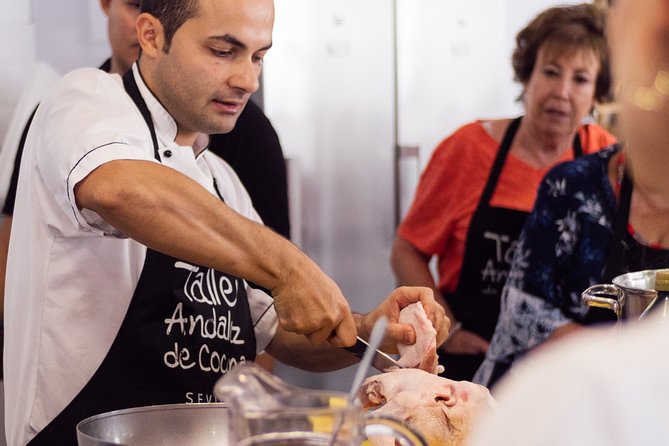
The meal isn’t an afterthought. You eat what you cook.
During the cooking, you’re provided with refreshing homemade sangria. Then at the end, your 3-course dinner comes with up to two drinks of your choice—soft drinks, Spanish wine, or local beer. That structure is useful: sangria keeps the energy going while you cook, and the drinks with dinner make the finished plates feel like a real celebration instead of a snack.
A practical note: because drinks are part of the experience, it’s a good idea to plan your evening walk back afterward. The session ends back at the meeting point, and it’s easy to continue exploring Seville once you’re fueled.
Also, the food is served as the culmination of your work. If you’ve ever done a class where you watched other people cook and then received a plate, avoid that disappointment by matching your expectations to the format: you participate in several parts, but you’re still relying on the chef for technique and timing.
Dietary Restrictions and the Menu Flexibility You’ll Want
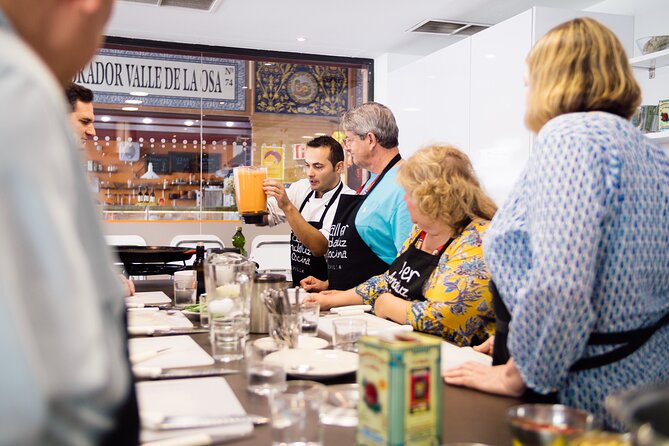
This is one of the strongest practical benefits. The class can accommodate dietary restrictions like:
- Vegan
- Gluten-free
- No seafood
- No pork
You need to let them know in advance so they can adjust the menu options and keep the class running smoothly. That matters because paella and tapas can shift in ingredients easily, but only if the substitutions are planned early.
In practice, the menu already includes swap points. For example, the second course can shift between spinach with chickpeas and various tapa-style mains (like cod fritters or garlic prawns). That makes it easier to handle common restrictions without turning your class into a completely different experience.
Timing, Group Size, and Where to Stand in the Market
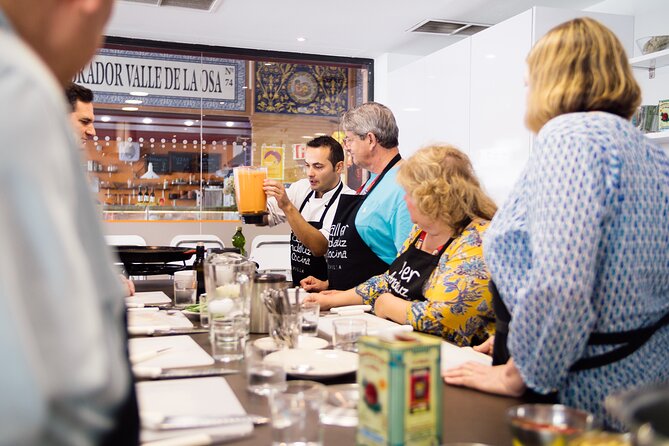
This class is scheduled for 6:00 pm, which is a nice middle ground. You’re not stuck cooking in peak daytime heat, but you’re also not scrambling for late dinner reservations.
The maximum group size is 16, and in many cases it feels like a smaller, conversational group (so you can actually talk to the chef and ask follow-ups). You’ll be working in a shared space, so you’ll want to be ready for that communal kitchen rhythm.
One small logistics tip that can save you time: when you show up at the market for Taller Andaluz de Cocina, look for the room/signage in the correct row. Some meet-up directions can feel vague, so give yourself a few extra minutes to orient yourself once you arrive.
No pickup or drop-off is included. That’s not a dealbreaker, since the meeting point is near public transportation, but it does mean you should plan your own route into the neighborhood.
Price Check: Is $84.69 Good Value?
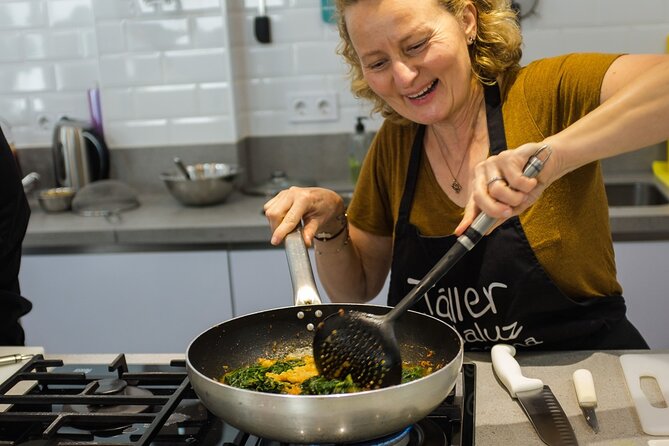
At $84.69 per person for about 3 hours, the value mostly comes from what’s included:
- All ingredients and materials for the meal
- Cooking tools like apron, chopboard, knives, and utensils
- A full 3-course dinner
- Two drinks with dinner (plus homemade sangria during the class)
- Written recipes so you can recreate the dishes at home
If you’ve paid for cooking classes before, you know the pain point: you might get instruction but not enough food, or you might get food but no real technique. Here, the structure is built around technique and payoff. You cook, you eat, and you leave with recipes rather than just a memory.
It’s also priced in a way that makes sense for a small group cap and a market-based kitchen setup. In other words, you’re paying for the experience plus the included meal and drinks, not just watching someone cook.
The one thing to consider is expectation management. If you’re hoping for every second to be hands-on cooking, this format can feel more like guided participation than full DIY. That said, the overwhelming majority of people seem to leave with dishes they can remake and a better feel for how Spanish cooking works.
Who This Class Suits Best (and Who Might Not)
You’ll probably love it if you:
- Want a real Spanish meal experience in Seville, not just a tastings-and-walking evening
- Like learning techniques you can reuse, especially for paella
- Prefer a small-group class where you can talk to the chef and get questions answered
- Want a meal that’s practical to recreate later thanks to recipes by email
You might want to think twice if:
- You dislike chef-led instruction where some steps are demonstrated instead of done by you
- You’re very picky about ingredient sourcing and want a specific kind of product guaranteed every night (the class uses fresh ingredients, but kitchen-style classes can vary in feel and setup)
- You want a completely flexible menu that always matches your exact preferences without advance notice (dietary changes work when you communicate them early)
The class has done a good job accommodating different needs in the past, including vegetarian preferences, but the more detailed you are when you request changes, the smoother it will be.
Should You Book This Seville Spanish Cooking Class?
If your goal is a fun, food-forward evening with a real payoff plate, I’d book it. The combination of Mercado de Triana location, 3-course meal, hands-on participation, homemade sangria, and written recipes is hard to beat for $84.69.
Book it especially if paella is on your must-try list and you want to learn the right approach rather than just copying a restaurant version. And if you have dietary restrictions, this is one of the clearer options because they explicitly say they can adjust the menu when you tell them in advance.
If you’re the type who needs 100% hands-on time, go in with a flexible mindset. The class is designed to teach technique and pacing, and that’s usually what makes the home remake actually work.
FAQ
FAQ
What time does the Spanish Cooking Class and Dinner start in Seville?
It starts at 6:00 pm.
How long is the experience?
The class and dinner last about 3 hours.
Where do I meet the group?
You meet at Taller Andaluz de Cocina, Mercado de Abastos de Triana, Pl. del Altozano, S/N Locales 75–77, 41010 Sevilla, Spain.
Is the class offered in English?
Yes, it’s offered in English.
What dishes are included in the 3-course menu?
The sample menu includes Salmorejo Cordobés (or Gazpacho on some occasions) as a starter, Spinach with Chickpeas (or other options such as Flamenco eggs, cod fritters, or garlic prawns on some occasions) as a second course, Paella Valenciana as the main, and lemon sorbet with cava as dessert.
Do I get recipes to take home?
Yes. You receive written recipes and tips to help you recreate the dishes at home.
Are dietary restrictions accommodated?
Yes. The class can accommodate dietary restrictions such as vegan, gluten-free, no seafood, and no pork if you let the team know in advance.
What drinks are included with the meal?
You’ll have homemade sangria during the class. Afterward, dinner includes up to two drinks of your choice, such as soft drinks, Spanish wine, or local beer.
Is transportation or pickup included?
No. Private transportation is not included, and there is no pickup/drop-off.
What’s the maximum group size?
The experience has a maximum of 16 travelers.
Can I get a full refund if my plans change?
Yes, it’s free cancellation. You can cancel up to 24 hours in advance for a full refund. If you cancel less than 24 hours before start time, the amount paid is not refunded.