REVIEW · MALLORCA
Spanish Cooking Experience in Mallorca
Book on Viator →Operated by MOLTAK - The windmill kitchen · Bookable on Viator
Want real Spanish cooking, not demos? In Palma, you’ll cook at a revived 16th-century windmill kitchen and eat what you make, not just watch. I loved the hands-on teamwork and the unlimited open bar vibe at the table, but one consideration is the menu includes sobrasada, so vegan diets need careful substitutions.
This is a 3-hour class in English with a professional chef guide, and it’s private for your group (so you’re not stuck waiting your turn). The meeting point is in Ponent, Palma, and you’ll end right back where you started, which keeps the whole evening simple.
The structure is clear: you’ll prep a 5-dish menu, then sit down together for the Mediterranean-style meal. Just keep dietary notes ready—some dishes can be adapted, but others are not vegan-friendly by default.
In This Review
- Why This Palma Windmill Cooking Class Feels Worth It
- A 16th-Century Flour Windmill Kitchen in Palma
- Your 5-Dish Mallorca-to-Spain Menu (With Real Dietary Notes)
- How the Class Works: Aprons On, Team Cooking, Chef-Led Steps
- The Big Flavors: What You’re Really Learning to Cook
- Tortilla skills you can use anywhere
- Paella method thinking
- Catalan cream as a confidence builder
- After Cooking: Unlimited Drinks and the Shared Mediterranean Table
- Price and Value: Is $157.21 Reasonable for Mallorca?
- Getting There: Meeting Point in Ponent and Palma Parking Reality
- Who Should Book This Mallorca Spanish Cooking Class?
- Should You Book This Spanish Cooking Experience in Mallorca?
- FAQ
- How long is the cooking experience in Mallorca?
- What’s the price per person?
- Is the tour in English?
- Is this a private experience?
- What dishes are included in the menu?
- Can the class accommodate vegetarian or vegan diets?
- Is there a minimum age requirement?
- Where do I meet, and where does it end?
Why This Palma Windmill Cooking Class Feels Worth It
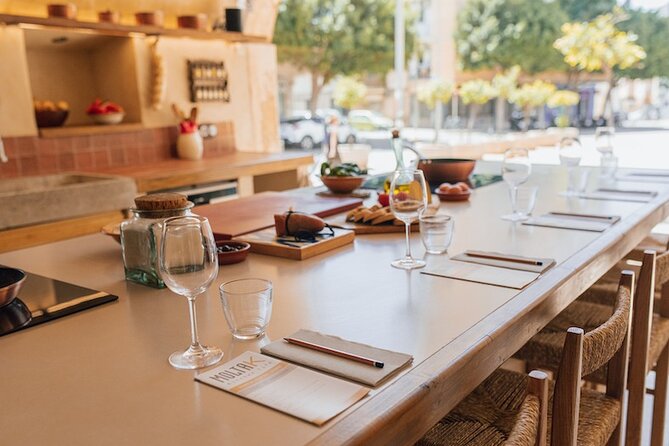
- A 16th-century flour windmill becomes your kitchen: you cook in a real historical space, not a rented room.
- You make a full 5-dish menu: welcome snack, sobrasada starter, tortilla, mixed paella, Catalan cream.
- Open bar + bottled water: unlimited drinks help the meal feel like a proper Spanish get-together.
- Professional chef instruction with names you’ll hear often: instructors include Laura, Vivian, Riccardo, Carlotta, Vanessa, Roberto, Andrés, and others from the team.
- Dietary accommodations exist, but you must plan: vegetarian options are available, and the paella/dessert can be adapted if you note needs at booking.
A 16th-Century Flour Windmill Kitchen in Palma
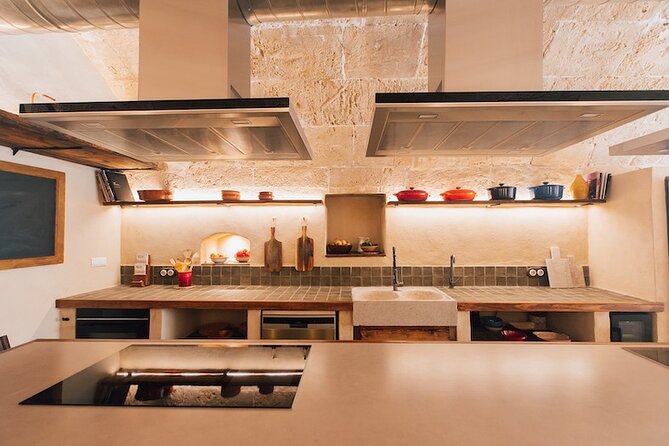
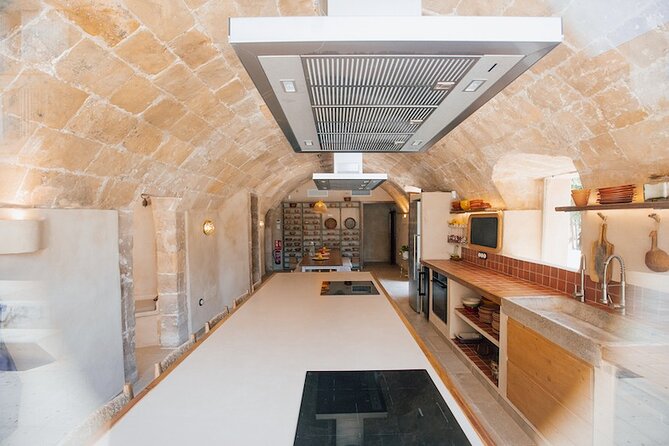
The setting is a big part of the experience. This class takes place in an old flour windmill building from the 1500s, and the place has been brought back to life as a working kitchen. That matters because you’re not just learning recipes—you’re learning them in a room that actually has that old-Palma feel: stone, arched shapes, and a “this is where food life happens” atmosphere.
I also like that the space supports the way this class is meant to run: you work together, move between prep stations, and then eat at a large shared dining table afterward. It’s social without feeling forced. Even if you don’t consider yourself a cook, the layout helps you understand what goes where and when.
A small practical note: Palma’s streets can be busy. If you’re driving, don’t assume parking will be quick. Build in extra time to park and walk to Carrer de la Indústria, 9 (Ponent).
You can also read our reviews of more cooking classes in Mallorca
Your 5-Dish Mallorca-to-Spain Menu (With Real Dietary Notes)
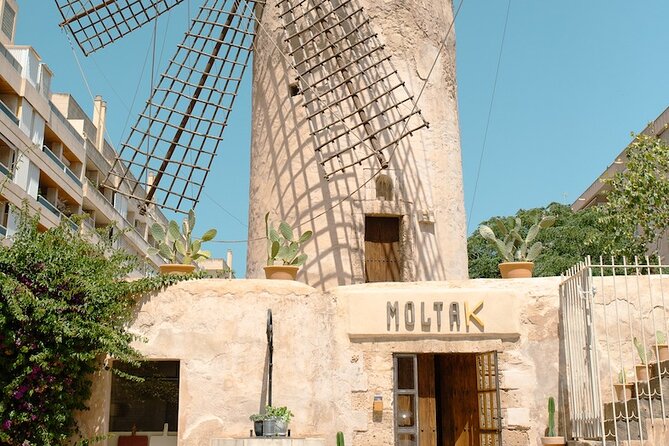
This class isn’t about one dish. You’ll move through a complete menu, so you leave with a mini “Spanish home cooking” toolkit you can repeat later.
Here’s what’s on the menu:
Welcome snack
You start with a quick snack to settle in. It’s also a good moment to meet your group and get your bearings before the cooking starts.
Sobrasada starter suquet
This is the local, sobrasada-based dish from the menu. One important thing: it’s not suitable for vegetarians or vegans. If your diet is plant-based, this is the one you should treat as a red flag unless the operator confirms a substitution when you book.
Spanish tortilla
You’ll make the authentic-style tortilla. This one is suited for vegetarians, but it’s not for vegans. If you eat dairy/eggs, this is likely your best match for learning a classic Spanish staple.
Mixed paella (meat and fish, with adaptations)
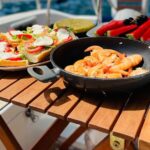
The paella is the centerpiece. The menu describes a traditional mixed paella that includes both meat and fish, but you can adapt it for vegetarians/pescatarians if you tell them in advance.
What I like here is that you’re not just tasting paella—you’re learning how to work through the components and how Spanish cooks think about timing and flavor building. Even if your cooking setup at home is simpler, the method is the part you can reuse.
Catalan cream
For dessert, you’ll get Catalan cream, which contains lactose. The good news: it can be adapted for vegans or lactose intolerance using vegetable milk.
Bottom line: there are accommodations, but they’re not automatic. If you’re vegan, or you have lactose needs, plan to flag it at booking so your menu matches what you can actually eat.
How the Class Works: Aprons On, Team Cooking, Chef-Led Steps
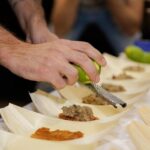
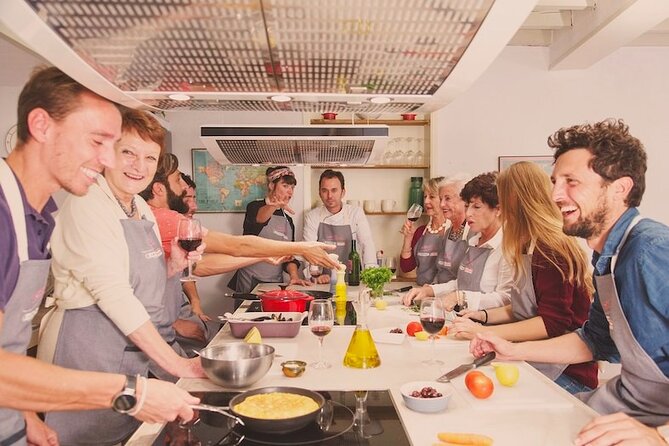
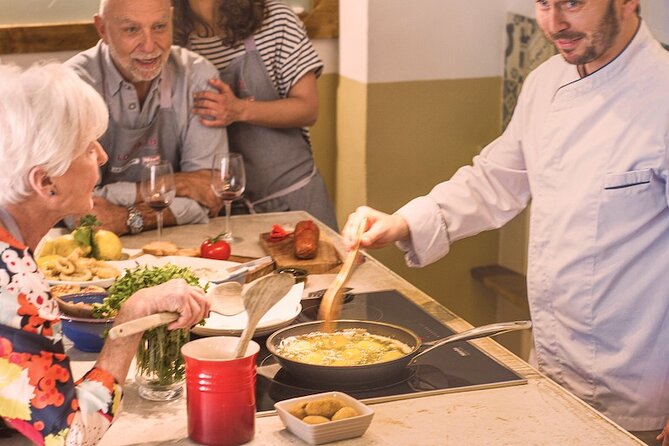
The cooking itself is designed to be doable. You’re not thrown into a test. You put on an apron, then you cook together as a group, with a professional chef guiding the steps.
The class format emphasizes three things that show up in the way the instructors teach:
- Everyone participates: it’s hands-on, with roles for different people so no one sits idle.
- You learn the trick, not just the recipe: the chef explanation matters because it’s what helps you reproduce results at home.
- Confidence building is part of the plan: the pace and encouragement are set up so even beginner cooks leave feeling capable.
Many classes use different chef personalities, but the common thread from the instruction style is warmth and clear direction. You might be guided by instructors such as Laura or Vivian, or by chefs like Riccardo or Carlotta—the team tends to be energetic, friendly, and focused on getting you comfortable in the kitchen.
You’ll also get take-home value. The experience includes recipe guidance so you can recreate what you made later, which is what turns the class from a one-night meal into a skill you keep.
The Big Flavors: What You’re Really Learning to Cook
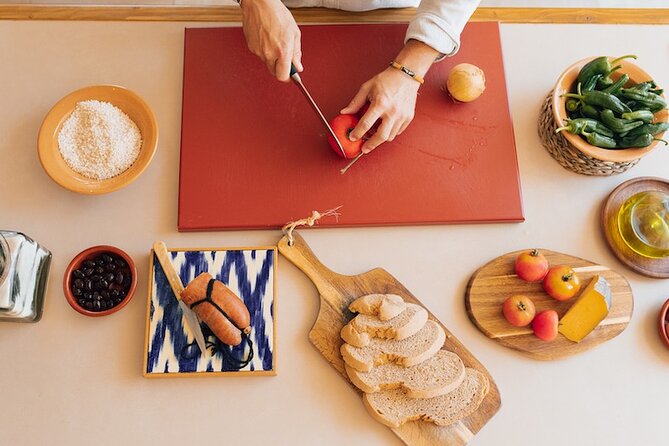
A Spanish cooking class can be hit-or-miss if it’s mostly “tasting with a bit of chopping.” Here, the dishes chosen are comfort foods with technique behind them.
Tortilla skills you can use anywhere
Spanish tortilla seems simple, but it’s a real technique dish. You’ll learn how to handle the base and how to think about texture and doneness. For home cooks, this is gold because you can adapt tortilla to what’s in your fridge.


Paella method thinking
Paella is often treated like a single recipe. In class, you’ll get a more useful framework: how to balance ingredients and how to manage progression so everything lands at the right moment. Even if you make paella on a different burner or in a different pan later, the technique mindset travels well.
Catalan cream as a confidence builder
Dessert matters here, because it teaches you that Spanish home cooking includes sweets that are not fussy. Learning Catalan cream—and the lactose/vegan adjustment—gives you a dessert option that feels “proper” without needing fancy equipment.
And yes, the sobrasada starter gives you a strong local flavor profile that you can remember. Even if you’re not eating it personally, it’s part of the full menu story of how Spanish food feels—bold, savory, and communal.
After Cooking: Unlimited Drinks and the Shared Mediterranean Table
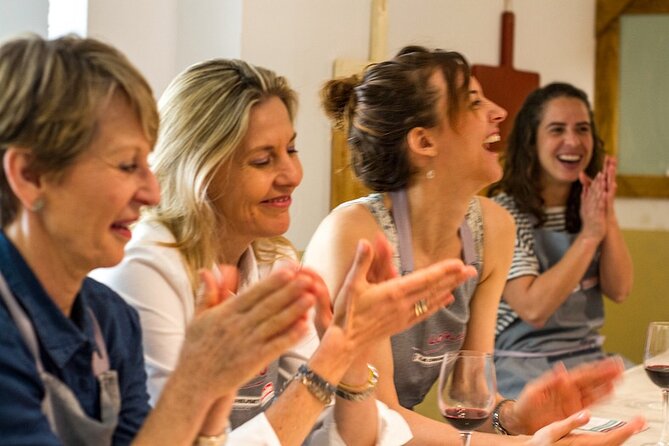
Once you finish cooking, you sit down together at a big dining table and eat the meal you made. This is where the experience stops being just a class and turns into an actual evening.
The included unlimited drinks open bar (plus bottled water) changes the whole tone. It’s not just background—people settle in, talk more, and enjoy the food as the point of the night. That matters for value, because you’re getting both a meal and a social experience, not paying only for instruction time.
This style of eating also keeps the experience grounded. Spanish food is often about timing, sharing, and conversation. You’re practicing that, not just learning theory.
Price and Value: Is $157.21 Reasonable for Mallorca?
Let’s talk money in plain terms. At about $157.21 per person for roughly 3 hours, this can be a fair deal if you value three things you actually get here:
1) A full menu, not a snack
You’re making and tasting multiple dishes: starter(s), tortilla, mixed paella, and dessert. That’s a lot of food volume for one sitting.
2) Unlimited drinks
The open bar and bottled water make the meal feel complete. If you’d otherwise spend extra on drinks with dinner in Palma, the included drinks can offset a chunk of the cost.
3) Chef-guided, hands-on time
Cooking classes are expensive when you pay for “watching.” This one is built around working together with professional instruction. If you leave with recipes you can repeat, it’s easier to justify the price.
So for me, the class is worth it if you want a real cooking session plus a real meal. If you’re looking for a quiet, sit-and-smell-only experience, you might prefer something more passive.
Getting There: Meeting Point in Ponent and Palma Parking Reality
You meet at Carrer de la Indústria, 9, Ponent, 07013 Palma. The location is near public transportation, so you can likely avoid the headache of driving into busy areas.
Parking is the catch. Palma can be tough to navigate, and you may need extra time to find a spot and walk in. If you’re driving, plan like you’re visiting during peak evening traffic, even if it doesn’t look that busy at first.
Also note: the experience ends back at the meeting point, so you don’t need to plan a separate return route. It’s one less moving piece for your schedule.
Who Should Book This Mallorca Spanish Cooking Class?
This is a great fit if you:
- Want a hands-on Spanish cooking class in Mallorca where you actually make multiple dishes.
- Like meeting people in a structured setting (and you’re okay chatting during prep and at the table).
- Eat eggs/dairy, or you’re willing to plan dietary options carefully at booking.
- Prefer English instruction and want a private group setting.
It also works well for families, since the minimum age is 6 years old. And if you’re traveling with a teen or friend group, the team-cooking format tends to keep everyone engaged.
If you’re strictly vegan, go in with clear expectations. The menu includes sobrasada starter suquet that’s not vegetarian/vegan by default, while other dishes (like Catalan cream) can be adapted with vegetable milk. You’ll need to coordinate early so you don’t end up watching portions you can’t eat.
Should You Book This Spanish Cooking Experience in Mallorca?
Book it if you want to leave Palma with more than a memory. You’ll cook a 5-dish Spanish menu, eat what you made, and do it in a unique windmill kitchen setting with a chef guide and an included open bar.
Don’t book it blindly if:
- You’re vegan and can’t or don’t want substitutions.
- You prefer a purely observational food tour (this is very hands-on).
- You hate parking stress and don’t want to plan extra time in Palma.
If you’re flexible and you like hands-on meals, this one is an easy yes. It’s the kind of class that turns Spanish food into something you can actually cook again back home.
FAQ
How long is the cooking experience in Mallorca?
It runs for about 3 hours.
What’s the price per person?
The price is $157.21 per person.
Is the tour in English?
Yes, the experience is offered in English.
Is this a private experience?
Yes. Only your group participates.
What dishes are included in the menu?
You’ll cook and taste a 5-dish menu: a welcome snack, sobrasada starter suquet, Spanish tortilla, mixed paella, and Catalan cream.
Can the class accommodate vegetarian or vegan diets?
A vegetarian option is available if you advise when booking. The sobrasada starter suquet is not suitable for vegetarians/vegans. The Spanish tortilla is suited for vegetarians but not vegans. Mixed paella can be adapted for vegetarians/pescatarians. Catalan cream contains lactose but can be adapted using vegetable milk for vegans or lactose intolerance.
Is there a minimum age requirement?
Yes, the minimum age is 6 years old.
Where do I meet, and where does it end?
You meet at Carrer de la Indústria, 9, Ponent, 07013 Palma, Illes Balears, Spain, and the activity ends back at the same meeting point.