REVIEW · SANTIAGO DE COMPOSTELA
Finisterre and Costa da Morte: The Most Complete Tour of Santiago
Book on Viator →Operated by Tour Galicia · Bookable on Viator
Finish the Camino with Atlantic air.
This Finisterre and Costa da Morte tour is built for people who want the story to keep going after Santiago, traveling by air-conditioned coach from central Compostela to the raw edge of Galicia. I like that you’re not just sightseeing single points—you connect the dots from pilgrim rituals to lighthouses, waterfalls, and fishing villages. The day also runs from a clear departure hub in Santiago, with a bilingual guide and a structured schedule that keeps you moving without rushing you through everything.
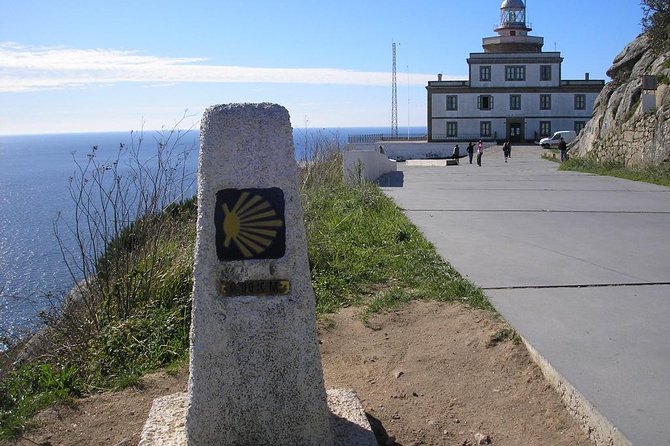
Two things I especially like: you hit the biggest pilgrimage markers, including Faro de Fisterra (the lighthouse at Finisterre) and the Santuario da Virxe da Barca at Muxía. I also like the practical design of the itinerary: multiple stops are timed for viewing plus enough free time to reset and actually enjoy lunch and the towns, not just stand and stare out a bus window.
One drawback to consider: if your English is important, pay attention to guide clarity. A small number of experiences flagged that spoken English can be hard to follow on some days, even though the tour is offered in English with a bilingual setup.
In This Review
- Key things to know before you go
- Why Finisterre and Costa da Morte feel like a second finish line
- Price and what you actually get for $59.26
- The coach day: 9:00 am start, a full schedule, and what to expect
- Stop 1: Ponte Maceira and the “finish” feeling starting early
- Stop 2: Santuario da Virxe da Barca and the pull of the sea
- Stop 3: Pedra D’Abalar and Pedra dos Cadris at Muxía
- Stop 4 + Stop 5: Finisterre timing, lunch, and the lighthouse region
- Stop 6: Fervenza de Ezaro, waterfalls, and pre-Roman legends
- Stop 7: Horreo de Carnota and why these granaries are icons
- Stop 8: Muros and the estuary world of bateas
- The guide matters: what good bilingual explaining does for this route
- How to make this day smoother (and more enjoyable)
- Who should book this tour, and who might want something else
- Should you book Finisterre and Costa da Morte from Santiago?
Key things to know before you go
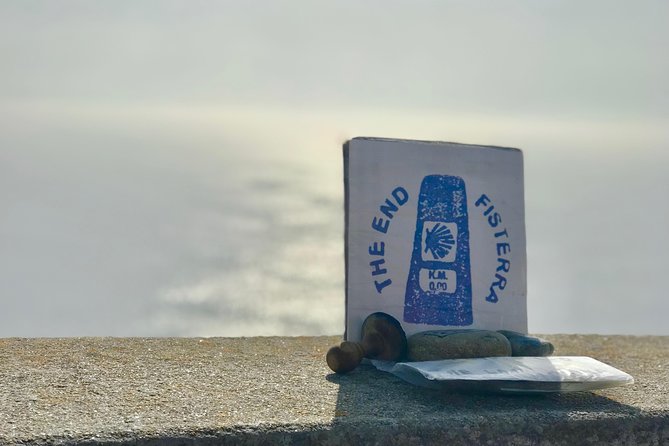
- End-of-the-world pilgrimage stops: Finisterre, Muxía, and related legends tied to the Camino.
- Multiple coastal “types” of views: cliffs and lighthouse at the coast, plus estuaries at Muros.
- A real lunch window in Finisterre: time to eat in the village without the meal feeling squeezed.
- Air-conditioned coach with an organized schedule: easier than DIY driving on narrow roads.
- Weather-dependent day: it’s better when the Atlantic behaves.
- Long day energy: you’ll get a lot done, but it’s still mostly a coach schedule.
Why Finisterre and Costa da Morte feel like a second finish line
There’s a special feeling in finishing the Camino. Then you look at a map and realize Galicia still has one more dramatic chapter: Costa da Morte, the rugged coast where the ocean looks close enough to spill into your shoes.
That’s what makes this tour different from a simple coast drive. You’re not only chasing pretty scenery. The stops are chosen around pilgrimage meaning—places that pilgrims historically connect with the end of the route and with legends tied to the sea. Even the timing makes sense for that theme: you start near Compostela with the Roman-bridge legend energy, then the day progressively leans harder into ocean power.
If you’ve already walked days (or weeks) and you want a day that feels like a “closing ritual” rather than a random checklist, this is aimed right at that.
You can also read our reviews of more tours and experiences in Santiago de Compostela.
Price and what you actually get for $59.26
At $59.26 per person, this isn’t an extravagant price for a 9.5-hour day out of Santiago. The value is in what’s bundled:
- Transportation by air-conditioned coach
- An English and Spanish tour guide
- Insurance
- A structured route with time at multiple major stops
What’s not included is also clear: lunch and drinks (unless your guide mentions value-added offers). So you’ll want to budget for a meal in Finisterre. For me, that’s normal and fair on a day like this, because it gives you flexibility to eat what looks good in the local area instead of being locked into a set menu.
The best way to think about value here: you’re paying to avoid the headache of coordinating driving, parking, and timing across several coastal towns that aren’t next door to each other.
The coach day: 9:00 am start, a full schedule, and what to expect
This tour starts at 9:00 am in Santiago de Compostela and runs about 9 hours 30 minutes. The tour group is capped at 55 travelers. That size is large enough to keep the cost down, but small enough that the guide can usually manage the group at stops.
Expect an easy rhythm: the guide explains before key sights, you get time to walk around, and then you settle back into the coach. Several stops are marked as free admission, so you’re mostly paying in time and effort—climbing stairs when needed, walking uneven ground, and standing for views when the best angles are brief.
Also, note that the tour is described as requiring good weather. If conditions are rough, the operator may move you to another date or offer a full refund—Atlantic weather can change quickly, especially along Costa da Morte.
Stop 1: Ponte Maceira and the “finish” feeling starting early
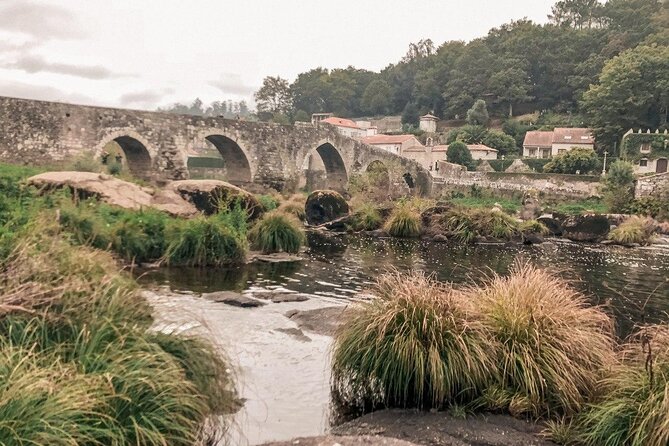
Your first stop is Ponte Maceira, a Roman bridge (Pontemaceira). It’s a smart opener because it anchors the day in the Santiago story, before you hit the bigger ocean drama.
What you’ll likely appreciate here is the contrast. Santiago and the Camino themes often feel spiritual and inland. Then you see a Roman bridge—solid and old—used as a “first note” in the Finisterranean journey toward the end of the world. There’s also time set aside for viewing and for hearing legends tied to Santiago.
Practical tip: bring a jacket or layer even if Santiago looks mild. Coastal Galicia can feel cooler in the morning, and bridges don’t offer much shelter.
Stop 2: Santuario da Virxe da Barca and the pull of the sea
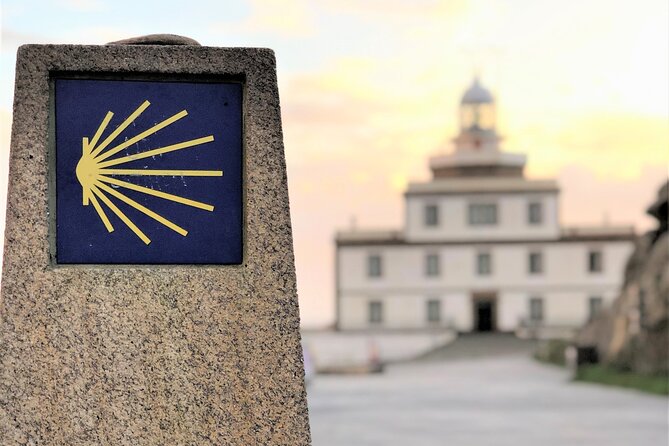
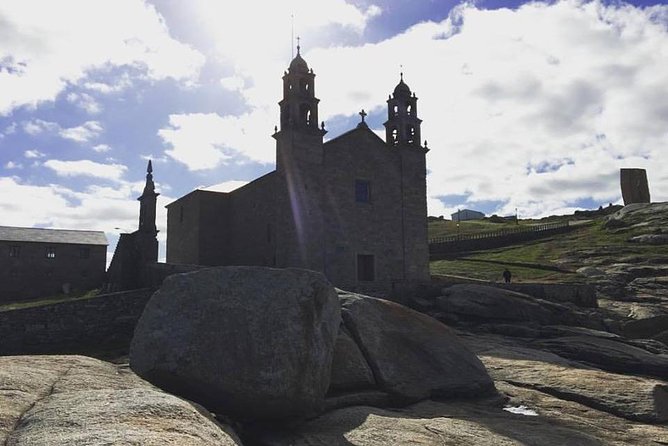
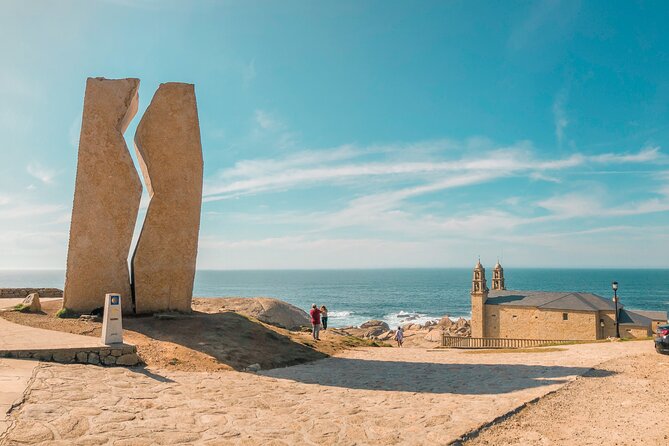
Next comes Santuario da Virxe da Barca. This is one of the pilgrimage landmarks around the Santiago route connections, especially for anyone who is thinking about the ocean as more than scenery.
The stop matters because it’s presented as a place pilgrims came for symbolism—strength of the ocean, plus local legends about the arrival of Santiago and the Apostol. Even if you’re not religious, the storytelling gives you a framework to understand why pilgrims considered these spots part of a spiritual geography.
Time is listed as about 45 minutes. That’s enough to take in the setting, absorb the guide’s explanation, and still have a calm moment without feeling rushed.
Stop 3: Pedra D’Abalar and Pedra dos Cadris at Muxía
Then you shift into Muxía territory with a visit that includes Pedra D’Abalar and Pedra dos Cadris.
These stones are treated as venerated objects with a history valued by local people. The tour even calls out the idea of local rituals you can try—so this isn’t only “look but don’t touch.” You get a chance to understand the cultural behavior around the stones and how locals keep the story alive.
The main consideration: stone sites can be windy, and footing can be uneven. Wear shoes that won’t punish you for a few minutes of uneven ground.
Stop 4 + Stop 5: Finisterre timing, lunch, and the lighthouse region
After Muxía, you head toward Faro de Fisterra and the Finisterre area. There are two related chunks here:
1) A lunch stop at the village of Finisterre (around 45 minutes allotted for that area).
2) Then more time in the town afterward (listed as about 1 hour 30 minutes).
That structure is practical. It means you’re not forced to eat while your brain is overloaded with cliff views. You can stop, eat, then come back into the mindset needed for the lighthouse and the end-of-the-world atmosphere.
Even though the tour doesn’t include lunch, it explicitly frames the village as a place with local gastronomy and prices that are appropriate. Translation: plan to spend your money there. This is exactly the kind of lunch stop where you should order something local and keep it simple, because you’ll be walking and looking for hours after.
Stop 6: Fervenza de Ezaro, waterfalls, and pre-Roman legends
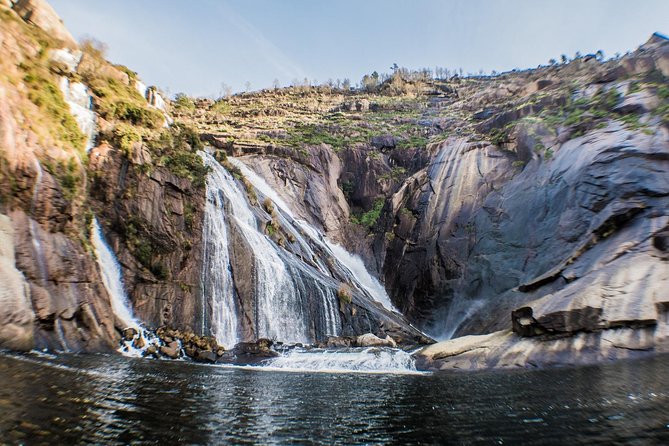
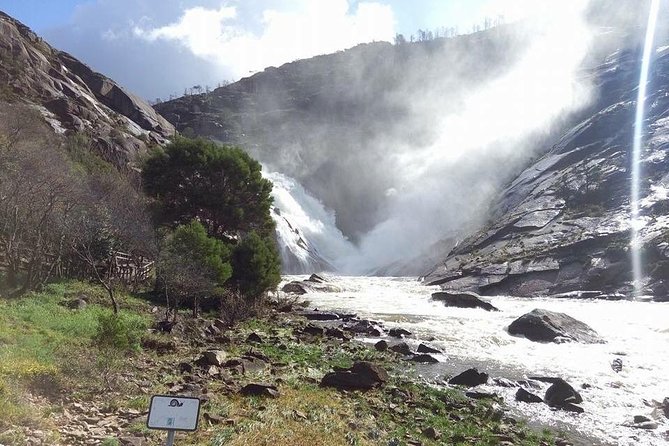
Next is Fervenza de Ezaro, the Ezaro waterfall. The tour description connects it to pre-Roman culture and local legends—again, meaning over pure sightseeing.
What’s nice about this stop is that it breaks the day into a different energy level. After cliffs, sanctuaries, and stones, you get motion. Water changes the way a place feels, and it also tends to offer “wow” visuals that don’t require a long hike.
Plan on a shorter viewing time (about 40 minutes). That’s enough to get a few angles, listen for the story the guide shares, and still keep the schedule intact.
If it’s rainy, don’t assume the magic disappears. You might find the waterfall is more forceful. The main issue is comfort: wind and mist are real along the coast.
Stop 7: Horreo de Carnota and why these granaries are icons
Then the itinerary shifts inland a bit with Horreo de Carnota—a large horreo granary. This is one of those Galicia details that you’d miss if you only cared about ocean cliffs.
Horreos are recognizably Galician: raised wooden-and-stone granaries built to protect food stores. The tour gives you the why, not just the sight. You learn how useful these buildings were and why they became a symbol of Galician society.
Time here is short (around 30 minutes), but it adds something meaningful to the day. You finish with more than photos of coast. You walk away understanding a working piece of local life.
Stop 8: Muros and the estuary world of bateas
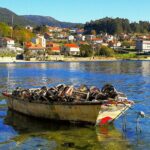
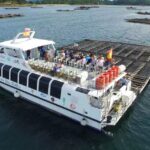
The last major coastal stop is Muros, with views related to the southern estuaries of Galicia. The tour highlights bateas, the sea platforms used to cultivate mussels, oysters, and scallops.
This is a great final theme because it takes the ocean from legend into livelihood. You’re reminded that this region’s beauty is also tied to real work: fishermen and aquaculture on the sea’s edge.
The time is about 30 minutes. It’s enough for viewpoints and for the guide’s explanation, without turning the day into another long walk.
The guide matters: what good bilingual explaining does for this route
For a day like this, the guide isn’t optional. You’re moving between places that have legends attached, and those legends are the thread that keeps the story coherent.
On this route, Maria is a name that comes up often, and the comments associated with her emphasize that she balances the amount of information so you don’t feel overloaded. She’s also described as staying engaged with questions during the day, which matters if you want to connect what you saw today with what you walked on the Camino.
One reality check: a few experiences mentioned difficulty understanding English on specific days. So if you’re relying on English for the “why” behind each stop, arrive ready to ask for clarification. Good guides will happily repeat a point or reframe it when needed.
How to make this day smoother (and more enjoyable)
A full-day coach tour works best when you treat it like an intentional day out, not a sprint.
- Dress for changeable coastal weather: layers beat one thick coat.
- Bring comfortable walking shoes: you’ll move around at multiple locations.
- Plan your lunch budget: lunch is not included, and the best time to eat is when the schedule gives it to you.
- Keep an eye on the meeting point details: the tour info lists Santiago addresses including Plaza de Galicia and R. de Montero Ríos, so it’s smart to check the exact pickup location shown on your materials and give yourself a little extra buffer.
- Know coach rules can be strict: one account described being made to finish a coffee before boarding. Not every day will be the same, but assume the driver’s rules for food and drink may be enforced.
If you do those things, the day tends to feel relaxed rather than chaotic.
Who should book this tour, and who might want something else
This tour fits best if you:
- Finished the Camino and want Finisterre and Muxía as a meaningful next step.
- Want history and legend explained while you travel by coach.
- Like the idea of seeing multiple coastal and cultural stops in one day.
It may not fit if you:
- Hate long coach time. This is a “see a lot” itinerary, so expect plenty of bus travel between highlights.
- Need perfectly consistent English narration with zero chance of misunderstanding. The tour is offered in English with a bilingual guide, but some experiences noted communication issues on certain days.
Should you book Finisterre and Costa da Morte from Santiago?
If your goal is a single, well-structured day that connects Santiago to Finisterre, through the pilgrimage-shaped stops of Muxía, and ending with a broader view of Galicia’s coast and seafood culture, then yes, I think this is a solid choice.
Book it when you want:
- A guided route that reduces planning stress.
- Enough time at major places to feel like you actually visited, not just passed through.
- A post-Camino day that feels like a ritual closure.
Skip it or consider alternatives if you:
- Can’t handle long days and coach time.
- Are sensitive to language clarity and need very strong English narration without any risk.
Either way, this is the kind of tour where the weather matters. If the Atlantic gives you decent visibility, the end-of-the-world feeling is the main reason you’ll remember the day.