REVIEW · SANTIAGO DE COMPOSTELA
From Santiago: Tour To Finisterre, Muxia & Costa da Morte
Book on GetYourGuide →Operated by Galicia Travels · Bookable on GetYourGuide
Galicia has a way of making you slow down. This one-day tour from Santiago throws you from Camino calm into wild Atlantic cliffs at Finisterre and Muxía. You get guided stops, photo time, and breathing space to wander coastal towns without feeling rushed.
I especially like the mix of big “end-of-the-world” symbols and smaller, very human details. You’ll stand at the lighthouse viewpoints and the famous 0 Km stone, then later slow down for places like Ponte Maceira and the Carnota hórreo. The guide approach matters too: you’re not just dropped off, you get explanations in English/Spanish, plus optional audio in many other languages.
One consideration: it’s a long day (about 9.5 hours), and some stops are short enough that you’ll want to choose your priorities fast. Also, lunch and drinks aren’t included—you’ll need to budget for a seafood meal if you go for it.
In This Review
- Key things I’d plan around
- Costa da Morte in one day: why it feels special
- Morning pick-ups: where to meet and how not to miss the bus
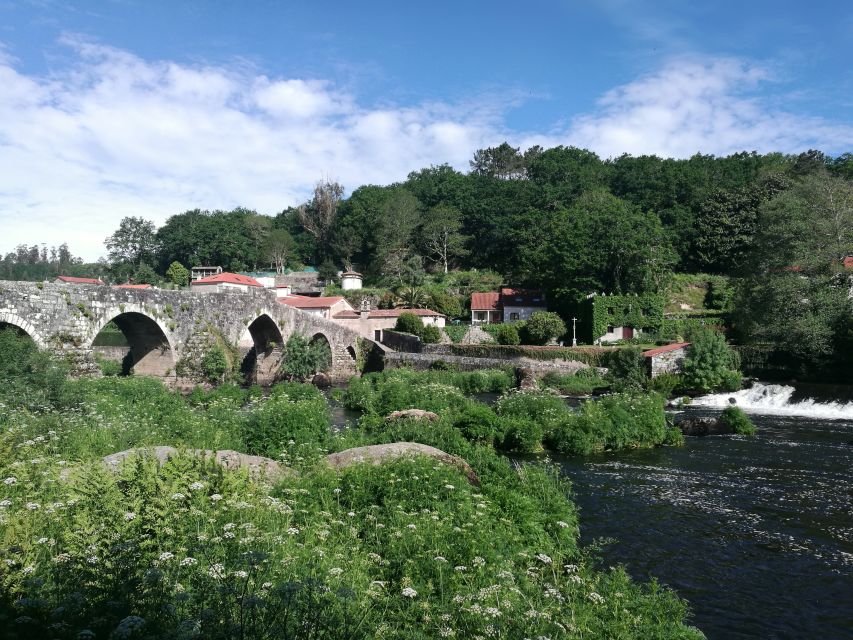
- Ponte Maceira: a peaceful Camino bridge stop
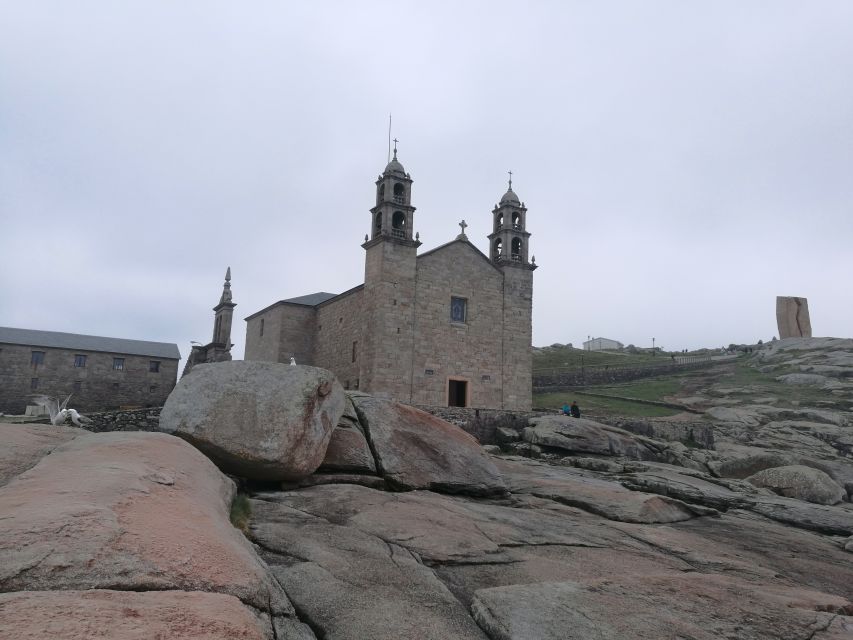
- Muxía and the Sanctuary of the Virgin of the Boat
- Cape Finisterre and the 0 Km stone: the pilgrimage finish vibe
- Fisterra (Finisterre town): harbor time and seafood lunch options
- Ézaro Waterfall (Fervenza do Xallas): the river meets the ocean
- Carnota hórreo and Muros: rural heritage then a calmer return
- How the guides and audio options make the day click
- Price and value: what you really get for about $58
- Who should book this Finisterre–Muxía–Costa da Morte day trip
- Should you book it or keep looking?
- FAQ
- How long is the tour from Santiago?
- What pickup options are available in Santiago?
- What stops does the tour include?
- Is lunch included?
- Is the tour physically demanding?
- What languages are spoken by the guide?
- Do I need to bring earphones for the audio guide?
- Is the tour wheelchair accessible?
- What happens if I don’t choose a pickup point?
Key things I’d plan around
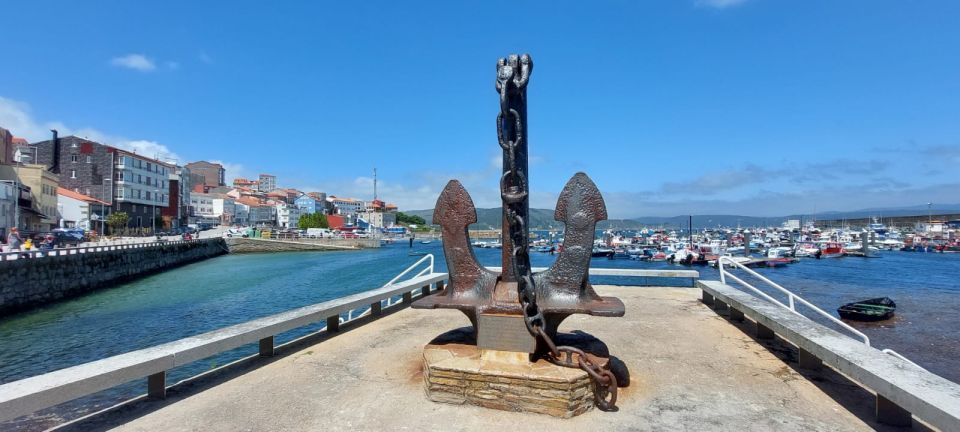
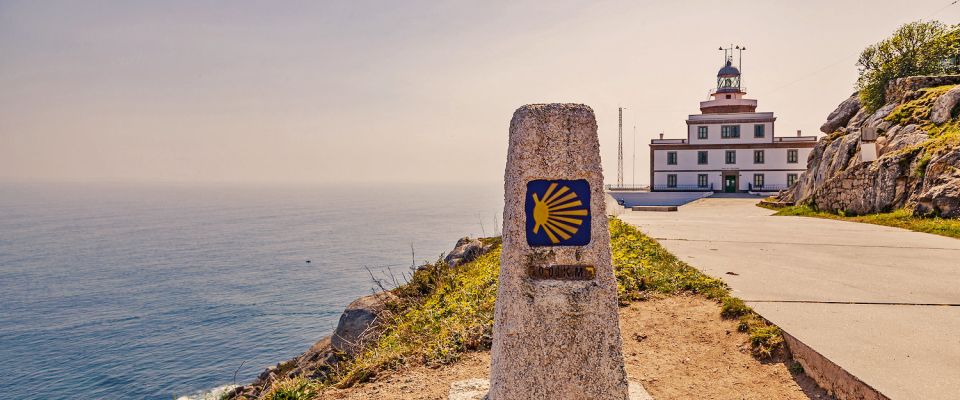
- Cape Finisterre + the 0 Km stone: the pilgrimage “finish line” vibe, with ocean views from the lighthouse area
- Muxía and the Sanctuary of the Virgin of the Boat: dramatic sea-cliff setting tied to maritime tradition
- Ézaro Waterfall (Fervenza do Xallas): a rare “river into the ocean” scene for photos and quick walks
- Fisterra town time: real free time by the harbor, including an option for seafood lunch
- Carnota hórreo: one of the largest traditional stone granaries in Galicia
- Muros on the ría: a calmer, coastal-town wind-down before heading back
Costa da Morte in one day: why it feels special
Costa da Morte (roughly, the coast of harsh Atlantic weather and legend) is the kind of place that makes you understand Galicia as more than one city. From Santiago, this tour gives you a fast route into the coastline’s drama—cliffs, sea spray, fishing villages, and the pilgrim geography that ends at Finisterre.
What makes this itinerary work is the balance. You get the headline moments (lighthouse area, Muxía sanctuary, the Ézaro waterfall), but you also get stops that show how people lived—Camino villages and the hórreo grain-storage architecture of rural Galicia.
You can also read our reviews of more tours and experiences in Santiago De Compostela.
Morning pick-ups: where to meet and how not to miss the bus
This tour is designed for an easy hotel-to-coach day, with pickup and drop-off included. You have three pickup options, so pick the one closest to you:
- 8:45 AM at Galicia Travels (Rúa das Casas Reais 31)
- 9:00 AM at Capilla del Pilar (Avenida de Xoán Carlos I)
- 9:05 AM in front of Hotel Hesperia Peregrino (Avenida de Rosalía de Castro)
Do the simple thing: arrive at least 10 minutes early. Also, the company confirms the meeting point by WhatsApp 1–2 days before the trip, so message them back if they ask you to confirm where you’ll meet.
If you don’t select or communicate your pickup point, the default is Galicia Travels before 8:45 AM. That’s the one small “gotcha,” and it matters because the day starts promptly.
Ponte Maceira: a peaceful Camino bridge stop
Your day opens with Pontemaceira (listed as Ponte Maceira), a rural village and a Camino point. You get a guided visit and a walk (about 25 minutes), including crossing a medieval stone bridge over the Tambre River.
This stop is a breather before the coastline chaos. If you’ve just finished a Camino segment, it’s the right kind of quiet: you’re not “performing tourism,” you’re getting a feel for the human scale of the route that brought people here.
Practical note: it’s a short walk and the tour is described as not physically demanding, but you still want comfy shoes. Even the gentle walking adds up over a 9.5-hour day.
Muxía and the Sanctuary of the Virgin of the Boat
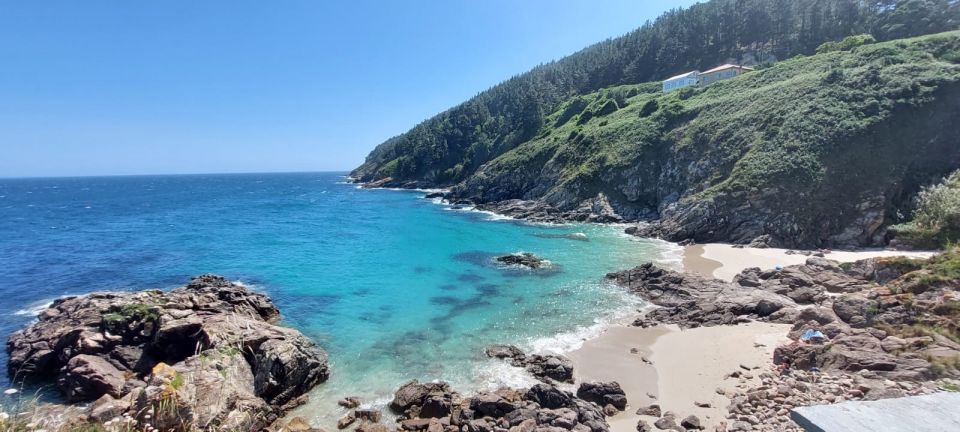
Muxía is the first big coastal wow of the day. You’ll have about 45 minutes here, with time for photos, a guided visit, and some free wandering.
The centerpiece is the Sanctuary of the Virgin of the Boat, perched in a dramatic setting where the Atlantic meets jagged rock. This is one of those places where the scenery and the stories match. The sanctuary is tied to Galicia’s maritime culture—legends, miracles, and the way seafaring communities interpret safety, weather, and faith.
I like that this stop isn’t just “take a picture and leave.” You get guided context, then you can spend a bit of time looking out over the coast and deciding what angle feels best for you.
Cape Finisterre and the 0 Km stone: the pilgrimage finish vibe
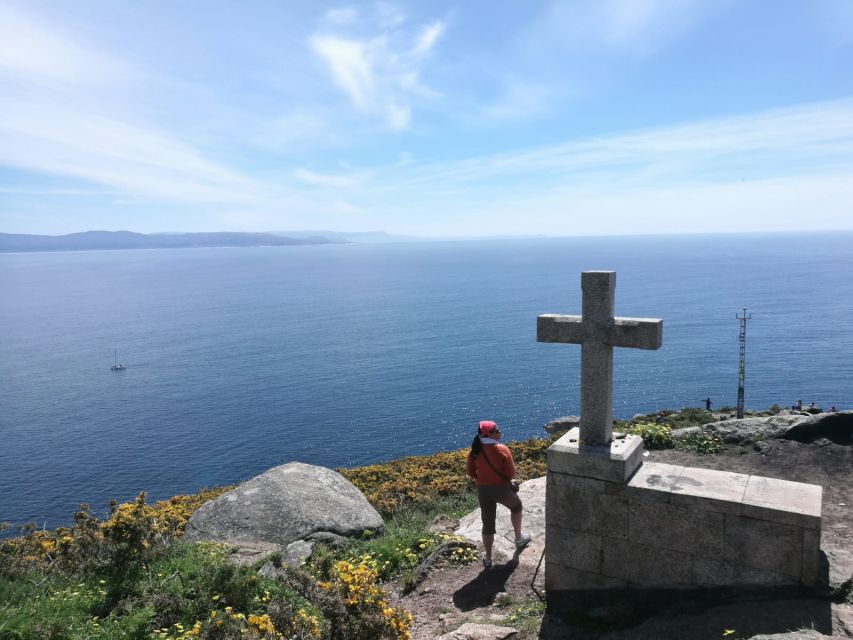
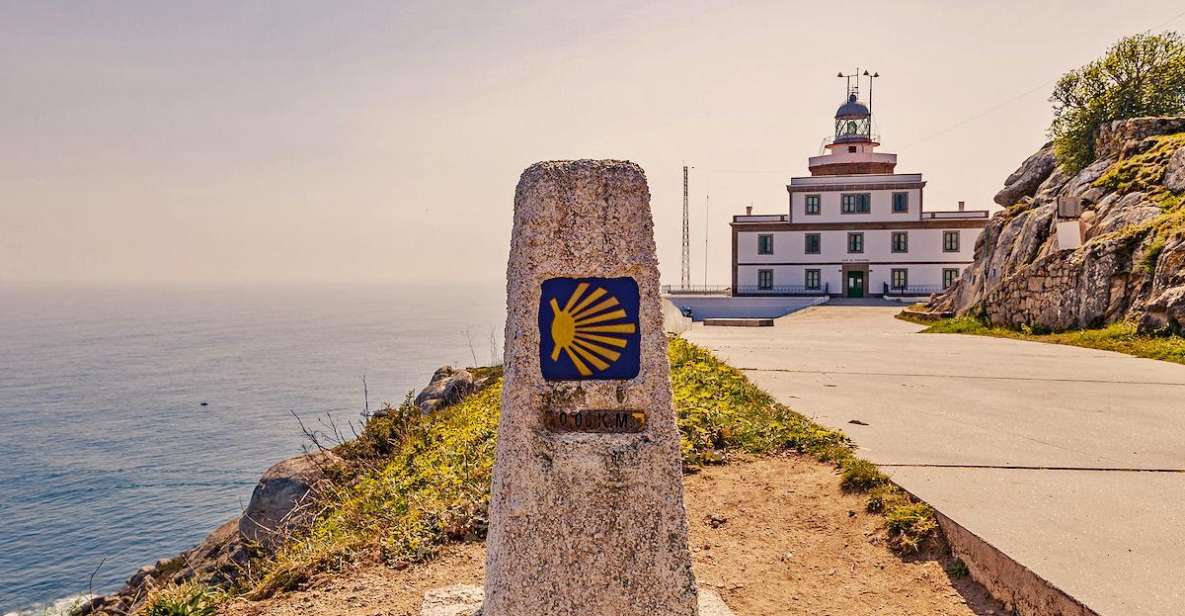
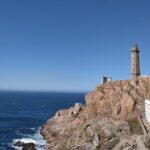
Cape Finisterre is where the tour earns its reputation. You’ll reach the lighthouse area with a guided visit and photo time, plus free time and shopping in the town area nearby.
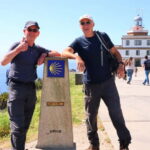
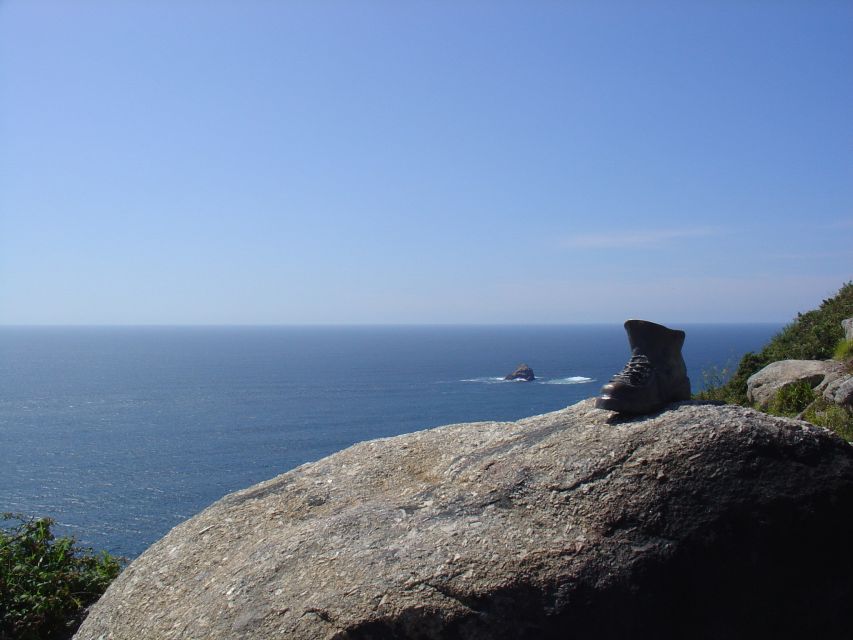
Expect big ocean views from the Finisterre lighthouse area. This is also where you see the famous 0 Km Finisterre stone, a symbolic marker for travelers who extend the Camino beyond Santiago. Even if you don’t care about symbolism, the location itself does the work: wind, water, cliff edges, and that sense of reaching the edge of what’s mapped in your head.
Timing matters here. You have around 45 minutes at Cape Finisterre, so if you want both lighthouse views and a quick look around, plan to move with purpose after the guided part. You’re not aiming for a deep museum-style visit—you’re aiming for the view and the moment.
Fisterra (Finisterre town): harbor time and seafood lunch options
After the lighthouse stop, you get a longer break in Fisterra town. This is your main “wander and eat” window, about 100 minutes total, with guided visit, coffee option, and lunch time (lunch is not included, but you’ll have time to choose).
This is a real fishing-town feel: harbor views, small shops, and plenty of people-watching potential. If you want a seafood lunch, this is the most natural place to do it. The guide will be available to recommend what to order, and the free time gives you flexibility if you want a lighter meal or just want to browse.
My tip: don’t leave the eating decision until the last 15 minutes. Sit down when you see a place that feels comfortable, order something local if you’re feeling brave, and save your energy for the next coastal stops.
Ézaro Waterfall (Fervenza do Xallas): the river meets the ocean
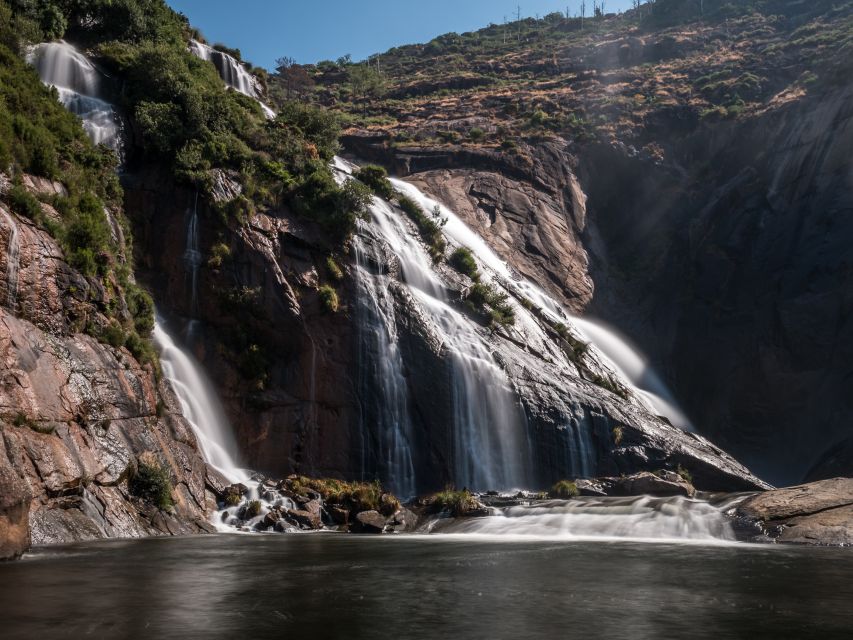
Next up is Fervenza do Xallas, listed as the Ézaro Waterfall. This is one of Europe’s rare “river flows into the sea” scenes—exactly the kind of detail that makes the photo work even for people who don’t think they’ll take photos.
You’ll get about 40 minutes here: a photo stop, guided info, and free time. It’s not described as strenuous, but it’s long enough to walk to vantage points depending on how the viewing areas are set up that day.
If rain happens, coastal places still keep their character. Water creates more motion, and the waterfall experience tends to feel more dramatic. Just keep an eye on footing if paths are wet.
Carnota hórreo and Muros: rural heritage then a calmer return
Carnota is a quick but meaningful architecture stop. You’ll spend about 15 minutes at the Hórreo de Carnota, with a guided visit and sightseeing time.
These stone granaries (hórreos) are a strong symbol of Galicia’s agricultural heritage. The cool part is that it’s not a “big monument” you stare at from far away. You’re close enough to understand it as a functional object—storage built for local conditions, not a decorative afterthought.
Then the tour finishes with Muros, about 40 minutes. You’ll have a break with photo opportunities, guided visit, and free time, plus a scenic coastal drive in the Ría of Muros area on the way back.
Muros is a nice contrast. After cliffs and ocean drama, it’s easier to slow down, look around, and let the day settle. If you want one last stroll without racing the clock, this is the time.
How the guides and audio options make the day click
This tour runs with a local guide on board and offers audio guides via QR code on your phone. You’ll want to bring your own earphones so you can switch between guide talk and audio whenever it’s helpful.
Languages offered for the live guide are English and Spanish. Audio options listed include Chinese, French, German, Italian, Korean, Portuguese, and Polish. If you prefer a physical device, you can request one, but it’s subject to device availability and comes with a rental fee of €3.
One more practical point: good tour days aren’t just about destinations—they’re about timing and explanations. Guides on this route have a reputation for mixing real context with humor, and the pacing generally stays on schedule. It’s also clear that the driver matters. A smooth ride reduces the fatigue, especially once you’ve had multiple stops and photo moments.
Price and value: what you really get for about $58
At around $58 per person, this day trip looks inexpensive when you compare it to the cost of doing the same route with taxis or multiple one-way bus tickets. The price includes:
- Hotel pickup and drop-off
- Air-conditioned bus transportation
- A guide
- Insurance
- Skip-the-ticket-line support
- Audio guide access (with phone QR, or optional physical device)
You just pay extra for food and drinks. The tour does include a lunchtime stop in Fisterra with enough time to eat, but lunch itself isn’t included.
So how do you judge value? If you’re staying in Santiago and want the full Costa da Morte highlights in one structured day, the bundled logistics are the value. You’re paying to avoid route planning, transfers, and figuring out where to stop for the best views.
If you like to travel “wild and free,” you can DIY parts of this coastline. But for most people, the real win here is that you see the major sites without spending your day coordinating transportation.
Who should book this Finisterre–Muxía–Costa da Morte day trip
This tour is a strong fit if you:
- finished Camino in Santiago and want a meaningful “next step” without another long walking day
- want coastal drama and iconic points of interest in one packed outing
- prefer guided context (legends, maritime tradition, local architecture) over reading about it later
- like the idea of built-in free time for photos and meals, not just continuous museum-style touring
It’s also suitable if you’re not in a walking mood. The tour says it doesn’t require physical effort and doesn’t involve large amounts of walking.
If you’re the type who always wants maximum time at every stop, you might feel the schedule is tight—some places are shorter than you’d wish. Still, the overall pacing is designed to keep the day moving without making it feel chaotic.
Should you book it or keep looking?
I’d book this if you want a one-day hit of Finisterre, Muxía, and Ézaro Waterfall, with real chances to pause, photograph, and eat in a fishing town. The combination of guided interpretation, comfortable transport, and the sequence of coastal highlights is exactly what makes a day trip feel worth it.
I’d think twice if your ideal day is slow, with hours in just one or two places. This route is more about coverage and momentum. Also, budget for lunch and drinks, because the food part is on you.
If you want an efficient, meaningful way to experience the Costa da Morte from Santiago, this tour does that job well.
FAQ
How long is the tour from Santiago?
It runs for about 9.5 hours.
What pickup options are available in Santiago?
Pickup is offered at Galicia Travels (8:45 AM), Capilla del Pilar (9:00 AM), and in front of Hotel Hesperia Peregrino (9:05 AM).
What stops does the tour include?
You’ll visit Pontemaceira, Muxía, Cape Finisterre, Fisterra town, Ézaro Waterfall (Fervenza do Xallas), the Hórreo de Carnota, and Muros.
Is lunch included?
No. Food and drinks are not included, but there is time to eat in Finisterre at lunchtime and the guides can recommend places.
Is the tour physically demanding?
No. The tour is described as not requiring physical effort and not involving large amounts of walking.
What languages are spoken by the guide?
The live tour guide is available in English and Spanish.
Do I need to bring earphones for the audio guide?
Yes. Audio guides are accessed via QR code on your mobile, and you’ll need your own earphones.
Is the tour wheelchair accessible?
Yes, it is listed as wheelchair accessible.
What happens if I don’t choose a pickup point?
If no pickup point is selected or communicated to the agency, the default meeting point is the Galicia Travels office before 8:45 AM.