REVIEW · SANTIAGO DE COMPOSTELA
Excursion to Rias Baixas with Winery – Optional mussel boat
Book on Viator →Operated by Galicia Travels · Bookable on Viator
Rías Baixas is a seafood-and-wine kind of day. This tour strings together seaside villages and a real Albariño experience, then (if you choose it) delivers the big payoff: a mussel-farm boat with steamed mussels and local wine. You’ll see how Galician coast life actually runs, not just pretty postcards.
I especially like the way the day mixes food with place. O Grove gives you sea views and an easy window for eating, while Combarro and the shell-covered stops add that distinct “old Galicia” feel without feeling like a museum day.
One heads-up: the schedule is outdoors-heavy, and the day can swing with rain and wind. Also, while English support is generally available, some moments (especially on the water) can have more Spanish than you’d like.
In This Review
- Key things to know before you go
- Entering Rías Baixas from Santiago: how the day starts
- O Grove first: sea views and a real chance to eat
- La Lanzada Chapel: old stone, coast air, and a short walk
- Combarro: granaries, crosses, and a town built over rock
- Isla de la Toja: soap history, shells, and a UNESCO-ish feel
- O Grove mussel boat: the part you’ll actually talk about
- Lagar de Besada winery: Albariño in a small, family-style setting
- Timing and pacing: what the long day feels like
- Price and value: is $50.81 worth it?
- English on the day: what to expect from guides
- Who this Rías Baixas tour suits best
- Should you book this Rías Baixas day trip?
- FAQ
- FAQ
- How long is the Rías Baixas day trip from Santiago?
- What time does the tour start and where does it meet?
- Are there pickup options besides the Galicia Travels office?
- Is the mussel boat included?
- What’s included in the price?
- What is not included?
- What happens if weather is poor?
Key things to know before you go
- Optional mussel boat = the highlight: it’s where you get the farm-viewing and the unlimited steamed mussels feel most “event-like.”
- Albariño tasting happens in a real cellar: short, but focused on how the region’s grapes become the wine you’ll be drinking.
- Shells and 9th-century coast history: the chapel stop is small, scenic, and different from standard sightseeing.
- Multiple pickup options: make life easy by matching your hotel/area pick-up and confirming by WhatsApp.
- Max group size is reasonable: up to 55 people, plus private transport, so it’s not a chaotic cattle-car situation.
Entering Rías Baixas from Santiago: how the day starts

The trip runs from 10:00 am out of Santiago and circles back to the same general meeting area. Total time is about 9 hours 30 minutes, which is long enough to feel like you left the city for good, but not so long that you’re dead on arrival.
You’ll ride in an air-conditioned vehicle with private transportation. That matters here because you’ll spend a chunk of the day on roads moving between coastal stops—plus the Atlantic weather can change fast, so you’ll want comfort for the in-between time.
Pickup is flexible. You can start from the Galicia Travels office, a chapel stop (Chapel del Pilar), or in front of the Exe Peregrino Hotel. Galicia Travels will message you on WhatsApp 1–2 days before to confirm the exact place and time, so don’t treat that as optional background noise.
You can also read our reviews of more boat tours in Santiago de Compostela
O Grove first: sea views and a real chance to eat
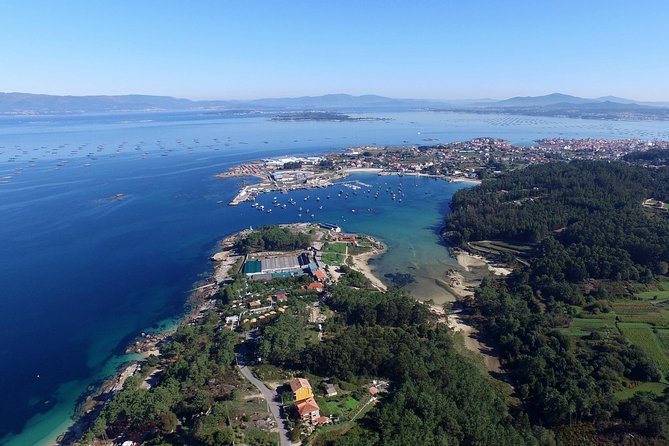
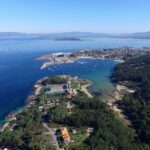
O Grove is one of the places that explains the nickname of this whole region: seafood country. You’ll have about 1.5 hours here, and it’s set up for you to grab lunch on your own with a sea view.
This stop is smart because it gives you control. Some tours rush lunch and leave you hungry and stressed. Here, you can pick what you actually want to eat before the later boat-and-tasting portion. Even if you’re not ordering seafood right away, the town atmosphere plus coastal views set the tone.
The practical tip: plan your pace. If you arrive and immediately start snack-hunting, you may feel heavy later when the boat brings the “unlimited” part. If you arrive hungry, you’ll do fine—just don’t overdo it on the first seafood platter.
La Lanzada Chapel: old stone, coast air, and a short walk
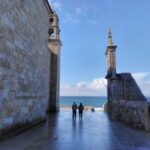
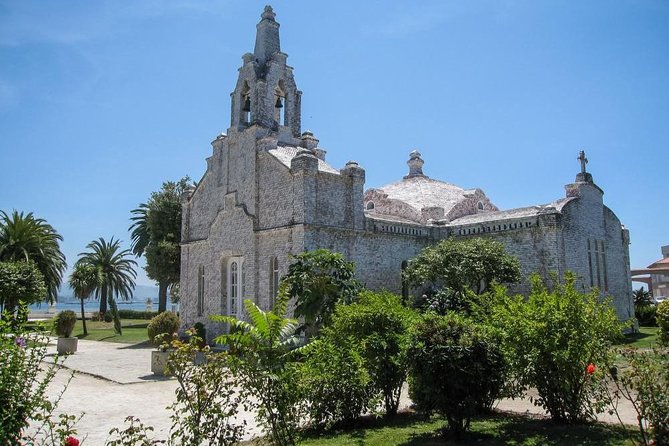
The Capilla de Nuestra Señora de La Lanzada is the kind of stop that turns a travel day from “driving from place to place” into “walking and noticing.” It dates back to the 9th century, and it sits right by an admired beach—so you’re mixing history with Atlantic scenery.
You’ll have about 25 minutes here. That includes time for the walk and for taking it in at a relaxed pace. It’s also known for popular moonlight rituals, which makes the place feel alive rather than purely historical.
If weather is bad, this is still doable, but keep your expectations realistic. This is not a long museum visit with indoor options; it’s a coastal chapel-and-walk stop.
Combarro: granaries, crosses, and a town built over rock
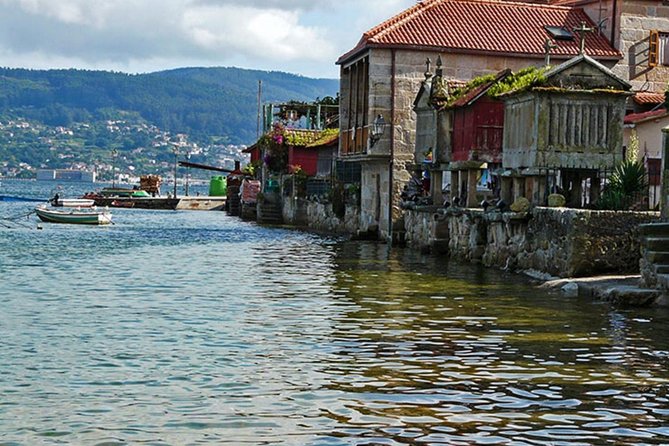
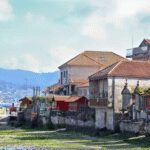
Combarro feels like a living postcard because it is—without becoming fake. The town sits along the Ría de Pontevedra, and the big visual markers are the giant rock, the granaries, the sea-facing houses, and those stone crosses called Cruceiros.
You get around 45 minutes, which is enough time to walk the lanes and squares without feeling rushed. The best part here is how everything reads at street level: you’re seeing how the coast and fishing life shaped the built environment.
The only “consideration” is time management. Combarro is the kind of place where you keep turning left and then suddenly 20 minutes vanish. That’s not a problem—unless you feel your schedule slipping later. If you’re the type who hates being late, set a soft turnaround time for yourself before you wander too far.
Isla de la Toja: soap history, shells, and a UNESCO-ish feel
Isla de la Toja is a small island stop that adds variety. It’s known for soap production and thermal waters, and it sits in an area called Red Natura 2000. You’ll also see a small museum connected to the old soap factory and a chapel covered in shells.
Expect about 30 minutes. That’s enough to see the main sights, stretch your legs, and take a break between bus legs. The shell chapel is the kind of visual you remember later, especially after you’ve been staring out at sea views for hours.
If you’re someone who likes “brief but meaningful” stops, this fits. If you want long guided immersion, you may wish you had more time here—but the rest of the day already loads up on highlights.
You can also read our reviews of more wine tours in Santiago de Compostela

O Grove mussel boat: the part you’ll actually talk about
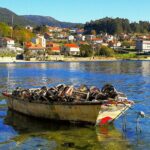
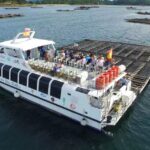
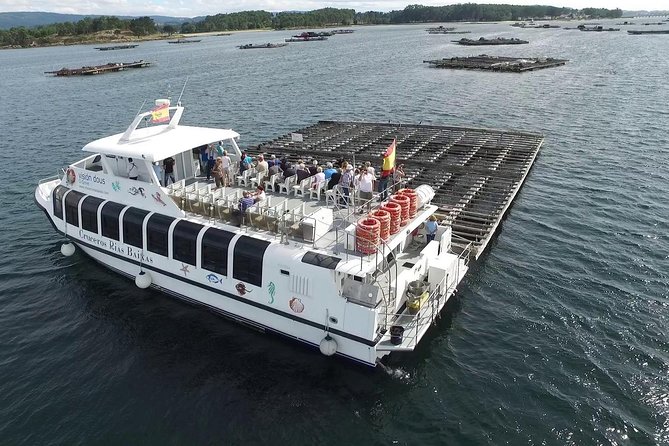
This is the reason many people upgrade. The mussel boat portion focuses on how mussels are produced in the Rías. You’ll get multiple stops to view the troughs and farming setups up close, then you’ll taste a big meal on board.
The tasting is the payoff: steamed mussels, accompanied by local wine, plus a shot of Crema de Orujo. One of the best practical notes from the experience is that the boat crew keeps the plates coming—so you’re not forced into tiny portions.
What makes it memorable isn’t only the food. It’s the combination of sea work and fun: modern boat vibes, music reported by some groups, and even dancing when the weather turns. You might spot dolphins nearby too, depending on conditions (that’s not guaranteed, but it’s been seen during this type of trip).
If you don’t book the boat, you miss the highlight and the unlimited mussel meal. The rest of the tour still has charm—villages, chapels, scenery—but the emotional peak is clearly on the water.
My advice: if your goal is one “big” Rías Baixas experience, pay for the boat.
Lagar de Besada winery: Albariño in a small, family-style setting
The day includes an Albariño stop at Enoturismo Lagar de Besada, described as a typical cellar of the area. You’ll get about 1 hour, with an included wine tasting.
This part is more about tasting and seeing the general setup than about a long, lecture-heavy production tour. The upside is you don’t spend the prime tasting hours waiting in rooms. The downside is that if you’re hoping for a deep technical walkthrough, the time can feel short.
What you can count on is this: you’ll leave with a better sense of why Albariño tastes the way it does in this coastal setting. You’re not just paying for wine—you’re connecting the wine to the region you’ve been riding through all day.
If you’re planning to drive later: don’t. You’ll be tasting wine, and you may also be on the boat with more drinks.
Timing and pacing: what the long day feels like
With multiple stops—some short, some town-time—you’ll likely feel the day as a “sequence of chapters.” It starts with a good chunk of travel, then moves into compact sightseeing, then shifts into food and the boat.
That structure works best when you accept two realities:
- The schedule is tight, so you can’t linger everywhere.
- Weather can change how enjoyable outdoor stops feel.
A rainy or windy day can make the outside portions less fun, and the boat (being on the sea) will still go forward depending on operator decisions. That’s why it helps to pack smart: a light rain layer and something grippy for wet surfaces.
One more pacing note: the tour sometimes includes extra local time that feels different from a strict sightseeing list. If you hate unpredictability, keep your mindset flexible for the day’s rhythm.
Price and value: is $50.81 worth it?
At about $50.81 per person, this is priced as a full-day regional tour rather than a budget transfer. You’re paying for transportation, multiple guided stops, and at least one included tasting.
Value is strongest if you:
- Add the mussel boat option, since it’s built around a major meal component and the farm-view experience.
- Want a mix of coast towns and wine without spending hours on planning and hopping public buses.
Value is weaker if your main goal is a long, deep winery education. The tasting is included, but the cellar visit isn’t built to be a half-day course. It’s a tasting stop within a broader coastal circuit.
Also remember what’s not included: lunch (you’ll handle your own in O Grove) and tips. If you’re using the boat option, you may barely need lunch depending on how much you eat before boarding. If you skip the boat, you’ll want a satisfying lunch plan.
English on the day: what to expect from guides
The tour is offered in English, and guides are typically bilingual (Spanish and English). Names that have stood out include Noel, Noria, Laura, Lucia, Anna, and Nora/Noelle in different group experiences. Those names matter because they point to the quality of the on-the-ground guiding, especially when explanations land well.
That said, there’s a fair caution for non-Spanish speakers: some parts—especially on the boat—can include less English information than you’d like. Winery time can be more English-focused in some cases and shorter in others.
If you speak some Spanish, you’ll feel the day smooth out. If you don’t, don’t panic—just keep your expectations aligned. The sights still work even when narration is partial, and the boat’s core experience is visual and food-based.
Who this Rías Baixas tour suits best
This tour fits best if you want:
- A coastal highlight day with multiple towns and quick nature-to-history stops.
- A chance to eat like you’re on a fishing port day, not a formal restaurant day.
- Wine tasting as a supporting act, not a deep dive.
You may want to think twice if:
- You’re very sensitive to schedule length and prefer unhurried sightseeing.
- You need full, detailed English narration at every single stop, including on-water segments.
- Weather would make outdoor time miserable for you. The tour can require good conditions, and the coast can feel loud, wet, and windy.
It’s also worth noting that some experiences on this kind of tour aren’t built for kids. If you’re traveling with children, the boat and long day can still work—but check whether the duration and seafood focus match your family.
Should you book this Rías Baixas day trip?
If you’re deciding between a “nice day out” and a day you’ll remember for food and sea life, this one leans toward the second option. My call: book it—especially if you include the mussel boat.
Do it if you want the blend of:
- Albariño tasting in the Rías setting,
- chapel and town architecture with real character,
- and a boat meal where the mussels are the star, not an afterthought.
Skip the boat add-on only if you truly prefer dry-land sightseeing and have little interest in seafood. Otherwise, the boat is the best reason to pick this specific tour over doing the region on your own.
FAQ
FAQ
How long is the Rías Baixas day trip from Santiago?
It runs for about 9 hours 30 minutes.
What time does the tour start and where does it meet?
The start time is 10:00 am at Galicia Travels, Rúa das Casas Reais 31, Santiago de Compostela. The tour ends back at the meeting point.
Are there pickup options besides the Galicia Travels office?
Yes. Pickup is available at three spots: Galicia Travels office (Rúa das Casas Reais 31), Chapel del Pilar (Avenida de Xoán Carlos I), and in front of the Exe Peregrino Hotel (Avenida de Rosalia de Castro).
Is the mussel boat included?
The boat ticket is optional. It’s included only if you buy the product with the boat. If you don’t, you’ll need to go without that boat component.
What’s included in the price?
Included items are air-conditioned vehicle and private transportation, a winery visit with wine tasting, and the boat ticket (if you purchased the option with the boat).
What is not included?
Lunch and tips are not included. The boat ticket is not included if you didn’t purchase the boat option.
What happens if weather is poor?
The experience requires good weather. If it’s canceled due to poor weather, you’ll be offered a different date or a full refund.