REVIEW · TARRAGONA
Tarragona Highlights Private Tour
Book on Viator →Operated by Trails & Culture · Bookable on Viator
Four hours, and Tarragona makes sense.
This private tour turns scattered monuments into one story, from Roman Tarraco power to medieval devotion, with time to ask questions and keep a comfortable pace. I like that you get included admission tickets at major sights, and I also like the city-specific guidance (names like Bernat/Bernard, David, and Carmen come up again and again for a reason). One note: it’s a lot of walking with stairs and uneven ground, and bottled water is not included, so plan for that.
Built for your group, not a busload of strangers.
You’ll start at Portal del Roser (outside the old quarter, by the Roman wall) and finish at Balcón del Mediterráneo above the sea. The tour runs about four hours, typically Tuesday to Friday afternoon, and the big sites are packed into that window—so if you’re expecting long museum time everywhere, you may want to pace your expectations.
In This Review
- Key Things That Make This Tarragona Tour Worth It
- A Four-Hour Tarragona Snapshot That Doesn’t Feel Rushed
- Circ Roma and the Praetorium: Where the Roman City Shows Off
- Tarragona Cathedral and the Cloister Museum: Romanesque to Gothic
- Murallas de Tarragona and the “Old Quarter Boundary” Feel
- Anfiteatro: Gladiators, Martyrs, and the Sea View Angle
- The Mediterranean Balcony: Rambla Nova’s Sea-and-Ruins Finale
- Part Alta Streets: Old Houses, a Consolat Feeling, and Jaume I
- Museu d’Art Modern de la Diputacio: A Clever Change of Pace
- Price and Logistics: What You’re Really Paying For
- Should You Book This Private Tour of Tarragona?
- FAQ
- How long is the Tarragona highlights private tour?
- Is the tour offered in English?
- Is this a private tour?
- Is pickup included, and where does the tour start?
- Where does the tour end?
- Are admission tickets included for the stops?
- Is bottled water included?
- What happens on Sundays with the cathedral visit?
Key Things That Make This Tarragona Tour Worth It
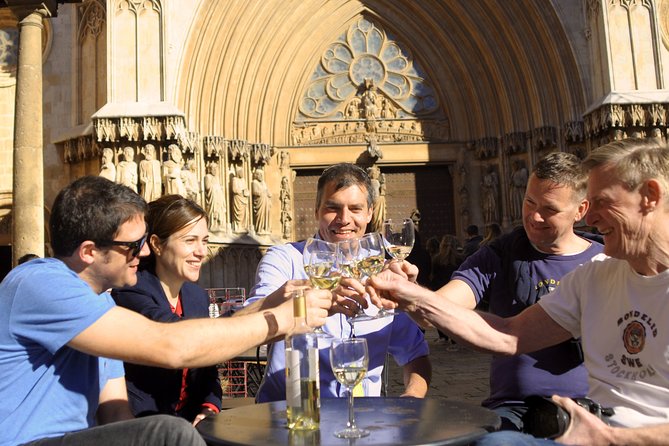
- Private, just your group: the guide can slow down for questions and adjust on the fly.
- Tickets are built in: admission is included for the key stops, so you’re not doing math at every doorway.
- Roman + medieval in one route: circus, forum tower, cathedral, walls, and the amphitheatre all connect visually.
- A real city view at the end: Rambla Nova’s Mediterranean Balcony gives you the sea-and-ruins panorama.
- Sunday has a plan B: if the cathedral is closed for Catholic mass, you’ll go inside the Roman amphitheatre instead.
- Strong guide energy: people specifically praise Bernat/Bernard for clarity, plus David and Carmen for kindness and depth.
A Four-Hour Tarragona Snapshot That Doesn’t Feel Rushed
Tarragona can look like it’s all separate ruins and churches at first glance. This tour fixes that by walking the same logic the city used centuries ago: movement, power, worship, and defense—laid out along a climb from the old quarter toward the sea views on Rambla Nova.
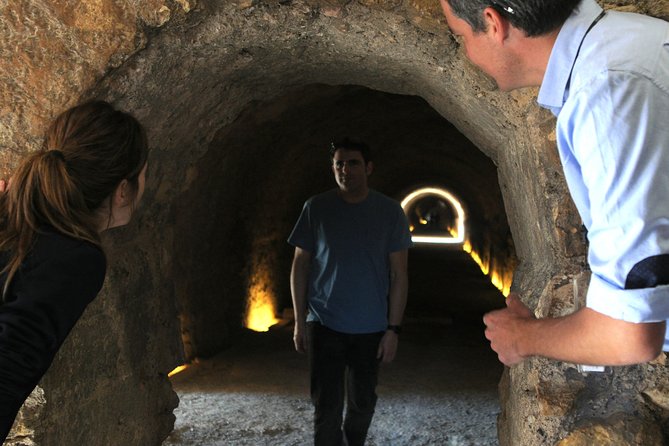
Because it’s private, the timing works better than on crowded group tours. You can linger at the spots that click for you, and you can ask follow-ups when the guide mentions something specific (like underground connections or why a building didn’t finish). People also talk about the pace feeling right—slow enough to absorb, not so slow that you’re bored.
The main trade-off is physical. You’ll be on foot for a few hours, with steps and uneven spots. Wear real walking shoes, and bring water. If you’re traveling with mobility limitations, double-check before you go.
You can also read our reviews of more tours and experiences in Tarragona.


Circ Roma and the Praetorium: Where the Roman City Shows Off
The first big stop is Circ Roma, a Roman circus built in the 1st century. It wasn’t a stadium for modern sports—it hosted horse and chariot races, and it stretches out on an elongated footprint of about 325 by 115 metres. The original estimated capacity was around 30,000 spectators, which helps you picture how much daily excitement Roman Tarraco could generate.
What I love about this site is the “why it looks a bit odd” factor. The circus sat inside the city limits, so parts are atypical compared with other Roman circuses. Some of the original structure is also hidden beneath older 19th-century buildings, which means you’ll feel the layers without needing a lecture.
Right nearby is the Praetorium, a Roman-era tower that once held the stairs linking the lower city to the provincial forum through underground passageways connected to the circus. That vertical connection is the key takeaway: this area wasn’t just monuments lined up for photos—it was built for movement and control. Then, in the 12th century, it became a palace for the kings of the Crown of Aragon, and later it was used as a prison. So even if your thing is Roman Tarragona, you still get the later “second life” of the stone.
At this stop, expect about 30 minutes and entry included.
Tarragona Cathedral and the Cloister Museum: Romanesque to Gothic
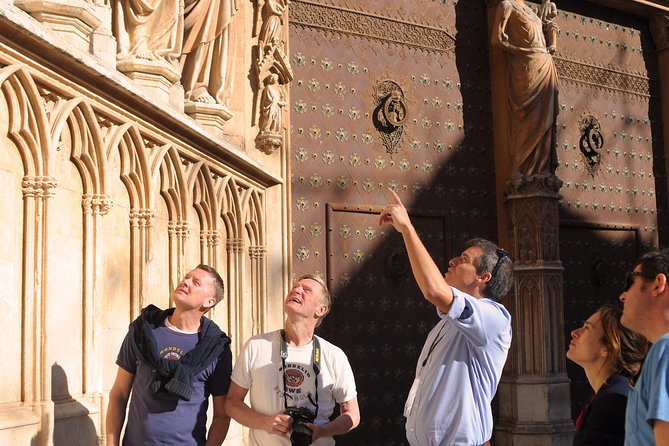
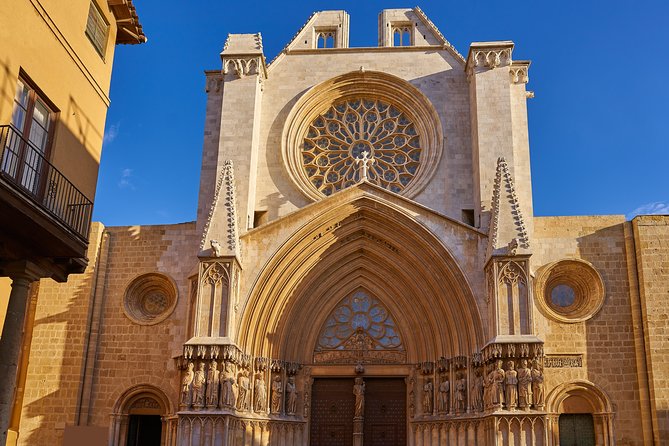
Next comes Catedral Tarragona, one of the city’s most emblematic images. Construction began in the 12th century in Romanesque style and then continued through the Gothic period. It was consecrated in 1331, but it couldn’t be finished because the Black Death devastated the region.
Look closely at the façade: the soaring entrance and the rose window are part of what makes people remember this cathedral even after they’ve left. The visual punch is great, but what makes this stop practical on a guided route is what’s around it.
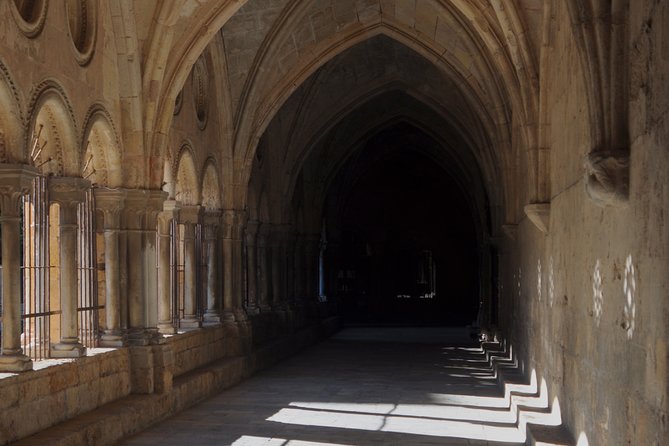
At the cloister entrance, you’ll find the Diocesan Museum and the Saint Tecla altarpiece. The cloister itself is a standout for Romanesque sculpture work, dating to around the turn of the 13th century. If you like when a building tells you its timeline, this is the place.
The museum side matters too. The Diocesan Museum brings together medieval and modern religious art from Tarragona and its diocese: altarpieces, stone sculptures, carved wood, goldwork, wrought-iron work, textiles, ceramics, and more.
Important planning note: on Sundays, the cathedral and its close areas are closed due to Catholic mass. In that case, the tour swaps to getting inside the Roman amphitheatre instead. That’s smart. It keeps the day productive instead of turning into a long wait outside.
Murallas de Tarragona and the “Old Quarter Boundary” Feel
Then you move to Murallas de Tarragona, the city walls that once circled Tarraco. In the 2nd century B.C., a large wall was built around the area to define municipal boundaries. The original stretch was about 3,500 metres, and today about 1,100 metres remain along the current old quarter.
One thing I really like about walls is that they help you read a city in real time. Stand along this stretch and you can feel how the old boundary shapes the streets and the density of the Old Quarter. It’s not just a monument; it’s a map made from stone.
These walls are also the oldest Roman construction still conserved outside Italy. Later, between the 16th and 18th centuries, they were reinforced with bulwarks, a curtain wall, and exterior fortifications to handle newer artillery. That “adapted over time” story is a useful lens—Tarragona didn’t stop evolving when the Romans left.
This stop is short, around 10 minutes, but it sets you up for the amphitheatre section beautifully.
Anfiteatro: Gladiators, Martyrs, and the Sea View Angle
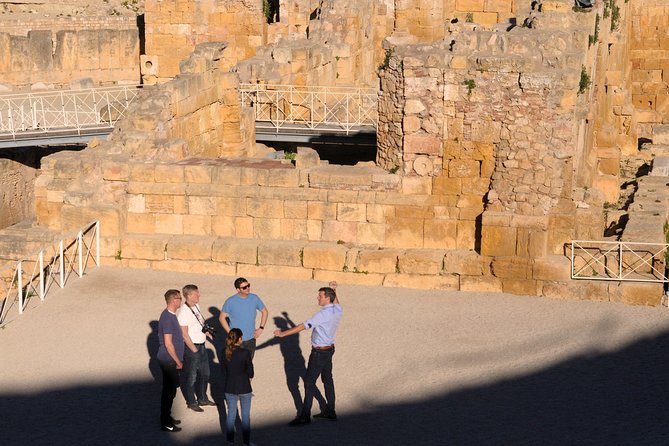
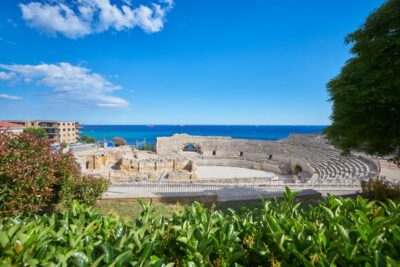
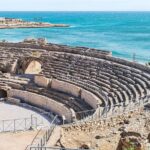
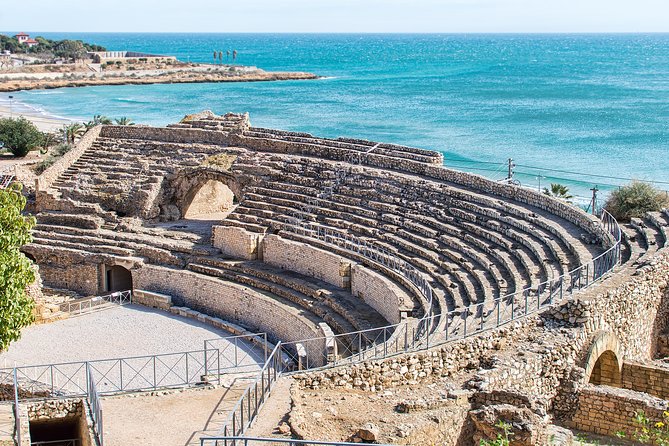
The Roman amphitheatre is the kind of sight that makes you slow down, even if you’re the “quick photo and go” type. It’s an oval structure from the 2nd century overlooking the sea, with stands carved directly out of the bedrock.
The scale is impressive: about 109.5 metres long by 86.5 metres wide, and it could hold up to 14,000 spectators. In Roman times, it hosted gladiator fights, battles against wild beasts, and public executions. And yes, there’s a darker religious chapter here too: in 259 A.D., Bishop Fructuoso and his deacons Augurio and Eulogio were burned alive within the amphitheatre.
Then history layered over the site. In the early 6th century a Visigoth basilica was built there. That was replaced later by the medieval church Santa Maria del Miracle (Our Lady of the Miracle). This is exactly the kind of layered site a guided walk makes more meaningful, because you can connect the “then” and the “now” without guessing.
Entry is included, and this stop typically runs about 10 minutes, which is about right for keeping the full route moving.
The Mediterranean Balcony: Rambla Nova’s Sea-and-Ruins Finale
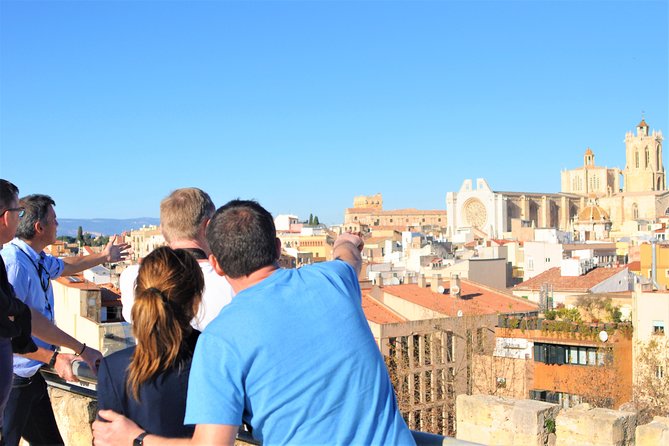
After the heavy Roman stone, the tour gives you a breather with height and air. The Mediterranean Balcony sits at the top of Rambla Nova, about 40 metres above the sea. This spot is famous locally because it frames the big picture: Mediterranean views, the Tarragona port, Platja del Miracle beach, and the amphitheatre below.
There’s also a little local ritual. The legend says that touching the railing (tocar ferro) brings good luck. It’s the kind of thing that doesn’t change the history, but it does make the stop feel like part of daily life instead of just a postcard.
Expect about 10 minutes here. And it’s a great point for a final photo set before you head through the upper-town streets.
Part Alta Streets: Old Houses, a Consolat Feeling, and Jaume I
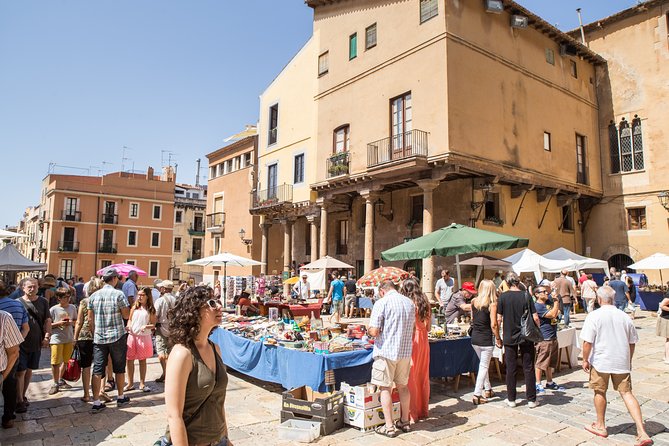
Now you head into Tarragona’s upper old town, the Part Alta. This is where the city becomes a maze of narrow, short streets and older buildings with a slightly decadent, lived-in vibe.
One highlight is Antiga Casa del Consolat Tarragoni, an old house in the upper part of town. This stop works best when you don’t rush. Pause and let the street rhythm sink in. It feels charming in a way that’s hard to fake with text descriptions, and it’s the sort of place you’d otherwise walk past without a reason to stop.
A little later is Casa Castellarnau, a noble house dating to the 15th century. Expect about 10 minutes. Even with limited time, a house like this gives you context for the transition from Roman civic power to later civic and private wealth.
And then there’s a more political-feeling stop: Ajuntament de Tarragona, which features an Art Nouveau tomb connected to the medieval king Jaume I. It’s a neat reminder that Tarragona’s layers aren’t just Roman and medieval—they keep shifting into newer styles as the city evolves.
These are shorter stops, around 10–15 minutes each, but they’re important glue for the story.
Museu d’Art Modern de la Diputacio: A Clever Change of Pace
Not every Roman ruins day needs another church. The tour includes Museu d’Art Modern de la Diputacio de Tarragona, created in 1976 by the Tarragona Provincial Council to support modern and contemporary art and share local artistic heritage with the community.
It’s in the Part Alta, and it’s housed in the union of three 18th-century buildings. That structure detail matters because it means you’re not just popping into a white box gallery. You’re in historic shells that help the museum feel tied to the same streets you just walked.
The collection spans 19th to 21st centuries and includes works by artists such as sculptor Julio Antonio. There’s also the Tarragona Tapestry by Joan Miró and Josep Royo. If you’ve been staring at stone for hours, this museum stop can reset your brain and give you a different kind of Tarragona pride.
Entry is included, with about 10 minutes allotted on the tour. If you love modern art, you may want to come back later on your own for a longer visit.
Price and Logistics: What You’re Really Paying For
At $150.85 per person for about four hours, this isn’t the cheapest option. But it can feel fair because you’re not paying separately for lots of entrances. The tour also includes all fees and taxes, and admission tickets are included for the main sights along the route.
You’re also buying time and direction. Tarragona’s landmarks are powerful, but they can be confusing if you don’t know what connects them—circus to forum, walls to old-quarter boundaries, amphitheatre to layered religious sites. A good private guide fixes that. The guide quality is a repeated theme, with Bernat/Bernard named often, and Carmen and David showing up too.
On logistics: you’ll need to be comfortable walking uphill and through uneven old streets. And since bottled water isn’t included, I’d treat hydration as part of your packing list. A small thing, but it keeps the whole experience smooth.
Booking-wise, the tour is often reserved in advance (about 57 days on average). If you’re traveling during peak season or have a tight schedule, booking earlier makes your life easier.
Should You Book This Private Tour of Tarragona?
Book it if you want to see Tarragona’s big monuments in a single, organized walk where the details connect. It’s especially good if Roman Tarragona is your focus, but you still want the Gothic and medieval layers—plus a sea-view finish that doesn’t require extra planning.
I’d also recommend it if you’re short on time. The route is built to hit the major sights without making you sit through long detours. Families can do it too, since one comment mentions a 12-year-old enjoying the walk and learning a lot.
Skip it or adjust your expectations if you need lots of long museum time at every stop. This is a highlights-and-connections approach. You’ll see a lot, but not every room becomes a full-length visit.
If you want a simple rule: good shoes, bring water, and go in curious. You’ll leave with a clearer mental map of Tarragona’s layers.
FAQ
How long is the Tarragona highlights private tour?
The tour lasts about 4 hours.
Is the tour offered in English?
Yes, it’s offered in English.
Is this a private tour?
Yes. It’s private, so only your group participates.
Is pickup included, and where does the tour start?
Pickup is offered. The guide meets next to the Portal del Roser, outside the old quarter in front of the Roman wall.
Where does the tour end?
The tour ends at Balcón del Mediterráneo on Passeig de les Palmeres (s/n), Tarragona.
Are admission tickets included for the stops?
Yes. Admission tickets are included for the listed stops, and all fees and taxes are included.
Is bottled water included?
No, bottled water is not included.
What happens on Sundays with the cathedral visit?
On Sundays, the cathedral and its close area are closed due to Catholic mass. The tour then includes getting inside the Roman amphitheatre instead.