REVIEW · VALENCIA
Valencia: Cathedral, St Nicholas, and Lonja de la Seda Tour
Book on GetYourGuide →Operated by Valencia & Go · Bookable on GetYourGuide
Valencia’s Old Quarter tells one story. I love how this tour strings St Nicholas and Lonja de la Seda into a clear timeline, and you get into the key interiors with tickets already included. One thing to consider: you’ll be walking in real street-level conditions (and it runs rain or shine unless storms shut things down), so comfy shoes help.
For $53, the value is in the mix: a local guide, 3 major sites, and skip-the-ticket-line access. I also like that the tour is short enough (3–4 hours) to fit a day packed with plazas, markets, and photos without turning into a full-day marathon.
You’ll start at the big, unmistakable Torres de Serranos, then work your way through the Cathedral area and end back in the central historic heart near the Plaza de la Virgen. If you’re the type who wants context as you walk, this format is a smart way to get your bearings fast.
In This Review
- Key Things I’d Put on Your Radar
- Torres de Serranos to the Old Quarter Walls: Start Where the City Began
- Church of Saint Nicholas: Baroque Frescoes and a Ceiling That Demands Eye Contact
- Lonja de la Seda (UNESCO): Gothic Trade Architecture That Feels Surprisingly Modern
- Metropolitan Cathedral of Valencia: Inside the World of the Holy Grail Legend
- Roman Almoina Ruins: Valencia’s Old Streets with Literal Old Layers
- Plaza de la Reina, Plaza de la Virgen, and the Basilica of the Virgin Mary
- Price and Value: What $53 Buys for 3–4 Hours
- How the Guide Changes Everything (Ferran, Marcela, Paolino, Benito, and More)
- Who This Tour Fits Best (And Who Might Want Something Else)
- Should You Book This Valencia Cathedral, San Nicolás, and Lonja Tour?
- FAQ
- Where is the meeting point?
- What does the tour include?
- How long is the tour?
- Can I skip the ticket line?
- What languages are available for the guide?
- Is the tour outdoors?
- What if I want a private group?
Key Things I’d Put on Your Radar
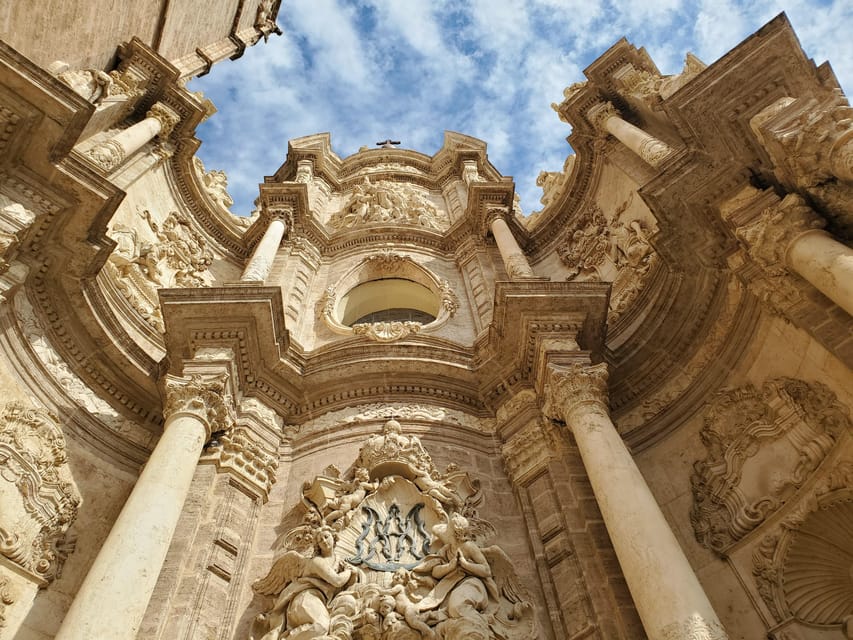
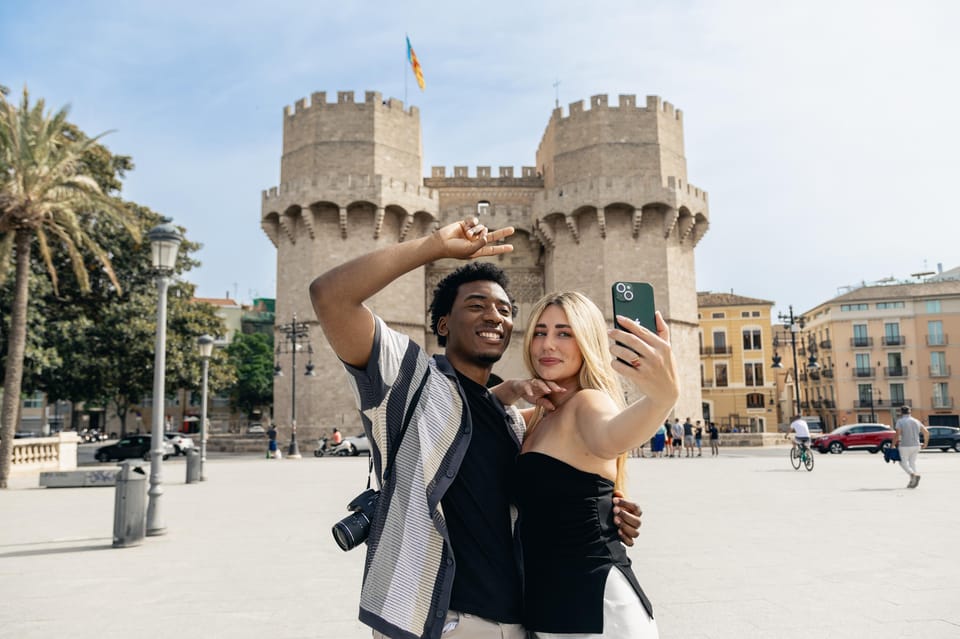
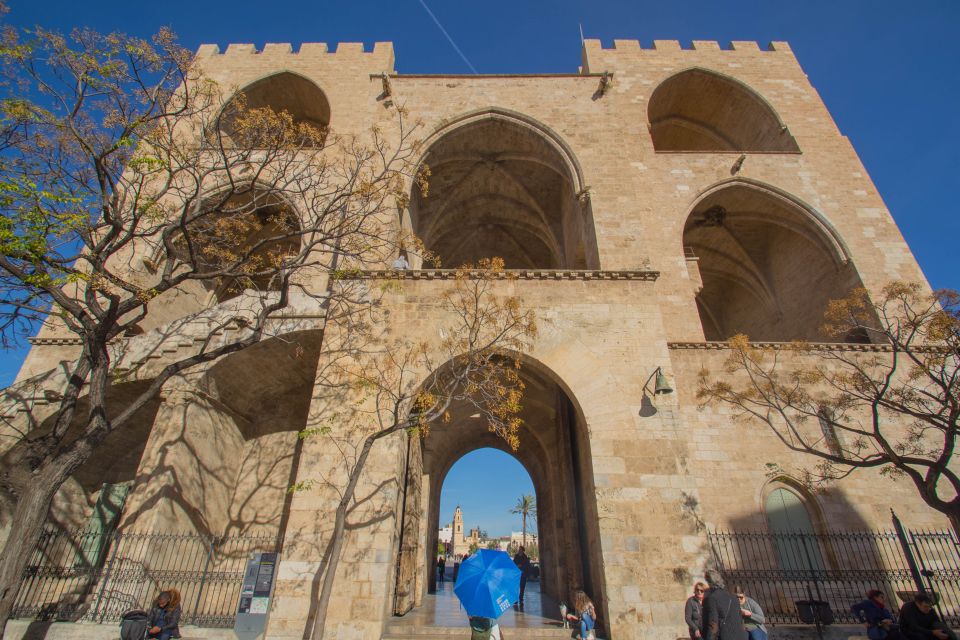
- Torres de Serranos as your launch pad: you begin with the dramatic gate that anchors Valencia’s old defenses
- San Nicolás ceiling by Dionís Vidal: plan to look up at the Baroque fresco coverage (2,000 square meters)
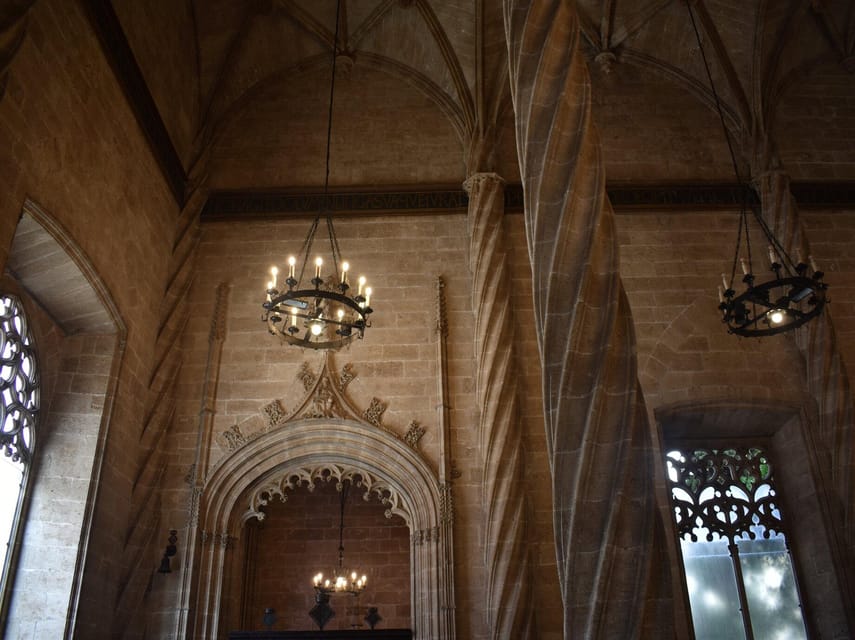
- UNESCO Lonja de la Seda: Gothic trade power with tall columns and a geometric roof
- The Cathedral’s Holy Grail claim: the tour points you to the belief tied to the site
- Roman Almoina ruins: Valencia’s most relevant archaeological remains appear in the middle of the story
- Timing may help with St Nicholas light projections: some guides line up the visit for the show rhythms
Torres de Serranos to the Old Quarter Walls: Start Where the City Began
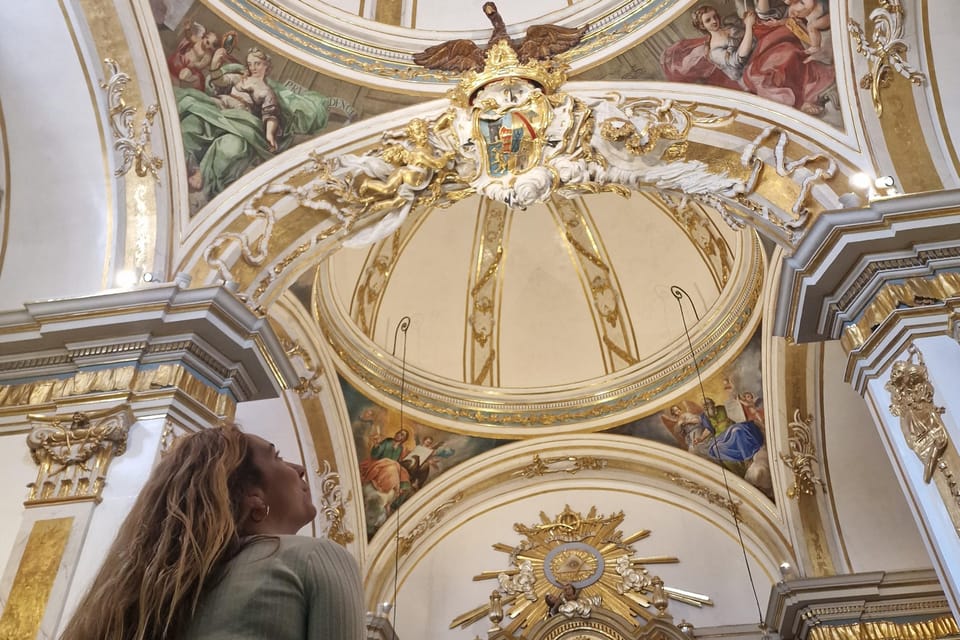
You meet at Torres de Serranos, and that matters more than it sounds. It’s a huge landmark that immediately gives you scale: Valencia wasn’t always the sprawling city you see today. Once you step away from the gate, your guide builds the “why” behind the old streets—how walls shaped movement, where people would have gathered, and why this area became so important.
You then transition into the older streets around the historic district. This is where a guided walk beats DIY wandering, because the lanes can feel maze-like. A good guide helps you connect what you see on a corner—plus the building shapes and street bends—to how Valencia grew over time.
Practical tip: this isn’t a crawl. The pace is “walk with purpose,” and you’ll want to keep your water bottle handy and your phone charged for photos inside and around churches.
You can also read our reviews of more tours and experiences in Valencia.



Church of Saint Nicholas: Baroque Frescoes and a Ceiling That Demands Eye Contact
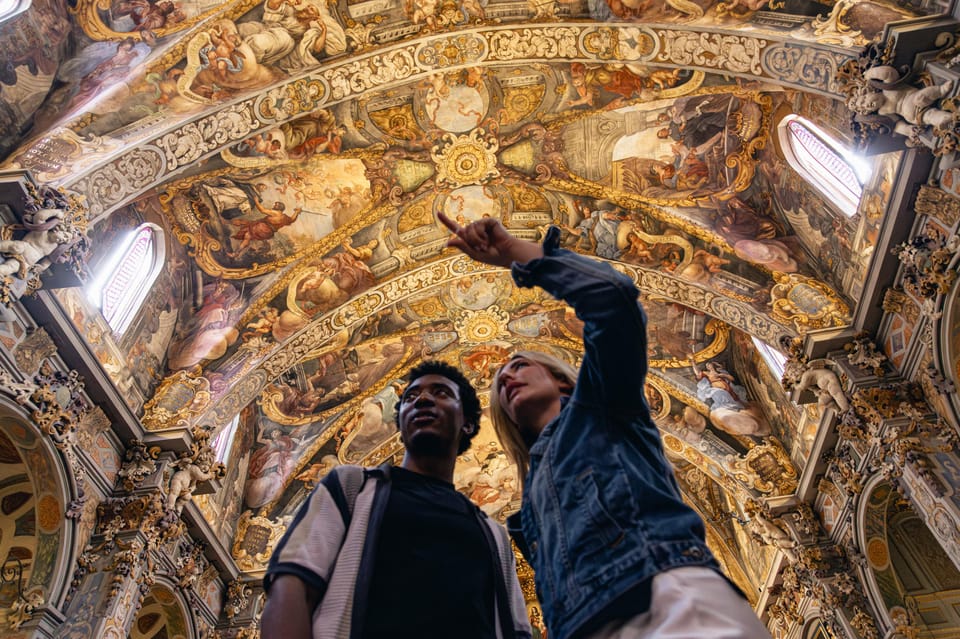
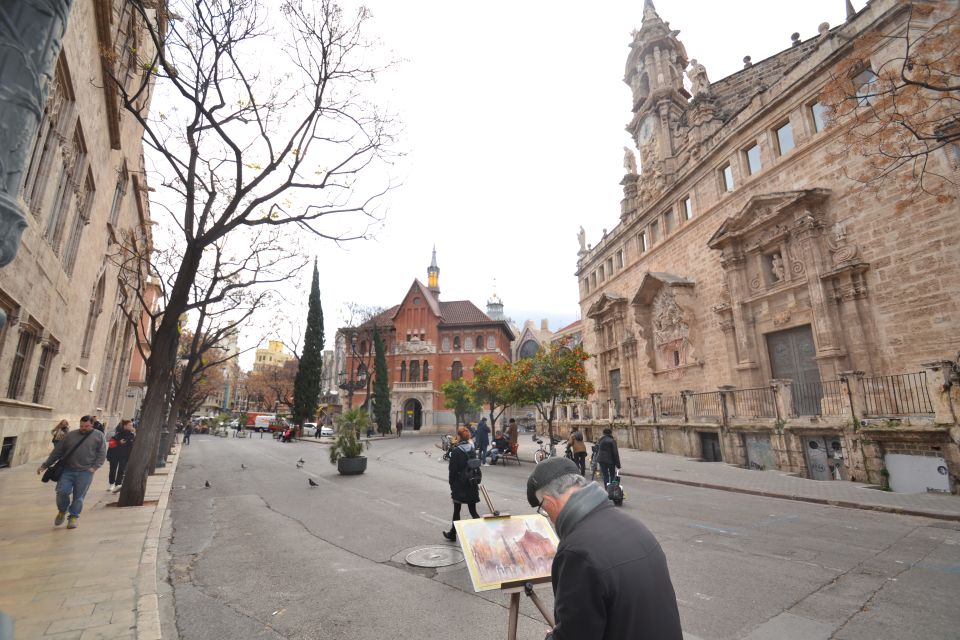
If you care about art and religious storytelling, Church of Saint Nicholas (San Nicolás) is the centerpiece. The tour takes you inside and focuses on what makes it famous: Baroque frescoes spread across 2,000 square meters, painted by Dionís Vidal. That ceiling isn’t just decoration. Your guide explains what you’re seeing and why the imagery is arranged the way it is, which is exactly what most people miss when they only do a quick glance.
Here’s the other reason I think this stop lands with people: there’s often a projection light show onto the ceiling and walls. In the feedback I received, guides timed the visit so the group could sit promptly when the show started, and the combination of old church art with modern lighting is a real wow moment—especially if you like when history gets turned into something you can feel.
What to do while you’re there:
- Look up early, before you get distracted by side details.
- Don’t rush the ceiling. The guide’s points work better when you follow them in order.
- If you’re sensitive to loud groups, remember church interiors can amplify noise during peak moments.
One caution: if your group is close, you’ll be standing and turning your head for a while. If you’re expecting a casual stroll, plan for this to be your most “attention required” stop.
Lonja de la Seda (UNESCO): Gothic Trade Architecture That Feels Surprisingly Modern
Next comes Lonja de la Seda, another major highlight, and it’s UNESCO for a reason: it’s architecture tied to power, commerce, and the confidence of Valencia’s merchants. The tour emphasizes the structure you can’t fully appreciate from the outside—Gothic design, sturdy tall columns, and the geometric roof that creates that distinct sense of order and symmetry.
What I like about this stop is the way it reframes what you think you’re touring. A church tour tells you what people believed. Lonja tells you what people built, traded, and risked money on. It’s Valencia showing off its skills in stone and math—without needing modern explanations.
If you’re the kind of person who likes to spot building “rules,” you’ll enjoy the geometry. If you’re less architectural, the guide’s job is to make the structure legible: where to look, what parts do what, and how the space would have functioned for the people using it.
Also, it helps that Central Market is right nearby. The tour moves you through a sequence where you can go from trade buildings to food-market energy, which makes the day feel like one connected system rather than three separate attractions.
Metropolitan Cathedral of Valencia: Inside the World of the Holy Grail Legend
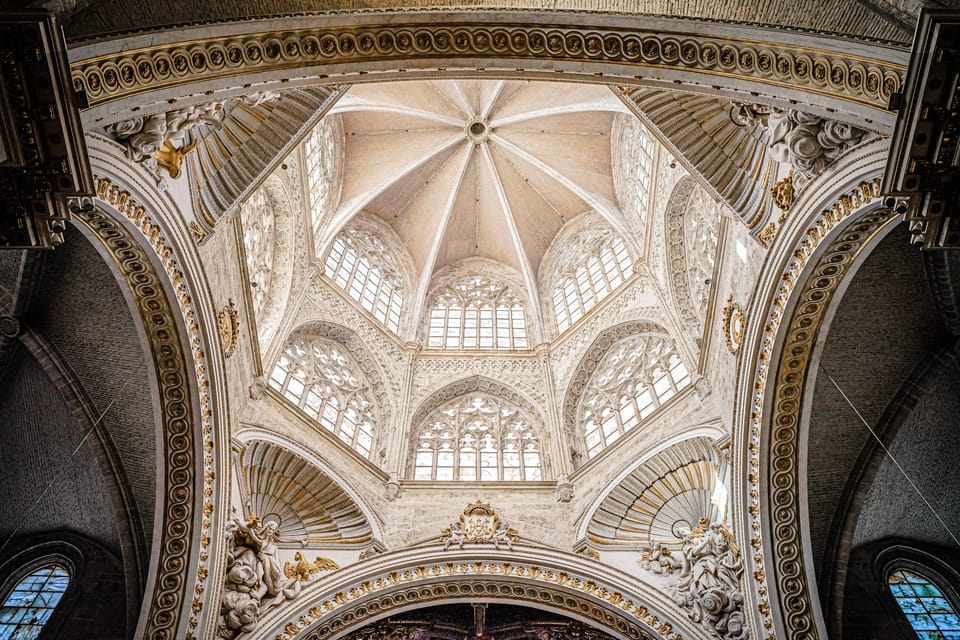
The Metropolitan Cathedral (Assumption of the Virgin Mary) is a huge stop on this route. The tour doesn’t just check a box; it explains why the Cathedral matters and what the building represents.
One of the tour’s standout stories is the Holy Grail legend: it’s said that the Cathedral holds the Holy Grail in its interior. Even if you treat the claim as a tradition rather than a literal artifact, it’s still a powerful way to understand how symbols shape places. Your guide helps connect the story to the Cathedral’s cultural pull, and that turns a generic visit into something more meaningful.
Worth knowing: Cathedrals attract crowds. The tour includes entry tickets and skip-the-ticket-line access, so you spend less time in queue limbo and more time actually seeing the interior.
How to get the most out of the Cathedral stop:
- Use the guide’s pointing. The places to pay attention aren’t always obvious at first glance.
- Slow down at the spots that are explained. The story is usually aimed at specific elements, not the building in general.
Roman Almoina Ruins: Valencia’s Old Streets with Literal Old Layers
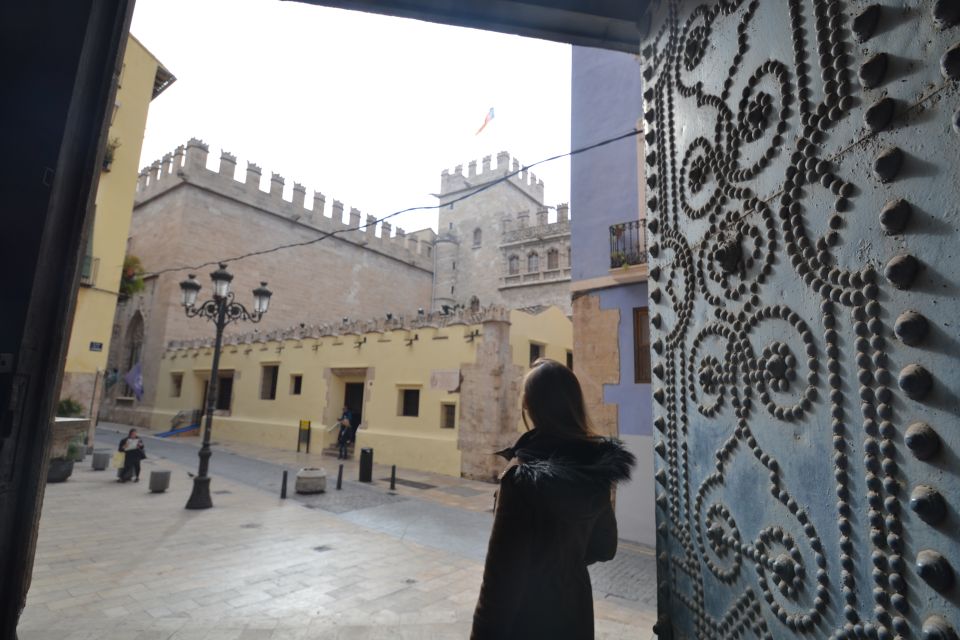
Then the tour shifts into archaeology: Almoina Roman ruins. The key detail here is that these are described as the most relevant archaeological remains in Valencia. This is one of those moments where the city stops being only “pretty.” The guide makes the ruins feel like part of Valencia’s daily life long ago, not just a fenced-off fragment.
It’s also a great counterbalance to church and UNESCO stops. After centuries of religion and medieval wealth, you get a slice of earlier city life underneath the modern streets.
If you like piecing together timelines, this is the part that clicks. You realize Valencia isn’t in one era—it’s many eras layered in the same footprint.





Plaza de la Reina, Plaza de la Virgen, and the Basilica of the Virgin Mary
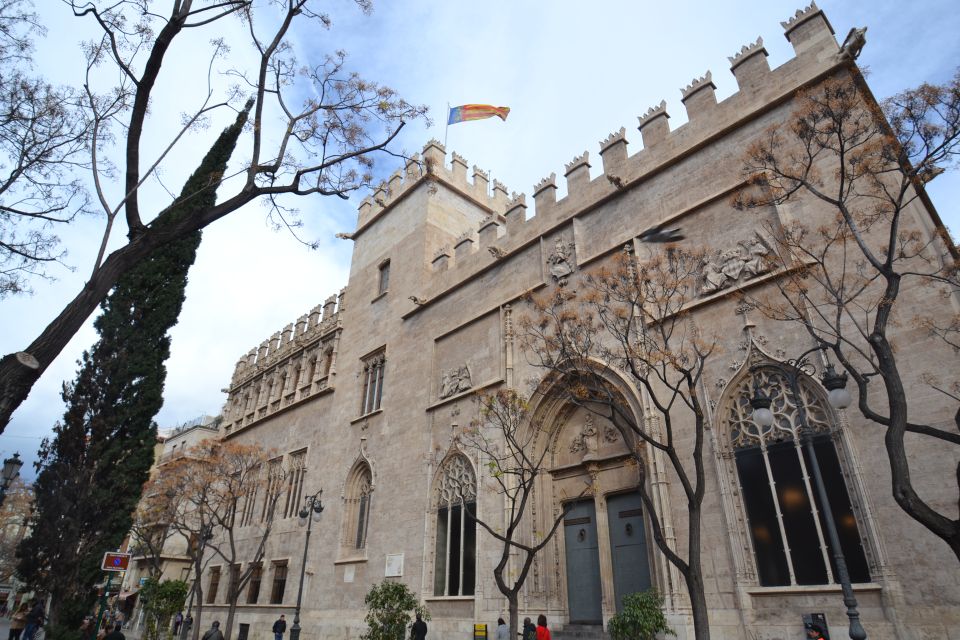
The walking route threads through landmark squares that help you understand Valencia’s layout. You’ll pass through areas like Plaza de la Reina and end up in the Plaza de la Virgen, where the tour explains the Basilica of the Virgin Mary of the Forsaken and the stories tied to it.
This part works because plazas are more than photo backdrops. They’re meeting points, procession spaces, and historical stage sets. When your guide gives you the “what happened here” angle, the squares stop feeling generic.
A couple of small practical notes:
- Expect to hear more about tradition and legends here than in the trade and archaeology stops.
- Keep an eye out for where the group gathers. Squares can get busy, and a good guide keeps the group controlled.
Price and Value: What $53 Buys for 3–4 Hours
Let’s talk money plainly. At $53 per person for 3–4 hours, you’re paying for more than walking. You’re paying for:
- A live guide
- Entry tickets for the Cathedral
- Entry tickets for Church of Saint Nicholas
- Entry tickets for Lonja de la Seda
- Skip-the-ticket-line access
That package is where the value usually lands. If you were to ticket these sites one by one, you’d likely spend more once you add time costs and queue time. Here, you buy one guided route that feeds you context while you move between major locations.
Is it pricey compared with a basic outdoor walking tour? It might feel that way if you’re only after street scenes and photos. But if you want interiors, art explanations, and a UNESCO stop with full context, the pricing starts making sense.
The other value is time. In a 3–4 hour window, you see three of Valencia’s biggest monuments plus the Roman layer and central squares. You’re not trying to squeeze everything into one chaotic DIY day.
How the Guide Changes Everything (Ferran, Marcela, Paolino, Benito, and More)
This tour’s quality depends heavily on the guide, and the feedback shows a pattern: guides who connect details to stories make the walk stick.
A few guide examples from the data you provided:
- Ferran handled route changes during the Fallas Festival opening ceremony, which is the kind of real-life complication that can derail less flexible groups.
- Marcela focused on architectural details and painted-meaning context in the Cathedral, Lonja, and St Nicholas.
- Paolino is credited with timing the visit so people could catch a lights show in St Nicholas without rushing.
- Benito was praised for being detailed and going above and beyond with answers, while one piece of feedback flagged that smoking by a few participants can affect comfort in a group.
- Some guides used visual tools like photos and diagrams to explain building layouts and architectural elements, which is a big help in places like Lonja where shape matters.
- One guide even adjusted the experience with comfort in mind, gathering shade when possible during breaks.
So here’s my practical takeaway for you: if you care about “why this looks like this,” not just “what this is,” choose this tour expecting explanations that go beyond the obvious.
One consideration: any group walking tour can include people who don’t follow the quiet norms inside churches. If you’re sensitive to that, you’ll want to be comfortable stepping back slightly or re-positioning when the group queues.
Who This Tour Fits Best (And Who Might Want Something Else)
This is a strong match if you:
- Want a first-timer-friendly Old Town loop that includes major interiors
- Love church art, architecture, and symbolism
- Like UNESCO stops but don’t want to treat them like a checklist
- Prefer guided context so you don’t miss the “why” behind each site
You might be less happy if:
- You want a slow, independent wander with long free time in one place
- You hate standing and looking up for fresco-heavy interiors
- You’re traveling with limited patience for group timing in crowded religious spaces
If your feet are the limiting factor, plan ahead: wear supportive shoes and keep your day light before and after this tour.
Should You Book This Valencia Cathedral, San Nicolás, and Lonja Tour?
I’d book it if you want the best of Valencia’s Old Quarter in a tight, structured format. The ticket-included approach is a real time-saver, and the combination of San Nicolás, the Cathedral, and Lonja de la Seda gives you three different lenses on how Valencia became Valencia: faith, civic legend, commerce, and even Roman layers underfoot.
I’d pause only if you’re trying to avoid walking, or if you’d rather spend extra time lingering in one site than moving through several. In that case, a slower option might fit better.
If you’re checking these sites anyway, this tour is the efficient way to turn them into a coherent story instead of separate stops. And honestly, the ceiling moment in San Nicolás is the kind of memory that makes the whole 3–4 hours feel worth it.
FAQ
Where is the meeting point?
You meet at Torres de Serranos. The exact meeting point can vary depending on which option you book.
What does the tour include?
The tour includes a live guide and entry tickets for the Valencia Cathedral, Church of Saint Nicholas, and Lonja de la Seda.
How long is the tour?
It runs 3 to 4 hours.
Can I skip the ticket line?
Yes. This tour includes skip-the-ticket-line access.
What languages are available for the guide?
Live tour guides are available in Polish, Italian, Portuguese, French, Spanish, English, and German.
Is the tour outdoors?
It takes place rain or shine, but it may be canceled in the event of a heavy storm.
What if I want a private group?
A private group option is available.