REVIEW · VALENCIA
Valencia City Highlights in Guided Bike or E-Bike Tour
Book on Viator →Operated by Orange Fox · Bookable on Viator
Valencia is best when you keep moving. This guided ride strings together Turia Park and the old-town landmarks into one easy loop, and I like that it’s built for quick stops with real explanations (plus bottled water). I also like that the route works for both bike and e-bike riders, so you can match your energy level. The main caution: some of the street riding can feel a bit busy, and a few stops are short enough that you may want to plan extra time elsewhere.
The payoff is a fast orientation to Valencia—everything from the Mercat Central to the gothic power of La Lonja de la Seda, then out to the modern City of Arts and Sciences. Guides can be friendly and animated (you’ll see names like Frederic/Federico, Yana, Enrique, Sasha, Dima, and Sergio), and they’re set up to guide in English. One more thing to consider: a few people felt the ride ran a bit shorter than the typical estimate, since most stops are intentionally “stop-and-look” rather than slow sightseeing.
Key takeaways before you ride
- Turia Park is the slow-down moment: the route uses Valencia’s green corridor for an easier, calmer pedal.
- A tight “highlights” route: you’ll cover old town, cathedral area, and the City of Arts in about 2.5 hours.
- E-bike vs regular bike is your call: the route is mostly doable on a city bike, but the assist helps if you’re tired.
- Don’t expect full museum time: several big sights are passed by or viewed briefly; some ticketed entries aren’t included.
- Bike traffic awareness matters: some streets can feel narrow or fast-moving, so stay alert and ask for a helmet.
In This Review
- Price and Logistics: what you’re really paying for
- Meet at Bike Rental Valencia & Tours and set yourself up
- Plaza de Toros to València-Estació del Nord: classic Valencia starts fast
- Market morning energy at Mercat Central (without the full shopping spree)
- La Lonja de la Seda: why silk makes sense here
- From Plaça de la Reina to El Micalet: squares, people, and views
- Valencia Cathedral and the Basílica dels Desamparats: what’s included vs what’s on you
- Palau de la Generalitat and Torres de Serranos: power symbols from two angles
- Ciutat Vella on two wheels: narrow streets, quick orientation, real personality
- Jardí del Turia and Palau de la Música: the calm stretch you’ll remember
- Gulliver Park and the jump to City of Arts: from storybooks to sci-fi
- Porta de la Mar: ending at the maritime edge
- Bikes, helmets, and e-bike reality checks
- Guides and pacing: when it feels personal vs when it feels brief
- Who this Valencia bike tour fits best
- Should you book Valencia by bike or e-bike with Orange Fox?
Price and Logistics: what you’re really paying for
This tour runs about $32.58 per person for roughly 2 hours 30 minutes. That price is mostly value-for-effort: you get a bilingual guide, a city bike or e-bike, bottled water, helmet on request, luggage storage, and insurance—all things that remove friction when you’re trying to see a lot in one go.
What you’re not buying here is a long, sit-down day of museum admissions and meals. Food isn’t included, and entry to a few major stops (like Valencia Cathedral and the big science-city attractions) isn’t included either. Think of it as a guided tour that helps you understand where you are and which places deserve your next visit.
Meet at Bike Rental Valencia & Tours and set yourself up
You start at Bike Rental Valencia & Tours, Carrer de Sogorb, 9 (L’Eixample), 46004 València. The location near public transportation is handy, and it also helps if your day includes train stations, museums, or a quick change of plans.
Before you roll, do the practical stuff that makes the ride better:
- Ask for a helmet if you want one (they provide all sizes on request).
- Use the luggage storage so you aren’t balancing bags through plazas.
- If you’re on a regular bike, choose it only if you’re comfortable with stopping and starting through the center streets.
Also remember: this is a guided ride, not a casual rental where you set your own pace. The guide will keep the group moving and will make brief stops so you see a lot without getting stuck in long lines.
You can also read our reviews of more cycling tours in Valencia
Plaza de Toros to València-Estació del Nord: classic Valencia starts fast
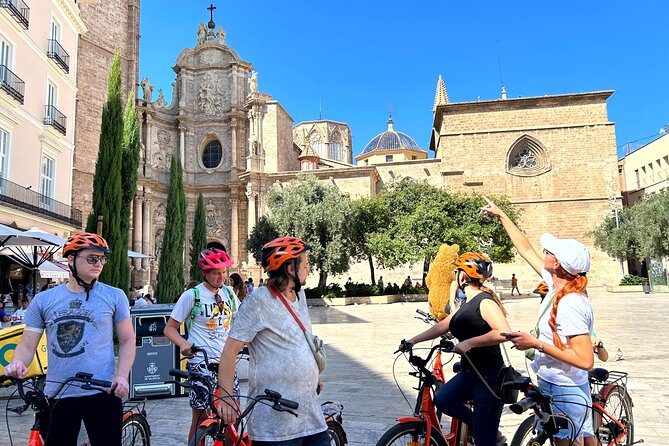
The ride kicks off near the historic Plaza de Toros. Even if you’re not into bullfighting, the bullring is a recognizable slice of Spanish tradition and architecture. It’s a quick start point—more about snapping a first photo and getting your bearings than a deep lesson.
From there, you head toward València-Estació del Nord, a railway station known for its design that mixes modernism with Valencian touches. Stations can be boring on foot, but from a bike seat you get a cleaner sense of how the city funnels people in and out. It’s also a nice reminder that Valencia isn’t only old stone—it has that early-20th-century design personality too.
If you’re sensitive to crowds or want calm photos, aim to be ready at the curb when the group stops. These are short photo-and-look moments.
Market morning energy at Mercat Central (without the full shopping spree)
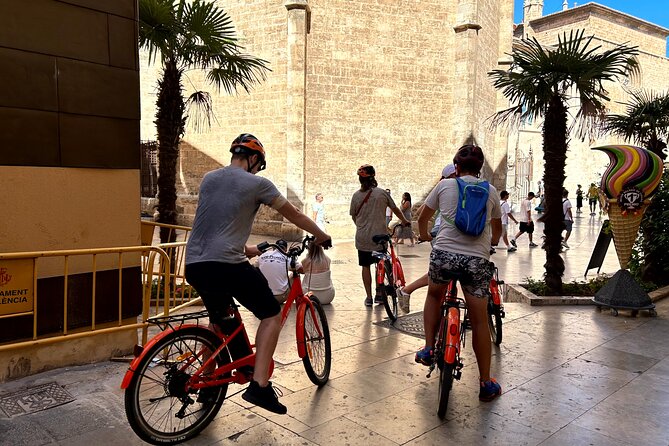
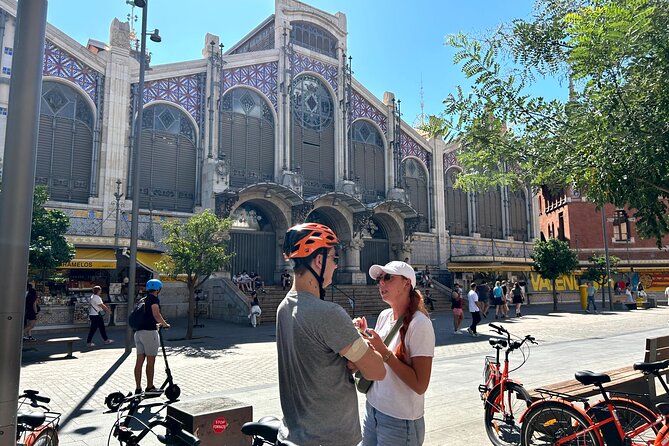
Next up: Mercat Central de Valencia. This is where the smells and color hit you—stalls, food displays, and that “everyone is in the market for a reason” feeling. The tour stop here is short, so you’re not meant to browse every aisle like you live there.
My advice: use your time like this:
- Walk in, take in the layout, and pick one thing you’d come back for later.
- If you like photos, pause for a few frames from angles that show the ceiling and stall rows.
- Then keep moving—this tour is set up so the market is one chapter, not the whole book.
Nearby, you also get a stop around the Real Parroquia de los Santos Juanes / Església de Sant Joan del Mercat area (the tour route pairs these churches in the old-market neighborhood). That gives you a break from food-and-noise for a bit of quieter architecture.
La Lonja de la Seda: why silk makes sense here
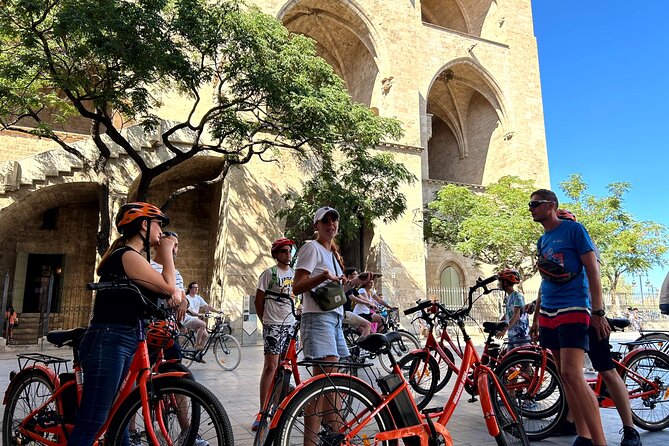
The ride then hits La Lonja de la Seda de Valencia, a UNESCO-listed Gothic building that once served as a hub for silk trade. Here’s the practical reason this matters: Valencia’s wealth history isn’t random trivia—it explains why the city has these grand civic structures in the first place.
From a bike tour perspective, La Lonja is perfect. You get a guided explanation and a quick look at the structure without needing hours of planning. The stop is brief, though, so if you love architecture, plan a return visit on a separate day to go inside thoroughly.
From Plaça de la Reina to El Micalet: squares, people, and views
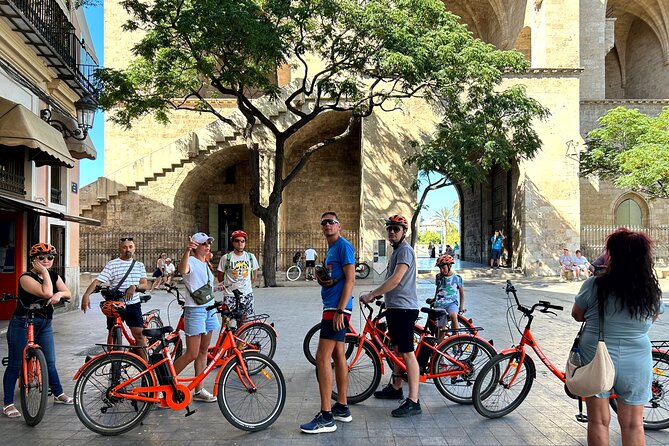
Then you glide to Plaça de la Reina, one of the central squares lined with bars and restaurants. It’s a good “human scale” break: look around, reset your water bottle, and watch how people move between streets.
After that, the route goes toward El Micalet, the bell tower connected to the cathedral complex area. The tour keeps it to a look-time window, but this is a place where you’ll immediately understand why locals and visitors love views from the top. Even from below, the tower’s presence is strong.
Timing note: if your goal is to climb for the full panorama, you’ll likely want to treat that as a separate add-on rather than relying on the tour’s short stop. The tour is about coverage, not extended climbing time.
You can also read our reviews of more guided tours in Valencia





Valencia Cathedral and the Basílica dels Desamparats: what’s included vs what’s on you
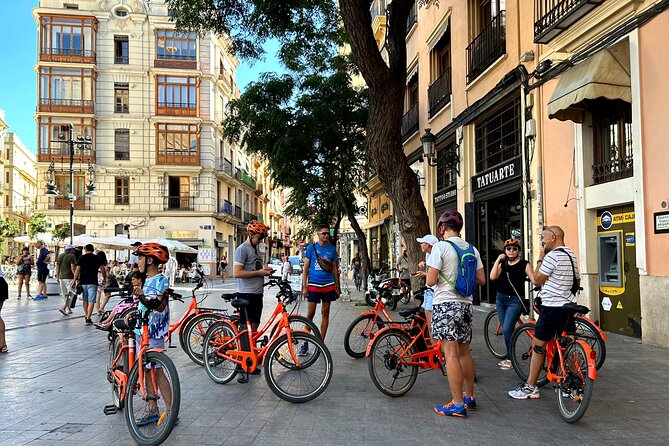
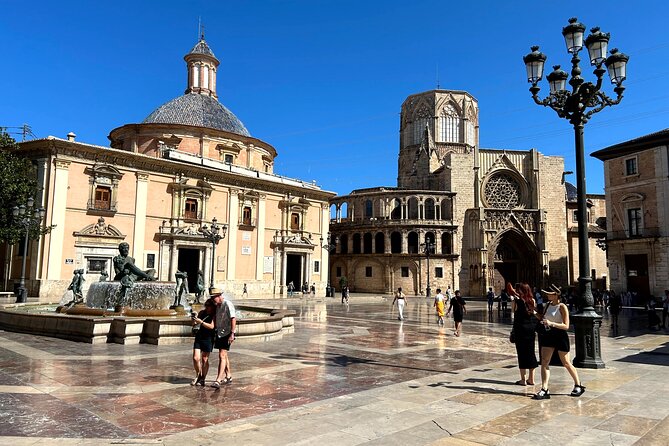
The next part is the cathedral zone around Plaça de la Mare de Déu. This is where the route shifts into “big civic religion” territory: squares, church façades, and the feeling that the city’s story has layers.
The tour includes time to be in position near Valencia Cathedral, and the information offered highlights the idea of the Holy Grail being believed by some to be housed here. However, admission ticket for the cathedral is not included, so if you want interior access, you’ll need to plan for paid entry on your own.
Right next door is the Real Basílica de Nuestra Señora de los Desamparados, also not ticket-included. This basilica is known in the tour context for its frescoes and architecture—exactly the kind of detail that turns into a “return to see it properly” moment.
If you’re budget-conscious, you can still enjoy the exterior and the square atmosphere with no paid entry. But if you want the inside artwork experience, budget for tickets.
Palau de la Generalitat and Torres de Serranos: power symbols from two angles
As you move along, the ride passes Palau de la Generalitat, the Valencian government palace—an example of Gothic civil architecture. It’s not just a “pretty building” stop. It helps you see how the city’s public identity was shaped long before modern politics.
Then you reach Torres dels Serrans, one of the old city gates from Valencia’s walls. These towers are especially satisfying from a bike tour because they connect history to movement: city gates were literally about controlling access and trade.
Climb time isn’t guaranteed here, but even if you don’t go up, you’ll get the “this is where travelers came in” perspective fast.
Ciutat Vella on two wheels: narrow streets, quick orientation, real personality
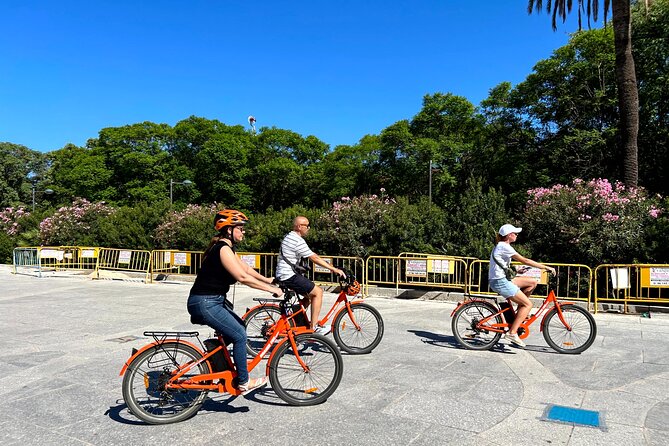
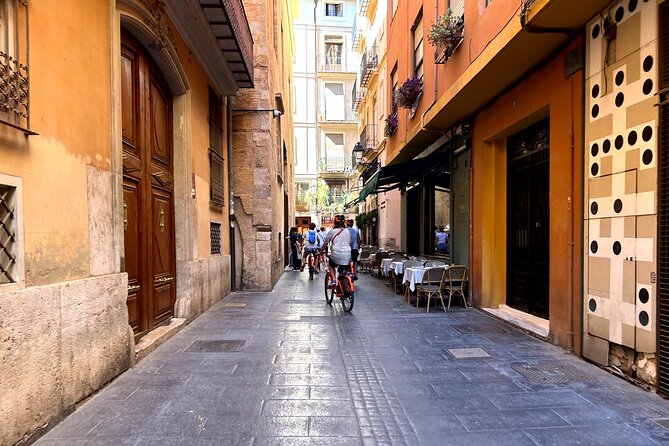
You then pedal through Ciutat Vella, Valencia’s old town. This is where the tour becomes more than a checklist. You’ll feel the city’s street pattern: tight lanes, small plazas, and buildings that compress space in a way you don’t get on a big walking circuit.
A key consideration: bike lanes and street traffic can vary. One rider noted that the city isn’t always the easiest place for cycling, with narrow lanes and cross traffic. So if you’re not confident navigating shared roads, choose an e-bike (if you’re on the right age range) and keep your eyes up at intersections.
Also, keep your expectations clear: this is a moving orientation through old streets. If you want to “wander deep,” you’ll do that later after the tour marks the best starting points.
Jardí del Turia and Palau de la Música: the calm stretch you’ll remember
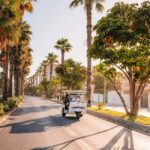
Here’s the part many people love most: the ride through Jardí del Túria. This long park is a break from the street energy—more relaxed riding, greenery, and a chance to breathe. If you’ve never ridden Valencia by bike, this is where you’ll understand why cycling feels so natural once you’re in the right corridor.
Inside or adjacent to the park is Palau de la Música (concert hall). The tour stop keeps it brief, but it’s a strong cue that Valencia has major music culture beyond what you’ll guess from the streets alone.
If you’re tired, this is your reset zone. The park stretch is where you can comfortably take photos without feeling rushed.
Gulliver Park and the jump to City of Arts: from storybooks to sci-fi
Next, Gulliver Park appears—playground inspired by Gulliver’s Travels, with a giant Gulliver sculpture. Adults tend to get as much fun out of it as kids, because it’s playful, slightly surreal, and easy to spot along the route.
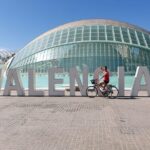
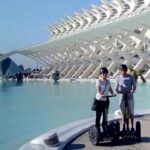
Then comes the big finale: Ciutat de les Arts i les Ciències. This is Valencia’s modern architecture statement, and arriving there by bike feels fitting. You’re coming from medieval streets and suddenly you’re in clean lines and futuristic silhouettes.
The tour includes time at the complex, plus short stops at:
- Hemisfèric (ticket not included): where planetarium/IMAX-style experiences happen.
- Oceanogràfic (ticket not included): described as the largest aquarium in Europe, with underwater tunnels.
Since tickets aren’t included, you’ll need to decide if you want quick views around the buildings or if you want to spend separate time inside them. Either way, the tour helps you understand where each attraction sits so you can plan your next move.
Porta de la Mar: ending at the maritime edge
To close, you pass Puerta del Mar (Porta de la Mar), a gateway tied to Valencia’s maritime heritage. It’s a nice last beat because it shifts the story from old walls and church towers to a city that also grew through the sea.
And since the tour ends back at the meeting point, you’re not stuck figuring out transportation after your ride. Just park the bike, grab your bearings, and decide whether you want a second round on foot.
Bikes, helmets, and e-bike reality checks
The tour offers city bikes or e-bikes. Reviews and common sense both point to this: Valencia is often easy to ride because the terrain is mostly flat, so an e-bike isn’t mandatory for everyone. But e-bikes still make sense if you:
- want to arrive fresh for the rest of your day,
- are less confident stopping frequently,
- have longer legs of road to cover without building fatigue.
Helmets are available on request in all sizes, which is the smart move—especially if you’re riding near busier roads.
One caution I can’t ignore: a couple riders reported that bike quality or maintenance wasn’t up to what they expected (tire/brake condition, newer-vs-older gear). Before rolling, do a quick check:
- squeeze the brake levers and see if they feel firm,
- test the saddle height,
- verify the bike locks smoothly and the tires look inflated.
This tour is still good value even if you treat the bike as a working tool rather than a luxury ride.
Guides and pacing: when it feels personal vs when it feels brief
Guides are a big part of the experience. Names you may see include Frederic/Federico, Yana, Enrique, Sasha, Dima, and Sergio. When the guide hits their stride, you’ll get short but clear history plus practical tips like when to go back for openings and how to plan your next stops.
The tour is also designed as a fast overview. Some people loved the clip and the coverage; others wanted more time and more detail at key areas. If you’re the type who likes to read every plaque and sit in every church, this may feel like a taste rather than a full meal.
My middle-ground advice: use the tour to learn the layout and the names, then return on foot where you want deeper time.
Who this Valencia bike tour fits best
This is a great match if you want:
- an efficient first-day overview of both old Valencia and the modern City of Arts,
- an active way to move through areas that are too spread out for comfortable walking,
- help getting oriented fast, especially around cathedral-squares and major landmarks.
It may be less ideal if:
- you want long, ticketed museum time for multiple attractions,
- you’re easily stressed by traffic or narrow streets,
- you’re expecting a slow, in-depth heritage lecture at each stop.
If you’re traveling with kids, the tour includes child seats on request, and children under 7 participate for free. Kids up to 130 cm can use children’s bikes, and children weighing up to 20 kg ride on the child seat of a parent’s bike. If you’re planning an e-bike for a teen, the minimum legal age to ride electric vehicles in Spain is 16.
Should you book Valencia by bike or e-bike with Orange Fox?
Book it if you want a low-cost, high-coverage highlights loop with a real guide and a fun riding rhythm. The best reasons to say yes are the park segment through Jardí del Túria, the quick-hit landmark route across Ciutat Vella, and the way the ride sets you up to explore the cathedral zone and the Arts complex on your own schedule.
Skip it or swap to a different format if you’re chasing deep entry-ticket experiences at multiple big-ticket sites, or if the idea of street riding makes you uneasy. In that case, you’d be happier with a walking-focused plan that spends more time inside.
If you do book, choose your bike type based on your comfort, do a quick bike check before you start, and treat the stops as a starter menu. Then go back for seconds where Valencia grabs you.