REVIEW · VALENCIA
Valencia: The Light of Saint Nicholas
Book on GetYourGuide →Operated by GLOBAL MENTA · Bookable on GetYourGuide
A church ceiling turns into a story of light.
In San Nicolás Church, the audio guide and the Saint Nicholas light show work together so you’re not just looking at baroque art, you’re learning how it all connects.
I really like that the visit is paced for self-guided exploring: you get an easy audio rhythm while the building’s vaults, frescoes, and famous dome become part of a larger history lesson. One catch: the whole experience hinges on finding the entrance quickly, and this church sits down a side street, so give yourself a few extra minutes.
In This Review
- Key points at a glance
- San Nicolás Church: Your 45-Minute Base in Valencia
- Picking Up the Audio Guide and Getting Oriented
- The Audio Guide: How to See Frescoes and Symbolism Fast
- The Light of Saint Nicholas: Three Interventions, One Flow
- The Heartbeat of Saint Nicholas: From Roman Valencia to the Parish
- Lux ex Oriente: Saint Nicholas Symbols in Audiovisual Form
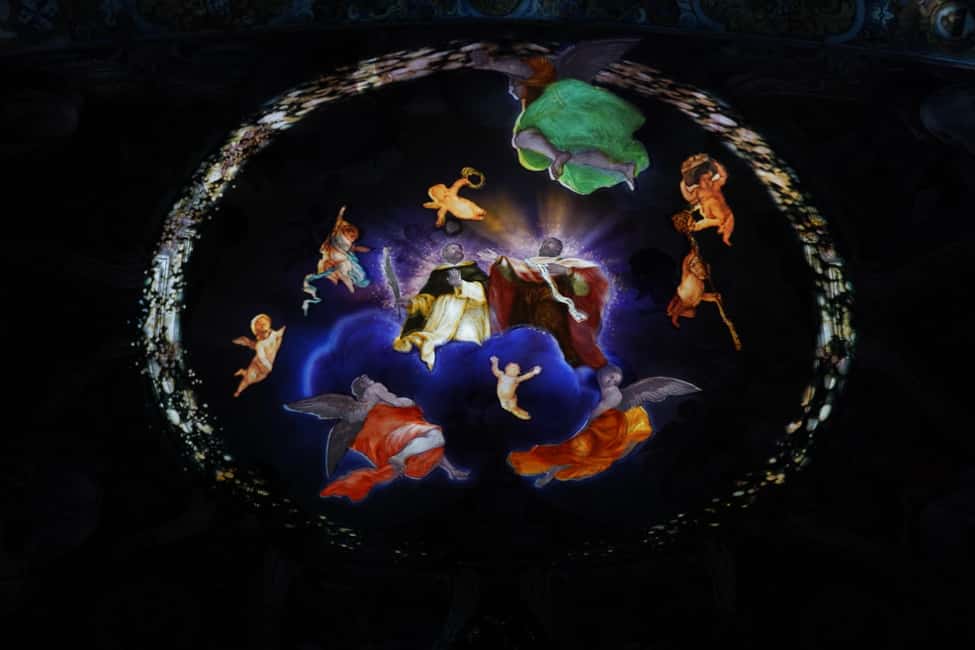
- Homage to Beauty: The Main Dome Projection Moment
- Exploring the Church at Your Own Pace (Without Missing the Best Bits)
- Price and Value: Is $17 Worth It?
- Timing, Hours, and What to Watch For
- What to Bring and Simple Rules Inside
- Should You Book the Light of Saint Nicholas Experience?
- FAQ
- How long is the visit?
- What languages is the audio guide in?
- Where do I start?
- Are the projections shown at specific times?
- What are the opening days and hours?
- Do I need a scarf or ID?
- Is flash photography allowed?
Key points at a glance
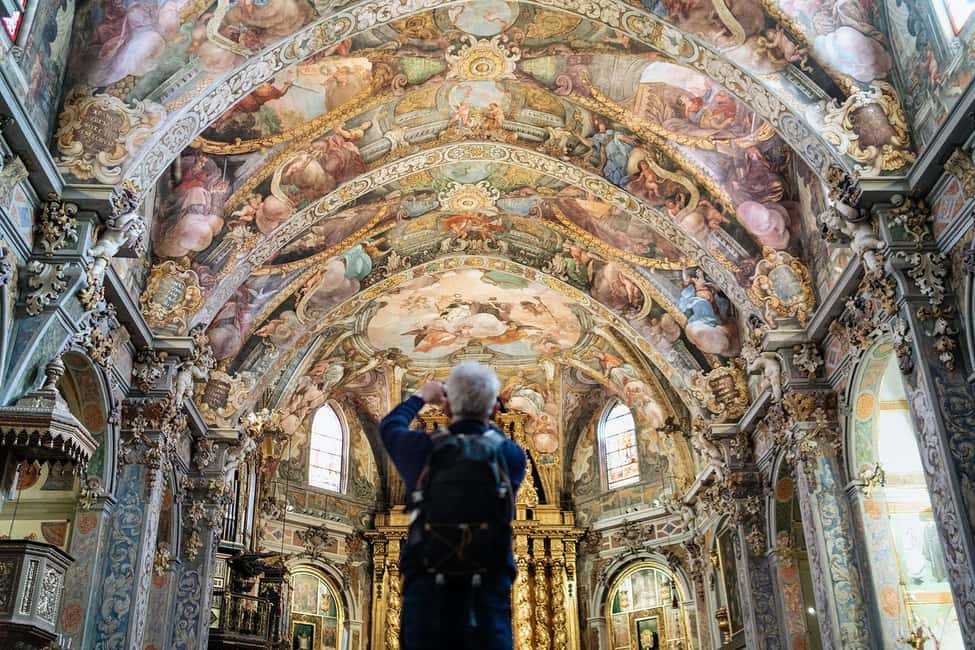
- San Nicolás Church entry + audio guide included so you can explore at your own speed
- Two multimedia rooms—The Heartbeat of Saint Nicholas and Lux ex Oriente—set the context before the main projection
- The baroque dome gets the video-mapping treatment with Homage to Beauty
- Projections run hourly starting at 11:00, so timing your arrival matters
- Dress code detail: bring a scarf (shoulders need covering) and ID may be checked
San Nicolás Church: Your 45-Minute Base in Valencia
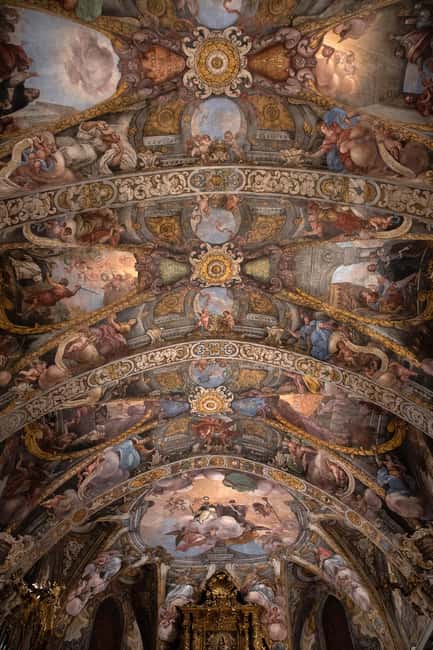
San Nicolás Church is one of those places where the building itself does most of the talking. You’ll enter, grab your audio guide, and start moving through the church like you’re touring with an instructor who actually points out what to notice.
The ticket is built around a 45-minute experience, but don’t interpret that as 45 minutes of lights and video. Think of it as: time in the church with a guided route, plus time in the multimedia rooms, plus the main ceiling projection at the right moment.
If you’re the type who likes to understand what you’re seeing (instead of just snapping photos and hoping it makes sense later), this works well. The audio is there for a reason: the church has enough art and architecture details that you’ll miss things if you rush.
One practical note: the church can hold Mass, and access can be restricted at times, so keep your visit flexible and check the supplier site if your timing is tight. Also, the church is closed on Mondays—Valencia loves a Monday reset, even for famous churches.
You can also read our reviews of more tours and experiences in Valencia.



Picking Up the Audio Guide and Getting Oriented
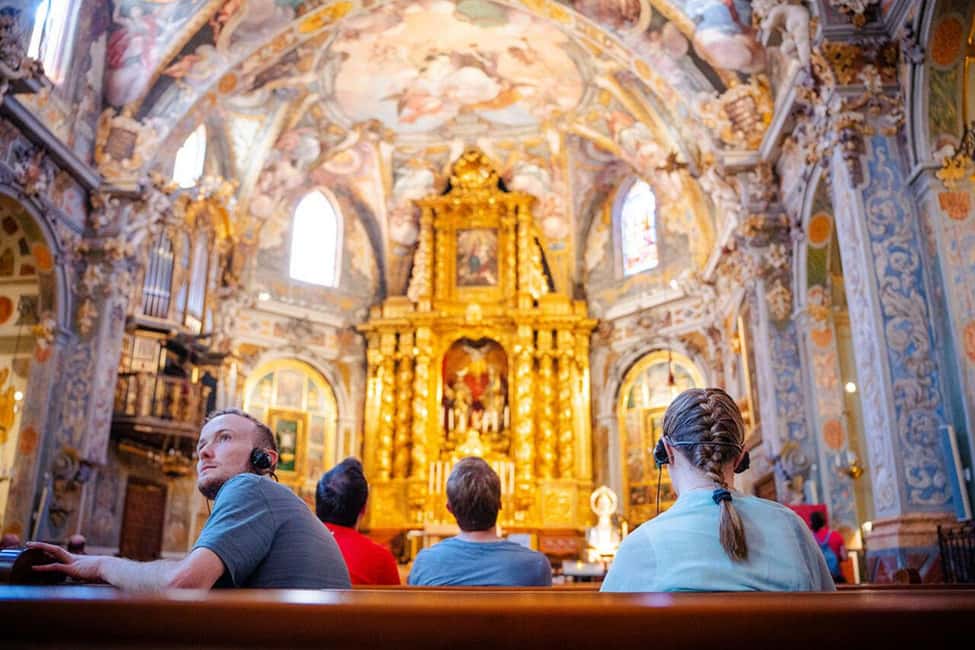
Your meeting point is simple: enter San Nicolás Church and pick up your audio guide. From there, you’re free to explore at your own pace.
That self-guided freedom is a plus. You can spend a little more time where you’re curious—especially on the vaults and painted areas—without feeling pushed along like you’re in a checklist tour. And because the audio exists to guide you to key moments, you’ll get more out of the walk.
Here’s the one practical thing I’d do right away: before you start listening, take a few seconds to understand how the headset sits (and adjust it if needed). The audio guide is included, but one detail from past experiences is that the device can feel tricky to keep comfortable. Getting it right at the start saves annoyance later.
The Audio Guide: How to See Frescoes and Symbolism Fast
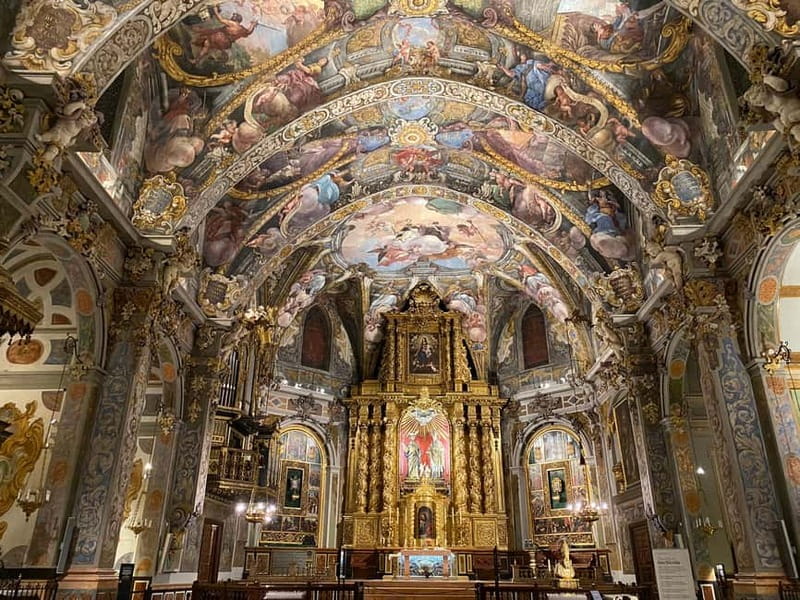
The audio guide is available in Spanish, French, Italian, and English. That matters because the show isn’t just “pretty visuals”—it’s tied to symbols and history linked to the parish and its patron saint.
What I like about the setup is that it trains your eye. San Nicolás isn’t only about one dramatic moment. The tour context helps you notice how the church was built and what features mean. With the audio running, frescoes covering the vaults feel less random. They become clues in a story.
You’ll also spend time learning how the church developed over centuries, including what’s referenced as early as the 13th century—the era when the building’s story begins in this program. If you enjoy architecture that has layers (instead of a single “original” moment), the audio makes that layering click.
And yes, there’s a bit of religious art context here. But the programming is designed as an appreciation of light, beauty, and harmony, so you don’t need to be there for theology to enjoy it.
The Light of Saint Nicholas: Three Interventions, One Flow
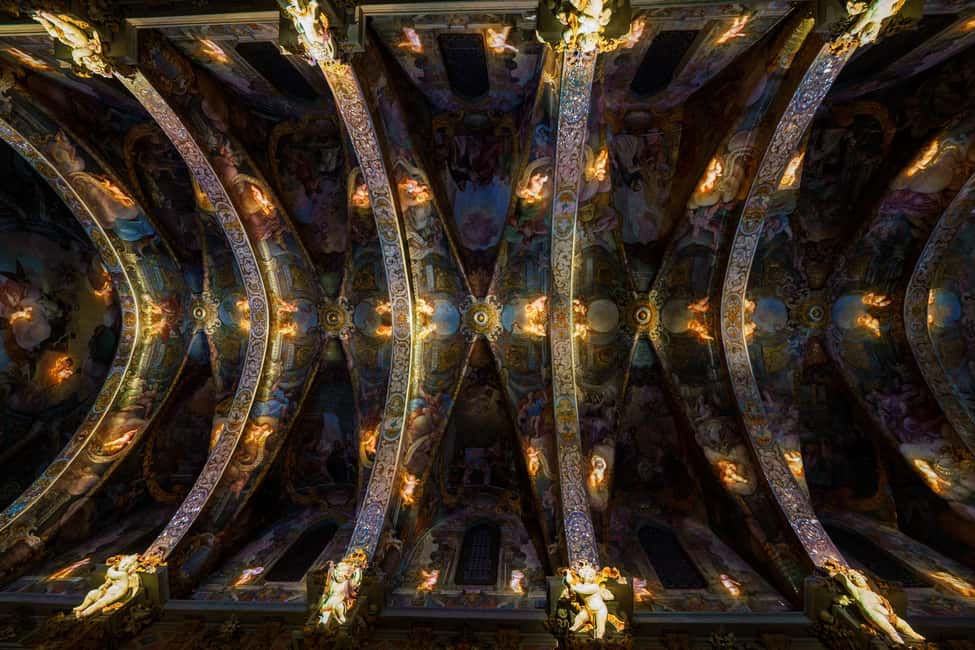
The “Light of Saint Nicholas” experience is made of three parts, each with a different style of art storytelling. The point isn’t to overload you with information. It’s to move your understanding forward: first the building’s heartbeat, then the saint’s symbols, then the dome’s luminous centerpiece.
Here’s how the pieces work conceptually:
1) The Heartbeat of Saint Nicholas
2) Lux ex Oriente
3) Homage to Beauty (the main video-mapping projection on the baroque ornamentation and dome)
You’ll move between the church spaces and multimedia rooms. The audio guide helps stitch it together so the transitions feel logical instead of random.
The Heartbeat of Saint Nicholas: From Roman Valencia to the Parish
The first multimedia stop is The Heartbeat of Saint Nicholas. This part focuses on history: it traces the building’s story and the place where it stands since the time of Roman Valencia.
What you’ll get from this segment is context. Without it, old churches can feel like “old walls.” With it, you start seeing the church as a living landmark—something that grew, changed, and held meaning over time.
It also sets up a second theme: the parish’s identity. This isn’t just a museum moment about dates; it’s a story about how the community experienced its patron and its home in that space.
If you’re a fan of timeline explanations, this is your on-ramp. If you’re more visual than wordy, it still works because it links story to the physical place you’re standing in.




Lux ex Oriente: Saint Nicholas Symbols in Audiovisual Form
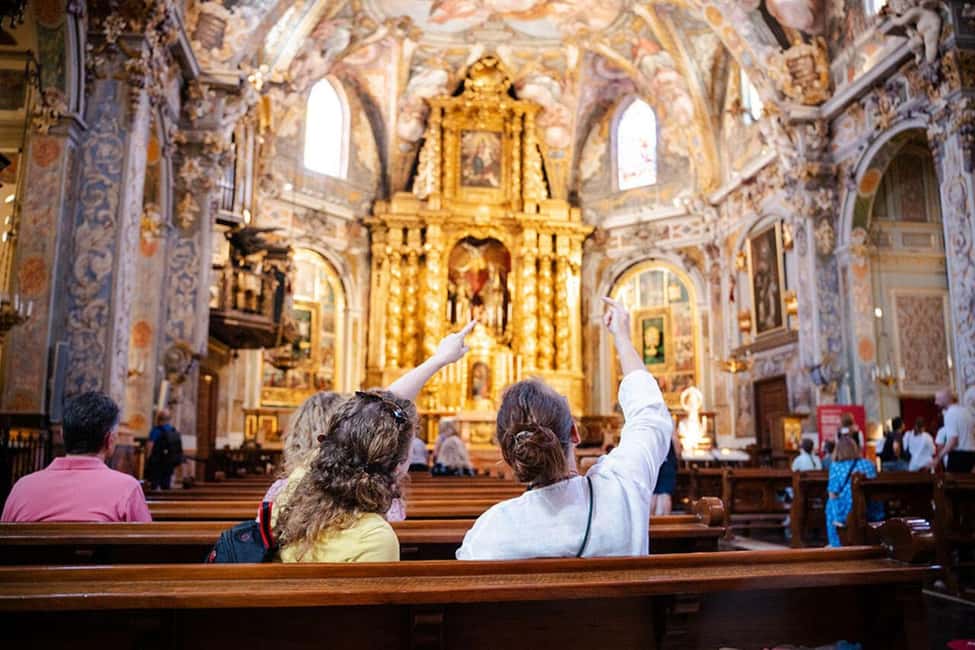
Next is Lux ex Oriente, described as a creative interpretation of symbols connected to Saint Nicholas. Instead of talking at you, it translates symbol language into audiovisual form.
This is the part that tends to feel most like “art project” rather than traditional guided history. You’ll likely appreciate it if you like iconography—saints, attributes, and repeated motifs—or if you just enjoy how design turns meaning into something you can feel.
Even if you can’t name every symbol, the format helps you follow the ideas. It’s less about memorizing details and more about recognizing that the church’s decoration isn’t only decorative. It’s communicating.
Homage to Beauty: The Main Dome Projection Moment
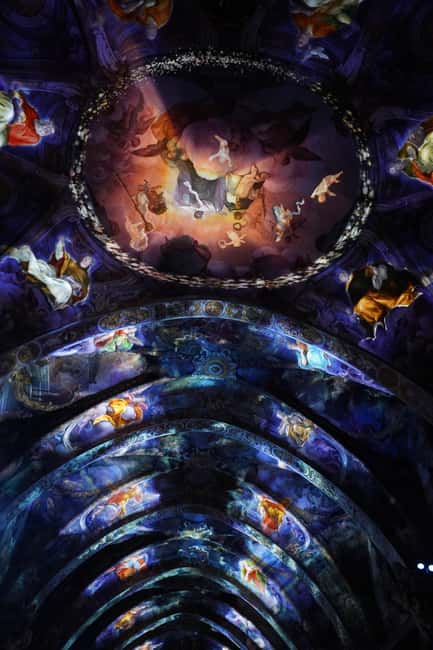
The finale is Homage to Beauty, a projection that puts light, music, and 21st-century technology in service of the church’s baroque ornamentation—often compared to the Valencian Sistine Chapel vibe in the description.
This is the moment where the ceiling and dome start to feel alive. The whole program aims for “harmony and luminosity,” and the video-mapping does exactly what it should: it makes you look up, slow down, and see how the building changes under shifting light.
Timing matters here. The projections are shown hourly starting at 11:00. If you arrive after a show starts, you may have to wait for the next hour, and that can stretch your “45 minutes” depending on how fast you explore the church spaces in between.
Also, plan for the projection itself to be shorter than you might expect. Even though the total experience is listed at 45 minutes, the actual ceiling moment is the kind of thing that happens in one concentrated burst. Your total time covers listening, room transitions, and then the show at the right time.
Exploring the Church at Your Own Pace (Without Missing the Best Bits)
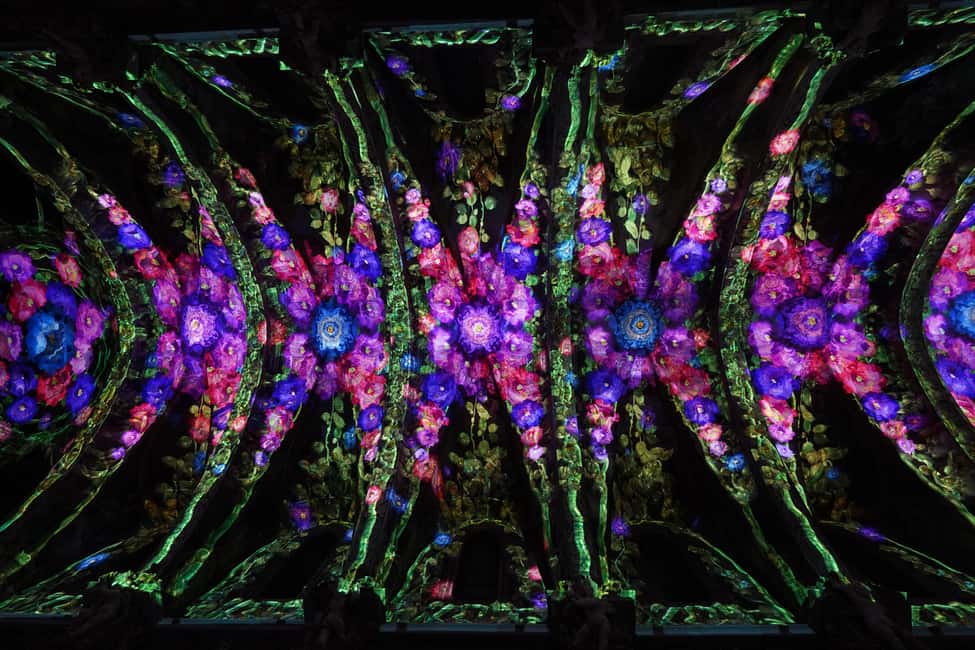
Between multimedia rooms, you’ll roam inside San Nicolás Church. This is where you appreciate the real payoff: the fresco paintings, the painted vaults, and the overall mix of architectural styles.
From past experiences, people often call out the Gothic ceiling and the way the narration explains how the chapel was built and what meanings are attached to it. Even if you don’t go hunting for every architectural term, you’ll benefit from standing still and letting the audio guide you to what to focus on.
A small but smart strategy: do one slow circuit first—listening for cues—then return to your favorite spots while the lighting and crowds change. If you like photos, you’ll want to be mindful that flash photography isn’t allowed, so rely on steady phone settings rather than blasting the ceiling with light.
Price and Value: Is $17 Worth It?
At $17 per person, this ticket isn’t just an entry fee to admire a pretty church. It’s also:
- entry to San Nicolás Church
- an included audio guide
- access to multimedia rooms (Lux ex Oriente and The Heartbeat of Saint Nicholas)
- the main projection (Homage to Beauty)
So the real question isn’t whether the church is beautiful (it is). The question is whether you’ll use what’s included. If you’re the kind of visitor who likes a guided path, learns while you walk, and enjoys technology paired with sacred art, you’ll likely feel good about the value.
If you prefer purely quiet, non-structured viewing, you might feel the cost is geared toward people who want the audio + light-show package. In that case, you might wish you had more time simply wandering, because the show segments are the key feature.
My advice: treat this as a “ticketed experience” rather than a normal church visit. If you walk in expecting only a quick look, it can feel overpriced. If you come ready to learn and watch the projection, it lands as a fair deal.
Timing, Hours, and What to Watch For
Here are the opening hours provided:
- Tuesday to Friday: 10:00 to 19:30
- Saturday: 10:00 to 18:30
- Sunday: 13:00 to 20:00
- Closed Mondays
- You can be inside until 1 hour before closing
The projection schedule is the other timing anchor: shows run hourly starting at 11:00. That means your best move is to arrive with enough buffer to catch a projection on your first try.
If you’re going early in the day, check whether it aligns with the 11:00 start. If you’re arriving later, you might be fitting the projection into your hour slot, then using the remaining time to explore with the audio.
What to Bring and Simple Rules Inside
Keep it straightforward. You’ll want:
- Passport or ID card
- A scarf for covering shoulders (shoulders need to be covered)
And avoid:
- pets
- food and drinks
- swimwear
- flash photography
Also remember: Mass can happen, and access can be restricted at times. When a church is still a working place of worship, the “museum rules” don’t always fully apply. If access is limited, be patient and use the time wisely.
Should You Book the Light of Saint Nicholas Experience?
Book it if you want a church visit with an actual storyline: how the building came together, what the symbolism means, and how baroque art looks when light and music take over. It’s especially worth it if you like getting guided context while you explore at your own pace.
Skip it (or at least think twice) if you strongly prefer quiet viewing with no audio headset and no projections. The program is clearly designed around the multimedia rooms and the main video-mapping moment, so you’re paying for the full package, not just a traditional walk-through.
If you do book: arrive with a little extra time to find the entrance and aim for a projection slot starting at 11:00. That small planning step helps you avoid the most common frustration—show timing that doesn’t match your arrival.
FAQ
How long is the visit?
The experience is listed as 45 minutes. You’ll also have time to explore the church, and you can enter and take part until 1 hour before closing.
What languages is the audio guide in?
The audio guide is included in Spanish, French, Italian, and English.
Where do I start?
Enter San Nicolás Church and pick up your audio guide to begin your tour.
Are the projections shown at specific times?
Yes. The projections are shown hourly starting at 11:00.
What are the opening days and hours?
The church is closed on Mondays. Tuesday to Friday it’s 10:00–19:30, Saturday 10:00–18:30, and Sunday 13:00–20:00.
Do I need a scarf or ID?
Bring passport or ID card, and bring a scarf for covering your shoulders.
Is flash photography allowed?
No. Flash photography is not allowed.