REVIEW · BILBAO
Walking Tour in Bilbao
Book on GetYourGuide →Operated by Local Experts Tours · Bookable on GetYourGuide
Bilbao tells its story on your feet. This 2-hour walking tour stitches together the old town, a 19th-century city makeover, and modern Bilbao icons, starting right in the Casco Viejo and ending near the waterfront sights. You’ll also get a guided look at how Basque culture fits into daily life, not just big monuments.
What I like most is the small-group size (10 max.), which makes it easy to ask questions and get practical local tips. I also love the strong focus on Basque culture and language, with guides like Beatriz, Adur, Jose, Miguel, and Victoria bringing it to life in real ways you can repeat on your own.
The main drawback to keep in mind is the 2-hour time limit. It’s enough to get your bearings fast, but it’s not enough for long museum-style pauses or leisurely market browsing—so bring curiosity, not a slow pace.
In This Review
- Key takeaways before you go
- Teatro Arriaga to Casco Viejo: the route that helps you navigate Bilbao
- Casco Viejo landmarks: the Seven Streets, San Antón, and Santiago Cathedral
- La Ribera Market: seeing Bilbao’s food culture where it happens
- Ensanche streets and 19th-century growth: why Bilbao changed shape
- Zubizuri Bridge and the Guggenheim zone: modern Bilbao in one walk
- The pacing and group size: why max 10 works for a short visit
- Price and value: why $41 can feel like a bargain
- What to do before and after the walk
- Practical tips: make the 2-hour walk easier on your feet
- Should you book this Bilbao walking tour
- FAQ
- How long is the Bilbao walking tour?
- Where do I meet the guide?
- How many people are in the group?
- Is the tour offered in English and Spanish?
- Is the tour wheelchair accessible?
- What happens if the minimum group size is not reached?
- Is the tour suitable for solo travelers?
Key takeaways before you go
- A tight route with big variety: Casco Viejo landmarks, Ensanche architecture, and modern Bilbao icons in 2 hours
- Small group energy: limited to 10 people max, which helps the guide tailor questions and pace
- Market time at La Ribera: a close-up look at a working local food hub
- Start at Teatro Arriaga: meet in front of the Arriaga Theater main entrance
- English and Spanish live guides: you’ll tour with a guide who can explain in Spanish or English
- You may get a guide like Beatriz, Adur, Jose, Miguel, or Victoria: consistent themes, with room for questions
Teatro Arriaga to Casco Viejo: the route that helps you navigate Bilbao
You start at the Arriaga Theater main entrance, which is a smart choice if you’re new to town. From there, you’re walked into the older layers of Bilbao, so the city stops feeling like random streets and starts feeling like a connected story.
This tour is also built for attention span reality. With a 2-hour walk, you’ll cover enough ground to understand where the neighborhoods “begin” and “shift,” without turning your day into a full marathon. That matters in Bilbao because the city layout changes fast—old stone streets give way to wider avenues, and then to modern waterfront landmarks.
I think the biggest win is orientation. By the time you reach the transition points—Casco Viejo to Ensanche to contemporary Bilbao—you’ll be able to choose what to see next on your own, instead of guessing.
You can also read our reviews of more walking tours in Bilbao


Casco Viejo landmarks: the Seven Streets, San Antón, and Santiago Cathedral
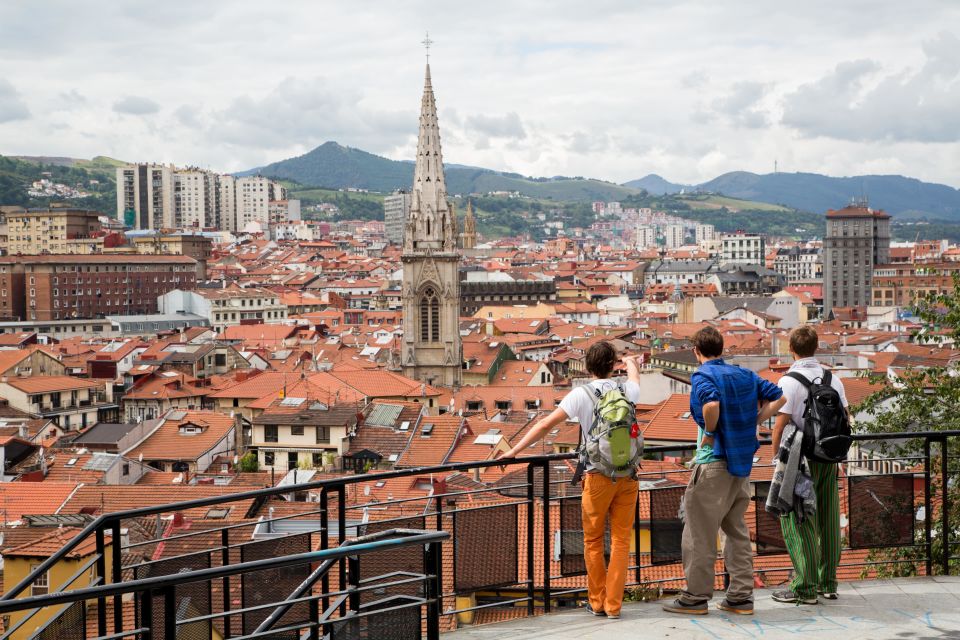
Your Casco Viejo introduction is anchored by the Seven Streets, the Church of San Antón, and Santiago Cathedral. These stops aren’t just name-drops. They show you how Bilbao’s older core was built for people moving on foot, with tight connections between religious sites, markets, and daily routines.
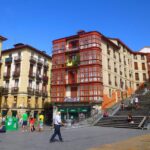
The Seven Streets are especially useful because they teach you the neighborhood logic. After your walk, you’ll recognize the “feel” of the old center—narrow lanes, old facades, and that sense that you’re reading the city like a book page-by-page.
Church of San Antón and Santiago Cathedral also help you understand Bilbao’s identity beyond industry. Even if you don’t consider yourself a church person, these are good anchors for context: they help explain why certain areas became social and cultural focal points.
La Ribera Market: seeing Bilbao’s food culture where it happens
One of the most practical stops is La Ribera Market. This is where the tour connects history to something you can touch: local food life. Even if you just walk through and look, it helps you understand why the market is more than a tourist photo stop.
What makes this stop valuable on a short tour is timing and placement. You’re not sent to the market after the walk is over—you’re guided through the area while your baseline knowledge is still forming. That means you’ll know what you’re seeing: the market as a living hub rather than a distant attraction.
If you’re the type who likes to plan meals, you’ll likely come away with ideas for what to eat next and where to find it. Guides on this walk often share bar and restaurant suggestions tied to local habits—useful when you want good value without guessing.
Ensanche streets and 19th-century growth: why Bilbao changed shape
After Casco Viejo, the route moves into Ensanche, Bilbao’s stage for the big 19th-century urban transformation. This section is where you’ll notice a shift: buildings feel more structured, streets open up, and the overall vibe turns more cosmopolitan.
This matters because Bilbao’s modern reputation can make people forget it used to be a more compact, defensive-feeling city. Ensanche helps you bridge the timeline. You start to see how the industrial and financial boom pushed growth outward and upward, changing who had access to which spaces.
For your next day in town, this part gives you real guidance. You’ll know where to look for a more “city” feel—wider streets for strolling, architecture that reads differently than the old quarter, and neighborhoods that support cafés, shopping, and a slower pace than the Casco Viejo lanes.
Zubizuri Bridge and the Guggenheim zone: modern Bilbao in one walk
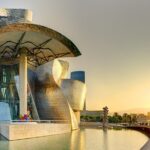
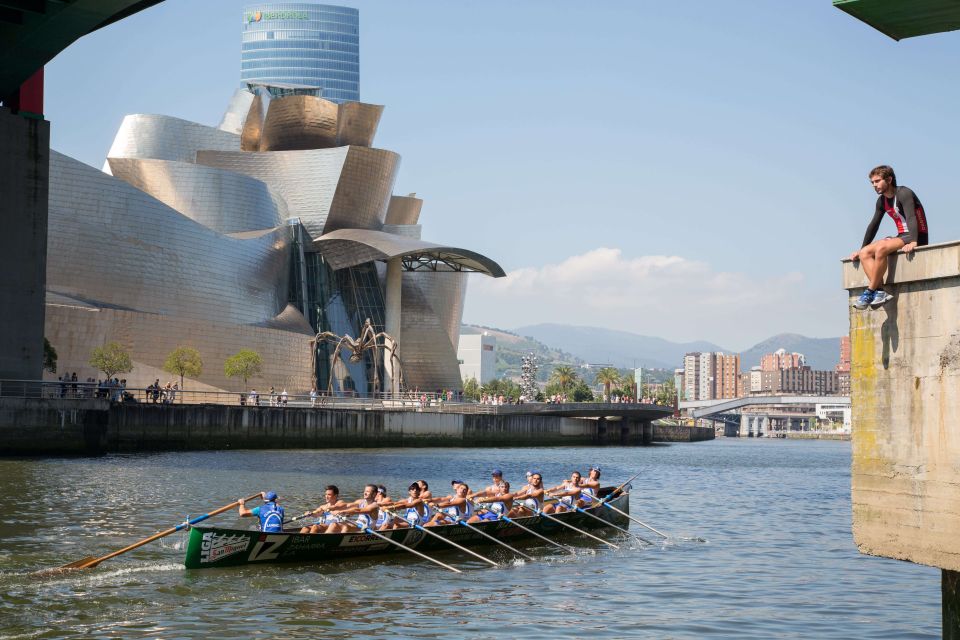
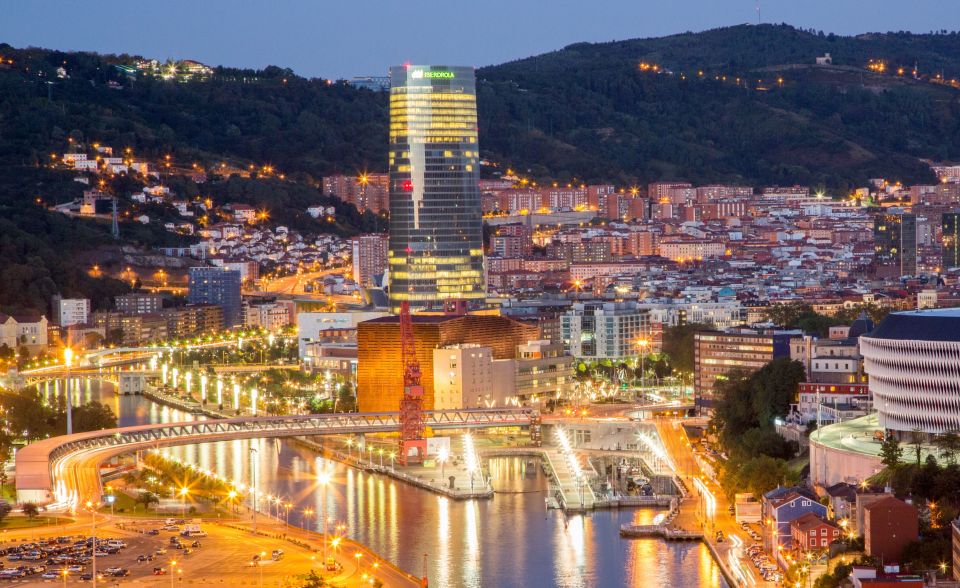
The tour finishes at contemporary Bilbao highlights, including the Zubizuri Bridge and the Guggenheim museum area. You’re not in a museum for hours here; you’re getting visual context fast. That’s actually the point of a short walk. It helps you connect the modern skyline to where you started.
Zubizuri Bridge is a quick “wow” moment, but it also helps you understand Bilbao’s shift toward design and reinvention. Then you reach the Guggenheim zone, which often feels like a different planet compared with the tight streets of the Seven Streets.
One thing to consider: if you want deep museum time, this walk won’t replace it. Think of this ending as a launch pad. Once you’re oriented, you can decide whether the Guggenheim itself is a must for you—and you’ll know how to get there smoothly.





The pacing and group size: why max 10 works for a short visit
This is a small-group tour limited to 10 participants, and that shows in the way the walk flows. You’re not stuck in a herd line, and it’s easier to ask follow-up questions when something catches your attention—language details, local customs, or what to do next.
The guides also seem to handle the pacing with real awareness. Some guides ask what you’re interested in at the start, then shape the balance of history, culture, and practical tips accordingly. That’s a huge help if your group includes different types of travelers—history fans, food people, and casual walkers all sharing the same sidewalk.
The tour is also live-guided in Spanish and English, so you’re not forced into a one-size-fits-all script. Based on the variety of guide styles you might encounter (including Beatriz, Adur, Jose, Miguel, and Victoria), you can expect a more narrative approach than a strict checklist.
Price and value: why $41 can feel like a bargain
At $41 per person for a 2-hour guided walk, the value is mostly about what you get for your time. You’re buying three things: local navigation help, contextual explanation, and practical recommendations you can use immediately.
Two hours is short, but it’s efficient. You’ll see multiple key areas—Casco Viejo, Ensanche, and modern Bilbao—without spending your energy getting lost between neighborhoods. For a first visit, that alone can save you hours of trial-and-error.
You also get a local guide included in the price. And from the guide patterns on this route, the “extras” often matter: food and drink suggestions, clarifying how Basque language and culture show up in real life, and pointing out details you might miss when walking alone.
What to do before and after the walk
You’ll get the most out of this tour if you treat it like a starting day, not a final day. If you do it early, you’ll understand what to prioritize later—whether that’s lingering in Casco Viejo, expanding your stroll into Ensanche, or spending a bigger block of time at the Guggenheim.
After the walk, use the direction the guide gives you rather than wandering randomly. If someone suggests specific tabernas or local bars, that’s often where you’ll find the best blend of value and atmosphere.
If you plan to eat while you’re in La Ribera, keep expectations realistic. The stop is part of a short walk, so bring the mindset of sampling and deciding what to return for, rather than trying to complete a full meal inside the tour time.
Practical tips: make the 2-hour walk easier on your feet
This is a walking tour, so wear shoes that can handle uneven old-street surfaces. Bilbao’s center is not the flat, uniform type of city that lets you coast. A good pair of shoes keeps the experience pleasant instead of tiring.
Rain is a real possibility, and rain clothes aren’t included. Some guides handle weather calmly, but you’ll still enjoy the tour more if you come prepared with a light layer or packable rain gear.
Also, don’t overbook that day. Two hours sounds small until you add transit and the fact that you’ll want time afterward to follow up on what you learned—especially Basque culture notes and food suggestions.
Should you book this Bilbao walking tour
If you want an efficient first look at Bilbao, I’d strongly consider booking. This walk is built for orientation: it strings together Casco Viejo, Ensanche, and modern icons in a way that helps you plan the rest of your trip without stress.
It’s especially a good fit if you:
- are visiting for a short time and need to understand neighborhood flow fast
- care about Basque culture and enjoy learning how language and identity show up in everyday life
- like small-group pacing and real back-and-forth with a guide
Skip it only if you’re looking for museum-level time or long stays in one neighborhood. This tour is about seeing the whole city picture quickly, not disappearing into one single site for hours.
FAQ
How long is the Bilbao walking tour?
The tour lasts 2 hours.
Where do I meet the guide?
Meet your guide in front of the Arriaga Theater main entrance.
How many people are in the group?
The group is small, limited to 10 participants.
Is the tour offered in English and Spanish?
Yes. The live guide speaks Spanish and English.
Is the tour wheelchair accessible?
Yes, the tour is wheelchair accessible.
What happens if the minimum group size is not reached?
If the minimum group size (2 people) isn’t reached, the tour will be canceled. You’ll be offered an alternative date or a full refund, and you’ll be contacted 24 hours before.
Is the tour suitable for solo travelers?
Solo travelers are welcome, though availability depends on the scheduled group.