REVIEW · ALICANTE
Alicante City & Beach Bike Tour
Book on Viator →Operated by Alicante by Bike · Bookable on Viator
A bike tour makes Alicante feel smaller fast. In just 2.5 hours, you’ll glide past Santa Bárbara Castle views and key sights from the old quarter to the coast.
I like that it covers both history and shoreline without turning into a lecture marathon, plus bottled water is included so you’re not scrambling in the heat.
One thing to consider: parts of the route are in town, so traffic can feel a bit busy in short stretches—good bike handling helps.
Key points at a glance
- Built for real sightseeing time: 2 hours 30 minutes that actually covers more than a single neighborhood.
- Santa Bárbara momentum: you’ll keep seeing the castle profile as you move through the city.
- Big “Alicante details” stops: the Explanada mosaic and Correos Square aren’t just photo ops.
- Beach + marina in one flow: Postiguet Beach meets the seafront walkway and port area.
- History explained without overload: co-cathedral, a former mosque-turned-church, and other damaged-and-rebuilt landmarks.
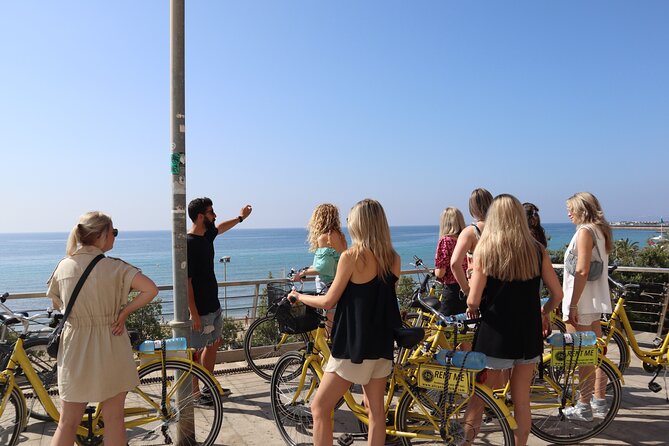
- Small group feel: up to 15 people, so the guide can keep an eye on pacing.
In This Review
- A 2.5-hour bike loop that ties Alicante together
- Price and what you’re truly paying for
- Where you start: C. Cienfuegos at 10:15
- Santa Bárbara Castle views without a day-long climb
- The Co-cathedral in Herrerian style: sober and striking
- A Gothic church with a Muslim past
- Postiguet urban beach: the Santa Bárbara face across the water
- Explanada’s mosaic and Correos Square: a city that loves details
- Shade and a slow breath at the 100-year-old ficus trees
- Back along the marina: Volvo Ocean Race port energy
- Old town meets rebuilt city: town hall, theatre, and market
- How the guides make or break the ride
- Is it a good fit for families, first-timers, and mixed abilities?
- Practical tips so you enjoy every stop
- Should you book the Alicante City & Beach Bike Tour?
- FAQ
- How long is the Alicante City & Beach Bike Tour?
- What time does the tour start?
- How much does the tour cost?
- What’s included in the tour price?
- Is the tour offered in English?
- Where does the tour start?
- What happens if the weather is poor?
A 2.5-hour bike loop that ties Alicante together
Alicante works best when you hop between “levels”: the hill towns feel like one world, and the waterline feels like another. This tour is designed to stitch those worlds together in a way you can actually enjoy—no long waits, no complicated transfers, and no day-long commitment.
The best part is the mix. You get old town texture (cathedral streets, squares, and buildings shaped by conflict), then you roll into ocean air at the urban beach and marina. It’s a smart way to get oriented on your first or second day, especially if you’re also planning to spend time on your own.
Price and what you’re truly paying for
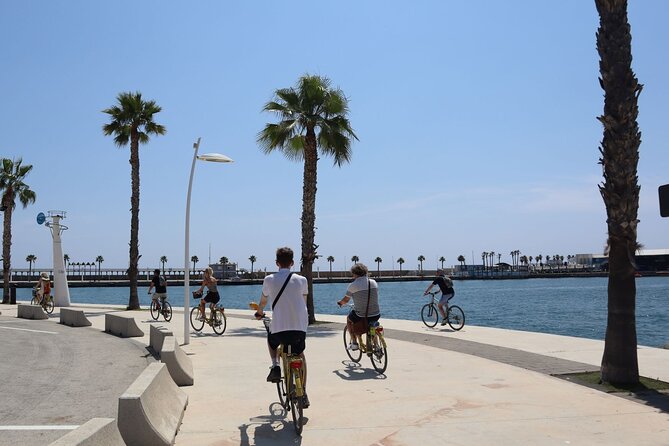
At $36.28 per person for about 2.5 hours, this is one of those “pay a little, save a lot of legwork” deals. You’re covering three practical costs in one: a professional guide, the bike rental, and bottled water to keep you moving.
If you’re deciding between a regular bike and an e-bike option, it’s worth thinking about your energy. Several riders recommend going e-bike if the day is hot, or if your group includes teens, mixed abilities, or anyone who prefers an easy cruise over pedaling. You might pay a bit more for the e-bike, but the payoff is a smoother ride with less sweat.
You can also read our reviews of more cycling tours in Alicante

Where you start: C. Cienfuegos at 10:15
The tour meets at C. Cienfuegos, 1 (03002 Alicante) and runs starting 10:15am. That late-morning timing matters. It’s late enough that morning chill is usually gone, but early enough that you’re not stuck only in midday heat.
You’ll also get a mobile ticket, and the meeting point is near public transportation. Translation: you can arrive calmly, grab your bike, and roll without a scavenger hunt.
Santa Bárbara Castle views without a day-long climb
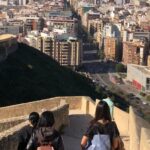
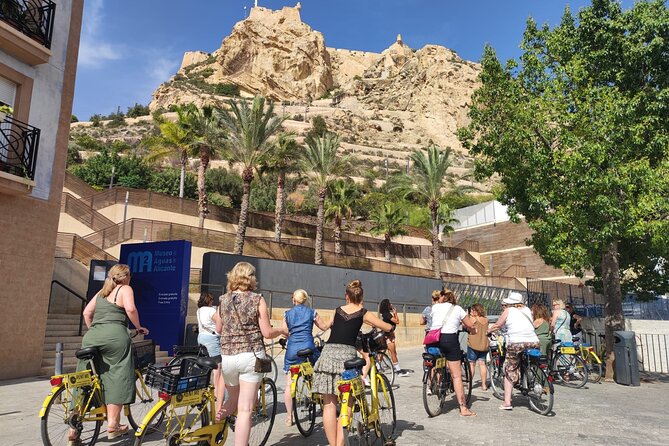
The route begins with a viewpoint zone connected to Santa Bárbara Castle. Even if you don’t go inside, the castle’s presence shapes Alicante’s identity. You’ll ride along areas that feel like they’re hugging the hillside wall coming down from the castle, and you’ll get that signature perspective of the city below.
This part is great for two reasons:
- You get orientation fast. From this height, you start to understand how the old quarter and the coast relate.
- The ride keeps you outdoors. You’re not standing in one place waiting for the “right time” to see the view.
Possible drawback: because it’s near the castle slopes and city walls, the streets can feel a little tighter at points than the open seafront. Just keep your focus on the guide’s pace and the spacing between bikes.
The Co-cathedral in Herrerian style: sober and striking
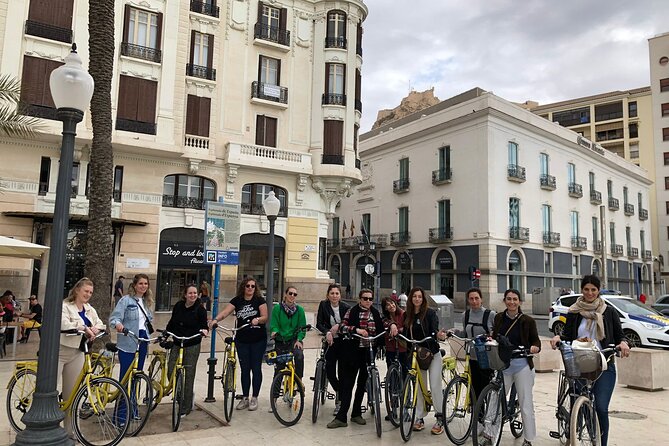
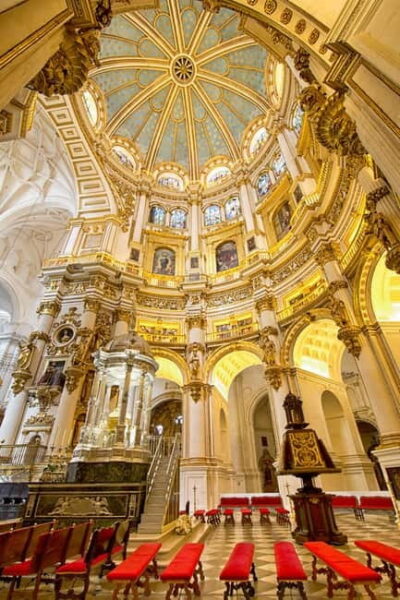
Next up are major religious landmarks tied to Alicante’s long timeline. You’ll stop at the Co-cathedral, where construction began in the 17th century. It’s described as Herrerian style—meaning it’s restrained, sturdy, and spare rather than overly decorative.
Why this stop matters: it gives you a quick “architecture key” for understanding why parts of the city feel serious and monumental. The building isn’t trying to impress with ornament. It impresses by scale and clarity.
And if you’re the type who likes reading buildings like a story, this is a good moment. The guide explains the style and what to look for, so you’re not just snapping a picture and moving on.
A Gothic church with a Muslim past
Alicante’s layers are not subtle. One of the most memorable stops is a church that began life as a Muslim mosque, then became a Christian church after the Christians conquered the city. The current structure is Gothic.
There’s a practical angle here too. You learn to notice how a city changes its “religious face” over centuries. Same ground, different meaning. That makes later stops—especially ones tied to bombardment and rebuilding—feel more connected.
One caution: this is a landmark stop, so plan for a short walk around it and for bike pauses. If your group prefers constant movement, this is still worth it, but it’s not a nonstop ride.



Postiguet urban beach: the Santa Bárbara face across the water
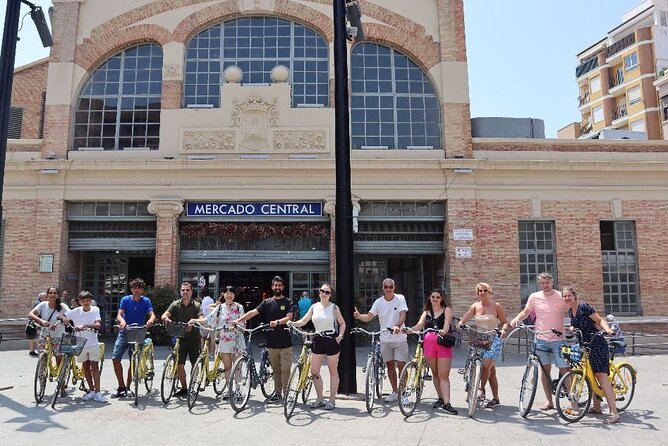
Then the tour drops you into coastal mood at Postiguet Beach, described as the only urban beach you can visit within the city. This stop is less about swimming and more about the viewpoint relationship.
From the beach, you can contemplate Santa Bárbara Castle with its famous Moor face profile. That face is such a distinctive landmark that it turns a normal beach walk into a city-identity moment.
Small drawback: because it’s a city beach, it can be busy. The good news is you’re not stuck there long. You’re there to reset your eyes and enjoy the sea air, then you head back to the ride.
Explanada’s mosaic and Correos Square: a city that loves details
Alicante has a reputation for doing things with style, and the Explanada is one of the clearest examples. You’ll roll past the seafront esplanade known for its famous mosaic, made of 6,600,000 pieces in three colors. One color is called Alicante red, and it’s tied to marble found only in this region.
What I like about this stop is that it rewards slow looking. Even if you’re on a bike, the guide’s explanation gives you something specific to watch for, so the whole stretch feels intentional rather than decorative.
You’ll also stop at a square that used to be called Correos. It reflects the bourgeois city and its ideas about urban design during the period when a new social class shaped the city’s look.
Downside? This is where the ride can feel a bit “watch your surroundings” because the seafront is popular. The bikes and small group help, but you still want alertness.
Shade and a slow breath at the 100-year-old ficus trees
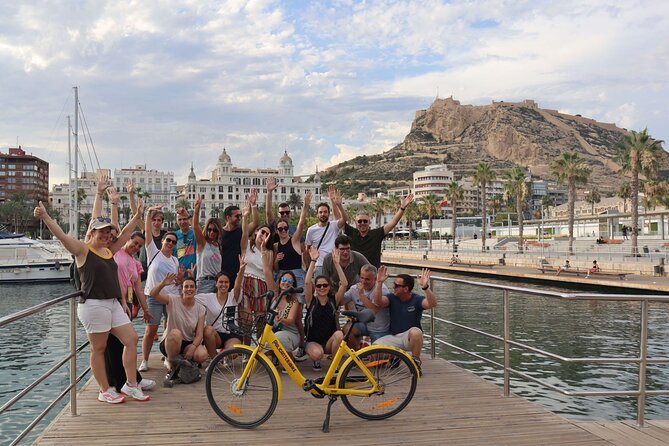
Not every stop has to be grand. One of the most pleasant moments is in a park with 100-year-old ficus trees. It’s a simple thing, but it’s a real comfort feature if you’re riding in warmer months.
These shade breaks do more than make the walk nicer. They also reset your pace so you’re not arriving at the next “big” sight already tired.
If you’re traveling with teens or anyone who gets cranky when movement stops, this park stop is usually the kind that feels like a break, not a delay.
Back along the marina: Volvo Ocean Race port energy
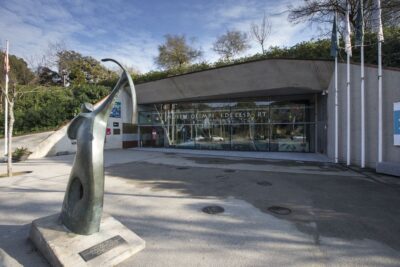
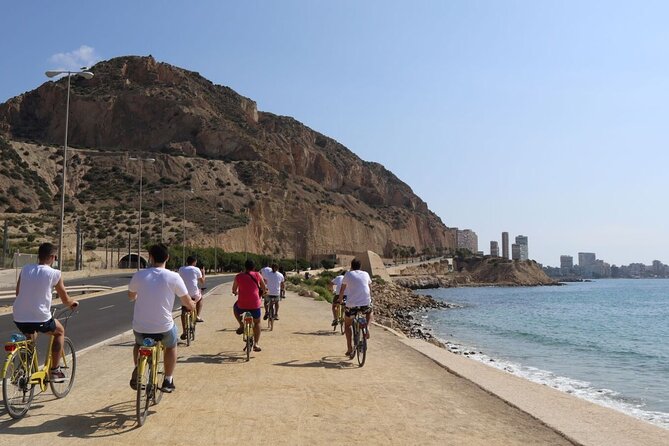
After the park, the route heads back toward the marina area. This is the coastal stretch where you can settle into the ride. The tour includes the port zone connected to the Volvo Ocean Race, built in 2008.
One of the fun descriptions here is that you’ll enjoy the sea under your feet. Without overpromising what you’ll see exactly, the point is clear: it’s a modern, sea-linked area that feels different from the older streets you’ve already covered.
This part is also where you’ll understand how Alicante’s waterfront has kept evolving—not just as a tourist strip, but as a working public space.
Old town meets rebuilt city: town hall, theatre, and market
Now you shift from “what the city looks like” to “how the city survived.” The tour visits key civic and cultural landmarks that relate to Alicante’s growth and damage during bombardments and war.
You’ll learn how the first Town Hall was destroyed by bombardments in 1691, partly because it was close to the sea. The town hall you can see today was built at the beginning of the 18th century. That contrast gives you a tangible sense of loss and reconstruction.
Then you’ll ride past an avenue that marks a boundary between the old quarter and the historic center that emerged later, in the second half of the 19th century. The guide notes it used to be a ditch at the foot of the wall where rainwater ran through—an odd but fascinating detail that turns “street layout” into history.
Other stops include:
- A theatre built in the middle of the 19th century
- A market built at the beginning of the 20th century, later bombed during the civil war, with parts reconstructed
These aren’t random “look at this building” stops. They show how Alicante’s civic life kept going even when parts of the city were hurt. If you like your history tied to real places you can stand in, this section is a strong payoff.
How the guides make or break the ride
The tour’s quality shows up in the way the guide manages pacing and explanations. In the guides credited on recent tours, you’ll see names like Fernando, Chris, Chadi, Isabelle, Rose, and Anke/Anki—and the common thread is stop timing and keeping the story clear without dragging.
If your group includes different fitness levels, this matters a lot. One of the recurring advantages here is that the route is framed as a gentle, workable way to see the highlights. People describe the pace as comfortable, and they mention the guide stays patient if someone needs a moment.
Also, bottled water is included, and some riders mention small local treats or food samples late in the ride. Even if what you get varies by day, the idea is consistent: the guide wants you to feel like you’re tasting the place, not just passing it.
Is it a good fit for families, first-timers, and mixed abilities?
Yes, with a few common-sense notes.
This tour says most travelers can participate, and the group size is capped at 15. That combination usually leads to a smoother experience for families and for mixed groups, because the guide can keep people together without rushing them.
It’s especially suited for:
- First-time visitors who want a structured orientation in half a day
- Families with teens who can handle short rides but don’t want an endurance test
- Travelers who want history explained in plain language, tied to streets and buildings
If you dislike riding through busy city sections at all, the seafront and town traffic can feel a bit hectic in short stretches. It’s not constant stress, but it is real city energy.
Practical tips so you enjoy every stop
A few things will make this tour smoother:
- Bring sunscreen and something to drink beyond the included water. The water helps, but you may still want extra.
- Wear closed-toe shoes. You’ll be on and off the bike at multiple stops.
- If you’re choosing between regular and e-bike, go e-bike when heat or uphill comfort matters to you. Many riders say it makes the day easier without losing the fun.
- If you want photos, plan for pauses rather than trying to shoot while rolling. The guide’s timing is part of the experience.
Should you book the Alicante City & Beach Bike Tour?
I’d book it if you want an efficient, well-paced way to see a lot of Alicante’s identity in one morning. The value is strong because you’re paying for more than bike time—you’re buying guided context, city orientation, and the convenience of having water covered.
I’d skip or choose a gentler alternative if:
- You hate mixed city traffic moments.
- Your group can’t handle short rides between stops.
- You’d rather spend the entire day at a single beach than see the city layers back-to-back.
If you’re visiting Alicante for a short trip or you want your first “aha” day, this tour is a solid bet.
FAQ
How long is the Alicante City & Beach Bike Tour?
It runs for about 2 hours 30 minutes.
What time does the tour start?
The start time is 10:15am.
How much does the tour cost?
The price is $36.28 per person.
What’s included in the tour price?
The tour includes bottled water, a professional guide, and bike rental.
Is the tour offered in English?
Yes, the tour is offered in English.
Where does the tour start?
It starts at C. Cienfuegos, 1, 03002 Alicante (Alacant), Alicante, Spain.
What happens if the weather is poor?
This experience requires good weather. If it’s canceled due to poor weather, you’ll be offered a different date or a full refund.