Mosaic tile making in Seville is unexpectedly calming. In about two hours, you learn how Arabic-style mosaics shaped the look of the city, then you build your own tile to take home. It’s culture you can touch, not just look at.
I especially liked the mix of mosaic history with hands-on making, guided by Viki, who connects the craft to what you’re seeing around Seville. I also loved the payoff: you leave with a real handmade souvenir that feels personal, not store-bought.
One thing to consider: the workshop runs best with good weather, and the tile-piece color options can be limited (often blue, gray, red, and white). If you want lots of color choice, plan for a more focused palette.
In This Review
- Key highlights to know before you go
- Turning Seville sightseeing into hands-on craft
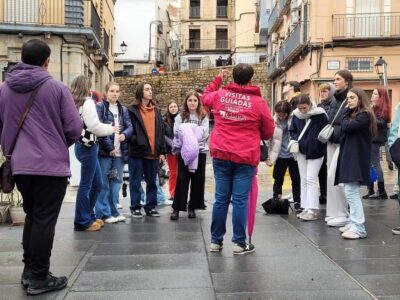
- Meeting at C. Castilla and setting up for a smooth class
- Catedral De Sevilla stop: why mosaics still matter in Gothic Seville
- Cilla del Cabildo: the quiet side of Seville’s built world
- Triana market workshop setting and the Salón Deza mosaic idea
- Your mosaic tile: what you’ll make and how the class works
- Viki the instructor: calm help, real Sevillian tips
- Price and value: what $50.69 buys you in real terms
- Who this mosaic class is best for
- Weather, timing, and how to plan around Seville days
- Should you book the Seville art artisans mosaic tile class?
- FAQ
- How long is the Seville mosaic workshop?
- What does the mosaic workshop cost?
- Is the workshop in English?
- Is this class private?
- Do I get materials to make the mosaic?
- Where do you meet for the activity?
- Where does the experience take place?
- What if the weather is bad?
- Is there a cancellation deadline?
- Are service animals allowed?
Key highlights to know before you go

- Arabic mosaic design inspired by the tiles of the Salón Deza
- All materials included so you can focus on making, not shopping
- A workshop setting described as over 400 years old, with a distinct Seville feel
- Viki’s teaching style works for first-timers and kids too
- Take-home packaging so your tile travels with you
- Private class setup so your group gets attention without crowd pressure
Turning Seville sightseeing into hands-on craft
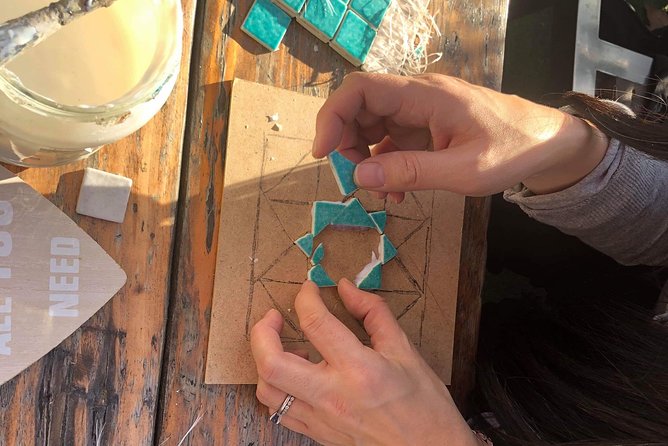
Seville can be nonstop walking. This experience gives your body a break and gives your brain a new task: cutting, placing, and assembling mosaic pieces into something you can actually carry home.
What makes it feel worthwhile is the balance. You get a short historical thread, then you get right to the craft. That means you’re not stuck watching someone else work for hours. You’re doing the steps, asking questions, and learning why certain colors and shapes matter in mosaic design.
You also get a real sense of place. The workshop is tied to the tradition behind the Arabic tile aesthetic, with inspiration drawn from the Salón Deza. And the class takes place in a space described as more than 400 years old, which gives your tile a nice sense of lineage, even if you’re starting from zero.
You can also read our reviews of more tours and experiences in Seville.


Meeting at C. Castilla and setting up for a smooth class
You meet at C. Castilla, 2, 41010 Seville, and the activity ends back at the same meeting point. It’s a simple route plan, and that matters in a city where streets can shift block to block.
The class is offered in English, and you get a mobile ticket, which is one less thing to manage while you’re juggling maps, buses, and tapas stops. It’s also a private tour/activity, meaning it’s only your group, not a big shared classroom. That usually makes it easier to ask questions and get help when you need it.
One more practical detail: the experience is designed for most travelers. Based on what people say, it works well for kids and adults together. If you’re bringing a youngster, you should still expect a hands-on session that requires patience and fine-motor focus, but the setup is flexible enough to keep it fun.
Catedral De Sevilla stop: why mosaics still matter in Gothic Seville
The first stop is Catedral De Sevilla. On the outside, it screams Christian-era architecture. But the craft lesson behind the experience is about influence and continuity. Even when styles change, the artistic language of tilework and ornament doesn’t vanish. It shifts shape, material choices, and where it appears.
This stop is less about hunting one specific mosaic panel and more about getting the right context. You get a guided connection between Seville’s broader story and the tile art you’ll build later. That’s useful for your understanding, because once you start placing pieces yourself, the history becomes less abstract.
What I like about starting with a major landmark is that it helps you orient fast. You have a big “you are here” moment at the start, then you move into a smaller, more personal craft setting. If you’ve been doing long museum walks all morning, this also acts like a reset button.
Possible drawback: if you came hoping for a heavy focus on mosaics inside the cathedral itself, this stop may feel more like a contextual primer than a deep dive into specific tile displays.
Cilla del Cabildo: the quiet side of Seville’s built world
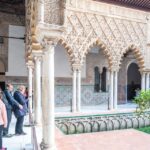
Next up is Cilla del Cabildo. This is where the vibe tends to turn more thoughtful. Instead of a massive public monument, you get a different kind of setting—more tied to how Seville was organized, how materials and traditions moved, and how craft culture fits into the city’s everyday structures.
For your mosaic learning, this pause helps because it frames tilework as something that belongs to real spaces, not just galleries. Mosaics are labor-intensive. They’re tied to workshops, materials, planning, and long-term placement. Learning that context makes your own tile-making feel more intentional.
If you prefer less crowd noise and more “how did this city function” thinking, this stop is a good match. It also helps break up the day so you don’t go from one loud sight to another loud sight without a breather.
Triana market workshop setting and the Salón Deza mosaic idea
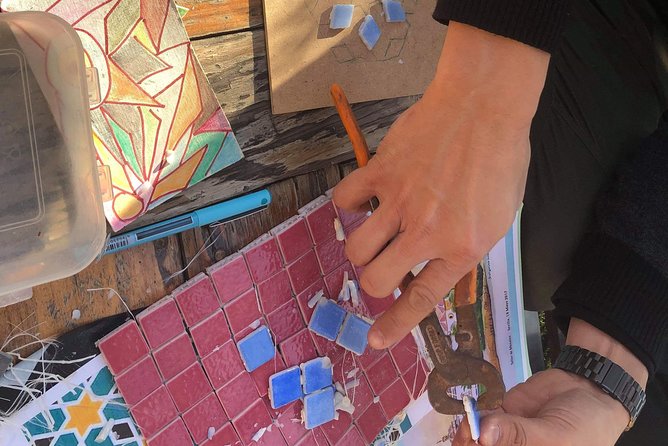
After the two sightseeing stops, the real heart of the experience happens near the Triana market area. Many sessions feel like a casual, arts-focused pause in the middle of daily life—people working, talking, and learning while the city keeps moving around you.
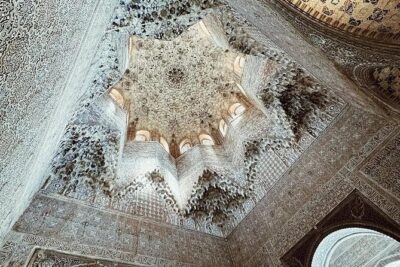
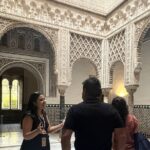
The design inspiration is clear: your mosaic is Arabic-inspired, pulled from the aesthetic linked to the tiles of the Salón Deza. That matters because it gives your project a target style. You’re not just assembling random “tile art.” You’re making a design that fits a specific tradition.
Another detail I appreciate: the workshop is described as taking place in a space over 400 years old. Even if you don’t obsess over the exact year, that kind of setting makes the craft feel grounded. You’re not doing a generic activity. You’re participating in a practice with long roots in Seville.
If you’re the type who gets more enjoyment from making than from staring at screens, this is the moment you’ll feel most “in it.”


Your mosaic tile: what you’ll make and how the class works
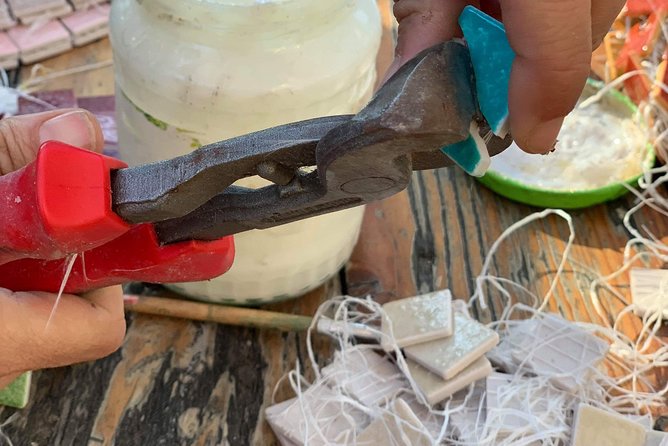
The class is a two-hour workshop with all materials included. That’s a big part of the value. You don’t need to bring tools, and you don’t need to figure out supplies on your own once you’re already in Seville.
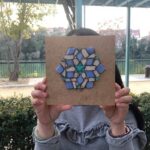
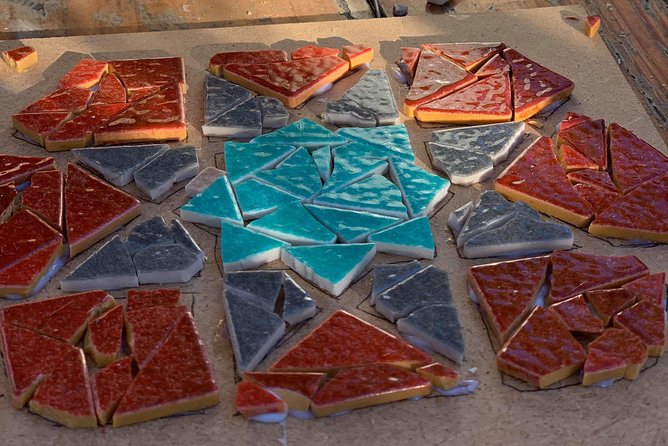
Your goal is to create an Arabic-style mosaic piece using provided tiles or pieces (the exact materials are part of the workshop setup). The instruction is step-by-step, and Viki guides you through the process. People consistently highlight that she’s patient, helpful, and good at making a first-timer feel capable.
Two practical things to know based on what people say:
- The tile-piece palette can be limited. Often it includes blue, gray, red, and white. If you love color variety, you may wish there were more options, even though you can still make a nice pattern within that range.
- It’s meant to be relaxing. It’s not a rushed “craft factory.” The pacing works well if you enjoy puzzles, careful placement, and taking your time.
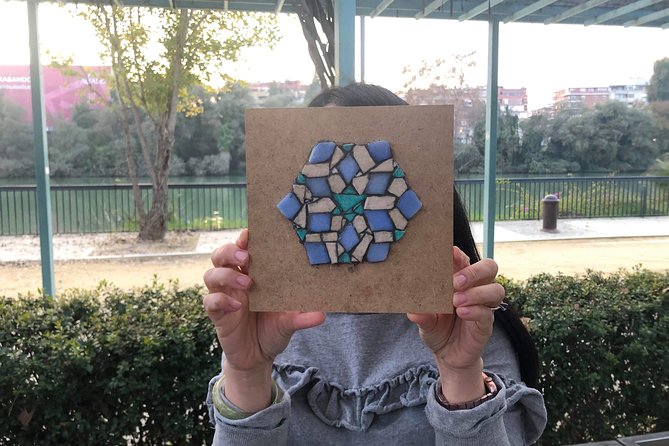
At the end, you take your mosaic home. One traveler noted the workshop packages tiles easily for transport. That’s the kind of detail that turns a fun activity into a real keepsake that survives the trip.
Viki the instructor: calm help, real Sevillian tips
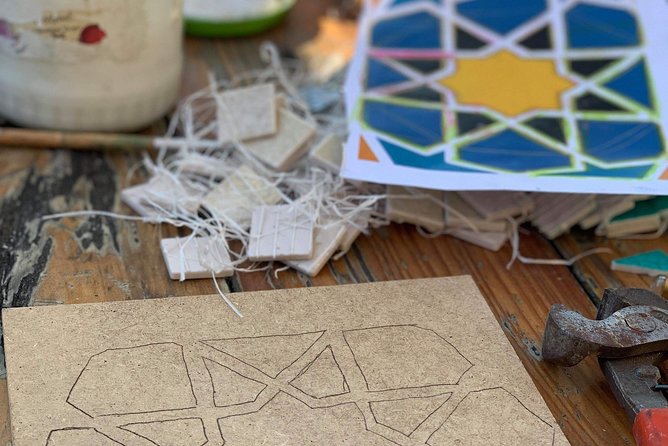
The instructor is Viki. Based on the feedback, she combines two skills that are rare in the same person: she’s teaching-focused, and she’s also Seville-focused.
On the craft side, people say she explains clearly and adapts to your starting point. Some mention the session works well even for kids as young as preschool age, and that Viki can bring child-friendly help or props. That tells you this isn’t only for adults who already know how to hold tools.
On the Seville side, Viki often shares recommendations—places to eat, areas to explore, and festival-type ideas. Even if you came with a full itinerary, those local suggestions can save you time. They also help you understand the city beyond the big-name landmarks.
My take: the best part isn’t just that she teaches mosaic. It’s that she makes you feel like you’re part of a small moment in Seville, not a customer in a conveyor line.
Price and value: what $50.69 buys you in real terms
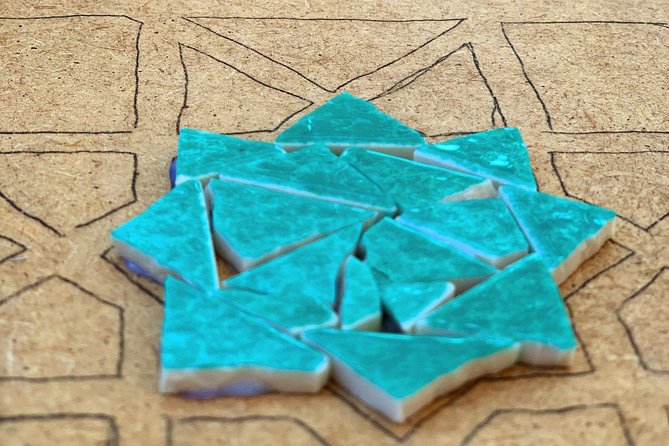
The price is $50.69 per person for roughly two hours, and it includes materials and instruction. Compared to buying a souvenir tile from a shop, you’re paying for two extra things: time and personal effort.
That matters. A store-bought tile is nice. A tile you made while learning what the shapes and color choices mean feels different when you hang it, display it, or pack it in a drawer. It’s a memory with weight.
It also helps that the class runs as a private activity for your group. Even if your group is small, you’re not sharing your attention with other strangers. In craft workshops, that extra help often makes the difference between struggling and enjoying the process.
One more value angle: it’s booked fairly ahead of time on average (about a month). If you’re traveling in peak season or on a tight schedule, I’d treat it like a real booking, not an optional add-on.
Who this mosaic class is best for
This works well for:
- Couples who want a change of pace from walking and photo stops
- Families looking for an activity that keeps kids engaged while adults still get cultural context
- First-timers in mosaics, since instruction is geared for beginners
- People who like craft + explanation rather than pure museum-style learning
From the way the workshop is described, it’s also the kind of activity where you can chat as you work. Several people mention the session feels relaxed and friendly, which helps if you’re traveling solo and want something social without loud group dynamics.
If you’re traveling with mobility limits, you may still be able to participate since the experience says most travelers can join and it’s near public transportation. The one condition is weather, since the experience requires good weather.
Weather, timing, and how to plan around Seville days
This workshop requires good weather. If it’s canceled due to poor weather, you’ll be offered a different date or a full refund.
That means you should book it thoughtfully. If you’re scheduling a mosaic class on the only half-day you have free, keep a little flexibility elsewhere on your itinerary. Seville’s weather can be a roller coaster in certain seasons, and the workshop decision hinges on it.
Timing-wise, the day is structured with two sightseeing stops and then the workshop. That’s great when you want to break up sightseeing without losing the cultural thread. Also, because it’s about two hours for the core workshop time, you can still keep an evening meal plan without rushing.
One small practical tip: comfortable clothes and shoes help, since you’re doing detailed handwork.
Should you book the Seville art artisans mosaic tile class?
Book it if you want:
- A hands-on Seville experience that produces a take-home result
- A guided connection between local culture and the Arabic mosaic style of the Salón Deza
- A calmer change of pace after lots of walking
- A workshop that feels beginner-friendly and family-friendly
Skip it (or adjust expectations) if:
- You’re chasing lots of color variety and lots of artistic freedom with a huge palette
- Your schedule has zero flexibility for weather changes
- You expected a deep mosaic museum tour at Catedral De Sevilla and Cilla del Cabildo rather than a guided setup leading into making
For most people, it’s an excellent value: you pay for instruction, materials, a private group experience, and a keepsake you truly own. It’s the kind of souvenir you can’t buy, because you made it.
FAQ
How long is the Seville mosaic workshop?
It’s about 2 hours.
What does the mosaic workshop cost?
The price is $50.69 per person.
Is the workshop in English?
Yes. The workshop is offered in English.
Is this class private?
Yes. It’s a private tour/activity, and only your group participates.
Do I get materials to make the mosaic?
Yes. The workshop includes provided materials, and you create your own mosaic tile.
Where do you meet for the activity?
You meet at C. Castilla, 2, 41010 Sevilla, Spain.
Where does the experience take place?
The class happens in the historic workshop setting near the Triana market area, with the experience tied to mosaic inspiration from the Salón Deza.
What if the weather is bad?
The experience requires good weather. If it’s canceled due to poor weather, you’ll be offered a different date or a full refund.
Is there a cancellation deadline?
Yes. You can cancel for a full refund if you cancel up to 24 hours in advance of the experience’s start time.
Are service animals allowed?
Yes. Service animals are allowed.