REVIEW · GIRONA
Costa Brava and Medieval Villages Small Group from Girona
Book on Viator →Operated by Girona Experience Tours · Bookable on Viator
One day, two totally different sides of Catalonia: coast and medieval stone. This small-group outing mixes Costa Brava viewpoints with walkable villages you can explore at a human pace.
What I like most is the way the day teaches you how these places grew—by the sea, around fortifications, and in the old inland quarters. You’ll also get those hands-on moments like walking the coastal path and spotting the defensive towers and castle features in Begur, Pals, and Peratallada.
The main thing to consider is that it’s not a sit-and-watch tour. Expect a fair amount of walking, including old streets and uneven surfaces, and lunch isn’t included.
In This Review
- Key points to know before you go
- Why this Costa Brava day starts in Girona (and not on the coast)
- The 8-hour pacing: how much walking is really in the plan
- Far de Sant Sebastià at Llafranc: lighthouse views with instant payoff
- Calella de Palafrugell to Llafranc: the coastal path walk that makes the scenery real
- Begur’s castle, towers, and Indiano houses (XVI-century defenses)
- Pals and El Pedró: the Medieval Quarter you can actually wander
- Peratallada: walls, moat, and palace-style medieval drama
- Girona orientation and the Gothic-quarter vibe that ties it all together
- La Bisbal d’Empordà: pottery and ceramics as a practical souvenir
- Lunch strategy: not included, but the day is built to handle it
- Value and what the price buys you at $175.36
- Who should book this tour (and who might want a different plan)
- Should you book Costa Brava and Medieval Villages from Girona?
- FAQ
- How long is the Costa Brava and Medieval Villages tour?
- Where does the tour start and where does it end?
- Is lunch included?
- What’s included in the price?
- Does the tour include admission tickets?
- What language is the tour offered in?
- What are the cancellation terms?
Key points to know before you go
- Small-group format (up to 7) with guide attention you can actually ask questions about
- Air-conditioned minivan transport between Girona, the coast, and inland medieval stops
- Lighthouse viewpoint at Far de Sant Sebastià for big Costa Brava panorama
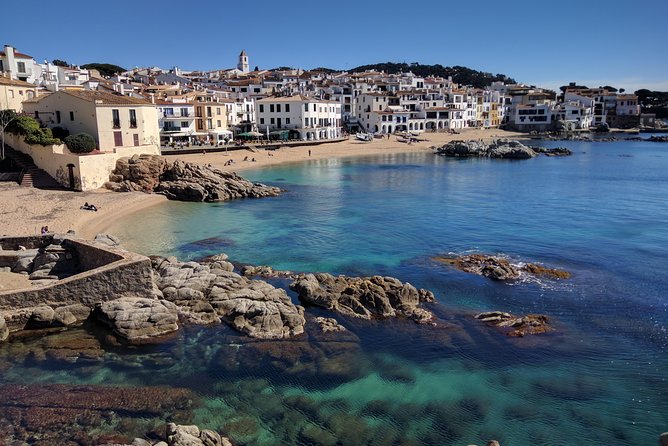
- Coastal walking segment between Calella de Palafrugell and Llafranc (great for photos)
- Medieval villages on foot: Begur, Pals (El Pedró), and Peratallada (walls, moat, palaces)
- La Bisbal d’Empordà pottery shop stop for a practical local souvenir
Why this Costa Brava day starts in Girona (and not on the coast)
Girona is the smart launch point for a day like this. You get to begin with an orientation in the city (a short stop at Plaça de Sant Feliu), and then the day turns into a coastline-and-fortress lesson across Catalonia’s east.
This matters because it keeps the trip from feeling like random sightseeing. The coast stops aren’t just pretty views. The medieval villages aren’t just postcard towns. Together, they show the same theme from different angles: sea trade and defense, inland power and church life, and the way stone buildings still tell the story.
You’re also not stuck figuring out routes or parking. With the minivan included, you can spend your energy on walking and looking, not on driving stress.
You can also read our reviews of more tours and experiences in Girona.


The 8-hour pacing: how much walking is really in the plan
The whole trip runs about 8 hours (starting at 9:00 am and ending back at the same meeting point). The walking is broken into chunks, and each major village gets its own guided time slot.
Here’s the practical rhythm:
- Coast viewpoints and coastal paths are timed so you can pause for photos and lookouts.
- Medieval towns are handled on foot, with guided walking through key areas.
- There’s also a shop stop at La Bisbal d’Empordà that gives your legs a breather.
Based on the feedback, the walking is enough that you should wear comfortable shoes. The good news: the stops are arranged so you’re not continuously walking for hours without a break. You’ll just need to be ready for old-town surfaces and some uphill-or-stairs moments.
Far de Sant Sebastià at Llafranc: lighthouse views with instant payoff
The first real standout moment is the lighthouse visit: Far de Sant Sebastià in Llafranc. You get about 40 minutes here, which is a sweet spot—long enough to get your bearings, short enough that you won’t feel stuck in one spot.
What you’re going for is the payoff view over the Costa Brava. This stop is perfect early in the day because it resets your eyes. After a morning start in Girona, suddenly you’re looking at that stretch of Mediterranean coastline from the kind of vantage point that makes you understand why people built and defended these towns in the first place.
Also, this stop is listed as Admission Ticket Free, so you’re not juggling extra entry fees while you’re already planning your day.
Calella de Palafrugell to Llafranc: the coastal path walk that makes the scenery real
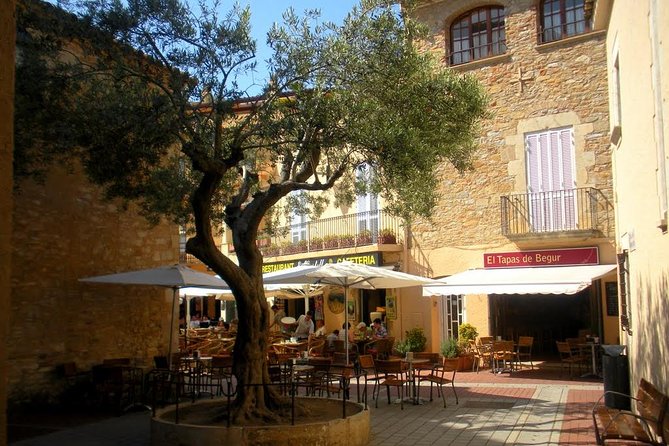
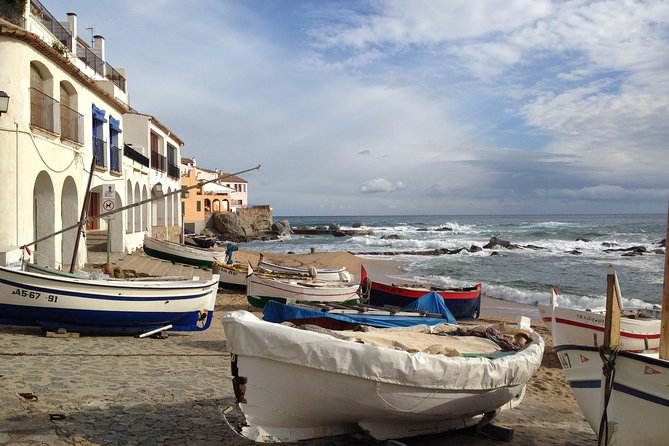
Next comes a 1-hour walk along a path near the Mediterranean sea, connecting Calella de Palafrugell to Llafranc. This is the kind of segment that adds texture to the day.
Instead of just looking from one viewpoint, you’re moving along the coast. That changes everything:
- Sea views keep coming in waves, not all at once.
- You get a better sense of coastline shape—how coves, cliff edges, and town edges meet.
It’s also a natural “story bridge” between the lighthouse and the medieval towns. You’re seeing how the coast connects to settlement patterns. The walk portion is where the day starts to feel like you’re traveling through a region, not hopping between stops.
Begur’s castle, towers, and Indiano houses (XVI-century defenses)
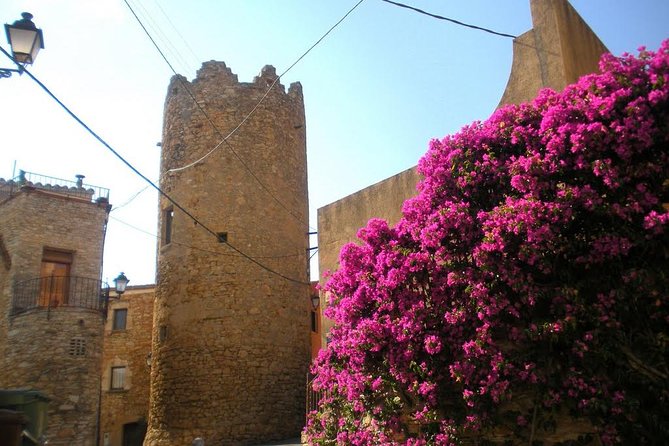
In Begur, you’ll spend about 1 hour on a guided walk focused on the village and its defensive identity. The highlights here are:
- Indiano Houses
- the Castle
- defensive towers from the XVI century
This is one of the best stops if you like architecture that has a “why.” A lighthouse says, Here’s where ships found land. Begur’s castle and towers say, Here’s how a community protected itself and controlled the area.
Begur also makes a strong transition from coast to inland feel. You start the day with sea angles; then you get the stone-and-mortar logic of defense, wealth, and local power.
One drawback to keep in mind: Begur is a walking town. If your mobility is limited, you’ll want to match your shoe choice and your expectations to cobblestones and uneven streets.



Pals and El Pedró: the Medieval Quarter you can actually wander
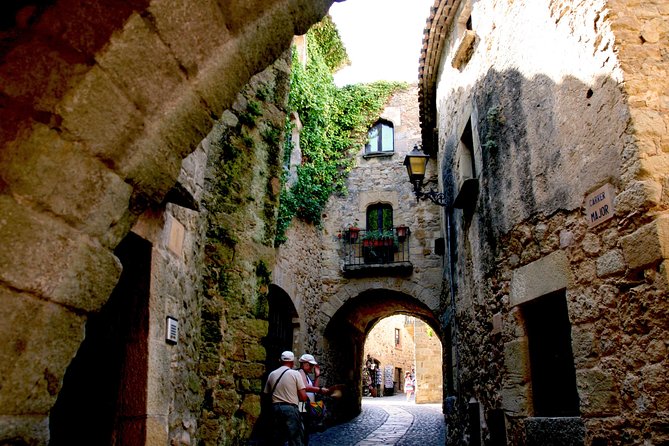
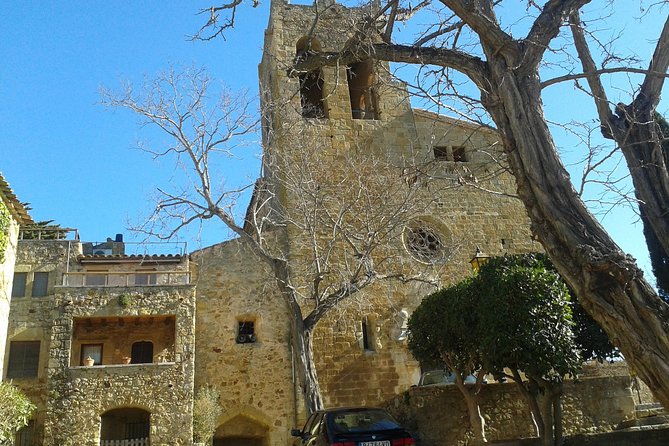
Pals is one of those inland towns that rewards slow attention. You get around 1 hour, and the guided walk focuses on constructions inside El Pedró, the medieval quarter.
The stop mentions specific features worth looking for as you walk:
- Tower of the Hours
- parts connected to the castle
- the Church of Sant Peter
This is where you start seeing medieval life as a physical layout, not just “old streets.” Narrow lanes, quarter boundaries, and key buildings create the map your feet follow. You don’t just see the town—you move through the medieval plan.
The good part for photography and personal pacing: 1 hour in a walkable quarter gives you time to stop when something catches your eye, without losing the group.
Peratallada: walls, moat, and palace-style medieval drama
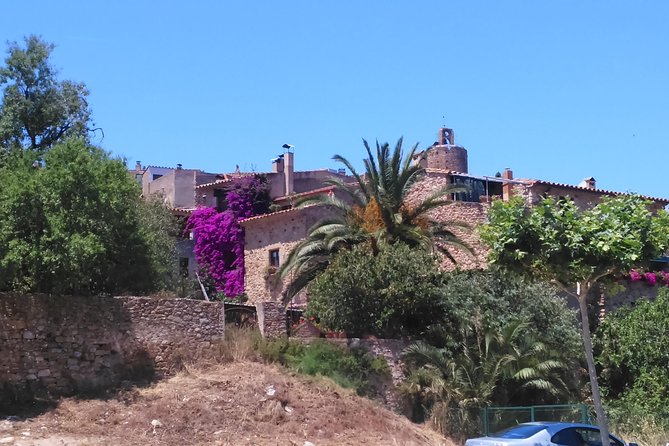
Then you head to Peratallada, with 1 hour 30 minutes for walking. Compared with some towns on day trips, that longer time matters because it gives you a chance to understand the place rather than rushing past it.
Peratallada is described around:
- Castle
- old walls
- a moat
- palaces
Even if you don’t know the technical terms, you’ll feel the design. Walls and moats change how light moves and how sightlines work. You’re standing inside a planned defense system, which makes the medieval story more tangible than a quick exterior photo.
If you love stepping into old-world geometry—corners, gates, boundaries—this is a top stop of the day.
Girona orientation and the Gothic-quarter vibe that ties it all together
There’s a short Girona stop that serves as a setup for the rest of the day. It’s brief—about 10 minutes—but it’s valuable because the tour isn’t only about places. It’s about linking what you see to a broader pattern: how coastal Catalonia and inland medieval quarters evolved side by side.
The overall theme includes things like cobblestoned Gothic quarters and historic town character. Even in a quick orientation, that framing helps you notice details later in towns like Begur, Pals, and Peratallada.
La Bisbal d’Empordà: pottery and ceramics as a practical souvenir
Mid/late in the day, you stop in La Bisbal d’Empordà for about 30 minutes to visit pottery and ceramics shops. This is a nice break after the heavier walking segments.
It’s also practical. Rather than buying something random because it’s pretty, you’re looking specifically at what the region is known for—ceramics you can actually pack and use later. And because the stop is time-boxed, you won’t lose the rest of your afternoon to wandering.
Lunch strategy: not included, but the day is built to handle it
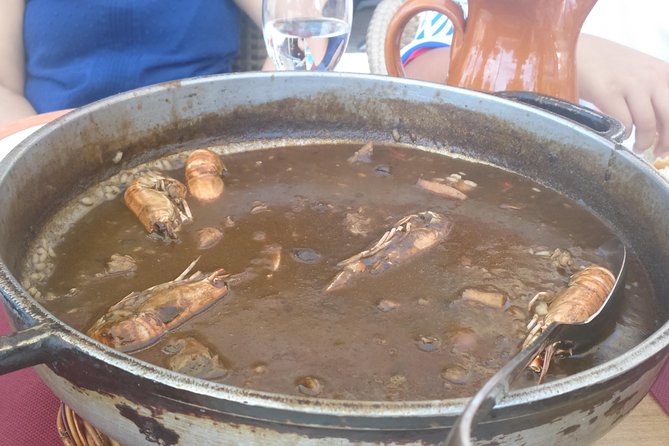
Lunch isn’t included. That’s typical for regional tours, but it’s still something you should plan for before you get hungry.
The experience does include bottled water, and the pacing suggests you’ll have time to eat at an appropriate point. In real terms, I’d treat lunch like this:
- Plan to buy it with the group’s timing in mind.
- Expect a local-food style meal rather than an all-you-can-eat tourist buffet.
If you have dietary needs, check with your guide when you start the day. You’ll save time by stating it early instead of trying to solve it when you’re already at a restaurant.
Value and what the price buys you at $175.36
At $175.36 per person for about 8 hours, the value isn’t that it’s the cheapest way to tour. The value is what’s wrapped into the day:
- Local guide for the story and walking interpretation
- Free transport by air-conditioned minivan
- Small-group size (up to 7 people)
- Bottled water
- Listed stops with Admission Ticket Free
If you tried to recreate this yourself, you’d still need transport, a route that connects the coast to the medieval towns efficiently, and enough local context to make the architecture and history click. Here, you’re buying time and translation of what you’re seeing into something you’ll remember.
From the guide side, the comments highlight a pattern: guides like Pau, Dylan, Miguel, Claudia, and Julia are praised for speaking excellent English and for bringing the day alive with real local storytelling. Drivers including Alex and Carmen/Carme also get credit for making the route smooth.
That combination—good pacing, good narration, and comfortable transport—is the reason the price tends to feel fair.
Who should book this tour (and who might want a different plan)
This tour fits best if you:
- want Costa Brava coast views plus medieval inland towns in one day
- like guided walking and architecture details (castle walls, towers, church buildings)
- prefer small-group travel over big bus crowds
- don’t want to drive yourself through the region
You might consider another option if you:
- have trouble with walking on older streets and uneven surfaces
- want lots of downtime with minimal walking
In short: if you like to get out and move a bit—while still staying comfortable with included transport—this is a strong match.
Should you book Costa Brava and Medieval Villages from Girona?
Yes, if you want a single day that gives you both the sea drama and the stone-defense story of this part of Catalonia. The coast walk, the lighthouse viewpoint, and the inland medieval focus make it feel like a real region, not a checklist.
If you’re on the fence, I’d base your decision on two things: your tolerance for walking and your interest in architecture and place-history. For the right traveler, this is the kind of trip that makes you feel like you covered a lot—without feeling rushed.
FAQ
How long is the Costa Brava and Medieval Villages tour?
It lasts about 8 hours.
Where does the tour start and where does it end?
It starts at Plaça de Sant Feliu, 17004 Girona, Spain at 9:00 am, and it ends back at the same meeting point.
Is lunch included?
No. Lunch is not included.
What’s included in the price?
Included are bottled water, a local guide, free transport by air-conditioned minivan, and a small-group tour (up to 7 people).
Does the tour include admission tickets?
The listed stops show Admission Ticket Free, meaning you won’t pay separate entry tickets for those specific stops.
What language is the tour offered in?
It’s offered in English.
What are the cancellation terms?
You can cancel for a full refund up to 24 hours in advance. If you cancel less than 24 hours before the start time, the amount paid isn’t refunded.