REVIEW · SEVILLE
Donana National Park and El Rocío: Guided Tour from Seville
Book on Viator →Operated by Naturanda Turismo Ambiental · Bookable on Viator
Doñana hits different at dawn. This guided day trip from Seville strings together marshes, forests, El Rocío’s historic chapel area, and a beach stop tied to the park’s dune system. I love how the day is built for bird lovers and nature watchers, with multiple habitat changes and expert-style spotting along the way. I also love the value for time: you get long-distance park access without renting a car, thanks to hotel pickup (for many hotels) plus round-trip transfers and a small group vibe. One thing to keep in mind: if you end up in the back of the vehicle, photo angles and visibility can be tougher.
This is the kind of trip where your best memories often come from small moments: storks working the rice fields, interpretive walks near La Rocina, and that late-day pause for sunset in the pine forest. It’s also a long 10-hour day, so it helps to show up ready to walk a bit and stay flexible if park access shifts.
In This Review
- Key highlights you’ll actually care about
- The Doñana plan: more than a single “pretty park stop”
- Price and value: $107.68 with real logistics bundled in
- Getting on the right side of the day: vehicle, seats, and photo reality
- Morning start from Seville: pickup points and a luggage stop
- Puebla del Río and the rice-field edge: where birds have water year-round
- Guadalquivir marshes and stork country: bird numbers that sound like a myth
- Dehesa de Abajo: ancient trees, storks, and a real-feeling pause
- El Rocío: horses, chapel atmosphere, and an ornithologists’ observatory
- The La Rocina walk and Palacio del Acebrón: trail-reading instead of random wandering
- Playa de Matalascanas: dune ecosystem education with beach time
- The 4×4 return, Iberian lynx hopes, and why timing matters
- Sunset in the Asperillo pine forest: a low-effort, high-reward ending
- What to pack (and what to plan for) for a 10-hour nature day
- Who this tour is best for (and who should consider a different style)
- Should you book the Doñana and El Rocío guided day trip from Seville?
Key highlights you’ll actually care about
- 4×4 transport into the park area (and, on some days, a forested “mammal search” on the return)
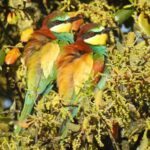
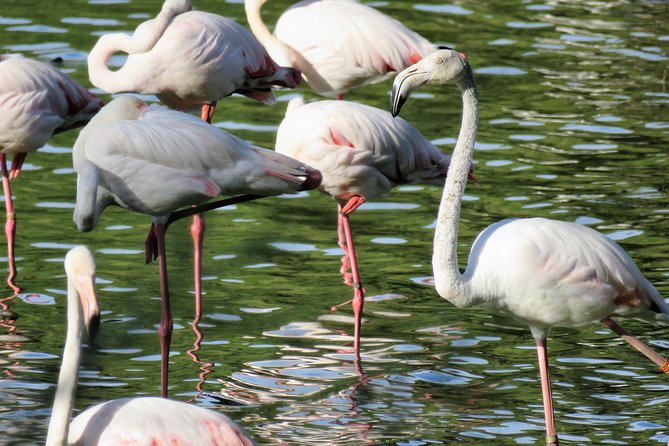
- Birdlife focus in real habitats: marshes, pine forests, pastures, and rice fields
- El Rocío village time plus a chapel visit and an ornithologists’ observatory for spotting
- La Rocina walking loop with trail-reading and indigenous plants
- Playa de Matalascanas dunes with a guided explanation of how Spain’s biggest dune system works
- Sunset timing planned for the Asperillo pine forest when conditions allow
The Doñana plan: more than a single “pretty park stop”
Doñana National Park is huge, and the biggest mistake you can make is thinking you’ll see it all from one viewpoint. This tour stitches together several different ecosystems in one long day, starting near the Guadalquivir River marshes and moving toward El Rocío, then out to the coast.
The practical win is that you’re not just “driving through scenery.” You’re changing habitats on purpose: marsh and riverbank zones for birds, forest/pasture areas for larger mammals when possible, and then dunes and shoreline ecology when you hit the beach. If you like your nature days with some structure, this format fits.
You can also read our reviews of more guided tours in Seville

Price and value: $107.68 with real logistics bundled in
At $107.68 per person, this isn’t a budget “hop on a bus” outing. You’re paying for a guided day with transport, park access, and 4×4 seating (though the exact vehicle type can vary by departure).
Here’s what makes the price feel more reasonable: you’re covering a lot of driving distance from Seville, and you’re getting stops that are hard to line up on your own without a rental car and without dealing with park road timing. Food and drinks are not included, so you’ll still want a plan for lunch. But if you’d rather spend your energy on spotting birds and not on logistics, the bundled help is the value.
Getting on the right side of the day: vehicle, seats, and photo reality
The tour is described as using a 4×4 and designed for off-the-beaten-track viewing. In the real world, you should expect that vehicle comfort and sightlines can vary, especially for the people in the back seats. Some departures have been reported with cramped seating and limited window options, which matters if you shoot photos or video.
My advice is simple:
- If you care about photos, aim for the front or front-middle when you can.
- If seat choice is possible, don’t wait—grab it early and be ready to adjust if the group is moving around.
Also note: since the day includes wildlife potential, the group usually wants to keep moving. That’s great for momentum, but it means you should keep your camera accessible and not rely on long setup moments during quick stops.
Morning start from Seville: pickup points and a luggage stop
The day kicks off with an early pickup from central Seville in most downtown hotels, with designated meeting points also listed in the area (including C. Rastro, 12a). There’s even a short stop connected with a tourism office where luggage storage is offered, which can make the morning smoother if you’re traveling light.
Plan to arrive a little early at the meeting spot you’re assigned. Even small timing confusion can stress out your morning, and the first part of the day is where the bird and marsh areas set the tone.
Puebla del Río and the rice-field edge: where birds have water year-round
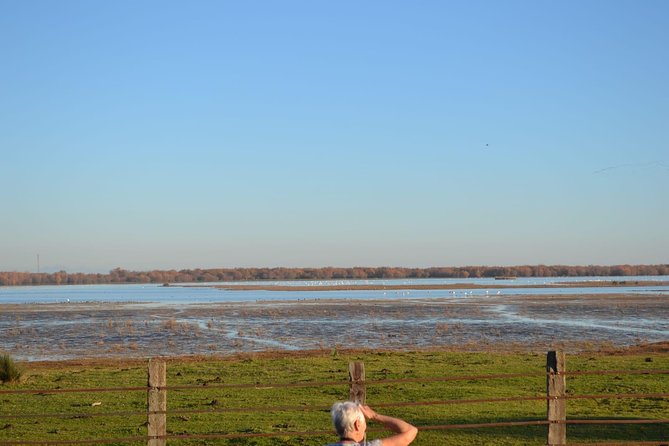
Before the deeper park moments, you start in the region around Puebla del Río. This area matters ecologically because it’s the only part of Doñana where water is easier for birds to access all year. Spring and summer rice growth helps draw in water-dependent wildlife, and it’s one reason birdwatching here can feel productive even on a limited schedule.
This is also where you’ll get the “big picture” context for the park: Doñana isn’t one habitat. It’s a patchwork. And that patchwork is why guided interpretation helps—you start to notice what’s actually pulling birds into a spot.




Guadalquivir marshes and stork country: bird numbers that sound like a myth
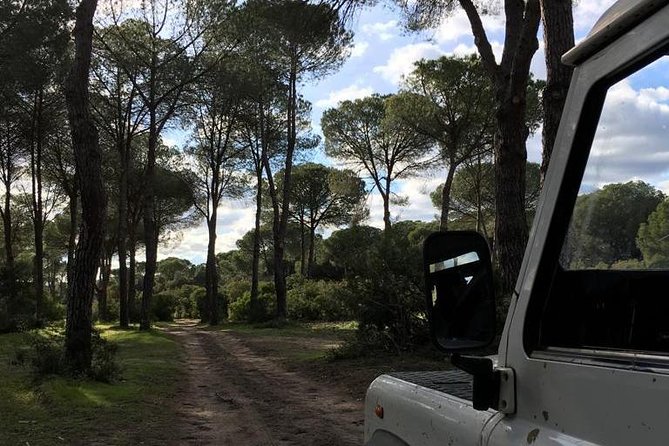
As you head toward the northern marshes and riverbank zones, you’ll be in an area where roughly 300 bird species have been recorded. That’s not a guarantee you’ll see them all in one day. It is, however, a strong sign that the tour is targeting places that matter to birds, not just places that look nice in a photo.
The tour also highlights the region’s white stork colony, including the fact that Europe’s largest white stork colony is found in nearby rice fields. If you love birds, this “first wave” of sightings can set your expectations the right way: lots of smaller birds, plus chances for larger silhouettes working the water and fields.
Dehesa de Abajo: ancient trees, storks, and a real-feeling pause
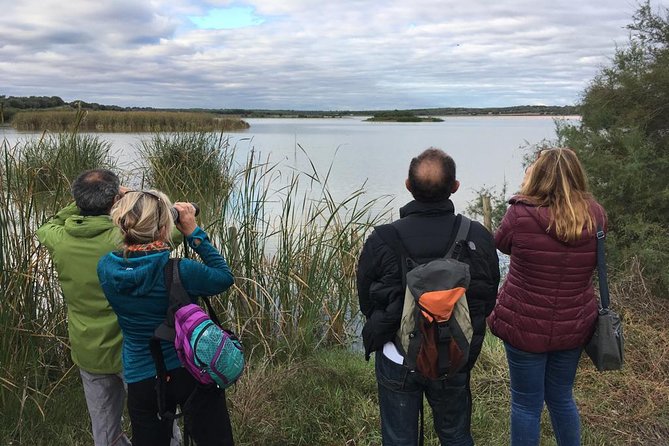
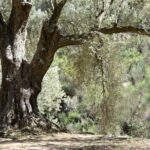
One of the stops is in a Dehesa zone with old olive trees and oaks, set up for observing the storks and many birds in natural habitat. This is a welcome break from rushing. It also helps you slow down and notice the park’s structure—trees, open pasture, and the edge conditions birds prefer.
If your brain is wired for spotting, this is where you’ll probably start recognizing “bird behavior patterns,” like how they use open sightlines versus shaded cover.
El Rocío: horses, chapel atmosphere, and an ornithologists’ observatory
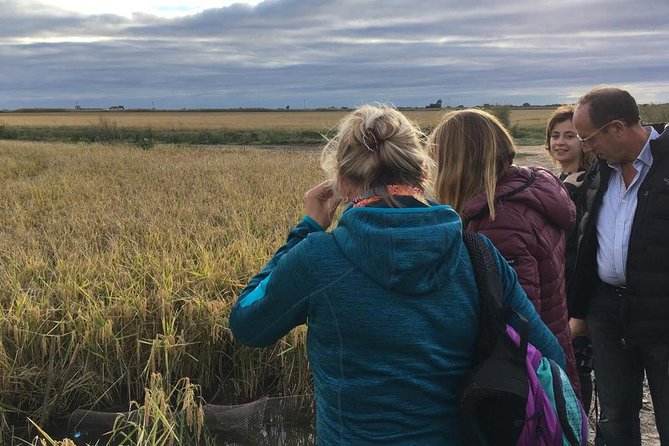
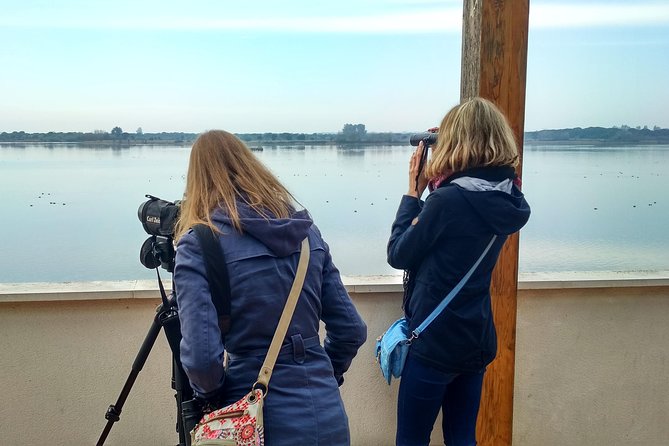
El Rocío is a classic Andalusian scene with an old-school feel: sandy lanes and a village atmosphere that works well with the park’s nature focus. You get time at the hermitage area and also a visit connected with an ornithologists’ observatory.
What I like about pairing village time with birdwatching is that it keeps the day human-scaled. You’re not stuck in wildlife mode the whole time, and the observatory part brings you right back to why you’re here.
This is also where you can get the sense of how people and the park ecosystem share space—something you’d miss if you only looked at the park boundaries.
The La Rocina walk and Palacio del Acebrón: trail-reading instead of random wandering
After the El Rocío portion, the day moves into a walking route near La Rocina. The goal here isn’t a long hike; it’s a guided loop that reads animal trails and points out indigenous plant species. That’s a smart way to make your time in the park more “useful,” because you learn what you’re actually looking for when you see tracks, paths, and plant signs.
Near the stream, there’s also a stop connected with Palacio del Acebrón next to the Arroyo de la Rocina. Even with limited time, it adds a cultural edge to the ecology-heavy schedule.
If you get even a moderately good guide (and the names you may encounter include Ramon, Jose, Sergio, Miguel, and Luismi), this is the part where the explanations can turn the park from scenery into a system you understand.
Playa de Matalascanas: dune ecosystem education with beach time
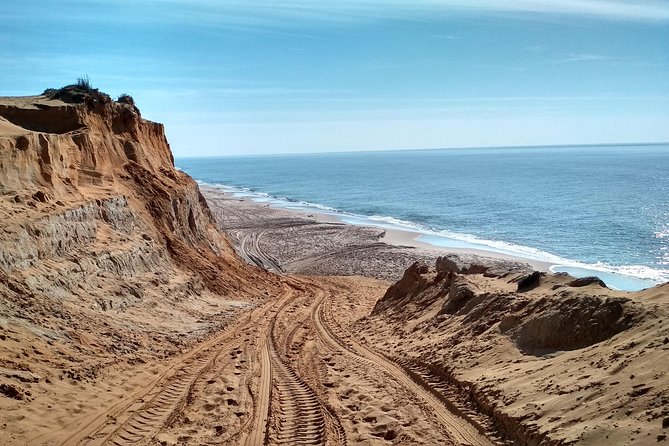
Then comes the coast: Playa de Matalascanas, where you learn about the dune system and the way dunes transform. The tour treats the beach as an ecosystem stop, not just a swim break.
You should assume there’s real time to stretch out. One review noted about 45 minutes at the beach, and the itinerary lists around an hour at this stop—so expect a shorter beach session than a dedicated beach day, but enough time to enjoy the sea air. If you want to swim, pack for it.
This stop is also a nice contrast after the inland focus. It breaks up the day and helps your brain reset for the return ride.
The 4×4 return, Iberian lynx hopes, and why timing matters
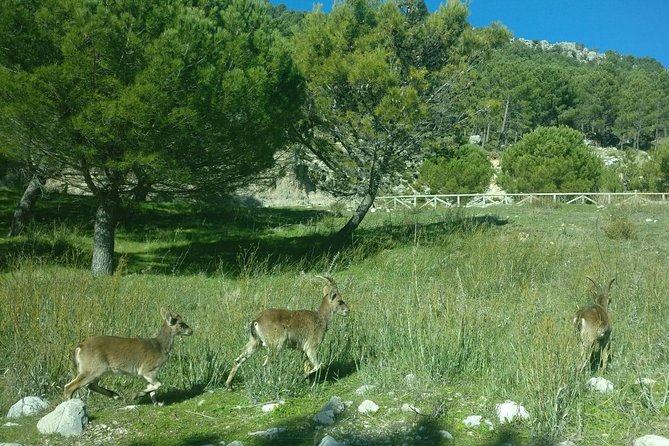
The day’s “finish strong” concept is a return through the park on a forested route, with an aim for larger mammals and the possibility of seeing the famous Iberian Lynx.
Here’s the key reality check: wildlife sightings depend on season, water levels, and access. Spring tends to be better because more water supports more activity—this was mentioned as a reason the tour can be more successful in that season. Weather can also change access. If certain areas are closed for security or due to conditions, the route may shift and the promised forest crossing might not happen the way it’s described.
So I’d frame the lynx portion as a targeted opportunity, not a guaranteed ticket to success. The best way to maximize your odds is to go in with the right mindset: enjoy birds and tracks even if the big cat stays out of sight.
Sunset in the Asperillo pine forest: a low-effort, high-reward ending
On the way back, the itinerary plans a sunset moment in Asperillo pine forest. Even if you don’t see a lynx, this type of timed pause can be a real payoff. It also makes the long day feel intentional instead of just “driving back to Seville.”
When light changes, birds and smaller mammals can get more active, and your photos tend to improve. Sunset timing is one of those details that’s hard to manufacture on your own unless you know the area well.
What to pack (and what to plan for) for a 10-hour nature day
This is an all-day outing with walking and a beach stop, so pack like it’s a field day:
- Comfortable shoes for the interpretive walk near La Rocina
- A hat and sun protection, especially if you’re sensitive
- Swimwear if you want the option at the dunes
- A camera strap you can manage quickly during short spotting moments
Also, because the day can run long, I recommend having a small backup snack even though lunch isn’t included. Lunch is usually part of the schedule as an own-expense break, and reviews have flagged that lunch quality can vary. A snack keeps you from turning hangry in hour seven.
Who this tour is best for (and who should consider a different style)
This tour is built for you if:
- You love birds and want guided help spotting and understanding what you’re seeing
- You want a full Doñana day without renting a car
- You’re okay with wildlife outcomes being seasonal and variable
- You like structured stops rather than free roaming
It’s less ideal if:
- You’re very sensitive to comfort and window limits in the back seats
- You want a strict English-only narration with zero exceptions (some guides and groups may mix languages)
- You need long, uninterrupted time in one area rather than multiple ecosystems in a single day
Should you book the Doñana and El Rocío guided day trip from Seville?
I’d book it if you want one of the best formats for first-time Doñana visitors: guided habitat hopping, village atmosphere at El Rocío, a purposeful coastal dune stop, and a realistic shot at bigger wildlife if conditions line up.
I wouldn’t book it expecting a sure-thing lynx safari. The tour is designed for opportunity, not guarantees, and weather or access changes can alter the final forest crossing.
If your priority is birds, interpretive walking, and a packed-but-focused nature day with local guiding, this is a strong pick. If your priority is comfort-perfect seating and guaranteed big-mammal sightings, consider either a private option or a more flexible itinerary that matches your exact expectations.