REVIEW · ARAGON
Greenway Section Cretas – Xerta 42km (90% descending 10% flat), Transfer inc.
Book on Viator →Operated by Matarraña Aventura · Bookable on Viator
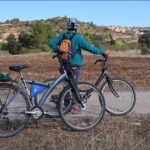
One road, three worlds of views. This Cretas to Xerta ride is a 42 km descent that moves from hilltop panoramas over Beceite to a natural park full of ravines and tunnels, then drops you into the Ebro Valley with orange trees along the shore. I love how the route is built for people who want exercise without the grind, and I also like the way the scenery changes in big, obvious chunks. One thing to consider: the ride is long enough that you’ll want to show up ready, and the bikes can be on the older side.
The best part for me is the feel of momentum: it’s 90% descending with only about 10% flat, so you can spend your energy on looking around instead of constantly working. I also like the human side, with the team behind Matarraña Aventura coming across as attentive and friendly, and the service feeling tight and well managed. The possible drawback is practical—plan for tunnels by bringing good light, and if you’re picky about bike condition, do it with eyes open.
In This Review
- Key points before you ride
- Cretas to Xerta: 42 km with 90% downhill so you can focus on views
- Three scenery zones in one ride: from ports of Beceite to orange trees
- Stop-by-stop ride plan: what each pause is for
- Prat de Comte: first sights and getting into rhythm
- Beceite: a view-focused checkpoint
- Cretas (mid-ride): a reset point
- Matarranya: the natural park feel arrives
- Valderrobres: an energizing stop before the final run
- Xerta: arriving at the station and feeling the payoff
- Tunnels and that must-have item: bring strong light
- Swimwear and down-to-earth comfort tips
- Bikes, effort level, and what to check on day one
- Price and value: what $42.24 buys you (and who it’s for)
- Should you book the Greenway Section Cretas–Xerta ride?
- FAQ
- Where does the tour start and end?
- How long is the ride and what’s the effort level?
- What should I bring?
- Is this a private tour?
- Are pets and service animals allowed?
- Is the tour affected by weather?
Key points before you ride
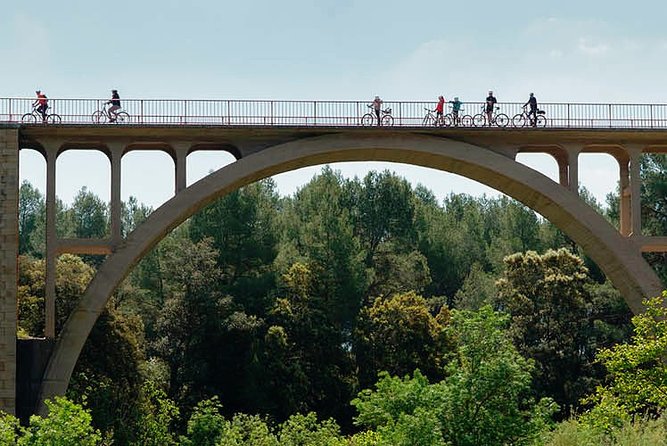
- Mostly downhill (90%) means your legs can take the day off, even over 42 km
- Three scenery zones: Matarraña fields and views, then park ravines/tunnels/bridges, then the Ebro Valley with oranges
- Tunnel prep matters: bring strong light for the darker sections
- Bring swimwear since you might want to cool off along the way
- Private group keeps it focused and comfortable
- Bikes may run old even if they’re fine for this route, so check yours early
Cretas to Xerta: 42 km with 90% downhill so you can focus on views
This is a bike tour that starts in Cretas and finishes at Xerta Station, then the activity ends back at the meeting point in Cretas. The full ride clocks in at about 6 hours, which includes time for the stops and the slower moments where the scenery is the point, not just the mileage.
What makes this route feel so doable is the downhill-heavy profile: 90% descending and only 10% flat. That’s a big difference from a typical “long but flat” ride, because you’ll still have to stay alert, control your speed, and steer on varied terrain—but you’re not stuck grinding uphill for hours.
The ride is described as suitable for people with moderate physical fitness, and I’d read that as: you don’t need to be a racer, but you do need to be comfortable cycling for a while. If you’re used to getting out on a bike or doing regular exercise, you’ll probably find the effort fits the day nicely.
You can also read our reviews of more tours and experiences in Aragon.
Three scenery zones in one ride: from ports of Beceite to orange trees
The route is built around big visual transitions, and you feel them as you move through different parts of Aragón. You start at the top area of the Matarraña, where you get panoramic views over the ports of Beceite along with cultivated fields like olives, almonds, and vineyards. It’s the kind of opening that makes you look up, not down at the handlebar.
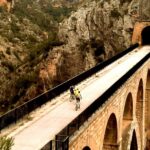
Then the scenery shifts into a more rugged natural-park vibe, with forests, ravines, tunnels, and bridges. This is where the ride stops being just pretty and starts being fun: the path breaks up the trip with structures, shadows, and changing viewpoints.
Finally, you reach the Ebro Valley, where the visual mood changes again—orange trees start appearing along the shore. It’s a classic “different world, same day” feeling, and it’s one reason this route works even if you’re traveling with a mix of interests. If someone loves photos, the scenery delivers. If someone loves momentum and variety, the ride delivers.
Stop-by-stop ride plan: what each pause is for
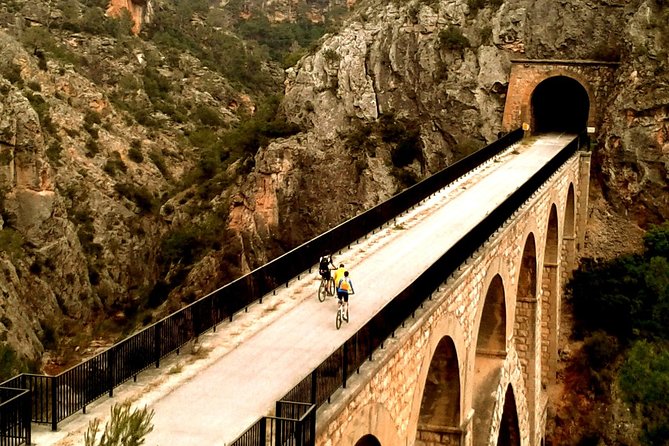
You’ll make a series of stops that help you break up the distance and focus on the route’s highlights. Here’s how I’d think about each one, and what to watch for as you move through the day.
Prat de Comte: first sights and getting into rhythm
Prat de Comte is an early stop, and it’s a good moment to settle into the ride pace. On a mostly-downhill route, it’s easy to start off too fast—this is where you can remind yourself to ride smooth, keep a steady grip, and watch the road surface, especially when you’re nearing bridges or shaded areas.
If you’re someone who likes understanding a route as you go, this first pause is where you’ll start connecting the dots between the hilltop views and the more dramatic natural park section ahead.
Beceite: a view-focused checkpoint
Beceite is the next meaningful scenery stop, and it pairs well with the earlier panoramic idea of the ports of Beceite. Think of it as a moment to slow down and take in the surrounding terrain before it turns into tunnels and ravines.
The practical benefit of this stop is mental: you break the ride into sections so that 42 km feels like chunks instead of one long blur.
Cretas (mid-ride): a reset point
There’s also a stop back in Cretas. Even if you’re starting in Cretas, this middle pause matters because it creates a clear “phase change” in your day. Use it like a reset: check your bike, adjust anything that feels off, and make sure you’re eating and drinking before the route gets more tunnel-and-bridge oriented.
It also helps if you’re traveling with anyone who prefers a clearer timeline rather than a continuous ride.
Matarranya: the natural park feel arrives
This is where you start thinking less about flat miles and more about the character of the route. The Matarraña area is tied to the park-side scenery: ravines, tunnels, bridges, and forested segments where light changes quickly.
If you’ve been waiting to see the “best part” of the ride, this is the phase that usually earns that title. Just remember: the most scenic sections are also the ones where you’ll want to be most careful. Keep both hands on the grips when you can, and treat tunnels like a visibility test, not just another ride feature.
Valderrobres: an energizing stop before the final run
Valderrobres comes before the finish, and it works as a motivational checkpoint. By now you’ve already felt the three big shifts in scenery, and this stop helps you land the day with a sense of progress rather than fatigue.
If you’re managing energy well, this is a moment to hydrate, stretch your back and legs briefly, and adjust your riding posture so the final approach to Xerta feels smooth.
Xerta: arriving at the station and feeling the payoff
Xerta is the last stop, and it’s timed so you finish the day at a real destination—Xerta Station—rather than just ending at a random roadside. When you reach this point, you also get the Ebro Valley mood shift in full: the orange-tree presence makes the ending feel lighter and more open than the park sections.
This is a great finish for anyone who likes closure. You can look back on the day and connect the visuals: hilltop fields and ports, then tunnels and ravines, then the valley with oranges.
Tunnels and that must-have item: bring strong light
One tip stands out for a reason: bring good light for the tunnels. If you’ve only ridden in daylight most of your life, tunnels can be a rude surprise. Even when a tunnel is short, it’s the moment your brain expects light and doesn’t get it.
I’d treat your light like part of your safety gear, not a nice-to-have. Bring something bright and reliable, and make sure you know where it is and how to turn it on quickly.
Also, keep in mind that tunnels can change how sound and depth feel. You don’t need to panic, but you do need to stay steady. Slow down before entering, avoid sudden braking, and let your eyes adjust while you’re moving through.
Swimwear and down-to-earth comfort tips
You’re also advised to bring a swimsuit. That suggests you might have an opportunity to cool off during the ride or at a stop where water is part of the experience. Even if you end up not using it, it’s still a smart “be ready” item because the route’s natural-park character makes the idea plausible.
For comfort, think in basics: you’re riding for about 6 hours, so plan your clothing like you would for a warm cycling day. Bring what keeps you comfortable on longer time in the saddle, and don’t assume the day will feel evenly warm—shaded sections and tunnels can make temps feel different.
If you’re sensitive to sun, bring protection. If you’re sensitive to cold when you stop, bring a light layer. The route’s scenery changes, so your body will feel it.
Bikes, effort level, and what to check on day one
This tour is rated extremely well overall (very high recommendation and a 4.9 score), and people also highlight that the activity feels low difficulty for 42 km. That lines up with the downhill-heavy route profile.
Still, one review detail is worth taking seriously: the bikes can be in lamentable condition for some riders. The key is that the same feedback also notes they’re still sufficient for the route type. So the bikes might not be pretty, but they should be workable.
When you arrive, do a simple check before you roll:
- make sure brakes feel responsive
- test that shifting works well enough for your comfort
- check tire condition and pressure if that’s possible
- ask the team right away if anything feels unsafe
If you’re the type who demands “new and perfect,” this might take the shine off a bit. If you’re practical and you mainly want the route and the views, it’s more likely to feel like a tradeoff you can accept.
Price and value: what $42.24 buys you (and who it’s for)
At $42.24 per person for about 6 hours, this is priced like a value-focused day outdoors. The reason it works isn’t just the sticker—it’s the structure: transfer is included, the ride follows a dramatic route with major scenery changes, and it’s private, meaning only your group participates.
For context, you should also know confirmations happen quickly: you receive confirmation within 48 hours of booking, depending on availability. That’s useful if your travel plans are firm but your exact day might shift.
Who gets the best value?
- You’re an active traveler who likes cycling or regular exercise
- You want views and route variety, not a pure fitness test
- You prefer a private group experience over joining a crowd
- You like practical guidance, not just “here’s a map”
Who might hesitate?
- You dislike tunnels and anything that needs extra visibility prep
- You’re picky about bike condition and don’t want to deal with older equipment
- You’re expecting a flat, lazy spin rather than a controlled downhill ride with technical moments
Should you book the Greenway Section Cretas–Xerta ride?
I’d book it if your dream day looks like this: start in Cretas, glide downhill through three distinct scenery worlds, pass ravines and bridges, ride through tunnels with the right light, and end at Xerta Station with that Ebro Valley feeling in your legs and eyes.
I’d think twice if you’re looking for a fast, easy ride that requires almost no attention. This is downhill-heavy, but it’s still a real cycling route—one where control and readiness matter, especially in tunnels.
If you go, do the preparation part seriously: bring good light, consider swimwear, and do a quick bike safety check at the start. Then focus on what the route does best: changing scenery in big, memorable steps.
FAQ
Where does the tour start and end?
It starts at Av. del Reino de Aragón, 6, 44623 Cretas, Teruel, Spain. The ride ends at Xerta Station, and the activity finishes back at the same meeting point in Cretas.
How long is the ride and what’s the effort level?
The duration is about 6 hours. The route is 42 km with roughly 90% descending and 10% flat, and it’s best for people with moderate physical fitness.
What should I bring?
Bring good light for the tunnels and a swimsuit. Since the ride includes shaded areas and tunnels, light is the key safety item.
Is this a private tour?
Yes. It’s a private tour/activity, so only your group participates.
Are pets and service animals allowed?
Service animals are allowed. The information also notes there are carts to take your pet by bicycle.
Is the tour affected by weather?
Yes. It requires good weather. If it’s canceled due to poor weather, you’ll be offered a different date or a full refund.