REVIEW · BAEZA
Guided tour of Baeza with entrance Baeza Cathedral
Book on Viator →Operated by Turistour turismo · Bookable on Viator
Baeza feels like it was built for slow discovery. This guided walk connects UNESCO-listed Renaissance streets to the city’s big monuments, including an included entrance into the Cathedral. I love that you cover both the grand sights and the small details that make them make sense, and I especially like that the highlight is the Cathedral’s Corpus Christi Processional Custody, not just a quick stop outside.
The main thing to consider is that this is a walking-focused tour with plenty of standing around plazas and monument entrances, so plan on comfortable shoes and a bit of patience as you move from spot to spot.
In This Review
- Key highlights you’ll care about
- UNESCO Baeza on foot: what 2 to 2.5 hours really gets you
- Plaza del Pópulo: where the city’s civic and religious identity shows up
- Plaza de Santa María: the square that sets up the Cathedral moment
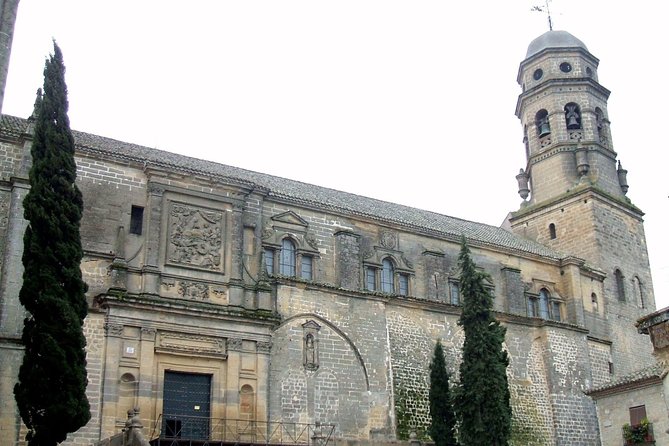
- Cathedral de Baeza: the included entrance and the goldsmithing highlight
- Antonio Machado links: views plus the preserved classroom
- Palacio de Jabalquinto and the Old University: education in stone
- Church of Santa Cruz: the late Romanesque angle you’ll want to notice
- Plaza de la Constitución and the Renaissance Town Hall
- Early-harvest EVOO tasting: a practical Andalusian finish
- Price and value: why €7 in Cathedral entry matters
- Who should book this Baeza Cathedral walk?
- A note on guides: names you may hear and the style they bring
- FAQ
- FAQ
- How long is the guided tour of Baeza with Cathedral entrance?
- What’s the price per person?
- Is the tour in English?
- Where does the tour start?
- What does the ticket include?
- Do I need to print a ticket?
- Is there a cancellation window?
- Should you book this Baeza Cathedral tour?
Key highlights you’ll care about
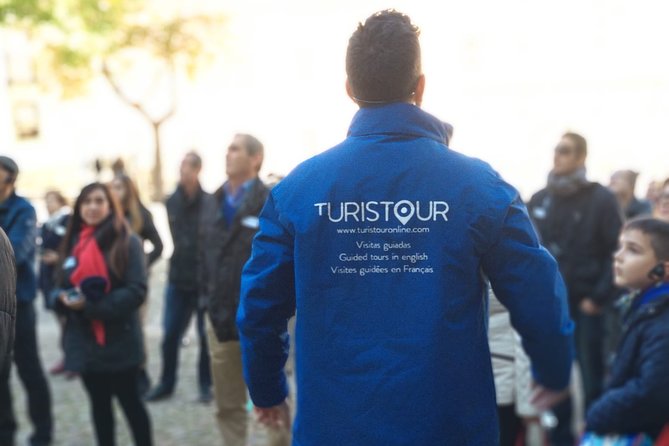
- Small-group feel (up to 25 people) helps the guide keep things moving without turning it into a photo lineup.
- Cathedral entry included, so you don’t have to hunt down tickets or wait for another timed slot.
- Antonio Machado stops built into the route, including the classroom where he taught.
- Big views over the olive country, with Guadalquivir river valley perspectives and mountain lines on clear days.
- Optional early-harvest EVOO tasting with a specialist at the end, explained in plain terms.
- Guides vary by day (Isabel, Adrián, Marta, Marisa, Cesar have led groups), but the common thread is animated storytelling with humor.
UNESCO Baeza on foot: what 2 to 2.5 hours really gets you
This is a focused walking tour through Baeza’s historic core, timed for people who want the “main course” without getting lost. Expect about 2 hours 15 minutes (approx.) and a route that brings you back to the start point at Plaza Pópulo.
You’ll move through the city’s plazas, streets, and standout monuments, with a guide explaining what you’re seeing and adding stories that connect buildings to real life. The structure matters: you’re not just hearing dates. You’re getting the why behind the form—why Renaissance civic power sits beside religious symbolism, and why Baeza’s educational legacy still shows up in its buildings.
Language is English, and you get a mobile ticket, which is helpful if you’re bouncing between stops elsewhere in Andalucía. Also, with a max of 25 people, it’s easier to ask a question and get a direct answer rather than listening from the back row.
Plaza del Pópulo: where the city’s civic and religious identity shows up
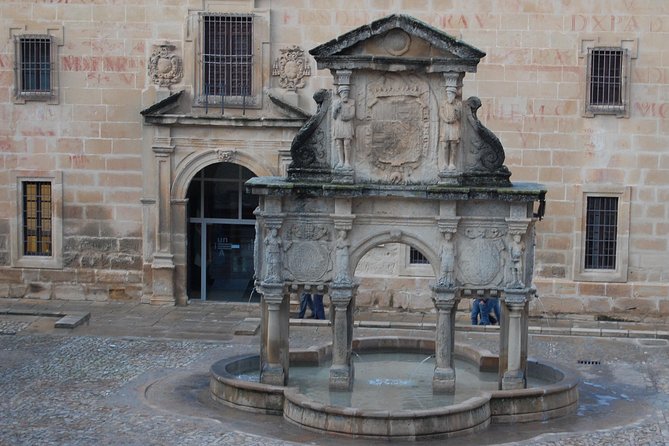
The tour begins at Plaza Pópulo (Plaza de los Leones, 1), and the first big hit is Plaza del Pópulo. This square is packed with 16th-century features—exactly the kind of place where Baeza feels like a living lesson in architecture.
Here’s what you’ll be looking for:
- Old Butchers (16th century buildings), which give a sense of how everyday commerce sat in the same frame as grander civic life.
- The Fountain of the Lions, a visual anchor for the square.
- The Public Notaries, a reminder that administration and law were as important as church and court.
You’ll also pass Arco de Villalar and Jaén’s Gate, which help you understand how the town used entrances as statements. It’s the kind of detail that’s easy to miss if you walk through on your own.
Plaza de Santa María: the square that sets up the Cathedral moment
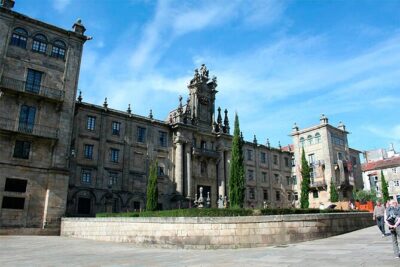
Next comes Plaza de Santa María, one of the most important public spaces in the center. The Santa María Fountain dominates the square, but the real value is what surrounds it. This is where you see a tight cluster of power: town-hall-style civic buildings and the Church/Cathedral presence that shapes the whole area.
The tour keeps moving, but this stop works as a mental reset. You get a quick orientation to the geography—where the religious and civic pieces sit relative to each other—so the Cathedral doesn’t feel like a random building you toured. It feels like the center of a system.
You’ll also notice how the guide uses local traditions and little city curiosities to make the architecture feel personal rather than museum-static. That’s the difference between memorizing shapes and actually recognizing what they mean.
Cathedral de Baeza: the included entrance and the goldsmithing highlight
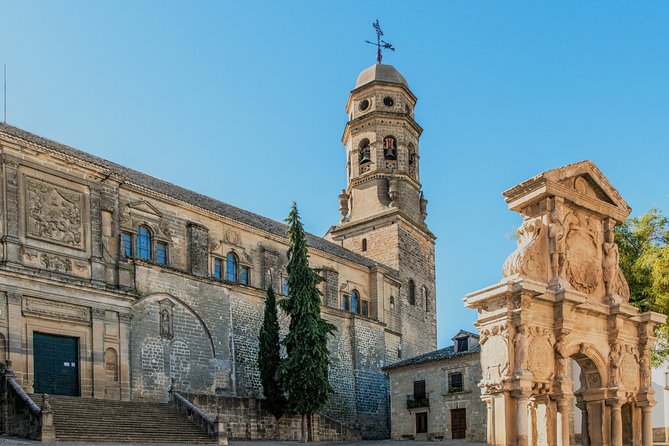
The Cathedral is the star, and you get entrance included. This is where the tour earns its money.
Inside, the Cathedral contains one of the major jewels of Spanish goldsmithing: the Corpus Christi Processional Custody. That wording matters. This isn’t only about big walls and old stone. It’s about an object designed to draw your eye, catch light, and communicate importance during religious ceremony.
Practically, this stop is long enough to feel worthwhile—about 30 minutes allocated for the Cathedral visit. That gives you time to:
- look at the piece in context,
- listen to the guide’s explanation without feeling rushed,
- and notice details that a quick outside glance can’t deliver.
If you’re choosing this tour mainly for one reason, make it this: you’re paying for a guided route that lands you inside the Cathedral, not just around it.
Antonio Machado links: views plus the preserved classroom
A great part of this tour is how it threads literature into the route. There are two stops tied to Antonio Machado, and they work together: one for feeling the place, one for understanding the man.
First is Paseo de Antonio Machado. From here you get impressive views over the Guadalquivir river valley, plus the mountains of the province, including Sierra de Cazorla and Sierra Mágina. You’ll also see the famous sea of olive trees vibe across the area. It’s not just pretty scenery; it explains why Andalucía’s identity is so tied to agriculture and craft.
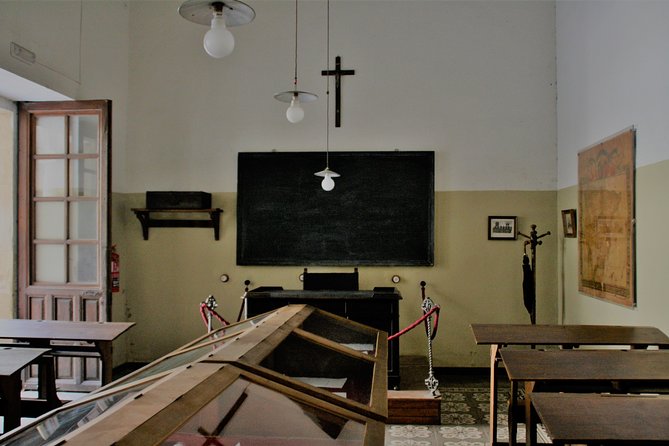
Then you move into the education angle with the Antigua Aula de Antonio Machado, the classroom where he taught between 1912 and 1917. The classroom is described as originally conserved, and that conservation detail is what makes the stop more than a name drop. It helps you connect the poetry with the real physical space where it could be shaped by teaching life.
If you like history that you can picture clearly, this section is one of the best uses of time on the whole route.
Palacio de Jabalquinto and the Old University: education in stone
Baeza’s reputation as a center of learning isn’t abstract on this tour. You see it in buildings, functions, and names.
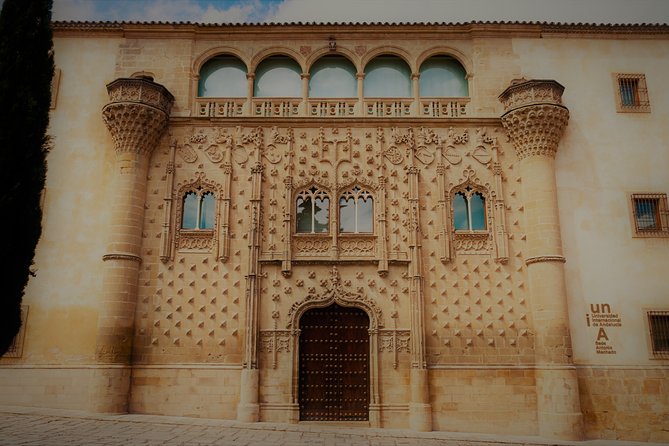
You’ll visit Palacio de Jabalquinto, currently the headquarters of the International University of Andalusia. Even without going deep into program details, it’s a strong example of how historic structures can stay useful.
Then there’s Antigua Universidad de Baeza, described as the original building that hosted the University in the 16th century. This is a key contrast: one building represents ongoing educational use, while the other represents the earlier institution phase.
For me, this is the part of the tour that makes Baeza feel different from other “pretty towns.” The city isn’t only surviving on architecture. It’s also continuing a role that shaped its identity long ago.
Church of Santa Cruz: the late Romanesque angle you’ll want to notice
The Church of Santa Cruz is a quick stop, but it’s distinctive. It’s described as the only late Romanesque building in Andalusia, built in the 13th century.
That’s the kind of fact that pays off when you’re on a guided route. Without the guide’s framing, it’s easy to treat a church like a church. With it, you start looking for how the style differs—how the structure signals its specific period compared with the surrounding Renaissance civic focus.
Even with just about 10 minutes here, it adds variety to the walk. The tour becomes less repetitive and more like a set of contrasts: Romanesque form, Renaissance civic power, and later literary connections.
Plaza de la Constitución and the Renaissance Town Hall
As you approach Plaza de la Constitución, the mood shifts slightly from monument viewing to daily life in the historic core. This is the central square, with old buildings and most of the pubs, restaurants, and shops.
If you’re thinking ahead, this is where you can naturally plan the rest of your day. You’ll finish the guided portion with a square that already supports stopping for a coffee or a casual bite.
You’ll also see Baeza Town Hall, highlighted as one of the outstanding Renaissance buildings of early Renaissance Spain. The value here is how the tour ties civic architecture to everything else you’ve seen. The square isn’t just a setting; it’s the stage where civic life played alongside church-centered power.
Early-harvest EVOO tasting: a practical Andalusian finish
The tour ends with AOVE Boutique – Venta de aceite de oliva in Baeza, where you can get an early-harvest EVOO tasting explained by a specialist. This is a smart way to close a walking tour, because you leave with something you can connect to what you saw earlier: olive country, the daily importance of agriculture, and Andalucía’s food culture.
You’ll have about 15 minutes for this final portion. It’s not a full meal. It’s more like a short, guided taste that helps you understand what early harvest means in flavor terms and why people in the region care about the details.
If you’ve never done an EVOO tasting before, don’t stress. The experience is structured to be explained, not assumed. And if you already know your way around oils, it’s still a nice chance to anchor the taste to place.
Price and value: why €7 in Cathedral entry matters
The price listed is $18.14 per person, for about 2 hours 15 minutes and English guiding. The big value clue is that the tour includes Cathedral entry valued at €7.00. That means a good chunk of your money goes straight toward a paid attraction, not only toward narration.
Also included are the guided route, access to the major monuments on the walk, and the optional EVOO tasting at the end (with a specialist explaining it). Lunch isn’t included, but you also aren’t stuck sitting through a long meal segment while the afternoon passes.
Is it a bargain? In my view, it’s priced like a city walking tour with a real paid add-on, and the paid add-on is the thing many people forget to budget for when planning Baeza. If you want the Cathedral to be part of your day, this is the way to avoid scrambling for entrance time.
Who should book this Baeza Cathedral walk?
This tour fits best if you:
- want a tight route through Baeza’s main highlights without spending your day figuring out what’s worth your time,
- care about architecture plus stories (the guide adds anecdotes, curiosities, and traditions),
- and like pairing monument time with a culture touch, like Machado’s classroom and viewpoint stops.
It’s also a good option if you’re visiting Andalucía and you want something that feels a bit more “thoughtful” than a fast-stop checklist. The pace is guided and organized, and the max 25 travelers style group makes it easier to stay oriented.
It may feel less ideal if you want a totally unstructured, wander-at-will day. This route is designed to move.
A note on guides: names you may hear and the style they bring
The quality piece is consistent. You’ll be led by a guide who’s lively and easy to follow, and in different runs you may encounter names like Isabel, Adrián, Marta, Marisa, or Cesar. The common thread is story-telling that keeps you engaged—history comes with humor, not just facts.
That matters because Baeza can look like “just stone” if someone doesn’t point you to the right details. A good guide turns the same streets into something you understand.
FAQ
FAQ
How long is the guided tour of Baeza with Cathedral entrance?
It’s about 2 hours 15 minutes (approx.).
What’s the price per person?
The price is $18.14 per person.
Is the tour in English?
Yes, it’s offered in English.
Where does the tour start?
The meeting point is Plaza Pópulo, Pl. de los Leones, 1, 23440 Baeza, Jaén, Spain.
What does the ticket include?
It includes the entrance to the Cathedral of Baeza and ends back at the meeting point. The tour also includes an EVOO tasting at the end.
Do I need to print a ticket?
No. It uses a mobile ticket.
Is there a cancellation window?
Yes. Free cancellation is available up to 24 hours in advance for a full refund.
Should you book this Baeza Cathedral tour?
If you want the Cathedral interior plus a guided walk through Baeza’s key plazas and monuments in one clean package, I’d book it. The price makes sense because Cathedral entry is built in, and the added stops—Machado’s classroom, the view over olive country, and the EVOO tasting—turn a simple walking loop into a day with layers.
Book it especially if you’re short on time and you’d rather spend your energy looking at the details than figuring out logistics. Just go in with the mindset that it’s a walking tour, not a sit-and-watch show, and you’ll get a lot out of the time you spend in Baeza.