REVIEW · BARCELONA
Barcelona: Palau de la Música Guided Tour
Book on GetYourGuide →Operated by Palau de la Música Catalana · Bookable on GetYourGuide
Barcelona’s Palau de la Música Catalana is where architecture acts like music, and this guided tour lets you see the building’s big, intimate details up close. I love the grand staircase with its ornate floral work and flags, because it’s the kind of decoration you can only truly appreciate when you’re standing there. I also love the payoff at the end: the tour concludes with the Palau organ, a short performance that puts the whole building in context.
One thing to keep in mind: the experience can be a bit crowded, and audio can be hit or miss depending on the day. In a few cases, the headset quality made it harder to hear the guide clearly, and construction or nearby visitors can limit photos or quiet focus.
In This Review
- Key things to know before you go
- Why Palau de la Música Catalana feels different from other Barcelona sights
- The opening stop: the Rehearsal Hall and Orfeó Català’s 1905 start
- The grand staircase: flowers, flags, and materials you can actually spot
- Lluís Millet Hall: the balcony and the columns that symbolize nature
- Entering the Concert Hall: color, light, and why acoustics matter
- The second-floor skylight: look upward, then look again
- The organ finale: a short performance with a big effect
- Price and time: is $28 worth 50 minutes inside a living venue?
- How close is it to Plaza Catalunya and Las Ramblas?
- Tips for hearing your guide and getting the photos you want
- Should you book the Palau de la Música Guided Tour?
- FAQ
- How long is the Palau de la Música guided tour?
- What is included in the $28 ticket?
- Which languages are available for the live guide?
- Where do I meet the tour, and how do I get there?
- Do I need to bring an ID?
- Is the tour wheelchair accessible?
Key things to know before you go
- Special access beyond the usual public areas inside Palau de la Música Catalana
- A guided path with clear stops, from rehearsal spaces to the Concert Hall
- The staircase is the star, with floral and flag details made from multiple materials
- Second-floor skylight views give you a rare look upward at the hall
- An organ moment at the end ties the building to Catalan musical life
- Guides matter, and names like Yu, Juan, Marco, Axel, and Fei Fei show up repeatedly for being engaging
Why Palau de la Música Catalana feels different from other Barcelona sights
Most Barcelona architecture tours focus on façades. This one flips the script. The Palau de la Música Catalana is famous because it’s a living venue for choral music and performance, not just a pretty object to photograph from the sidewalk.
You’ll walk through spaces tied to rehearsals, ceremonies, and performances, then finish inside the Concert Hall where color, light, and acoustics work together. That’s the real value of a guided visit here: you get help noticing the why behind the wow.
Also, the length is sensible. At 50 minutes, you’re not stuck for half a day, but you still cover the building’s most recognizable interiors.
You can also read our reviews of more guided tours in Barcelona


The opening stop: the Rehearsal Hall and Orfeó Català’s 1905 start
Your tour begins in the Rehearsal Hall of the Orfeó Catala, the room with deep roots in the Palau’s story. You’ll hear how the foundation stone was laid in 1905, and you’ll also learn that the choir rehearses there regularly, with continuity that goes back more than a century.
This first stop sets the tone. Instead of treating the Palau as a static museum, you start seeing it as a working music home. That matters once you reach the decorated public spaces later, because you’ll understand the building’s design as something created for performance and community.
Practical note: this is a good moment to settle your pace. Take a minute to look around before the group moves on, because you’ll likely want your best attention here and not just at the most photogenic rooms.
The grand staircase: flowers, flags, and materials you can actually spot
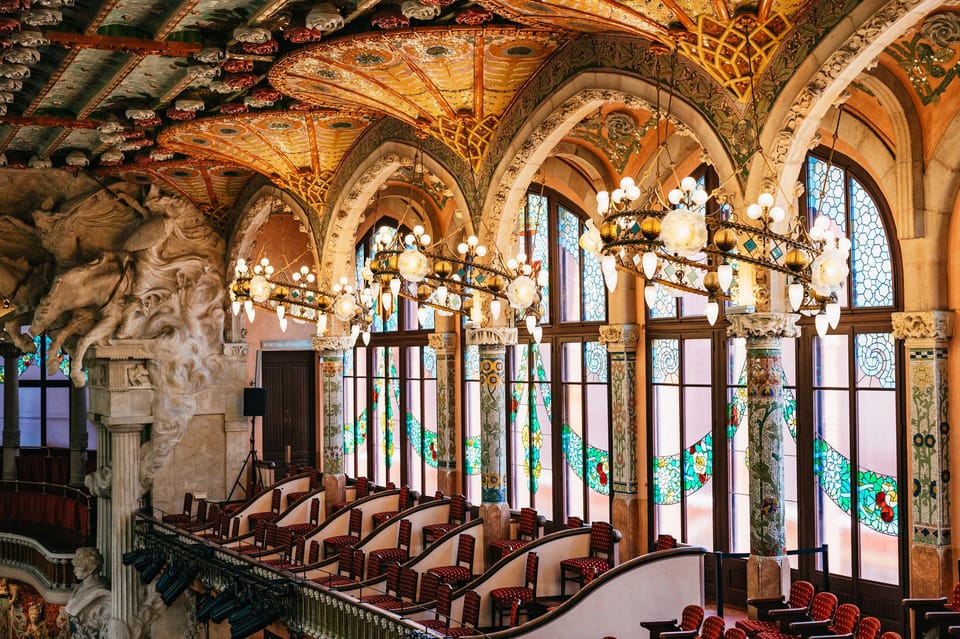
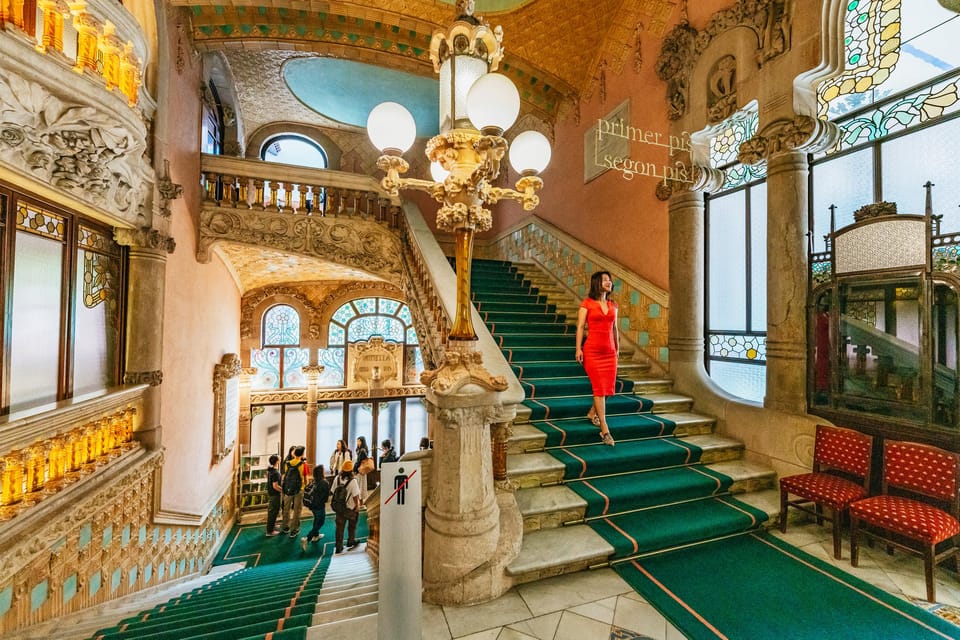
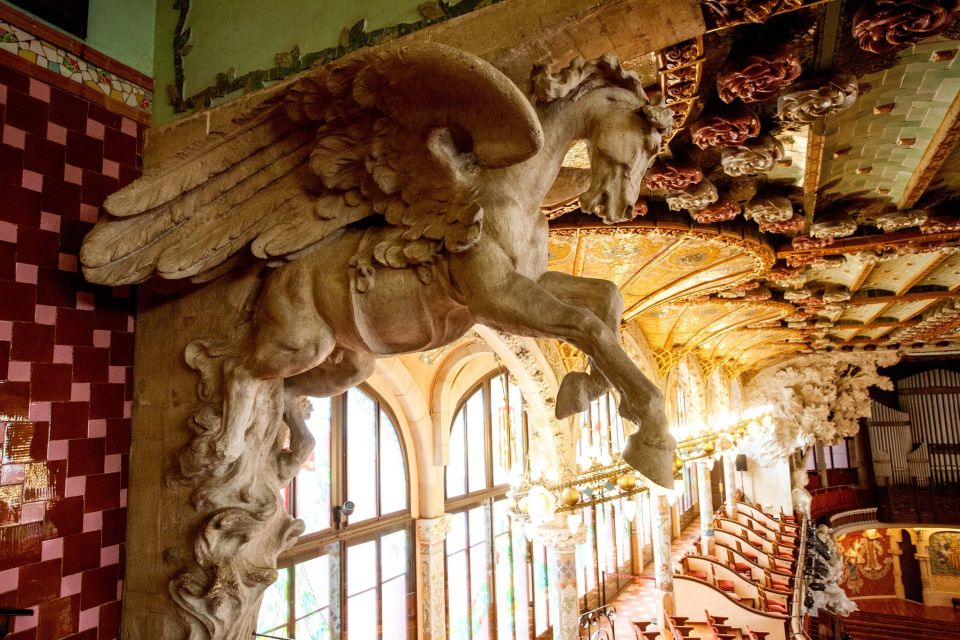
Next comes the grand staircase, and yes, it earns the hype. This is where the Palau turns decoration into storytelling. The staircase is surrounded by intricate elements that include ornate floral designs and flags, built using a range of materials.
What I like about this stop for your experience is that it trains your eye. Once you notice how many textures and construction choices are used for the floral work, the rest of the Palau starts to feel less like random ornament and more like a deliberate visual language.
Photos here are usually worth prioritizing. You’ll also get a bit of time with the space before the tour continues, so it’s a good place to slow down and frame shots from different angles.
Lluís Millet Hall: the balcony and the columns that symbolize nature
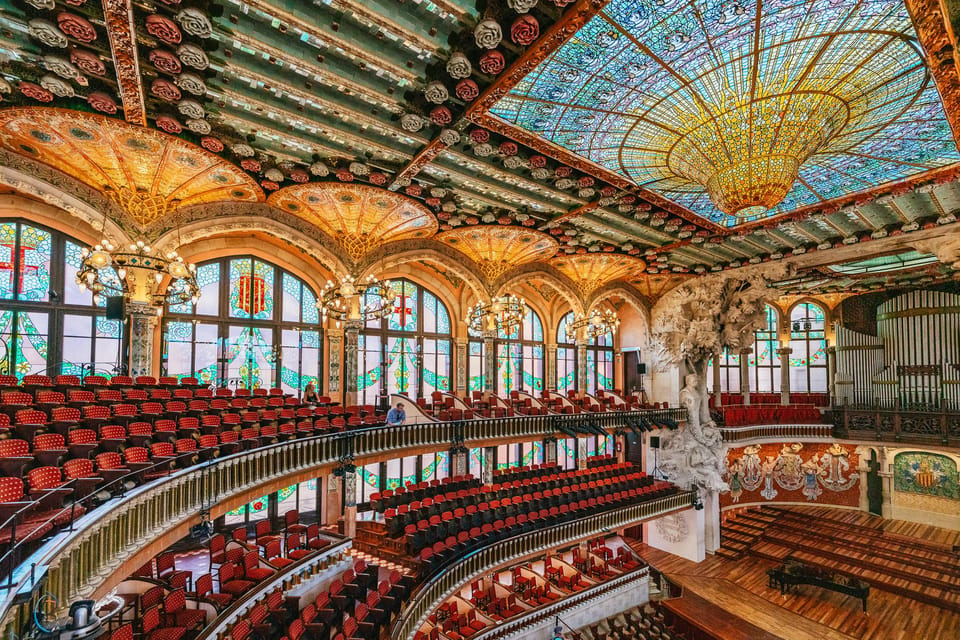
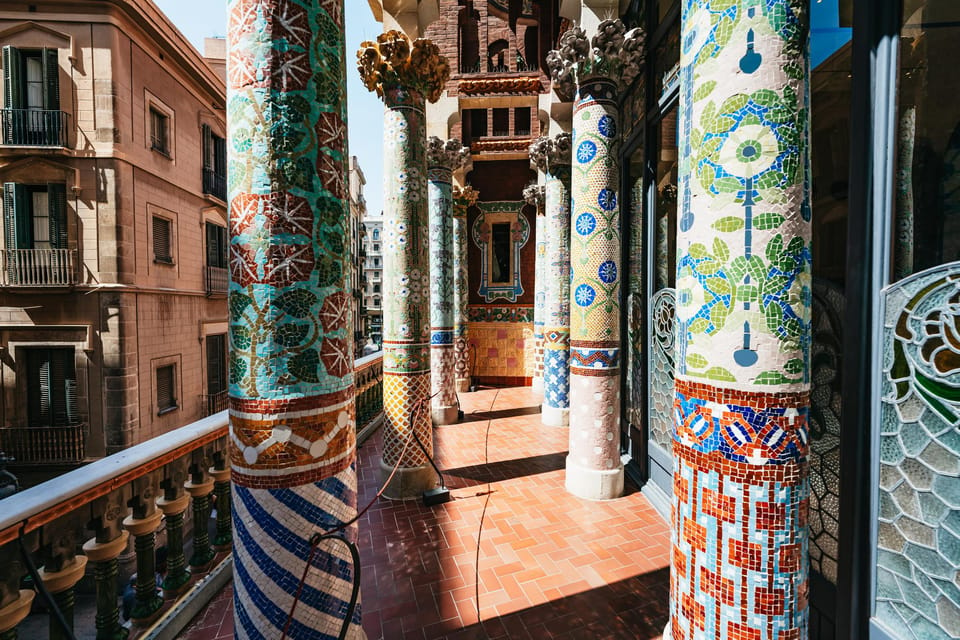
After the staircase, you’ll move into the Lluís Millet Hall. This is another area where the design is symbolic, not just decorative. You’ll see the large balcony with columns, and you’ll learn that these details connect to ideas of nature.
This stop is less about one single wow moment and more about reading the building. The Palau’s design keeps referencing the natural world through color, shape, and structural choices. It’s a fun mental shift: you start looking at lines and forms as if they’re trying to represent something.
If you like design explanations that connect art to meaning, this is the part where a strong guide really helps. Several guides have been highlighted for being clear and energetic, including people like Juan and Marco, so you may find the narrative is easy to follow even when you’re scanning for details.
Entering the Concert Hall: color, light, and why acoustics matter
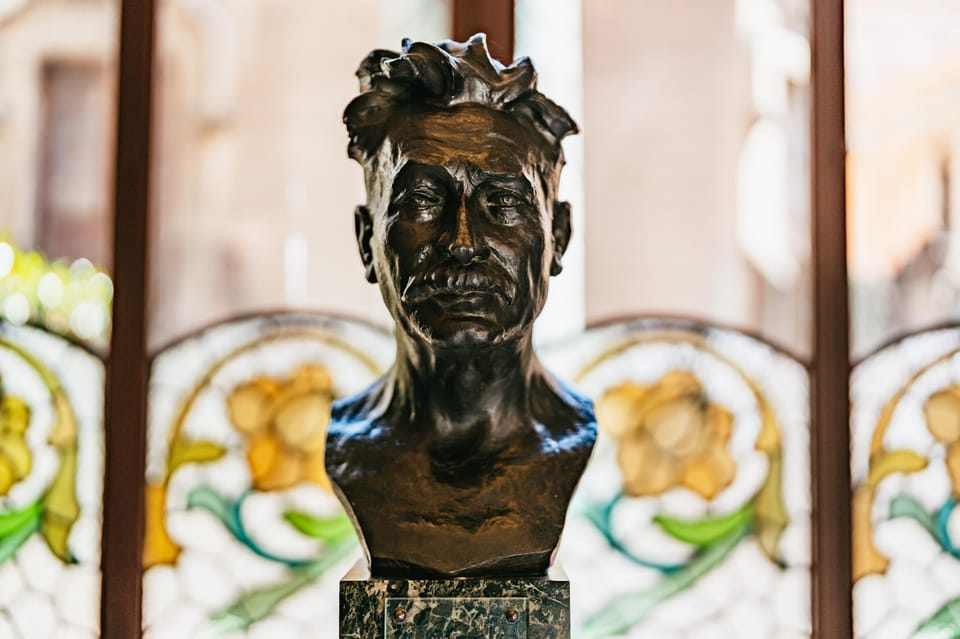
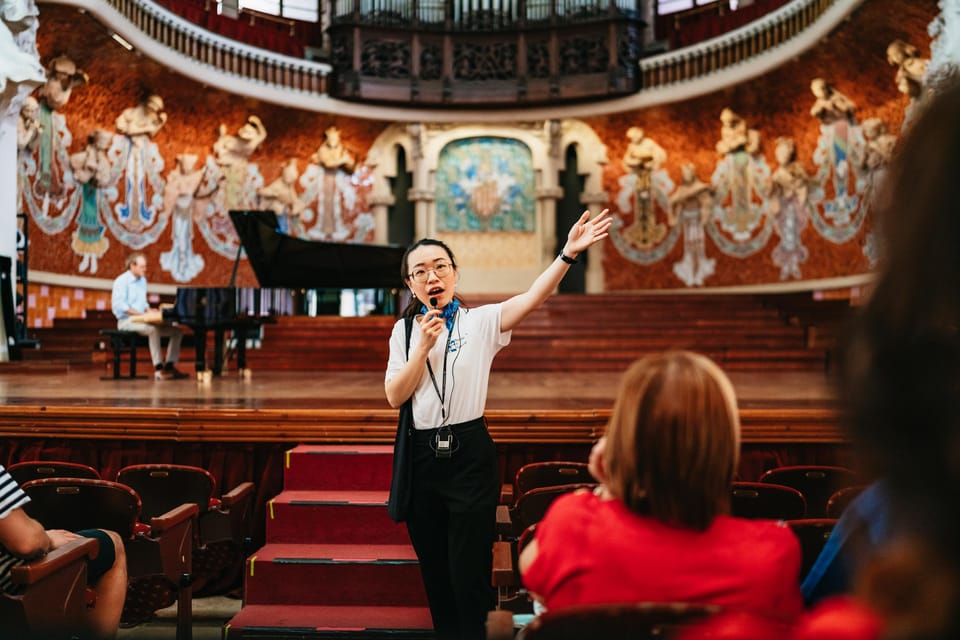
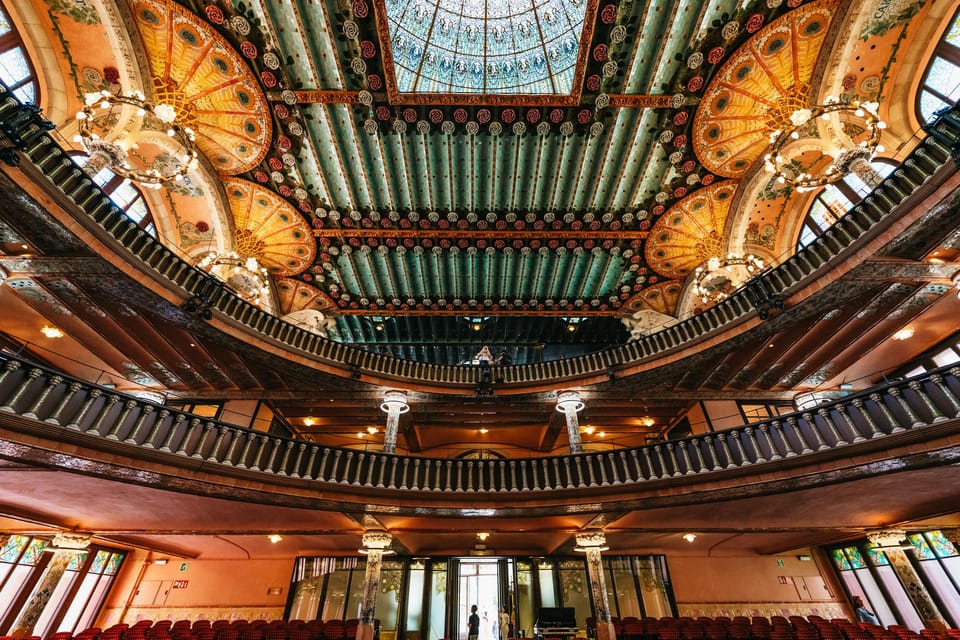
Then comes the part most people came for: the Concert Hall. Expect an explosion of colors, shapes, and light. The hall’s atmosphere is hard to describe because it’s not one style choice. It’s a whole system of materials and design decisions that make the space feel alive.
Even better, the tour doesn’t stop at visuals. You also get context for why the Palau is still used for music today. The building is engineered for sound and performance, and that’s why people often recommend pairing a tour with a concert if your schedule allows.
One detail worth planning around: the most photogenic moments can also be the most crowded. If you’re the type who wants wide open angles with zero people in frame, you’ll have an easier time by being flexible with camera positions and timing your shots as the group shifts locations.

The second-floor skylight: look upward, then look again
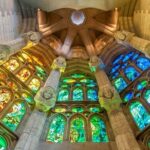
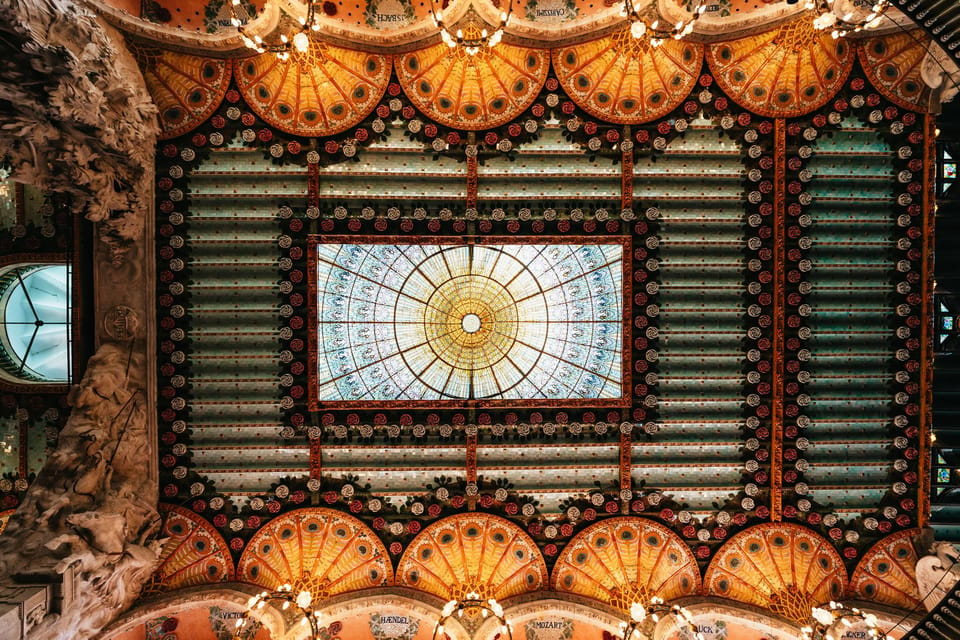
From the Concert Hall, you’ll head up to the 2nd floor. This is where you’ll admire the grand skylight, one of those architectural features that changes how you see the room.
Skylights can be boring in other buildings. Here, it helps explain why the Palau feels so bright and theatrical even in daylight. When light hits the hall’s ornament, it makes the colors look different than they do in shade.
I recommend taking a moment during this stop to look upward first, then look at what your eye keeps grabbing next. That small habit helps you notice design relationships you might otherwise miss.
The organ finale: a short performance with a big effect
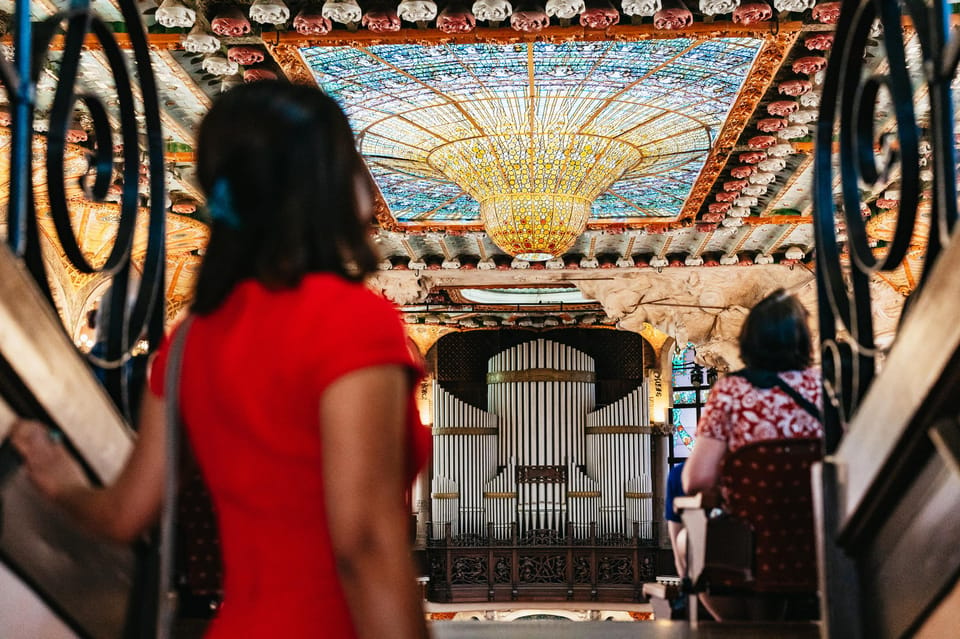
At the end of the tour, you’ll hear the Palau’s organ. It’s typically brief, but it lands hard because by then you’ve seen the building’s visual logic and you understand it’s built for sound, not just selfies.
This is also where the experience often becomes memorable in a personal way. Multiple visitors praised the organ moment as a highlight, especially when they got a live demonstration rather than only a description. If you’re a music person, this ending can feel like the building finally speaks back.
If you’re choosing between a tour-only plan and adding a concert, here’s my practical take: adding a concert gives you the full reason the Palau exists. The tour gets you the architecture and the story. A concert gives you the sound that architecture was designed to carry.
Price and time: is $28 worth 50 minutes inside a living venue?
At $28 per person for a 50-minute guided visit, this is one of those rare tours where the “value” part isn’t just marketing. You get:
- Guided interpretation of what you’re seeing
- Entrance to areas you don’t always access on your own
- The architecture highlights, including the staircase and skylight
- A short organ performance to close the loop
What’s not included matters too. You’ll want to know that café and restaurant spending is separate, and concert tickets are not part of the tour price.
So, is it worth it? If you care about design, performance spaces, or Catalan culture connected to music, yes. If you mainly want a quick exterior photo and you’re allergic to guided groups, you might feel like the time is short. But for most people, it’s a smart, concentrated use of an hour.
And if you’re booking with flexibility in mind, the option to reserve and pay later is useful when you’re still juggling your Barcelona schedule.
How close is it to Plaza Catalunya and Las Ramblas?
The Palau de la Música is about a 10-minute walk from Plaza Catalunya and Las Ramblas. That’s a nice location because you can pair it with other city-center stops without relying on a long commute.
The meeting point can vary depending on which option you book, so I’d treat the confirmation email like your map, not a suggestion. When you arrive, have your ID ready. You’ll need to present it at the box office to confirm your tour.
Also, bring a camera. You’ll be surrounded by details worth capturing. This is one of those interiors where you’ll take the “one good photo” and then realize you need five more from different angles.
Tips for hearing your guide and getting the photos you want
A quick word on sound and clarity. Some people have praised guides for being super informative and speaking clearly, including guides like Yu and Axel. Others have complained that the headset audio could be crackly and hard to understand.
So here’s the practical approach: when you get your audio device, check it early and adjust if needed. If you notice it’s not clear, speak up right away. Don’t wait until you’re halfway through the hall.
Photo advice, based on how the tour flows:
- Start with wide shots early, then move to close-ups once the group shifts.
- Accept that the staircase and hall can get busy, and plan your best photos around the moment the group pauses.
- If you’re sensitive to noise, take advantage of the quieter transitions between stops.
And if you’re hoping for an added bonus, look at the possibility of seeing a rehearsal or concert during your timing. The building can host these moments, and that kind of experience is a step up from tour-only viewing.
Should you book the Palau de la Música Guided Tour?
Book it if you want the best odds of understanding why the Palau looks the way it does. This is not just a pretty room. You’ll walk through rehearsal history, explore symbolic design choices, admire the skylight from the second floor, and finish with an organ performance.
Skip it only if your priorities are strictly low-effort or you’re not interested in guided context. At 50 minutes, it’s a tight itinerary, and the experience works best when you’re open to being guided.
My recommendation for value: treat this as your architecture and culture anchor in central Barcelona. Then, if you can, consider adding a concert afterward or around the same trip window. The Palau is at its best when sound and decoration meet.
FAQ
How long is the Palau de la Música guided tour?
The tour lasts about 50 minutes, and starting times can vary based on availability.
What is included in the $28 ticket?
Your ticket includes a guided tour and entrance to the Palau de la Música Catalana. Café and restaurant items aren’t included, and concert tickets are not included.
Which languages are available for the live guide?
The tour offers live guides in Italian, French, English, Chinese, Catalan, and Spanish.
Where do I meet the tour, and how do I get there?
The meeting point may vary depending on the option booked. The Palau de la Música is roughly a 10-minute walk from Plaza Catalunya and Las Ramblas.
Do I need to bring an ID?
Yes. You’ll need to present your ID at the box office to confirm your tour.
Is the tour wheelchair accessible?
Yes, the tour is wheelchair accessible.