REVIEW · BARCELONA
Barcelona: City Sightseeing Hop-On Hop-Off Bus Tour
Book on GetYourGuide →Operated by City Sightseeing Europe · Bookable on GetYourGuide
A bus loop, but it makes Barcelona click. I like how the two-route system (Red and Blue) lets you stitch together a workable itinerary across big sights, beaches, and the football stadium area. I also love that the 16-language audio guide keeps you oriented while you ride open-top double-decker buses.
One thing to plan around: you only get so much time at each stop, and the last bus runs until 7pm from Stop 1, so if you’re hopping to something time-sensitive, you’ll want a buffer.
In This Review
- Key takeaways before you ride
- Barcelona hop-on hop-off bus: what you really get
- Red vs. Blue routes: how they shape your day
- Starting at Plaça de Catalunya: your orientation cheat code
- Gaudí and modernisme hits: Casa Batlló, La Pedrera, and Passeig de Gràcia
- Sagrada Família: photo strategy and timing reality
- Gothic Quarter and La Rambla: the Medieval-to-night shift
- Sea views and Olympic-area energy: Port Olímpic to the beaches
- Montjuïc-style viewpoints: Teleferic and Miramar areas
- Park Güell and the uphill tradeoff
- Sant Pau and modernist side streets
- Football fans: hop to Futbol Club Barcelona without guessing
- Comfort, audio, and Wi‑Fi: the real experience on top deck
- Paying about $39: value, 24 hours vs. 48 hours, and when it’s worth it
- Quick planning tips that save stress
- Should you book the Barcelona City Sightseeing hop-on hop-off bus?
- FAQ
- How long is the hop-on hop-off bus tour circuit?
- What ticket options do you get?
- Do I need to use the 48-hour ticket on consecutive days?
- How often do the buses run?
- What time does the first and last bus run?
- Is the audio guide included, and what languages are offered?
- Is free Wi‑Fi included on the buses?
- Are attraction tickets or food included?
- Can I use a mobile voucher?
- Are there any rules about pets or smoking?
- FAQ
- Is the tour running all year?
- Is there any day when service is suspended?
- Where do I meet for the tour?
- Can I take photos from the bus?
Key takeaways before you ride
- Pick Red + Blue for the full picture: the routes split the city so you can cover more in less walking.
- 38 stops, lots of choices: you can zoom past some sights and linger at others without committing to a rigid schedule.
- Sagrada Família is the big magnet: you’ll see it repeatedly, and one hop-off spot makes it easiest to aim your photos.
- La Rambla shows Barcelona at night: stop near Colom and drift into the energy along the boulevard.
- Be ready for walking at Park Güell area: the closest bus drop-off can still mean a steep uphill leg.
Barcelona hop-on hop-off bus: what you really get

This tour is built for one goal: helping you move around Barcelona without constantly figuring out routes, transfers, and which neighborhood to tackle next. You ride open-top double-decker buses, and your ticket lets you hop off and back on as often as you like within your 24 or 48-hour window.
You’re not just buying transportation. You’re buying time. Barcelona has major attractions spread out in different directions—modernist architecture one moment, sea breezes the next, then hills when you least expect them. With this format, you can do the “see first, decide later” approach and still get enough city variety in a short trip.
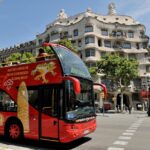
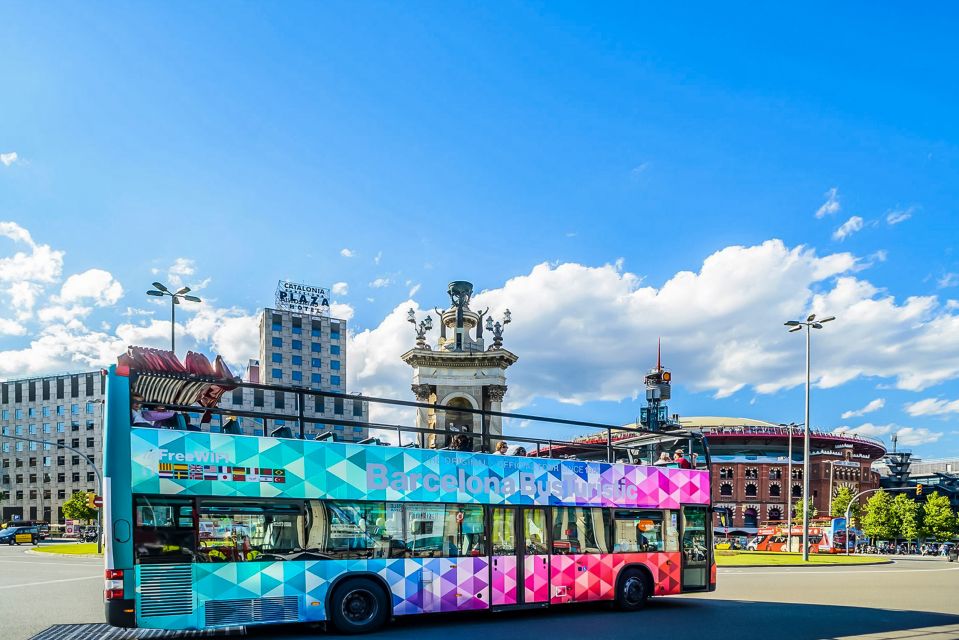
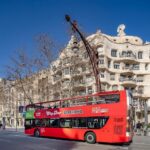
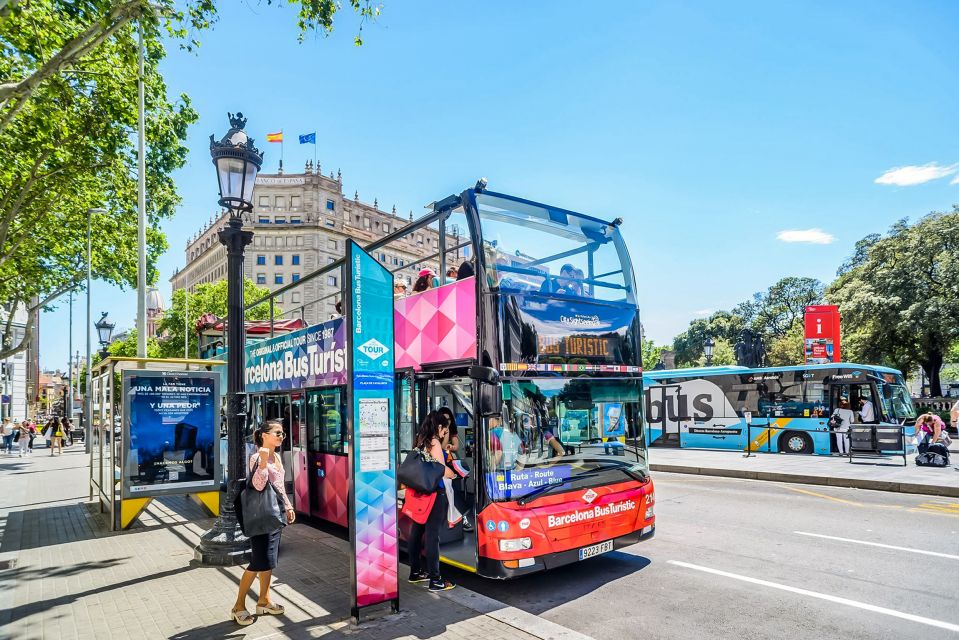
The bus itself is straightforward: branded and labeled Barcelona Bus Turistic, double-deck top viewing, and headphone audio commentary in 16 languages (Spanish, Catalan, Chinese, English, French, German, Italian, Japanese, Portuguese, Russian, Dutch, Hebrew, Swedish, Arabic, Turkish, Norwegian). If you like having context while you look, this matters a lot. It turns random streets into a route you understand.
You can also read our reviews of more city tours in Barcelona


Red vs. Blue routes: how they shape your day

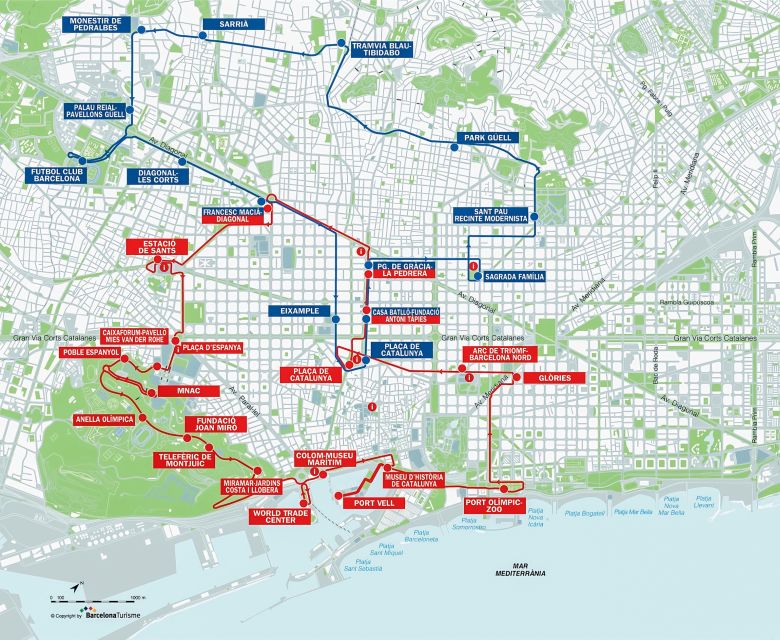
Barcelona is too big to do on vibes alone. The smartest move is to use the Red and Blue routes as two halves of the city and combine them.
The Red Line is your best bet for covering the central-to-southern side with big city landmarks and a wide spread into the seaside/modern areas. It also includes key stops that help you feel the city’s scale: places near Plaça de Catalunya, Estació de Sants, Placa d’Espanya, and the run through major areas like Anella Olímpica, Port Olímpic, and several beach stops (including Platja del Bogatell and Platja Nova Mar Bella). It also lands you at Torre Glòries and finally hits Sagrada Família.
The Blue Line is your best bet for the Gaudí-heavy, hillside, and football-fan side. It runs from the center with Passeig de Gracia stops like La Pedrera, then heads into modernist and park territory with Sant Pau Recinte Modernista and Park Güell, plus a run toward the Tibidabo area via Tramvia Blau – Tibidabo and stops further out like Monestir de Pedralbes. It also includes Futbol Club Barcelona, which is huge if that’s your main mission.
If you’re only doing one day, I’d choose based on your priorities:
- Want maximum “Gaudí and parks” time? Go Blue.
- Want a smoother spread of central sights plus sea and sports venues? Go Red.
If you can do 48 hours, you’ll get the best results by mixing both.
Starting at Plaça de Catalunya: your orientation cheat code
Your common starting point for both routes is Plaça de Catalunya. This is the right place to begin because it acts like the city’s main junction. Once you see the buses pull out and you get your first sweep of the route, Barcelona stops feeling like disconnected neighborhoods.
Even if you don’t hop off at Plaça de Catalunya, this first segment helps you “place” the city in your head. You’ll figure out what’s uphill, what’s toward the sea, and what areas feel like they cluster around major avenues. That matters later when you decide where to walk and where to save your energy.
Also, the service runs frequently—buses are set up to depart from Stop 1 starting at 9am and run until 7pm, with buses arriving about every 20 minutes. That frequency reduces stress. You’re not stuck waiting forever just because you paused for a coffee.
Gaudí and modernisme hits: Casa Batlló, La Pedrera, and Passeig de Gràcia
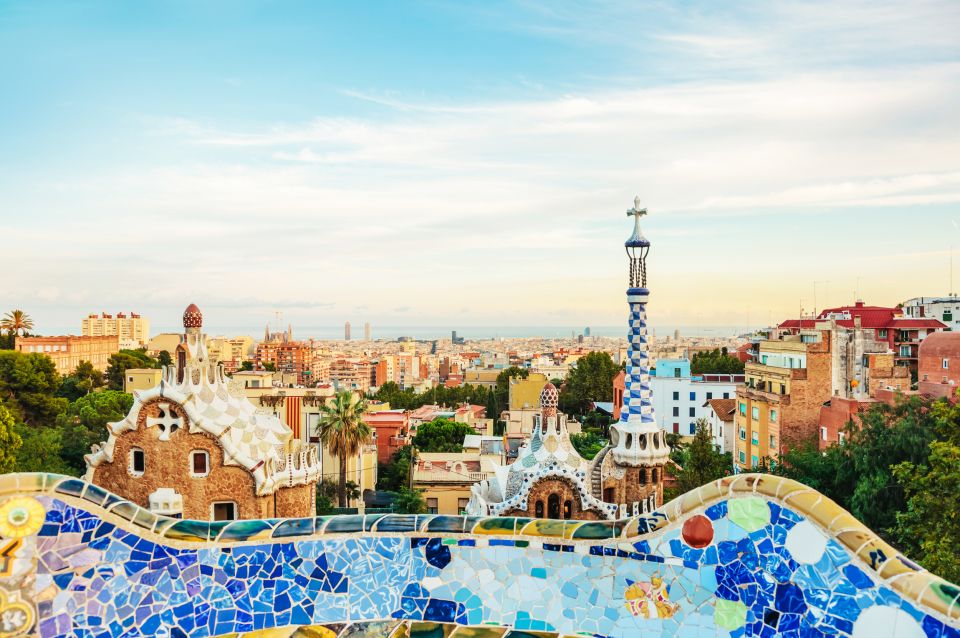
If Barcelona has a signature look, it’s modernisme. The routes give you multiple chances to experience it without hunting across town.
On the Red Line, you’ll see Casa Batlló – Fundació Antoni Tàpies early. On the Blue Line, you’ll get Passeig de Gracia – La Pedrera. These are the kinds of stops that make the city feel like a design museum—but outdoors.
Here’s how to use these stops strategically:
- Hop off for 20–40 minutes if you want exterior photos and a quick street-level look.
- Stay on the bus if your day is already packed and you’d rather save time for bigger “must-do” stops.
The practical benefit: these are in the center, so you’re not committing to a long transfer. You can also return later on foot once you’ve seen the bigger picture from the top deck.
Sagrada Família: photo strategy and timing reality
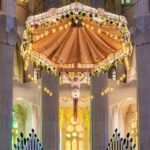
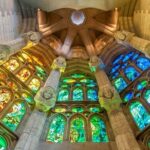
For most people, Sagrada Família is the reason you come to Barcelona. The good news is that it appears along the routes, and you can also hop off near it for that iconic view.
The key drawback isn’t the attraction. It’s the situation around it. One review noted that the bus can get busy enough that you don’t always get on the first bus at Sagrada Família, which is exactly what you’d expect at one of the city’s biggest magnets. So don’t treat the bus stop like a quiet museum entrance.
My advice: make Sagrada Família your anchor stop, not a random one. Pick a realistic window, arrive at the stop with time to spare, and plan your next connection afterward. If you’re booking any timed tickets, leave extra breathing room for the bus flow and the limited time you get while it’s at each stop.
Also, the open-top bus makes it easy to see the building’s presence in the city, but getting perfect photos from the move can be harder. If you care about photos most, hop off and pause longer rather than relying only on driving-by shots.



Gothic Quarter and La Rambla: the Medieval-to-night shift
Barcelona isn’t just architecture. It’s also streets, pacing, and that feeling of wandering until you find something worth stopping for.
This tour’s highlight mix includes Medieval streets in the Gothic Quarter and Barcelona nightlife at La Rambla. You’ll connect to La Rambla via the Colom – La Rambla area, and you can use that stop as a launch point for an evening stroll. Expect a lot of bars and eateries along the boulevard, so it’s a natural place to hop off even if you don’t plan a formal activity.
If you want a smooth night plan, do this:
- Use the bus earlier to reduce walking fatigue.
- Hop off near La Rambla later, when you can actually enjoy the vibe and not just rush through it.
One practical note: La Rambla is long. Even with the bus stop nearby, you’ll still walk. But you’ll be walking because you chose where to go, not because you had to fight transit math.
Sea views and Olympic-area energy: Port Olímpic to the beaches
One of the best things about the Red Line is that it pushes you beyond the classic center. It heads toward the coast with stops around the waterfront and beach zone.
You’ll pass through or stop near World Trade Center, Port Olímpic, and beach areas like Platja del Bogatell and Platja Nova Mar Bella. There’s also Parc Diagonal Mar and Poblenou, which help show Barcelona as a city with modern edges, not only historic cores.
Why this matters: the city can feel dense and “old world” when you’re focused on major sights. The sea stops are where you reset. Even a short hop-off can make your whole trip feel lighter—breeze, open space, and fewer staircases per minute.
Tip: if it’s hot out, use these seaside stops as your midday break. You’re already in transit mode. If you’re trying to cram museums back-to-back, the coastline can save you from a burnout spiral.
Montjuïc-style viewpoints: Teleferic and Miramar areas
The Red Line includes a set of stops that point you toward higher ground and viewpoints, even if you don’t go all the way up.
You’ll find Teleferic de Montjuic, plus Miramar – Jardins Costa i Llobera on the route. This is the sort of area that’s made for short walks and big views, and it can be a great “change of scenery” moment between major monuments.
A drawback to remember: higher areas often mean more effort than you expect, especially if you hop off and then decide you want to keep going. The bus makes it easy to access the base. It doesn’t erase the fact that Barcelona has hills.
So treat this as an “I’ll hop off, look, and maybe wander a bit” stop—not a “let’s conquer the entire mountain” plan unless you’re fit and you’ve got time.
Park Güell and the uphill tradeoff
Park Güell is a giant draw, and the Blue Line includes it. But the tour format doesn’t guarantee gate-adjacent drop-offs.
One of the most useful “real life” notes from the experience is that the bus stop may drop you at a distance from Park Güell, and reaching the park can involve a long, steep uphill walk. The takeaway isn’t to avoid it. It’s to plan for it.
If you’re doing Park Güell:
- Wear shoes that can handle steep paths.
- Don’t stack an early reservation right after your hop-off unless you like running.
- Consider using the bus as your way to reduce other walking earlier in the day, so your energy is saved for this uphill section.
Park Güell is worth it for many people, but the bus only solves the “how do I get close” part.
Sant Pau and modernist side streets
The Blue Line includes Sant Pau Recinte Modernista, a standout stop if you’re into architecture beyond the obvious Gaudí headlines.
This is also one of the stops that works well for a timed visit concept: if you want to get out, see something specific, and get back to the bus without wandering forever, Sant Pau fits the logic of a hop-off experience. You get a clean reason to stop, and the bus helps you rejoin the tour route afterward.
If you’re not into long indoor visits, you can still use it as a photo-and-stroll stop. Just don’t expect the bus to handle your walking comfort—choose short and smart.
Football fans: hop to Futbol Club Barcelona without guessing
If you’re coming for soccer, the Blue Line includes Futbol Club Barcelona. This is one of the simplest “check it off” stops on the tour because it’s directly named and tied to the club area.
The same practical advice applies here as it does for Sagrada Família: bus crowds and stop timing can affect how smooth your transition is. If your goal involves a match, tour, or any timed entry, don’t let the hop-off be the only buffer you have.
Use the bus to get into position, then focus on making your schedule work from there.
Comfort, audio, and Wi‑Fi: the real experience on top deck
The big selling point is simple: you’re above street level, so you can see the city without constantly turning your head down at a map.
A few practical comfort notes matter:
- The buses are open-top, but the roof can close automatically when rain starts. That’s a big deal in Barcelona weather swings.
- Free Wi‑Fi is included, but it might not work on every bus at every moment.
- The top deck can get cold in December, and it can get hot in summer. One review pointed out AC wasn’t great, so plan based on the season.
Audio guide: generally, it’s a win because you can listen while riding and get context without using your phone. Still, some people experienced audio dropouts. So if you care about every detail, keep an eye on the stop map and don’t rely on audio alone.
Also note: getting up to the top deck can take a bit of time, and drivers may not always allow long waits at stops. If you’re trying to rearrange yourself every time you stop, you might miss the short window.
Paying about $39: value, 24 hours vs. 48 hours, and when it’s worth it
At around $39 per person, this kind of hop-on hop-off tour is often the difference between planning a perfect day and just trying to survive a packed one with your feet intact.
Here’s how I judge value for this specific tour:
- You’re paying for transport + narration + flexibility in one.
- You’re also buying coverage: two routes, 38 stops, and enough variety to make the money feel like it turns into time.
When 24 hours is enough:
- You’re focused on one theme (like Gaudí and parks) and you don’t need to cover the coast or extra neighborhoods.
- You want to get oriented your first day, then use the metro or taxis for specific targets later.
When 48 hours earns its keep:
- You want to use both routes fully.
- You want to linger at more than a few stops without feeling guilty about skipping something.
- You’d rather ride to reduce walking and then walk only where you truly want to.
One review tip that lines up with how the routes work: do Blue first, then Red later. The order helps some people because it spreads the effort—parks/hills one day, broader city coverage another.
Quick planning tips that save stress
These small choices make the biggest difference once you’re on the bus:
- Check your stop placement before you commit to reservations. Some places need extra walking after the bus drops you.
- Use the map as your main tool. Audio is helpful, but the bus doesn’t always stop long.
- Treat Sagrada Família and football club areas as busy stops. Expect crowds.
- Plan an evening La Rambla moment. It’s one of the best ways to turn the tour into real city time.
Also, if you’re the kind of traveler who hates waiting, you’ll like the frequency. Buses are listed as running every 20 minutes, and operators also note running every 5 minutes in a way that helps prevent long queues at stops.
Should you book the Barcelona City Sightseeing hop-on hop-off bus?
Yes, if you want an easy route system that covers the city’s big names without turning your vacation into a transit puzzle. It’s especially worth it if you’re doing a short stay and want to see a lot before deciding where to go deeper.
Skip or downscale it if you hate crowds at major attractions and you prefer to build a very tight walking itinerary from neighborhood to neighborhood. In that case, you might use the bus for one segment, not as your whole plan.
My bottom line: if your goal is orientation + flexibility + major sights (Sagrada Família, Gaudí stops, La Rambla, and the football area), this is a strong way to spend your first day or two.
FAQ
How long is the hop-on hop-off bus tour circuit?
The tour duration is listed as 120 minutes.
What ticket options do you get?
You can choose a 24-hour or 48-hour hop-on hop-off bus ticket.
Do I need to use the 48-hour ticket on consecutive days?
Yes. 48-hour tickets must be used on consecutive days.
How often do the buses run?
The schedule states buses run every 20 minutes, and the service is described as running very frequently to help avoid long waits.
What time does the first and last bus run?
Both routes state the first bus departs from Stop 1 at 9am and the last bus departs from Stop 1 at 7pm.
Is the audio guide included, and what languages are offered?
Yes. The audio guide commentary is included with headphones and is available in 16 languages (including English, Spanish, French, German, Italian, and more).
Is free Wi‑Fi included on the buses?
Yes. Free Wi‑Fi is included.
Are attraction tickets or food included?
No. Attraction tickets and food and drink are not included.
Can I use a mobile voucher?
Yes. Mobile and printed paper vouchers are accepted.
Are there any rules about pets or smoking?
Pets are not allowed, and smoking is not allowed.
FAQ
Is the tour running all year?
It operates all year round except 1st January and 25th December.
Is there any day when service is suspended?
Yes. Service is suspended on Thursday 12th February.
Where do I meet for the tour?
The meeting point may vary depending on the option booked.
Can I take photos from the bus?
You can use the open-top viewing deck while riding, but like any sightseeing bus, your photos may depend on how long the bus stops and where you’re seated.