REVIEW · BARCELONA
Barcelona: Columbus Monument
Book on GetYourGuide →Operated by Turisme de Barcelona · Bookable on GetYourGuide
Barcelona’s Columbus Monument is a quick climb.
From a 60-meter-tall column built for the 1888 Exposición Universal, you get wide panoramic views and a clear story of Columbus’s 1492 voyage right at your feet. The drawback is real: the lift and upper deck are snug, so people with claustrophobia or vertigo may want to skip it.
I also like how the view is practical, not just pretty. From the top you can pick out the Gothic Quarter rooftops, bell towers (including the cathedral), Santa Maria del Mar, La Rambla, Montjuïc Castle, and the Royal Shipyards of Drassanes—now tied to the Maritime Museum. The main consideration is comfort: the lift experience is tight, and the tower can feel like it moves a bit at height.
If you want a one-day, low-cost Barcelona highlight (it’s around $11 per person), this is one of the most straightforward ways to see how the old city meets the harbor. Just plan around the closure dates on Dec 25 and Jan 1, and meet at Plaça del Portal de la Pau so you don’t waste time hunting the entrance.
In This Review
- Key points before you go
- Columbus Monument: a 60-meter viewpoint with real meaning
- Finding your way: Plaça del Portal de la Pau is the key
- What happens at the monument: statues, then a tight lift to the deck
- If you have motion or height concerns
- The view map: Gothic Quarter, Port Vell, Montjuïc, and Tibidabo
- Old Barcelona: rooftops and church bell towers
- La Rambla from above
- Shipyards and the maritime angle
- Montjuïc Castle and the hill backdrop
- The modern harbor: Forum area, Port Vell, and Olympic Marina
- The green “lung” and the far horizon
- How long it takes and when to go (without guessing)
- Price and value: why about $11 feels fair
- Optional wine tasting: a small upgrade if you want it
- Who should book (and who should skip)
- Should you book the Columbus Monument ticket?
- FAQ
- How much does the Columbus Monument viewing access cost?
- How long is the experience?
- Where do I meet for the Columbus Monument?
- What can I see from the top?
- Is the monument suitable for everyone?
- When is the monument closed?
Key points before you go
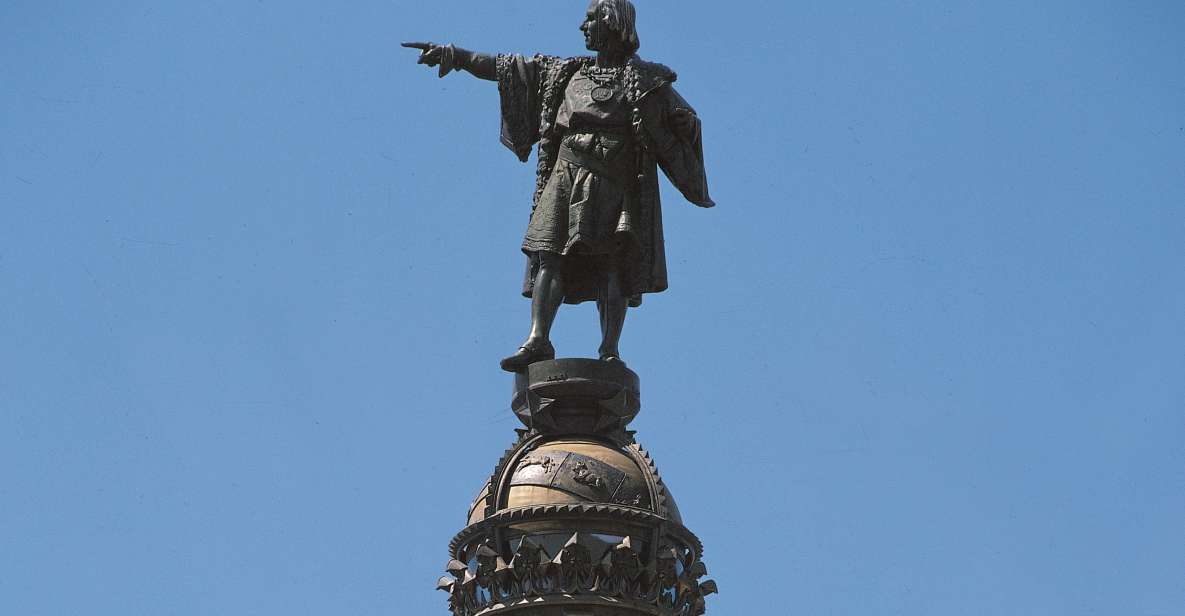
- 60-meter panoramic deck: Big views with a short visit time.
- 1888 Universal Exposition context: The monument ties directly to Barcelona’s world-fair era.
- Bronze details at the base: Winged victories you can actually look at up close.
- Small lift capacity: The elevator is limited, which matters for comfort.
- Views from old to new: Gothic Quarter, Port Vell, Montjuïc, Olympic Marina area, and beyond.
- Value at about $11: A lot of skyline for the price.
Columbus Monument: a 60-meter viewpoint with real meaning
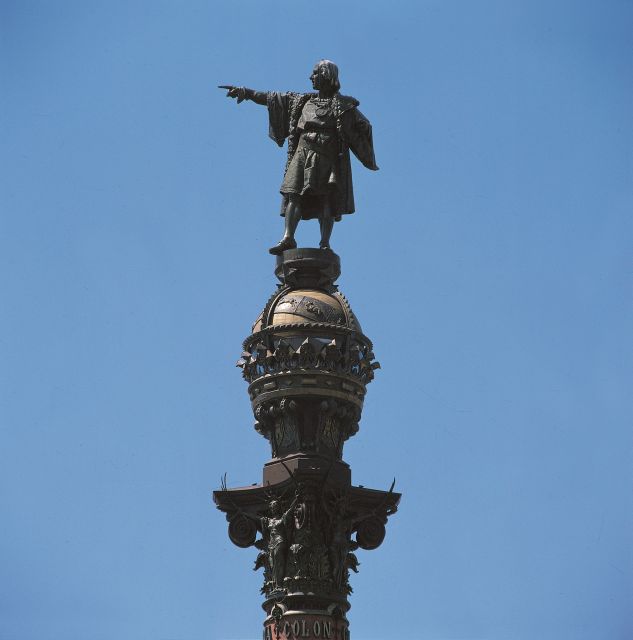
The Columbus Monument isn’t just a tall photo spot. It was built for the 1888 Barcelona Universal Exposition, honoring Columbus’s first voyage to the Americas in 1492. That matters because the monument’s structure and details help you understand the big story Barcelona wanted to tell at the time: ships, discovery, and the city showing up on the world stage.
The monument itself is a Corinthian column, with bronze statues of the four winged victories at the base. Once you’ve climbed (or rather, once you’ve ridden) to the viewing level, those symbols stop being decoration and start feeling like part of a designed set. You get a sense of why this spot was chosen: the city’s geography really does stretch out in all directions from here.
And yes, the views are the main event. At about 60 meters above ground, you’re high enough to see neighborhoods as patterns—rooftops, harbors, hills—rather than individual buildings only.
You can also read our reviews of more tours and experiences in Barcelona.
Finding your way: Plaça del Portal de la Pau is the key
Your meeting point is at Columbus Monument, Plaça del Portal de la Pau. This is one of those Barcelona locations where it’s easy to be nearby, but still take longer than you want if you arrive late or distracted.
A practical tip: arrive with a few extra minutes, especially if you’re trying to match the meeting instructions with street-level signage. One review noted the entrance is not the easiest to find, so I’d treat this as a do-this-on-purpose kind of stop, not a last-minute wander.
If you’re walking in from the harbor side, you’ll also understand why many people recommend making it an easy stroll. The approach is part of the experience: the monument sits above the action, so you start building the panorama before you even go up.
What happens at the monument: statues, then a tight lift to the deck
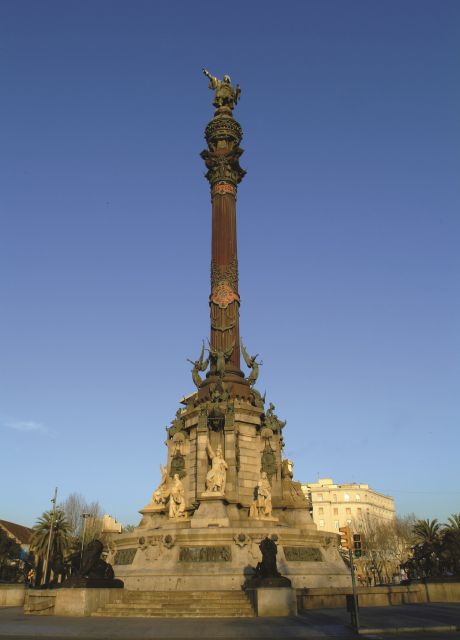
You’ll start by taking in the monument at ground level. Look closely at the bronze winged victories near the base. They’re the kind of details you’d miss if you only cared about skyline photos, but here they’re worth the minute or two because they connect the whole structure to its historic theme.
Then you head up to the panoramic area. The key detail: the lift experience is small. One of the most repeated points is that the elevator only accommodates a limited number of visitors—basically two visitors plus the guide. That’s a big deal for comfort and patience. There isn’t much room to stretch, and you’ll feel the enclosure.
At the top, the deck is snug enough that you won’t have a lot of space to spread out. It’s not a huge open plaza; it’s a viewpoint you rotate through. I like that style because you get the payoff fast without turning this into an all-afternoon project.
If you have motion or height concerns
This isn’t for everyone. It’s not suitable for people with claustrophobia or vertigo. Also, at height, the structure can feel like it shifts slightly. If you’re sensitive to that, you may feel it more than you expect.
The view map: Gothic Quarter, Port Vell, Montjuïc, and Tibidabo
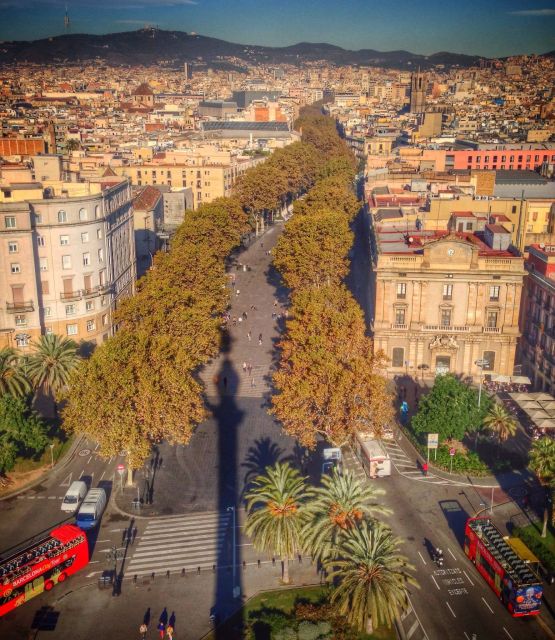
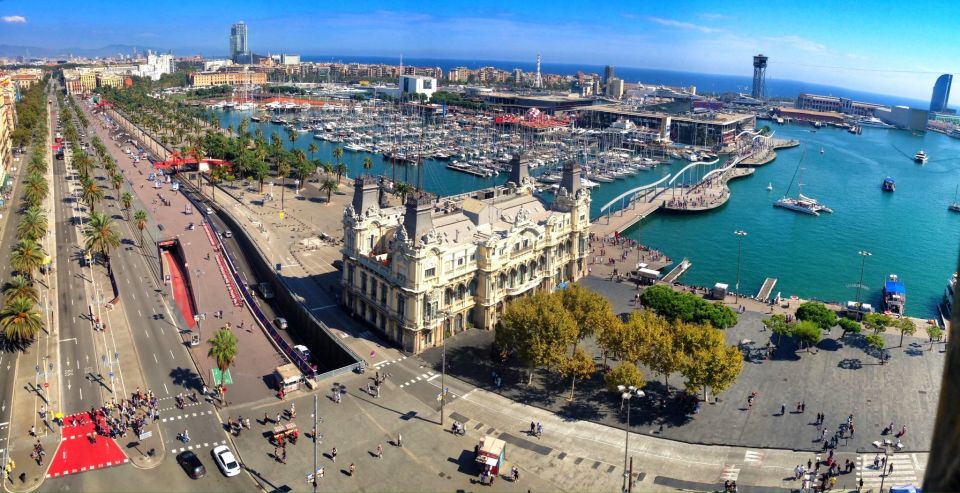
From the top, you can scan the city like a map. I like the way this viewpoint connects Barcelona’s layers: medieval stone, working harbor, modern beachfront redevelopment, and the hills behind it.
Here’s what you can try to spot:
Old Barcelona: rooftops and church bell towers
First, look toward the Gothic Quarter rooftops. From this angle, it’s easier to see the medieval texture as a whole: dense blocks, narrow streets, and the way the cathedral rises above everything else. You can also line up sights like the bell towers of the cathedral and Santa Maria del Mar, the seafarers’ church.
La Rambla from above
La Rambla is right in your field of view when you’re looking down toward the center. From street level it’s easy to just feel crowds and traffic. From above, it becomes a corridor—one of those Barcelona features that reads better in a wide shot.
Shipyards and the maritime angle
Turn your attention to the harbor side and you’ll be able to recognize Les Drassanes Reials (Royal Shipyards of Drassanes). Today those buildings are tied to the Maritime Museum, so the monument’s Columbus theme starts to feel less like a random statue and more like a match to the city’s sea identity.
Montjuïc Castle and the hill backdrop
In the other direction, Montjuïc Castle stands out as a landmark that makes the city’s topography obvious. This is where the viewpoint earns its keep: you’re not just seeing neighborhoods—you’re seeing how the city sits between sea and hill.
The modern harbor: Forum area, Port Vell, and Olympic Marina
If you follow the coastline, you can pick out the Forum area, including its distinctive photo-voltaic roof, plus nearby skyscrapers. Closer to the monument, the twin towers mark the entrance to the Olympic Marina.
And then there’s Port Vell (Old Harbor). At this height, it looks like an organized stage set: boats, terminals, walkways, and water channels that help you understand how the working harbor and the tourist zone overlap.
The green “lung” and the far horizon
Barcelona doesn’t feel flat from here. You can see Parc Natural de Collserola—the massive green area that acts like a city lung. On clear days, you may even spot Torre de Collserola and Tibidabo Amusement Park up on Tibidabo Hill at the horizon.
This is the payoff for choosing a monument viewpoint instead of a smaller street-level spot. The top helps you understand distance and direction, not just aesthetics.
How long it takes and when to go (without guessing)
This is a 1-day experience, and the visit itself is short. That’s part of the value: you can fit it into a morning or evening plan without sacrificing half a day.
Timing matters mostly for comfort. Because the lift and deck are compact, you’ll enjoy it more if you avoid peak crowds. One review described a low-season evening where they arrived around 6:30pm and found a very light crowd—basically no line. You can’t count on that every day, but it’s a good reminder that off-peak times can feel more relaxed.
If you’re deciding between daytime and evening, pick the option that best matches your energy level. Daylight makes it easier to identify far landmarks like Collserola and Tibidabo. Evening can feel calmer and more walkable around the harbor, but your landmark-spotting may rely more on visibility.
Price and value: why about $11 feels fair
At roughly $11 per person, this is priced like a practical add-on that delivers a real skyline moment. You’re paying for:
- access to the viewing platform,
- height (that 60-meter perspective),
- and a monument that already has a strong story built into it.
If you’re comparing this kind of ticket to other viewing options in Barcelona, this one has a clear advantage: you’re getting both history at the monument base and a wide panorama up top. One review even suggested it felt better value than a pricier tower option nearby, mainly because the views from the statue deck were stronger.
The only way it doesn’t feel worth it is if you’re the type of person who needs lots of space and lots of time. This isn’t a huge open-air event. It’s a compact viewpoint with a tight elevator. If that suits you, it’s a smart buy.
Optional wine tasting: a small upgrade if you want it
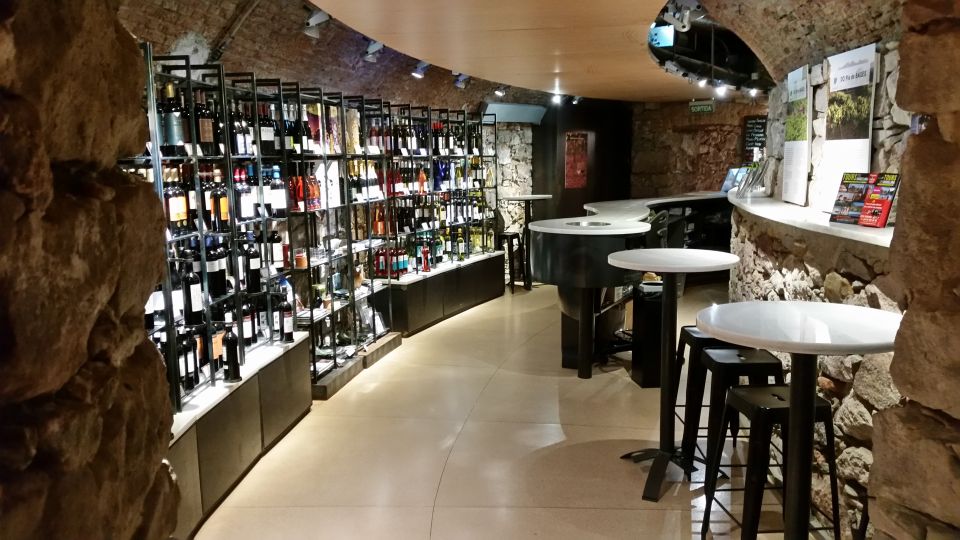
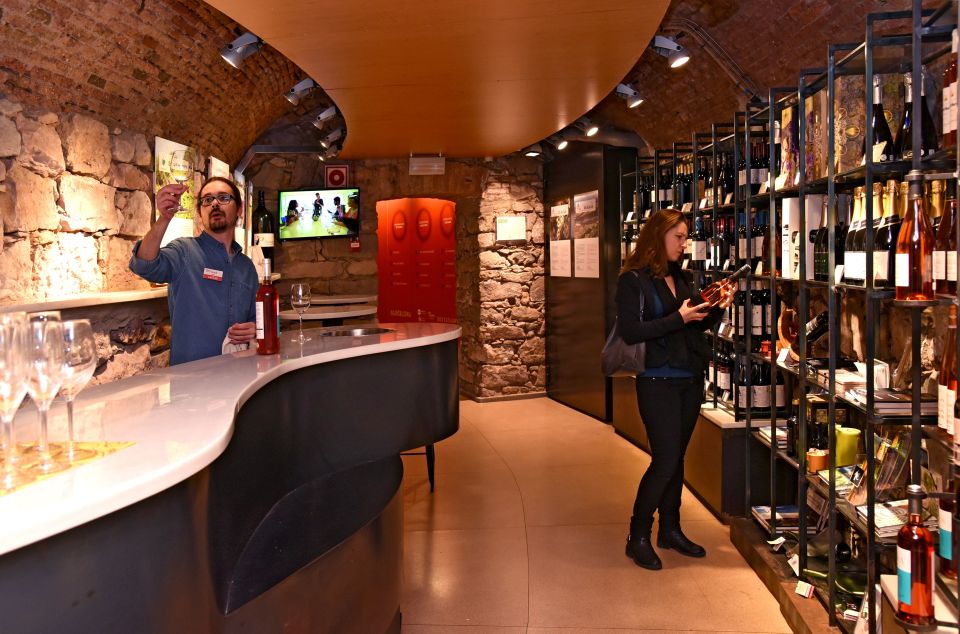
The standard ticket experience is access to the viewing platform. But there’s an optional add-on people often choose at the site: wine tasting.
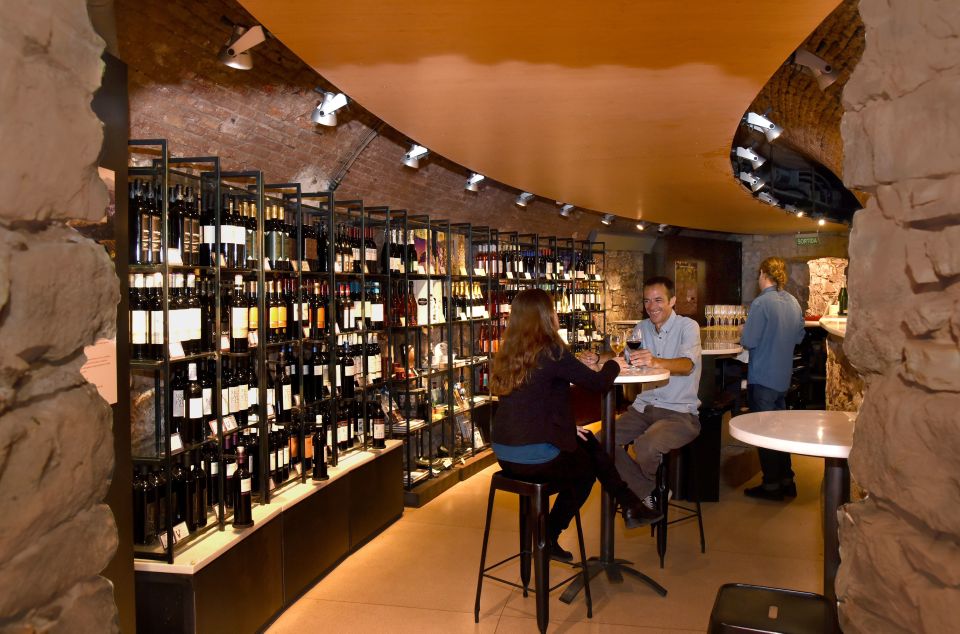
Reviews describe it as a simple wine experience, including one glass (and in another description, tasting several types and then getting the one you prefer). If you like the idea of turning the visit into a little ritual, it can be a fun way to extend the moment after you come down.
Just note it’s not part of the core viewing access. Think of it as extra, not required.
Who should book (and who should skip)
This is ideal for you if you want:
- a fast, affordable panoramic view of Barcelona,
- a monument stop with clear context (1888 exposition + Columbus 1492),
- and views that connect old city, harbor, and hills in one sweep.
It’s also good for families or mixed groups who don’t want a long tour. The structure is straightforward: get to the monument, go up, look around, go back down.
Skip it if:
- you have claustrophobia (the lift is small),
- you have vertigo,
- or you hate tight spaces and waiting in compact areas.
Also, if you’re traveling with pets, note that pets aren’t allowed, and no smoking rules apply.
Should you book the Columbus Monument ticket?
Book it if you want one of the best “bang for your buck” skyline moments in Barcelona, with the bonus of standing on a monument that clearly ties to the 1888 world-fair era and Columbus’s 1492 voyage. The view range—from Gothic Quarter and La Rambla to Port Vell, Montjuïc, and toward Tibidabo—makes it feel like a condensed tour of the city’s geography.
Don’t book it if tight spaces or height sensations are a deal-breaker. Between the limited elevator capacity and the snug deck, it’s not the kind of attraction I’d choose for people who get uncomfortable in enclosed settings.
If you’re comfortable with that, this is a smart, efficient way to see Barcelona from a true landmark height—then get back to walking the streets where the city really happens.
FAQ
How much does the Columbus Monument viewing access cost?
The price is listed as about $11 per person.
How long is the experience?
It’s listed as 1 day.
Where do I meet for the Columbus Monument?
Meet at Columbus Monument, Plaça del Portal de la Pau, Barcelona.
What can I see from the top?
From the viewing platform, you can look over the Gothic Quarter rooftops, landmarks like Santa Maria del Mar and the cathedral bell towers, La Rambla, Montjuïc Castle, Les Drassanes Reials (Royal Shipyards of Drassanes), Port Vell, and areas toward Parc Natural de Collserola, Torre de Collserola, and Tibidabo on the horizon.
Is the monument suitable for everyone?
It’s not suitable for people with claustrophobia or vertigo. It is listed as wheelchair accessible.
When is the monument closed?
It is closed on December 25 and January 1.