REVIEW · SEVILLE
Historical Italica: Half-Day Guided Tour from Seville
Book on Viator →Operated by Naturanda Turismo Ambiental · Bookable on Viator
Roman seats, under the sun of Andalusia. A half-day guided trip from Seville takes you to Italica, the Roman city best known for a big amphitheater and floor mosaics that still look sharp. I like the scale you feel in the arena area, and I like how the guide connects what you see to how people actually lived.
The only real catch is timing. This tour uses shared transportation, so shared-transfer timing can matter if you’re trying to catch another plan right after. And the day includes a monastery stop—monastery stop—which is beautiful, but not everyone wants a religion-and-art hour after Roman ruins.
On the plus side, the tour is English-guided with tickets included, so you can focus on walking and listening. With up to 60 people, it’s big enough to feel efficient, but small enough that a good guide can keep the story going. Guides like Jesús, Rebecca, Miguel, and León have gotten real praise for turning stones into a walk-through history lesson.
In This Review
- Key things to know before you go
- Italica from Seville: the Roman city you can actually fit in
- Stop 1: Anfiteatro de Italica and the mosaics that still look good
- Roman domus and elite life: what the guide helps you see
- Stop 2: Monasterio de San Isidoro del Campo over the Roman story
- Price and logistics: is $47.18 good value?
- Guide style and group flow: where the experience can speed up or slow down
- What to bring for Italica: shoes, shade, and a water plan
- Who should book this Italica half-day, and who might not love it
- Should you book Historical Italica from Seville?
- FAQ
- How long is the Historical Italica half-day tour from Seville?
- What does the tour cost?
- Is this tour offered in English?
- What stops are included?
- Are admission tickets included?
- Does the price include transportation?
- Is food or drinks included?
- How large are the groups?
- Can I cancel for a full refund?
- Is the meeting area near public transportation?
Key things to know before you go
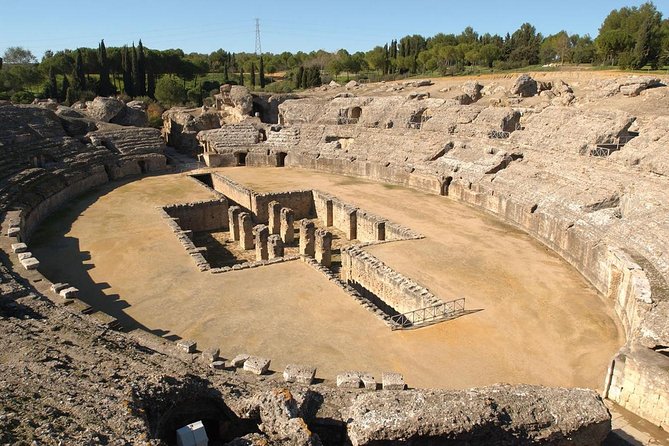
- Italica is a major Roman site near Seville known as the first Roman settlement on the Iberian Peninsula
- The amphitheater scale is the star and it’s described as capable of holding 25,000 spectators
- Mosaics + domus houses let you see elite Roman taste, not just rubble
- Two admission-included stops: the Italica ensemble and then Monasterio de San Isidoro del Campo
- Bring water mindset: food and drinks aren’t included, and it can get hot
- You’ll be in an English group led by a professional guide
Italica from Seville: the Roman city you can actually fit in
Seville has plenty of history, but Italica is different. It’s Roman, it’s older than most of what you’ll see in the city center, and it’s close enough that a half-day plan doesn’t feel like you’re sprinting across Spain.
The drive is short. You’re leaving Seville, heading to the archaeological complex, and then returning after roughly four hours total. That makes this outing a smart match if you want archaeology without sacrificing your whole day to museums and buses.
The Roman context matters, too. Italica is described as the first Roman settlement on the Iberian Peninsula, so the site carries a “this is where it starts” vibe. Even if you think you know Roman history already, the way the guide points out building functions—streets, elite homes, public spaces—makes it easier to picture daily life, not just emperors and dates.
Also, small practical win: this tour includes round-trip shared transfer, so you don’t have to figure out buses on a timetable after a long travel day. You’ll start and end at a set plan, and the guide keeps the pieces moving.
You can also read our reviews of more guided tours in Seville


Stop 1: Anfiteatro de Italica and the mosaics that still look good
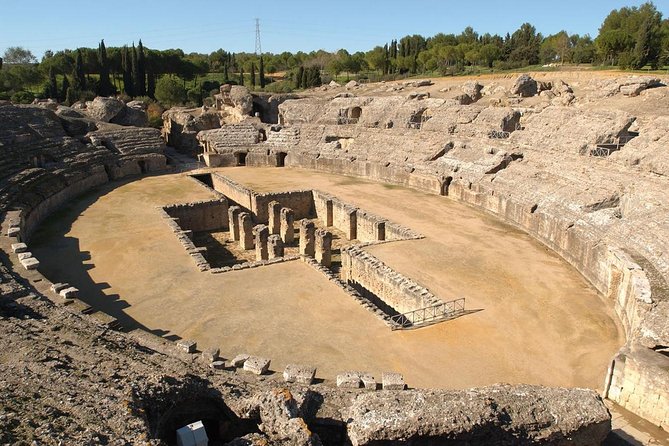
The first stop is the Italica archaeological ensemble, centered on the amphitheater area. The big draw is the seating scale. This site is described as one of the largest theaters in the Roman empire, with a capacity of about 25,000. When you stand in the space (or near it), it’s hard not to think about noise, crowds, and spectacle—Roman entertainment on a serious budget.
What I’d aim your attention at first is the “how do we know?” factor. The ruins aren’t a blank field; you’re looking at real preserved structure and real design choices. The guide helps translate what you’re seeing so it doesn’t become a vague tour of “old stones.” Expect explanations that connect the amphitheater to the broader city layout.
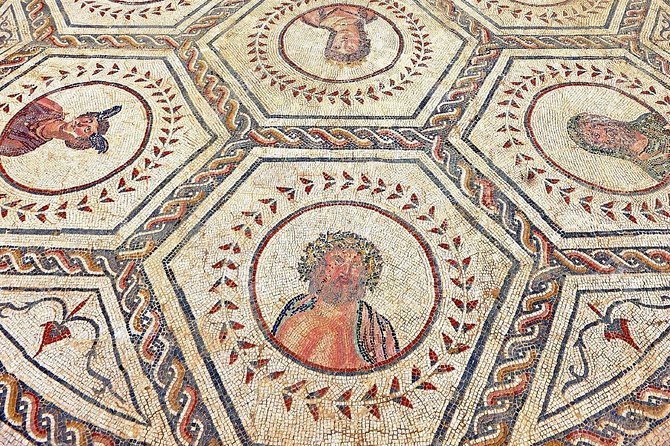
Then come the mosaics. Italica is especially famous for them, and this tour’s focus makes sense: mosaics are where Roman artistry becomes everyday life. The floors you see help you imagine houses decorated for show—wealth displayed underfoot. If you’re into archaeology, this is where you’ll feel the payoff most quickly, because mosaics are visually striking even before you fully understand the story.
Good guides—like Rebecca, Miguel, Juanra, or León—tend to slow down just enough for you to notice details. In one memorable guide style, people praised how the tour could feel like Roman life was being reenacted: streets, homes, and the practical side of city living.
One note: the on-site route can feel compact because the tour is half-day. If you’re the type who wants to linger everywhere, you’ll want to keep your pace. You’ll get time in the complex, but you won’t have a full day to wander independently.
Roman domus and elite life: what the guide helps you see
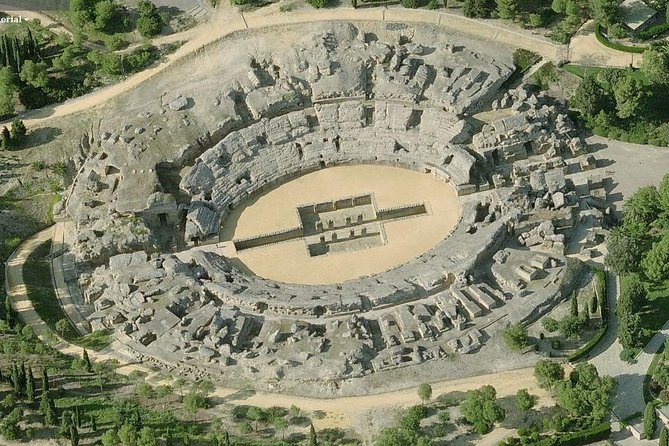
Beyond the amphitheater, the tour highlights the town’s domus houses—the kinds of homes associated with upper classes. That’s a key reason this works as a guided tour. Without a narrative, domus ruins can look like random foundations. With the right guide, they become a map: where people ate, where they received visitors, and how wealth showed up in materials and decoration.
You’ll also get help placing Italica in the bigger Roman world. Some guides go beyond what’s on the museum label and talk about how Italica fit into Rome’s expansion across the region. The better the guide, the more you’ll appreciate the difference between simplified stories and the messier, more realistic history of who lived where and when.
This is also where your interest level matters. If you love Roman architecture and art, you’ll enjoy the way the guide turns domus layouts and mosaic styles into clues about status and taste. If you only want a quick photo stop for the amphitheater, you might find the domus portion less exciting—until the mosaics pull you in.
For language and naming: this tour runs in English, but accents and multilingual history terms can still be a factor. If you’re picky about names, listen carefully and don’t be shy about asking for clarification if something sounds off.
Stop 2: Monasterio de San Isidoro del Campo over the Roman story
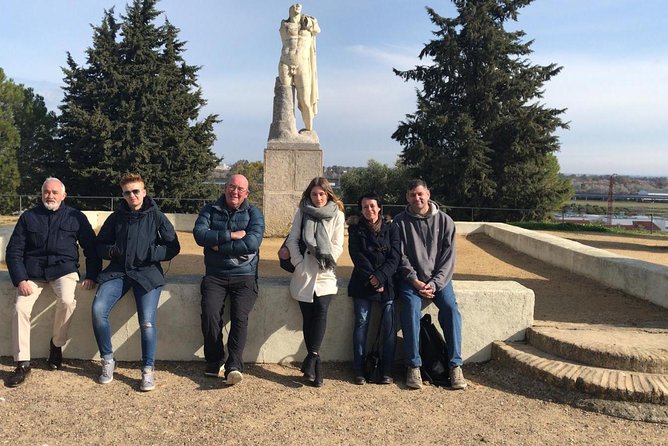
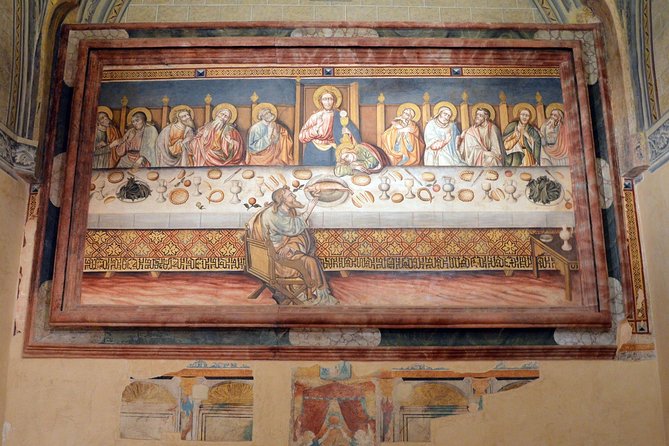
Then the tour shifts gears to the medieval layer. You’ll visit Monasterio de San Isidoro del Campo for about an hour, and you also catch monastery elements as part of the overall Italica area experience.
This part can be polarizing, and that’s honest. Some people love it because it makes the site feel like a living place, not a frozen Roman snapshot. Others feel it breaks the Roman momentum—like you got halfway through a great novel and then someone hands you a short art history chapter.
If you’re even a little interested in how civilizations build on each other, you’ll probably appreciate the monastery stop. You see how later history reuses land and structures, leaving Roman material underneath or nearby. That layering is one of the most interesting ways to read archaeology: not as one culture only, but as successive eras changing the same ground.
Guides like Jesús and Catherine have been praised for keeping this stop engaging, with context that turns the church and monastery into part of the same story rather than a separate detour. If your guide is strong, you’ll leave feeling like you understood why the monastery belongs here.
If your focus is laser-only Roman entertainment, plan for the possibility that you’ll want to spend your mental energy in Italica and treat the monastery as a respectful bonus.
Price and logistics: is $47.18 good value?
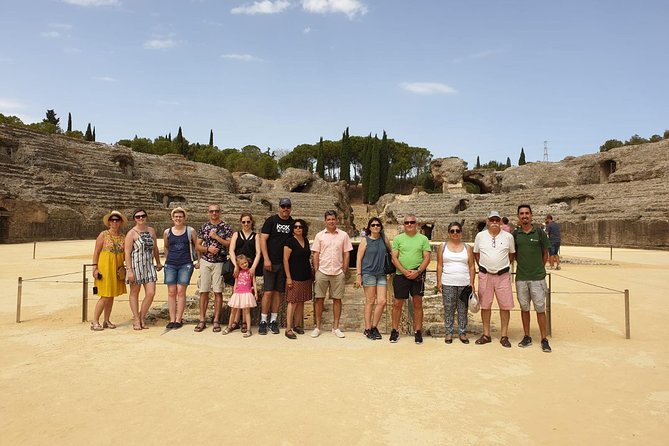
Let’s talk value in plain terms. The price listed is $47.18 per person, and it includes a professional driver/guide, round-trip shared transfer, and admissions for the stops. That matters because admission tickets can add up fast when you’re doing archaeology outside the city center.
You’re also getting a real half-day block—about four hours total. For Seville, that’s a manageable commitment, especially if you’re trying to balance the city’s sights with one day trip.
The biggest value variable is timing. When transport runs well, you get the full flow: bus in, guide-led walk, mosaic time, monastery hour, bus back. When delays happen, the on-site time can tighten. So if you have a train or a strict dinner reservation, build in breathing room. Shared transport usually means you travel with a little give-and-take.
What isn’t included is important: food and drinks aren’t provided. On a hot day, that’s not a small detail. I’d treat this like any outdoor walking plan. Bring water, a hat, and sunscreen. Wear shoes you can stand in for a while. You’ll be glad you did once the shade breaks.
Group size is capped at 60 travelers, and most people can participate. It’s not described as a slow museum crawl; you’ll be walking and listening. That’s good for efficiency, but it means comfort matters.
You can also read our reviews of more historical tours in Seville






Guide style and group flow: where the experience can speed up or slow down
A guided tour is only as good as the guide’s method. The best ones on this route use a simple rhythm: show you something specific, explain what you’re looking at, then help you connect it to daily life.
Names that have come up for strong guiding include Jesús, Rebecca, Miguel, Juanra, León, Alberto, and Catherine (plus Inez). The pattern behind the praise is consistent: clear explanations, strong passion, and the ability to make Italica feel real rather than like a checklist of ruins.
Group flow can also affect your day. Some people reported that when the day runs late, the pace can turn rushed, and that can cut into the parts they came for most. Even when the guide is trying hard, the clock is still the clock.
If you want the smoothest experience, do two things:
- Arrive ready to go at the meeting time rather than showing up at the last second.
- Keep your expectations realistic for a shared-transfer tour. It’s organized, but it’s not private.
Also, listen for how your guide handles names and history. In one example, there was an issue with how certain terms were presented and corrected during the tour. If you notice confusing naming or overly simplified history, ask a question. A good guide will usually adjust.
What to bring for Italica: shoes, shade, and a water plan
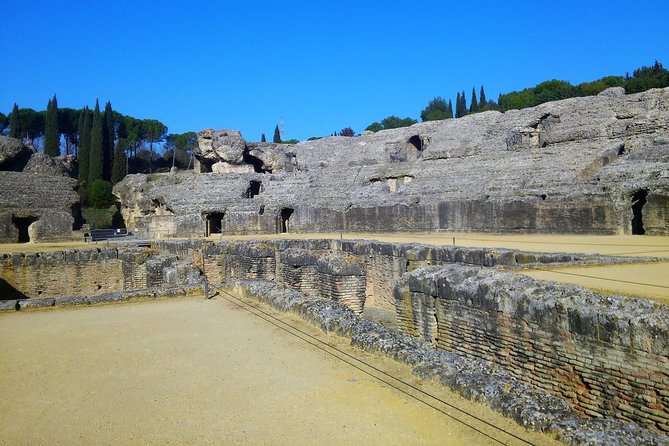
This is an outdoor walking experience, and the site includes long visual moments in bright light. Even if the weather is mild in the morning, you can still feel it by midday.
Bring:
- Water (food and drinks are not included)
- Sun protection (hat, sunscreen)
- Comfortable walking shoes with grip
- A light layer in case the monastery interior feels cooler than the air outside
If you’re visiting in summer—especially during hot months—plan like you’re going to spend time hopping between shade pockets. One of the most practical pieces of advice is to treat this as a serious “walk in the sun” day, not a quick stroll.
One last practical thing: this tour info doesn’t state anything about needing ID. Still, I’d follow a conservative travel habit and carry a passport or at least a photo copy on your phone, just in case the sites request it at check-in.
Who should book this Italica half-day, and who might not love it
Book this if you want:
- A Roman archaeology day with the amphitheater as the headline
- A guided explanation of mosaics and domus houses
- A half-day plan that doesn’t wreck your full itinerary in Seville
- A structured outing that includes transfer and admissions, so you don’t have to self-plan every step
It may be less ideal if:
- You only want Roman material and don’t care about medieval churches or monastery interiors
- You’re extremely time-sensitive with zero buffer (shared transport can be unpredictable)
- You dislike outdoor walking in strong sun and don’t want to manage water and shade
For most people who love Roman history and want one standout day trip from Seville, this hits the sweet spot: big site, strong visuals, and a guide who can translate it all into a story.
Should you book Historical Italica from Seville?
Yes—if your priority is Italica’s amphitheater and mosaics, this is a solid, efficient way to do it in one half-day. The included tickets and transfers make it feel like real value, not just a bus ride.
Book it especially if you like guided explanations that turn ruins into Roman life. If you’re the type who enjoys “how the story layers over time,” the monastery stop is a bonus, not an interruption.
But if your schedule is tight, give yourself extra buffer. And if you know you’ll be impatient with anything that isn’t Roman, consider that the monastery is part of the package.
FAQ
How long is the Historical Italica half-day tour from Seville?
The tour is listed as about 4 hours. The first stop at Anfiteatro de Italica is 2 hours, and the monastery stop is 1 hour, with travel time making up the rest.
What does the tour cost?
The price is $47.18 per person.
Is this tour offered in English?
Yes, it is offered in English.
What stops are included?
You’ll visit Anfiteatro de Italica (Archaeological Ensemble of Italica, mosaics, and a medieval monastery element you see within the complex) and then Monasterio de San Isidoro del Campo.
Are admission tickets included?
Yes. Admission tickets are included for both the Anfiteatro de Italica stop and the Monasterio de San Isidoro del Campo stop.
Does the price include transportation?
Yes. It includes a round-trip shared transfer.
Is food or drinks included?
No. Food and drinks are not included.
How large are the groups?
The tour has a maximum of 60 travelers.
Can I cancel for a full refund?
Yes. You can cancel up to 24 hours in advance for a full refund.
Is the meeting area near public transportation?
Yes, it is described as being near public transportation.